Vehicle Health & Roadside Safety
Can You Drive With the Check Engine Light On?
Sometimes it is a loose gas cap. Sometimes it is the beginning of a very expensive afternoon. Here is how to tell the difference, what to do in the first five minutes, and when to stop driving altogether.
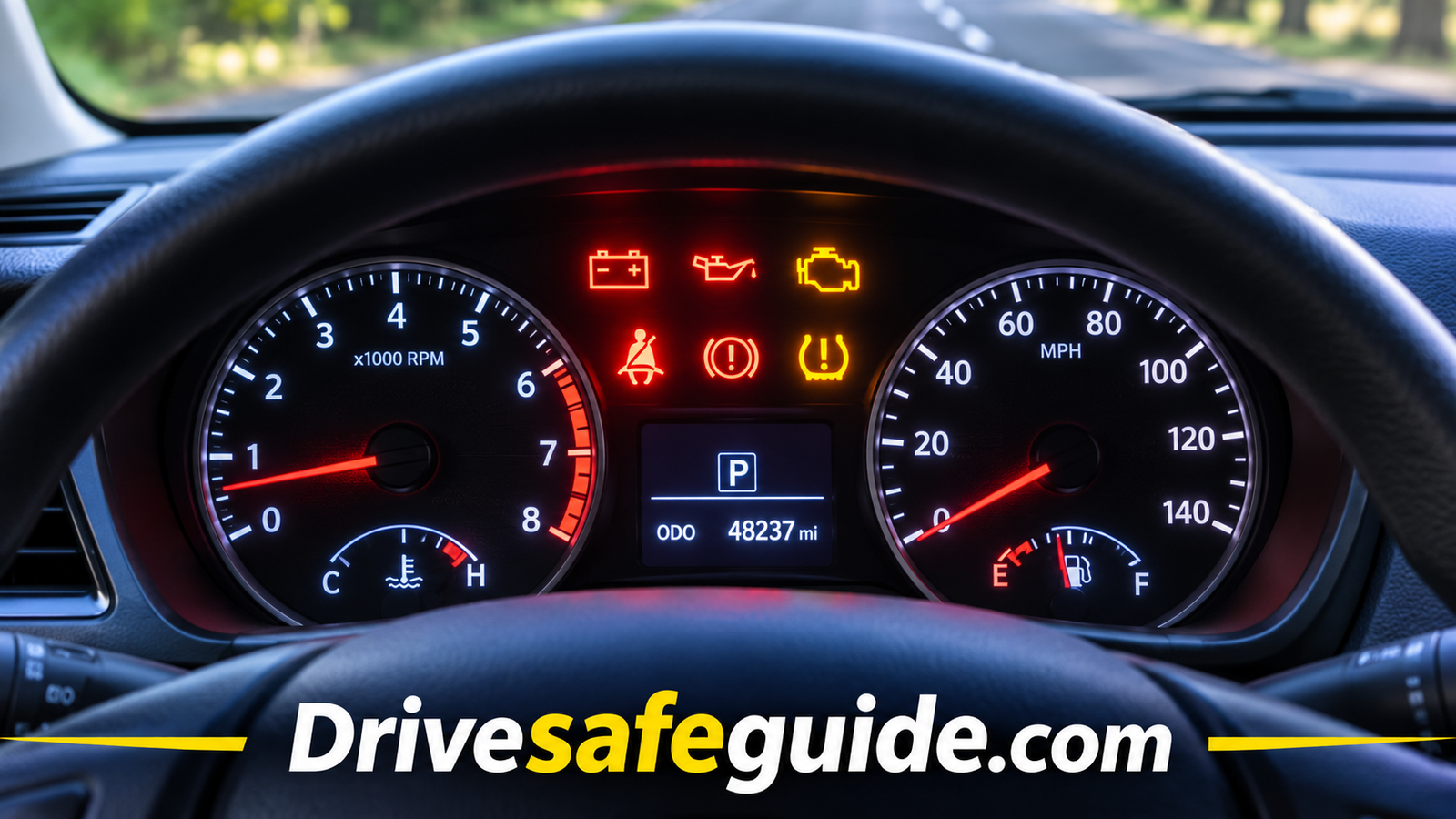
Few dashboard moments generate as much anxiety as a small amber engine outline lighting up in the middle of a commute. The car still drives fine. The engine sounds normal. Nothing is smoking. And yet that little symbol is sitting there, glowing like a quiet accusation, and every driver eventually asks the same question: can you drive with the check engine light on?
The honest answer is “usually yes, but with limits.” That qualifier is where people get into trouble. The check engine light — technically called the malfunction indicator lamp, or MIL — is not a single warning about a single problem. It is a status indicator for the entire engine management and emissions system, and it can be triggered by anything from a gas cap that is a quarter-turn loose to a misfire that is quietly cooking your catalytic converter. Two very different situations, one identical little light.
So the useful question is not just “can I drive?” It is “what is the light likely telling me, what are the symptoms doing right now, and how far am I from help?” By the end of this guide you will have a straightforward decision framework, a ranked list of causes, a five-minute response checklist, and a clear line between “keep driving carefully” and “pull over and call a tow truck.”

If you have already noticed that the car runs completely normally despite the warning, that is genuinely useful information — and it is worth understanding why. We break that exact scenario down in detail in what to do when the check engine light is on but the car runs fine, which pairs well with the framework below.
Don’t Guess — Read the Code First
A basic code reader turns a mystery light into plain language.
Check Price on Amazon1. What the Check Engine Light Is Actually Telling You
Under the hood, your car is running a continuous diagnostic routine. The engine control module — the computer that manages fuel delivery, ignition timing, idle speed and emissions equipment — monitors dozens of sensors and compares their readings against expected values. When a reading falls outside of those expected values for a set number of drive cycles, the computer stores a diagnostic trouble code and illuminates the check engine light.
That detail matters more than it sounds. The light is not a sensor failure alarm in the way a low oil pressure light is. It is a data alarm. Something in the system is reporting information the computer does not expect, and the computer is asking a human to look at it. Which is why the same light can appear for a trivial reason or a serious one.
What the light is not
The check engine light does not tell you the engine is about to fail. It does not mean you need a new engine. It is also not the same as your temperature warning light, oil pressure light, or battery/charging light — those three are immediate-action warnings, and none of them are covered here because they demand a different, faster response. The check engine light is what engineers sometimes call an amber-level warning: investigate, but you usually have some breathing room.
The light is the car’s way of saying “something changed and I wrote it down.” Your job is to read the note. It is not necessarily a verdict on the engine.
Why the color and behavior matter
On most vehicles, the symbol is amber or orange and glows steadily when the fault is stable. On many modern cars it blinks or flashes when the computer detects a condition that could damage the catalytic converter — most often a severe or persistent misfire. A flashing check engine light is in a completely different category from a steady one, and treating them the same is one of the most common and most expensive mistakes drivers make. We go deep on that distinction in the next section.
It is also worth knowing that a steady light usually still allows the vehicle to pass basic drivability, while a flashing light is a strong signal that the vehicle should not be driven at all. If you want the fuller version of that comparison, including how to decide which one you are dealing with in real time, we cover it in solid vs. flashing check engine light: what’s safe to drive.
Where the fault code lives
Every car sold in the United States since the mid-1990s has a standardized diagnostic connector, usually located under the dash near the steering column. That port is how a scanner pulls the stored code. Codes beginning with “P” relate to the powertrain, “B” to body systems, “C” to chassis, and “U” to network communication between modules. The vast majority of check engine lights produce P-codes, and among those, a handful of causes account for the majority of all warnings.
Knowing that a code exists is not the same as knowing the fix. Codes point to a circuit or a symptom — “system too lean” or “cylinder 3 misfire detected” — not to a specific failed part. Any diagnosis that skips from code straight to “replace this part” without testing is guesswork, and guesswork is how people spend money twice.
Keep the Diagnostic Port Within Reach
A handheld reader pays for itself the first time the light comes on.
Check Price on Amazon2. Can You Drive With the Check Engine Light On? The Short Answer
Yes — usually — if the light is steady, the car drives normally, no other warning lights are on, and the temperature gauge is sitting where it always does. No — if the light is flashing, the car is shaking, losing power, or any red warning light joins in.
That is the whole rule in two sentences. Everything else is detail, and the detail is what keeps you from being stranded or from turning a minor repair into a major one.
The conditions that make driving acceptable
- The light is steady, not flashing. A solid light means a fault has been recorded. A flashing light means the fault is actively harmful right now.
- The car drives the way it did yesterday. Same acceleration, same idle, same braking, no hesitation, no surging.
- No other warning lights are illuminated. Temperature, oil pressure and charging system warnings override everything else.
- The temperature gauge is normal. An overheating engine can go from fine to destroyed in minutes, and the check engine light sometimes accompanies early overheating.
- You are not towing, hauling, or climbing long grades. Those conditions put maximum stress on exactly the systems most likely to be involved.
- You have somewhere to get it scanned soon. “Soon” means days, not months.
The conditions that mean stop driving
The check engine light is flashing. The engine is shaking or running rough at idle or under load. You smell fuel, burning, or sweet coolant. The temperature gauge climbs toward the red. Power drops suddenly or the vehicle goes into a reduced-power “limp” mode. Any red warning light appears on the dash.
The reasoning is straightforward. A flashing light usually indicates ignition misfire, which means unburned fuel is passing through the engine and into the catalytic converter. Converters operate at extreme temperatures by design, but raw fuel makes them overheat, and a converter that overheats can be destroyed in a single drive — sometimes taking other components with it. In other words, the reason you stop driving is not necessarily that the car will stop moving. It is that continuing can turn a repair into a replacement.
What if you have no choice but to drive?
Real life is not always a clean decision tree. Sometimes the light comes on two hundred miles from home, at night, in the rain, and stopping is not realistic. In that case, drive as gently as physics allows: moderate speeds, gentle acceleration, no hard passes, no towing, no mountain detours. Keep the heater available as a backup cooling method if the temperature gauge starts to climb — turning the cabin heat to maximum pulls heat out of the engine, which can buy you enough time to reach a safe place. It is uncomfortable. It works.
Some faults genuinely are severe enough that even that is unwise. A failing head gasket, for instance, can put coolant into places coolant should never be, and continuing to drive often multiplies the damage. If you suspect that specific failure, our guide on whether you can drive with a blown head gasket walks through the trade-offs in detail.
Be Ready Before the Light Comes On
Emergency essentials turn a warning light into a manageable errand.
Check Price on Amazon3. Solid vs. Flashing: The Difference That Changes Everything
If you remember only one thing from this entire article, make it this: a steady check engine light and a flashing check engine light are not the same warning. They use the same symbol and the same lamp, but the intent behind them is completely different.
What a steady light means
A solid light indicates the engine computer has detected and stored a fault, but the condition is not currently causing immediate risk to the emissions system. The vehicle may drive perfectly well. Common triggers include a loose or worn gas cap, a slowly degrading oxygen sensor, an evaporative emissions leak, or a minor air metering discrepancy. These are real problems that deserve attention, but they rarely leave you stranded on the side of the road.
What a flashing light means
A blinking check engine light is the car raising its voice. In almost all cases, flashing indicates a severe or active misfire — one or more cylinders not burning their fuel properly. That unburned fuel travels into the catalytic converter, where it ignites and raises temperatures far beyond design limits.
The consequences escalate quickly:
- First: rough running, noticeable vibration, and a loss of power under load.
- Next: the catalytic converter begins to overheat, sometimes glowing or smelling hot.
- Then: the converter’s internal substrate can melt or break apart, which is expensive and can create a restriction that makes everything worse.
- In severe cases: the extreme heat poses a fire risk near fuel and heat-sensitive components.
Steady vs. flashing: how the response changes
| Behavior | What it usually means | Safe to drive? | What to do now |
|---|---|---|---|
| Solid amber light, drives normally | Stored fault: gas cap, sensor drift, small EVAP leak | Yes, short and gentle trips | Scan the code within a few days |
| Solid light, mild hesitation | Developing misfire, clogged filter, fuel delivery issue | Only to a repair shop or home | Avoid highway merges and hills |
| Flashing light | Active severe misfire damaging the catalytic converter | No | Pull over safely, get a tow or repair first |
| Flashing light plus shaking and power loss | Ignition or fuel failure in progress | Absolutely not | Stop, shut down, call for service |
The reduced-power twist
Some vehicles do not flash the light at all when something is seriously wrong. Instead, they enter what drivers call limp mode: the transmission stays in a single gear, throttle response becomes deliberately sluggish, and top speed is capped. That is the computer protecting itself and you. A car in reduced-power mode is designed to get you off the highway and to safety — not to finish a two-hour journey.
For a fuller comparison with symptom-by-symptom guidance, see our breakdown of solid versus flashing check engine lights. It includes the specific situations where a steady light is still an immediate problem.
Scan Before You Decide
Live data tells you whether the fault is active or historical.
Check Price on Amazon4. The Most Common Causes, Ranked by How Dangerous They Are
Not all check engine light triggers deserve the same level of urgency. Below is a practical ranking based on the kind of damage that tends to follow if the problem is ignored. It is not a diagnosis — only a scan can tell you what your specific car is reporting — but it gives you a sense of scale while you wait for the scan.
Common check engine light causes: severity and likely outcome
| Cause | Typical symptoms | Severity | Can you drive? | Cost of waiting |
|---|---|---|---|---|
| Loose, worn, or cracked gas cap | None; light only | Low | Yes | Failed evap test at inspection |
| Oxygen sensor aging | Slight fuel economy change | Low to moderate | Yes, briefly | Higher fuel use; converter damage over time |
| Mass airflow sensor dirty or failing | Rough idle, hesitation on acceleration | Moderate | Short distances | Misfire risk; poor performance |
| Spark plugs or ignition coils worn | Shaking, hesitation, flashing light possible | Moderate to high | Only if light is steady | Catalytic converter damage |
| Catalytic converter efficiency below threshold | Rotten smell, sluggish performance, heat | High | Short, gentle trips | Converter failure; exhaust restriction |
| Cooling system or thermostat fault | Temperature gauge movement, heater change | High | Only while temperature stays normal | Overheat, head gasket damage |
| Fuel delivery problem (pump or pressure) | Stalling, surging, hard starting | High | Risky | Stranding; potential lean-burn damage |
The unglamorous favorite: the gas cap
It is not exciting advice, but checking the gas cap is genuinely the first thing to do. A cap that is not seated fully, or whose rubber seal has hardened and cracked, allows fuel vapors to escape from the tank. The evaporative emissions system detects that as a leak and turns on the light. Remove the cap, inspect the seal for cracks or flattening, reseat it until it clicks, and drive for a day or two to see whether the light clears on its own as the system runs its self-check.
The one that gets ignored: the oxygen sensor
Because an aging oxygen sensor rarely makes the car feel different, drivers tend to postpone it. That is understandable and short-sighted. The sensor’s job is to tell the computer how much fuel to add. When its readings drift, the engine runs richer or leaner than intended, and over time that extra fuel loads up the catalytic converter. It is one of the few “minor” faults with a genuinely major downstream cost.
The one that escalates fastest: the misfire
A misfire is a cylinder failing to combust properly, often from worn plugs, failing coils, or a fuel injector problem. It feels like shaking at idle, a stumble when you press the throttle, or a general roughness that wasn’t there before. This is the fault most likely to trigger a flashing light, and it is the one where driving on can cause the most damage in the shortest time.
Adjacent systems worth connecting
Some check engine lights are actually pointing at systems people think of as separate. Charging system problems show up in our guide to alternator failure symptoms; belt-driven accessory problems are covered in serpentine belt replacement signs; slow coolant loss has its own walkthrough in coolant leak detection; and fuel delivery issues are detailed in symptoms of a failing fuel pump. Transmission behavior can also appear as an engine fault, which we explain in transmission slipping causes.
Get the Full Picture Under the Hood
Inspection tools help you confirm the cause before buying parts.
Check Price on Amazon5. What to Do the Moment the Light Comes On
Panic is the wrong response, and so is ignoring it. The right response is a short, repeatable routine that takes about five minutes and tells you almost everything you need to make a safe decision.
-
Note exactly how the light is behaving
Is it steady or flashing? Did it come on during startup and stay on, or appear while driving? A light that illuminates during the first few seconds of startup is a bulb self-test; one that stays on afterward is a real fault. If it is flashing, skip ahead — that becomes your priority.
-
Check the other gauges and lights
Look at the temperature gauge, the oil pressure light, and the battery or charging indicator. If any of those are abnormal, the check engine light is secondary and your response changes immediately.
-
Pull over somewhere safe and shut the engine off
Not in a travel lane, not on a shoulder with traffic at speed if you can avoid it. Give the car thirty seconds, then restart it. Sometimes this resets a transient condition and gives you clean information about what is actually happening.
-
Check the gas cap
Remove it, look at the seal, put it back on until it clicks. This takes twenty seconds and solves a surprising share of all check engine lights.
-
Listen and feel for changes
At idle, is the engine smooth or hunting? Under gentle acceleration, is there hesitation, a surge, a new noise, or a smell? Fuel smell, burning odor, or sweet coolant scent all raise the severity of the situation immediately.
-
Decide: drive on gently or stop driving
Use the decision rules from Section 2. If you drive on, do it with the lightest possible inputs and the shortest possible route to help.
-
Get the code read within days, not weeks
Most auto parts stores will read codes at no charge, and a personal scanner or phone app removes the trip entirely.
Clearing the code turns off the light; it does not fix the cause. Worse, it also resets the emissions readiness monitors that inspection stations look for, which can cause a failed test even if nothing is wrong with the car. Read and record the code first. Clear it later, on purpose, and only after the repair.
Build the habit of documenting
When the light comes on, take a photo of the dash and jot down what you were doing at the time — speed, whether the engine was warm, whether you had just refueled, whether the weather was extreme. That small amount of context can save a technician real diagnostic time, and diagnostic time is the part of the bill people complain about most.
Keeping a small vehicle log also helps you spot patterns before they become warnings. If you want a full pre-drive routine that catches problems earlier than the light does, our car emergency kit checklist and best car safety tools roundup are good places to start.
Keep a Response Kit in the Trunk
Gloves, light, and a place to write down what happened.
Check Price on Amazon6. Read the Code Yourself: OBD2 Scanners, Apps, and What the Numbers Mean
Once you know that a code exists, reading it is easier and cheaper than most people expect. The diagnostic port has been standardized for decades, and the tools range from inexpensive phone-connected adapters to handheld units with live data and graphing.
What a scanner actually shows you
- Stored codes. Faults that have been confirmed by the computer and triggered the light.
- Pending codes. Faults the computer has noticed but not yet confirmed with enough drive cycles to turn on the light. These are early warnings.
- Permanent codes. Records that stay in memory even after clearing and can only be removed once the vehicle’s own self-tests pass. Useful for inspection honesty.
- Freeze frame. A snapshot of engine conditions at the moment the fault occurred — engine load, temperature, speed, fuel trim. Extremely useful for intermittent problems.
- Live data. Real-time sensor readings while the engine runs. This is where diagnosis actually happens.
Reading the code without over-reading it
A code like “cylinder 2 misfire” tells you where to look, not what to replace. The cause could be a spark plug, an ignition coil, an injector, a vacuum leak, or low compression. The correct approach is verification: check the cheap and accessible things first, test before replacing, and change one variable at a time.
The opposite approach — replacing every part the code could possibly refer to — is how people end up with an expensive pile of new parts and the same warning light. If you want to see how the more advanced tools handle live sensor streams and what separates a useful tool from a frustrating one, we cover that in OBD2 scan tools and real-time sensor monitoring.
Choosing between an app and a handheld
Scanner options at a glance
| Option | Best for | Strengths | Limitations |
|---|---|---|---|
| Phone app with wireless adapter | Everyday drivers | Compact, good live data, easy sharing of results | Depends on phone battery and app support |
| Handheld code reader | Quick, no-fuss reads | No phone needed, simple operation, always in the glovebox | Fewer advanced data views on basic models |
| Multi-system diagnostic tablet | Enthusiasts and home mechanics | Covers transmission, ABS and body modules; bi-directional tests | More to learn, more to spend |
| Shop diagnosis | Intermittent or stubborn faults | Professional equipment, smoke testing, compression testing | Requires booking and a diagnostic fee |
For app-based options, our review of the best OBD2 scanner apps compares the interfaces and data views that actually matter. If you prefer a dedicated tool you can hand to someone else, this handheld battery and system tester review shows what a compact unit can do. And since a weak battery causes a surprising number of strange electrical faults and false warnings, battery testers are worth having alongside a code reader.
Turn Warning Lights Into Plain English
Wireless adapters pair with your phone in under a minute.
Check Price on Amazon7. How Far Can You Drive? Limits, Risks, and the Signals That Change the Answer
“Can I drive with the check engine light on?” is really three questions wearing one coat: can I drive at all, how far, and under what conditions. The distance question is the one people get wrong, because the answer is not a number of miles — it is a function of what is happening while you drive.
Distance follows symptoms, not mileage
There is no safe universal mileage figure. A car with a steady light caused by a gas cap can be driven normally for weeks without consequence. A car with a developing misfire can suffer permanent emissions damage in a single sustained highway run. What matters is whether the symptoms are stable, improving, or worsening as you drive.
Signals while driving and what they should change
| Signal you notice | What it might indicate | Distance guidance | Immediate action |
|---|---|---|---|
| Everything feels completely normal | Minor emissions or sensor fault | Normal driving is fine until diagnosis | Book a scan within days |
| Mild hesitation under acceleration | Early misfire, air metering, fuel delivery | Shortest route to a shop | Reduce speed, avoid hills and merges |
| Shaking at idle or under load | Active misfire | Only to the nearest safe location | Stop and get help if it worsens |
| Temperature gauge rising | Cooling system fault or combustion leak | Stop driving | Shut down, call a tow |
| Sudden power loss or limp mode | Protective strategy engaged by the computer | Exit the roadway only | Repair before resuming normal driving |
Driving conditions that make everything worse
The same fault is far more dangerous in certain conditions. Steep grades force the engine to produce sustained power, which exposes a marginal ignition or fuel system. Towing adds load and heat. Extreme cold thickens fluids and strains a weak battery, while extreme heat stresses the cooling system and can turn a small leak into an overheat. Stop-and-go traffic keeps the engine in a range where misfires are most noticeable and least tolerable.
If you are already in challenging conditions when the light appears, the smart move is to simplify your situation: get off the highway, avoid the mountain route, keep speeds moderate, and shorten the trip. A vehicle that feels “almost fine” on a quiet road can fall apart under the demands of a high-speed merge.
When the car shakes at speed
Not every shake is an engine problem, and misdiagnosing the source costs time. Vibration that changes with speed but not with engine load often points toward wheels, tires, or suspension rather than combustion. Our guide to car shaking at highway speeds helps separate tire balance issues from engine-related vibration. If you do need to move through traffic while the vehicle is compromised, keep more room than usual; our safe following distance rule gives you a simple buffer to work with.
Keep Tire Pressure From Creating New Problems
A quick gauge check rules out one common source of dash warnings.
Check Price on Amazon8. Emissions Tests, Inspections, and the Legal Side of a Warning Light
There is a regulatory dimension to the check engine light that has nothing to do with whether the car will make it home. In many places, an illuminated check engine light is an automatic failure on an emissions inspection, regardless of how well the vehicle runs.
Why the light alone can fail an inspection
Modern inspection routines do not only read codes. They also check the status of the vehicle’s readiness monitors — internal self-tests for systems like the catalytic converter, oxygen sensors, and the evaporative emissions system. Each monitor needs a specific pattern of driving to complete after the battery has been disconnected or codes cleared. If too many monitors are incomplete, the vehicle may be rejected even with no fault present.
Clearing the code a day before an inspection often guarantees a rejection. Complete the repair, then drive enough varied cycles for the monitors to run again — a mix of highway and city driving works best.
Is driving with the light on illegal?
In most jurisdictions, an illuminated check engine light by itself is not a moving violation. However, a vehicle that is visibly emitting smoke, running so poorly it impedes traffic, or otherwise in an unsafe condition can draw attention for other reasons. Requirements also vary widely by location: some areas conduct emissions testing, others do not, and some have no periodic inspection at all. When a rule matters to you specifically, check your local authority rather than relying on general guidance.
Rules that depend on where you drive are worth understanding before they become a problem. We have plain-language explainers on driving with a cracked windshield, using interior lights while driving, and driving with headphones on — all common questions with surprisingly location-dependent answers.
Insurance and resale considerations
A warning light you ignore can affect resale value simply because it signals deferred maintenance to a buyer or appraiser. And if a fault contributes to a loss of control, the fact that the warning was ignored can become relevant. Documenting that you diagnosed and repaired promptly is one of the easiest ways to protect yourself.
Related coverage questions — including what happens when the other driver has no insurance — are explained in our guide to uninsured motorist coverage.
Document Everything, Just in Case
A dash cam preserves context if a fault leads to an incident.
Check Price on Amazon9. What Repairs Usually Involve (and How to Avoid Overpaying)
Cost anxiety keeps a lot of drivers from dealing with a check engine light promptly. That is understandable, but postponement usually makes the bill larger, not smaller. What helps is understanding how repair billing works and where you have leverage.
Diagnosis is a real service
Reading a code is quick. Finding the cause behind a code can take significant time, especially with intermittent faults. Most shops charge a diagnostic fee, and that fee pays for a technician’s time, equipment, and judgment. Ask up front what the diagnostic fee covers and whether it applies toward the repair. A shop that explains its process clearly is usually a shop that will treat you fairly on the rest.
The cheapest repair is not always the right one
Why to fix it now
- Small faults stay small instead of cascading
- Fuel economy returns to normal
- The vehicle passes inspection without a scramble
- You avoid being stranded at the worst moment
- Resale value and trade-in conversations go smoother
The cost of waiting
- One failed part strains the parts around it
- Emissions components are among the priciest to replace
- Intermittent faults get harder to diagnose over time
- You lose the ability to choose where and when to repair
- Small symptoms become roadside emergencies
How to talk to a shop
- Bring the code and the context. When the light came on, what you were doing, what you have already checked.
- Ask for the diagnosis before the parts list. “What is the root cause?” is a better question than “What parts do I need?”
- Request that old parts be kept. It is a simple courtesy and it discourages sloppy work.
- Ask about part choices. Original equipment, quality aftermarket, or remanufactured options each have trade-offs in cost, availability, and warranty.
- Get the estimate in writing, with labor and parts broken out separately.
If you want a second opinion on how thorough a shop’s process should look, our overview of the engineering behind multi-point inspections explains what a proper check actually covers and what separates a glance from a real inspection.
Keep a Record of Every Repair
A maintenance log protects resale value and speeds up diagnosis.
Check Price on Amazon10. Preventive Maintenance That Keeps the Light Off
Most check engine lights are not random. They are the end result of wear that was detectable long before the lamp illuminated. A consistent maintenance habit does not guarantee you will never see the light, but it shifts the odds heavily in your favor and makes the eventual repair smaller.
The habits that matter most
- Keep the gas cap sealed. Inspect the rubber ring whenever you refuel. A hardened seal is a guaranteed evap code eventually.
- Change oil and filters on schedule. Contaminated oil accelerates wear in the exact components that trigger misfire and sensor codes.
- Replace spark plugs at the interval in your owner’s manual. Ignition wear is the single most common root cause of misfires.
- Watch your coolant. Level drops and temperature changes deserve attention early, not after an overheat.
- Keep the air filter and intake clean. Air metering faults frequently trace back to contamination.
- Mind the battery. Low voltage produces bizarre sensor behavior and phantom codes. Most batteries have a service life measured in a handful of years; testing beats guessing.
- Pay attention to small changes. A slightly rougher idle, a faint new smell, a small drop in fuel economy — these are the car telling you early.
Systems worth learning about before they fail
Knowledge is a form of prevention. Understanding what your oil’s viscosity rating means helps you use the right product; our guide to engine oil viscosity grades covers it plainly. Knowing when a timing belt versus a chain is due prevents one of the most catastrophic engine failures there is — see timing belt vs. timing chain service intervals. Cooling system upkeep is explained in how to flush a radiator at home, and interior air quality maintenance in DIY cabin air filter replacement.
Battery life is one of the biggest variables in whether a car behaves predictably, so how long car batteries last is worth a read before winter or a long trip. And if your vehicle has a hybrid powertrain, maintenance intervals and priorities shift; hybrid vehicle maintenance lays out the differences. Long-term body and undercarriage protection also reduces the corrosion that causes electrical gremlins later; see rust proofing methods for the undercarriage.
Use the Right Fluids Every Time
Correct oil and coolant specs prevent avoidable sensor faults.
Check Price on Amazon11. Building a Roadside Buffer: Gear That Buys You Time
A check engine light becomes dramatically less stressful when you are prepared for the possibility that you will need to stop. The goal of carrying a few well-chosen items is not to perform repairs in a parking lot; it is to give yourself visibility, light, power, and time while you decide what to do.
The essentials worth keeping in the car
- Jump starter or jumper cables. Electrical faults and a weak battery often arrive together.
- Powerful flashlight or headlamp. Most under-hood checks happen in poor light.
- Road flares or LED warning triangles. Being visible is more protective than anything else you can carry.
- Small fire extinguisher rated for automotive use. A rare need, an enormous difference when it matters.
- Gloves and a rag. Simple, but they make checking a gas cap, dipstick, or coolant reservoir far more pleasant.
- Reflective vest. Especially valuable on highways and at night.
- Tire inflator and gauge. Tires cause plenty of dash warnings and plenty of roadside stops.
Our reviews cover the specifics: best road flares, best car emergency flashlights, portable jump starter review, best car fire extinguishers, and best car window breakers. For a tire top-up tool, air compressors for car tires and our comparison of digital versus analog tire gauges are helpful starting points.
Why a dash cam is worth considering
If a warning light contributes to a breakdown or an incident, the ability to show what happened is valuable. Modern cameras are compact, mount cleanly, and record automatically. We have covered dash cams for everyday driving, 4K options for night driving, and the trade-offs between front-only and dual-camera setups. If you prefer a comparison before buying, our dash cam comparison lays the categories side by side.
Light Up the Roadside Safely
Visible warning devices protect you while you check the engine.
Check Price on Amazon12. Special Situations: Hybrids, EVs, Older Cars, Weather, and Long Trips
The general rules hold across most vehicles, but certain situations change the risk profile enough to deserve their own discussion.
Hybrids
Hybrid powertrains add high-voltage systems and a second energy source to the diagnostic picture. A check engine light on a hybrid can involve the internal combustion engine, the battery management system, or the interaction between them. Reduced-power modes are more common, and regenerative braking behavior can change noticeably when faults are present. Because of that, a hybrid showing a warning light deserves prompt attention even when it seems to drive acceptably. See hybrid vehicle maintenance for what to watch.
Electric vehicles
Fully electric vehicles do not have an engine in the traditional sense, but they do have warning lights and diagnostic systems, and the principle is identical: note the behavior, stop if the vehicle indicates reduced power or a thermal warning, and have the fault read. Range behavior under stress is another thing to understand in advance; EV battery range anxiety tips covers the planning side.
Older vehicles
Cars built before the standard diagnostic port became universal give you less information and more ambiguity. Many older warning systems rely on simpler circuits, and a warning lamp may reflect a basic electrical issue rather than a computer-recorded fault. In these cases, physical inspection — wires, connectors, vacuum lines, belts — matters even more than scanning.
Weather extremes
Cold weather punishes batteries and thickens fluids, which can trigger hard-starting faults and sensor readings outside expected ranges. cold-weather car batteries and our winter car emergency kit checklist prepare you for that side. Heat is just as demanding: cooling systems work hardest in traffic and on grades during hot spells. extreme heat engine care explains how to reduce that stress, and winter driving tips round out cold-weather preparation.
Long road trips
A warning light that appears at the start of a trip is a reason to reassess the plan before leaving, not after. Build a pre-trip routine: check fluids, tires, lights, battery condition, and listen for anything unusual on a short test drive. Our how to prepare your car for a road trip guide is a complete checklist, with a shorter pre-road-trip safety checklist for quick reference and a road trip essentials checklist for packing.
Get Road-Trip Ready Before You Leave
A quick pre-trip check prevents most warning-light surprises.
Check Price on AmazonFrequently Asked Questions
Is it safe to drive with the check engine light on?
Generally yes, if the light is steady, the car drives normally, and no other warning lights are on. It becomes unsafe when the light flashes, the engine shakes or loses power, the temperature gauge climbs, or you smell fuel or burning. In those situations, stop driving and get help.
How long can I drive with the check engine light on before something breaks?
There is no universal timeframe, because it depends entirely on the cause. A gas cap issue can be driven with for weeks without damage. A severe misfire can damage a catalytic converter in a single long drive. Let symptoms guide you: if the car feels normal, short-term driving is reasonable while you arrange a scan; if it feels wrong, treat it as urgent.
What does it mean when the check engine light is flashing?
Flashing almost always indicates an active, severe misfire. Unburned fuel is entering the catalytic converter, which can overheat and be destroyed. A flashing light is the strongest possible reason to pull over safely and stop driving.
Will the check engine light turn off by itself?
Sometimes. If the condition was temporary and the vehicle’s self-tests pass over several drive cycles, the light can clear on its own. That is common after refueling with a loose gas cap. If the underlying fault persists, the light will return — and if it clears only to reappear, the problem is real and repeating.
Can a loose gas cap really trigger the check engine light?
Yes. The evaporative emissions system monitors fuel vapor pressure in the tank. A cap that is not sealed allows vapors to escape, which the system reads as a leak. Reseating or replacing the cap is the cheapest possible fix and a sensible first step.
Should I disconnect the battery to reset the check engine light?
It will usually turn the light off, but it does not repair anything and it erases stored information that helps diagnose the problem. It also resets emissions readiness monitors, which can cause an inspection rejection. Read and save the code first, fix the cause, then clear the light deliberately.
Can I pass an emissions test with the check engine light on?
In most places that perform emissions testing, an illuminated check engine light is an automatic failure regardless of how well the car runs. Requirements vary by location, so confirm with your local inspection authority.
Why is my check engine light on but the car drives perfectly?
Because many faults affect emissions or efficiency long before they affect drivability. An aging oxygen sensor or a small evaporative leak can trigger the light while the car feels unchanged. It still deserves diagnosis, since ignoring it tends to create bigger problems later. We cover this exact scenario in depth here.
Can I drive on the highway with the check engine light on?
If the car drives normally and the light is steady, yes, with attention. Highway driving keeps the engine under sustained load, which is where a marginal ignition or fuel problem shows itself. If you feel hesitation, shaking, or power loss, exit at the earliest safe opportunity rather than continuing at speed.
Does the check engine light mean the transmission is failing?
Not usually, but it can. Modern transmissions are monitored by the same computers, and issues like slipping or solenoid faults can produce warning lights and codes. If you notice delayed engagement, flaring revs, or harsh shifts, have it checked promptly; our guide to transmission slipping causes explains what to look for.
How much does it cost to diagnose a check engine light?
Many parts stores will read the code at no charge, while repair shops typically charge a diagnostic fee for professional testing. The fee reflects real technician time and equipment. Cost varies widely by region and by how complex the fault is, so ask what the diagnostic covers before authorizing work.
What should I do if the light comes on during a road trip far from home?
Run the five-minute check from Section 5, then adjust your plan. If the car feels normal, shorten the trip, avoid towing and steep grades, and scan at the next town. If it is flashing, shaking, or overheating, stop where it is safe and arrange a tow. Having roadside essentials in the car makes the whole situation far less stressful.
Still Wondering What the Light Means?
Start with a scan, then plan the repair with confidence.
Check Price on AmazonFinal Word: Drive Smart, Not Scared
A check engine light is not a crisis. It is a conversation starter between your car and you. The mistake is treating it as either a five-alarm fire or a decorative dashboard feature. The truth sits comfortably in the middle: understand what the light is telling you, respond proportionally, and never gamble with the flashing version.
Keep the decision rules close. Steady light, normal driving, no other warnings — you can drive, gently, and get it scanned soon. Flashing light, rough running, rising temperature, or sudden power loss — stop driving and get help. Between those two poles, let symptoms and distance from help guide you.
Then build the habits that keep you on the good side of that line: check the gas cap, stay current on plugs and fluids, watch your battery, and pay attention when the car feels slightly different than it did last week. A code reader and a small emergency kit in the trunk turn a stressful moment into a manageable errand.
If you are preparing for a longer drive, run through our pre-road-trip safety checklist and road-trip preparation guide before you go. The best time to deal with a warning light is before it appears.
Get Ahead of the Next Warning Light
Keep a scanner, a light, and an emergency kit in the car today.
Check Price on Amazon