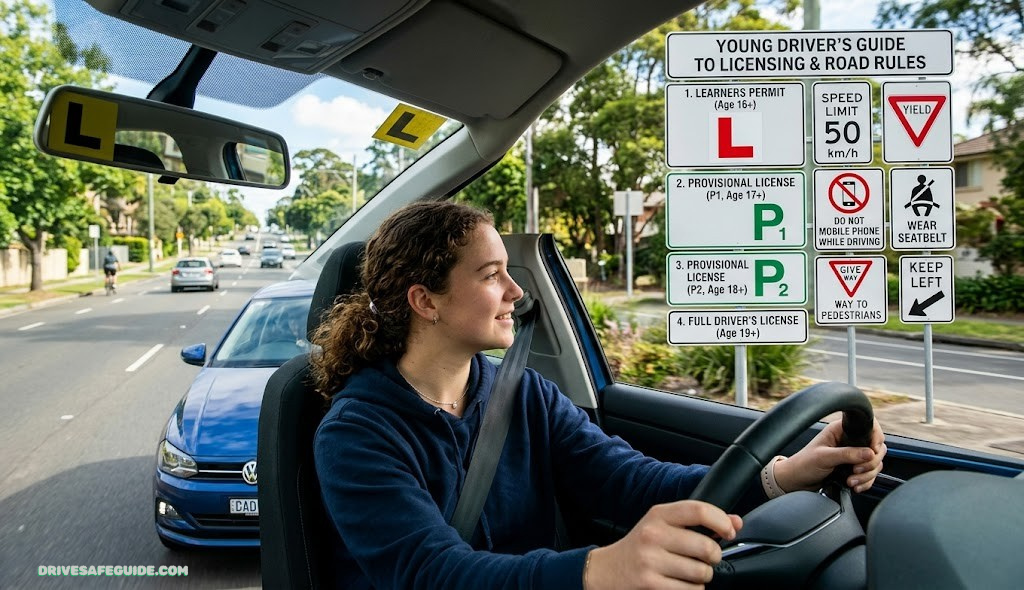
The Three-Stage GDL Road Map
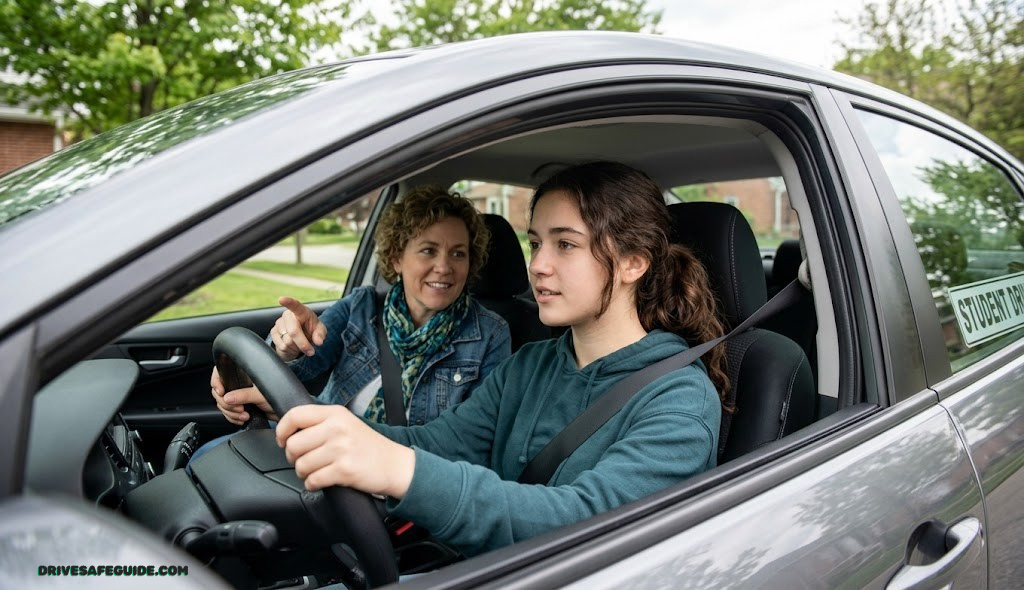
Graduated licensing builds skills progressively — helping new drivers earn freedom through demonstrated responsibility.
Getting a driver’s license is one of the most anticipated milestones in a teenager’s life. The freedom to drive independently represents autonomy, growth, and access to the adult world. But that freedom comes with a reality that every new driver, parent, and driving instructor needs to understand: teen drivers are statistically the most at-risk group on the road.
The crash rate per mile driven is nearly three times higher for 16- and 17-year-olds than it is for drivers aged 20 and over. This isn’t because teens are inherently reckless — it’s because driving demands a level of hazard perception, split-second judgment, and multitasking ability that only comes with practice and maturity. That’s exactly why graduated driver licensing (GDL) systems exist.
This guide breaks down everything you need to know about graduated licensing restrictions — what each stage requires, which restrictions carry the most safety weight, how violations can derail the process, and what role parents play throughout. Whether you’re a new driver counting down to your permit test, a parent trying to set the right rules at home, or an educator helping students understand the law, this is the resource you need.
What Is Graduated Driver Licensing?
Graduated Driver Licensing — commonly abbreviated as GDL — is a structured, multi-stage system for granting driving privileges to new drivers. Rather than awarding full driving independence the moment a teen passes a written test, GDL programs require new drivers to progress through defined stages, each with its own requirements and restrictions.
The concept is simple but powerful: build real-world driving skill gradually, while limiting exposure to the highest-risk driving conditions until a driver has demonstrated consistent competence. Research from the Insurance Institute for Highway Safety (IIHS) and the Centers for Disease Control and Prevention consistently confirms that well-implemented GDL programs save lives.
All 50 states and the District of Columbia have adopted some form of GDL legislation, though the specific rules vary considerably. The three-stage framework is the national standard:
Stage 1: Learner’s Permit
A new driver holds a permit and must practice only with a licensed adult supervisor in the car at all times. No solo driving permitted.
Stage 2: Provisional License
The driver may operate a vehicle independently but faces restrictions on nighttime hours, passenger count, and phone use.
Stage 3: Full License
All restrictions are lifted after meeting age requirements and completing any remaining holding periods without violations.
The GDL model was pioneered in New Zealand in the early 1990s and adopted across North America throughout the late 1990s and 2000s as data made the safety case undeniable. Today, the framework is the global standard for new driver programs in most developed countries.
It’s worth noting that GDL laws primarily target drivers under 18. If someone begins driving for the first time at age 18 or older, many states exempt them from the younger-driver-specific restrictions — though first-time licensees should check their state laws carefully, as some states do apply GDL requirements regardless of age.
Why GDL Works: The Science Behind the Restrictions
Skeptics sometimes argue that GDL restrictions are overly paternalistic — that teens who pass their driving test should be trusted to drive freely. But the restrictions aren’t based on distrust; they’re based on neuroscience and crash data.
The adolescent brain’s prefrontal cortex — the region responsible for impulse control, risk assessment, and decision-making — is not fully developed until the mid-twenties. This biological reality means that even a motivated, careful teen driver is working with a brain that is genuinely less equipped to handle sudden high-stakes decisions than an adult driver’s brain.
Pair that with lack of driving experience, and the crash risk becomes significant. Studies have identified several specific conditions that dramatically increase crash risk for new teen drivers:
- Night driving: Fatal crash rates for teens are about 3 times higher at night than during the day.
- Peer passengers: Each additional teen passenger in the car increases crash risk by roughly 45% per passenger.
- Phone use: Any cell phone use while driving — including hands-free — impairs driving performance for teen drivers more severely than for adults.
- Speed: New drivers consistently overestimate their ability to control a vehicle at high speeds, particularly on highways.
- Unfamiliar roads: Driving in new environments without experience reading road cues increases reaction time errors.
GDL restrictions directly address each of these risk factors. Night curfews keep inexperienced drivers off the road during the highest-risk window. Passenger limits remove the peer pressure dynamic that causes many teen crashes. Phone bans eliminate a major source of cognitive distraction. The result: each stage of GDL laws reduces teen crash fatalities by roughly 8–14%.
GDL restrictions aren’t punishment — they’re engineering. They reduce exposure to the exact conditions that cause the most teen crashes, while giving new drivers the time and mileage they need to build genuine competence. Research shows that states with stronger GDL laws consistently have lower teen driver fatality rates than states with weaker laws.
If you’re interested in building comprehensive safety habits beyond the GDL phase, our guide to defensive driving habits that reduce collision risk is an excellent next read.

Start every solo drive prepared. A good safety kit covers jumper cables, a first aid kit, an emergency flashlight, and reflective triangles — essentials every new driver should have in the trunk.
🛒 Shop Teen Driver Safety Kits on AmazonAs an Amazon Associate, DriveGuide earns from qualifying purchases.
Stage 1: The Learner’s Permit — Building the Foundation
The learner’s permit is where every new driver starts. This stage is fundamentally different from the stages that follow: no solo driving is permitted under any circumstances. Every time a permit holder gets behind the wheel, a licensed supervisor must be seated in the front passenger seat, ready to intervene.
How to Obtain a Learner’s Permit
The process varies slightly by state but typically follows this pattern:
- Meet the minimum age requirement (usually 15 or 15½ in most states, though some states allow 14 or require 16)
- Pass a written knowledge test covering traffic laws, road signs, and safe driving practices
- Pass a vision screening
- Submit proof of identity, residency, and Social Security number
- Pay the permit fee (typically $10–$40)
- Have a parent or guardian sign the permit application if under 18
Supervised Driving Hours: The Requirements
Most states require between 30 and 65 hours of documented supervised driving before a teen can apply for a provisional license. This isn’t optional paperwork — it’s the foundation of Stage 1. The required hours are typically broken into daytime and nighttime components:
| State Example | Total Hours Required | Night Hours Required | Min. Holding Period |
|---|---|---|---|
| California | 50 hours | 10 hours | 6 months |
| Texas | 30 hours | 10 hours | 6 months |
| Florida | 50 hours | 10 hours | 12 months |
| New York | 50 hours | 15 hours | 6 months |
| Illinois | 50 hours | 10 hours | 9 months |
| Pennsylvania | 65 hours | 10 hours | 6 months |
| Colorado | 50 hours | 10 hours | 12 months |
| Georgia | 40 hours | 6 hours | 12 months |
Parents and guardians must sign off on logged hours. Falsifying supervised driving records can result in permit revocation and is considered fraud in many states. Many DMVs now cross-check these logs during the provisional license application process.
What Can You Practice During Stage 1?
Everything — and that’s the point. Supervised driving gives new drivers the opportunity to encounter real traffic, real roads, and real conditions with an experienced driver who can intervene. Smart families use the permit stage strategically, progressively introducing more challenging scenarios:
- Start in quiet residential areas to build basic vehicle control
- Move to busier surface streets and intersections
- Practice parking lots, parallel parking, and backing techniques
- Introduce highway and freeway driving with supervision
- Practice night driving deliberately to reach the night-hours requirement
- Include adverse weather conditions where safe to do so
For a broader approach to vehicle preparedness during the training phase, our guide to building a car safety kit can help families kit out the practice vehicle with emergency essentials before hitting the road.
Stage 2: The Provisional License — Restricted Independence
The provisional (or intermediate) license is the stage most teens spend the most time navigating — and the one where the most restrictions apply. A teen who earns their provisional license can now drive independently, but that independence comes with a specific set of rules designed to keep them safe while their skills continue to develop.
Obtaining a provisional license typically requires:
- Completing the minimum holding period for the learner’s permit (usually 6–12 months)
- Meeting the minimum age requirement for the provisional license (often 16 or 16½)
- Documenting the required supervised driving hours
- Passing a behind-the-wheel road test with a DMV examiner
- Paying a license fee (typically $20–$60)
- Having a parent or guardian certify completion requirements if under 18
The provisional stage typically lasts 6 to 12 months, during which a young driver must go violation-free. Any moving violation or license suspension during this stage typically extends the holding period — sometimes significantly — serving as a built-in incentive for safe driving behavior.

A dedicated driving log makes it easy to track supervised hours accurately, note road conditions practiced, and keep everything organized for your DMV application.
🛒 Shop Driving Log Books on AmazonAs an Amazon Associate, DriveGuide earns from qualifying purchases.
Nighttime Driving Curfews: The Most Impactful Restriction
Of all the restrictions in the GDL framework, nighttime driving curfews have the most dramatic effect on crash rates. The statistics are stark: teen fatal crash rates during overnight hours are nearly three times higher than during daytime driving. The reasons compound each other — reduced visibility, fatigue, the prevalence of impaired drivers on the road late at night, and the social environments teens are likely driving home from after 11 PM.
Most states set the curfew window between 11 PM and 5 AM, though there is meaningful variation. Some states start curfews as early as 10 PM. A smaller number allow driving until midnight before the prohibition kicks in.
Common Exceptions to Curfew Rules
Nearly every state includes exceptions that allow provisional license holders to drive during restricted hours under specific circumstances. These typically include:
- Employment: Many states allow curfew exceptions if the teen is driving to or from a job, often with a signed letter from the employer kept in the vehicle.
- School activities: Travel to or from school-sanctioned events, sports, or activities may be exempted.
- Medical emergencies: Any genuine medical emergency for the driver or a household family member.
- Religious activities: Travel to or from a place of worship or religious event.
- Supervised driving: If a licensed adult supervisor is present in the vehicle, the curfew restriction is typically lifted.
Exceptions require documentation in many states. Teens who regularly drive after curfew for work, for example, should carry an employer’s letter in the glove box to avoid complications if stopped by law enforcement. This connects naturally to knowing your rights during traffic stops — understanding how law enforcement interactions work, including DUI checkpoint refusal rights, is useful foundational knowledge for all drivers.
Approximately 40% of teen driver fatalities occur between 9 PM and 6 AM. That’s a disproportionately high number given that teens don’t drive nearly as much at night. The curfew restriction isn’t about being punitive — it’s about the math. Our night driving safety checklist covers what even experienced drivers should know about headlight settings, glare reduction, and fatigue management after dark.
Passenger Restrictions: Why Less Is Safer
The relationship between teen passengers and teen driver crash risk is one of the most well-documented findings in traffic safety research. It seems counterintuitive — shouldn’t having friends in the car make a driver more alert and focused? In practice, the opposite is true for new drivers.
Research published by the AAA Foundation for Traffic Safety found that the presence of peer passengers increases a teen driver’s crash risk by approximately 45% per additional passenger. With two teen passengers, the risk more than doubles. The reasons are behavioral, not mechanical:
- Social pressure to show off, accelerate quickly, or take risks
- Distraction from conversation, laughter, and noise
- Peer reluctance to object to dangerous driving for fear of social embarrassment
- Increased likelihood of phone use or audio system interaction
How States Handle Passenger Restrictions
The specifics vary, but the general framework across most states follows a consistent pattern during the provisional license stage:
| Phase | Typical Passenger Limit | Family Members | Exception Triggers |
|---|---|---|---|
| First 6–12 months of provisional license | Zero non-family passengers under age 20 | Permitted (siblings, parents) | Adult supervisor in vehicle lifts restriction |
| After first 6 months (some states) | One non-family teen passenger | Permitted | Varies by state |
| Full license | No restriction | N/A | N/A |
It’s worth noting that “family member” definitions vary by state. Most states allow immediate family in the vehicle (siblings, parents, grandparents) without counting toward passenger limits. Some states also allow a licensed adult who is not a family member to serve as a supervising passenger, which lifts the passenger restriction entirely.
Teens and parents often underestimate how much the social dynamics in a car change with more passengers. If you’re helping a new driver understand risk factors, pairing this discussion with our broader guide to safe driving habits gives them a more complete picture of how behavioral factors intersect with crash probability.

A quality dash cam gives parents visibility into how their teen drives when solo. Many models offer real-time alerts for harsh braking and speeding, plus cloud-connected footage review.
🛒 Shop Teen Driver Dashcams on AmazonAs an Amazon Associate, DriveGuide earns from qualifying purchases.
Phone & Distraction Rules for New Drivers
Cell phone restrictions for teen drivers are, by now, nearly universal across all states — and they go further than the rules that apply to adult drivers. Most GDL laws prohibit all mobile device use for provisional license holders, including:
- Talking on a handheld phone
- Talking on a hands-free or Bluetooth device
- Texting or messaging in any form
- Using navigation apps directly (though mounted passive navigation is often permitted)
- Accessing social media or any apps
- Taking photos or videos
The reasoning is clear: cognitive distraction — the mental load of having a conversation — reduces a driver’s hazard response time regardless of whether they’re holding a device. For experienced adult drivers, the impairment is real but manageable. For new teen drivers whose hazard perception is still developing, the additional cognitive load of a phone conversation can push their capacity beyond a safe threshold.
The Hands-Free Myth
Many teens (and parents) believe that using a Bluetooth earpiece or speakerphone makes phone use acceptable under GDL laws. In the majority of states, this is incorrect. GDL laws typically ban all phone use for provisional license holders — not just handheld use. The National Safety Council estimates that hands-free devices eliminate roughly zero percent of cognitive distraction, even though they eliminate the physical task of holding a device.
A GPS or navigation app mounted on a dashboard holder and pre-programmed before driving is generally permitted. The restriction is on actively interacting with a device while driving. Setting a navigation destination while parked, then leaving the device in mount mode, is acceptable in most jurisdictions — but teens should verify their specific state’s rules, as some states have stricter provisions.
Understanding distracted driving extends well beyond phones. Our detailed guide on driving with headphones and the legal status of distracted driving provides additional context on what counts as a distraction under the law and what the evidence says about cognitive load while driving. Similarly, our look at eating while driving is a reminder that distractions take many forms beyond screens.
State-by-State GDL Comparison: How the Rules Vary
One of the most important things to understand about graduated licensing is that there is no single national standard. While the three-stage structure is consistent, the specific age requirements, holding periods, curfew times, and restriction details vary meaningfully from state to state. What’s legal in one state may be a violation in another.
Here’s a representative comparison of how several states structure their GDL programs:
| State | Permit Age | Permit Holding | Curfew | Passenger Limit | Phone Ban |
|---|---|---|---|---|---|
| California | 15½ | 6 months | 11 PM – 5 AM | No passengers under 20 for 12 mo. | All devices banned |
| Texas | 15 | 6 months | Midnight – 5 AM | No more than 1 non-family passenger | All devices banned |
| Florida | 15 | 12 months | 11 PM – 6 AM | No passengers first 3 mo.; 1 after | All devices banned |
| New York | 16 | 6 months | 9 PM – 5 AM (varies by county) | Limit varies by county | All devices banned |
| Illinois | 15 | 9 months | 10 PM – 6 AM | No more than 1 non-family passenger | All devices banned |
| Ohio | 15½ | 6 months | Midnight – 6 AM | No unrelated passengers first year | All devices banned |
| Georgia | 15 | 12 months | 10 PM – 6 AM | No non-family first 6 months | All devices banned |
| Michigan | 14 yrs 9 mo. | 6 months | 10 PM – 5 AM | No more than 1 passenger under 21 | All devices banned |
The table above provides general reference information but GDL laws change regularly. Always verify the current rules for your specific state through the official DMV or motor vehicle authority website. Some states also differ at the county or municipal level (New York is a notable example).
GDL Strength Index: Why Some States Are Safer
The IIHS regularly evaluates state GDL laws against a set of evidence-based best practices and assigns a “strength rating.” States with stronger GDL laws — those that include earlier curfews, longer holding periods, stricter passenger limits, and all-device phone bans — consistently show lower teen driver fatality rates than states with weaker laws. The data makes the case clearly: every incremental restriction saves lives.
✅ Stronger GDL States Feature
- Curfew starting at 10 PM or earlier
- 12-month minimum permit holding
- 50+ supervised driving hours required
- Zero passenger restriction first 6–12 months
- All-device phone ban (including hands-free)
- Violation-triggered holding period extensions
⚠️ Weaker GDL States Lack
- Curfews that start at midnight or later
- Short permit holding under 6 months
- Low supervised hour requirements (under 30)
- Permissive passenger limits from the start
- Handheld-only phone bans (not hands-free)
- No automatic extension for violations
Violations & Consequences: What Happens If You Break GDL Rules
Understanding GDL restrictions is one thing — understanding what happens when they’re violated is equally important. Consequences for GDL violations are typically more severe than for equivalent violations by fully licensed adult drivers, reflecting the intent to reinforce safe behavior during the critical formative driving period.
Common GDL Violations and Typical Consequences
| Violation Type | Typical Fine Range | License Impact | Notes |
|---|---|---|---|
| Cell phone use (any form) | $50–$200 | Holding period extended in many states | Often primary enforcement offense for teens |
| Nighttime curfew violation | $50–$300 | Provisional period reset or extended | Documentation of exception required to avoid citation |
| Excess passengers | $50–$150 | Possible holding period extension | Passengers can also be cited in some states |
| Speeding (any amount) | $100–$500+ | Typical license suspension, period reset | Insurance premium impact is severe for teen drivers |
| Reckless driving | $250–$1,000+ | License suspension 6–12 months | Criminal misdemeanor in most states |
| DUI / DWI | $500–$5,000+ | Immediate revocation; possible criminal charges | Zero-tolerance laws apply in all states for under-21 |
Every state in the U.S. has zero-tolerance laws for drivers under 21. A blood alcohol content of 0.02% or higher (essentially any detectable amount) triggers a DUI for an underage driver. This is not the same 0.08% standard that applies to adults. A single drink can trigger a DUI for a teen driver with catastrophic consequences for their license, education, insurance rates, and future opportunities.
For context on related legal gray areas that new drivers often wonder about, our guide to open container laws by state and the rules around passengers consuming alcohol in a moving vehicle provide helpful reference information.
The Parent’s Critical Role in Graduated Licensing
Research is unambiguous: parental involvement is one of the strongest predictors of teen driving safety. Parents who actively monitor, guide, and enforce GDL restrictions during the supervised and provisional stages help their teens become significantly safer drivers than parents who disengage from the process once a permit is issued.
This doesn’t mean hovering — it means staying engaged. Here’s what the evidence suggests makes the biggest difference:
The Parent-Teen Driving Agreement
One of the most consistently effective tools is a written parent-teen driving agreement. This is a contract that both parent and teen sign, specifying the rules that will govern driving during the GDL period. The power of the written agreement isn’t legal — it’s psychological. It makes expectations explicit and reduces arguments about “I didn’t know that was a rule.”
A comprehensive parent-teen driving agreement typically covers:
- Adherence to all GDL legal restrictions (curfew, passengers, phones)
- Additional household rules (no eating while driving, music volume limits)
- What happens if the teen is involved in a crash
- What happens if the teen receives a traffic citation
- Procedures for if the car breaks down or the teen needs help
- What to do if a planned driver is impaired (free ride home policy)
- Consequences for violations — including loss of driving privileges
Progressive Privilege Expansion
Even within the GDL framework’s legal minimums, smart parents build a more gradual expansion of driving freedoms. Consider layering privileges over time based on demonstrated safe behavior:
The guide we’ve developed on parents teaching teen drivers goes into considerable depth on how to structure practice sessions, communicate expectations effectively, and handle the emotional dynamics of teaching your own child to drive.
Technology Tools for Parent Monitoring
Parents today have access to a range of technology tools that make monitoring a new driver easier without requiring constant physical supervision. Options range from dashcams with cellular connectivity that send clips directly to a parent’s phone to OBD2-based apps that track speed, hard braking, and location. Our comparison of Bluetooth OBD2 apps for live data monitoring is a useful starting point for parents interested in this approach.
Many auto insurance companies also offer teen driver monitoring programs that use telematics devices to track driving behavior and adjust premiums based on performance — a financial incentive for teens to drive safely.

Plug a GPS tracker or OBD2 monitor into your teen’s car for real-time speed alerts, location tracking, hard braking notifications, and driving reports — all from your phone.
🛒 Shop Teen Driver Trackers on AmazonAs an Amazon Associate, DriveGuide earns from qualifying purchases.
Earning a Full License: The Final Step
After successfully completing the provisional license stage — staying violation-free, meeting the minimum holding period, and reaching the required age — a driver can upgrade to a full, unrestricted license. This is the milestone most teen drivers are working toward, and it’s genuinely earned through demonstrated safe behavior over months of real-world driving.
Requirements to Advance to Full License
While the specifics vary by state, advancing from a provisional to a full license typically requires:
- Reaching the minimum age (typically 17 or 18, depending on the state)
- Completing the minimum provisional holding period without major violations
- No outstanding license suspensions or DUI charges
- Visiting the DMV to have the license upgraded (no second road test required in most states)
- Paying an upgrade or renewal fee if applicable
A full license removes the GDL-specific restrictions on passengers, nighttime driving hours, and phone use that applied to the provisional stage. However, many laws that apply to all drivers continue to apply — seatbelt requirements, speed limits, and general distracted driving laws don’t disappear with a full license. The transition to full licensing is a change in GDL restrictions, not a pass to ignore traffic law.
The Hidden Challenge: Overconfidence After Earning Full License
Research consistently shows a spike in teen crash rates in the months immediately following the transition from provisional to full licensing. The reason is well-understood: teens who successfully completed the restricted provisional phase now have access to conditions they previously couldn’t practice in — late nights, multiple passengers, unfamiliar routes. The combination of new freedoms with still-developing driving skills creates a new risk window.
Families can mitigate this by treating the full license as another gradual expansion rather than an immediate removal of all household rules. Maintaining some family agreements — around night driving in adverse weather, for example, or maximum passengers for the first few months — provides a thoughtful bridge between the legal restrictions of the GDL and complete independence.
This is also the stage where broader road safety knowledge becomes more important. Our guides on highway safety tips, driving in heavy rain, and black ice driving survival cover the high-stakes situations that new full-license holders will inevitably encounter.
Beyond GDL: Building Lifelong Safe Driving Habits
The graduated licensing system is designed to build a foundation — but the foundation only matters if the habits formed during those supervised and restricted phases carry forward. Studies show that drivers who develop strong safety instincts during the GDL phases are measurably safer throughout their driving lives compared to drivers who viewed the restrictions as obstacles to be endured and discarded.
The habits that GDL restrictions force aren’t arbitrary — they’re the same habits that experienced safe drivers follow by choice:
- Avoiding distractions: Top professional drivers don’t touch their phones while driving. The phone restriction in GDL isn’t a teen-only rule — it’s a best practice that transcends licensing stage.
- Limiting passengers to manageable groups: Experienced drivers know their focus degrades with too much in-car noise and social activity. Keeping passenger count reasonable is a lifelong smart choice.
- Respecting fatigue: Late-night driving fatigue is real and deadly at every age. The curfew removes late-night driving during the highest-risk learning period, but the underlying principle — being honest about fatigue — applies to every driver forever.
- Adjusting to conditions: The supervised permit stage forces new drivers to practice in various conditions. Good drivers continue adapting speed and following distance to conditions throughout their driving lives.
Defensive driving is the natural extension of these principles. Our detailed guide to defensive driving habits that reduce collision risk translates the mindset of GDL safety into actionable techniques that apply for life. And for those who are already thinking about road trips and longer drives, our road trip essentials checklist and guide to eliminating road trip risks before departure provide practical preparation frameworks.
Continuing Education: Defensive Driving Courses
Even after earning a full license, many newly independent drivers benefit significantly from taking a formal defensive driving course. These programs go beyond the basics of traffic law to teach hazard perception, emergency maneuver techniques, and decision-making under pressure. Many insurance companies offer meaningful premium discounts for teen drivers who complete certified defensive driving programs — making this both a safety investment and a financial one.
Our overview of drivers ed online options and comparisons can help identify programs that offer substantive content rather than just certificate-grinding. And our reference to the most common driving test failure mistakes is useful for teens still working toward their provisional license.
Vehicle Preparation: The Other Half of the Safety Equation
All the safe driving behavior in the world is diminished by a poorly maintained vehicle. Teen drivers — who often drive older, higher-mileage cars — need to understand basic vehicle health as part of their overall safety picture. Knowing what a solid vs. flashing check engine light means, understanding why a car shakes at highway speeds, and keeping a proper car emergency kit checklist in the vehicle are all part of being a complete, prepared driver.
For teen drivers with specific health considerations, it’s worth noting that conditions like dyslexia, ADHD, and dyspraxia or epilepsy come with their own driving-specific considerations and rights — topics well worth understanding in the context of building a complete safety framework. Hearing-related considerations are also addressed in our guide on deaf people’s rights to drive under U.S. laws.

Supplement GDL training with dedicated driving education books, hazard perception training guides, and defensive driving workbooks designed for new and teen drivers.
🛒 Shop Driver Safety Books on AmazonAs an Amazon Associate, DriveGuide earns from qualifying purchases.
Frequently Asked Questions About Graduated Licensing
A graduated driver licensing (GDL) system is a phased approach to granting full driving privileges to new drivers, typically teens. It moves through stages — learner’s permit, restricted (provisional) license, and full license — each with specific rules designed to reduce crash risk while building experience. All 50 U.S. states and D.C. have some form of GDL law.
Most states limit teen drivers to zero or one non-family passenger under age 20 or 21 during the first 6 to 12 months of the provisional license stage. Some states prohibit all non-family passengers entirely during that phase. Family members are typically permitted regardless. A licensed adult supervisor in the vehicle usually lifts the passenger restriction. Rules vary meaningfully by state.
Most states restrict provisional license holders from driving between 11 PM and 5 AM. Some states start curfews as early as 10 PM, while others allow driving until midnight. Exceptions typically exist for work, school activities, religious events, and medical emergencies — often requiring documentation kept in the vehicle. New York varies by county.
The vast majority of states prohibit all cell phone use — including hands-free calling — for drivers with a learner’s permit or provisional license. This is stricter than adult standards. Violations can result in fines, holding period extensions, or license suspension. Pre-mounted, pre-programmed navigation is typically permitted, but actively interacting with a device is not.
If a person receives their first driver’s license at age 18 or older, many states do not apply the same GDL restrictions that apply to younger teens. However, some states apply GDL rules to all first-time drivers regardless of age. Always verify your specific state’s rules if you’re a first-time driver at 18 or older.
Most states require a minimum of 6 months on a learner’s permit before applying for a provisional license. Some states require up to 12 months. During this stage, the permit holder must always drive with a licensed adult supervisor in the front passenger seat — no exceptions for solo driving.
The majority of states require between 30 and 65 hours of supervised driving, with a specific portion — often 10 to 15 hours — completed at night. These logged hours must be signed off by a parent or guardian. Falsifying these records is considered fraud in most states and can result in permit revocation.
Violations of GDL restrictions can result in fines, mandatory waiting period extensions, temporary license suspension, or a full reset of the provisional stage timeline. Serious violations like DUI or reckless driving typically result in immediate revocation and possible criminal charges. Insurance rates can also increase dramatically following violations.
While not universal, some states restrict learner’s permit holders from driving on high-speed highways without supervision. Most states don’t impose specific highway bans for provisional license holders driving independently, but the combination of speed, merging, and lane changes makes highway driving one of the highest-skill environments — and many families wisely delay introducing it until a driver is confident on surface streets.
Research consistently shows that GDL laws reduce teen crash fatalities by 8–14% per stage. By limiting exposure to the highest-risk conditions — night driving, peer passengers, and distracted driving — while new drivers build skill and judgment, GDL systems allow teens to gain experience gradually. States with stronger GDL laws consistently show lower teen driver fatality rates than states with weaker laws.
During the learner’s permit stage, a licensed supervisor must be in the front passenger seat at all times. The supervisor is typically required to be 21 or older and fully licensed (not hold a permit themselves). Some states allow any licensed adult to supervise, while others specify a parent, guardian, or driving instructor. No solo driving is ever permitted during Stage 1.
A learner’s permit is the first stage: a licensed adult supervisor must be in the vehicle at all times, and no independent driving is allowed. A provisional license allows independent solo driving, but comes with restrictions on nighttime hours, passenger count, and phone use. A full unrestricted license is the final stage — typically granted after completing all prior phases at the required minimum age and without major violations.
Ready to Make Every Drive Count?
Graduated licensing restrictions aren’t obstacles on the road to freedom — they’re the reason that road is safer for everyone on it. Each phase, each restriction, each logged hour of supervised driving is an investment in the skills, judgment, and habits that will define your driving life for decades. Whether you’re counting down to your permit test, helping your teen log their final supervised hours, or looking to understand what GDL actually means in your state, the foundation you build now matters enormously.
Explore more driver safety resources across DriveGuide.com — from emergency preparedness to vehicle maintenance to smart gear recommendations for every type of driver.
Explore Safe Driving Habits → Guide for Parents Teaching Teen Drivers