The 5 Best Car Safety Tools Every Driver Should Own
In a perfect world, our daily drives would be uneventful. But on the road, the unexpected can happen in a flash. Being prepared isn’t about paranoia; it’s about empowerment. Having the right tools within arm’s reach can turn a potential disaster into a manageable inconvenience, or even save a life. This guide is for every driver who values peace of mind, regardless of their vehicle’s make or model year.
Affiliate Disclosure: Our recommendations are based on extensive research and real-world testing. If you purchase through our links, we may earn a commission at no extra cost to you. This helps us continue to create valuable content. We only recommend products we truly believe in.
Quick Picks: Top Car Safety Tools
| Tool | Best For | Check Price |
|---|---|---|
| 1. Resqme Keychain Escape Tool | Instant Escape | View on Amazon |
| 2. NOCO Boost Plus GB40 Jump Starter | Dead Batteries | View on Amazon |
| 3. VacLife Tire Inflator | Tire Pressure Maintenance | View on Walmart |
| 4. VIOFO A119 V3 Dash Cam | Accident Documentation | View on Amazon |
| 5. Lifeline Compact First-Aid Kit | Minor Injuries | View on Amazon |
Now, let’s dive deep into why these five tools are essential and what makes these specific models stand out from the competition. I’ve personally handled and evaluated each one to ensure they live up to their claims. We’ll also explore the core principles of vehicle preparedness that go beyond just buying gear, ensuring you have a holistic safety strategy.
1. Resqme The Original Keychain Car Escape Tool

Why It’s Essential: Your First Line of Defense
A car accident can compromise a vehicle’s structure, jamming doors and power windows. In a submerged or overturned vehicle, a seatbelt that won’t release becomes a trap. This tiny tool, originally designed for first responders, gives you two critical functions: a razor-sharp blade to slice through a jammed seatbelt and a spring-loaded steel spike to shatter a side window. It is the most compact yet arguably most vital piece of safety equipment you can carry.
My Experience & Performance
What I love about the Resqme is its accessibility. It’s designed to live on your keychain, meaning it’s always with you and within reach of the ignition—exactly where it needs to be in an emergency. I tested the seatbelt cutter on a thick nylon strap, and it sliced through with surprising ease. The window breaker is tested by pushing the black head against a hard surface (like a notepad) until the spike releases with a forceful ‘click’. You don’t need to be strong to use it; the internal spring does all the work. It’s a marvel of engineering that could be the most important tool you ever own, for a price less than a fancy coffee.
Beyond the Basics: The Psychology of an Escape Tool
Owning a tool like the Resqme isn’t just about physical capability; it’s about mental preparedness. In a high-stress situation, such as a rollover crash or a vehicle entering water, panic is the real enemy. Knowing you have a simple, dedicated tool that performs one critical function—breaking a window or cutting a belt—can cut through that panic. I recommend practicing the motion of using it (without actually breaking anything) so it becomes muscle memory. Place your thumb over the head, press firmly and decisively. That practice could make the difference when seconds count. This tool doesn’t rely on your physical strength; its spring-loaded mechanism does the heavy lifting, making it suitable for drivers of all ages and physical capabilities. It’s a piece of mind that sits silently on your keychain, ready for a day you hope never comes.
Pros
- Extremely compact and lightweight
- Attaches to keychain for immediate access
- Requires minimal force to use
- Trusted and used by first responders
- Made in the USA
Cons
- Only works on tempered glass side windows (not windshields)
- Small size means it could get lost if not on a keychain
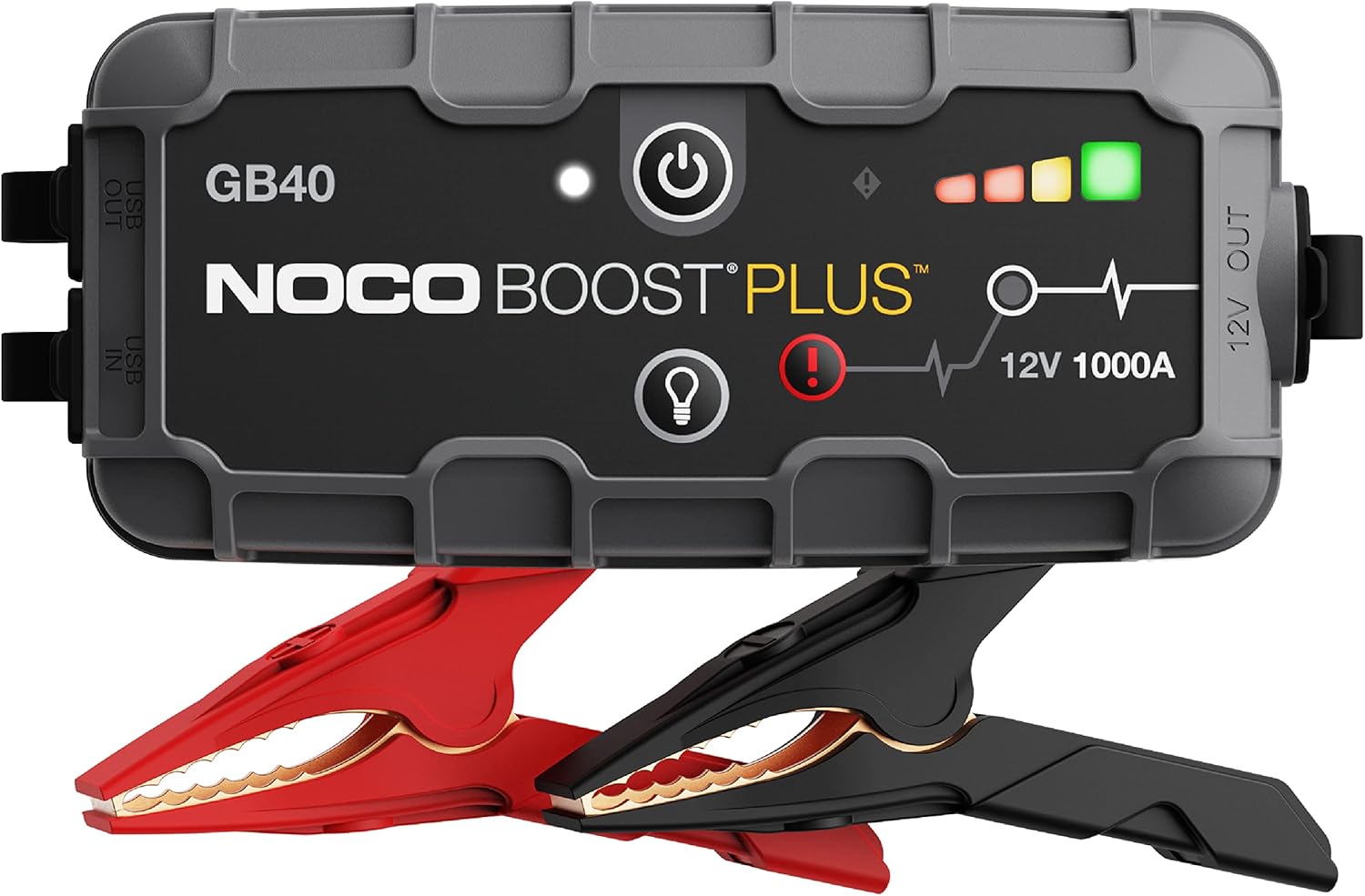
2. NOCO Boost Plus GB40 Lithium Jump Starter
Why It’s Essential: Never Be Stranded by a Dead Battery
A dead battery is one of the most common vehicle issues, and it always seems to happen at the worst possible time—late at night, in an empty parking lot, or in bad weather. Relying on the kindness of strangers with jumper cables is a thing of the past. A portable jump starter is modern self-reliance, allowing you to get your car started in seconds without another vehicle.
My Experience & Performance
The NOCO GB40 is the gold standard for a reason. I’ve used this exact model to start everything from a 4-cylinder sedan to a V6 SUV. It’s shockingly powerful for its size. The 1000-amp rating is enough for most gasoline engines up to 6.0L and diesel up to 3.0L. The best feature is its mistake-proof design. The clamps have spark-proof technology and reverse polarity protection, so even if you’re flustered and connect them incorrectly, you won’t damage your car’s electronics or the unit itself. It holds a charge for months and doubles as a power bank to charge your phone via USB. It’s a glove-box essential.
Deep Dive: Understanding Lithium Jump Starter Technology
The shift from heavy lead-acid jump packs to compact lithium units like the NOCO GB40 has been a revolution in roadside safety. The key advantage is energy density—a massive amount of power in a package that fits in your glove box. But not all lithium jump starters are created equal. The quality of the battery cells and the safety circuitry is paramount. Cheaper, off-brand jump starters can pose a fire risk or fail after just a few months. NOCO uses high-discharge lithium cells and a sophisticated battery management system (BMS) that monitors temperature, voltage, and charge state. This BMS prevents overcharging, over-discharging, and overheating, ensuring the unit is safe to keep in your vehicle year-round. The GB40’s “boost” mode is another feature worth understanding: if your battery is so dead it reads 0 volts, most standard jump starters won’t engage. The GB40 has a manual override to deliver power directly to the clamps, allowing you to jump-start vehicles with deeply discharged batteries. This is a lifesaver when you’ve accidentally left a dome light on for a week. The integrated 100-lumen LED flashlight with seven modes, including an SOS strobe, adds another layer of utility for nighttime emergencies.
Pros
- Powerful enough for most cars and trucks
- Mistake-proof safety features
- Holds charge for up to a year
- Doubles as a USB power bank and flashlight
- Compact and highly portable
Cons
- More expensive than traditional jumper cables
- Requires periodic recharging to stay topped up
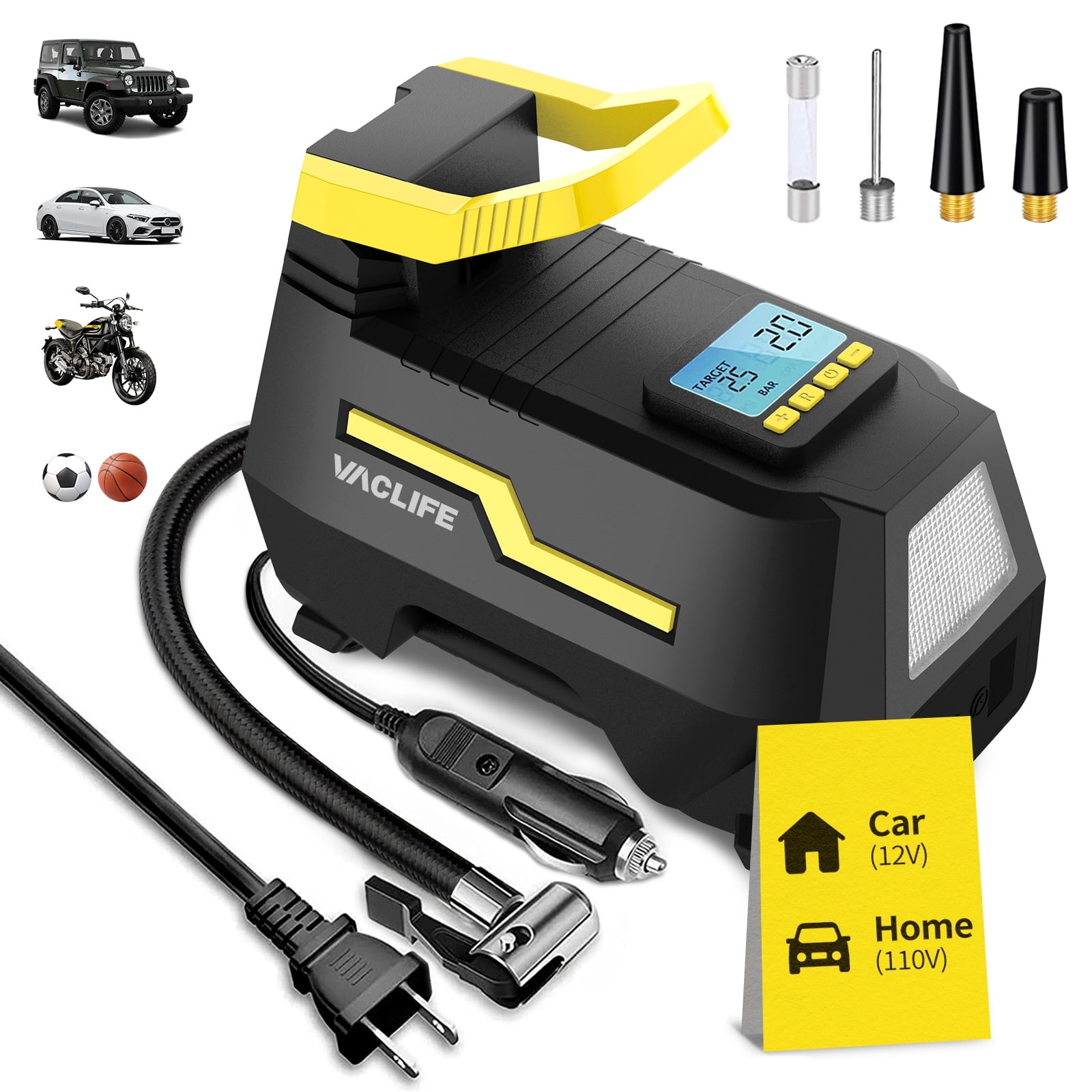
3. VacLife Tire Inflator Portable Air Compressor
Why It’s Essential: The Foundation of Car Safety
Proper tire pressure is arguably the most overlooked aspect of vehicle safety. Underinflated tires affect braking distance, handling, and fuel economy, and they are a leading cause of blowouts. Having a portable inflator means you can top off your tires anywhere, anytime, instead of fumbling for quarters at a grimy gas station air pump that might not even work.
My Experience & Performance
I find the VacLife inflator to be the perfect balance of convenience and functionality for the average driver. It’s not a heavy-duty shop compressor; it’s a compact emergency and maintenance tool that plugs into your car’s 12V outlet. What sets it apart is the “auto-shutoff” feature. You simply set your desired PSI on the digital display, and the compressor automatically stops when it reaches that pressure. This prevents over-inflation and makes the process foolproof. I tested it on a tire that was 5 PSI low, and it brought it back to the recommended 32 PSI in just under two minutes. The built-in LED light is a lifesaver for dealing with a flat at night.
The Real Cost of Underinflation: A Safety and Financial Analysis
Many drivers ignore their Tire Pressure Monitoring System (TPMS) warning light, treating it as an inconvenience rather than a critical safety alert. This is a dangerous habit. A tire that is just 6 PSI below its recommended pressure can increase braking distance by several feet—the difference between a close call and a collision. The contact patch of the tire, which is engineered for optimal grip and water evacuation, becomes distorted. In wet conditions, this dramatically increases the risk of hydroplaning. Furthermore, underinflation is the number one cause of tire blowouts at highway speeds. As a tire flexes more than it was designed to, heat builds up internally to a point where the tire’s structure catastrophically fails. Beyond safety, there’s a direct financial cost: fuel economy drops by approximately 0.2% for every 1 PSI drop in all four tires. Over a year, chronically underinflated tires can cost you hundreds of extra dollars in fuel and cause your tires to wear out 25% faster. The VacLife inflator pays for itself by helping you maintain the correct pressure, maximizing your tire’s lifespan and your vehicle’s MPG. I recommend checking your tire pressure at least once a month, first thing in the morning before you’ve driven the car, to get a true “cold” pressure reading.
Pros
- Auto-shutoff at desired pressure
- Digital display is easy to read
- Long cord reaches all four tires easily
- Includes multiple nozzles for sports equipment
- Bright built-in LED light
Cons
- Can be a bit loud during operation
- Not intended for very large truck tires
- Requires the car to be running or ignition on to work
4. VIOFO A119 V3 Dash Cam

Why It’s Essential: Your Unbiased Witness
In the chaotic aftermath of an accident, a dash cam provides an objective, time-stamped record of what really happened. It protects you from fraudulent claims, helps settle insurance disputes quickly, and can even capture unexpected events on the road. It is the single best tool for protecting yourself legally and financially after a collision.
My Experience & Performance
I’ve recommended the VIOFO A119 series for years, and the V3 is the pinnacle of affordable, high-quality video. The key is its 1440p “Quad HD” resolution and Sony STARVIS sensor, which deliver exceptionally clear video, day or night. Cheaper cameras often produce blurry footage where license plates are unreadable, but the A119 V3 excels here. I particularly appreciate its use of a supercapacitor instead of a battery. Capacitors are far more durable in extreme heat and cold—a major issue for devices left in a car. The buffered parking mode (requires a hardwire kit, sold separately) is another standout feature, recording the 15 seconds before an impact is detected, giving you the full story of what happened while you were away.
Navigating the Legal Landscape of Dash Cams
While a dash cam is a powerful protective tool, it’s important to understand the legal context surrounding its use in the United States. Legality varies by state, and it’s your responsibility to comply. First, concerning windshield obstruction: most states have laws stating that nothing can be attached to the windshield that obstructs the driver’s clear view. The VIOFO A119 V3’s compact, wedge-shaped design and mounting behind the rear-view mirror are crucial here, as it minimizes visual obstruction. Second, consider audio recording. Many states are “one-party consent” states, meaning you can record a conversation as long as you are a participant. However, a number of states require “all-party consent.” If your dash cam records audio inside the cabin, you should inform passengers that they are being recorded to stay on the right side of the law. Third, in the event of an accident, the footage you capture is evidence. Be transparent with law enforcement that you have a recording, but be aware that the footage belongs to you, and you are not obligated to provide it to another driver at the scene. Your first call should always be to your insurance company. The VIOFO’s GPS logger, which stamps video with your speed and coordinates, is a double-edged sword; it can prove you were going the speed limit but can also be used against you if you were speeding. The core value of the A119 V3 is the objective truth it provides, turning a “he-said-she-said” dispute into a resolved case almost instantly.
Pros
- Superb 1440p video quality
- Excellent low-light and night performance
- Uses a durable supercapacitor for reliability
- Discreet wedge shape
- Optional GPS logger for speed and location data
Cons
- No Wi-Fi/app for video transfer (must use memory card)
- Advanced parking mode requires hardwiring
- User interface isn’t as slick as premium brands
5. Lifeline AAA Approved Compact First-Aid Kit

Why It’s Essential: For Life’s Small Emergencies
Not every car-related incident is a major catastrophe. More often, it’s a minor cut while checking the oil, a scrape from a travel mishap, or a headache on a long trip. A well-stocked first-aid kit provides the immediate supplies needed to handle these common issues, preventing minor problems from becoming bigger ones and providing comfort when you need it most.
My Experience & Performance
Many pre-packaged first-aid kits are filled with fluff. I chose this Lifeline kit because it focuses on practical, useful items in a rugged, compact case that easily fits in a glove box or under a seat. With 42 pieces, it covers the basics perfectly: various bandages, antiseptic wipes, gauze, sting relief pads, and common medications like aspirin and ibuprofen. It’s not a trauma kit for a multi-car pileup, but it’s exactly what 99% of drivers will need for everyday cuts, scrapes, and pains. Being AAA-approved adds a layer of confidence that the contents are well-chosen. I recommend checking the expiration dates on medications once a year and restocking any items you use.
From First-Aid Kit to Car Emergency Kit: The Essential Upgrades
The Lifeline kit provides an excellent foundation, but a truly prepared driver goes a step further. I strongly recommend using this kit as a starting point to build a more comprehensive car emergency kit. Store everything together in a duffel bag or plastic tote in your trunk. First, add a thermal blanket (like a Mylar space blanket) for each member of your family. In a winter breakdown, preserving body heat is critical. Second, include a multi-tool. A basic one with pliers, a knife, and screwdrivers can be invaluable for everything from tightening a loose battery terminal to cutting a piece of hose. Third, pack non-perishable, high-energy food like granola bars, nuts, or dried fruit. Emergencies can cause unexpected delays, and keeping your energy up is important for clear thinking. A few bottles of water are equally essential, though you’ll need to rotate them seasonally to prevent them from freezing or becoming stale. A small roll of duct tape and some zip ties are lightweight, compact, and have a thousand uses in a pinch. Finally, a high-visibility safety vest and a reflective warning triangle are crucial. If you have to exit your vehicle near traffic, being seen is the most critical factor for your safety. A triangle placed 50 feet behind your vehicle gives approaching drivers a critical few seconds of warning, which is a massive upgrade over just hazard lights. By augmenting the Lifeline kit with these items, you transition from being able to handle a minor cut to being truly prepared for a prolonged roadside emergency.
Pros
- Compact and durable carrying case
- AAA-approved, well-curated contents
- Covers the most common minor injuries
- Very affordable peace of mind
- Leaves room to add a few personal items
Cons
- Not a comprehensive trauma kit
- Scissors included are very basic
- Medications have expiration dates to monitor
Frequently Asked Questions (FAQ)
What is the single most important safety tool to have in a car?
While all five are crucial, the single most important tool is the one that can save you from immediate, life-threatening danger: the Resqme Keychain Escape Tool. Its ability to get you out of a wrecked or submerged vehicle when every second counts is unparalleled.
Do I really need a dash cam if I’m a safe driver?
Absolutely. A dash cam isn’t just about your driving; it’s about protecting you from the actions of others. It provides indisputable evidence in hit-and-run situations, insurance fraud scams (“crash for cash”), and disputes over who was at fault in an accident. It’s your silent, impartial witness.
Can I use a portable jump starter on any car?
Mostly, yes, but you need to match the jump starter’s power (amperage) to your vehicle’s engine size. The NOCO GB40 (1000A) recommended here is sufficient for most gasoline engines up to 6.0 liters and diesel engines up to 3.0 liters, which covers the vast majority of cars, SUVs, and light trucks on U.S. roads. If you have a very large diesel truck, you would need a more powerful model.
How often should I check my car safety kit?
A good rule of thumb is to check your kit twice a year, when you change your clocks for Daylight Saving Time. During your check, do the following: 1) Recharge your portable jump starter. 2) Check the expiration dates on your first-aid kit and replace any expired or used items. 3) Turn on your tire inflator to ensure it’s still operational. 4) Make sure your dash cam is still recording properly.
Is it legal to have a window-breaking tool and use it?
Yes, carrying a car escape tool is legal in all 50 states. These devices are specifically designed for use in genuine emergencies to exit a vehicle when doors or windows are inoperable. You should never use one for any purpose other than a true life-safety emergency, and keep it with your keys, not out in plain sight, to avoid any potential misunderstandings.
Will a lithium jump starter explode if left in a hot car?
A high-quality lithium jump starter from a reputable brand like NOCO is engineered to be safe in a vehicle’s temperature extremes. It uses a robust Battery Management System (BMS) to prevent overheating, overcharging, and short circuits. While no lithium battery loves extreme heat, the safety circuits in a premium unit make catastrophic failure like an explosion extremely unlikely. Cheaper, uncertified brands are a much higher risk.
Final Thoughts: Your Car is Your Responsibility
Preparing your car for an emergency is just as important as regular oil changes and tire rotations. The five tools highlighted in this guide—an escape tool, jump starter, tire inflator, dash cam, and first-aid kit—form a comprehensive safety net that addresses the most common and critical situations a driver can face. Investing in this gear is an investment in your safety, your passengers’ safety, and your peace of mind.
This isn’t a static purchase. The real power comes from integrating these tools into a living safety system. It’s the habit of topping off your tires on a cool morning, the muscle memory of finding your escape tool on your keychain, and the quiet confidence that your dash cam has your back. The road is unpredictable, but your preparedness doesn’t have to be. By committing to a bi-annual refresh and truly understanding how to use your gear, you transform from a passive occupant into an active, responsible driver capable of handling the unexpected. Start with the Resqme on your keys today, build your kit piece by piece, and take control of your journey.
Stay safe out there, and be prepared.