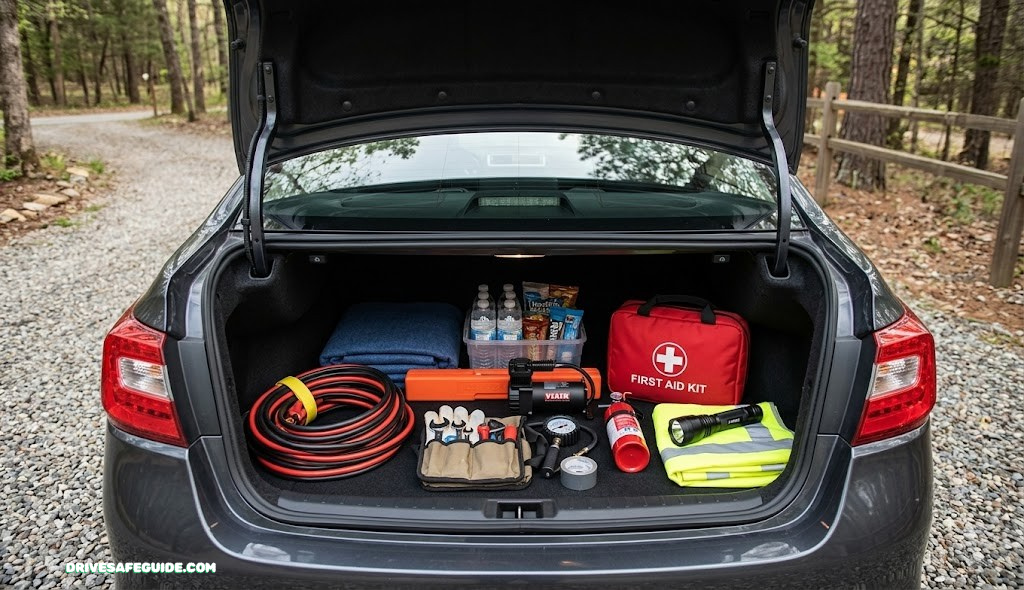
Car Emergency Kit Checklist: Every Item You Actually Need in the Trunk
A room-by-room breakdown of what belongs in your vehicle, why each item earns its space, and how to organize it so you can find what you need in the dark, in the rain, on the shoulder of a highway.
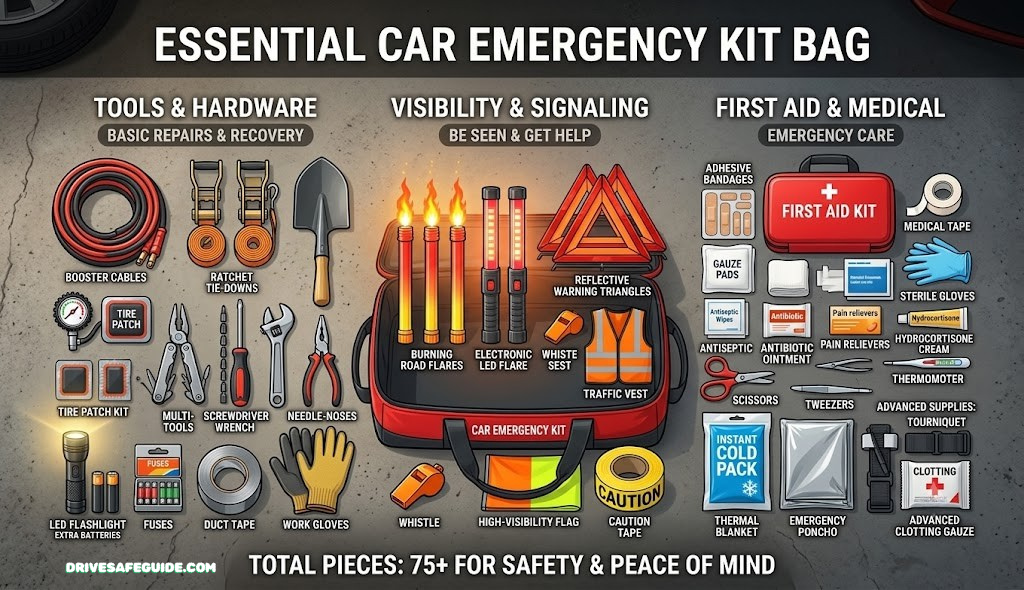
Most drivers find out what should have been in their trunk at the worst possible moment: a dead battery in a grocery store parking lot at 11 p.m., a flat tire on a dark two-lane road, or a check engine light thirty miles from the nearest exit. This guide walks through every category of gear worth carrying, explains the reasoning behind each pick, and gives you a realistic system for keeping it all maintained instead of forgotten in a corner of the garage.
01Why a Car Emergency Kit Matters
A car emergency kit is not about pessimism — it’s about arithmetic. Vehicles are mechanical systems with hundreds of parts that wear down on their own schedule, not yours. Weather turns without much notice. Routes that look routine on a map can put you thirty or forty minutes from the nearest gas station, phone signal, or tow truck. None of that requires bad luck; it just requires enough miles.
The value of a kit isn’t only in the big, dramatic scenarios like being stranded overnight in a storm, described in detail in our guide to surviving being stranded in a blizzard. It’s mostly in the small, mundane failures — a dead battery, a low tire, a cut on your hand from a hot hood latch — that are genuinely inconvenient without the right item on hand, and genuinely manageable with it.
There’s also a decision-quality argument. When something goes wrong on the road, stress narrows your thinking. People who have already gathered and organized their supplies make calmer, faster decisions than people improvising in the moment. That’s the entire premise behind our broader car safety kit build guide: preparation shifts the hard thinking from a crisis to a calm afternoon in your driveway.
The rest of this checklist is organized the way a mechanic or a search-and-rescue volunteer would think about it: safety first, then medical, then tools, then visibility, then the conditions layer, then comfort and communication. Skip around if you already know what you’re missing, or read straight through and build the whole kit in one pass.
02Core Safety Essentials
These are the items that solve the most common roadside failures: a battery that won’t turn over, a tire that’s lost pressure, and the small but real risk of an engine bay fire.
Jump Starter or Jumper Cables
A dead battery is the single most common reason drivers call for roadside help, and it’s also one of the easiest problems to solve yourself if you’re carrying the right device. Portable lithium jump starters have mostly replaced traditional cables because they don’t require a second car, they’re small enough to live in a glovebox, and most modern units include USB charging ports as a bonus. If you’re deciding between the two approaches, our comparison of jump starters versus jumper cables breaks down when each makes more sense, and our portable jump starter buying guide covers what separates a reliable unit from a dollar-store dud.
Sizing matters more than people expect. A jump starter rated for a compact sedan may struggle with a diesel truck’s larger battery. Our breakdown of how many amps you need for your engine walks through matching peak amperage to engine size, and the lithium vs. lead-acid jump starter comparison explains why lithium units have become the default for glovebox storage — they hold a charge far longer when sitting unused for months. If you’re shopping specific brands, the NOCO vs. Halo jump starter comparison is a useful starting point.
| Option | Best For | Downside |
|---|---|---|
| Lithium jump starter | Solo drivers, long-term glovebox storage | Higher upfront cost |
| Traditional jumper cables | Backup, no batteries to maintain | Requires a second running vehicle |
| Lead-acid jump box | Fleet or garage use, budget option | Loses charge faster in storage |
Tire Inflator and Pressure Gauge
A slow leak is rarely an emergency if you catch it early, but it becomes one if you keep driving on a tire that’s already at 15 PSI. A 12-volt tire inflator lets you add air on the shoulder of the road and buy yourself enough pressure to reach a shop safely. Our tire inflator buying guide explains duty cycle and CFM ratings in plain terms, which matter more than the marketing copy on the box. Pair it with an accurate gauge; the digital vs. analog tire gauge comparison covers the tradeoffs between the two formats.
Fire Extinguisher
Engine fires are uncommon but not rare, and the ones that are caught in the first sixty seconds are usually manageable with a small extinguisher; the ones that aren’t caught early rarely are. A compact Class B:C extinguisher rated for fuel and electrical fires belongs in every trunk. Our guide to choosing and mounting a car fire extinguisher covers sizing and where to secure it so it isn’t a projectile in a collision, and the broader car fire extinguisher guide walks through use technique.

03First Aid & Medical Supplies
A car first aid kit doesn’t need to match a hospital trauma bay, but it does need to cover the injuries that actually happen around vehicles: cuts from tools or broken glass, burns from a hot engine bay, and minor sprains from changing a tire on uneven ground.
- Adhesive bandages in multiple sizes
- Sterile gauze pads and medical tape
- Antiseptic wipes and antibiotic ointment
- Instant cold compress for sprains or swelling
- Elastic wrap bandage
- Disposable gloves (nitrile, not latex, to reduce allergy risk)
- Tweezers and small scissors
- A CPR face shield
- Any personal medications you or a passenger take regularly, with a few days’ supply
Check the kit’s expiration dates twice a year. Antiseptic wipes dry out, adhesive loses its grip, and cold packs can fail to activate after enough heat cycles in a hot trunk. A first aid kit that’s been sitting untouched for three summers is often less useful than people assume.
If your household includes a driver managing a condition that affects driving fitness — for example, someone researching epilepsy driving restrictions or navigating driving anxiety treatment — it’s worth keeping any relevant medical information card in the glovebox alongside the first aid kit, so a first responder has context quickly.
04Tools & Repair Gear
This category covers the items that let you actually fix, or at least stabilize, a mechanical problem instead of just waiting for help.
- Basic tool kit: adjustable wrench, screwdrivers, pliers
- Duct tape and zip ties (surprisingly effective for temporary hose or hardware fixes)
- Spare fuses matched to your vehicle’s fuse box
- Tire pressure gauge and inflator (see Section 2)
- A functioning spare tire, jack, and lug wrench — confirmed working, not assumed
- Work gloves
- Multi-tool
- Small funnel and a quart of the correct engine oil
An OBD2 scan tool is worth adding if you want more than a guess when a warning light appears. Pairing a scanner with your phone lets you read the actual trouble code instead of driving blind; our OBD2 scan tool guide and Bluetooth OBD2 app comparison both cover what to look for. If a check engine light does come on, our piece on solid vs. flashing check engine lights explains which situations are safe to keep driving through and which mean pull over now.
A battery load tester or conductance tester is a smart addition if your car is more than four years old, since batteries tend to fail without much warning. The load tester vs. conductance tester comparison explains which is more useful for a glovebox-sized kit.
Worth Carrying
- Compact multi-tool over a full mechanic’s set
- Nitrile gloves to keep hands clean
- Zip ties in three or four lengths
Often Overpacked
- Full socket sets (heavy, rarely used roadside)
- Specialty tools for a single repair job
- Loose tools with no case or organizer
05Visibility & Signaling Gear
Being seen is often more important than being able to fix anything. Most roadside injuries and secondary collisions happen because a stopped vehicle wasn’t visible in time, not because the original breakdown itself was dangerous.
LED Road Flares
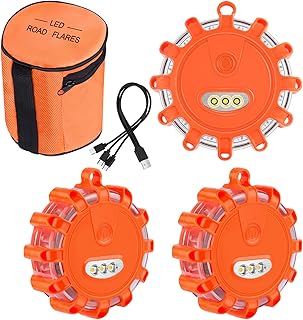
Traditional combustible flares work but carry an obvious fire risk and a limited burn time. LED road flares have become the more practical choice: they’re reusable, visible from a longer distance at night, and safe to use near a fuel leak. Our review of the most durable, crushproof LED road flares covers which models survive actually being run over, which happens more often than you’d expect on a highway shoulder.
Reflective Triangles and Vests
A set of reflective warning triangles placed 100 to 300 feet behind your vehicle gives approaching traffic real reaction time. A high-visibility vest for the driver serves the same purpose for a pedestrian standing near the vehicle at night or in fog — a scenario covered in detail in our fog driving visibility strategies guide.
Flashlight
A magnetic-base flashlight is worth the small premium over a standard one because it lets you free both hands during a tire change or engine bay inspection at night. Our magnetic base flashlight guide covers the models that hold securely to a hood or fender without sliding off.
06Weather-Specific Additions
A base kit covers most of the year, but the items you carry should shift with the season and the climate you’re driving through.
Cold Weather & Winter
Cold batteries lose cranking power, which is why our cold weather car battery guide is worth a read before your first hard freeze of the season. A dedicated winter car emergency kit checklist covers additions specific to snow and ice, including a blanket, a small shovel, sand or cat litter for traction, and extra layers. Black ice deserves its own preparation; see our guide on surviving black ice for how to react if you hit a patch, and if you get genuinely stuck in a storm, the blizzard stranded survival guide covers what to do while you wait for help.
Heat and Desert Conditions
Hot climates put different stress on a vehicle and a driver. Extra water becomes a safety item, not a comfort item, in this context — our desert breakdown water rationing guide covers how much to carry and how to ration it if a breakdown runs long. Keeping the vehicle’s finish protected matters too in sustained heat; see our notes on paint care in hot climates.
Rain and Storms
Wet-weather driving increases stopping distances and reduces visibility, both of which raise the stakes of any roadside stop. Review our rain driving safety guide for handling technique, and keep a rain poncho and a spare set of dry socks in your kit — a small addition that makes a wet roadside tire change meaningfully less miserable.
| Season | Add to Kit | Why |
|---|---|---|
| Winter | Blanket, shovel, traction aid, hand warmers | Extends survivable wait time if stranded |
| Summer / Desert | Extra water, sunshade, electrolyte packets | Heat raises dehydration risk during delays |
| Rainy season | Poncho, dry socks, waterproof flashlight | Keeps roadside repairs manageable when wet |
07Food, Water & Comfort Items
These items don’t fix a mechanical problem, but they make the waiting period — which is often the longest part of any roadside incident — bearable, especially with kids or pets in the car.
- Sealed bottled water, rotated every few months
- Non-perishable snacks (protein bars, nuts)
- A lightweight blanket per passenger
- A phone power bank, charged and checked quarterly
- A small pillow or neck support for a long wait
If you regularly drive with a pet, a proper restraint system matters as much as any human comfort item — our guide to pet restraint crash test ratings covers which harnesses actually hold up in a collision, and our broader car ride with a dog guide covers general road-trip comfort for pets. Long stretches behind the wheel also take a physical toll; a gel seat cushion for fatigue relief or an orthopedic neck pillow are inexpensive additions that make sitting through a long wait, or a long drive, noticeably easier.

08Documents & Communication
A folder in the glovebox solves problems that no physical tool can. Keep copies (not just digital, since a dead phone means dead access) of:
- Proof of insurance and registration
- Roadside assistance membership number, if you have one
- A written list of emergency contacts
- A pen and small notepad, for exchanging information after a minor collision
On the communication side, keep your phone charged before long trips and carry a car charger as a backup to the power bank mentioned above. If you regularly drive routes with weak signal, it’s worth reviewing apps every driver should use, several of which include offline map caching that works without a live connection. If your kit includes a GPS tracker for a teen driver or a fleet vehicle, our GPS tracker guide covers the setup basics.
Uninsured motorist coverage is worth confirming before you ever need it — our explainer on uninsured motorist coverage covers what it protects and where the gaps typically are.
09Kit by Vehicle & Household Type
A one-size-fits-all kit is a reasonable starting point, but a few household situations call for specific additions.
New and Teen Drivers
A new driver benefits from a slightly larger kit and a walk-through of how each item works, not just where it’s stored. Our guides on practical graduation gifts for teen drivers and parents teaching teen drivers both cover kit-building as part of a broader readiness conversation, and our graduated licensing restrictions guide is useful context for what young drivers are legally allowed to do while building experience.
Long-Haul and Cross-Country Drivers
Longer trips justify a more complete kit, including redundant water, a wider first aid supply, and tools for minor repairs far from a shop. Our cross-country driving checklist and pre-road-trip safety check guide both walk through the extra prep that a multi-day drive deserves, and road trip essentials checklist covers the broader packing list beyond just the emergency kit.
EV and Hybrid Owners
Electric and hybrid vehicles change a few specifics — there’s no engine oil to top off, but range planning becomes part of your emergency preparation. Our EV battery range anxiety guide and hybrid vehicle maintenance guide cover what to adjust in your kit and your habits for these drivetrains.
Drivers With Physical Considerations
Comfort accessories that reduce fatigue and pain matter more for some drivers than others. If long stretches at the wheel are hard on your back, our sciatica driving cushion guide and lumbar support adjustment guide are worth a look, and drivers managing carpal tunnel symptoms may find our steering grip guide useful for reducing strain during a long emergency wait or drive.
10DIY Kit vs. Pre-Made Kit
You have two starting points: build your own kit item by item, or buy a pre-assembled kit and customize from there. Neither is objectively better — it depends on how much time you want to spend and how specific your needs are.
DIY Kit — Pros
- Every item is one you’d actually trust
- No filler items you’ll never use
- Easy to tailor to your climate and vehicle
DIY Kit — Cons
- Takes more time and research upfront
- Easy to forget a category entirely
- Usually costs more piece by piece
Pre-Made Kit — Pros
- Fast, single purchase
- Organized case included
- Reasonable baseline coverage
Pre-Made Kit — Cons
- Often includes low-quality filler tools
- May skip a jump starter or fire extinguisher entirely
- Rarely matches your specific climate needs
A practical middle path: buy a basic pre-made kit for the case and small consumables, then upgrade the handful of items that matter most — the jump starter, the flares, and the fire extinguisher — with dedicated products reviewed in the sections above. Our full build-your-own car safety kit guide walks through this hybrid approach in more depth.
11Where to Store Your Kit
Storage location affects both accessibility and how well items hold up over time.
- Trunk, in a soft-sided bag: keeps weight low and out of the way; best for tools, flares, and the fire extinguisher.
- Under-seat storage: good for a compact first aid kit you might need without opening the trunk.
- Glovebox: best for documents, a small flashlight, and a phone charger — items you’d want without leaving the driver’s seat.
- Trunk organizer with straps: prevents heavier items like a jump starter or tire inflator from sliding during hard braking or a collision.
Avoid stacking loose, heavy items directly behind rear passengers. In a sudden stop, an unsecured tool kit or jump starter becomes a projectile. If you store gear behind a cargo net or liner, our cargo liner material guide covers options that keep things contained without adding much bulk.
Temperature matters too. Extreme heat degrades batteries, cold packs, and adhesive faster than moderate storage would. If you park outdoors in a hot climate, check your fire extinguisher’s pressure gauge and your jump starter’s charge more often than the general schedule below.
12Maintaining & Updating Your Kit
A kit that isn’t checked periodically slowly turns into dead weight — a fire extinguisher with a discharged gauge, a jump starter with a drained battery, snacks past their date. Building the kit is the easy part; keeping it functional is the part most people skip.
| Frequency | Task |
|---|---|
| Monthly | Check jump starter charge level and tire inflator power |
| Every 3 months | Rotate water and snacks, check power bank charge |
| Every 6 months | Inspect first aid kit expiration dates, test flashlight batteries |
| Annually | Check fire extinguisher gauge, confirm spare tire pressure, review documents |
| Before any long trip | Full kit inventory against this checklist |
Set a recurring reminder on your phone rather than relying on memory — this is the single most common reason kits fail when they’re actually needed. Pair kit maintenance with routine vehicle upkeep, like checking brake pad wear indicators or watching for alternator failure symptoms, so the whole system — car and kit — stays in good shape together. If you’re prepping before a longer drive, our pre-departure risk elimination checklist is a good final pass.
FAQFrequently Asked Questions
At minimum: a jump starter, a tire inflator with a pressure gauge, a basic first aid kit, a flashlight, reflective triangles or LED flares, and a phone charger. Everything else in this checklist adds resilience, but these six categories cover the most common roadside failures.
A functional DIY kit typically runs somewhere between $80 and $200 depending on the quality of the jump starter and tire inflator you choose, which are usually the two most expensive items. A pre-made base kit can be found for less, though it often needs a few upgrades to match a DIY build’s reliability.
It isn’t legally required in most places, but it’s strongly recommended. A small Class B:C extinguisher can control a fuel or electrical fire in its earliest stage, before it spreads beyond what any bystander could safely manage.
A quick check monthly for battery-powered items, a deeper review every six months for first aid supplies, and a full inventory before any long road trip. Items with a charge or an expiration date fail silently if they’re never checked.
A blanket, a small folding shovel, sand or cat litter for traction under a stuck tire, hand warmers, and extra layers. Cold weather also reduces battery performance, so a fully charged jump starter matters more in winter than any other season.
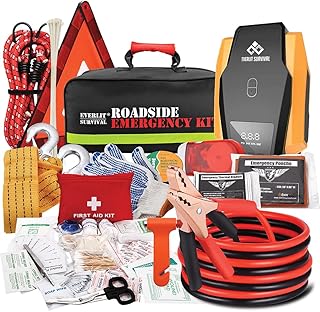
A pre-made kit is a reasonable starting point but often skips a real jump starter and fire extinguisher, or includes low-quality tools. Many drivers do best with a hybrid approach: a pre-made kit for the case and small consumables, upgraded with a dedicated jump starter, flares, and extinguisher.
Heavier tools and gear belong in the trunk, secured with straps or an organizer so they can’t shift during a collision. Documents, a compact flashlight, and a phone charger are better kept in the glovebox where they’re reachable without leaving the driver’s seat.
Mostly the same kit works, minus engine oil. The main difference is planning around range instead of fuel, and keeping a portable charging cable or knowing your nearest charging station if you’re driving in an unfamiliar area.
Lithium jump starters generally hold a usable charge for several months, but manufacturers typically recommend a top-up charge every one to three months for reliability. Lead-acid units lose charge noticeably faster and need more frequent attention.
Sealed bottled water rotated every few months, plus shelf-stable snacks like protein bars or nuts. In hot or desert climates, carry more water than feels necessary, since a breakdown wait can stretch longer than expected.
Yes — add extra water, snacks, and a blanket sized for a child, along with any comfort item that keeps a young passenger calm during an unplanned wait. It’s also worth double-checking your car seat’s crash rating and installation periodically as part of the same routine.
You can, but it’s worth keeping a separate, dedicated set for the emergency kit so nothing is missing or discharged when you actually need it. Borrowing from the kit for routine jobs is one of the most common reasons kits are found incomplete during an actual emergency.
Build It Once, Maintain It Twice a Year
The gap between a bad roadside moment and a manageable one usually comes down to what’s already in the trunk. None of the items on this checklist are expensive or hard to find — the only real cost is the hour it takes to gather them and the ten minutes, twice a year, it takes to check that everything still works. Start with the core safety items, layer in first aid and tools, then adjust for your climate and household. For a broader packing companion on your next trip, pair this checklist with our road trip essentials checklist.
Shop Car Emergency Kits on Amazon