
Driver Comfort & Ergonomics
Boost Your Driving Comfort with Proper Lumbar Support Adjustment
A stiff lower back after even a short commute usually isn’t bad luck — it’s a lumbar setting that’s fighting your spine instead of holding it. Here’s how to fix that, section by section.
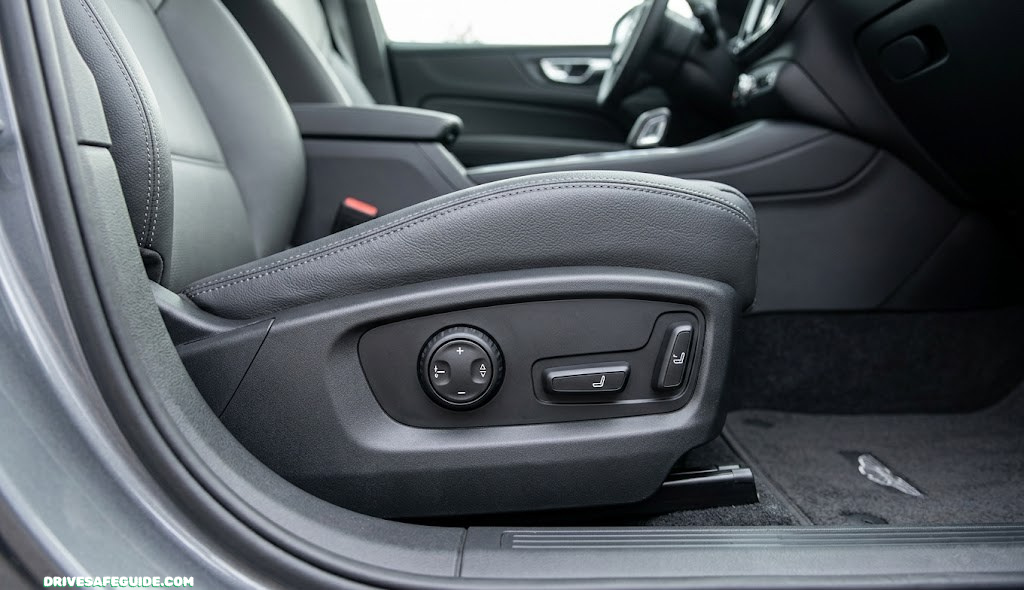
Most factory lumbar systems are underused — not because they’re weak, but because almost nobody is shown how to dial them in correctly.
Somewhere between the driveway and the highway on-ramp, most drivers stop thinking about their seat entirely. That’s the problem. The seat is the one piece of “equipment” touching your body for the entire drive, and unlike your mirrors or your climate control, almost nobody revisits it after the first week of owning the car. Lumbar support, in particular, gets set once — often by accident, while fumbling for the seat-back recline lever — and then forgotten for years.
That’s a shame, because proper lumbar adjustment is one of the cheapest, fastest, most consistently overlooked upgrades to daily driving comfort. It doesn’t cost anything if your car already has it built in, and even an aftermarket cushion is a fraction of the price of a physical therapy visit. This guide walks through the anatomy behind it, how to actually use the dial or button your car already has, when an aftermarket cushion makes sense, and the small mistakes that quietly undo all of it.
It also helps to reframe what “comfort” even means in a driving context. It isn’t about plushness — a seat that feels wonderful for the first two minutes in a showroom can be the exact seat that leaves your lower back aching an hour into a highway drive. Real driving comfort is about sustained support: a seating position your body can hold, largely without conscious effort, for the length of an entire trip. Lumbar adjustment is the single biggest lever for getting there, because it directly addresses the part of your spine doing the most work while seated.
There’s also a compounding effect worth mentioning up front. Poor lumbar positioning doesn’t just cause discomfort in isolation — it tends to trigger a chain reaction of small postural compensations. Your shoulders round forward to relieve pressure on your lower back, your neck cranes to keep your eyes level with the road, and your grip on the wheel tightens as your body looks for any source of stability it can find. Fixing the root cause at the lumbar spine often resolves two or three “unrelated” complaints at once, which is part of why this single adjustment tends to feel disproportionately impactful compared to how simple it is to make.
1. Why Lumbar Support Matters More Than You Think
Your lower back — the lumbar spine — has a natural inward curve. When you stand, that curve does the job it evolved to do: it distributes your upper body’s weight down through the spine and pelvis without concentrating pressure on any single disc or joint. When you sit, especially in a low, reclined car seat, that curve tends to flatten or even reverse. Most factory bucket seats and flat aftermarket seats are shaped in a way that encourages this flattening, which is exactly why your lower back starts to ache after twenty or thirty minutes, long before any “long drive” threshold.
Lumbar support exists to counteract that flattening. A properly adjusted lumbar bolster pushes gently into the small of your back, encouraging your spine to keep something closer to its natural curve even while you’re seated. The difference isn’t cosmetic comfort — it changes how much load your intervertebral discs, ligaments, and lower back muscles carry over the course of a drive. Get it right, and a two-hour drive feels like a non-event. Get it wrong, or ignore it altogether, and you’re training your spine into a slouched position for hours at a stretch, which is a big part of why so many drivers report chronic stiffness that seems to have no obvious cause.
This matters more for driving than for almost any other seated activity, because unlike an office chair, you can’t simply stand up and stretch every fifteen minutes. You’re locked into position, often gripping a wheel, sometimes in stop-and-go traffic that adds tension through the shoulders and neck as well. If you’ve ever wondered why a road trip leaves your back sorer than a full day at a desk, lumbar support — or the lack of it — is usually the answer.
There’s also a cumulative dimension to this that’s easy to underestimate. A single uncomfortable drive is forgettable, but the average commuter spends hundreds of hours a year in the driver’s seat. If even a small percentage of that time is spent with the lumbar spine held in a flattened, unsupported position, the aggregate load on the discs and surrounding soft tissue adds up in a way that a single bad day of sitting never would. Physical therapists who work with commuters and delivery drivers frequently point to unsupported seating time, rather than any single dramatic incident, as the leading contributor to the kind of chronic, low-grade lower back pain that shows up gradually over months or years rather than all at once.
It’s also worth noting that lumbar support isn’t only about pain prevention — it measurably affects alertness. A body that’s constantly making micro-adjustments to compensate for an unsupported spine is spending energy on that instead of on the task of driving itself. Drivers who’ve properly dialed in their seating position often report feeling less generally fatigued at the end of a drive, independent of how long the drive actually was, simply because less of their attention and muscular effort was spent fighting their own seat.
2. Understanding Your Spine’s Natural Curve Behind the Wheel
The lumbar spine consists of five vertebrae (L1–L5) that naturally curve slightly forward — a shape called lordosis. This curve is what lets you stand upright without your muscles working overtime, and it’s also what gets erased the moment you sink into a soft, unsupported seat. Picture the difference between standing tall against a wall and slumping into a beanbag chair; your lower back does something similar every time you get behind the wheel, just less dramatically.
Three things influence how well your seat preserves that curve: the seat’s own base shape, your seat-back recline angle, and the lumbar bolster itself. A seat that’s reclined too far back forces your pelvis to roll backward, which flattens the lumbar curve no matter how good the lumbar adjustment is. That’s why lumbar tuning always has to happen after you’ve set a reasonable recline angle — usually somewhere between 100 and 110 degrees from horizontal — not before.
It’s also worth understanding that “more support” isn’t automatically better. The goal is to fill the natural gap between your lower back and the seat, not to push your spine into an exaggerated arch. Overcorrecting creates its own problems: excess pressure on the same two or three vertebrae, and a strange feeling of being pushed forward at the hips. The sweet spot is subtle — support that just barely fills the gap so your spine can rest in something close to its neutral, standing curve.
Body proportions also play a bigger role in this than most drivers assume. Torso length, not overall height, determines where your lumbar curve naturally sits relative to the seat back, which is why two people of similar height can need very different lumbar settings. A shorter torso means the natural curve sits lower on the seat back than a factory-default bolster is often positioned for, while a longer torso may need the support point raised. This is one of the main reasons a one-size lumbar bolster works reasonably well for some drivers and not at all for others — it isn’t a flaw in the seat, it’s simply a mismatch between a fixed, average design and an individual body.
Pregnancy, recent injury, and even significant weight changes can also shift what a “correct” lumbar setting feels like from one season to the next. None of these are reasons to avoid using lumbar support — quite the opposite — but they are good reasons to treat your ideal setting as something to periodically revisit rather than a number you lock in once and never touch again.
| Seat Element | What It Should Do | Common Mistake |
|---|---|---|
| Seat-back recline | Hold torso near-upright (100°–110°) | Reclined too far, flattening lower back |
| Lumbar bolster | Fill the gap at the small of the back | Left at factory default or maxed out |
| Seat height | Keep hips level or slightly above knees | Seated too low, rolling pelvis backward |
| Cushion tilt | Support thighs without lifting knees | Flat cushion, no thigh support |
3. Signs Your Current Seat Position Is Hurting Your Back
Most people don’t diagnose a lumbar problem directly — they notice a cluster of smaller symptoms and assume they’re unrelated. Recognizing the pattern early can save months of low-grade discomfort. If you regularly experience shooting or tingling pain down one leg after driving, a habit of shifting your weight every few minutes, or a dull ache that only shows up after you’ve been parked and standing for a minute, your seat setup is very likely part of the cause.
Another telling sign is where the fatigue shows up first. Lumbar-related discomfort tends to concentrate right at belt-line height, sometimes radiating slightly to one side if your bolster is uneven or your seat cushion has worn unevenly over the years. Compare that to wrist or hand fatigue, which points to steering-wheel grip and positioning instead, or neck stiffness, which usually traces back to headrest angle rather than lumbar support.
Timing is another useful clue. Discomfort that shows up at a fairly predictable point in a drive — say, always around the twenty-minute mark — suggests a postural cause like lumbar support rather than something structural, since a genuine injury tends to produce pain that’s less tied to a specific duration and more tied to specific movements or positions. Similarly, if the ache consistently improves the moment you exit the car and stand up straight, that’s a strong signal that the seat itself, rather than an underlying condition, is the primary driver of the discomfort.
It’s also worth paying attention to whether the discomfort is symmetric. Lumbar support problems caused by a flattened seat back or an unused bolster tend to produce a fairly even ache across the lower back. A pain pattern that’s clearly one-sided, especially if it’s sharp rather than dull, points more toward a specific structural issue — a worn seat spring, an uneven bolster, or in some cases a disc or nerve issue unrelated to the seat at all — and is worth investigating more specifically rather than assuming a simple lumbar adjustment will resolve it.
Likely a Lumbar Issue
- Ache concentrated at belt-line, both sides
- Feeling of a “hollow” or gap behind your lower back
- Constant urge to shift or arch your back while driving
- Pain that eases almost immediately when you stand up
Probably Something Else
- Pain radiating from the neck or shoulders — check headrest
- Numb thighs — check cushion tilt or seat height
- Wrist or forearm fatigue — check wheel grip and distance
- Pain that started suddenly after an injury — see a professional
4. Using the Lumbar Support Your Car Already Has
Before spending a cent on an aftermarket product, it’s worth confirming what your car can already do — because a surprising number of drivers never actually engage their built-in lumbar system. Depending on the vehicle, this shows up as a manual pump lever on the side of the seat, a rotating dial, or a set of buttons on a power seat panel, sometimes represented by a small icon that looks like a spine or an hourglass shape.
Manual systems typically use a small hand pump or lever that inflates or extends an internal bladder or frame inside the seat back. Power systems use a small motor to move a similar mechanism, often with independent control over upper and lower lumbar zones on higher trim vehicles. Either way, the mechanism is doing the same physical job: pushing a bolster forward, closer to your spine, to fill that gap discussed earlier.
If you’ve never located this control, check the outer edge of the seat cushion near the bottom of the seat-back bolster first — that’s the most common spot for a manual pump. For power seats, look at the seat-adjustment panel on the door-side of the seat cushion; lumbar buttons are often the smallest ones on the panel and easy to overlook next to the larger seat-height and recline controls.
It’s also worth checking your owner’s manual specifically for lumbar support, even if you’re fairly confident your car doesn’t have it. Some manufacturers include a basic lumbar adjustment on trims where it isn’t obviously advertised, tucked into the seat specification tables rather than the headline feature list. This is especially common on mid-range trims that inherited a seat frame from a higher trim without carrying over every marketed feature. A five-minute manual check can save you the cost of an aftermarket cushion entirely if the feature was there all along.
If you do confirm your car has no lumbar adjustment whatsoever — common on older vehicles, base trims, and many aftermarket bucket seats — that’s not a dead end, just a signal to move to the aftermarket options covered later in this guide. The physical goal stays identical either way: filling the gap at your lower back with something firm enough to hold its shape through a full drive.
Don’t have built-in lumbar support?
A well-rated memory foam lumbar cushion with adjustable straps can replicate most of what a factory system does, for well under the cost of a seat upgrade.
Shop Lumbar Cushions on Amazon5. Manual vs. Power Lumbar Support: Which Is Right for You
Manual lumbar systems, usually a small pump or twist knob, are simple and reliable because there’s nothing electronic to fail. Their downside is granularity — you’re often choosing between a handful of firmness stages rather than a smooth range, and adjusting them mid-drive means reaching down and pumping a lever, which isn’t exactly subtle in traffic.
Power lumbar systems trade that simplicity for precision. A motorized system typically offers a continuous range of adjustment, sometimes with separate controls for how far the bolster extends and how high or low it sits on your back. Some premium systems even offer four-way or eight-way lumbar adjustment, moving the support point up, down, in, and out independently. The tradeoff is cost and long-term reliability — motors and internal bladders can wear out or develop rattles over years of use, whereas a manual pump rarely breaks.
| Factor | Manual Lumbar | Power Lumbar |
|---|---|---|
| Adjustment precision | Stepped, limited range | Continuous, fine-tuned |
| Ease of mid-drive changes | Requires reaching down | Button or switch, one hand |
| Long-term reliability | Very high — mechanical only | Good, but motors can wear |
| Typical availability | Base and mid trims | Higher trims, luxury vehicles |
| Repair cost if it fails | Low | Moderate to high |
Neither option is objectively better — what matters is whether the system fits your back’s actual shape. A driver with a shorter torso may find a basic manual system perfectly adequate, while someone who needs the support point higher or lower than average will benefit far more from a power system’s finer range, or from an aftermarket cushion that can be repositioned by hand.
Households with multiple drivers sharing one vehicle should weigh this decision a little differently. If everyone driving the car has a noticeably different torso length or preferred setting, a power system with memory presets tied to individual key fobs removes the friction of re-adjusting every time someone new gets behind the wheel. Without memory presets, a manual system can actually be less frustrating in a shared-car household, since a simple pump lever is faster to reset by feel than hunting for the right combination of button presses on an unfamiliar power panel.
6. Dialing In the Perfect Lumbar Setting
Getting lumbar support right is less about finding one magic number and more about sequencing the adjustment correctly. Doing it out of order — for instance, setting lumbar support before recline — almost guarantees you’ll have to redo it.
Set seat height and distance first
Adjust so your hips sit level with or slightly above your knees, and your feet reach the pedals with a slight bend in the knee.
Set recline to a near-upright angle
Aim for roughly 100–110 degrees. Too far back flattens your lumbar curve before you’ve even touched the bolster.
Start lumbar support at zero
If your system has a “flat” or minimum setting, start there so you can feel the change as you add support.
Increase gradually until the gap disappears
Add support slowly until you feel your lower back contacted evenly, without a hollow space behind it.
Stop at “filled,” not “pushed”
You’re aiming for contact, not pressure. If your pelvis feels like it’s being shoved forward, back off slightly.
Recheck after 10 minutes of driving
Muscles relax once you’re moving. Fine-tune again after the first ten minutes on the road.
Once you find a setting that works, note it — some vehicles allow you to save it as part of a memory seat profile tied to your key fob. If yours doesn’t, it’s worth a mental note or a quick phone photo of the dial position so you’re not re-guessing every time someone else has driven the car.
Want to save your ideal setting permanently?
A strap-mounted lumbar cushion holds its position regardless of who else drives the car, so you’re never re-adjusting from scratch.
Compare Strap-On Lumbar Cushions7. Aftermarket Lumbar Support Cushions: What to Look For
Aftermarket lumbar cushions exist for two very different groups of drivers: those whose cars have no built-in lumbar adjustment at all, and those whose built-in system simply doesn’t hit the right spot. Both groups benefit from the same short checklist when comparing products, since the market is crowded with options that look similar in photos but perform very differently after a few weeks of daily use.
Firmness and memory foam density matter more than most buyers expect. A cushion that feels supportive in a showroom or on your kitchen chair can compress flat within a month if the foam density is low — look for descriptions that specify high-density memory foam rather than generic “foam” with no further detail. Strap design matters just as much: adjustable, wide elastic straps that wrap around the seat-back keep the cushion from sliding down over hours of driving, which is one of the most common complaints in cushion reviews.
Shape also matters more than people assume. A cushion contoured specifically for the lumbar region, tapering rather than uniform in thickness, tends to match the spine’s natural curve far better than a flat rectangular pad. Breathable covers are worth prioritizing too, especially for drivers in hot climates, since a non-breathable cover can turn an otherwise great cushion into a sweaty inconvenience on longer trips.
Sizing deserves its own moment of attention, because “universal fit” claims vary wildly in how true they actually are. A cushion sized for a full-size truck bench seat can overwhelm a compact sedan’s narrower bucket seat, pushing the shoulders forward or crowding the side bolsters. Before buying, it’s worth checking the listed dimensions against your own seat back width, rather than trusting fit photos alone, since photography angles can make a cushion look more compact than it is in person.
Installation friction is another underrated factor. Cushions that require threading straps behind an integrated headrest, around side-airbag modules, or through narrow gaps at the base of the seat tend to get used less consistently over time, simply because reinstalling them after cleaning or after someone else drives the car becomes a small chore. A cushion that clips or straps into place in under thirty seconds is far more likely to stay in regular use six months later than one that requires a small production every time.
Look For
- High-density memory foam, not low-cost fill foam
- Contoured shape tapering at the edges
- Wide, adjustable, non-slip elastic straps
- Breathable, machine-washable cover
- Compatibility note for your seat style (bucket, bench, mesh)
Avoid
- Vague “foam” listings with no density specified
- Thin single straps that slip during driving
- Uniform, non-contoured rectangular shape
- Non-breathable synthetic covers with poor reviews on heat
- Extra-large cushions that crowd compact seats
8. Comparison: Lumbar Cushions vs. Full Seat Support Systems vs. Wedge Cushions
Not every back-comfort product targets the same problem, and mixing them up is a common — and avoidable — waste of money. Lumbar cushions target the lower back curve specifically. Full seat support systems, sometimes marketed as back support systems or orthopedic seat covers, wrap the entire seat back and often include both lumbar and upper-back support in one unit. Wedge cushions, by contrast, sit under you rather than behind you, changing pelvis angle and hip height rather than lower-back curvature directly.
| Product Type | Best For | Limitation |
|---|---|---|
| Lumbar cushion | Isolated lower-back gap, most common daily driver need | Doesn’t address hip or thigh positioning |
| Full seat support system | Drivers with both upper and lower back fatigue | Bulkier, may not fit compact bucket seats |
| Wedge cushion | Sciatica or tailbone pressure, poor visibility due to low seating | Doesn’t directly support the lumbar curve |
For most people dealing with straightforward lower-back fatigue on daily commutes, a dedicated lumbar cushion is the right starting point — it’s the least bulky, least expensive, and most targeted option. Drivers managing both upper and lower back discomfort, often from long-haul or commercial driving schedules, tend to get more value from a full seat support system that addresses the whole spine at once.
Dealing with both upper and lower back fatigue?
A full seat support system covers the entire seat back, addressing shoulder and lumbar tension together for longer routes.
Browse Full Seat Support Systems9. Lumbar Support for Long-Haul and Commercial Drivers
Everything discussed so far applies to any driver, but the stakes change considerably for people who spend eight, ten, or twelve hours a day behind the wheel. For long-haul and commercial drivers, lumbar support isn’t a comfort upgrade — it’s closer to a piece of safety equipment, since chronic back pain is directly tied to fatigue, reduced concentration, and more frequent rest-stop breaks that can throw off delivery schedules.
Commercial seats often include more advanced adjustment than passenger vehicles, including air-ride suspension seats that reduce vibration transfer along with adjustable lumbar zones. Even so, many professional drivers layer an aftermarket cushion on top of factory lumbar support, because factory systems are built to a “reasonable average” rather than any one driver’s specific spine shape, and small mismatches compound painfully over a ten-hour shift.
Pairing proper lumbar adjustment with scheduled movement breaks makes a bigger difference than either change alone. Pairing a good stretching routine built for long-haul drivers with a correctly adjusted lumbar setting addresses both the static posture problem and the muscular fatigue problem at the same time, rather than treating them as separate issues.
Vibration is a factor that passenger-vehicle drivers rarely have to think about but that compounds lumbar strain significantly for commercial drivers. Sustained low-frequency vibration transmitted through the seat and chassis has been linked in occupational health research to increased lower back complaints among professional drivers, independent of posture alone. This is part of why air-ride suspension seats, which isolate the driver from much of that vibration, are considered less of a luxury and more of an occupational health feature in trucking and delivery fleets. Pairing that vibration isolation with correctly tuned lumbar support addresses two separate contributors to fatigue rather than just one.
Route planning can also play a quiet supporting role here. Building short movement breaks into a schedule at natural stopping points — fuel stops, loading docks, scheduled rest periods required by hours-of-service regulations — turns posture resets from an afterthought into a built-in part of the workday rather than something squeezed in only when discomfort becomes unbearable. Drivers who treat these breaks as a fixed part of the route, rather than an optional extra, tend to report less end-of-shift stiffness than those who only stop once pain has already set in.
10. Common Mistakes That Undo Good Lumbar Support
Even drivers who understand lumbar support in theory tend to make a handful of small, repeatable mistakes that quietly cancel out the benefit. The most common is adjusting lumbar support before recline, which was covered earlier, but there are several others worth flagging specifically.
Wallets, phones, and back pockets are a surprisingly frequent culprit — sitting on a thick wallet for an hour tilts the pelvis just enough to undo careful lumbar tuning, and most people never connect the two. Slouching to reach a phone mounted too low, or twisting to reach a cupholder repeatedly, has a similar cumulative effect over a long drive.
Another overlooked mistake is treating lumbar support as a “set once, forget forever” setting. Body posture changes with fatigue, weight fluctuation, clothing thickness in winter versus summer, and even which shoes you’re wearing. A setting that felt perfect in July can feel slightly off by December once a heavier coat changes how you sit. Revisiting the adjustment every season, rather than assuming it’s permanently correct, prevents small mismatches from building into real discomfort.
A less obvious mistake is compensating for a poor lumbar setting with an unrelated adjustment elsewhere in the car. Some drivers, feeling a vague ache they can’t quite place, respond by moving the seat closer to the pedals, reclining further back, or raising the steering wheel — changes that can mask the discomfort briefly while actually making the underlying lumbar mismatch worse. If a change to mirrors, pedal distance, or wheel height doesn’t fully resolve a recurring ache, it’s worth returning to the lumbar setting itself rather than continuing to adjust everything around it.
Finally, drivers sometimes assume that because a cushion or seat felt fine during a short test drive, it will hold up over a genuinely long trip. Lumbar strain is cumulative, not immediate, which means a mismatch that’s barely noticeable in the first thirty minutes can become the dominant complaint by hour three. Testing any new lumbar setup on at least one longer drive, rather than judging it purely on a quick errand, gives a far more honest read on whether it’s actually working.
Quick Fixes
- Empty back pockets before driving
- Recheck lumbar setting seasonally
- Reset lumbar after anyone else drives the car
- Don’t max out lumbar support “just to be safe”
Why It Helps
- Keeps pelvis level, preserving lumbar curve
- Accounts for clothing and posture changes
- Prevents inheriting someone else’s setting
- Avoids pressure points from overcorrection
11. Complementary Habits: Stretches, Breaks, and Posture Checks
Lumbar support solves the static half of the comfort equation — it changes what your spine does while you’re sitting still. The other half is movement, and no cushion or adjustment fully replaces it. Even a perfectly tuned lumbar setting benefits from a short break roughly every two hours on longer drives, both to reset posture and to give fatigue-related safety concerns a chance to reset as well.
A simple posture check while driving costs nothing and takes seconds: shoulders back and relaxed rather than hunched toward the wheel, hands at a comfortable point on the wheel rather than overextended, and a quick self-check for whether you’ve slowly slumped since the last check. Most drivers slouch gradually and don’t notice it happening in real time.
At rest stops, a few minutes of gentle standing extension — hands on the lower back, leaning back slightly — helps reverse the flexed position the spine holds while seated. Pairing that with light hip flexor stretches addresses a secondary effect of long sitting: tight hip flexors from a bent-hip position can themselves pull on the lower back and contribute to the same ache that lumbar support is trying to prevent.
Drivers who also deal with wrist or hand fatigue from gripping the wheel too tightly often find that better lumbar support indirectly helps here too — a supported spine reduces the unconscious tendency to grip the wheel harder for stability, which in turn eases tension traveling up through the shoulders and forearms.
Hydration is another small habit that’s easy to dismiss but genuinely relevant here. Intervertebral discs are largely water, and mild dehydration reduces their cushioning capacity over the course of a long day, making an already-marginal seating position feel worse than it otherwise would. This isn’t a reason to overhaul your driving routine, but it’s a low-effort addition alongside the posture checks and breaks already discussed — keeping water within reach on longer drives supports the same discs that lumbar adjustment is trying to protect.
It’s also worth building a specific habit around getting back into the car after a break, rather than only focusing on the break itself. Drivers often reset their posture carefully while stretching at a rest stop, then climb back in and sink into whatever position feels easiest in the moment, undoing the reset within seconds. Taking the extra ten seconds to reapply the same sequence — seat height, recline, then lumbar fill — after every stop keeps the benefit of the break from being wasted the moment you’re back on the road.
Pair lumbar support with proper neck alignment
An orthopedic neck pillow rounds out the setup for long trips, keeping the whole spine — not just the lower back — supported.
Shop Orthopedic Neck Pillows12. When Back Pain Signals Something More Serious
Most driving-related back discomfort responds well to the adjustments covered in this guide — recline angle, lumbar fill, posture breaks, and the occasional aftermarket cushion. But it’s worth being honest about the limits of a seating fix. Sharp, shooting pain that travels down one leg past the knee, numbness or tingling in the foot, or pain that persists or worsens even after you’ve stepped out of the car and rested, can point toward a herniated disc, sciatica, or another condition that a cushion cannot resolve on its own.
The same is true if discomfort shows up suddenly and severely rather than building gradually, or if it’s paired with weakness in one leg, changes in bladder or bowel function, or pain that wakes you up at night. These are signals to see a medical professional rather than to keep adjusting seat settings. Lumbar support adjustment is genuinely effective for the common, gradual, posture-driven aches most drivers experience — but it isn’t a substitute for medical evaluation when the pattern of pain looks different from ordinary driving fatigue.
Frequently Asked Questions
How do I know if my car has built-in lumbar support?
Check the outer edge of the seat cushion for a small manual pump or lever, or look at the power seat control panel on the door side of the seat for a small button, often shaped like a spine or hourglass icon.
Should lumbar support feel firm or barely noticeable?
It should feel like gentle, even contact that fills the natural gap at your lower back — not a firm push. If you feel your pelvis being shoved forward, the setting is too aggressive.
Can a lumbar cushion fix an old, worn-out car seat?
In many cases, yes. A memory foam lumbar cushion can compensate for foam that has flattened over years of use, effectively rebuilding the support the seat once offered new.
Is more lumbar support always better?
No. Overcorrecting concentrates pressure on a small area of the spine and can feel worse than having no support at all. The goal is to fill the gap, not maximize firmness.
Why does my back hurt more in winter than summer?
Thicker clothing changes how your body sits against the seat and lumbar bolster, effectively shifting the support point. It’s worth rechecking your setting seasonally.
Does seat recline angle affect lumbar support?
Yes, significantly. Reclining too far back rolls the pelvis backward and flattens the lumbar curve regardless of how the bolster itself is set, so recline should be adjusted before lumbar support.
Are aftermarket lumbar cushions safe to use with airbags?
Standard lumbar cushions that sit against the seat back, rather than wrapping around side airbag modules, generally don’t interfere with airbag deployment. Avoid bulky covers that wrap fully around the seat if your vehicle has seat-mounted side airbags, and check the manufacturer’s compatibility notes.
How often should I readjust my lumbar support?
At minimum, recheck it seasonally and any time someone else has driven the car. Weight changes, clothing thickness, and even shoe height can shift what setting feels correct.
Can lumbar support help with sciatica while driving?
It can help indirectly by improving overall spinal alignment, but sciatica often responds better to a combination of lumbar support and a wedge or coccyx-relief cushion that addresses pelvic and hip positioning as well.
What’s the difference between lumbar support and a seat cushion?
Lumbar support targets the curve of the lower back through the seat-back, while a seat cushion sits underneath you and primarily affects hip height, pelvis angle, and pressure on the tailbone.
Do truck and long-haul drivers need different lumbar solutions than commuters?
Often yes. Long-haul drivers benefit more from full seat support systems and scheduled movement breaks, since the cumulative hours make isolated lower-back support less sufficient on its own.
Can poor lumbar support contribute to drowsy driving?
Indirectly, yes. Chronic discomfort increases fatigue and the urge to shift position frequently, both of which can reduce focus over long drives, especially when combined with other fatigue risk factors.
Your Back Will Thank You for the Five Minutes This Takes
Proper lumbar support adjustment is one of the rare car-comfort fixes that costs little or nothing and pays off on literally every drive afterward. Set your seat height and recline first, dial in lumbar support gradually until the gap at your lower back disappears, and revisit the setting when the seasons — or the drivers — change. If your car’s built-in system isn’t cutting it, a well-chosen aftermarket cushion closes the gap for a small fraction of what a seat replacement or a physical therapy course would cost.
Pair this with a few of the habits covered above — regular breaks, a quick posture check, and attention to genuine warning signs — and the ache that used to show up halfway through every commute becomes far less familiar.
Find Your Lumbar Support Fix on AmazonRelated reading: sciatica driving cushions · gel seat cushions for fatigue relief · long-haul driver exercises · steering grip and carpal tunnel · orthopedic neck pillows · heated seat cushion comparison · senior driver refresher courses · drowsy driving checklist · motion sickness as a driver · non-slip steering wheel covers · cross-country driving checklist · road trip safety checks · defensive driving habits · night driving fatigue checklist · practical everyday car accessories
🌟 Recommended for Comfort
Drive More Comfortably Every Day
From lumbar supports to seat cushions, the right accessories can transform long drives from painful to comfortable. Browse our top picks on Amazon.
📯 Shop Comfort AccessoriesAffiliate link — we earn a small commission that keeps DriveSafeGuide running. Thank you!