
The Ultimate Guide to the Best Car Neck Pillows for Pain-Free Driving (2026 Review)
Don’t let neck pain ruin your road trip. We tested the most popular ergonomic supports to find the perfect balance of comfort, durability, and breathability for your daily commute.
Stop the Stiffness: Why Your Car Seat Needs an Upgrade
Car manufacturers design seats to fit the “average” human body, but in reality, very few of us fit that mold perfectly. One of the most common design flaws is the gap between the car seat and your neck. This lack of support forces your neck muscles to work overtime to stabilize your head, leading to tension headaches, stiffness, and fatigue.
If you are planning a long journey, a high-quality neck pillow is one of the best road trip essentials you can buy. It fills that ergonomic void, allowing your muscles to relax. Staying comfortable is crucial for maintaining focus, especially when following tips for driving at night where fatigue can be dangerous.
In this guide, we’ve analyzed the top 5 car neck pillows of 2026, evaluating them on foam density, strap security, and cover breathability.
Why Your Neck Hurts When Driving: The Anatomy Behind It
Before you buy anything, it helps to understand exactly what’s happening to your body during a long drive. Your cervical spine — the seven vertebrae that run from your skull down to your shoulders — is designed to hold your head upright with the help of muscles like the trapezius, levator scapulae, and sternocleidomastoid. In a neutral standing posture, these muscles share the load evenly. In a car seat, that balance falls apart.
Modern headrests are engineered primarily around crash safety, not comfort. Regulatory crash-test standards push manufacturers to angle the headrest slightly forward and position it close to the back of the skull so that in a rear-end collision, the head is caught quickly and the neck doesn’t whip backward. That’s excellent for safety, but it means the average headrest leaves a two-to-four inch gap right where the base of your skull and upper neck actually need contact. Every mile you drive without support in that gap is a mile your neck muscles spend isometrically contracting to keep your head from tipping forward or lolling to the side.
Add vibration into the mix. Even a smooth highway transmits low-frequency vibration up through the seat and into the spine. Studies on whole-body vibration and occupational drivers — truckers, delivery drivers, rideshare drivers — consistently link long hours of seated vibration exposure to a higher rate of chronic neck and lower back complaints. Your neck muscles aren’t just holding weight; they’re constantly making tiny corrective contractions to counteract vibration, which is far more fatiguing than static holding.
The “Forward Head Posture” Problem
Many drivers unconsciously lean their chin toward the windshield, especially in stop-and-go traffic or bad weather when they’re straining to see. This is called forward head posture, and for every inch the head moves forward of the shoulders, the effective load on the neck muscles roughly doubles. A head that weighs around 10-12 lbs in a neutral position can feel like it weighs 20+ lbs to the supporting muscles once posture drifts forward. Over a two-hour commute, that compounding load is exactly why people step out of the car rubbing the base of their skull.
Why It Gets Worse With Age or Prior Injury
Anyone with a history of whiplash, a desk job that already stresses the upper trapezius, or early cervical disc degeneration will notice driving-related neck pain much sooner than someone without those risk factors. A neck pillow doesn’t fix the underlying issue, but by physically filling the support gap, it reduces the amount of isometric work the neck muscles have to perform, which is exactly the mechanism by which users report less stiffness after long trips.
Are Car Neck Pillows Actually Safe to Use While Driving?
This is one of the most searched — and most debated — questions about this category, so it’s worth addressing directly instead of glossing over it. The short answer: a well-designed, properly fitted neck pillow is generally considered safe for the driver, but “properly fitted” is doing a lot of work in that sentence, and there is a legitimate minority opinion that any aftermarket accessory near the headrest is unwise.
The Case For Using One
Automotive headrests are only effective at reducing whiplash risk if your head is close to them at the moment of impact. A neck pillow that fills the gap between your skull and the headrest, without pushing your head noticeably forward, can actually shorten the distance your head needs to travel backward in a rear-end collision, which is the entire basis of whiplash-reducing headrest design in the first place. In that sense, a thin, well-fitted pillow can complement the factory headrest instead of fighting it.
The Case for Caution
The concern raised by some safety-focused critics is that a pillow which is too thick, too firm, or mounted too high can push the head forward of its resting position. In a collision, that added forward distance means the head has further to travel before it meets the headrest, which could theoretically increase whiplash forces rather than reduce them. This is why thickness and strap positioning matter so much — a pillow is not a “set it and forget it” accessory; it needs to be adjusted so your head sits naturally against the headrest, not propped away from it.
Rules of Thumb for Safer Use
- Choose the thinnest pillow that still closes the gap — more is not better.
- Never use a neck pillow to compensate for a headrest that is adjusted too low; fix the headrest height first.
- Avoid pillows with rigid inserts, wood, or hard plastic frames anywhere near head height.
- If you drive a car with side-curtain airbags that deploy from the headrest or B-pillar area, keep the pillow low enough that it doesn’t obstruct the airbag’s deployment path.
- Replace foam pillows once they’ve compressed and lost their rebound — a “dead” pillow no longer does its job and can shift unpredictably.
None of the models in this guide are certified safety restraints, and none should be marketed or treated as one — they are comfort and ergonomic accessories. If you have a pre-existing cervical spine condition, it’s always worth a quick conversation with your doctor or physical therapist about what kind of support is appropriate for your specific situation before relying on any aftermarket product for hours at a time.
Quick Comparison: Top Picks at a Glance
| Model | Best For | Material | Strap Type | Cover |
|---|---|---|---|---|
| Dreamer Car | Overall Ergonomics | Slow-Rebound Memory Foam | Adjustable Buckle | Sport Fabric |
| Samsonite | Reliability | High-Grade Memory Foam | Elastic | Breathable Mesh |
| Feagar | Adjustability | Memory Foam | Dual Straps | Machine Washable |
| Aukee | Leather Interiors | Memory Foam | Elastic | Genuine Leather |
| Cloudz | Budget / Travel | Microbeads | Snap Loop | Plush |

1. Dreamer Car Ergonomic Headrest
The Dreamer Car pillow tops our list because it addresses the biggest complaint drivers have: fitment. Unlike generic pillows that slide down, this model features highly adjustable straps that allow you to position the cushion exactly where your neck curves.
The memory foam is balanced perfectly—soft enough to be comfortable but firm enough to provide actual support during braking or acceleration. The cover is made from a breathable athletic fabric that prevents sweat buildup, making it ideal for hot climates. These make excellent gifts for new car owners who haven’t upgraded their interior comfort yet.
| Foam Type: | Slow Rebound Memory Foam |
| Cover: | Removable Sport Fabric |
| Dimensions: | 10.6 x 9.8 x 4.7 inches |
- Ergonomic shape fills the neck gap perfectly.
- Strap keeps the pillow from sliding down.
- Cover is machine washable.
- Odor-free memory foam.
- Might be too thick for seats that angle forward.
- Takes a few days to fully expand from packaging.


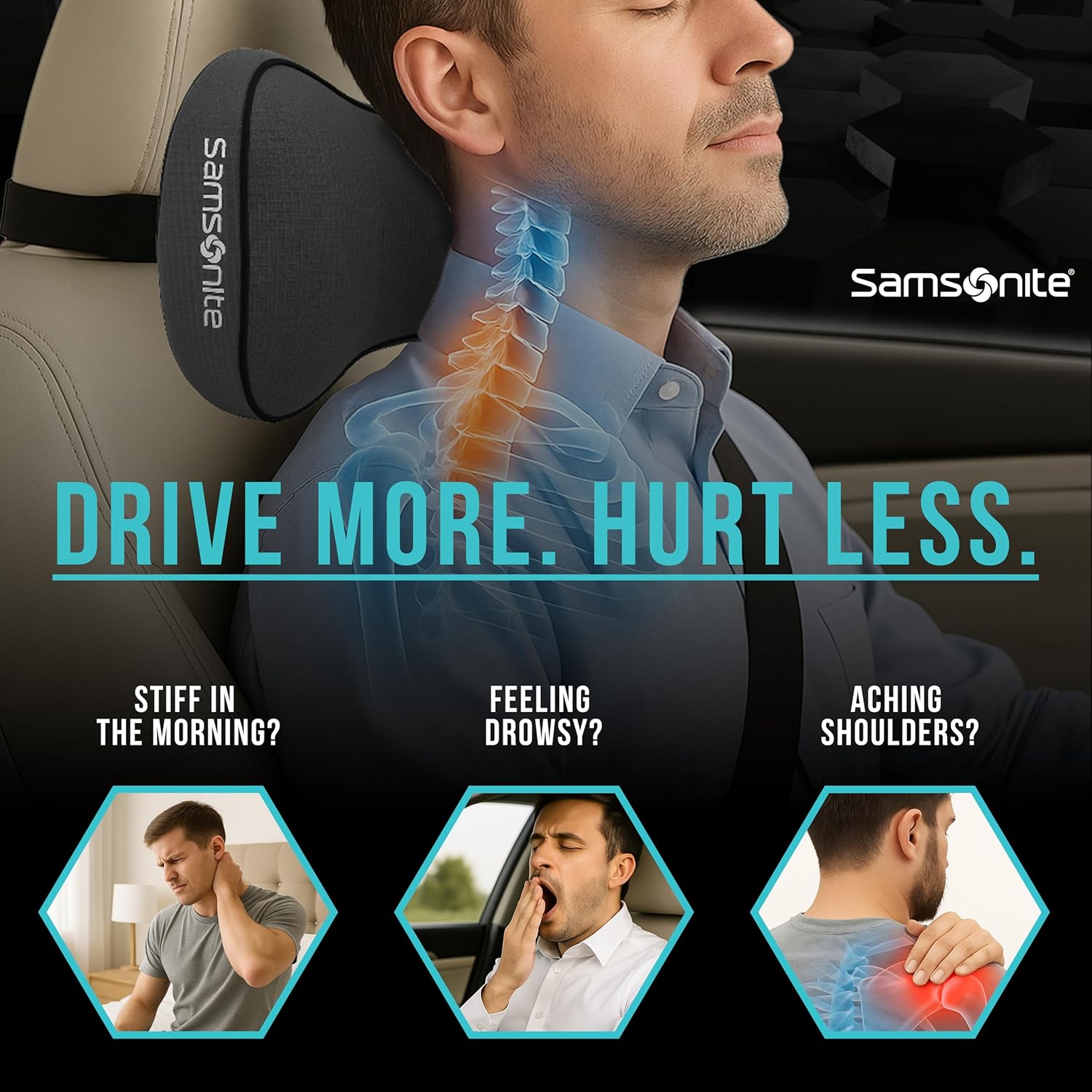
2. Samsonite Memory Foam
Samsonite is synonymous with travel, and their automotive accessories live up to the name. This option typically comes in a 2-pack, offering great value for outfitting both the driver and passenger seats. The design is simpler and more compact than the Dreamer Car.
The mesh cover is designed for maximum airflow, which is crucial if you drive long hours. While not a replacement for best car safety tools, proper ergonomic support like this prevents long-term strain injury, which is a safety factor in itself.
| Value: | Usually sold as a 2-Pack |
| Material: | Ventilated Mesh & Memory Foam |
| Mount: | Elastic Strap |
- Excellent value for money (2-pack).
- Compact size isn’t obtrusive.
- Trusted brand durability.
- Breathable mesh keeps neck cool.
- Elastic strap is less adjustable than buckles.
- Foam is slightly softer/less dense.

3. Feagar Car Seat Neck Pillow
Feagar solves the “sliding pillow” problem with a unique dual-strap system. It has one horizontal strap and one vertical strap, ensuring the pillow stays locked in position regardless of how much you move around. This is perfect for taller or shorter drivers who need the pillow to sit higher or lower than standard.
The contour is deep, cradling the neck aggressively. This provides superior support but might feel restrictive to drivers who like to move their heads frequently. It pairs well with other comfort accessories like heated car blankets for winter driving.
| Mounting: | Dual Strap System |
| Design: | 3D Ergonomic Contour |
| Cover: | Anti-Sweat Fabric |
- Stays in place better than any other model.
- Includes an extra foam insert to adjust thickness.
- Deep contour supports head during turns.
- Can feel bulky for smaller drivers.
- Installation takes a minute longer due to straps.


4. Aukee Genuine Leather Pillow
If you drive a luxury vehicle with leather seats, putting a mesh sport pillow on them can ruin the aesthetic. The Aukee pillow is wrapped in genuine leather (or high-quality PU options), allowing it to blend seamlessly with your car’s interior. It looks like a factory upgrade.
While leather isn’t as breathable as mesh, Aukee perforates the material to allow some airflow. It wipes clean easily, making it great for families with kids or pets.
| Material: | Genuine Leather Cover |
| Core: | Cloud Cotton Filling |
| Maintenance: | Wipe Clean |
- Looks premium and matches leather interiors.
- Very easy to clean (just wipe).
- Uses soft “cloud cotton” instead of dense foam.
- Leather can get hot in summer.
- Cotton filling is less supportive than memory foam.

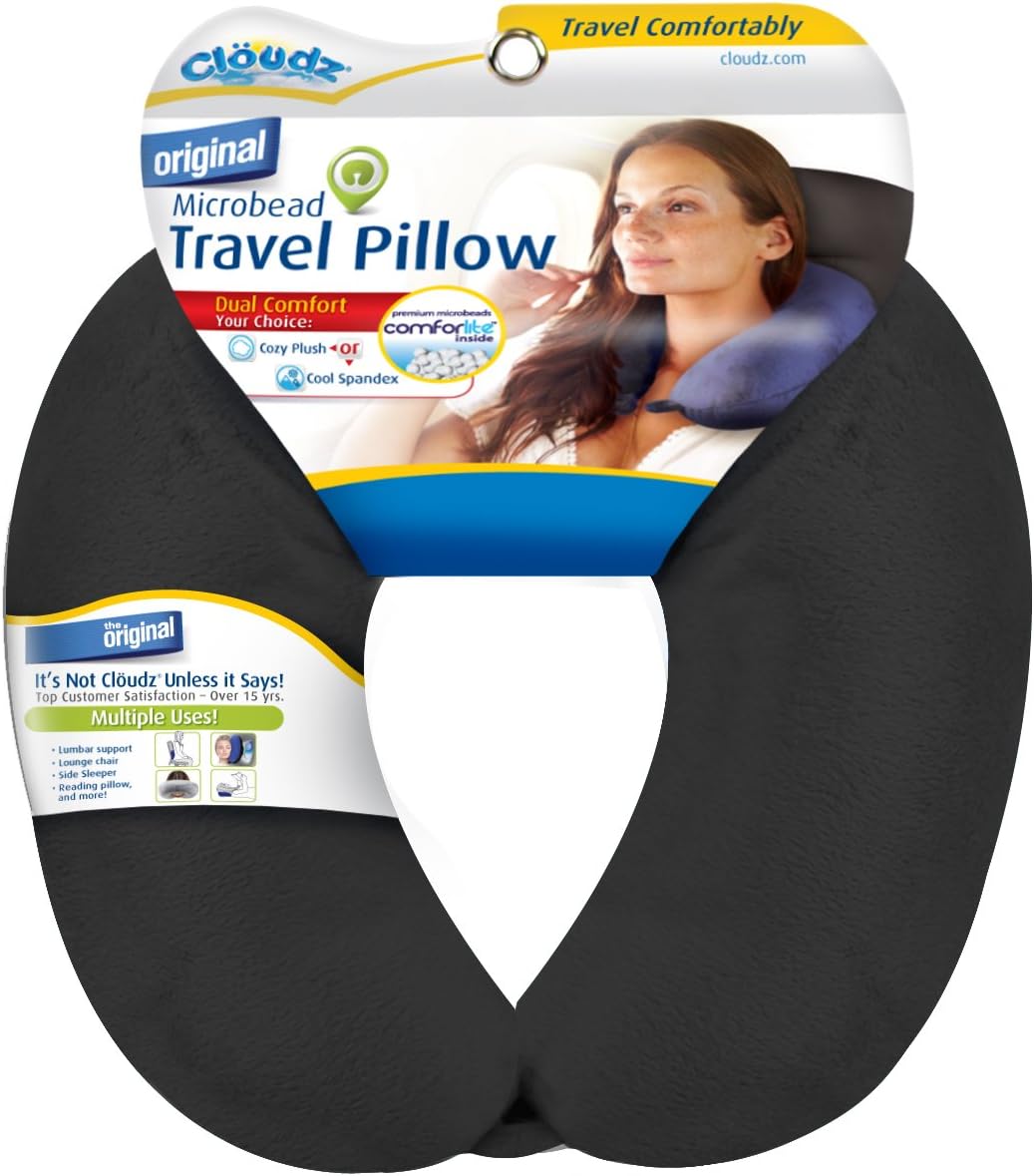
5. Cloudz Microbead Pillow
Sometimes you don’t need a permanent fixture; you just need something for a quick nap in the passenger seat. The Cloudz microbead pillow is a classic travel pillow that can be used in the car, on planes, or trains. It’s filled with millions of tiny beads that conform to your shape instantly.
It’s not designed to be strapped to the driver’s seat for active driving support, but it is the best option for passengers needing rest. It’s affordable, versatile, and soft.
| Filling: | Polystyrene Microbeads |
| Style: | U-Shape Travel Pillow |
| Versatility: | Car / Plane / Home |
- Extremely affordable.
- Squishy and moldable comfort.
- Great for passengers and kids.
- Dual-sided fabric (plush/spandex).
- Not safe/suitable for the driver to use while moving.
- Microbeads compress over time.

Driver Seat vs. Passenger Seat: Do You Need Different Pillows?
One of the most overlooked distinctions in this category is that the driver and the passenger have genuinely different needs, and buying the same pillow for both seats can leave one of you disappointed. The driver’s pillow has one job above all others: stay locked in place while the head is actively turning, checking mirrors, and reacting to traffic. That’s why the models we ranked highest for the driver’s seat — the Dreamer Car and the Feagar — both rely on adjustable straps or dual-strap systems rather than a simple elastic loop. A pillow that slides an inch to the left every time you check your blind spot isn’t support; it’s a distraction.
The passenger seat is a different story entirely. A passenger isn’t actively scanning the road, so the priority shifts from “stays locked during motion” to “maximizes comfort for napping.” This is exactly why a microbead or memory-foam travel pillow like the Cloudz performs so well in the passenger seat despite being a poor fit for the driver: it conforms to whatever angle the head falls into during sleep, rather than forcing the neck into one fixed position.
Should the Front Passenger and Rear Passengers Use the Same Style?
Not necessarily. Rear seat passengers usually recline against a fixed, non-adjustable headrest and often lean toward the window, which calls for a pillow with some lateral (side) support built in — a U-shaped travel pillow does this better than a flat, rectangular ergonomic cushion. Front passengers, meanwhile, can recline the seatback itself, so a simple contoured pillow that stays put during recline is usually enough.
Best Car Neck Pillows for Truckers, Rideshare, and Long-Haul Commuters
If you spend six, eight, or twelve hours a day behind the wheel — long-haul trucking, rideshare driving, delivery routes, or a brutal daily commute — the calculus around a neck pillow changes considerably. Occasional drivers can tolerate a slightly imperfect fit for an hour-long trip. Professional drivers cannot; a poorly fitted pillow used for a full shift, every day, can create new problems instead of solving old ones.
What Professional Drivers Should Prioritize
- Durability over plushness. A pillow used eight hours a day, five days a week, needs to hold its foam structure for months, not weeks. Higher-density memory foam, like the type used in the Dreamer Car and Feagar, resists the “pancaking” that cheaper foams suffer under constant compression.
- Washability. Daily use means daily sweat and oil transfer. A removable, machine-washable cover isn’t a luxury for a full-time driver — it’s a hygiene requirement.
- Breathability. Sitting in the same position for hours in a heated cab makes airflow critical. Mesh covers, like the Samsonite’s ventilated design, outperform leather or dense foam covers for all-day comfort.
- Strap security at highway speed. Long-haul driving means more highway miles and less city stop-and-go, but it also means more hours where a slipping pillow becomes a constant, nagging distraction rather than an occasional annoyance.
Many professional drivers also pair a neck pillow with a lumbar support cushion, since hours of seated compression affect the lower back just as much as the neck. If your commute already involves following tips for driving at night, know that fatigue and stiffness compound each other — a stiff neck makes it physically harder to do the shoulder checks and head turns that safe night driving requires, so investing in real support isn’t just about comfort, it’s about staying alert.
Neck Pillows for Kids, Toddlers, and Family Road Trips
Parents searching for a “car neck pillow for kids” are almost always trying to solve one specific problem: a child’s head bobbing forward or sideways during naps in the car seat, sometimes hard enough to wake them up or leave them cranky. It’s a legitimate comfort concern, but it comes with real safety caveats that are worth taking seriously before you buy anything for a child who rides in a car seat or booster.
Car Seats and Boosters Are a Different Category
Car seat and booster seat manufacturers, along with most child passenger safety technicians, generally advise against adding any aftermarket padding, pillow, or headrest accessory directly around or behind a child’s head within a five-point harness car seat. The reasoning is straightforward: car seats are crash-tested as a complete system exactly as sold, and adding foam near the head can change how the harness and seat interact with the child’s body during a collision in ways that haven’t been tested. This is different from an adult using a pillow against a vehicle’s own factory headrest, which is not a harnessed restraint system.
What Actually Works for Kids
- For a child old enough to ride without a harnessed car seat (using the vehicle’s own seat belt and headrest), a small, soft travel pillow — similar in concept to the Cloudz microbead pillow — used loosely around the neck (not strapped tightly to the headrest) is generally viewed the same as any other soft comfort item a passenger might use.
- For a child still in a harnessed car seat, look specifically for head-support inserts designed and crash-tested by the car seat manufacturer itself, rather than a generic aftermarket neck pillow.
- Never wedge a firm or bulky pillow between a child’s head and the car seat shell, and never allow straps from an aftermarket pillow to interfere with the harness buckle or chest clip.
When in doubt, a certified child passenger safety technician (often available for free consultations at local fire departments or hospitals) is the best resource for anything involving car seats and comfort accessories together.
Memory Foam vs. Microbeads vs. Inflatable vs. Cooling Gel: A Materials Deep Dive
The five products above cover the two most common fill types, but the wider neck pillow market includes a few other materials worth understanding before you buy, especially if none of our top picks quite match your climate or comfort preference.
Memory Foam
The category standard, and for good reason. Slow-rebound memory foam contours to the exact shape of your neck and holds that shape under sustained pressure, which is what makes it the best choice for the active driver. Its main weaknesses are heat retention (traditional memory foam sleeps warm) and a “new foam” chemical smell for the first few days out of the packaging, which usually fades with airing out.
Microbeads
Tiny polystyrene beads that shift and redistribute instantly under pressure. They’re excellent for a passenger who is reclining or leaning at an unpredictable angle, but they don’t hold a fixed shape, which is exactly why they’re a poor choice for a driver who needs consistent support while the head is moving. Microbead pillows also compress and lose volume gradually over months of use.
Inflatable Travel Pillows
Popular for air travel because they pack down to almost nothing, inflatable neck pillows use air chambers instead of foam. In a car, their main advantage is portability — useful if you switch between rideshares, rental cars, or multiple vehicles and don’t want to leave a bulky pillow behind. The tradeoff is a firmer, less contoured feel and the small risk of a slow leak over time.
Cooling Gel-Infused Foam
A newer variation on standard memory foam, where gel beads or a gel layer are infused into the foam structure to pull heat away from the skin. If you drive in a hot climate or your commute involves long stretches without air conditioning, a gel-infused option can meaningfully reduce the sweaty, warm feeling that standard memory foam is known for, at a small premium in price.
Which Material Fits Your Situation?
| Daily driver, hot climate: | Gel-infused memory foam or ventilated mesh cover |
| Frequent car-switcher / renter: | Inflatable travel pillow |
| Passenger who naps often: | Microbead or plush U-shape pillow |
| Long-haul professional driver: | High-density memory foam with a washable cover |
Other Popular Neck Pillow Brands Worth Knowing
Beyond the five products we tested head-to-head, a handful of other brand names come up constantly in neck pillow searches, and it’s worth knowing where they fit even if we didn’t include a dedicated product card for each.
- Trtl — known for a wraparound, scarf-style neck support with an internal hidden support panel rather than a traditional foam ring. Popular with air travelers, and usable in a car, though it’s designed more for a reclined or sleeping position than active driving.
- Cabeau — makes a memory foam travel pillow line with a distinctive front closure and chin support, aimed primarily at preventing the head from dropping forward during sleep, which suits a napping passenger more than an alert driver.
- BCOZZY — a wraparound-style pillow that supports the chin, sides, and back of the neck simultaneously, best suited to a reclined passenger seat rather than a driver’s upright, head-turning position.
- Everlasting Comfort — offers a memory foam U-shape pillow at a competitive price point, similar in concept to the Samsonite in this guide, generally positioned as a comfort-first, budget-friendly option.
- Purple — best known for their gel-grid mattress technology, Purple also makes a travel pillow using the same grid material, appealing to shoppers who specifically want the cooling, breathable feel of their grid over traditional foam.
If none of our top five feel like the right fit after reading the pros and cons above, these brands are reasonable starting points for further research — just apply the same buyer’s guide criteria (strap type, foam density, cover material) to whichever one you’re considering.
Fit Guide: Choosing by Height, Neck Length, and Seating Position
A neck pillow that’s perfect for a 5’4″ driver can feel completely wrong for someone 6’2″, and vice versa, simply because of where the factory headrest naturally sits relative to each person’s neck.
Taller Drivers
Taller drivers typically sit with their neck curve higher relative to the headrest, meaning the gap that needs filling is often positioned toward the lower portion of the headrest rather than dead center. A pillow with a long adjustable strap — like the Dreamer Car’s buckle system or the Feagar’s dual-strap setup — lets you drop the cushion lower on the headrest post to meet your neck where it actually curves, rather than being stuck wherever a short, non-adjustable elastic band happens to sit.
Shorter Drivers
Shorter drivers often find the opposite problem: a pillow rides too low and ends up supporting the upper back rather than the neck. Look for pillows explicitly described as having a shorter minimum strap length, or be prepared to double back the strap through the buckle to shorten the effective drop.
Long-Necked vs. Short-Necked Builds
Drivers with a longer neck generally do better with a thicker, more substantial pillow, since there’s more vertical distance between the shoulders and the base of the skull to fill. Drivers with a shorter neck should lean toward thinner profiles — the Aukee’s softer cloud-cotton fill or a slimmer foam option — to avoid the “pushed forward” feeling discussed in the safety section above.
Reclined Seating Positions
If you (or your passengers) prefer a reclined seatback angle, prioritize pillows with contoured side wings rather than a flat rectangular shape, since a reclined head tends to drift sideways rather than straight back.
Choosing a Neck Pillow by Vehicle Type
The shape and mounting geometry of a headrest varies considerably across vehicle categories, and that variation matters more than most shoppers expect. A pillow that fits perfectly in a sedan can sit awkwardly in an SUV, and a setup that works in a pickup can be completely incompatible with a two-seat sports car.
Sedans and Standard Passenger Cars
Most sedans use a fairly standard two-post headrest with generous vertical adjustment range, which makes them the easiest vehicle type to fit almost any strap-based pillow to. If you drive a typical daily-driver sedan, fit compatibility is rarely the deciding factor — foam density and strap adjustability matter more than whether the pillow will physically attach.
SUVs and Crossovers
Taller seating positions in SUVs often mean the driver’s eyeline — and by extension, neck curve — sits higher relative to the headrest than in a sedan. Combined with more upright seatbacks in some three-row SUVs, this can mean the “sweet spot” for a pillow sits closer to the top of the headrest post rather than the middle. Adjustable buckle straps, rather than fixed elastic loops, give you the range to find that higher position.
Pickup Trucks
Work trucks and long-haul pickups often see the heaviest daily use of any vehicle category in this guide, which loops back to the trucker and long-haul section above — durability and washability should be prioritized over aesthetic details like a leather cover, since a truck cab pillow is likely to see years of near-daily use.
Sports Cars and Bucket Seats
As mentioned in the mistakes section, many sports cars and performance trims use molded bucket seats where the headrest is integrated directly into the seatback with no separate, exposed posts. If that describes your vehicle, skip strap-mounted pillows entirely and look at free-standing or wrap-style travel pillows instead, since there’s simply nothing to strap them to.
Minivans and Family Vehicles
With multiple rows of seating, minivans are one of the few vehicle types where you might reasonably want different pillow styles in different rows — a driver-focused strapped pillow up front, and softer, kid-friendly travel pillows in the second and third rows for napping children (subject to the car-seat cautions discussed earlier for any harnessed seats).
How to Measure Your Seat Before You Buy
A surprising number of return requests for neck pillows come down to a basic sizing mismatch that could have been avoided with thirty seconds of measuring beforehand.
Step 1: Measure the Headrest Post Spacing
Most vehicle headrests use two posts spaced roughly 4 to 8 inches apart, though exact spacing varies by manufacturer. Strap-based pillows are generally designed to accommodate a range of spacing, but if your vehicle uses an unusually wide or narrow spacing, or a single center post rather than two, double-check the manufacturer’s compatibility notes before ordering.
Step 2: Measure the Gap Behind Your Neck
Sit in your normal driving position and have someone measure the horizontal gap between the back of your neck and the headrest’s front face. This single number is the most useful data point for choosing pillow thickness — a 2-inch gap calls for a noticeably thinner pillow than a 4-inch gap, and buying based on this measurement avoids the “pushed forward” problem entirely.
Step 3: Check for Obstructions
Look for any built-in headrest speakers, DVD screens, side airbag modules, or adjustment levers on or near the headrest, since these can interfere with strap placement or, in the case of airbag modules, create a safety consideration worth accounting for as discussed earlier in this guide.
What Ergonomics Research Says About Seated Neck Support
While there isn’t a large body of research specifically studying aftermarket car neck pillows, the underlying ergonomic principles are well established in occupational health literature covering seated postures more broadly. Prolonged static neck flexion — the position your neck holds when unsupported and slightly forward — is consistently associated with increased muscle activity in the upper trapezius and levator scapulae, the same muscles most people rub instinctively after a long drive.
Occupational health guidance for office workers, which shares significant overlap with the seated posture challenges of driving, generally recommends keeping the head balanced directly over the shoulders and providing physical support to reduce the duration of sustained muscle contraction. A neck pillow that closes the support gap is, functionally, applying the same ergonomic principle used in adjustable headrests for office chairs and airline seats, just adapted to the specific geometry of a vehicle headrest.
It’s worth being clear-eyed about the limits of this: a neck pillow reduces the amount of unsupported time your neck muscles spend working, but it doesn’t correct underlying postural habits like leaning toward the wheel in bad weather, and it isn’t a treatment for a diagnosed cervical spine condition. Think of it as reducing daily wear rather than reversing existing damage.
Neck Pillow Glossary: Terms You’ll See When Shopping
| Slow-rebound foam: | Memory foam engineered to return to shape gradually rather than instantly, providing sustained contouring support. |
| Cervical alignment: | Keeping the neck’s natural curve in a neutral position relative to the head and shoulders. |
| Forward head posture: | A postural pattern where the head sits forward of the shoulders, increasing load on neck muscles. |
| Off-gassing: | The release of residual manufacturing compounds from new foam, causing a temporary chemical smell. |
| Headrest posts: | The metal bars connecting a headrest to the seatback, used as anchor points for strap-based pillows. |
| U-shape pillow: | A horseshoe-shaped travel pillow that wraps around the sides and back of the neck, common for passengers. |
| Contoured pillow: | A pillow shaped to match the natural curve of the neck rather than a flat or uniform cushion. |
Pairing a Neck Pillow With Other Comfort Accessories
A neck pillow solves one specific ergonomic gap, but it’s rarely the only comfort issue on a long drive. Many of the same drivers searching for neck support also deal with lower back fatigue, cold cabin temperatures, or general road-trip logistics — and addressing all of them together tends to produce a much more noticeable improvement than any single accessory alone.
A lumbar support cushion strapped to the lower seatback complements a neck pillow by addressing the other end of the spine, and the two together cover most of the postural gaps a factory seat leaves unaddressed. For colder climates or overnight drives, pairing your neck pillow with heated car blankets keeps the whole body comfortable rather than just the neck. And if you’re outfitting a vehicle for a longer trip generally, running through a broader checklist of road trip essentials ensures the neck pillow is part of a complete comfort setup rather than an isolated fix.
Beyond the Car: Using Your Neck Pillow at a Desk or in a Gaming Chair
It’s worth mentioning that the exact same ergonomic gap this guide addresses — the empty space between an upright seatback headrest and the natural curve of your neck — shows up in plenty of non-driving seating too. Gaming chairs are explicitly modeled after racing bucket seats, right down to the headrest geometry, which means a driver’s-seat pillow like the Dreamer Car or Feagar tends to transfer over to a gaming setup with almost no adjustment needed. The strap systems designed to grip a car’s headrest posts work just as well on the similarly shaped posts (or attachment points) found on many gaming chairs.
Standard office chairs are a slightly different story. Most don’t include a headrest at all, and the ones that do rarely include exposed posts for a strap to wrap around. If you want neck support at a desk, look specifically for products marketed as office or ergonomic chair neck pillows, which typically use a different mounting method — usually a wraparound band that cinches around the chair’s backrest rather than a post-based strap. A dedicated driving pillow can sometimes be repurposed with a bit of creative strapping, but it’s not guaranteed to fit every chair design.
For remote workers who also drive frequently for their job — field sales, real estate, home services — this overlap is genuinely useful: buying one higher-quality pillow with a versatile strap can reasonably cover both the car and a compatible chair, rather than needing to purchase separate products for each.
Which Pillow Should You Actually Buy? A Quick Decision Guide
With five strong options and dozens of buying factors covered in this guide, it can still be hard to land on one answer. Use this quick framework to cut through the noise:
- If you want one pillow that does everything well: choose the Dreamer Car. Its adjustable buckle, balanced foam density, and breathable cover make it the safest default recommendation for most drivers.
- If you need to outfit two seats economically: choose the Samsonite 2-pack, which delivers reliable, breathable support for both driver and passenger without buying twice.
- If your headrest sits at an awkward height for your build, or you’re notably tall or short: choose the Feagar, whose dual-strap system offers the widest positioning range of any model in this guide.
- If you drive a vehicle with a leather interior and want a factory-matched look: choose the Aukee, accepting a small tradeoff in firmness for a significantly better aesthetic match.
- If you mainly need something for a napping passenger, not an alert driver: choose the Cloudz, and don’t try to strap it in as a driver’s primary support.
- If none of the five quite fit your situation: revisit the materials, vehicle-type, and body-type sections above, and consider one of the additional brands mentioned in the “other popular brands” section as a starting point for further research.
Whichever you choose, remember the two non-negotiables covered throughout this guide: get the thickness right relative to your specific gap, and prioritize a strap system that will actually hold up to the way you drive — daily commute, occasional road trip, or professional long-haul use — rather than buying based on looks or price alone.
Buyer’s Guide: How to Choose the Right Support
Choosing a car neck pillow isn’t as simple as grabbing the softest one. Here are the critical factors to consider:
1. Memory Foam Density
Not all foam is created equal. You want “slow-rebound” memory foam. If the foam springs back instantly, it acts like a spring pushing your head forward. If it sinks too fast, it offers no support. The Dreamer Car has the ideal density balance.
2. Strap Adjustability
This is the most important feature. Standard elastic bands eventually stretch out. Look for pillows with buckles or adjustable clips. If you are short, you need a pillow that can be strapped lower on the seat back; if you are tall, you need it higher. Elastic bands limit this movement.
3. Thickness vs. Seat Angle
If your car’s headrest already pushes your head forward (common in modern cars for whiplash protection), you need a thinner pillow. A thick pillow will force your chin to your chest, causing more pain. Feagar models often include removable inserts to adjust thickness.
4. Cover Material and Climate
Where you live and drive should influence your cover choice as much as your foam preference. Hot, humid climates call for ventilated mesh or moisture-wicking sport fabric, since a non-breathable cover traps heat right against the back of the neck — one of the sweatiest parts of the body during a summer drive. Cold-climate drivers have more flexibility, and can lean toward denser fabrics or even leather for their aesthetic appeal, since heat retention is less of a downside in winter.
5. Odor and Off-Gassing
New memory foam products, especially budget ones, can arrive with a noticeable chemical smell caused by residual manufacturing compounds off-gassing from the foam. This isn’t unique to car pillows — it’s the same phenomenon associated with new mattresses. Higher-quality foams, like the type used in the Dreamer Car, tend to be far less pungent out of the box, but it’s still smart to unbox and air out any new pillow in a well-ventilated space for a day or two before strapping it into your car, particularly if you’re sensitive to smells in an enclosed cabin.
6. Weight and Portability
If you drive multiple vehicles, use rideshares regularly, or want to move your pillow between a car and a desk chair, weight and packability matter. Dense memory foam pillows are heavier and bulkier than microbead or inflatable alternatives, which makes them less practical to carry around daily even though they outperform lighter options for pure driving support.
7. Price vs. Longevity
It’s tempting to grab the cheapest option, but foam quality is one area where price differences usually reflect real durability differences. Budget foams tend to lose their rebound and flatten permanently within a few months of daily use, while higher-density foams can last several years before needing replacement. If you’re a daily commuter, calculate cost-per-month of use rather than sticker price alone — a $15 pillow replaced every four months can end up costing more over a year than a $35 pillow that lasts two years.
Common Mistakes People Make When Buying or Using a Neck Pillow
- Buying based on looks alone. A stylish leather cover means nothing if the foam underneath is too soft to actually hold your head in position.
- Ignoring the headrest’s existing angle. Adding a thick pillow on top of a headrest that’s already angled forward compounds the forward-head problem instead of fixing it. Adjust the headrest itself first, then add support.
- Choosing elastic straps for a driver’s seat. Elastic is fine for an occasional passenger, but it stretches out with regular use and will eventually let the pillow droop or slide during turns — exactly when you need it to stay put.
- Never airing out new foam. Strapping a brand-new memory foam pillow straight into an enclosed car cabin can leave a lingering chemical smell for days. Give it time outside the vehicle first.
- Using a driving-style pillow for sleep, or vice versa. A deep-contour pillow made for an alert, upright driver will feel restrictive to a napping passenger, and a soft microbead pillow made for napping won’t provide the consistent support an active driver needs.
- Forgetting to match the pillow to your headrest posts. Some sport bucket seats and racing-style seats don’t have separate, adjustable headrest posts at all, which makes strap-based pillows physically impossible to install — always check your seat style before buying.
- Skipping maintenance. A pillow that’s never washed accumulates hair oil, sweat, and skin cells, all of which can degrade fabric and foam over time and create odor issues that are much harder to fix after the fact.
Care & Maintenance Tips
- Wash the Cover: Sweat and oils from your hair will accumulate. Ensure the pillow has a zipper for easy removal. Wash on cold to prevent shrinking.
- Air Out the Foam: Memory foam cannot be washed. If it smells, sprinkle baking soda on it, let it sit for an hour, and vacuum it off.
- Seasonal Adjustment: Foam gets harder in winter and softer in summer. Be prepared for the pillow to feel different depending on the weather.
- Sun Exposure: Parking in direct sun for hours can degrade both foam and fabric faster than normal use. A sunshade over the dash and windows helps protect not just your neck pillow but your entire interior.
- Strap Care: Elastic straps lose tension over time; if yours has stretched to the point the pillow no longer stays put, most manufacturers sell replacement straps rather than requiring a full pillow replacement.
- Storage Between Trips: If you remove the pillow between long trips, store it somewhere dry and out of direct sunlight rather than leaving it compressed under a seat, where prolonged pressure can create a permanent dent in the foam.
- When to Replace: If the foam no longer springs back within a few seconds of pressing it with your thumb, or if you notice a permanent body-shaped indentation, the pillow has lost its supportive structure and it’s time for a replacement rather than continued use.
Neck Pillows and Specific Neck Conditions: What to Know
A large share of people researching this topic aren’t just looking for general comfort — they’re dealing with a specific issue like whiplash recovery, cervical spondylosis, a herniated disc, or chronic tension from a desk job, and want to know whether a car neck pillow will actually help or make things worse. This section is general educational information, not medical advice, and anyone with a diagnosed cervical condition should talk to their doctor or physical therapist about what’s appropriate for their specific situation before relying on any aftermarket product.
Post-Whiplash Recovery
In the weeks after a whiplash injury, many people find that any unsupported time in a car seat noticeably worsens stiffness and soreness. A properly fitted, soft-to-medium pillow that closes the support gap without pushing the head forward can reduce the isometric muscle strain discussed earlier in this guide, which is often exactly the kind of static loading that aggravates a healing neck. That said, recovery timelines and appropriate activity levels vary enormously by injury severity, so this is an area where following a physical therapist’s specific guidance matters more than any general product recommendation.
Cervical Spondylosis and Age-Related Disc Changes
Cervical spondylosis involves gradual wear on the discs and joints of the neck, and people with this condition often report that their tolerance for unsupported sitting is much lower than it used to be. A supportive, contoured pillow can reduce the amount of muscular compensation the neck has to do, but thickness needs to be chosen carefully — the safety section’s guidance about not pushing the head too far forward is especially relevant here, since spondylosis often comes with reduced range of motion that makes an awkward head position more uncomfortable, not less.
Herniated or Bulging Discs
For anyone managing a cervical disc herniation, positioning matters a great deal, and what feels supportive to one person can feel aggravating to another depending on exactly which disc level and direction the herniation affects. This is a case where a generic buying guide genuinely can’t substitute for individualized advice — bring the specific product’s dimensions and firmness description to a physical therapy appointment if you want tailored input before purchasing.
Chronic Desk-Job Tension Carried Into the Car
If your neck pain is really an extension of hours spent hunched over a laptop rather than something caused by driving itself, a car neck pillow will help with the driving portion of your day, but it’s treating a symptom that starts elsewhere. Combining a good pillow with basic desk ergonomics — monitor height, regular movement breaks — addresses the root cause instead of just the commute.
Real-World Scenarios: Matching the Right Pillow to the Trip
The Daily Commuter
For a 30-90 minute daily commute in stop-and-go traffic, prioritize strap security and durability over anything else, since this pillow will see the most cumulative hours of any use case in this guide. The Dreamer Car’s adjustable buckle and washable cover make it the strongest fit for this scenario.
The Weekend Road-Tripper
Occasional long drives call for a balance of driver support and passenger comfort, since roles often swap on a road trip. A 2-pack option like the Samsonite covers both seats consistently without needing to buy two different styles.
The Napping Passenger or Overnight Traveler
If the main goal is comfortable sleep in a moving vehicle — think overnight drives, camping trips where someone sleeps in the car, or long stretches with rotating drivers — a softer, non-strapped travel pillow like the Cloudz will conform better to a slumped or reclined position than any driver-focused ergonomic design.
The Rideshare or Delivery Driver
Professional drivers switching between many short trips throughout a shift benefit most from quick-adjust straps that can be tightened or loosened without much fuss, plus a cover that can handle being wiped down between passengers if the vehicle is shared or used for ridesharing.
The Luxury or Leather-Interior Owner
For drivers who care as much about matching their interior as functional support, the Aukee’s genuine leather cover is the only option in this guide designed specifically not to clash with a leather cabin, even though its cotton fill trades off some of the firmer support of memory-foam competitors.
Warranty, Returns, and Buying With Confidence
Because fit is so personal — dependent on your headrest type, seating position, and neck length — it’s worth checking a seller’s return policy before committing, especially for a pillow you can’t test in person beforehand. Most reputable sellers on marketplaces like Amazon offer a standard return window (commonly 30 days) even on used or opened items, which gives you enough time to actually install the pillow and drive with it for a week or two rather than judging it on a five-minute test sit in your driveway.
When a return is warranted, keep the original packaging if possible, and photograph any defect (a torn seam, a strap that won’t hold tension, foam that arrived already compressed) before initiating the return, since marketplace sellers generally process defect-based returns faster with photo documentation attached.
If you’re buying as a gift — these do make popular gifts for new car owners — consider whether the recipient’s vehicle uses standard two-post headrests before choosing a strap-based style, since a beautifully designed pillow that physically won’t fit their seat creates an awkward return conversation you can avoid by asking about their car first.
A Note on Materials and Sustainability
Memory foam is a petroleum-derived polyurethane product, and like most foam-based consumer goods, it isn’t biodegradable and isn’t widely accepted in curbside recycling programs. If sustainability is a factor in your buying decision, a few practical considerations can help: buying a higher-density, longer-lasting pillow reduces how often you replace (and discard) foam over the years compared to a cheap pillow that flattens and gets thrown out repeatedly. Some manufacturers also now offer covers made from recycled polyester fabric, which is worth checking for if this is a priority — the product listing or manufacturer’s site will typically disclose fabric sourcing if it’s a recycled blend.
How We Tested and Ranked These Neck Pillows
Our evaluation process focused on the factors that matter most for real-world driving rather than marketing claims. Each pillow was assessed across the same core criteria so the comparison table above reflects a consistent standard rather than a subjective gut feeling.
Foam Density and Rebound
We pressed each foam sample and timed how long it took to return to its original shape — too fast and it acts like a spring pushing the head forward, too slow and it never fully rebounds between drives, both of which reduce effective support over time.
Strap Security Under Motion
Every model was tested through repeated head-turning motions simulating mirror checks and shoulder checks, since a pillow that performs well sitting still can still slide during the exact movements that matter most for safe driving.
Breathability and Heat Retention
Cover materials were assessed for airflow and how quickly they trapped heat against the skin during extended, stationary use — a reasonable proxy for how a pillow performs during a hot afternoon commute with the AC on low.
Cover Removability and Washability
We checked whether each cover unzips fully, whether the foam core is exposed cleanly for airing out, and whether the manufacturer’s washing instructions matched what the fabric could reasonably tolerate.
Value Relative to Longevity
Finally, we weighed sticker price against expected lifespan based on foam density and stitching quality, since the cheapest option on paper isn’t always the cheapest option after a year of daily use.