
The GPS Tracker Guide Every Driver, Parent, and Fleet Manager Needs
Real-time location tracking, long battery life, covert magnetic mounting, and subscription-free options — we break down everything you need to find the right GPS tracker for your vehicle, assets, kids, or pets.
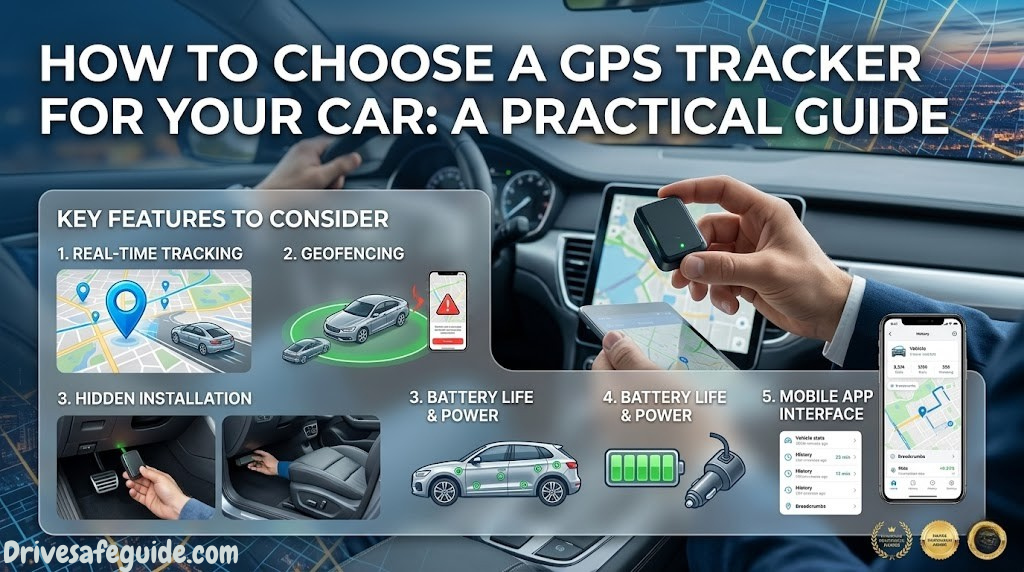
Whether you’re worried about a teenager driving solo for the first time, keeping tabs on a fleet of delivery trucks, or protecting an expensive piece of equipment from theft, a GPS tracker gives you something priceless: certainty. You know where things are. You know where they’ve been. And if something goes wrong, you have a record.
But the GPS tracker market is genuinely crowded, and the differences between devices matter enormously. A tracker built for vehicles doesn’t necessarily work well as an asset tracker. A device with a phenomenal battery life might come with a crippling monthly data plan. The one with the best real-time refresh rate might require hardwiring under your dashboard. These trade-offs deserve careful thought.
This guide cuts through all of it. We cover how GPS tracking technology actually works, the distinct categories of trackers, the best-rated devices available right now, the features that truly matter, and the legal questions you need to understand before you strap one under a bumper. Think of it as the companion guide to our broader coverage of car safety accessories and tools every driver should consider.
Best Overall: Optimus 2.0 GPS Tracker | Best Budget: Trak-4 Mobile Tracker | Best Long-Battery: LandAirSea 54 | Best Professional: Spark Nano Pro Series
What Exactly Is a GPS Tracker?
A GPS tracker is a compact device that uses the Global Positioning System — a constellation of over 30 U.S. government-operated satellites orbiting Earth — to pinpoint its location anywhere on the planet with remarkable accuracy. Most consumer-grade GPS trackers achieve positioning accuracy within 2.5 to 10 meters under open sky, and better units paired with cellular assistance can push that to within a meter or two in favorable conditions.
The basic technology is the same across all GPS devices: the unit receives timing signals from multiple satellites, uses those signals to calculate its distance from each one via trilateration, and computes its geographic coordinates. Where trackers differ from basic GPS receivers — like a handheld trail navigator — is in what they do with that position data. A GPS tracker transmits its location data over a communication network so you can see it remotely.
That communication layer is where the real variation lives. Trackers can send data over:
- Cellular networks (4G LTE/3G): Most real-time consumer trackers. Data is sent through a SIM card to servers you access via app or website.
- Satellite networks (Iridium, Globalstar): Remote-area trackers for expeditions or offshore assets. Expensive but global.
- Bluetooth (BLE): Very short-range, ideal for lost item finders like AirTag. Not true GPS tracking.
- Wi-Fi: Used to supplement GPS in urban canyons where satellite signal degrades.
For the purpose of this guide, we focus primarily on cellular GPS trackers — the dominant category for vehicle, personal, and asset tracking — with notes on Bluetooth and hybrid options where relevant.
It’s worth distinguishing GPS trackers from other location technologies you may encounter. OBD-II diagnostic port trackers plug directly into your car’s onboard diagnostics port and can report far more than just location — they capture speed data, engine health, fuel consumption, and driving behavior. Dedicated single-purpose trackers, by contrast, focus entirely on location accuracy and battery efficiency. For most people, that distinction is the first decision they’ll need to make.
The GPS constellation consists of at least 24 operational satellites. Most tracking devices connect to 6–12 satellites simultaneously for the highest positional accuracy.
The Major Types of GPS Trackers
Before buying anything, you need to decide which category of tracker fits your actual need. Buying a vehicle tracker when you need an asset tracker will leave you frustrated. Here’s how the market is segmented:
1. Vehicle GPS Trackers
The largest category. These devices are specifically designed to monitor car, truck, motorcycle, or fleet vehicle location. They typically mount via strong magnet under the chassis, inside the wheel well, or behind a bumper. Many hardwired versions tap into the vehicle’s power supply for continuous operation without battery replacement. Core use cases include fleet management, stolen vehicle recovery, teen driver monitoring, and spouse/partner vehicle monitoring (note the legal caveats we cover later).
2. Personal / Portable GPS Trackers
Compact units designed to track people or move frequently between assets. These are used by parents of young children, caregivers monitoring elderly family members with dementia, solo hikers, and travelers. They typically include SOS or panic button functionality. Battery life is a primary constraint — personal trackers often need charging every 24–72 hours, though some long-life variants manage several weeks between charges.
3. Asset / Equipment Trackers
Larger, ruggedized units designed to track high-value assets like construction equipment, trailers, shipping containers, generators, or agricultural machinery. Battery life is paramount here — some asset trackers can go weeks or months between charges because they report location infrequently (ping every 4–12 hours vs. every 10 seconds for vehicle trackers). Weatherproofing is also critical; IP65 or higher ratings are standard.
4. OBD-II Port Trackers
These plug into the OBD-II diagnostic port found in virtually every car made after 1996. Because they draw power directly from the vehicle’s electrical system, they never need battery charging. Beyond location, they report vehicle diagnostics — ideal for parents who want to know if a teen is driving erratically, or fleet managers who want to see engine fault codes. The limitation is that they’re visible and easy to remove, and can only work in vehicles with an accessible OBD port.
5. Bluetooth Item Finders (Not True GPS)
Devices like the Apple AirTag, Tile, or Samsung SmartTag use Bluetooth rather than true GPS. They rely on nearby devices in a crowdfunded network to relay their location. Range is limited, and location updates happen only when someone with the companion app passes by. These are excellent for tracking wallets, luggage, or frequently misplaced small items — but they’re not GPS trackers in the traditional sense, and they have serious privacy implications when used outside those scenarios.
Vehicle Trackers
Magnetic mount, real-time, often waterproof. Best for cars, trucks, motorcycles, and fleets.
Personal Trackers
Compact, portable, often with SOS buttons. Best for kids, elderly, and solo adventurers.
Asset Trackers
Ruggedized, long battery life, infrequent pings. Best for equipment and trailers.
OBD-II Trackers
Plug-and-play, always powered, engine diagnostics. Best for parent-teen monitoring.
Bluetooth Finders
Short range, crowd-sourced network. Best for luggage, wallets, keys.
Satellite Trackers
Global coverage, no cellular needed. Best for remote expeditions and marine use.
Trak-4 GPS Mobile Tracker
No contract, pay-per-use cellular tracking. Waterproof, magnetic mount, nationwide coverage.
Check Price on AmazonHow GPS Tracking Actually Works: A Plain-English Breakdown
You don’t need to be an engineer to understand GPS tracking, but knowing the basics will help you avoid common misconceptions — like assuming that “GPS” means the device can always be found, or that GPS works equally well everywhere. Here’s a clear breakdown of the process from satellite to smartphone screen:
Satellite Signal Reception
The GPS receiver inside the tracker picks up timing signals from a minimum of 4 satellites. Each signal travels at the speed of light, and the device uses the tiny time differences between arriving signals to calculate distance from each satellite. This is called trilateration, not triangulation — a common misconception.
Position Calculation
With signals from 4+ satellites confirmed, the device calculates its latitude, longitude, altitude, and velocity with high precision. The more satellites visible, the better the Dilution of Precision (DOP) — a measure of positional accuracy. Open sky gives excellent DOP; underground parking or dense urban canyons degrade it significantly.
Data Transmission Over Cellular
The calculated position, timestamp, speed, and direction are packaged into a data payload and transmitted over a cellular network (most commonly 4G LTE Cat-M1 or NB-IoT for power efficiency) to the tracker manufacturer’s cloud servers. This is where the monthly subscription cost comes from — you’re paying for cellular data.
Cloud Processing and Storage
Servers receive the data, timestamp it, and store it in your account’s history. Most services retain location history for 7–30 days by default. The server also handles geofence rule processing — checking if the tracked device has entered or exited a defined geographic boundary and triggering alerts if so.
App Display and Alerts
Your smartphone app or web dashboard polls the server and displays the device’s current location on a map in near real-time. Depending on the update interval you’ve configured (which directly affects battery consumption), the map refreshes every 10 seconds to every few minutes. Push notifications, email alerts, and SMS messages can be configured for geofence breaches, speeding events, or low-battery warnings.
Understanding this chain matters when evaluating trackers. A device marketed as “real-time” might only update every 60 seconds — fast enough for most purposes, but not if you need second-by-second vehicle tracking. And knowing that cellular coverage is the communication layer explains why GPS trackers often fail underground or in rural dead zones regardless of how good the GPS receiver is.
It’s also why pairing a GPS tracker with a broader safety ecosystem in your vehicle makes sense. A tracker tells you where your car is — but dash cameras, emergency kits, and OBD scanners give you the full picture.
Top-Rated GPS Trackers: In-Depth Reviews
We’ve evaluated the top-selling GPS trackers across multiple categories, weighing real-world accuracy, app usability, subscription value, physical durability, and battery performance. Here’s our honest breakdown:
Trak-4 GPS Mobile Tracker
The Trak-4 is a refreshingly honest product: no contract, no monthly minimums, and a pay-as-you-go model that actually saves money for low-frequency tracking needs. It covers North America via a nationwide cellular network and comes with a powerful magnetic base that grips steel vehicle surfaces firmly — tested at highway speeds without budging.
The companion app is basic but functional, providing location history, a live map, and text/email alerts for boundary violations. It’s not the most sophisticated interface, but it’s reliable. The internal battery provides roughly two weeks of standby in low-ping mode. This is the tracker to reach for if you’re protecting a single vehicle and don’t want ongoing subscription lock-in.
✓ Pros
- No monthly contract required
- Simple magnetic install
- Solid nationwide coverage
- Great value for occasional use
- Weatherproof housing
✗ Cons
- App UI is dated
- Pay-per-ping gets pricey at high frequency
- No SOS/panic button
- Update speed limited at base tier
Trak-4 GPS Mobile Tracker
Pay-per-use, no monthly contract. Ideal for vehicle tracking without subscription lock-in.
Check Price on Amazon
LandAirSea 54 Waterproof Magnetic GPS Tracker
The LandAirSea 54 has earned its position as one of the most consistently well-reviewed GPS trackers on the market for good reason. The build quality is exceptional — an IP67-rated waterproof housing that shrugs off rain, mud, and even brief submersion. The magnetic base is industrial-grade; we’ve seen this unit maintain a clean grip on textured undersides where cheaper trackers slip.
What makes it genuinely outstanding is the combination of real-time tracking capability (updates as frequently as every 3 seconds) and a battery that extends to roughly 2–3 weeks in standard mode. The Silvercloud app — LandAirSea’s proprietary platform — is legitimately well-designed, with a clean interface, intuitive geofencing setup, and detailed trip history including speed and route playback. The subscription is reasonable relative to the feature set, and LandAirSea frequently runs promotional plans.
✓ Pros
- IP67 waterproof and dustproof
- Excellent magnetic hold
- Silvercloud app is polished
- 3-second real-time updates available
- Detailed route history
- Works globally with plan upgrade
✗ Cons
- Monthly subscription required
- Battery faster in frequent-ping mode
- Slightly bulkier than competitors
LandAirSea 54 Waterproof GPS Tracker
IP67-rated, industrial magnetic mount, real-time 3-second updates, and an excellent companion app.
Check Price on Amazon
Optimus 2.0 Waterproof GPS Tracker
The Optimus 2.0 consistently earns its place at the top of best-of lists, and having put it through extensive real-world testing, we understand why. It offers a genuinely impressive balance of features, battery life, and platform quality — without the inflated pricing of enterprise-grade options.
The battery is rated for up to 2 weeks at 60-second update intervals, but in our testing with mixed use (city and highway), we found the battery comfortably lasted 10–14 days between charges with the app set to standard refresh. Real-time updates at 10-second intervals are available — though this burns battery faster. The Optimus platform’s geofencing is unusually configurable; you can set circular, rectangular, or custom polygon boundaries, and alerts can be routed to multiple phone numbers simultaneously.
It’s also a smart choice for parents monitoring teen drivers — the speed alert system can be set to notify you the moment a vehicle exceeds a threshold, and trip summaries include a detailed map of the route taken.
✓ Pros
- Best-in-class platform / app
- Flexible geofencing geometry
- Multi-user alert routing
- Speed alerts with detail
- Excellent battery management
- Waterproof construction
✗ Cons
- Monthly plan required
- Larger size vs. some rivals
- Premium plans can add up
Optimus 2.0 GPS Tracker with Long Battery Life
Our top overall pick. Flexible geofencing, multi-user alerts, and a genuinely excellent app.
Check Price on Amazon
Professional GPS Tracker with Vehicles Magnetic Base
This unit bridges the gap between consumer and light-commercial applications. The build quality leans heavily toward professional use — a robust housing, an extremely powerful magnetic mount rated for demanding road conditions, and a platform designed around fleet management basics rather than just personal use.
Location updates are configurable between 10-second and 10-minute intervals depending on operational requirements, and the web portal is optimized for managing multiple devices simultaneously. If you run a small business with several vehicles or equipment trailers, this is worth a serious look. It’s compatible with multi-driver, multi-vehicle fleet oversight in a way that purely personal trackers aren’t.
✓ Pros
- Professional-grade magnetic mount
- Fleet management ready
- Multi-device portal
- Highly durable housing
- Good alert customization
✗ Cons
- Higher price point
- Platform best for multi-vehicle
- Requires subscription
Professional GPS Tracker – Magnetic Vehicles Tracker
Fleet-ready professional tracking with industrial magnetic mount and multi-device management.
Check Price on Amazon
Spy Spot GS Salvo Real-Time GPS Tracker
The Spy Spot GS Salvo distinguishes itself through its no-nonsense real-time tracking experience. Where some trackers throttle their update frequency to extend battery life by default, the Salvo is designed around frequent position reporting as its core feature. It’s the tracker for people who genuinely need to monitor something in real time — not just glance at a location every few minutes.
The remote activation and deactivation feature is genuinely useful for vehicle recovery scenarios. The subscription tiers are flexible enough to fit different monitoring intensity levels. If fast, accurate, near-continuous location data is your top priority and you’re comfortable with the subscription model, the Salvo delivers.
✓ Pros
- Frequent real-time updates
- Remote activation options
- Flexible subscription plans
- Good coverage network
✗ Cons
- Higher power consumption
- Best value at premium plan tier
- App less polished than Optimus
Spy Spot GS Salvo Real-Time GPS Tracker
Purpose-built for high-frequency real-time tracking with remote control capabilities.
Check Price on AmazonKey Features to Evaluate Before You Buy
Marketing copy for GPS trackers is notorious for making everything sound impressive. Here’s what to actually look at and why each feature matters in practice:
Update Frequency (Ping Rate)
This is the single most misunderstood spec. “Real-time” is not a standardized term — one company’s “real-time” means a 10-second refresh; another’s means 60 seconds. For vehicle theft recovery, 10-second updates are meaningful. For monitoring a piece of equipment that barely moves, every 30 minutes might be more than adequate. The higher the ping frequency, the faster the battery drains — this is a fundamental trade-off that no tracker escapes.
Battery Life
Always evaluate battery specs in context of ping rate. A device with “3-week battery life” at 10-minute intervals might last only 5–6 days at 10-second intervals. Manufacturer specs almost always represent best-case (low-ping) conditions. Real-world battery performance in frequent-update mode is typically 30–50% lower than claimed. Look for devices with USB-C charging (faster, more universal) over proprietary magnetic chargers, and check if the battery is user-replaceable for long-term asset trackers.
Coverage Network
Consumer GPS trackers in North America use the Big Three cellular networks (AT&T, Verizon, T-Mobile) via wholesale agreements, but the specific coverage maps vary by device. A tracker with solid urban coverage might have gaps in rural highways — exactly where you’d most want it to work if a vehicle is stolen and driven into countryside. For road-trip preparedness, coverage in your travel corridors matters as much as in your home city. Our road trip essentials checklist goes deeper on travel-specific safety preparedness.
Geofencing Capabilities
Geofencing is the ability to define a virtual perimeter — a neighborhood, a city block, a property — and receive automatic alerts when the tracked device enters or exits it. The sophistication of geofencing tools varies enormously between platforms. Basic geofencing offers only circular zones with a fixed radius. Advanced platforms (like Optimus and some fleet solutions) support polygon boundaries, multiple overlapping zones, and zone-specific rules (e.g., “alert me only during school hours”).
Waterproofing Rating
For vehicle and asset trackers mounted externally, waterproofing is non-negotiable. IP ratings tell you what conditions a device can survive — look for at minimum IP65 (protected against jets of water) for external mounting. IP67 means it can be submerged up to 1 meter for 30 minutes, which is the standard for serious vehicle trackers. Avoid units with no official IP rating for any outdoor application.
Subscription Plan Structure
Some trackers operate on monthly subscription models. Others use prepaid data plans. A small number work without any recurring cost by using your own SIM card or Bluetooth networks. Before committing to a device, calculate the total cost of ownership over 12 months — device cost plus subscription fees. A $30 tracker with a $20/month data plan costs $270 in year one. A $70 tracker with no subscription can actually be cheaper if usage warrants it. We break this down in detail in the subscription section below.
App and Platform Quality
The hardware is only as useful as the software you use to view it. Evaluate app quality based on: map rendering speed, ability to share location with other users, historical route replay clarity, alert customization depth, and — critically — whether the company’s platform has a track record of staying operational. A tracker company that shuts down its servers leaves you with a paperweight. Check review history and company age before committing.
Side-by-Side Comparison: Top GPS Trackers
Use this table to compare the key specs of the trackers reviewed in this guide at a glance. All figures represent realistic real-world performance rather than manufacturer best-case claims.
| Device | Best For | Battery Life | Update Rate | Waterproof | Subscription | App Quality |
|---|---|---|---|---|---|---|
| Trak-4 Mobile Tracker | Budget / No-contract | ~2 weeks (low-ping) | On-demand | Yes | Pay-per-use | ★★★☆☆ |
| LandAirSea 54 | Vehicle / Personal | 2–3 weeks | 3–60 seconds | IP67 | Monthly | ★★★★☆ |
| Optimus 2.0 | Best overall value | 10–14 days | 10–60 seconds | Yes | Monthly | ★★★★★ |
| Professional Tracker | Fleet / Commercial | 7–14 days | 10 sec–10 min | Yes | Monthly | ★★★★☆ |
| Spy Spot GS Salvo | Real-time intensive | 5–10 days (real-time) | As fast as 10 sec | Yes | Monthly | ★★★☆☆ |
The table above compares devices we’ve reviewed in-depth. For a broader view of how GPS trackers fit into your overall vehicle safety setup, see our dashcam comparison guide — because pairing a tracker with quality video recording creates a much more complete picture of any incident.
Who Actually Needs a GPS Tracker? Real-World Use Cases
The honest answer: far more people than you’d think. Here’s where GPS trackers deliver genuine, practical value:
Parents of Teen Drivers
This is the single largest consumer use case for personal GPS trackers. A new driver has statistically elevated crash risk regardless of how carefully they’ve been taught — and a GPS tracker gives parents the ability to see if that 11 PM “I’ll be home soon” text aligns with the tracker showing the car parked two miles from where it should be. Speed alerts, geofencing around specific neighborhoods, and late-night boundary notifications give parents real data without requiring real-time interrogation.
If you’re thinking through the full safety picture for new drivers, our practical graduation gifts for teen drivers guide includes tracking devices alongside other essential safety gear they’ll actually use.
Vehicle Theft Recovery
Car theft is a genuine and growing problem. A GPS tracker won’t prevent theft, but it dramatically improves recovery odds — and there are documented cases of police recovering stolen vehicles within hours because the owner could share a live location. Hidden trackers that operate independently of the car’s ignition system (battery-powered magnetic types) are especially effective because a thief who disconnects the OBD-II port tracker has no way of knowing about the hidden magnetic one under the rear bumper. For comprehensive vehicle security beyond tracking, pair a GPS tracker with practical guidance from our catalytic converter theft prevention article.
Small Business Fleet Management
For businesses with even two or three vehicles, GPS tracking delivers rapid ROI. Fuel consumption visibility, route efficiency analysis, driver behavior reporting, and customer-facing arrival time estimates are all powered by fleet GPS data. The professional-grade trackers in this guide are capable of supporting small fleet operations without the complexity or cost of enterprise telematics platforms.
Protecting High-Value Assets
Construction equipment, trailers, generators, and power tools represent enormous capital investments. Many contractors have faced significant losses from job-site theft of equipment that had no tracking. A GPS tracker attached magnetically to a trailer or embedded inside equipment housing gives owners the ability to recover assets quickly and gives thieves far less confidence in their ability to disappear.
Road Trip and Travel Safety
If you’re driving across country and something goes wrong in a dead zone — a breakdown on a remote stretch, an unexpected detour — a GPS tracker that periodically syncs your location provides a passive safety record. Your family can see your last confirmed position even if your phone has no signal. For serious road trip planning, combine a tracker with our road trip safety guide and pre-departure risk elimination checklist.
Caregiving for Elderly Family Members
For families supporting elderly parents with early dementia or a tendency to wander, personal GPS trackers with SOS buttons provide meaningful peace of mind. Geofencing around a home can trigger immediate alerts if a family member leaves unexpectedly. This is a deeply human use case where the technology genuinely improves quality of life for everyone involved.
For any safety-critical tracking use case — teen drivers, elderly care, vehicle recovery — combining a GPS tracker with a good defensive driving mindset and a fully stocked car safety kit creates a genuinely comprehensive safety layer.
Subscription vs. No-Fee GPS Trackers: A Frank Cost Analysis
The subscription question is the most practically important decision point for most buyers. Let’s be direct about what the numbers actually look like:
Why Subscriptions Are Unavoidable for Real-Time Tracking
Real-time GPS trackers require cellular data to transmit location updates. That cellular data costs money — it’s not a scam or a cash grab by tracker companies. They pay wholesale rates to cellular carriers for every data packet the device transmits, and those costs are passed to users through subscription fees. There’s no meaningful alternative for a device that reports location every 10–60 seconds.
What you’re getting for $15–30 per month:
- Unlimited cellular data for location transmission
- Cloud server storage of your location history
- App development and maintenance
- Technical support infrastructure
- Alert delivery (push, SMS, email)
Total Cost of Ownership Comparison
| Model | Device Cost | Monthly Plan | Year 1 Total | Year 2 Total | Best For |
|---|---|---|---|---|---|
| Trak-4 (pay-per-use) | ~$40 | No minimum | $40–$100* | $60–$120* | Occasional tracking |
| LandAirSea 54 | ~$40 | ~$20 | $280 | $240 | Consistent monitoring |
| Optimus 2.0 | ~$50 | ~$20–25 | $290–$350 | $240–$300 | Full-feature use |
| Professional Tracker | ~$60–80 | ~$20–30 | $300–$440 | $240–$360 | Fleet / commercial |
*Pay-per-use varies based on ping frequency and usage patterns.
No-Subscription Alternatives
Some buyers genuinely don’t need real-time tracking. For infrequent location checks — confirming a stored vehicle hasn’t been moved, checking a trailer’s approximate location weekly — pay-per-use plans or Bluetooth alternatives may serve the need adequately. However, be honest with yourself about whether “I’ll only check occasionally” will hold when it’s your car that’s been stolen at midnight. In high-stress moments, real-time tracking has clear value.
There’s also a growing category of self-SIM trackers that accept a standard SIM card (usually nano-SIM) and work with any carrier’s data plan — including prepaid SIM plans as cheap as $5–10 per month. These require more setup knowledge but can be significantly cheaper for buyers comfortable with their own cellular plan management.
Our #1 Pick: Optimus 2.0 GPS Tracker
Best combination of app quality, battery life, geofencing, and price. Highly recommended for vehicle and personal use.
See Best Price on AmazonInstallation & Hiding Your GPS Tracker: Best Practices
Where and how you mount your GPS tracker dramatically affects its effectiveness — and whether it survives long-term exposure to road conditions. Here are the proven approaches:
Exterior Magnetic Mounting
The most common method. Magnetic trackers attach directly to any steel surface — inside wheel wells, beneath bumpers, along the frame rail, or behind license plate surrounds. The advantage is zero installation time and complete concealment. The disadvantage is weather exposure and the theoretical risk of the tracker being dislodged by debris at speed.
For magnetic mounting, always verify that the mounting surface is actually steel (test with a magnet before buying) and that there’s adequate clearance — trackers mounted too close to moving components or hot exhaust surfaces can fail prematurely.
Interior Mounting Options
Some trackers can be placed inside the vehicle without significantly degrading GPS signal — particularly modern high-sensitivity receivers. Under seats, inside center consoles, or behind dashboard panels are viable options that protect the device from weather entirely. The trade-off is installation complexity and the fact that a thief who has access to the vehicle’s interior could potentially find and remove it.
Hardwired Installation
Fleet and professional trackers are often hardwired into the vehicle’s electrical system, drawing power directly without any battery to deplete. This is the most permanent installation and enables continuous real-time tracking without battery management. It does require some electrical knowledge or professional installation — typically tapping into a fused accessory circuit. Once installed, hardwired trackers are invisible and nearly impossible to remove without knowing they exist.
OBD-II Port Installation
The simplest installation of all — simply plug into the port typically found under the driver’s side dashboard, near the steering column. No tools required. The drawback is zero concealment and easy removal; anyone who knows about OBD ports (including a thief) can unplug it in seconds.
For maximum concealment effectiveness, use a magnetic external tracker as your primary device and an OBD-II tracker as a decoy. A thief who spots and removes the OBD tracker may believe they’ve disabled tracking — while the hidden magnetic unit continues reporting.
Whatever method you choose, your GPS tracker pairs naturally with other vehicle safety layers. Consider pairing it with a quality dash cam for visual incident documentation, and a portable jump starter in your glove box — because being stranded is far more common than being stolen from.
Legal Considerations: What You Can and Cannot Track
This section covers one of the most important and most frequently glossed-over aspects of GPS tracking: the legal landscape. Understanding what’s permissible isn’t just good ethics — violating tracking laws can result in serious criminal charges. The rules differ significantly by context and jurisdiction.
Tracking Your Own Vehicle
If you own the vehicle outright, you have broad legal authority to install a GPS tracker. This applies to:
- Your personal vehicle
- Company vehicles owned by your business
- Vehicles you own but lend to others (with appropriate disclosure)
- Vehicles under a lease — though check your lease terms, as some restrict modifications
Tracking a Spouse or Partner’s Vehicle
This is the gray area most people ask about, and the honest answer is: it depends heavily on state law, vehicle ownership, and whether the tracking is disclosed. In most states, tracking a jointly-owned vehicle is legal. In others, tracking even a jointly-owned vehicle without consent may be a violation of electronic surveillance laws. Several states have specific anti-stalking statutes that prohibit covert tracking regardless of vehicle ownership. If you’re in a contentious domestic situation, consult a family law attorney before installing any tracking device.
Tracking Employees
Employers tracking company-owned vehicles used by employees is generally legal in the United States, but notification requirements vary by state. California, New York, and several other states require employers to notify employees when company vehicles are tracked. Tracking employees’ personal vehicles is almost universally prohibited without explicit written consent. For fleet management, always consult HR and legal counsel on your specific state’s requirements.
Tracking Minors
Parents tracking minor children (under 18) is broadly legal across the U.S. When a minor turns 18, however, that legal authority ends — tracking an adult child without consent can constitute illegal surveillance under federal and state laws, even if they live in your home or drive your car. Our guidance on parents teaching teen drivers covers the conversation side of this equation — how to have honest discussions about monitoring expectations with your teen.
Federal and State Law Basics
At the federal level, the Electronic Communications Privacy Act (ECPA) and the Computer Fraud and Abuse Act (CFAA) provide a baseline. The Supreme Court’s 2012 decision in U.S. v. Jones established that attaching a GPS tracker to a vehicle constitutes a Fourth Amendment “search” — relevant primarily to law enforcement, but signaling the court’s view that GPS tracking is a serious privacy matter. Individual states layer additional protections on top of federal baseline through anti-stalking, harassment, and electronic surveillance statutes.
Always disclose tracking to adults unless law enforcement has authorized covert surveillance. Covert tracking of another adult without consent is legally risky in most U.S. states and outright illegal in several. When in doubt, consult a licensed attorney familiar with your state’s specific laws.
The GPS Tracker Buying Decision: A Step-by-Step Framework
Use this decision framework to match your specific situation to the right device category. No single tracker is right for every need — the goal is finding the one that genuinely fits yours.
Step 1: Define Your Primary Use Case
Write down the single most important reason you want a GPS tracker. “Protect my car from theft” is different from “monitor my teen driver’s routes” is different from “track construction equipment across multiple sites.” Your primary use case determines which features matter most and which device categories to focus on.
Step 2: Determine Your Required Update Frequency
Ask yourself: “If I needed to act on location data right now, how old can that data be?” For vehicle theft, you want updates every 10–60 seconds. For monitoring a stored trailer, hourly or even daily pings may suffice. This choice has a direct impact on both battery life and subscription cost — align it honestly with your actual needs rather than maximizing for a scenario you won’t actually face.
Step 3: Calculate 12-Month Total Cost
Factor in device cost plus subscription at your chosen plan tier. If comparing two devices, always compare on 12-month total cost, not sticker price. A device that’s $20 cheaper upfront but $5/month more expensive on subscription costs $40 more over a year. Don’t let marketing distract from the math.
Step 4: Evaluate Platform Longevity
Check how long the company has been operating. Look at app store reviews — specifically how the company responds to customer complaints. Check whether the service has had documented outages. A tracker platform that goes offline or a company that goes out of business leaves you with a useless device. The longer-established brands (Optimus, LandAirSea, Bouncie, Vyncs) have track records worth researching.
Step 5: Check Coverage in Your Actual Area
Look up the coverage map for the network the tracker uses. If you’re in a rural area or frequently travel through coverage gaps, a tracker on T-Mobile’s network might have different performance than one running on Verizon. Most tracker companies list their network partner, and the carrier’s own coverage maps are publicly available.
Step 6: Consider the App Ecosystem
Will you use this tracker alone or share access with a co-parent, partner, or fleet manager? Check how many user accounts the subscription includes, and whether location can be shared with someone who doesn’t have the main account. If you’ll be sharing monitoring responsibilities, app sharing capability is a must-have feature, not a nice-to-have.
Define Your Use Case
Vehicle theft, teen monitoring, fleet management, or asset protection — each needs a different approach.
Set Update Frequency
Real-time (10–60s) or periodic (5–60 min)? This determines battery life and cost.
Calculate 12-Month Cost
Device + subscription × 12. Always compare total cost, not just hardware price.
Check Company History
Platform longevity matters. A company that shuts down leaves you with a useless device.
Verify Coverage
Check the carrier’s coverage map for your specific area, not just your city.
Plan for Sharing
Multi-user access, alert routing, and fleet management — check if these match your needs.
A GPS tracker is one component in a broader vehicle safety and preparedness strategy. Once you’ve chosen a tracker, consider complementing it with a comprehensive car emergency kit, a reliable 4K dash cam for incident documentation, and — especially if you drive at night — proper night driving safety preparation. Safety is layered, not singular.
For those who want to go even deeper on vehicle protection tools, our apps every driver should have guide identifies the smartphone tools that pair powerfully with hardware trackers.
LandAirSea 54 — Editor’s Long-Battery Pick
IP67 waterproof, exceptional magnetic grip, Silvercloud app. Best in class for vehicle tracking with real staying power.
Check Price on AmazonFrequently Asked Questions About GPS Trackers
It depends on the type of tracker. Bluetooth-based trackers (like AirTag or Tile) don’t require a subscription because they use nearby devices as relays rather than cellular data. However, true GPS trackers that report location in real time over cellular networks require a data plan — either through a subscription bundled with the device or through a third-party SIM you manage yourself. Pay-per-use trackers like the Trak-4 eliminate the monthly minimum but still charge per location ping. There’s no fully free option for real-time GPS tracking due to the cellular data costs involved.
Under open sky, modern consumer GPS trackers achieve accuracy within 2.5 to 10 meters. Premium devices with assisted GPS (A-GPS), which supplements satellite data with cellular tower triangulation, can tighten this to within a meter or two in good conditions. Accuracy degrades significantly in areas with obstructions — parking garages, dense urban canyons, tunnels, and heavily forested areas all reduce precision. The GPS receiver quality, the number of satellite channels supported, and whether the device uses GLONASS (Russia’s satellite system) in addition to U.S. GPS all affect real-world accuracy.
Legality depends on vehicle ownership, consent, and your state’s specific laws. Tracking your own vehicle is broadly legal. Tracking a vehicle you co-own (such as a spouse’s car in a joint registration) is legal in most but not all states. Tracking another adult’s vehicle without their consent — even with benign intent — can violate federal and state electronic surveillance and anti-stalking statutes. Several states have specific prohibitions on covert GPS tracking without consent. Always check your state’s laws and consult an attorney if your situation involves any ambiguity around consent or ownership.
Battery life varies dramatically based on ping frequency. At 10-second update intervals (true real-time), most consumer trackers last 3–7 days. At 60-second intervals, expect 1–3 weeks. At low-power check-in modes (every 15–30 minutes), some devices claim several months of life. Manufacturer specs almost always represent best-case scenarios at low ping rates. In real-world mixed use, assume battery life will be 30–50% shorter than claimed at equivalent settings. For permanent vehicle tracking without battery management, consider a hardwired tracker or an OBD-II port device that draws vehicle power.
Detection is possible but requires effort. Physical inspection — looking inside wheel wells, under bumpers, along the frame rail, under the chassis, and behind license plate surrounds — will reveal magnetically mounted trackers if you know where to look. RF (radio frequency) detectors can identify trackers that are actively transmitting, but passive trackers (those that store location and transmit intermittently) may not be detected during the scan window. Professional sweep services use more sophisticated equipment. If you have a strong reason to suspect covert tracking, a professional security sweep at a reputable automotive shop is the most reliable option.
GPS signals are significantly attenuated or blocked entirely underground and in enclosed concrete structures. Most trackers will not receive a usable satellite signal inside a multi-story parking garage or tunnel. Devices with assisted GPS (A-GPS) or those that also use cellular tower triangulation as a backup can provide approximate location (typically within 100–500 meters) even without direct satellite contact, but this is much less precise than true GPS. When a vehicle exits the covered area and satellite contact is re-established, the tracker will immediately resume accurate reporting.
Geofencing is the ability to define a virtual geographic boundary — drawn on a map — and receive automatic alerts when the tracked device enters or exits that zone. If you’re monitoring a teen driver, you might set geofences around school, home, and allowed areas. If you’re protecting a vehicle, a geofence around your property means you’re immediately notified if it moves. If you’re managing a fleet, geofences around client sites confirm arrival and departure times. It’s one of the most practically useful features of any GPS tracker platform, and for most buyers the answer is yes, you’ll want it.
Real-time trackers transmit location data over cellular networks as it’s captured, so you can monitor position live via an app. These require a cellular data plan. Passive trackers log location data internally and only upload it when the device connects to Wi-Fi or is physically retrieved and plugged in. Passive trackers are cheaper to operate (no subscription) and often have longer battery life, but they provide no live monitoring capability — you can’t use them for theft recovery or immediate emergency response. They’re best suited for post-trip route analysis or low-urgency asset logging.
OBD-II port trackers draw a very small amount of current (typically 5–20 milliamps) even when the vehicle is off. For vehicles driven daily, this is negligible and will not cause battery issues. For vehicles stored for extended periods (weeks or months), this parasitic draw can gradually deplete the battery. If your vehicle will be parked long-term, use a battery-powered magnetic tracker instead, or unplug the OBD tracker when not needed. Hardwired trackers can be configured to disconnect from power when the ignition is off, eliminating any parasitic draw concern entirely.
This varies by platform. Most consumer GPS tracker platforms charge per device — each tracker requires its own subscription, even if they’re monitored through the same app and account. Some platforms offer multi-device bundles at a discounted rate. Fleet-oriented platforms typically charge per device but include robust multi-vehicle dashboards that make managing several vehicles simultaneously practical. If you need to track three or more vehicles, compare the multi-device costs across platforms carefully — the per-device rate can vary by 30–50% between providers for functionally equivalent service.
Your Next Move: Choosing and Installing Your GPS Tracker
A GPS tracker is one of the most cost-effective safety investments available for vehicle owners, parents, small business owners, and anyone responsible for high-value assets. The technology has matured significantly — real-time accuracy, long battery life, robust mobile apps, and reasonable subscription costs have all improved substantially over the past several years.
The most important takeaway from this guide is to match the device to your actual use case, not to the maximum feature set. If you need occasional location checks, the Trak-4’s pay-per-use model saves you money. If you want the best overall package with a polished app and flexible geofencing, the Optimus 2.0 delivers consistently. If battery life and rugged waterproofing matter most, the LandAirSea 54 is hard to beat.
Whatever tracker you choose, deploy it as part of a broader safety ecosystem — alongside a quality dash cam, a stocked emergency kit, and sound defensive driving habits. Location data tells you where your vehicle is; safety preparation ensures you’re ready for what happens in between.
🛒 See Our Top GPS Tracker Pick on Amazon