Graduated Licensing Restrictions Explained
A complete, state-by-state look at GDL rules — passenger limits, curfews, highway restrictions, and everything new drivers and their families need to know.
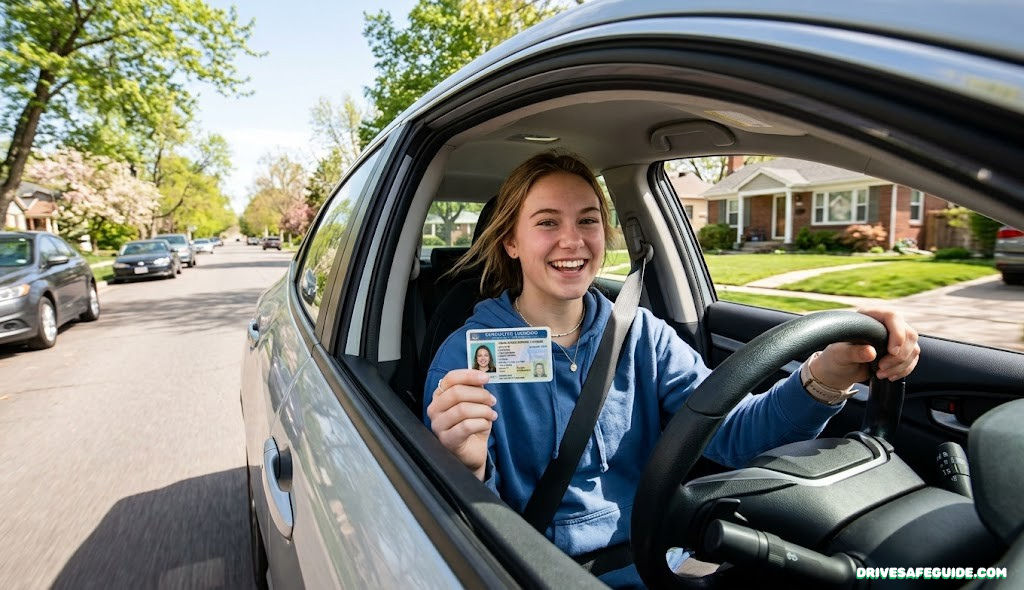
What Is Graduated Driver Licensing?
Graduated Driver Licensing — often called GDL — is a multi-stage system that introduces new drivers to increasing levels of driving responsibility over time. Rather than issuing a full, unrestricted license the moment someone passes a driving test, GDL programs recognize that the skills required for safe driving develop progressively. The system is built on one foundational truth: experience is the single most effective teacher on the road, but gaining that experience is safest when done under controlled conditions.
The core idea is elegantly simple. A new driver first earns a learner’s permit, which allows supervised practice with a licensed adult. After demonstrating competency and logging required hours, they advance to an intermediate or provisional license — one that permits more independent driving but still carries meaningful restrictions. Only after completing this middle phase, and meeting age and time requirements, does the driver qualify for a standard, full-privilege license.
It is worth understanding that GDL programs vary significantly from state to state. There is no single federal graduated licensing law in the United States. Each state designs its own program, which means the specific age requirements, supervised hours, curfew times, and passenger limits you need to know will depend entirely on where you live. That said, the structural framework — learner phase, intermediate phase, full license — is consistent across virtually every state and the District of Columbia.
GDL Is Evidence-Based Policy
Graduated licensing programs are not arbitrary bureaucratic rules. They were developed in direct response to crash data showing that young, inexperienced drivers are most vulnerable during their very first months behind the wheel — particularly at night and with peer passengers present.
Understanding the full scope of graduated licensing restrictions is essential not just for teen drivers, but for their parents, guardians, driving instructors, and anyone who shares the road with newer motorists. When everyone understands the purpose behind these rules, the rules become far easier to respect and follow.
The diagram above summarizes the progression at a glance. What looks like a simple three-step process is actually a carefully engineered system where each phase builds genuine competency before expanding privileges. The key insight is that restrictions are not punishments — they are scaffolding that supports the development of a safer driver.

Driver’s Ed Study Guide — Permit Test Prep
Ace your permit test and understand traffic laws with this comprehensive study guide. Covers GDL rules, road signs, and defensive driving techniques.
View on Amazon →Why Graduated Licensing Matters for Road Safety
To appreciate the importance of graduated licensing, you have to confront the statistics honestly. New drivers — particularly those in the 16–19 age bracket — face crash rates that are dramatically higher than any other age group. This is not because young people are reckless by nature. The elevated risk is largely driven by inexperience combined with specific situational factors that GDL programs directly target.
These numbers reveal exactly why the two most common GDL restrictions — limiting nighttime driving and limiting peer passengers — are the most impactful. Nighttime driving demands a higher skill set: headlight management, reading unlit road features, responding to glare from oncoming traffic, and fighting fatigue. Peer passengers, meanwhile, introduce a social dynamic that measurably increases distraction and risk-taking behavior in young drivers.
Research consistently shows that states with stronger, more comprehensive GDL programs have lower teen crash fatality rates than states with weaker programs. This is not a coincidence. The relationship is causal: graduated systems work because they ensure that new drivers build experience with the support structures in place to catch mistakes before those mistakes become tragedies.
If you’re also thinking about building broader defensive driving habits that reduce collision risk, the mental framework you develop during a GDL program is actually one of the best foundations you can have. The restriction phase teaches you to think deliberately about driving conditions — a habit that stays with you long after the restrictions expire.
The Lethality Window
Studies show that new drivers face their highest crash risk not when they first get a permit, but in the weeks and months immediately after earning an independent license — when they feel more confident but still lack real experience. GDL programs are specifically designed to extend the protected learning window into this critical period.
Graduated licensing is also economically significant. Crashes cost money — in vehicle repairs, medical expenses, insurance rate increases, and in some cases, legal liability. A GDL program that prevents even a small number of collisions per year saves families, insurers, and the healthcare system a significant amount of money and heartache. The investment in compliance with GDL rules is genuinely worth making.

Emergency Roadside Flashlight with Magnetic Base
Every new driver needs a hands-free emergency light. This magnetic base flashlight attaches to any metal surface during tire changes or breakdowns.
View on Amazon →The Three Phases of Graduated Licensing Explained
Every state’s GDL program structures the path to full licensure across three distinct phases. Understanding each phase — what it requires, what it allows, and what it restricts — is the foundation for successfully navigating the system. Let’s examine each phase in depth.
- Must pass written knowledge test
- All driving must be supervised
- Supervisor must be licensed adult 21+ (often 25+)
- Minimum permit holding period: 6–12 months
- Supervised hours required: 30–65+
- Night hours often separately required
- Independent driving now permitted
- Nighttime driving restrictions apply
- Passenger limits in effect
- Cell phone bans typically apply
- Must remain violation-free
- Minimum intermediate period: 12 months
- All restrictions lifted
- No curfew
- No passenger limits
- Standard adult traffic laws apply
- Minimum age: typically 17–18
- Vision test renewal may be required
Phase 1: The Learner Permit in Detail
The learner permit phase is the entry point. To obtain a permit, applicants must typically pass a written knowledge test covering road signs, traffic laws, and safe driving concepts. Many states also require a vision screening at this stage. Once the permit is issued, the new driver may practice driving — but only with a qualified supervising driver present in the vehicle at all times.
The supervising driver requirement is not simply a formality. Research shows that teens who log more supervised hours during the permit phase have significantly lower crash rates in their first years of independent driving. The minimum hours requirement varies by state, ranging from as few as 30 hours to as many as 65, with many states requiring that a portion of those hours be completed at night.
Phase 2: The Intermediate License in Detail
The intermediate or provisional license phase is where most of the noteworthy GDL restrictions apply. Once a new driver passes the road skills test and receives their provisional license, they gain the ability to drive independently — but within clearly defined boundaries. The restrictions that apply during this phase are specifically engineered to remove the situational factors most strongly associated with teen crashes.
Supervisors are no longer required in most driving situations, though some states allow provisional license holders to drive with family members of any age without restriction. What changes are the time, social, and technological boundaries around driving. These are addressed in depth in the following sections.
Passenger Restrictions Under Graduated Licensing
Among all graduated licensing restrictions, passenger limits are simultaneously among the most impactful and the most misunderstood. Many new drivers and their parents assume that having friends in the car is simply a social matter — a personal choice with no bearing on road safety. The data tells a completely different story.
Research has established that the presence of teenage passengers in a vehicle driven by a teen significantly increases crash risk. With one teen passenger, crash risk roughly doubles compared to solo driving. With two or more teen passengers, the risk increases even more dramatically. This is because peer passengers introduce social pressure, distraction, and a dynamic where showing off or accepting dares becomes more likely.
Peer Passenger Risk Is Real
Studies have found that teen drivers take significantly more risks — faster speeds, shorter following distances, more frequent rolling stops — when teen friends are present in the vehicle compared to when driving alone or with adults.
Typical Passenger Restriction Structures
Most states restrict teen passengers during the first 6–12 months of intermediate licensure. The structure of these restrictions varies, but generally falls into a few patterns:
| Restriction Type | What It Means | Common States | Exceptions |
|---|---|---|---|
| Zero teen passengers | No passengers under 20 unless accompanied by licensed adult 25+ | CA, NJ, WI | Family members, supervised driving |
| One passenger limit | Maximum of one teen passenger allowed | FL, TX, GA | Immediate family often exempt |
| Family member exemption | Immediate family (parents, siblings) can ride without limit | Most states | Cousins, friends excluded |
| Occupant restriction by seats | Cannot carry more passengers than available seat belts | Universal | No exceptions |
| Time-phased relaxation | Restrictions ease after 6 months of clean record | AZ, OH, OR | Violations reset the clock |
The Family Exemption Explained
The family exemption is one of the more nuanced aspects of passenger restrictions. Nearly every state that imposes teen passenger limits carves out an exception for immediate family members. This means that an intermediate license holder can typically transport a younger sibling to school or drive a parent to an appointment without violating passenger restrictions.
However, the definition of “immediate family” varies. Most states mean parents, stepparents, legal guardians, siblings, and sometimes grandparents. Cousins, aunts, and uncles often do not qualify. If you’re unsure whether a specific family relationship qualifies in your state, your state’s DMV website is the authoritative source. This also highlights the broader point: always verify rules in your specific state rather than assuming a rule you’ve heard applies universally.
The chart above illustrates the compounding nature of passenger risk. Each additional teen passenger represents a meaningful escalation in crash probability. This is why the restriction is not arbitrary — it directly targets one of the most well-documented risk factors for new drivers. For parents, this means having an open, firm conversation with your teen about why the passenger rule exists and why it matters, even when it feels socially inconvenient. You can find more guidance on this in the parents teaching teen drivers guide.

4K Dashcam with Driver Monitoring — Peace of Mind for Parents
Keep an eye on your teen’s driving with a high-resolution dashcam that captures everything. Ideal for families navigating the GDL phase.
View on Amazon →Nighttime Curfew Rules for Intermediate License Holders
Nighttime curfews are the restriction that most intermediate license holders encounter in their daily lives. The logic behind them is straightforward: nighttime driving is objectively more dangerous for everyone, and for new drivers with limited experience reading dark roads and managing headlight glare, the risk multiplies significantly. Add the element of fatigue — which tends to peak in the late evening and early morning hours — and you have a recipe for preventable crashes.
For those interested in going deeper on why nighttime driving is uniquely challenging, the night driving safety checklist covering headlights, glare, and fatigue is an excellent reference. Understanding the specific hazards of driving after dark helps contextualize why curfews exist.
Common Curfew Timeframes by Region
| State Group | Curfew Begins | Curfew Ends | Notes |
|---|---|---|---|
| Strictest States | 8:00 PM – 9:00 PM | 5:00 AM – 6:00 AM | NJ (11 PM), MA (12 AM with exemptions) |
| Moderate States | 10:00 PM – 11:00 PM | 5:00 AM – 6:00 AM | TX, FL, GA, OH, PA — most common range |
| More Permissive States | Midnight – 1:00 AM | 5:00 AM | Some states with lower overall restriction levels |
| No Statewide Curfew | N/A | N/A | A few states rely on local municipal curfews instead |
Standard Curfew Exemptions
Nearly every state with a nighttime curfew builds in a set of exemptions for situations where driving after hours is genuinely necessary. These commonly include:
- Employment: A new driver commuting to or from work is typically exempt. Most states require documentation — an employer letter or pay stubs — to use this exemption if pulled over.
- School-sponsored activities: Student athletes returning from away games, musicians returning from evening performances, and similar school-supervised activities are usually exempt.
- Religious activities: Travel to or from religious services or events is exempted in most state laws.
- Medical emergencies: If a family member requires emergency care in the middle of the night, the restriction is lifted.
- Adult supervision: Having a licensed adult age 21 or older in the vehicle typically suspends curfew restrictions.
Pro Tip: Carry Exemption Documentation
If you regularly drive after curfew hours for a legitimate reason like work, keep a copy of your work schedule or an employer letter in your glove compartment. A law enforcement officer who pulls you over during curfew hours will likely ask for it, and having it ready demonstrates responsibility and avoids unnecessary complications.
Phone and Distraction Laws Under Graduated Licensing
Distracted driving is one of the most significant road safety challenges of the modern era, and new drivers are among the most vulnerable. The explosion of smartphone use has made this problem far more acute in recent years. In response, virtually every state in the U.S. now imposes specific phone and electronic device restrictions on intermediate license holders — restrictions that are typically more stringent than those that apply to adult drivers.
While many states allow adult drivers to use hands-free calling technology while driving, intermediate license holders are almost universally prohibited from all phone use while driving, including hands-free calls via Bluetooth or speakerphone. This is a meaningful distinction, and one that trips up many young drivers who don’t realize that the adult rules they’ve heard about don’t apply to them yet.
Types of Distraction Covered
- GPS navigation (mounted and pre-set)
- Music from car stereo
- Music pre-selected via integrated system before driving
- Emergency calls in genuine emergencies (state-dependent)
- Communication devices installed by vehicle manufacturer
- Texting while driving
- Handheld phone calls
- Hands-free calls (for intermediate holders)
- Social media browsing
- Video streaming or watching
- Adjusting music with phone in hand
- Taking photos or videos
The consequences of violating phone laws during the intermediate phase go beyond the ticket itself. In most states, a distraction-related violation resets or extends the intermediate phase timeline, delaying progression to a full license. Some states impose mandatory license suspensions for phone violations by intermediate license holders, even on the first offense.
Building the habit of putting your phone on Do Not Disturb while driving is one of the most important things a new driver can do. The apps every driver should use include several that automatically block notifications while the vehicle is in motion — a smart tool for the intermediate phase and beyond.
For those curious about the broader legal landscape of phone use while driving — including what applies to passengers as well — the laws vary significantly by state and are worth understanding in full. Distracted driving isn’t limited to phones: eating while driving, adjusting the radio, and interacting with other passengers can all count as distracted driving behaviors in legal contexts. See this guide on the legal risks and safety impact of eating while driving for a related perspective.

Safe Car Phone Mount — Hands-Free and Secure
Keep your phone out of your hands without ignoring it entirely. A quality mount lets you use GPS legally while building safe driving habits from day one.
View on Amazon →Highway and Expressway Rules for New Drivers
Not every state restricts highway or expressway access for intermediate license holders, but many do impose specific speed limits, require adult supervision for high-speed roadway driving, or place limits on driving in heavy traffic conditions. Even in states where highway driving is technically unrestricted for intermediate license holders, the skill demands of expressway driving deserve careful attention.
Merging onto a highway at speed, maintaining lane discipline on multi-lane roads, managing following distances at 65+ mph, and navigating highway exits safely are skills that require deliberate practice. The guide to managing highway merging anxiety is especially useful for new drivers approaching their first real expressway experiences.
High-Speed Driving Challenges for Intermediate Drivers
The safe following distance rule is especially critical on the highway, where closing speeds are much higher than surface streets. Many new drivers dramatically underestimate how much stopping distance they need at highway speeds. This is one of the most important skills to develop during the permit phase before attempting independent highway driving.
Additionally, weather dramatically changes highway driving dynamics. Intermediate license holders should be especially cautious about highway driving in rain, fog, and winter conditions. For wet-weather driving strategies, the rain driving safety guide covering cruise control and high speeds is essential reading for any new driver preparing for expressway conditions.
State-by-State GDL Comparison
Because there is no federal graduated licensing law, the specific restrictions a new driver faces depend entirely on their state of residence. The table below provides a comparison of key GDL features across major states. Always verify current rules with your state’s DMV, as laws are periodically updated.
| State | Min. Permit Age | Supervised Hours | Curfew Begins | Passenger Limit | Phone Ban |
|---|---|---|---|---|---|
| California | 15½ | 50 hrs (10 night) | 11 PM | 0 under 20 (12 mos.) | All phone use banned |
| Texas | 15 | 30 hrs (10 night) | Midnight | 1 non-family (12 mos.) | All phone use banned |
| Florida | 15 | 50 hrs (10 night) | 11 PM | Occupants = seat belts | Texting banned |
| New York | 16 | 50 hrs (15 night) | 9 PM | 1 under 21 (6 mos.) | All phone use banned |
| Illinois | 15 | 50 hrs (10 night) | 10 PM | 1 non-family (12 mos.) | All phone use banned |
| Pennsylvania | 16 | 65 hrs (10 night) | 11 PM | 1 non-family (6 mos.) | All phone use banned |
| Ohio | 15½ | 50 hrs (10 night) | Midnight | 1 non-family (12 mos.) | All phone use banned |
| Georgia | 15 | 40 hrs (6 night) | Midnight | 1 non-family (12 mos.) | All phone use banned |
| Michigan | 14 yr 9 mo | 50 hrs (10 night) | 10 PM | 1 non-family (12 mos.) | All phone use banned |
| New Jersey | 16 | 6 hrs certified course | 11 PM | 0 non-family (12 mos.) | All phone use banned |
Always Verify Locally
Laws change, and the table above reflects general frameworks rather than fully current legal text. Before making any decisions based on GDL rules, visit your state DMV’s official website or call their information line to confirm current requirements. Some states have also modified their programs recently in response to updated crash research.
Common GDL Violations and Their Penalties
Understanding what can go wrong — and what happens when it does — is an important part of navigating the graduated licensing system responsibly. GDL violations are not treated the same as regular traffic violations in most states. Because intermediate license holders are in a probationary period, violations carry additional consequences designed to reinforce the learning objective of the system.
What Constitutes a GDL Violation
A GDL violation can occur in several ways. The most common are: driving during curfew hours without an eligible exemption, carrying more passengers than the license allows, using a phone or electronic device while driving, or receiving a moving violation (speeding, running a red light, etc.) during the intermediate phase. Each of these can trigger consequences that go well beyond the standard fine.
| Violation Type | Typical Fine Range | License Impact | Other Consequences |
|---|---|---|---|
| Curfew violation | $50–$500 | Extended intermediate phase | Points added in some states |
| Passenger restriction violation | $50–$250 | Phase timeline reset | Possible suspension |
| Phone/texting violation | $100–$500+ | Mandatory suspension in many states | Points, insurance increase |
| Moving violation (any) | Varies by violation | Phase delayed 6–12 months | Possible suspension, points |
| At-fault crash | Variable civil liability | Possible suspension/revocation | Insurance consequences |
| Zero tolerance DUI | $1,000+ and legal fees | Immediate suspension/revocation | Criminal record, mandatory education |
The Cascading Effect of Violations
What makes GDL violations particularly costly is their cascading nature. A single moving violation doesn’t just result in a fine — it resets or extends your intermediate phase, which means you spend more months under restrictions. That creates more opportunities for additional violations, and the cycle can significantly delay the transition to a full license. Some states are particularly unforgiving: a second moving violation during the intermediate phase can trigger a mandatory license suspension even without any crash involvement.
This is one reason why developing strong defensive driving habits early matters so much. Understanding concepts like road rage prevention and how to de-escalate potentially dangerous situations can also protect intermediate license holders. The guide to preventing road rage incidents is worth reading early in the driving journey.
Zero Tolerance for Alcohol
Every state enforces a zero-tolerance or near-zero-tolerance alcohol policy for drivers under 21, and these laws are rigorously applied to GDL drivers. The legal limit for underage drivers is typically 0.00%–0.02% BAC — effectively zero. A DUI as an intermediate license holder can result in immediate license revocation, criminal charges, and consequences that follow the driver for years or decades. There are no exceptions, no second chances, and no gray areas here.

Complete Car Emergency Safety Kit for New Drivers
Every new driver should have a well-stocked emergency kit. This comprehensive kit covers roadside emergencies, first aid, and basic breakdowns.
View on Amazon →The Parent’s Role in Graduated Licensing
Parents and guardians are arguably the most important participants in the graduated licensing system. During the permit phase, they are legally required to supervise all driving. During the intermediate phase, they become the enforcement mechanism for restrictions the law cannot always practically monitor. A teen who gets away with taking extra passengers because their parents don’t enforce the rule is still building dangerous habits, regardless of whether they get caught.
The most effective parental approach combines clear communication, consistent enforcement, and active participation in the learning process. Parents who ride along during permit-phase practice, who have explicit conversations about curfew and passenger rules before the intermediate phase begins, and who respond proportionately to violations are raising safer drivers than parents who hand over keys and hope for the best.
Parent-Teen Driving Agreements
One of the most effective tools available to families navigating the GDL period is a formal parent-teen driving agreement. This is a written document — signed by both parent and teen — that spells out the rules of the road for the household, including consequences for violations. Many states provide downloadable templates, and the act of going through the agreement together is as valuable as the document itself.
A strong parent-teen agreement typically covers:
- Where the teen is allowed to drive and when
- Exact curfew times (which may be more restrictive than the state law)
- Passenger rules and the specific friends/family who may ride
- Phone rules (most agreements specify zero phone use, even hands-free)
- Consequences for violations at home (e.g., reduced driving privileges)
- What to do in an emergency (whom to call, that it’s always okay to call for a pickup)
- Seatbelt requirements for all occupants at all times
For parents looking to give a new driver a thoughtful gift that also promotes safety, there are excellent options covered in the guide to practical graduation gifts for teen drivers. Items like dashcams, emergency kits, and roadside assistance memberships are genuinely useful and communicate that safety matters.
Progressing to a Full License
The transition from intermediate license to full, unrestricted license is a milestone worth understanding clearly. In most states, the requirements include a minimum age threshold (commonly 17 or 18), a minimum time spent in the intermediate phase (typically 12 months), and a clean driving record — meaning no moving violations or significant traffic offenses during the intermediate period.
In some states, this transition happens automatically when all conditions are met: you simply apply at the DMV, pay a fee, and receive your upgraded license. In other states, the transition requires an additional road test or assessment. Either way, it is your responsibility to track your own eligibility — the state typically does not notify you when you become eligible.
What Changes When You Go Full
Rights You Gain With a Full License
- Drive at any hour without curfew restrictions
- Carry any number of passengers (up to vehicle capacity)
- Use hands-free phone technology where permitted by general law
- Drive on any road or highway without restriction
- Work and volunteer without needing to document exemptions
- No more phase extension penalties for violations (standard adult penalties apply instead)
Note: Standard adult traffic laws, alcohol limits (still 0% under 21 in most states for alcohol), and seatbelt requirements continue to apply.
Building Skill Toward Full-License Readiness
The intermediate phase is most valuable when it’s treated as an active training program, not just a waiting period. Some of the most important skills to develop and solidify during the intermediate phase include:
- Parallel parking with consistency — see the parallel parking step guide
- Three-point turns and reversal maneuvers in various spaces
- Hill starts without rollback — essential for manual transmission drivers and urban terrain
- Roundabout navigation, which many newer drivers find intimidating — covered in the roundabout navigation rules guide
- Merging and lane changes at highway speeds with full mirror and shoulder check technique
- Emergency handling like skid correction and brake management
- Vehicle maintenance basics — knowing how to check oil, tires, and fluids
Drivers who enter their full-license phase with these skills genuinely mastered are far less likely to be involved in crashes during the first months of unrestricted driving. The guide to driving test failures and instant-fail mistakes is worth reviewing both before the road test and before the full-license transition to make sure you’re truly ready.
OBD2 Scan Tool — Real-Time Diagnostics for New Drivers
Help new drivers learn to monitor their vehicle’s health. This compact scanner reads fault codes and sensor data in real time.
View on Amazon →Essential Tips for Succeeding Under GDL Restrictions
Completing the graduated licensing process with a clean record and a growing skill set requires intentional effort. The following strategies, drawn from driver safety research and the practical experience of driver education professionals, can make the difference between a smooth transition to full licensure and a frustrating, extended intermediate phase.
Build Your Route Familiarity First
One of the most effective strategies for new drivers is to begin with routes you know well. Use the permit phase to become extremely comfortable with the roads you’ll most often drive independently: the route to school, to work, to familiar friends’ houses. Familiarity reduces cognitive load and lets you focus on driving technique rather than navigation. When you’re ready to expand your range, plan new routes in advance and walk through them mentally before driving them.
Treat Every Drive as a Learning Experience
The intermediate phase goes by faster when you treat each drive as an opportunity to improve, not simply a means of getting somewhere. After each drive, take 60 seconds to think about what went well and what you’d do differently. Did you follow the three-second rule consistently? Were your lane changes smooth and well-signaled? The comprehensive safe driving habits guide offers a framework for this kind of reflective practice.
Proactively Prepare for Challenging Conditions
One of the biggest risks for intermediate license holders is encountering difficult driving conditions for the first time without preparation. Rain, fog, strong crosswinds, and ice are all circumstances that demand techniques a beginner may not have practiced.
- Practice driving in heavy rain under supervision before doing it alone
- Understand how to handle fog driving strategies for visibility
- Learn the principles of winter driving safety including traction and braking in snow
- Know hydroplaning recovery steps before you need them
Build Your Vehicle Safety Knowledge
Understanding your vehicle is part of being a responsible driver. New drivers should know how to check tire pressure, recognize warning lights, and know what to do if a check engine light comes on. Understanding the difference between a solid vs. flashing check engine light and whether it’s safe to drive is exactly the kind of practical knowledge that builds confidence and safety simultaneously.
Maintain a Roadside Emergency Kit
Every driver — new or experienced — should carry a well-stocked emergency kit. Flat tires, dead batteries, and minor accidents happen to all drivers regardless of skill level. Being prepared means you can handle these situations calmly without calling for help in a panic. A complete guide to building a car safety kit covering tires, batteries, and first aid covers everything you need. You may also want to review the road trip essentials checklist for longer journeys once you’ve earned more independence.
Frequently Asked Questions
What is the difference between a learner’s permit and an intermediate license?
A learner’s permit is the first stage of graduated licensing and requires a licensed supervising adult to be present in the vehicle at all times. You cannot drive alone on a permit. An intermediate (or provisional) license is issued after passing a road skills test and allows solo driving, but within specific restrictions such as nighttime curfews and passenger limits. Think of the permit as training wheels and the intermediate license as supervised independence.
Do passenger restrictions apply to family members?
In most states, immediate family members — parents, stepparents, legal guardians, and siblings — are exempt from passenger restrictions. This means an intermediate license holder can typically transport a younger sibling to school or drive a parent without violating the restriction. However, cousins, aunts, uncles, and family friends generally do not qualify under most state laws. Always verify how your specific state defines “immediate family” for this exemption, as definitions vary.
Can an intermediate license holder use a Bluetooth earpiece or hands-free calling?
In most states, the answer is no. While adult drivers are sometimes permitted to use hands-free calling technology, intermediate license holders are typically subject to a complete ban on electronic device use, including hands-free calling through Bluetooth earpieces, speakerphone, and integrated car systems. The reasoning is that even hands-free calls create cognitive distraction that experienced drivers manage better than new drivers. Always check your specific state’s current law, as a small number of states do allow hands-free communication for intermediate holders.
What happens if a GDL restriction is violated?
Consequences for GDL violations are typically more severe than standard traffic tickets because the driver is in a probationary period. Common consequences include fines, extension of the intermediate phase (often resetting the timeline by 6–12 months), license suspension in some states for more serious violations like phone use or DUI, and added points to the driving record. Parents may also face consequences in some states for allowing or failing to prevent repeated violations by a minor in their care.
How long does the graduated licensing process take from start to finish?
The minimum total duration varies by state but is typically 2–3 years from first obtaining a permit to reaching the age and time requirements for a full license. Most teens obtain a learner’s permit around age 15–16, spend 6–12 months in the permit phase, then 12 months or more in the intermediate phase before becoming eligible for a full license at age 17 or 18. Any violations that reset phase timelines can extend this process further. Pennsylvania is among the longest at requiring 65 supervised hours before the road test.
Do GDL restrictions apply when driving with a licensed adult in the car?
In many states, the presence of a qualified supervising adult — typically age 21 or older with a valid full license — suspends or relaxes intermediate restrictions including curfew and passenger limits. The logic is that the supervisory function previously required during the permit phase re-activates when an adult is present. However, this varies significantly by state, and some states impose restrictions regardless of adult presence. Check your specific state law before assuming adult presence removes all restrictions.
Can a graduated license holder drive in other states?
Yes, in most cases — and generally, the more restrictive rule applies. When an intermediate license holder drives in another state, they must typically obey the driving laws of the state they’re visiting. However, the GDL restrictions from their home state technically still attach to their license. In practice, enforcement across state lines is rare, but the legal obligation remains. When planning road trips with an intermediate license, it’s worth reviewing the rules for every state you’ll pass through. See also the cross-country driving checklist for multi-state trip planning.
What should I do if I’m stopped by police during curfew hours for a legitimate reason?
Stay calm, be polite, and provide your license and registration as requested. Calmly explain your exemption — for example, that you are returning from work and have a pay stub or employer letter in your glove box. Keep any documentation of regular exemptions (employer letters, school schedules, etc.) in the car. Law enforcement officers who stop teens during curfew are doing their job; cooperating and explaining your situation clearly is the best approach. If the exemption is valid and documented, the stop typically does not result in a violation.
Does a driver’s education course speed up the GDL process?
In many states, yes. Completing a state-approved driver education course can allow teens to obtain a learner’s permit at a younger age, reduce the required supervised hours, or shorten the intermediate phase by a few months. Some states require driver education as a prerequisite for any license at all for teens under 18. Even where it is optional, formal driver education significantly improves skill development and is worth taking regardless of any timeline benefit it may provide. Check with your state DMV and compare online driver’s ed options for your state.
Are there any states that don’t have a graduated licensing system?
All 50 states and the District of Columbia have some form of graduated driver licensing. However, the strength and scope of those programs varies considerably. Some states have robust three-phase systems with meaningful requirements at each stage; others have weaker programs with minimal restrictions. Research by highway safety organizations consistently finds a correlation between GDL program strength and teen crash fatality rates — states with stronger programs have lower rates. If your state has a relatively weak GDL program, consider treating the restrictions of a stronger program as personal standards to hold yourself to.
What is the best thing a parent can do to help their teen succeed in the GDL process?
The most effective thing a parent can do is to maximize high-quality supervised driving during the permit phase. This means driving in varied conditions — rain, night, highway, heavy traffic — so the teen encounters these situations first with an experienced guide rather than alone. Beyond that, creating a clear parent-teen driving agreement before the intermediate phase, enforcing it consistently, and keeping communication open throughout the process are the most impactful factors. Finally, modeling good driving behavior yourself matters more than most parents realize. Teens notice when their parents speed, use phones, or skip seatbelts.
The Bottom Line on Graduated Licensing
Graduated driver licensing is one of the most evidence-backed, effective road safety interventions available. The restrictions it imposes — curfews, passenger limits, phone bans — are not obstacles or punishments. They are carefully designed guardrails that protect new drivers during the most statistically dangerous period of their entire driving career.
Whether you’re a new driver working through the intermediate phase, a parent helping a teen navigate GDL, or a driving instructor shaping the next generation of motorists, understanding and respecting these restrictions is one of the most meaningful things you can do to reduce crash risk on shared roads.
Take the process seriously. Maximize supervised practice. Obey the restrictions — not because you have to, but because they work. And build the habits that will make you a safe, confident driver long after all the restrictions have fallen away.
Teen Driver Safety Bundle — Emergency Kit & Study Guide
The perfect combination for a new driver starting out: a comprehensive emergency kit and a driving knowledge guide to handle anything the road throws at them.
View on Amazon →