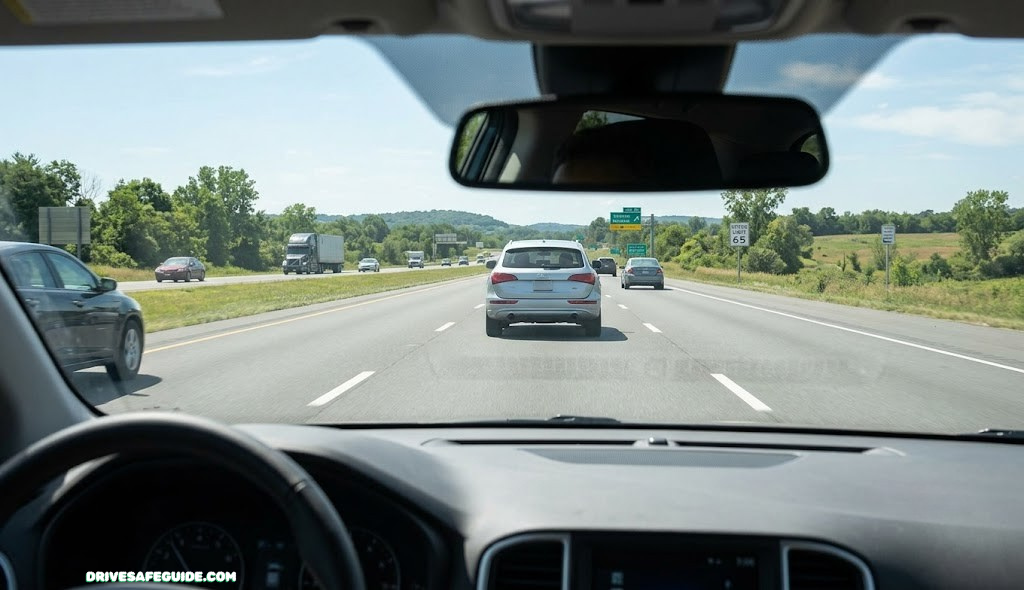
Mastering the Safe Following Distance Rule for Defensive Driving
The single habit that buys you the most time, the most control, and the most forgiveness on the road — explained the way a driving instructor would explain it, not the way a textbook does.
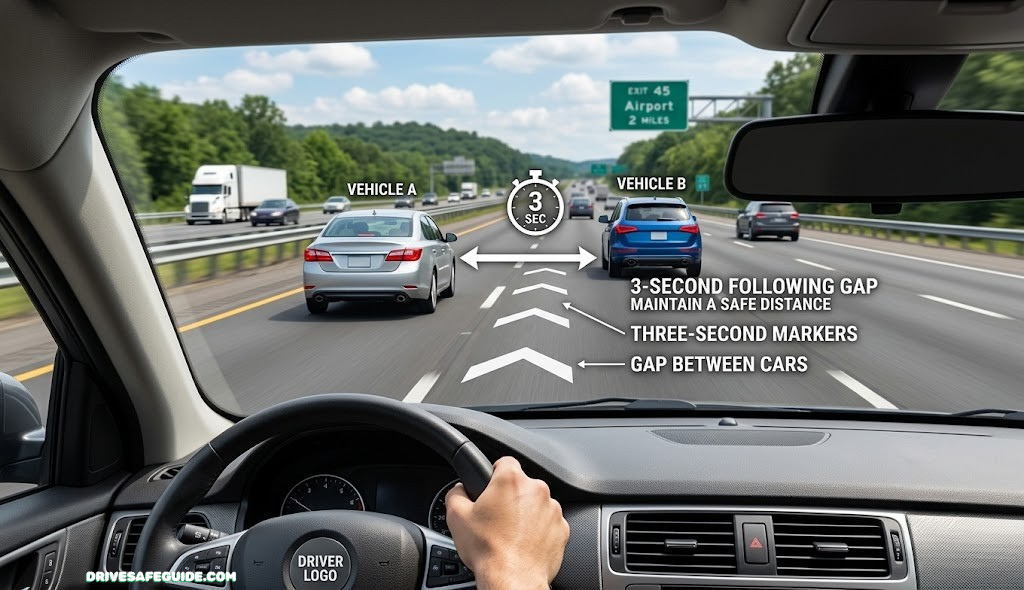
A safe following distance is not a fixed number of car lengths — it’s a moving target that depends on speed, weather, and what’s ahead of you.
What the Safe Following Distance Rule Actually Means
Most drivers can recite the rule without ever really using it. “Leave some space.” “Don’t tailgate.” “Two seconds, or is it three?” The safe following distance rule is simple to state and surprisingly easy to ignore in practice, which is exactly why it deserves a closer look.
At its core, the rule asks a single question: if the vehicle ahead of you stopped right now, completely and without warning, would you have enough room to stop too? Everything else — the seconds, the car lengths, the weather multipliers — is just a practical way of answering that question without needing a laser rangefinder mounted on your dashboard.
Following distance is usually measured in time rather than feet, because time scales automatically with speed. A gap that feels generous at 25 mph in a parking lot evaporates in an instant at 70 mph on the interstate. Measuring in seconds — the time it takes you to reach the spot the car ahead just passed — keeps the safety margin consistent no matter how fast you’re going.
This matters because rear-end collisions are among the most common and most preventable crash types on the road. They almost never happen because a driver couldn’t see the car in front of them. They happen because there wasn’t enough distance banked to absorb the surprise. Following distance is the one variable a driver controls completely, every second of every drive, regardless of what anyone else on the road is doing.
Why Following Distance Is the Foundation of Defensive Driving
Defensive driving is often described as a mindset — scanning ahead, anticipating other drivers’ mistakes, staying calm under pressure. All of that is true, but a mindset only helps if you’ve left yourself the physical space to act on it. Following distance is where defensive driving stops being a philosophy and becomes something measurable in the ten feet between your bumper and the next.
Consider what a proper gap actually buys you:
- Reaction time. A few extra seconds of following distance is often the exact amount of time a driver needs to notice brake lights, register the situation, and move a foot from the accelerator to the brake.
- Braking room. Even after you react, the car needs physical distance to slow down. That distance grows fast as speed increases — much faster than most drivers intuitively expect.
- Visibility. Hanging back a bit lets you see further down the road, over or around the vehicle ahead, which means spotting hazards earlier than the driver right in front of you.
- Escape options. A cushion of space gives you somewhere to go — a lane shift, a shoulder, a controlled slowdown — instead of a single binary choice between hitting the brakes hard or hitting the car ahead.
This is also why following distance shows up early in nearly every defensive driving habit worth building. It’s the rare skill that costs nothing, requires no special equipment, and pays off on every single trip — commute, road trip, or a quick run to the store.
The Physics of Stopping Distance (Why the Rule Works)
To understand why a fixed number of car lengths falls apart at highway speed, it helps to break stopping distance into its two real components: the distance you travel before you even start braking, and the distance the car needs to actually stop once you do.
Reaction distance grows in a straight line with speed. Braking distance grows with the square of speed — which is why “leave a couple car lengths” stops working above city speeds.
Reaction distance is what you cover during the roughly 1 to 2 seconds it takes an alert driver to notice a hazard, decide to brake, and move their foot onto the pedal. It’s a simple relationship: double your speed, and you roughly double the distance covered during that same reaction window.
Braking distance behaves very differently. Once the brakes actually engage, the distance needed to stop increases with the square of your speed, not in a straight line. Going from 30 mph to 60 mph doesn’t double your braking distance — it roughly quadruples it, all else being equal. This is the part of the equation most drivers underestimate, and it’s the mathematical reason a fixed “two car lengths” rule is close to meaningless once you’re moving faster than a school zone.
Tire condition, brake health, and road surface all shift these numbers further. A vehicle with worn brake pads or tires nearing the end of their tread life needs meaningfully more room to stop than the same car with fresh components — one more reason following distance should be treated as a variable you actively manage, not a fixed habit you set once and forget.

The 3-Second Rule, Step by Step
The 3-second rule is the most widely taught version of the following distance rule because it’s easy to apply without any equipment, and it automatically scales with your speed. Here’s exactly how to use it.
Step 1: Pick a Fixed Landmark
Choose something stationary just ahead of the vehicle you’re following — a sign, an overpass shadow, a lane-marking seam, a pole. It needs to be something both cars will pass over.
Step 2: Start Counting When the Car Ahead Passes It
The moment the rear bumper of the vehicle in front of you crosses that landmark, start counting: “one-one-thousand, two-one-thousand, three-one-thousand.”
Step 3: Check Where You Are When You Reach It
If your front bumper reaches the same landmark before you finish counting to three, you’re following too closely. Ease off the accelerator and open the gap.
If your bumper reaches the landmark before you finish counting to three, the gap is too tight for current conditions.
Step 4: Repeat It Automatically
The 3-second count isn’t a one-time check. Traffic speed changes constantly, so the gap needs to be re-verified every so often — after a lane change, after traffic thins out, after you’ve been distracted for a moment. Good defensive drivers run this count almost subconsciously, the way an experienced typist doesn’t look at the keyboard.
This same landmark method pairs well with highway merging and zipper-merge situations, where following distance tends to collapse as drivers focus on the merge point instead of the gap ahead.
When 3 Seconds Isn’t Enough
Three seconds is a baseline for good conditions — dry pavement, clear weather, an alert driver, in a car with healthy brakes and tires. Change any one of those variables and the number needs to move too. Treat the 3-second count as a floor, not a target.
Situations Where 3 Seconds Usually Holds
- Dry, well-maintained roads in daylight
- Light to moderate traffic at steady speed
- A rested, unhurried, undistracted driver
- A vehicle with good tires and responsive brakes
Situations That Demand More Than 3 Seconds
- Rain, fog, snow, or ice on the road
- Following a large truck, trailer, or motorcycle
- Driving at night or into low sun glare
- Towing, hauling a heavy load, or driving a larger vehicle
- Fatigue, unfamiliar roads, or heavy traffic
| Condition | Recommended Adjustment | Why |
|---|---|---|
| Rain | 4–5 seconds | Reduced tire grip roughly doubles braking distance |
| Fog / low visibility | 5+ seconds | Less time to see and process a hazard ahead |
| Snow / icy roads | 8–10 seconds or more | Braking traction can drop to a fraction of dry pavement |
| Night driving | 4–5 seconds | Headlight range limits how early hazards are visible |
| Following a truck | 5+ seconds | Blocked sightlines and longer truck stopping distances |
| Towing / heavy load | Add 1 second per extra 1,000 lbs (approx.) | Added mass increases braking distance |
Wrap the table above in a horizontally-scrollable container on narrow screens — already handled by the responsive layout on this page.
Safe Following Distance by Speed: Reference Table
Because time-based counting isn’t always intuitive to visualize, it helps to see roughly how much physical space a 3-second gap actually represents at different speeds. These are approximate figures for dry, daylight conditions.
| Speed | 3-Second Gap (approx.) | Rough Car Lengths |
|---|---|---|
| 25 mph | ~110 feet | 7 cars |
| 35 mph | ~154 feet | 10 cars |
| 45 mph | ~198 feet | 13 cars |
| 55 mph | ~242 feet | 16 cars |
| 65 mph | ~286 feet | 19 cars |
| 75 mph | ~330 feet | 22 cars |
Notice how quickly the required gap grows. At 75 mph, a 3-second cushion is longer than an entire football field. That’s a hard number to eyeball accurately, which is exactly why the counting method — not a visual estimate of “a few car lengths” — is the more reliable habit to build.
Weather and Visibility Adjustments
Weather changes two things at once: how much traction your tires have, and how much you can actually see. Both push in the same direction — toward needing more space, not less.
Rain
Wet pavement roughly doubles stopping distance compared to dry conditions, and the first 10–15 minutes of rain are often the worst, when oil and dust on the road haven’t washed away yet. Pair a longer following distance with the guidance in this rain driving safety guide, and be aware of hydroplaning recovery steps in case standing water causes a loss of traction despite the extra space.
Fog
Fog is unusual because it doesn’t just reduce traction — it reduces how far ahead you can see at all, sometimes to a few car lengths. Following distance needs to expand well beyond the 3-second baseline, and speed needs to drop to match your actual visibility, not the posted limit. Full strategies are covered in this fog driving guide.
Snow and Ice
On snow, and especially on ice, tire grip can fall to a small fraction of what it is on dry pavement. A gap that feels excessive in normal conditions can still be too tight on a slick road. See the dedicated winter driving safety guide and the black ice survival guide for how to recognize and respond to the most dangerous surface conditions.
Minimum recommended following time by condition. Treat these as starting points — the worse the visibility or traction, the more you should add.
Following Distance at Night
Night driving quietly erodes the margin most drivers count on, because headlights only illuminate a limited stretch of road ahead — often shorter than the distance needed to stop safely at highway speed. That mismatch is one of the main reasons nighttime crash rates run higher relative to traffic volume than daytime rates.
Extending following distance at night compensates for two things at once: reduced depth perception (it’s genuinely harder to judge the gap to a car you can only see by its taillights) and the higher chance of an unlit hazard — a pedestrian, an animal, debris — appearing with almost no warning. Combine a longer gap with the checklist in this night driving safety guide, particularly around headlight aim and glare management, since a poorly aimed headlight makes it even harder to judge the distance to the car ahead.
Fatigue compounds the problem. Reaction time slows measurably after a long day behind the wheel, which effectively shrinks your following distance even if you haven’t changed your speed. If you notice yourself drifting mentally, treat it as a hard signal to pull over rather than trying to compensate with a slightly bigger gap — see the drowsy driving checklist for how to recognize the warning signs early.
Tailgating: Risks, Psychology, and How to Respond
Tailgating is following distance’s opposite number, and understanding why people do it helps explain why the habit is so persistent. Drivers tailgate for a mix of reasons: impatience, a false sense of control, misjudging their own reaction time, or simply not thinking about the gap at all.
If You Catch Yourself Tailgating
Ease off the accelerator and let the gap open naturally rather than braking hard, which just resets the same tight distance a few seconds later once you speed back up. Re-run the 3-second count and treat it as a checkpoint, not a one-time fix.
If Someone Is Tailgating You
Resist the urge to brake-check or speed up defensively — both tend to escalate the situation. Instead, increase your own following distance to the car ahead of you, which gives you more room to slow down gradually if needed, and move over when it’s safe to let the tailgater pass. This is one small piece of a much broader approach to preventing road rage incidents from escalating on the road.
What Actually Reduces Tailgating
- Leaving earlier so a tight schedule isn’t driving your following distance
- Using the 3-second landmark method as an automatic habit
- Increasing distance proactively in heavy or unpredictable traffic
What Doesn’t Work
- Flashing lights or brake-checking a tailgater
- Speeding up to “get away” from the car behind you
- Judging distance by eye instead of counting seconds
Following Distance for Trucks, Motorcycles, and Towing
The 3-second baseline assumes a typical passenger car in typical conditions. Certain vehicles — the ones you’re following, and the one you’re driving — change the math.
Following Large Trucks
Large trucks and trailers take longer to stop than passenger cars, especially when loaded, and they block far more of your forward view. A 3-second gap behind a truck also often puts you in or near a blind spot. Widening the gap to 5 seconds or more improves both visibility and stopping margin at the same time — a theme that shows up again in guidance on highway driving stability, since trucks also generate more turbulence and crosswind at speed.
Following Motorcycles
Motorcycles can decelerate faster than most cars, and their smaller size makes distance harder to judge accurately. Give a motorcycle the same generous gap you’d give a car, and resist the temptation to close the distance just because the visual gap looks larger than it is with a smaller vehicle.
Towing or Driving a Loaded Vehicle
Added weight increases stopping distance directly, and a trailer adds its own momentum that pushes against your brakes. As a rough rule, add roughly one extra second of following distance for every additional 1,000 pounds being towed or hauled, and treat that as a floor rather than a precise formula — actual figures vary by vehicle and trailer brake setup. This pairs with broader road trip essentials planning, since towing setups are common on longer trips.

Tools and Tech That Help You Keep the Gap
Following distance is ultimately a discipline, not a gadget, but a few tools make the habit easier to build and easier to verify after the fact.
Dash Cams
A forward-facing dash cam gives you objective footage of the gap you actually kept, not the gap you think you kept, which is useful both for self-review and for documentation if a tailgating incident or near-miss occurs. See this comparison of 4K dash cams built for night driving if visibility after dark is a priority.
Tire and Brake Monitoring
Since braking distance depends heavily on tire and brake condition, keeping both in good shape effectively extends your real-world safety margin without changing your driving at all. A simple tire pressure gauge and periodic brake pad checks go a long way toward keeping your actual stopping distance close to the “ideal” numbers used in following-distance charts.
Emergency Preparedness
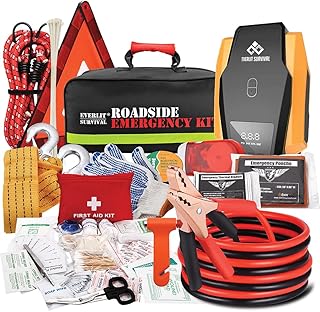
Even a well-kept following distance doesn’t eliminate risk entirely, which is why a stocked car safety kit remains a sensible companion habit — not because it prevents a collision, but because it shortens how badly a bad day on the road can go.
| Tool | What It Helps With | Best For |
|---|---|---|
| Dash cam | Verifying and reviewing actual following distance | Daily commuters, rideshare drivers |
| Tire tread gauge | Confirming real-world braking capability | Anyone before a long trip or winter season |
| Emergency kit | Reducing consequences if a gap fails | Road trips, unfamiliar routes |
Turning Following Distance Into a Lasting Habit
Knowing the 3-second rule and actually using it every time you drive are two different things. Like most defensive driving habits, following distance sticks best when it’s tied to a simple, repeatable trigger rather than treated as something to remember consciously on every trip.
- Recheck after every speed change. Merging onto a highway, exiting, or slowing for traffic are natural moments to re-run the count.
- Treat tight gaps as a cue, not a target. If you notice you’re close enough to read a bumper sticker, that’s the signal to back off — not a sign you’re driving efficiently.
- Adjust before conditions get bad, not after. Widening the gap as the first raindrops hit the windshield is far safer than doing it once the road is already slick.
- Pair it with other defensive habits. Following distance works best alongside scanning ahead, minimizing distractions, and the broader set of defensive driving habits that reduce collision risk.
Over time, the 3-second count stops being a deliberate exercise and becomes background awareness — the same way an experienced driver doesn’t consciously think about checking mirrors before changing lanes. That’s the actual goal: not memorizing a number, but building a habit reliable enough to hold up on the one day it matters most.
The Bottom Line on Safe Following Distance
The safe following distance rule isn’t a suggestion buried in a driver’s manual — it’s one of the few genuinely free safety upgrades available to every driver, every trip, in every vehicle. A 3-second baseline, adjusted upward for weather, visibility, vehicle size, and fatigue, gives you the single most useful resource in an emergency: time. Time to notice, time to react, and time to stop.
Make the count automatic, widen it without hesitation when conditions call for it, and treat the space ahead of you as one of the most valuable things you control behind the wheel.
Explore More Defensive Driving Habits →Frequently Asked Questions
What is the safe following distance rule?
It’s a guideline for how much space and time to keep between your vehicle and the one ahead so you can react and stop safely if the lead vehicle brakes suddenly. It’s most reliably measured in seconds, not car lengths, since time scales automatically with speed.
Is it 2 seconds or 3 seconds?
Both numbers circulate in driving guidance. Two seconds is sometimes taught as a bare minimum in light, ideal conditions, while 3 seconds is the more commonly recommended baseline for everyday driving. Either way, both should be treated as a floor, increased for weather, traffic, and visibility.
How do I measure following distance without a tool?
Pick a fixed landmark the car ahead passes, then count seconds until your own vehicle reaches that same point. No special equipment is required — just a stationary reference point and a steady count.
Does following distance change at higher speeds?
The time-based rule (3 seconds) stays the same number regardless of speed, but the physical distance it represents grows substantially. At higher speeds, that same 3-second count covers hundreds of feet, which is why counting in seconds is more reliable than estimating car lengths by eye.
How much extra distance is needed in the rain?
A common guideline is to roughly double the dry-condition gap, moving from 3 seconds to about 4–5 seconds, since wet pavement significantly increases braking distance.
What’s a safe following distance on ice or snow?
Considerably more than on dry pavement — often 8 to 10 seconds or more, since tire traction on snow and ice can drop to a small fraction of what it is on dry roads.
Why does following distance matter more behind trucks?
Large trucks take longer to stop, block more of your forward view, and create blind spots at close range. A wider gap, often 5 seconds or more, improves both visibility and stopping margin.
Is tailgating illegal?
Most jurisdictions have some form of “following too closely” statute, though the exact legal distance requirement varies by location. Beyond the legal question, tailgating substantially increases rear-end collision risk regardless of whether it’s specifically cited.
What should I do if someone is tailgating me?
Avoid braking suddenly or speeding up in response. Increase your own following distance to the vehicle ahead for a larger safety cushion, and move over to let the tailgater pass when it’s safe to do so.
Does towing a trailer change safe following distance?
Yes. Added weight increases stopping distance, so following distance should increase as well — roughly an extra second for every additional 1,000 pounds being towed is a reasonable starting adjustment, though actual figures vary by vehicle and trailer.
Does a dash cam actually help with following distance?
Indirectly, yes. A dash cam won’t change your following distance in the moment, but reviewing footage afterward helps drivers see gaps they misjudged in real time, which reinforces better habits going forward.
Is a longer following distance ever a problem?
An excessively large gap can occasionally invite other drivers to merge into it, but this is a minor tradeoff compared to the risk of following too closely. When in doubt, err on the side of more space, not less.