Safe Driving Habits: The Ultimate Guide to Accident Prevention and Road Safety
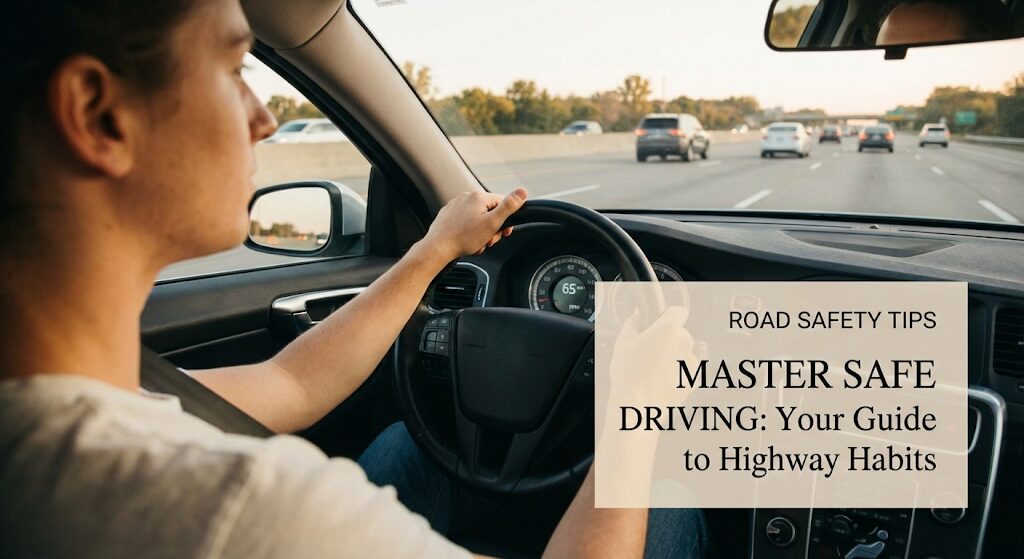
Driving is likely the most dangerous activity you participate in on a daily basis. According to global safety statistics, human error accounts for over 90% of all road accidents. The difference between a near-miss and a collision often comes down to habit. Safe driving isn’t just about following the law; it is about cultivating a subconscious set of behaviors that constantly scan for, predict, and neutralize threats before they materialize.
In this comprehensive guide, we will break down the 12 non-negotiable safe driving habits that distinguish an average operator from a truly defensive driver. Whether you are a newly licensed teen or a veteran of the road, these strategies are your frontline defense.
1. The Defensive Mindset: Anticipation vs. Reaction
Most accidents happen because a driver was reacting to a situation rather than anticipating it. The core of safe driving is the shift from “passive” to “active” driving.
The SIPDE Method
Defensive driving schools often teach the SIPDE method, which stands for:
- Scan: Continuously sweep your eyes across the road, not just the car in front of you.
- Identify: Recognize potential hazards (a ball rolling into the street, a car swerving).
- Predict: Ask yourself, “If that car swerves, where will I go?”
- Decide: Determine your course of action (brake, steer, accelerate).
- Execute: Perform the maneuver smoothly.
A defensive driver assumes that other drivers will make mistakes. They expect the car at the stop sign to pull out in front of them; they expect the pedestrian to jaywalk. By expecting the worst, you are never surprised when it happens.
 Shop Defensive Driving Manuals
2. Eliminating Distractions: The Modern Epidemic
Distracted driving claims thousands of lives annually. While smartphones are the primary culprit, distraction comes in three forms:
| Type | Description | Examples |
|---|---|---|
| Visual | Taking your eyes off the road. | Checking GPS, looking at a billboard, turning to talk to passengers. |
| Manual | Taking your hands off the wheel. | Eating, drinking coffee, grooming, adjusting the radio. |
| Cognitive | Taking your mind off driving. | Daydreaming, arguing on a hands-free call, stress. |
For those who struggle with focus due to neurodivergent conditions, standard strategies might not be enough. It is crucial to understand how your brain works on the road. Read more about driving with Dyslexia, ADHD, and Dyspraxia: rights and strategies to tailor your habits to your specific needs.
Shop Hands-Free Phone Mounts
3. The 3-Second Rule and Space Management
Tailgating is a leading cause of rear-end collisions. Safe driving requires a “safety cushion” of space around your vehicle. This space buys you time to react.
How to Measure Following Distance
Pick a stationary object on the side of the road (a sign or tree). When the rear bumper of the car ahead of you passes it, start counting: “One thousand one, one thousand two, one thousand three.” If you pass the object before you finish counting, you are too close.
Note: In adverse weather (rain, snow, fog), this should be increased to 5 or 6 seconds. The heavier your vehicle, the more space you need.
4. Intelligent Speed Control
Speed limits are set for ideal conditions. A safe driving habit involves adjusting your speed based on the current conditions, not just the sign on the post. This concept is known as “driving too fast for conditions,” and it is a common citation in accidents.
Factors that dictate a lower speed include:
- Traffic Flow: Driving significantly faster or slower than the flow of traffic creates turbulence and danger.
- Road Condition: Potholes, gravel, or construction zones require reduced speeds.
- Visibility: If you cannot see 10 seconds ahead of you, you cannot stop in time for a hazard you can’t see.
5. Intersection Mastery
Intersections are conflict points where paths cross. They are high-risk zones. A critical habit is to never blindly trust a green light. When the light turns green, count to two and scan Left-Right-Left before entering.
6. Blind Spot Management and Mirror Usage
You should be checking your mirrors every 5 to 8 seconds. This keeps you updated on the “traffic picture” behind you. However, mirrors have limits. Relying solely on mirrors for lane changes is a recipe for disaster.
The Shoulder Check
Before every lane change, you must physically turn your head to check the blind spot—the area next to your car that mirrors don’t show. This momentary glance confirms that a motorcycle or small car isn’t hiding right next to your rear fender.
Shop Blind Spot Mirrors
7. Weather Adaptation
Rain, snow, and ice change the physics of driving. Tires lose grip, and stopping distances double or triple. A key habit is identifying the change in road surface early.
Winter driving, in particular, requires preparation beyond just driving skills. It requires equipment. Do not get caught unprepared in a blizzard or freezing rain. Review our comprehensive winter car emergency kit checklist to ensure your trunk is stocked with essentials like thermal blankets and traction aids.
8. Vehicle Health Checks
You cannot drive safely in an unsafe vehicle. Developing a habit of a “pre-flight check” can save your life. Once a week, walk around your car. Check tire pressure, look for cracks in the windshield, and ensure all lights are working.
Warning Lights
Modern cars communicate their health through the dashboard. Ignoring these lights is dangerous. For example, a check engine light can mean anything from a loose gas cap to a misfiring engine. Understanding the difference is vital. Learn more about the solid vs. flashing check engine light and whether it is safe to keep driving.
Shop Tire Pressure Gauges
9. Combating Fatigue
Drowsy driving is as dangerous as drunk driving. Fatigue slows reaction times and impairs judgment. The most dangerous aspect is “microsleep”—nodding off for just a second or two. At highway speeds, a 2-second microsleep means you travel the length of a football field completely blind.
If you find yourself yawning frequently, drifting lanes, or unable to remember the last few miles, pull over immediately. Coffee is a temporary fix, not a cure. For a structured approach to managing tiredness on long trips, use our drowsy driving checklist.
10. Parking Lot Safety
Parking lots are low-speed environments with high accident frequency. Pedestrians appear from between cars, carts roll away, and drivers back out blindly. The safest habit in a parking lot is to “Pull Through” whenever possible.
By pulling through to the spot facing the next lane, or backing into a spot upon arrival, you ensure that when you leave, you are driving forward. Driving forward out of a spot offers 100% better visibility than backing out into active traffic.
11. Emotional Control and Road Rage
Driving can be stressful. Traffic jams, rude drivers, and running late can trigger anger. Road rage leads to aggressive maneuvering, speeding, and “brake checking.” A safe driver separates their ego from their driving.
If another driver cuts you off, let it go. Do not engage, do not make eye contact, and do not escalate. Assume the other driver is having a medical emergency rather than personally attacking you. This mental reframe de-escalates your own anger and keeps you focused on safety.
12. Physical and Mental Readiness
Finally, safe driving starts before you even enter the car. It assesses whether you are fit to drive. This includes sobriety (alcohol and drugs), but also emotional distress and illness.
Consider the impact of physical pain or minor medical procedures. Many drivers assume they are fine to drive after a dental appointment, but local anesthetics and pain can impair cognitive function. Before getting behind the wheel after a procedure, check our guide on driving after a root canal: local vs. sedation.
Shop Car First Aid Kits
Conclusion: Making Safety a Lifestyle
Building safe driving habits is a lifelong journey. It requires conscious effort every time you turn the key. By mastering space management, eliminating distractions, and maintaining your vehicle, you actively reduce the statistical probability of an accident.
Don’t wait for a close call to change your habits. Start today. Choose one of these 12 habits to focus on during your next drive, and master them one by one. The road is shared by us all; let’s make it safer together.
Browse Top Rated Car Safety Accessories
13. Night Driving Safety: Seeing and Being Seen
Roughly half of all traffic fatalities occur after dark, even though a much smaller share of total miles are driven at night. The reason is simple: human depth perception, color recognition, and peripheral vision all degrade once the sun goes down, and glare from oncoming headlights can cause several seconds of temporary blindness. A safe driving habit after dusk starts with accepting that your normal daytime margins are no longer good enough.
Adjusting Your Following Distance and Speed
Because your headlights only illuminate a limited stretch of road ahead, you should never drive so fast that you outrun your headlights — meaning you cannot stop within the distance you can actually see. On unlit rural roads, this often means slowing down well below the posted limit, especially around curves where your low beams sweep away from the road surface just when you need them most.
Extend your following distance at night beyond the standard three seconds. The taillights of the car ahead give you far less visual information than you would have in daylight, so a longer cushion compensates for the reduced data you are receiving.
Combating Headlight Glare
When an oncoming vehicle has its high beams on, resist the urge to stare directly at the lights. Instead, shift your gaze slightly toward the white line on the right edge of your lane. This “keep your eyes on the fog line” technique preserves your night vision while still keeping you oriented within your lane. Always dim your own high beams for oncoming traffic and when following another vehicle closely, since your bright lights reflecting in their mirrors can blind them just as easily as theirs can blind you.
Fighting Night-Specific Fatigue
Your body’s circadian rhythm naturally pushes you toward drowsiness in the late evening and the early hours of the morning, regardless of how much sleep you got the night before. If a long drive is unavoidable at these hours, plan deliberate rest stops every two hours, keep the cabin cool, and avoid heavy meals beforehand, since digestion competes with alertness for your body’s resources.
Headlight Maintenance and Aim
Even a healthy driver with excellent night vision cannot compensate for poorly maintained headlights. Over time, plastic headlight lenses can become cloudy or yellowed from ultraviolet exposure, cutting the amount of usable light that reaches the road by a significant margin. A simple habit of inspecting your headlights every few months for haze, moisture inside the housing, or a burned-out bulb can meaningfully restore your visibility at night. Headlight aim also matters: lights angled too low waste illumination on the pavement just in front of the car, while lights aimed too high blind oncoming drivers without actually helping you see farther down the road. If you frequently notice other drivers flashing their lights at you, it may be worth having your headlight alignment checked by a technician.
Reading Reflective Cues in the Dark
At night, much of your situational awareness comes not from directly seeing objects but from noticing reflections. Road signs, lane markers, and the reflective eyes of animals near the roadside all catch your headlights before the object itself becomes visible. Training yourself to notice these small flashes of reflected light, rather than waiting to see a full silhouette, effectively extends your reaction window by a second or two, which can be the difference between a controlled stop and a collision.
Rural Roads Versus City Streets After Dark
Night driving hazards differ significantly between environments. On unlit rural roads, the primary danger is often reduced visibility of animals, unlit vehicles, and unmarked curves. In cities, the challenge shifts toward glare from oncoming headlights, streetlights, and illuminated signage competing for your attention, along with pedestrians in dark clothing who may be difficult to spot against a busy visual backdrop. Adjusting your specific night-driving habits to match the environment you are actually in, rather than applying one blanket approach everywhere, produces safer outcomes in both settings.
Vision Correction and Anti-Glare Options
Drivers who wear corrective lenses should have an updated prescription, since even a slightly outdated correction can worsen the halo and starburst effect many people experience around bright lights at night. Anti-reflective coatings on prescription glasses can also meaningfully reduce glare compared to standard lenses. Tinted “night driving glasses” marketed specifically for this purpose are generally not recommended by vision specialists, since darkening your view at night can reduce the overall light reaching your eyes rather than improving glare specifically.
14. Highway and Interstate Merging Safety
On-ramps and merge lanes are among the most common sites for sideswipe and rear-end collisions, largely because merging requires two vehicles traveling at high speed to negotiate a shared space in only a few seconds. A safe merging habit begins long before you reach the merge point.
Matching Speed, Not Stopping
The single most important habit for a safe merge is using the acceleration lane to match the speed of highway traffic, not to slow down and wait for a gap. A driver who comes to a near-stop at the end of an on-ramp forces faster-moving traffic behind them to brake hard or swerve, creating exactly the kind of surprise that defensive driving is designed to prevent.
The Merge Checklist
- Signal early: Activate your turn signal as soon as you identify a gap, giving other drivers time to react to your intentions.
- Shoulder check: Confirm the gap is actually clear with a physical head turn, not just a mirror glance, since merge lanes sit directly in a common blind spot.
- Accelerate smoothly: A gradual, confident increase in speed is far safer than a sudden burst of acceleration or a hesitant crawl.
- Zipper merge when lanes end: When a lane closure forces a merge, taking turns one car at a time from each lane — rather than merging early and leaving one lane empty — has been shown by traffic engineers to reduce overall congestion and the abrupt lane changes that cause crashes.
When you are already on the highway and see a vehicle merging from an on-ramp, safe driving habits work both ways. If it is safe to do so, moving over one lane or slightly adjusting your speed to open a gap for the merging driver reduces the chance of a last-second, high-speed lane change from either party.
Exiting the Highway Safely
Exiting requires the same forward planning as merging, only in reverse. Identify your exit well in advance using highway signage that typically counts down mileage in increments, and move into the appropriate lane early rather than cutting across several lanes of traffic at the last second. Once in the deceleration lane, resist the temptation to slow down while still on the main highway; braking in an active travel lane before actually reaching the exit ramp is a common cause of rear-end collisions from following traffic that does not expect a sudden slowdown.
Lane Discipline at Highway Speeds
Choosing and holding an appropriate lane is itself a safe driving habit. The leftmost lane on most multi-lane highways is intended for passing rather than sustained cruising, and lingering there at or below the speed of surrounding traffic forces faster vehicles to pass on the right, which is a riskier maneuver than passing on the left. A general rule of thumb is to keep to the right except when actively passing, and to return to the right lane promptly once the pass is complete.
Managing Multi-Lane Traffic Weaving
Weaving between lanes to gain a few car lengths rarely saves meaningful time on a long drive, but it substantially increases the number of lane-change maneuvers you perform, each of which carries its own crash risk. A steadier habit of choosing a lane with a consistent flow of traffic and staying in it, adjusting only when necessary for an exit or to pass a genuinely slower vehicle, reduces your overall exposure to risk over the length of a trip.
Truck and Large Vehicle Blind Spots on the Highway
Large trucks have substantially larger blind spots than passenger cars, extending along both sides and directly behind the trailer. A simple guideline is that if you cannot see the truck driver’s face in their side mirror, they very likely cannot see you either. Avoid lingering in these blind zones, and give trucks extra space when they are merging, changing lanes, or navigating a curve, since their length and weight require significantly more time and distance to maneuver safely.
15. Navigating Construction Zones Safely
Work zones combine several hazards at once: narrowed lanes, shifted traffic patterns, reduced speed limits, uneven pavement, and workers on foot only a few feet from moving traffic. Fines for speeding in a marked construction zone are doubled in many jurisdictions, but the real cost of inattention here is measured in worker and driver lives, not tickets.
Reading the Signs Early
Orange work-zone signage typically begins well before the actual construction, giving you advance warning to slow down and choose a lane. Waiting until you see barrels or workers to react is already too late. Use that advance notice to merge into the correct lane smoothly, rather than making a last-second dash across multiple lanes when the barrier wall suddenly appears.
Habits for the Work Zone Itself
- Increase following distance: Lane widths shrink and sudden braking from the vehicle ahead is more likely as drivers react to unfamiliar lane markings.
- Watch for stationary workers: Flaggers and crews may be working just beyond a temporary barrier with no permanent protection, so a driver’s full attention is often the only thing standing between a routine day and a tragedy.
- Avoid distractions entirely: This is not the place to check a GPS route or answer a text; construction zones demand full visual and cognitive engagement.
- Expect the unexpected: Temporary lane markings sometimes conflict with older, painted-over lines still faintly visible on the pavement, which can momentarily confuse even experienced drivers.
Understanding Flagger Signals
Flaggers use a small set of standardized signals, and misreading them can be dangerous for both the driver and the worker directing traffic. A flagger holding a sign reading “Stop” facing you means come to a complete stop, while one holding “Slow” means proceed cautiously at a reduced speed, watching for further instructions. Flaggers may also use hand signals alone if their sign is turned away from you; a raised hand generally means stop, while a beckoning wave means proceed. Never interpret ambiguous signals in your own favor — if you are unsure what a flagger wants, come to a full stop and wait for a clearer instruction.
Night Work Zones
Many construction projects shift to overnight hours specifically to reduce disruption to daytime traffic, but this also means drivers may encounter an active work zone with reduced visibility, temporary lighting, and workers whose high-visibility gear may be the only thing distinguishing them from the surrounding equipment. Extra caution and reduced speed are warranted in these zones even beyond what daytime construction already demands, since your reaction window is compressed by the darkness on top of the already narrowed lanes.
Why “Move Over” Laws Exist
Most regions now have laws requiring drivers to move over a lane, or slow down significantly if changing lanes is not possible, when passing any stopped vehicle with flashing lights, including construction vehicles, tow trucks, and law enforcement. These laws exist because a stationary vehicle on the shoulder, combined with a driver or worker standing just outside it, creates an extremely narrow margin for error if a passing vehicle drifts even slightly toward the shoulder.
Loose Debris and Uneven Surfaces
Construction zones frequently include loose gravel, exposed metal plates covering trenches, or a noticeable lip where old and new pavement meet. These surface irregularities can affect steering and braking response in ways that are easy to underestimate at normal speeds. Slowing down before encountering an uneven surface, rather than braking on top of it, keeps your tires better able to maintain traction through the transition.
16. Roundabout Navigation for Confident, Crash-Free Circulation
Modern roundabouts are proven to reduce the frequency and severity of intersection crashes compared to traditional stop-sign or signal-controlled intersections, largely because they eliminate high-speed, right-angle collisions. Even so, many drivers hesitate or freeze at roundabouts simply because they are unfamiliar with the rules of entry.
The Basic Rule: Yield to the Left
Vehicles already circulating inside the roundabout have the right of way. As you approach, slow down and look to your left for a safe gap in traffic. If the roundabout is clear, or the gap is large enough, you may enter without stopping completely — a full stop is only required when a vehicle is actually approaching from your left.
Choosing the Correct Lane
Multi-lane roundabouts require choosing your lane before you enter, based on your intended exit, much like choosing a lane before a standard intersection. Signs and pavement markings typically indicate which lane serves which exits. A safe habit is to identify your exit before entering, use the correct lane from the start, and avoid last-second lane changes once you are inside the circle.
Roundabouts with Pedestrians and Cyclists
Roundabouts often include pedestrian crossings just before the entry and exit points, positioned so that vehicles are already moving at a reduced speed. A safe habit is to check for pedestrians waiting at these crossings before entering or exiting the circle, since your attention while circulating is naturally focused on other vehicles rather than the crosswalk. Cyclists in a roundabout may choose to either merge into the vehicle lane and behave like a car, or use a separate pedestrian-style crossing depending on local design and their own comfort level, so drivers should stay alert to either behavior.
Common Roundabout Mistakes to Avoid
- Stopping unnecessarily: Coming to a full stop when the roundabout is clearly empty confuses drivers behind you who expect a yield-and-proceed motion.
- Signaling incorrectly on entry: Some drivers mistakenly signal left when entering, which can suggest to a waiting driver that you intend to make a full loop rather than exit soon, causing hesitation.
- Braking while inside the circle: Once safely inside, maintain a steady speed rather than braking, since sudden braking inside a roundabout increases the chance of being rear-ended by another circulating vehicle.
18. Railroad Crossings and School Zone Discipline
Railroad crossings and school zones share a common thread: both involve a narrow, predictable window in which a serious mistake can turn deadly, and both are areas where safe drivers deliberately slow down and heighten their awareness regardless of how many times they’ve driven the same route before.
Railroad Crossing Habits
Never attempt to beat a descending crossing gate, and never stop your vehicle on the tracks themselves, even in heavy traffic — if the lane ahead is not clear beyond the tracks, wait behind the crossing until it is. Trains cannot swerve or stop quickly; a fully loaded freight train can take well over a mile to come to a stop once the brakes are applied.
At crossings without gates or lights, treat the tracks like a stop sign: come to a complete stop, look and listen in both directions, and proceed only when you are certain no train is approaching.
School Zone Discipline
Reduced speed limits in school zones are not a suggestion; they exist because young children are unpredictable and often step off a curb without checking traffic first. Watch closely for the flashing lights that indicate an active school zone period, and be especially alert around stopped school buses, since children may cross directly in front of or behind the bus without warning.
Multi-Track Crossings
At crossings with more than one set of tracks, a passing train on the nearer track can hide a second train approaching on a farther track, particularly at crossings without gates. A crucial safe habit is to wait until you can clearly see that all tracks are clear in both directions, not just until the first train has passed, before proceeding.
Drop-Off and Pick-Up Line Etiquette
School drop-off and pick-up zones generate some of the most chaotic short bursts of pedestrian and vehicle activity in a typical day. Following the designated traffic pattern of the school, rather than creating a shortcut by double-parking or performing a U-turn near the entrance, reduces the number of unpredictable pedestrian interactions in a tightly packed space. Patience during these few minutes of congestion is a safety habit as much as a courtesy one.
19. Wildlife Collision Prevention
Collisions with deer and other large animals spike sharply during dawn, dusk, and the autumn mating and migration seasons. These crashes often happen on rural roads where speeds are higher and animals can appear from tree lines with little warning.
Reading the Environment
Deer crossing signs are placed in genuinely high-risk zones based on historical collision data, so treat them as a cue to actively scan the roadside rather than as background scenery. Deer rarely travel alone; if you see one cross the road, assume more are following and slow down accordingly.
What to Do If a Collision Is Unavoidable
Safe driving instructors generally advise against swerving sharply to avoid a small-to-medium animal, since a hard swerve at speed is more likely to cause a rollover or a head-on collision with oncoming traffic than the animal strike itself would cause. Instead, brake firmly in a straight line and stay within your lane whenever possible. For larger animals such as moose or elk, this guidance becomes even more important, since swerving to miss a large animal can still result in impact with its legs while risking a far more severe secondary collision.
After dark on rural roads, use your high beams whenever no oncoming traffic is present — the increased range gives you far more time to spot the reflective eye-shine of an animal near the roadway before it becomes a last-second surprise.
Seasonal and Time-of-Day Risk Patterns
Wildlife collision risk is not evenly distributed throughout the year. Autumn months, coinciding with deer mating season and shorter daylight hours pushing commutes into dusk, see a noticeable spike in animal-related crashes in many regions. Dawn and dusk remain the highest-risk windows year-round, since these are the natural feeding times for many species, coinciding with reduced visibility for drivers.
After a Wildlife Collision
If a collision with an animal does occur, move your vehicle to a safe location if it is drivable, turn on hazard lights, and avoid approaching an injured animal, since a frightened or wounded animal — even a deer — can behave unpredictably and cause further injury. Report the collision to local authorities or wildlife services as appropriate, and document any vehicle damage for insurance purposes before leaving the scene if it is safe to do so.
20. Preventing Hydroplaning and Handling Black Ice
Water and ice are two of the most deceptive road hazards because they can look identical to a dry surface from behind the wheel, especially at night or in shaded areas. Understanding how each condition affects your tires is essential to reacting correctly rather than making the situation worse.
Hydroplaning: When Tires Lose Contact
Hydroplaning occurs when a layer of water builds up faster than your tire treads can channel it away, causing the tire to ride on top of the water rather than gripping the pavement. This is most likely at higher speeds, in areas with standing water, and with worn tire tread. If you feel your steering suddenly go light or the rear of the car drift, ease off the accelerator gradually, avoid braking or turning sharply, and let the vehicle’s speed decrease naturally until traction returns.
Recognizing and Reacting to Black Ice
Black ice forms a thin, nearly transparent layer that blends with the road surface, making it almost invisible until you are already on it. It tends to form first on bridges, overpasses, and shaded curves, since these surfaces cool faster than the open road. A sudden change in road noise — from the normal hum of tires on pavement to an eerie quiet — is often the first clue that you have hit a patch of ice.
If your vehicle begins to skid on ice, steer gently in the direction you want the front of the car to go, avoid slamming the brakes, and keep inputs smooth. Overcorrecting is one of the most common causes of a minor skid turning into a full loss of control.
Tire Condition and Seasonal Preparation
Tread depth is one of the single largest factors in how well a tire resists both hydroplaning and ice-related loss of traction. Worn tires simply cannot channel water or bite into a slick surface the way tires with healthy tread can, regardless of how skilled the driver behind the wheel is. A habit of checking tread depth at the start of each rainy or winter season, and rotating or replacing tires proactively rather than waiting until they are visibly bald, meaningfully reduces your risk in both conditions.
Bridges, Overpasses, and Shaded Curves
Because bridges and overpasses are exposed to cold air on both their top and underside, they lose heat faster than the surrounding roadway and tend to freeze first, even when the rest of the road appears clear and wet rather than icy. Treat every bridge crossing in freezing conditions as a potential ice patch, reducing speed and avoiding any unnecessary steering or braking input while crossing.
The Value of Anti-Lock Brakes and Traction Control
Modern anti-lock braking systems and traction or stability control significantly reduce the chance of a skid escalating into a total loss of control, but they cannot create traction that genuinely does not exist on an icy or flooded surface. Understanding what these systems can and cannot do prevents overconfidence; a vehicle with excellent electronic aids still needs a driver who slows down appropriately for the conditions rather than relying on technology to compensate for excessive speed.
21. Building Safe Habits in New and Teen Drivers
Newly licensed drivers face a crash risk many times higher than experienced drivers, largely due to inexperience with hazard recognition rather than a lack of physical skill behind the wheel. Building the right habits early prevents them from ever having to be unlearned later.
Graduated Exposure
Rather than throwing a new driver into every possible condition at once, safe programs build exposure gradually: daylight before night driving, light traffic before rush hour, dry roads before rain or snow. Each new condition should be introduced deliberately, with a supervising adult present, rather than encountered for the first time alone.
The Danger of Passengers and Phones
Research consistently shows that a teen driver’s crash risk increases substantially with each additional teen passenger in the vehicle, largely due to social distraction. Combined with a phone that constantly demands attention, these two factors are frequently cited as leading contributors to serious teen driver crashes. Many families find success with a written driving agreement that sets clear, specific rules about passenger limits, phone storage during the drive, and nighttime curfews during the first year of licensure.
Understanding Graduated Licensing Structures
Many regions use a graduated licensing structure that intentionally restricts new drivers from certain conditions, such as late-night driving or carrying multiple passengers, during the first months or years after licensure. Rather than viewing these restrictions as an inconvenience, families can use them as a built-in framework for structured habit-building, since the restrictions are typically designed around the same risk factors that safe driving research consistently identifies.
Modeling Behavior as a Parent
New drivers tend to mimic the driving habits they have observed for years as passengers before ever taking the wheel themselves. A parent who consistently avoids phone use, wears a seatbelt without exception, and maintains a calm demeanor in traffic sets an example that is often more influential than direct instruction. Conversely, habits like checking a phone at a red light or rolling through stop signs tend to transfer directly to a new driver’s own behavior once they are independent.
Building Confidence in Challenging Conditions
Highway merging, parallel parking, and driving in rain are three of the most commonly cited sources of anxiety for new drivers. Rather than avoiding these situations entirely until the driver “feels ready,” which can delay comfort indefinitely, a supervised, low-pressure introduction — practicing a highway merge on a quiet stretch with light traffic, for instance — builds real competence far faster than avoidance ever could.
Choosing a First Vehicle with Safety in Mind
When selecting a vehicle for a new driver, prioritizing safety features such as forward collision warning, blind-spot monitoring, and a strong crash-test history is generally more valuable than horsepower or styling. Larger, high-powered vehicles are often statistically riskier for new drivers due to a mismatch between the vehicle’s capability and the driver’s experience level, particularly during the first year behind the wheel.
22. Safe Driving Considerations for Senior Drivers
Aging can bring gradual changes to vision, reaction time, joint flexibility, and the side effects of medication, all of which affect driving safety. The goal is not necessarily to stop driving altogether, but to recognize changes early and adapt habits accordingly.
Adjusting for Vision and Reaction Time
Regular eye exams become increasingly important, since conditions such as cataracts or reduced night vision can develop gradually enough that a driver may not notice the decline themselves. Many senior drivers benefit from deliberately limiting driving to daylight hours, choosing familiar routes, and avoiding rush-hour traffic where split-second decisions are more frequently required.
Medication Awareness
Certain common medications, including some antihistamines, sleep aids, and pain relievers, can cause drowsiness or slowed reaction time. Reviewing all medications with a doctor or pharmacist specifically for their effect on driving ability is a habit worth adopting at any age, but it becomes especially important as prescriptions accumulate over time.
Vehicle Adaptations
Simple adjustments, such as a wider rearview mirror, seat cushions that improve sightlines over the dashboard, or pedal extensions, can meaningfully improve comfort and control without requiring a driver to give up independence prematurely.
Physical Flexibility and the Shoulder Check
Reduced neck and shoulder flexibility can make the physical shoulder check described earlier in this guide more difficult over time. Rather than skipping this crucial step, many drivers benefit from supplemental blind-spot mirrors or a driver-assist feature that provides an audible or visual warning, used alongside — not as a full replacement for — a physical glance whenever possible.
Having the Conversation About Driving Retirement
Eventually, some senior drivers reach a point where driving is no longer safe, and this conversation is often difficult for families to initiate. Occupational therapists who specialize in driving evaluations can provide an objective, professional assessment that removes some of the emotional charge from a purely family-led conversation, and can also identify specific adaptive equipment that might extend safe driving years rather than ending them prematurely.
Planning for Transportation Independence
Reducing or ending driving does not have to mean losing independence altogether. Many communities offer senior-specific transportation services, and ridesharing apps have made on-demand transportation more accessible than in previous decades. Establishing familiarity with these alternatives well before they become a necessity — rather than waiting until driving is no longer an option — makes the eventual transition considerably smoother.
23. Child Passenger and Car Seat Safety
Motor vehicle crashes remain one of the leading causes of injury to children, yet a large share of car seats in use are installed or used incorrectly, which significantly reduces their protective benefit. Getting this right is one of the highest-impact safe driving habits a parent can build.
Choosing the Right Seat for Age and Size
- Rear-facing seats: Recommended for infants and toddlers as long as possible, since a rear-facing position better distributes crash forces across the stronger parts of a young child’s body.
- Forward-facing seats with a harness: Appropriate once a child outgrows the rear-facing height or weight limit of their seat.
- Booster seats: Used once a child outgrows a forward-facing harness seat but is still too small for an adult seatbelt to fit properly across the shoulder and hips.
- Seatbelt alone: Appropriate only once a child is tall enough for the lap belt to sit low across the hips and the shoulder belt to cross the chest rather than the neck.
Installation Habits
A properly installed seat should not move more than an inch in any direction when tested firmly at the base. Many fire stations and police departments offer free car seat inspection services, which is a valuable habit for any parent uncertain about their installation. Always keep children in the back seat at least through early adolescence, since the back seat consistently proves safer in the event of a front-impact collision.
Preventing Heatstroke in Parked Vehicles
Vehicle interiors can reach dangerous temperatures within minutes, even on a mild day and even with windows cracked slightly. A simple, life-saving habit is to place a personal item you need, such as a phone, bag, or badge, in the back seat next to a child’s car seat, forcing a visual check of the back seat before leaving the vehicle every single time.
Avoiding Common Car Seat Errors
- Loose harness straps: The harness should be snug enough that you cannot pinch excess webbing at the shoulder once the child is buckled in.
- Bulky winter coats: A thick coat under the harness can compress in a crash, leaving dangerous slack; dress the child in thinner layers and place a coat or blanket over the buckled harness instead.
- Chest clip positioning: The chest clip should sit at armpit level, not down near the stomach, to keep the shoulder straps properly positioned over the collarbone during a crash.
- Reusing a seat after a crash: Most manufacturers recommend replacing a car seat after any moderate-to-severe collision, even if no damage is visible, since internal stress on the plastic shell may not be apparent.
Traveling with Multiple Children
Families with more than one child in car seats often face a genuine logistical challenge fitting multiple seats correctly across a single back seat. Consulting your vehicle’s manual for the specific anchor point layout, and testing seat combinations before a long trip rather than the morning of, prevents a rushed and potentially incorrect installation. Some vehicles simply cannot fit three car seats across one row without a specific narrow-profile seat model, so researching compatibility in advance saves considerable stress.
24. What to Do Immediately After an Accident
Even the safest drivers can be involved in a collision caused by someone else, so knowing the correct sequence of steps in the first few minutes afterward is itself a safe driving habit worth mastering in advance, rather than figuring out under stress.
Immediate Priorities
- Check for injuries first: Before anything else, assess yourself and your passengers for injuries and call emergency services immediately if anyone is hurt.
- Move to safety if possible: If the vehicles are drivable and no one is seriously injured, move to the shoulder or a nearby parking lot to avoid a secondary collision from passing traffic.
- Turn on hazard lights: This alerts approaching traffic to slow down and gives you a moment of visibility while you assess the situation.
Documentation Habits
Exchange insurance and contact information with the other driver, but keep the conversation factual and avoid admitting fault at the scene, since fault determination often depends on details that are not yet clear in the immediate aftermath. Photograph the vehicle positions, license plates, visible damage, and any relevant road conditions or signage before vehicles are moved, if it is safe to do so. Note the responding officer’s name and report number if police are called, and follow up with your insurance provider as soon as reasonably possible afterward.
What Information to Collect from the Other Driver
- Full name and contact information matching their driver’s license.
- Insurance company and policy number, ideally photographed directly from their insurance card.
- License plate and vehicle description, including make, model, and color.
- Witness contact information, if any bystanders saw the collision and are willing to share their account.
Keeping an Emergency Kit for This Exact Moment
A small folder or app with your insurance information, a basic accident checklist, and a few emergency contact numbers saved in advance removes much of the guesswork from an already stressful moment. Some drivers also keep a disposable checklist card in the glove compartment specifically for this purpose, since remembering every step from memory during an adrenaline spike is genuinely difficult.
When to Involve Law Enforcement
Even in a minor, low-speed collision with no visible injuries, many insurance companies and local laws require or strongly recommend filing a police report, particularly when there is disagreement about what happened or any vehicle damage above a minimal threshold. A police report creates a neutral, timestamped record that can prevent disputes over fault later in the claims process.
Delayed Injuries and Follow-Up Care
Some injuries, particularly soft-tissue neck and back strains, do not produce noticeable symptoms until a day or two after a collision, once the initial adrenaline has worn off. Seeking a medical evaluation even after a seemingly minor accident, especially one involving any noticeable impact, ensures that a delayed injury is documented and treated early rather than discovered weeks later without a clear connection to the incident.
25. Managing Driving Anxiety and Staying Calm Behind the Wheel
Driving anxiety, whether from a past accident, unfamiliar highways, or general nervousness, can itself become a safety issue, since a tense, distracted mind reacts more slowly and unpredictably than a calm one. Addressing this is as much a part of safe driving as any physical skill.
Gradual Exposure and Preparation
Building confidence often works best through small, incremental steps: practicing on quiet roads before busy ones, choosing familiar routes before unfamiliar highways, and driving during low-traffic hours before rush hour. Planning your route in advance and knowing roughly what to expect reduces the number of unpredictable decisions you need to make in the moment.
In-the-Moment Techniques
Slow, deliberate breathing before and during a stressful driving situation can help counteract the physical symptoms of anxiety, such as a racing heart or shallow breathing. If anxiety becomes overwhelming while driving, it is always safer to pull over in a legal, well-lit location and pause for a few minutes than to continue driving while distracted by panic. For anxiety that persists or significantly limits daily life, speaking with a licensed therapist experienced in anxiety or phobia treatment can provide structured tools beyond what general advice can offer.
Recovering Confidence After an Accident
It is common for anxiety to intensify sharply after being involved in even a minor collision, sometimes appearing weeks later rather than immediately. Returning to driving gradually, starting with short, low-stress trips on familiar roads, tends to rebuild confidence more effectively than either avoiding driving altogether or forcing an immediate return to full driving duties, such as a long highway commute.
Passenger Support Without Added Pressure
If you are riding with someone who experiences driving anxiety, avoid adding commentary about their driving choices unless safety is genuinely at risk, since this feedback, even when well-intentioned, often heightens the very self-consciousness that fuels the anxiety in the first place. A calm, quiet presence in the passenger seat is usually more helpful than active coaching in the moment.
26. Safety Considerations for Electric and Hybrid Vehicles
Electric and hybrid vehicles drive much like their gasoline counterparts, but a few characteristics call for slightly adjusted habits, particularly around sound levels and regenerative braking behavior.
Pedestrian and Cyclist Awareness
At low speeds, electric vehicles produce far less engine noise than a traditional combustion vehicle, which means pedestrians and cyclists may not hear you approaching in a parking lot or quiet residential street. Many newer electric vehicles include a low-speed pedestrian warning sound for this reason, but drivers should still not assume they have been heard and noticed.
Regenerative Braking Habits
Many electric and hybrid vehicles use regenerative braking, which slows the car noticeably as soon as you lift off the accelerator, often enough that the vehicle can nearly come to a stop without the traditional brake pedal at all in “one-pedal driving” modes. New owners should familiarize themselves with this behavior in a low-risk setting, such as an empty parking lot, before relying on it in traffic, since it can feel noticeably different from a traditional gas vehicle’s coasting behavior.
Charging and Range Planning
Safe trip planning for an electric vehicle includes accounting for charging stops well before the battery runs critically low, particularly in cold weather, which can reduce usable range. Arriving at a charging station with a comfortable buffer avoids the temptation to rush or take risks while searching for a working charger under time pressure.
Weight Distribution and Braking Behavior
Battery packs in electric vehicles typically sit low in the chassis, giving these vehicles a lower center of gravity than a comparable gasoline car, which can improve stability during quick maneuvers. However, the added weight of the battery pack also means these vehicles are generally heavier overall, which can increase stopping distances compared to a similarly sized gasoline vehicle. Building in slightly more following distance, especially in wet or icy conditions, accounts for this extra mass.
Charging Cable and Parking Lot Awareness
When charging in a public lot, keep the charging cable neatly routed and out of walking paths where possible, since a cable stretched across a pedestrian path is both a tripping hazard and a potential source of damage if a vehicle inadvertently drives over it. Always disconnect the cable fully before pulling away, since driving off while still connected can damage both the vehicle’s charging port and the station’s equipment.
Quiet Cabin, Increased Distraction Risk
The near-silent cabin of many electric vehicles removes engine noise that once served as a subtle, ambient cue about speed and acceleration. Some drivers find they unintentionally exceed their intended speed without the auditory feedback they were previously accustomed to. Glancing at the speedometer slightly more often than habit dictates in a gas vehicle can help offset this loss of ambient auditory feedback until the new driving feel becomes second nature.
Frequently Asked Questions
What is the most important safe driving habit?
Maintaining a proper following distance (the 3-second rule) is often cited as the most critical habit because it provides the time and space needed to react to almost any other hazard on the road.
How can I improve my reaction time while driving?
You can improve reaction time by eliminating distractions, scanning the road ahead (SIPDE method), and ensuring you are well-rested. Physical fitness and staying hydrated also play a role in cognitive speed.
Is it safer to drive slightly below the speed limit?
Generally, yes, especially in poor conditions. However, driving significantly slower than the flow of traffic on highways can be dangerous as it disrupts traffic patterns and causes other drivers to make aggressive lane changes.
What should I do if a tailgater is following me?
Do not brake check them. Instead, increase the distance between you and the car in *front* of you. This allows you to brake more gently if traffic slows, reducing the chance of the tailgater hitting you. If possible, change lanes safely to let them pass.
How often should I check my mirrors?
You should check your rearview and side mirrors every 5 to 8 seconds to maintain full situational awareness of the traffic environment around your vehicle.
Are hands-free calls safe while driving?
While legally permitted in many places, hands-free calls still cause cognitive distraction. Your brain is engaged in the conversation rather than analyzing the road, which can lead to “inattention blindness.”
What is the best hand position on the steering wheel?
The recommended position is 9 o’clock and 3 o’clock. This reduces the risk of injury from airbag deployment and offers superior leverage for evasive maneuvers compared to the old “10 and 2” standard.
How does loud music affect driving safety?
Loud music can mask auditory cues like sirens, horns, or mechanical issues. Fast-paced music can also subconsciously encourage speeding and aggressive driving behaviors.
When should I use my headlights?
Use headlights from dusk until dawn, and whenever weather conditions (rain, fog, snow) require windshield wipers. Using headlights during the day (Daytime Running Lights) also increases your visibility to other drivers.
What is defensive driving?
Defensive driving is a set of skills that allows you to defend yourself against possible collisions caused by bad drivers, drunk drivers, and poor weather. It focuses on anticipation, space management, and emotional control.
Why are car crashes more common at night?
Reduced visibility, headlight glare, and natural circadian dips in alertness all combine to make night driving riskier, even though far fewer total miles are driven after dark compared to daytime hours.
What should I do if my car starts to hydroplane?
Ease off the accelerator gradually, avoid braking or steering sharply, and hold the steering wheel steady until your tires regain contact with the road surface.
How do I merge onto a highway safely?
Use the acceleration lane to match the speed of highway traffic before merging, signal early, perform a shoulder check for your blind spot, and merge smoothly rather than stopping or hesitating at the end of the ramp.
Who has the right of way in a roundabout?
Vehicles already circulating inside the roundabout always have the right of way. Entering drivers must yield to traffic coming from their left before proceeding into the circle.
Should I swerve to avoid hitting an animal in the road?
Generally no. Braking firmly in a straight line is usually safer than swerving, since a sharp swerve at speed can cause a rollover or a head-on collision, which are often more dangerous than the animal strike itself.
When can a child stop using a booster seat?
A child can transition out of a booster seat once the adult seatbelt fits properly on its own, meaning the lap belt sits low across the hips and the shoulder belt crosses the chest rather than the neck.