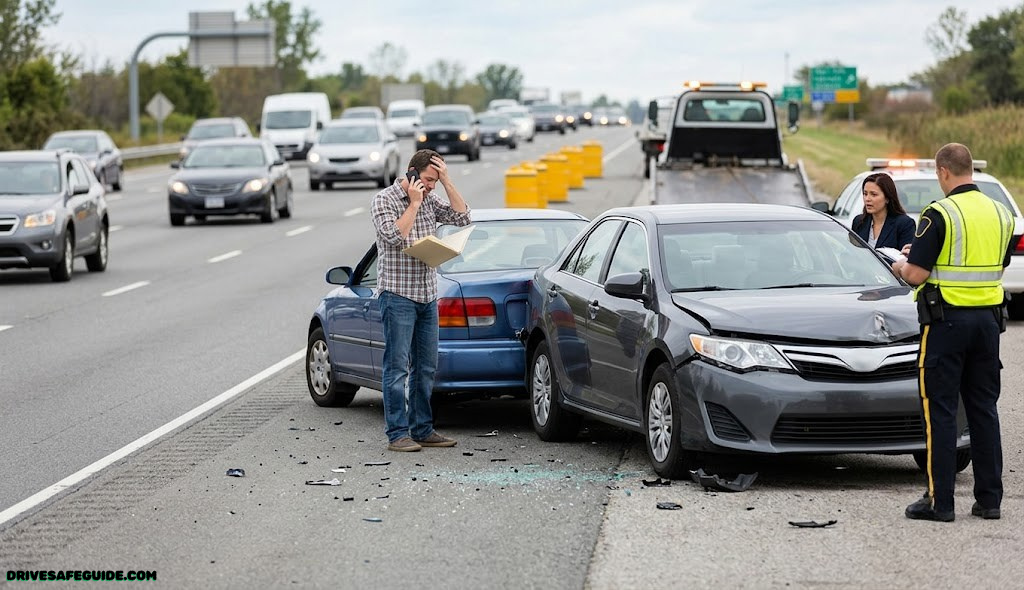
Understanding Uninsured Motorist Coverage: Protecting Yourself on the Road
What happens when the driver who hits you doesn’t have insurance — and how the right coverage keeps you from paying for someone else’s mistake.
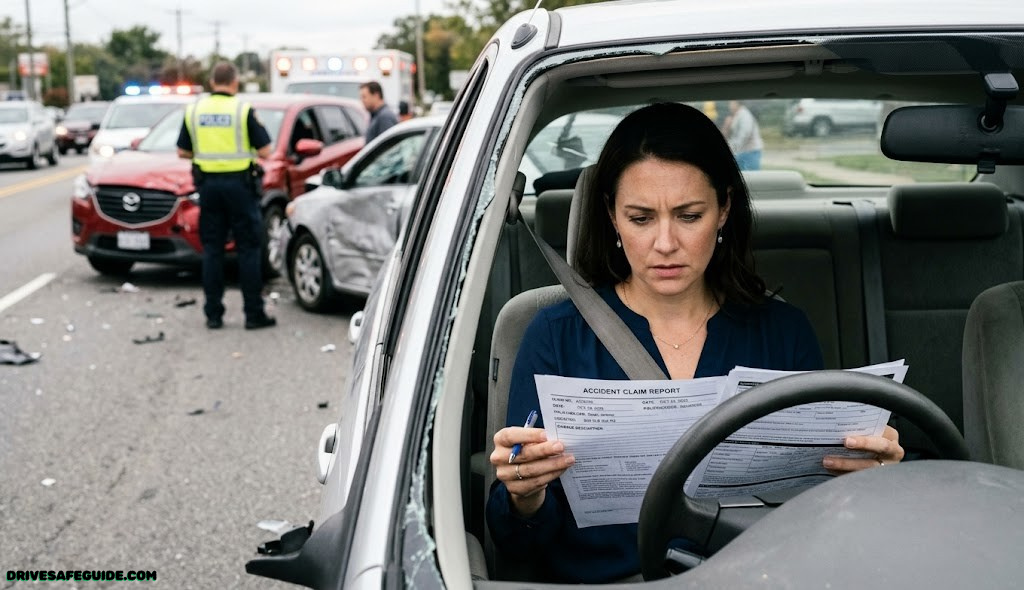
Uninsured motorist coverage is one of the least understood — and most important — parts of an auto policy.
Roughly one out of every eight drivers on the road carries no auto insurance at all. That statistic alone should change how you think about your own policy — because in most states, if an uninsured driver hits you, their lack of coverage becomes your problem unless you’ve planned for it.
Uninsured motorist (UM) coverage is the part of your auto insurance policy that steps in when the at-fault driver either has no insurance or can’t be identified, as in a hit-and-run. It’s easy to overlook when you’re comparing premiums, and many drivers don’t fully understand what it covers until they’re standing on the side of the road wondering who’s going to pay for their totaled car and their trip to the emergency room. This guide walks through exactly what uninsured motorist coverage does, how it differs from underinsured motorist protection, what it costs, and how to make sure your policy actually protects you the way you think it does.
We’ll also cover related situations you may encounter on the road — from deer collisions to black ice accidents — where knowing your coverage in advance can save you real money and real stress.
1. What Is Uninsured Motorist Coverage?
Uninsured motorist coverage is a policy add-on (mandatory in some states, optional in others) that pays for your medical bills, lost wages, pain and suffering, and in many cases property damage when you’re hit by a driver who carries no liability insurance whatsoever. It essentially replaces the insurance the at-fault driver should have had but didn’t.
This matters because liability insurance — the kind every state requires drivers to carry in some form — only pays out when the driver who caused the crash actually has a policy in force. If they let their policy lapse, never bought one to begin with, or fled the scene before you could get their information, there’s no liability coverage to file a claim against. Without UM coverage of your own, you’d be left pursuing the other driver directly through a lawsuit, which is slow, expensive, and often fruitless if they have no meaningful assets to collect against.
Who UM Coverage Actually Protects
UM coverage typically extends to you as the policyholder, any resident relatives in your household, and any passengers riding in your car at the time of the crash. Depending on your policy, it may also cover you as a pedestrian or cyclist if you’re struck by an uninsured driver while not in a vehicle at all.
Where UM Coverage Fits Among Your Other Coverages
It helps to think of your auto policy as a stack of protections, each answering a different question. Liability coverage answers, “What happens if I hurt someone else?” Collision coverage answers, “What happens to my own car if I’m at fault or the cause is unclear?” Medical payments or personal injury protection answers, “Who pays my immediate medical bills, regardless of fault?” Uninsured motorist coverage answers a narrower but critical question: what happens when someone else is clearly at fault, but they have no insurance to make it right? None of the other coverages on a typical policy are built to answer that question the same way, which is exactly why UM coverage exists as its own distinct line item rather than being folded into liability or collision.
It’s also worth noting that UM coverage generally doesn’t apply if you’re the one at fault, and it doesn’t apply to damage caused by potholes, weather, animals, or mechanical failure — those situations fall under comprehensive or collision coverage instead. UM coverage is specifically triggered by the negligent act of another uninsured driver, which is a narrower and more specific trigger than many drivers assume when they first read their policy documents.

Document Every Trip, Just in Case
A reliable dash cam gives you time-stamped video evidence if an uninsured or hit-and-run driver ever causes a collision — which can make or break your UM claim.
Check Dash Cam Prices →2. Uninsured vs. Underinsured Motorist Coverage
Uninsured motorist (UM) and underinsured motorist (UIM) coverage are frequently bundled together on a policy declarations page, which leads a lot of drivers to assume they’re the same thing. They’re related, but they cover two different scenarios.
UM coverage applies when the at-fault driver has zero liability insurance. UIM coverage applies when the at-fault driver does have insurance, but their policy limits aren’t enough to cover the full cost of your injuries or damage. Imagine a driver with the state-minimum $25,000 in bodily injury liability hits you and causes $80,000 in medical expenses. Their insurer pays out the $25,000 limit, and your underinsured motorist coverage can then be tapped to cover the remaining $55,000, up to your own policy’s UIM limit.
| Scenario | Applies When | Coverage Type |
|---|---|---|
| At-fault driver has no insurance | Zero liability coverage in force | Uninsured Motorist (UM) |
| At-fault driver’s limits are too low | Liability coverage exists but isn’t enough | Underinsured Motorist (UIM) |
| Hit-and-run, driver never identified | No way to file against anyone | Uninsured Motorist (UM) |
| At-fault driver’s insurer denies the claim | Insurer disputes liability or coverage | Depends on state / policy language |
Some states combine UM and UIM into a single combined limit, while others require them to be purchased and tracked separately. It’s worth pulling out your own declarations page and confirming which structure your policy uses, since the difference affects how much total protection you actually have.
3. Why This Coverage Matters More Than You Think
It’s tempting to assume that everyone on the road carries insurance because it’s legally required almost everywhere. In practice, enforcement is inconsistent, premiums are expensive, and a meaningful share of drivers simply don’t comply. Industry estimates have placed the national uninsured driver rate at somewhere between 1 in 8 and 1 in 7 drivers, with some states seeing rates well above that average.
There’s also a category of driver who’s technically insured on paper but whose policy has lapsed due to a missed payment, meaning they’re driving uninsured without even realizing it themselves. And even fully insured drivers frequently carry only the state-minimum liability limits, which in many states remain unchanged for years and no longer reflect the real cost of a serious injury claim or a modern vehicle repair.
The Financial Exposure Without UM Coverage
- You’re responsible for your own medical bills through health insurance, out-of-pocket costs, or medical payments coverage if you have it.
- Your only recourse against the at-fault driver is a civil lawsuit, which can take years and often ends with an uncollectible judgment.
- Vehicle repair or replacement costs may fall entirely on your collision coverage (if you carry it) or on you directly.
- Lost wages from time away from work have no clear path to reimbursement.
This is also where good defensive driving habits and a well-stocked car safety kit pull double duty — they reduce your odds of being in a crash at all, but when a crash does happen because of someone else’s negligence, UM coverage is what actually gets your bills paid.
The Hit-and-Run Problem Specifically
Hit-and-run collisions deserve special mention because they represent one of the clearest cases where UM coverage isn’t just helpful — it’s often your only realistic path to compensation. When a driver flees the scene, there’s frequently no way to identify them, no insurance policy to pursue, and no defendant to name in a lawsuit. Police departments do sometimes track down hit-and-run drivers using traffic cameras, witness descriptions, or debris left at the scene, but a meaningful share of these cases go unsolved. Without your own UM coverage in place, a hit-and-run can leave you covering significant medical and vehicle costs entirely out of pocket, through no fault of your own.
Rideshare Passengers and Uninsured Risk
If you frequently ride as a passenger in rideshare vehicles, or drive for one yourself, it’s worth understanding how your personal UM coverage interacts with the rideshare company’s insurance policies. Coverage structures for rideshare trips are often layered and can leave gaps depending on whether the driver’s app was on, whether a ride was accepted, and whether a passenger was already in the car. Reviewing your own UM coverage alongside any rideshare-specific endorsement on your policy closes gaps that many passengers and drivers never think to check until after an incident occurs.
4. How Uninsured Motorist Coverage Works After a Crash
Unlike a standard liability claim, where you file against the other driver’s insurance company, an uninsured motorist claim is filed against your own insurer. This can feel counterintuitive, but it’s the entire point of the coverage — your insurer essentially steps into the shoes of the missing or inadequate at-fault policy.
The General Claims Process
After the accident, you report the claim to your own carrier just as you would with any other claim. Your insurer will investigate to confirm that the other driver was, in fact, uninsured or unidentifiable, and that they were at fault for the crash. This typically involves the police report, witness statements, and sometimes an independent investigation into whether the other driver’s policy was truly lapsed or nonexistent at the time.
Once fault and lack of insurance are confirmed, your insurer evaluates your damages — medical bills, lost income, pain and suffering, and property damage if your policy includes it — and negotiates a settlement, generally up to your UM policy limits.
Arbitration Clauses
Many UM policies include a mandatory arbitration clause for disputed claims, meaning if you and your insurer disagree on the value of your claim, a neutral arbitrator decides the outcome instead of a courtroom. This is generally faster than litigation, though it does limit some of your options compared to a lawsuit against a traditional at-fault driver.

Be Ready Before You Need To Be
A stocked roadside kit means you can document the scene, stay warm or visible, and stay safe while you wait for police and handle the claims process.
Shop Emergency Kits →5. State Requirements at a Glance
Whether uninsured motorist coverage is mandatory, optional, or something you have to actively reject in writing depends entirely on where you live. Some states build it into every policy by default; others leave it as an add-on that many drivers skip without realizing what they’re giving up.
| Requirement Type | What It Means | Typical State Approach |
|---|---|---|
| Mandatory UM/UIM | Coverage must be included on every policy | Common in states with historically high uninsured driver rates |
| Mandatory offer, optional purchase | Insurer must offer it, driver can decline in writing | Most common approach nationwide |
| Fully optional | No requirement to offer or carry it | Less common, but still exists in some states |
| Combined UM/UIM limit | One shared limit covers both scenarios | Varies by state insurance code |
Because these rules change and vary so widely, the only reliable way to know your exact obligations is to check with your state’s department of insurance or ask your agent directly what your state requires and what you currently have. If you’re relocating, or reviewing coverage for a family member who’s just gotten their graduated license, this is worth revisiting rather than assuming your old policy automatically transfers the same protections.
It’s also worth understanding related legal gray areas that affect your risk exposure — topics like move-over law requirements, right-on-red variations, and open container laws all shape the kinds of collisions and citations you might encounter, which in turn shape how often UM claims get triggered in the first place.
6. Bodily Injury vs. Property Damage UM Coverage
Uninsured motorist coverage typically splits into two categories, and not every state or policy includes both.
Uninsured Motorist Bodily Injury (UMBI)
This covers medical expenses, lost wages, and pain and suffering for you and your passengers when injured by an uninsured driver. It’s the more universally available form of UM coverage and is mandatory or default in the vast majority of states that address UM coverage at all.
Uninsured Motorist Property Damage (UMPD)
This covers repair or replacement of your vehicle when it’s damaged by an uninsured driver. It’s less universally offered — several states don’t require it, and where it’s optional, many drivers skip it since collision coverage (if carried) can often serve a similar function, sometimes with a lower deductible or fewer restrictions.
When UMPD Makes Sense
- You don’t carry collision coverage but still want vehicle damage protection
- Your state doesn’t allow UMPD claims to be filed if you have collision coverage
- You want to avoid a collision deductible for a clearly not-at-fault accident
When It May Be Redundant
- You already carry robust collision coverage with a low deductible
- Your state requires you to exhaust collision coverage first anyway
- Your vehicle’s value is low enough that repair costs rarely exceed minor thresholds
Deductibles Matter More Than People Expect
Even where UMPD is available, it often comes with its own deductible, separate from your collision deductible. Depending on your state and insurer, this could mean the difference between filing under UMPD with a low or zero deductible versus filing under collision coverage with a higher out-of-pocket cost. Comparing the two deductibles side by side, rather than assuming one automatically applies, is a simple step that can save you real money after a not-at-fault crash.
How This Plays Out With Older or Leased Vehicles
If you’re driving an older vehicle that you own outright, you might have already dropped collision coverage to save on premium, since the payout on a low-value vehicle may not justify the ongoing cost. In that case, UMPD — where available — can serve as a more targeted, lower-cost way to make sure a not-at-fault crash with an uninsured driver doesn’t leave you paying for repairs entirely out of pocket. Leased vehicles, on the other hand, typically require both comprehensive and collision coverage as a condition of the lease, which changes the calculation somewhat since collision coverage is already mandatory regardless of UMPD.
7. Stacking Uninsured Motorist Coverage
“Stacking” refers to combining UM coverage limits across multiple vehicles on the same policy, or in some states, across multiple policies within a household. If you insure three cars, each carrying $50,000 in UM coverage, stacked coverage could allow you to combine those limits into a single $150,000 pool available for a claim involving any one of those vehicles.
Not every state allows stacking, and where it is allowed, insurers frequently offer both stacked and unstacked versions of the same coverage at different price points. Unstacked coverage caps your available UM benefit at the limit tied to the specific vehicle involved in the crash, regardless of how many other cars are on the policy.
Intra-Policy vs. Inter-Policy Stacking
There are generally two forms of stacking worth understanding. Intra-policy stacking combines UM limits across multiple vehicles insured under a single policy. Inter-policy stacking, where permitted, allows combining limits across entirely separate policies held by members of the same household — for example, if you and a spouse each carry your own individual auto policy rather than a single joint policy. Not all states permit both forms, and insurers often price them differently, so it’s worth asking specifically which type of stacking, if any, applies to your situation.
The Trade-Off: Premium vs. Protection
Stacked coverage generally costs more than unstacked coverage for the same base limit, since it effectively multiplies the insurer’s maximum exposure per claim. For households with several vehicles and a genuine desire for maximum protection, the added premium is often modest relative to the increased payout ceiling, but it’s still worth comparing stacked and unstacked quotes side by side rather than assuming stacking is automatically worth the extra cost for your specific situation.
8. What Does It Actually Cost?
Uninsured and underinsured motorist coverage is, dollar for dollar, one of the more affordable additions available on a standard auto policy. Because it doesn’t cover your own at-fault behavior — only losses caused by someone else who can’t pay — the actuarial risk to the insurer is comparatively contained, and premiums reflect that.
The exact price depends on your state’s uninsured driver rate, the coverage limits you select, whether you add property damage protection, whether stacking is included, and your overall driving record. Areas with a higher concentration of uninsured drivers on the road will generally see somewhat higher UM premiums than areas where compliance with insurance laws is stronger.
Getting the Most Value
Because the coverage is relatively inexpensive compared to the protection it provides, many independent agents and consumer advocates recommend matching your UM/UIM limits to your liability limits rather than defaulting to the state minimum. If you’re already budgeting for essentials like a reliable battery or a good tire inflator to keep your car running safely, a modest bump in UM limits is often a similarly small line-item cost with an outsized payoff if you’re ever in a serious crash.
Why It’s Cheaper Than You’d Expect
Insurers price coverage based on the likelihood and size of a payout. Because UM/UIM claims only trigger when a specific, relatively well-defined event occurs — another identified or hit-and-run driver causing the crash while lacking adequate insurance — the pool of qualifying claims is narrower than it is for, say, comprehensive coverage, which has to account for theft, weather, animal strikes, vandalism, and a long list of other triggers. That narrower scope tends to keep UM/UIM premiums modest relative to the size of the payout it can provide if you ever need it.
Bundling and Discount Opportunities
Many insurers offer small discounts for bundling UM/UIM coverage with other policy features, maintaining a clean driving record, or insuring multiple vehicles on the same policy. It’s worth asking your agent directly whether increasing your UM/UIM limits by even a modest amount changes your total premium meaningfully — in many cases, the jump from state-minimum UM limits to limits that actually match your liability coverage adds only a small amount to your six-month or annual premium.

Small Tool, Big Difference in a Crash
A compact seatbelt cutter and window breaker keeps you and your passengers prepared for the moments right after a serious collision.
View Emergency Escape Tools →9. How to File an Uninsured Motorist Claim
Filing a UM claim follows a fairly predictable sequence, though the details vary by insurer and state.
Step 1: Document the Scene Thoroughly
Take photos of all vehicles, license plates, visible damage, road conditions, and any relevant signage. If you have a dash cam running, preserve that footage immediately rather than letting it get overwritten by a loop-recording cycle.
Step 2: File a Police Report
A police report is often required to substantiate a UM claim, particularly in hit-and-run situations where there’s no other driver to interview. Get the report number before you leave the scene if at all possible.
Step 3: Notify Your Insurer Promptly
Most policies require “prompt notice” of a claim, and delays can occasionally be used to dispute coverage. Report the incident as soon as you reasonably can, even if you’re still gathering full details.
Step 4: Provide Documentation
This typically includes the police report, medical records and bills, repair estimates, proof of lost wages, and any witness contact information you were able to collect.
Step 5: Review the Settlement Offer Carefully
Your insurer will present a settlement based on your policy limits and the extent of your damages. You’re generally not obligated to accept the first offer, and depending on your state and policy, you may have the right to dispute the amount through arbitration or negotiation.
Throughout this process, the same instincts that serve you well for general roadside emergencies apply here too — staying calm, methodical, and well-documented gives you the strongest possible position when it’s time to settle.
How Insurers Determine Fault in a UM Claim
Because you’re essentially asking your own insurer to pay out on behalf of someone else’s negligence, they’ll want solid evidence that the other driver was actually at fault before approving the claim. This is where a thorough police report, clear photos, and witness statements carry real weight. If fault is disputed or unclear — for example, in a case with no witnesses and conflicting accounts — your insurer may take longer to investigate, or may initially offer a reduced settlement reflecting shared or uncertain fault.
Negotiating a Fair Settlement
It’s common for an initial settlement offer to undervalue long-term medical needs, especially for injuries that require ongoing physical therapy or that may not fully resolve for months. Before accepting a settlement, it’s worth gathering complete medical documentation, including any prognosis for future treatment, and comparing the offer against your actual and anticipated costs rather than accepting the first number presented. Many claimants find it useful to keep a simple running log of medical visits, missed workdays, and out-of-pocket expenses, since this makes it much easier to justify a higher settlement figure if the initial offer falls short.
When to Involve an Attorney
Most straightforward UM claims — a clear rear-end collision with minor injuries, for instance — can often be resolved directly with your insurer without needing outside legal help. However, for serious injuries, disputed fault, or settlement offers that seem clearly inadequate relative to your documented losses, consulting a personal injury attorney who handles UM/UIM claims specifically can help ensure your policy’s limits are being applied fairly and that the arbitration or negotiation process isn’t working against you.
10. Common Myths, Debunked
Myth: “If the other driver has no insurance, there’s nothing I can do.”
This is exactly the scenario UM coverage exists to solve. Without it, your options are limited, but with it, you have a direct path to compensation through your own insurer.
Myth: “Filing a UM claim will raise my rates like an at-fault accident would.”
In most states, since you weren’t at fault, a UM claim is treated differently than an at-fault claim for rating purposes, though this varies by carrier and state, so it’s worth confirming directly.
Myth: “My health insurance will cover everything, so I don’t need UM bodily injury coverage.”
Health insurance may cover medical treatment, but it won’t cover lost wages, pain and suffering, or often the full scope of long-term rehabilitation costs the way a liability-style UM settlement can.
Myth: “UM coverage only matters in states with lots of uninsured drivers.”
Even in states with relatively low uninsured rates, a single hit-and-run or a lapsed policy can leave you fully exposed. No state has a zero percent uninsured driver rate.
Myth: “My collision coverage makes UM property damage unnecessary.”
Sometimes true, sometimes not — it depends heavily on your deductible, your state’s rules, and whether collision coverage must be exhausted first. It’s a case-by-case comparison, not a blanket rule.
Myth: “UM coverage is only useful for major cities with lots of traffic.”
Uninsured driving rates vary by state, not strictly by city size, and rural roads carry their own set of risks, including higher speeds and longer emergency response times. There’s no reliable pattern that lets you assume you’re safe from uninsured drivers just because you live outside a major metro area.
Myth: “If I wasn’t badly hurt, it’s not worth filing a UM claim.”
Even relatively minor injuries can come with meaningful medical bills, missed work, and vehicle repair costs. Filing a claim for a legitimate, documented loss is exactly what the coverage is there for, regardless of how “serious” the injury feels in the moment.
11. How to Choose the Right Coverage Limits
Selecting UM/UIM limits isn’t just a matter of picking the cheapest add-on available. A few practical guidelines can help you land on limits that actually reflect your real-world risk.
Match Your Liability Limits
A common rule of thumb is to carry UM/UIM limits equal to your liability limits. If you’ve already decided $100,000 per person is the right amount of protection to offer others in an at-fault crash, it’s reasonable to want at least that much protection for yourself when the roles are reversed.
Consider Your Household’s Real Exposure
Families with multiple drivers, teens who are newly licensed, or anyone with a long commute on high-traffic highways carry more cumulative exposure to an uninsured-driver incident. This is also where reviewing teen driver safety practices and appropriate limits for a new driver in the household becomes especially relevant.
Factor In Medical Cost Realities
A single emergency room visit followed by even a short hospital stay can easily reach tens of thousands of dollars before rehabilitation or long-term care are factored in. State-minimum limits, which in some states remain unchanged since being set decades ago, often fall far short of covering a serious injury.
Ask About Stacking and Combined Limits
As covered above, whether your limits stack across vehicles can dramatically change your real available protection — always confirm this explicitly with your agent rather than assuming.
Revisit Your Limits After Major Life Changes
Coverage decisions made years ago don’t always reflect your current situation. Buying a more expensive vehicle, adding a new driver to the household, moving to an area with heavier highway traffic, or simply noticing that your state’s uninsured driver rate has crept upward are all reasonable triggers to revisit your UM/UIM limits rather than letting the same figures roll over renewal after renewal. Insurance agents generally don’t proactively suggest limit increases unless asked, so the responsibility for this review tends to fall on the policyholder.
Balance Against Your Overall Budget
There’s a reasonable balance to strike between maximizing every coverage line and keeping your total premium sustainable. UM/UIM coverage tends to offer an unusually strong ratio of protection to cost, which is why many advisors treat it as one of the first places to add a little extra cushion, even if you’re keeping other optional coverages closer to the minimum.

Stay Prepared for Every Roadside Scenario
Whether it’s a dead battery or a stressful post-accident wait, a reliable portable jump starter keeps you moving and in control.
Compare Jump Starters →12. What to Do the Moment It Happens
The minutes right after a crash with an uninsured or fleeing driver set the tone for your entire claim. A clear, methodical response protects both your safety and your ability to recover compensation later.
- Check for injuries first. Call 911 immediately if anyone is hurt, and move to a safe location if the vehicle is drivable and it’s safe to do so.
- Call the police, even for minor damage. A police report is often required documentation for a UM claim and is especially critical in hit-and-run situations.
- Get the other driver’s information if they stay. Name, license plate, and insurance details if they claim to have any — but don’t rely on their word alone; let the police report and your insurer verify it.
- Photograph everything. Vehicle damage, license plates, road conditions, skid marks, and any visible injuries.
- Gather witness information. Independent witnesses can be invaluable, particularly in disputed-fault or hit-and-run scenarios.
- Seek medical evaluation promptly, even if you feel fine. Some injuries, particularly soft-tissue and concussion-related ones, aren’t immediately obvious.
- Notify your insurer within a day or two and specifically mention that you believe the other driver may be uninsured or unidentified so they can begin the correct claims track from the start.
If the crash happened under difficult driving conditions — heavy rain, nighttime glare, or reduced visibility — note those conditions in your report as well, since they can be relevant to the overall liability picture your insurer builds.
Quick Reference: Is UM/UIM Coverage Worth It?
Reasons to Carry It
- Relatively low cost compared to the protection it provides
- Direct path to compensation without suing an uncollectible defendant
- Covers hit-and-run situations where no other driver can be identified
- Extends to household members and passengers, not just you
Things to Watch For
- Combined UM/UIM limits can be exhausted quickly in a severe crash
- Arbitration clauses may limit some dispute options
- Stacking rules vary and aren’t always automatic
- Property damage portion isn’t universally available or necessary
13. Real-World Scenarios Where UM Coverage Changes the Outcome
Abstract policy language becomes a lot clearer once you walk through how it actually plays out on the road. The following scenarios illustrate common situations where uninsured or underinsured motorist coverage is the deciding factor between a manageable recovery and a serious financial setback.
Scenario One: The Rear-End Collision at a Red Light
You’re stopped at a red light and a driver behind you fails to brake in time, causing a moderate-speed rear-end collision. You exchange information, and it turns out their insurance lapsed two weeks earlier due to a missed payment they hadn’t gotten around to reinstating. Their liability coverage technically doesn’t exist at the moment of the crash, even though they may believe they’re still covered. Without UM coverage, you’d be pursuing a driver who likely can’t pay a large settlement out of pocket. With it, your own insurer handles your medical bills, vehicle repair, and lost wages according to your policy limits.
Scenario Two: The Hit-and-Run in a Parking Lot
Your car is struck while parked, and the responsible driver leaves no note and no witness saw the incident clearly enough to identify them. Without UMPD coverage, you may be limited to filing a claim under your own collision coverage, subject to your deductible. With UMPD available and applicable under your state’s rules, you may have another avenue depending on your policy’s specific terms and your state’s requirements around exhausting collision coverage first.
Scenario Three: The Serious Injury Crash With Minimum-Limit Liability
A driver runs a red light and T-bones your vehicle, causing injuries that require surgery and months of physical therapy. The at-fault driver does carry insurance, but only the state-minimum limits, which in many states remain in the tens of thousands of dollars — far short of a six-figure medical bill. Their insurer pays out their full policy limit, and your underinsured motorist coverage picks up the difference, assuming your UIM limits are set high enough to cover the gap.
Scenario Four: A Passenger in Someone Else’s Car
You’re riding as a passenger in a friend’s vehicle when another driver, who turns out to be uninsured, causes a crash. Depending on the specifics of your friend’s policy and your own auto policy back home, you may be able to draw on either or both policies’ UM coverage, which is one of the reasons understanding how your own coverage extends to you as a passenger elsewhere matters, not just as a driver in your own car.
Final Thoughts: Don’t Let Someone Else’s Bad Decision Become Your Financial Problem
Uninsured motorist coverage is one of those policy features that feels unnecessary right up until the moment you need it — and by then, it’s too late to add it. Given how affordable it typically is relative to the protection it offers, reviewing your current limits, confirming whether your coverage stacks, and matching UM/UIM limits to your liability limits is one of the highest-value conversations you can have with your insurance agent.
Take a few minutes this week to pull up your declarations page, confirm exactly what you’re carrying, and close any gaps before you’re standing on the shoulder of the highway relying on a stranger’s insurance that was never there to begin with.
Build Your Complete Roadside Safety Kit →Frequently Asked Questions
It depends on your state. Some states mandate it on every policy, others require insurers to offer it while allowing drivers to decline in writing, and a smaller number leave it fully optional. Check with your state’s department of insurance for the exact rule where you live.
Yes, in most cases. Since the at-fault driver can’t be identified in a hit-and-run, there’s no liability policy to file against, which is exactly the situation uninsured motorist coverage is designed to address, provided you have a police report documenting the incident.
In most states, since you weren’t at fault for the crash, a UM claim is treated differently than a standard at-fault claim for rating purposes. However, this varies by insurer and state, so it’s worth confirming directly with your carrier.
Uninsured motorist (UM) coverage applies when the at-fault driver has no insurance at all. Underinsured motorist (UIM) coverage applies when they do have insurance, but their policy limits aren’t enough to cover your full damages.
In many cases, yes. If your policy’s UM coverage extends beyond just occupants of your vehicle, you may be able to file a claim if you’re struck by an uninsured driver while walking or cycling, though the exact terms vary by policy and state.
Only if you carry uninsured motorist property damage (UMPD) coverage specifically, which isn’t available or required in every state. Otherwise, vehicle repair after an uninsured-driver crash typically falls to your collision coverage if you have it.
Stacking allows you to combine UM coverage limits across multiple vehicles on the same policy, increasing the total amount available for a single claim. It’s not permitted in every state and is sometimes offered as an optional upgrade rather than a default feature.
It’s generally one of the more affordable coverage additions on a standard policy, since it only applies to losses caused by another driver rather than your own at-fault behavior. Exact cost depends on your state, chosen limits, and whether you add stacking or property damage coverage.
A common recommendation is to match your UM/UIM limits to your bodily injury liability limits, ensuring you have at least as much protection for yourself as you provide to others in an at-fault crash you might cause.
You file directly with your own insurance company, since the entire purpose of uninsured motorist coverage is to step in when the other driver’s insurance either doesn’t exist or can’t be identified.
This article is for general educational purposes and does not constitute legal or insurance advice. Coverage rules, requirements, and terminology vary by state and insurer — always confirm specifics with your own agent or state department of insurance. As an Amazon Associate, DriveSafeGuide may earn from qualifying purchases made through links on this page.
💳 Save on Insurance
Compare Car Insurance Rates in Minutes
Stop overpaying for auto insurance. Compare dozens of top insurers in 2 minutes and find the best rate for your situation.
🔍 Compare My Rates — FreeAffiliate link — we earn a small commission that keeps DriveSafeGuide running. Thank you!