How Long Do Car Batteries Last? Lifespan, Cost, Voltage, and Step-by-Step Replacement
Quick Answer: How Long Do Car Batteries Last?
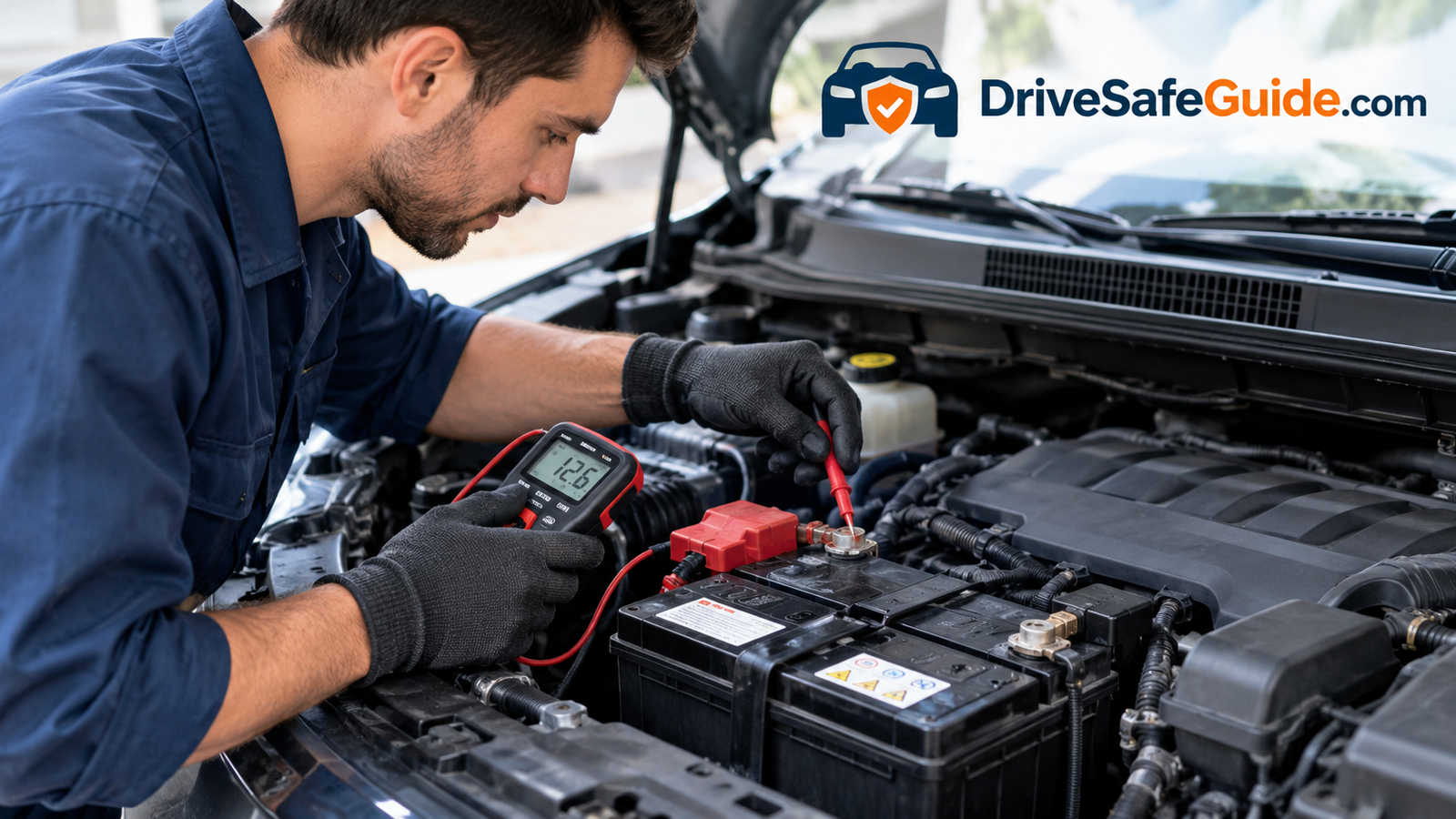
Most conventional car batteries last about three to five years. AGM batteries often stretch toward five to seven, and the real number depends on climate, driving habits and how well the charging system is working. If you have been asking how long does a car battery last, the honest answer is “it depends, but plan for three to five.”
Heat is the biggest silent killer. Cold gets blamed because it is when weak batteries finally fail, but summer heat does the actual damage by speeding up internal corrosion. Short trips add to it, because the alternator never gets time to top the battery back up.
Think of battery life as a range, not a promise. A battery that has spent its whole life in a mild northern climate, driven daily on highway commutes, can occasionally reach six or seven years. The same battery in a hot southern city, used for ten-minute errands, may be tired by year three. Neither is unusual, which is why mechanics talk in ranges and why an annual test is smarter than a calendar date.
The date code on the case helps you keep track. Most batteries carry a sticker or stamp that shows the month and year of manufacture, often as a letter for the month and a number for the year. Check it when you buy, because a battery that has sat on a shelf for a year already used up part of its life before it ever reached your car.
Your car also matters. Modern vehicles run a long list of electronics, from infotainment screens to driver-assist sensors, and many have modules that stay awake even when the car is parked. Vehicles with start-stop systems put extra strain on the battery because it restarts the engine dozens of times each trip. That is why many of them require AGM or EFB batteries rather than the cheapest option on the shelf.
If your battery is approaching the three-year mark, treat it like a tire with moderate tread: still usable, but worth watching. Have it tested before cold weather arrives, keep a jump source in the trunk, and set aside a replacement budget. Replacing a battery on your schedule is always cheaper and less stressful than replacing it at night in a parking lot.
Shop car batteries and tools
Check Prices on AmazonWhat Really Decides Car Battery Lifespan
Five things matter most: temperature, trip length, electrical load, vibration and charging health. A battery in a mild climate that is driven 30 minutes a day can outlive an identical one in a hot desert city by years.
A failing alternator also shortens life fast. If your lights dim at idle, read about alternator failure symptoms before spending money on a new battery that will just drain again.
Temperature deserves a closer look. Chemical reactions inside a lead-acid battery speed up with heat, which sounds good until you realize that includes corrosion of the plates and evaporation of the electrolyte. Every sustained stretch of high temperatures chips away at capacity, and the loss is permanent. Cold, on the other hand, simply slows the chemistry down, so a weak battery that coped fine in August suddenly cannot deliver enough current on a frozen January morning.
Trip length is the second big factor. Starting an engine uses a surprising amount of energy, and the alternator needs time to replace it. If most of your drives are under fifteen minutes, the battery is slowly running a deficit. Over months, the plates build up sulfate crystals that reduce capacity. A weekly drive of thirty minutes or more on the highway can break that cycle, and a smart charger can do the same job when driving is not practical.
Electrical load adds to the picture. Dash cams that record while parked, aftermarket alarms, heated seats, and powerful audio systems all pull current. If you have added accessories, make sure they are wired correctly and, where possible, use low-voltage cutoff protection so they cannot drain the battery to zero. Deep discharges are one of the fastest ways to ruin a starting battery, which is designed for short bursts of high current rather than long, slow drains.
Finally, vibration and mounting count. A loose hold-down lets the battery bounce around, which can crack internal welds and shorten life dramatically. Spending a minute to check that the bracket is tight is one of the cheapest bits of maintenance you can do.
Shop car batteries and tools
Check Prices on AmazonAverage Lifespan by Battery Type
Flooded lead-acid, AGM and EFB batteries age differently.
| Type | Typical Life | Best For |
|---|---|---|
| Flooded lead-acid | 3–5 years | Basic vehicles, budget |
| EFB | 4–6 years | Start-stop, mid-range |
| AGM | 5–7 years | High electrical load, cold climates |
Hybrid and EV owners should also see hybrid vehicle maintenance, since the 12-volt battery still matters there.
Flooded lead-acid batteries are the traditional choice. They are affordable, widely available, and perfectly adequate for older vehicles with modest electrical demands. Some have removable caps so you can top off distilled water, though most sold today are sealed and maintenance-free. Their main weakness is sensitivity to heat and deep discharge.
Enhanced flooded batteries, usually called EFB, are built a bit tougher to handle frequent cycling, which makes them a common factory choice for entry-level start-stop vehicles. They cost more than a standard battery but less than AGM, and they usually offer noticeably better cycle life.
Absorbent glass mat batteries hold the electrolyte in fiberglass mats between the plates. That design resists vibration, tolerates deeper discharges, charges faster, and is spill-resistant. AGM is the usual requirement for vehicles with heavy electronics and advanced start-stop systems. If your car came with an AGM battery, replace it with another AGM. Downgrading to a flooded battery can cause early failure and sometimes trigger charging-system warnings, because the vehicle’s software expects a specific battery type.
- Flooded: lowest price, shorter life, sensitive to heat.
- EFB: a middle path with better cycling for start-stop cars.
- AGM: highest price, best durability, best for electronics-heavy vehicles.
A quick note on lithium: some performance cars and aftermarket upgrades use lithium starter batteries, which are very light but need specific chargers and care. For almost every daily driver, the three types above are what you will encounter.
Shop car batteries and tools
Check Prices on AmazonHow Much Is a Car Battery?
Expect roughly $100 to $200 for a standard flooded battery and $180 to $350 or more for AGM, depending on size and brand. Installation, if you do not do it yourself, often adds a modest fee, and a core charge is refunded when you return the old battery.
Match the group size and cold cranking amps (CCA) to your owner’s manual rather than shopping on price alone. Cold-climate drivers should check our cold-weather battery picks.
Price is driven by battery type, size, cold cranking amps, reserve capacity and warranty length. A small compact car needs a smaller, cheaper battery than a full-size truck with a diesel engine, which often needs two. Premium brands cost more, but the real value is usually in the warranty and the build quality behind it.
| Battery Class | Typical Price Range | Warranty |
|---|---|---|
| Economy flooded | $100–$150 | 1–2 years |
| Mid-range flooded or EFB | $130–$200 | 2–3 years |
| AGM | $180–$350+ | 3–4 years |
Look beyond the shelf price. Many retailers add a core charge of around ten to twenty dollars that you get back when you return the old battery. Installation can be free at some parts stores, but on vehicles where the battery sits under a seat or in the trunk, labor can climb. Some modern cars also need the new battery registered with the vehicle’s computer, which adds a step and sometimes a fee.
Ask about the free replacement period and the prorated period. A three-year free replacement warranty is worth more than a five-year prorated one, because prorated coverage only gives you a partial credit toward a new battery.
If you are comparing prices online, look at the manufacture date, because a cheap battery that has been sitting for a year is not a bargain. Whatever you buy, confirm the group size, the terminal layout and the CCA rating before you pay, so you do not discover at home that the posts are on the wrong side.
Shop car batteries and tools
Check Prices on AmazonHow Many Volts Is a Car Battery?
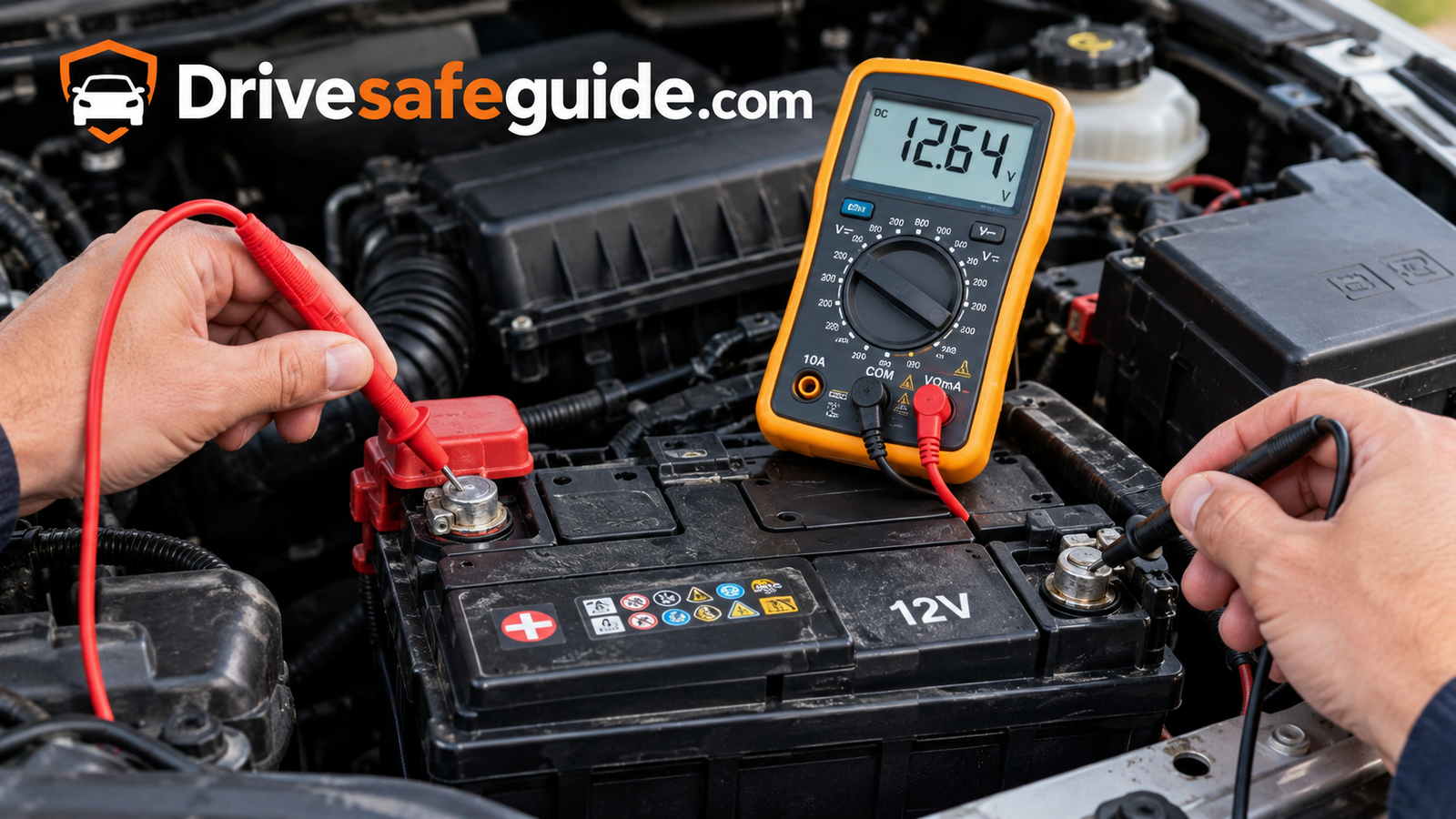
A healthy, fully charged 12-volt battery rests around 12.6 volts. At 12.4 volts it is roughly 75 percent charged, and at 12.0 it is about half. With the engine running, the alternator should push roughly 13.7 to 14.7 volts.
| Reading (engine off) | Approx. Charge |
|---|---|
| 12.6 V+ | 100% |
| 12.4 V | 75% |
| 12.2 V | 50% |
| 12.0 V or less | Discharged |
A multimeter works, or grab one of the best car battery testers for a quicker health read.
Voltage is the quickest health indicator you can check yourself. The numbers in the table describe a battery that has rested for a few hours with the engine off. If you test right after driving, you will see a falsely high surface charge. Turning on the headlights for a minute and then switching them off helps clear that before you measure.
With the engine running, the alternator output tells a different story. A reading between roughly 13.7 and 14.7 volts means the charging system is doing its job. A reading close to the resting number suggests the alternator is not charging. A reading well above 15 volts suggests overcharging, which can cook a battery and damage electronics.
Cranking voltage is the third number worth knowing. While someone starts the car, a healthy battery should stay above about 9.6 volts. If it dips lower, the battery is losing the ability to deliver current, even if its resting voltage looks acceptable. This is why a battery can read fine on a multimeter and still leave you stranded on a cold morning.
Remember that voltage is not the same as capacity. A battery can show 12.6 volts and still have weak plates that collapse under load. For a complete picture, pair voltage readings with a proper load test or a conductance tester, which estimates remaining cranking capability.
Also remember that the number 12 is nominal. Six cells at about 2.1 volts each add up to roughly 12.6 volts, which is why a battery measuring exactly 12.0 is actually mostly empty, not slightly low.
Shop car batteries and tools
Check Prices on AmazonWarning Signs Your Battery Is Dying
Slow cranking, dim headlights at idle, a clicking sound, a swollen case, a rotten-egg smell, corroded terminals and a battery warning light are all classic signs. Electronics acting strangely can also point to low voltage.
A scan tool helps rule out other causes. Our guide to OBD2 scan tools explains what live voltage data can tell you.
Slow cranking is the most common early warning. The engine turns over lazily, as if it is thinking about it. If this happens more often in cold weather, the battery is probably the cause, but do not assume. A worn starter or poor cable connection can mimic the same symptom.
Dim lights and electronic quirks are the next sign. Headlights that dim noticeably at idle, a flickering dash, or power windows that move slowly all point to low voltage. Some cars display warnings about the charging system or start-stop being unavailable, which can mean the battery’s state of health has dropped.
Look at the battery itself. A swollen or bulging case often comes from heat or overcharging and means replacement is overdue. A sulfur or rotten-egg smell suggests leaking gas, so ventilate the area and avoid sparks. White or blue-green crust on the terminals is corrosion that restricts current flow and can often be cleaned, but heavy buildup may signal a leak.
Pay attention to the age too. If the battery is past four years old and showing any of these symptoms, replacement is usually more sensible than repeated jump starts. Constant jumping puts stress on the alternator, which is built to maintain a charge rather than rebuild one from empty.
A single clicking noise with no crank usually means the battery has some charge but not enough to turn the starter. Silence with no dash lights often means a fully dead battery or a loose terminal. Wiggle the clamps first, because it is a surprisingly common fix.
Shop car batteries and tools
Check Prices on AmazonHow to Test Your Battery at Home
Set a multimeter to 20 volts DC. Touch red to positive and black to negative with the engine off and read the voltage. Then start the car and read it again; the running number tells you whether charging is healthy.
For a load test, many parts stores will test for free. A battery that reads fine but fails under load is on borrowed time.
Start with a visual check. Look for cracks, bulges, leaks and corrosion, and make sure the cables are tight. Clean any buildup with a mixture of baking soda and water and a stiff brush, and rinse carefully, keeping liquid away from electrical connectors.
For the multimeter test, set the dial to DC volts at the 20-volt range. Connect the red probe to the positive terminal and the black probe to the negative terminal. Read the number and compare it with the voltage table earlier in this guide. Do this before the first drive of the day for the most accurate result.
Next, test charging. Start the engine and measure again with the probes in the same place. Turn on the headlights and the blower fan to add load. You should still see around 13.7 volts or more. If the number falls or never rises, the alternator or the belt that drives it deserves a closer look.
A load test is the gold standard. Many auto parts stores perform one for free using a handheld tester that applies a controlled load and measures how the battery holds up. A battery that fails a load test while showing normal voltage has lost capacity and is a candidate for replacement.
Whatever you find, write down the date and the reading. Tracking numbers over a few seasons helps you spot a slow decline long before the battery actually fails.
Shop car batteries and tools
Check Prices on AmazonHow to Disconnect a Car Battery (Step by Step)
You will need a 10 mm wrench (most cars), gloves and eye protection. Always disconnect the negative terminal first to avoid accidental shorting against the body.
Step 1: Switch off and locate the battery
Turn the ignition off, remove the key and open the hood. Some cars hide the battery in the trunk or under a seat.
Step 2: Remove the negative (−) clamp
Loosen the nut counter-clockwise and lift the clamp straight off the post.
Step 3: Remove the positive (+) clamp
Repeat on the red-marked terminal, then tuck both cables so they cannot touch the posts.
Disconnecting resets some radio and idle settings, so have codes handy. A portable jump starter is handy if the car will not restart afterward.
Before you begin, gather the right items: a 10 mm wrench or socket for most vehicles, safety glasses, gloves, and a small brush for any corrosion. Check your owner’s manual, because some vehicles have a remote jump post, a battery in the trunk, or a battery management sensor on the negative clamp that needs gentle handling.
Be aware of what you lose when the power is cut. Clocks, radio presets, and sometimes window auto-up settings reset. Some cars need a short relearning drive for idle and transmission behavior. If your radio is locked with an anti-theft code, find it before you disconnect.
Why negative first? The negative cable connects to the car’s metal body. If your wrench touches both the positive terminal and any bare metal while the negative is still connected, it creates a short circuit and sparks. Removing the negative clamp first breaks the circuit, so a stray wrench is far less dangerous.
Once both cables are off, wait a few minutes if you are working near airbags or sensitive modules, and keep your tools away from the posts. Use a rag or a plastic cap to cover the clamps if they could swing back, and never let the two clamps touch each other.
To reconnect, reverse the order: positive first and negative last. Tighten each clamp until it cannot be twisted by hand, but do not overtighten, since soft lead posts can deform. If you intend to leave the battery disconnected for storage, keep it somewhere cool and consider a maintainer.
Shop car batteries and tools
Check Prices on AmazonHow to Replace a Car Battery (Step by Step)
Buy the right group size first. Bring a terminal brush, baking soda and water for corrosion, and consider a memory saver if your car is sensitive to power loss.
Step 1: Document the setup
Photograph the cable routing and find the hold-down bracket. Disconnect negative, then positive.
Step 2: Lift out the old battery
Remove the hold-down and lift straight up with both hands. Batteries are heavy, so bend your knees.
Step 3: Install the new one
Clean the tray and clamps, seat the battery, secure the bracket, then connect positive first, negative last.
Return the old battery for your core refund. If it will not start, check the steps in jump starter vs jumper cables.
Choosing the right replacement is half the job. Match the group size, which sets the physical dimensions and terminal position, and meet or exceed the CCA rating in the manual. For start-stop and electronics-heavy vehicles, stay with AGM or EFB as specified.
Preparation saves headaches. Wear gloves and glasses, place a rag over the work area to protect paint from acid, and use a battery strap or carrier handle for lifting. A memory saver that plugs into the accessory socket can maintain settings, but it is optional for most people.
Cleaning matters as much as installation. Wipe the tray, remove debris and corrosion, and scrub the clamps with a terminal brush until the metal shines. A new battery connected to dirty clamps will perform poorly and may be blamed unfairly. A light coat of anti-corrosion grease or felt washers on the posts slows future buildup.
After installation, double-check everything. The battery should not move when you push it, the clamps should not rotate, and the vent tube, if there is one, should be connected. Start the car and confirm that the dash lights go out normally and that the voltage reads in the healthy range.
Some vehicles require a battery registration or reset using a scan tool so the charging system adjusts to the new battery. If your car has a battery sensor and you notice odd charging behavior afterward, that is the first thing to check. Finally, take the old battery back for your core refund, since recycling lead-acid batteries is both required and easy.
Shop car batteries and tools
Check Prices on AmazonHow to Make Your Car Battery Last Longer
Take longer drives now and then, keep terminals clean, secure the hold-down so vibration does not damage plates, and turn off accessories before shutting down. A smart maintainer is ideal for cars that sit.
Park in shade or a garage when possible. Heat management matters, and extreme heat engine care covers the wider picture.
The simplest habit is to drive the car regularly. If you only take short trips, add a longer drive every week or two. For vehicles that sit, a smart battery maintainer keeps the charge topped up without overcharging, and it is one of the best investments for a classic, a seasonal vehicle, or a second car.
Keep the battery clean and tight. Corrosion creates resistance, which makes the alternator and starter work harder. Inspect the terminals twice a year, clean them as needed, and confirm the hold-down is secure. If the battery has removable caps, check electrolyte levels and top off with distilled water only.
Manage the load. Turn off lights, the radio and chargers before shutting the engine off, and unplug devices that keep drawing power. If you use a dash cam in parking mode, choose a model with a voltage cutoff, which shuts the camera down before it drains the battery too far.
Protect it from extremes. A garage in winter and shade or a sunshade in summer help. In very hot regions, a heat shield around the battery, where the car came with one, should stay in place rather than be discarded during repairs.
Finally, test it annually. A quick test before winter catches problems early. Many batteries die without much warning, so a routine test combined with replacing at the first sign of weakness is the best insurance you can buy.
Shop car batteries and tools
Check Prices on AmazonCommon Mistakes People Make With Batteries
Replacing a battery when the real culprit is a bad alternator, ignoring corrosion, buying the wrong CCA rating, connecting terminals in the wrong order and letting a car sit for weeks are the usual offenders.
Another mistake: ignoring a repeated jump start. If you needed one twice in a month, test the whole charging system. See also our winter emergency kit checklist.
One of the most common mistakes is blaming the battery for every starting problem. A bad alternator, a worn starter, a loose ground strap, or a parasitic drain can all produce the same symptoms. Replacing a battery without testing the system is a good way to buy a second one a few months later.
Another frequent error is ignoring corrosion and loose clamps. Many no-start calls are fixed with a wrench and a brush. Likewise, buying the cheapest battery that fits sounds smart but can backfire if the CCA is too low for your climate or the type is wrong for your vehicle.
People also make mistakes during jump-starting and installation. Connecting clamps in the wrong order, letting the clamps touch, or jumping a frozen or swollen battery can cause damage or injury. Always read your manual, and if the battery is cracked, leaking or frozen, replace it rather than try to revive it.
Letting a vehicle sit is a quieter mistake. A car left for weeks with a small parasitic drain can fully discharge, and deep discharges shorten battery life significantly. Disconnecting the negative cable or using a maintainer prevents the problem.
Finally, many drivers forget to recycle the old battery. Lead-acid batteries are among the most recycled consumer products, and returning yours is usually rewarded with a refund, so there is no good reason to leave one in the garage.
Shop car batteries and tools
Check Prices on AmazonSafety Tips When Working With Car Batteries
Wear eye protection and gloves, remove metal jewelry, work in a ventilated area and keep sparks and flames away, because batteries can release hydrogen gas. Never lean over a battery while connecting cables.
Keep a fire extinguisher nearby; our best car fire extinguisher guide helps you choose one.
Batteries contain sulfuric acid and can produce flammable hydrogen gas, so a few simple rules go a long way. Wear safety glasses and gloves, remove rings and watches, and keep metal tools from bridging the terminals. Work in an open or well-ventilated area, and never smoke or use open flames nearby.
Lift with care. A typical car battery weighs between thirty and fifty pounds, so use a carrier strap, bend your knees, and keep the battery upright to avoid spilling acid. If you do get acid on your skin or clothes, rinse with plenty of water right away, and neutralize spills on surfaces with baking soda.
Charging deserves caution as well. Use a charger that matches your battery type, keep it in a ventilated space, and connect the clamps before turning the charger on. If the battery becomes very hot, swells, or hisses, stop and disconnect it.
Keep children and pets away from the work area, and store spare batteries upright on a non-conductive surface, away from heat. If the worst happens, call emergency services for any fire that you cannot control immediately, and do not use water on an electrical fire.
Finally, keep an emergency kit in the car with jumper cables or a jump starter, gloves, a flashlight and a basic tool set. Preparation turns a dead battery from a crisis into an inconvenience.
Shop car batteries and tools
Check Prices on AmazonFrequently Asked Questions
How long do car batteries last?
Typically three to five years, with AGM batteries often reaching five to seven. Climate, trip length and electrical load are the biggest variables, so test yearly after the three-year mark and replace on your schedule rather than waiting for a failure.
How long does a car battery last without driving?
A healthy battery may hold for two to four weeks; older ones can fail sooner. A maintainer prevents this. Disconnect the negative cable or use a maintainer for longer storage, because parasitic drains quietly empty a battery and repeated deep discharges permanently reduce capacity.
How much is a car battery?
Around $100 to $200 for standard and $180 to $350+ for AGM, plus possible installation. Prices vary by size, type and warranty. Ask about the core refund, free installation, and whether your vehicle needs the new battery registered with its computer.
How many volts is a car battery?
About 12.6 volts fully charged when the engine is off, and 13.7–14.7 volts while running. Remember that this is a resting figure. A running engine should show noticeably higher voltage, and a battery that drops very low while cranking is weak even if it looks fine at rest.
How do I disconnect a car battery safely?
Turn off the car, remove the negative clamp first, then the positive, and keep them apart. Use the correct wrench, wear eye protection, and keep both clamps away from the posts afterward. Expect to reset clocks and some convenience settings when power returns.
How do I replace a car battery?
Disconnect negative then positive, remove the bracket, swap the battery, then connect positive first and negative last. Take a photo of the cable layout first, clean the clamps and tray, secure the hold-down, and confirm the new battery matches the group size and type specified in your manual.
Does heat or cold kill batteries faster?
Heat does the long-term damage; cold exposes the weakness. Both matter, though heat causes the permanent internal damage while cold simply reveals how much capacity is left. Hot climates usually shorten life the most.
Can a battery be too old to jump?
Yes. If it will not hold a charge after jumping, it needs replacement. A severely drained, swollen or frozen battery may not accept a charge. If it will not hold voltage after a jump and a proper charge, replacement is the safe choice.
Do I need a new battery if the car is slow to start?
Not always. Test the battery and alternator first. Sluggish cranking has several causes, including loose terminals, a weak starter and a failing alternator. Test the battery and charging system before buying anything.
Will disconnecting the battery reset my car?
It can reset clocks, radio presets and idle learning, but usually nothing permanent. Most vehicles tolerate it fine. Stored settings like radio presets and idle learning may reset, but a short drive or a memory saver reduces the inconvenience.
Is a more expensive battery worth it?
Often yes for AGM-required vehicles or cold climates; match the manufacturer specs. Premium batteries are worth it when your vehicle requires AGM, when you live in extreme climates, or when a longer free replacement warranty is included in the price.
How often should I test my battery?
Twice a year, and before winter or long road trips. A good habit is every spring and fall, plus before any long road trip. Regular testing finds slow declines early and avoids roadside surprises.
Conclusion
Car batteries usually last three to five years, but good habits, regular testing and a healthy charging system can push that further. Know the voltage numbers, watch for warning signs, and you will rarely be stranded. Whether you disconnect, test or replace, take it step by step and put safety first. Keep a simple routine: check the date code, test the battery every spring and fall, keep the terminals clean, and take a longer drive when you can. Small habits like these add up to extra seasons of reliable starts, and they make the eventual replacement a planned purchase instead of an emergency. If you are unsure about any step, a local shop can test your battery and charging system in minutes, often at no charge, and that information is worth having before you spend money. Take your time choosing the right type, compare warranties rather than just prices, and keep the old battery out of the trash so it can be recycled. Doing these few things consistently will protect your car, your schedule and your wallet for years to come. Bookmark this guide so the voltage chart and the step-by-step instructions are close at hand the next time your battery needs attention.
Find the right battery for your car
Check Prices on Amazon