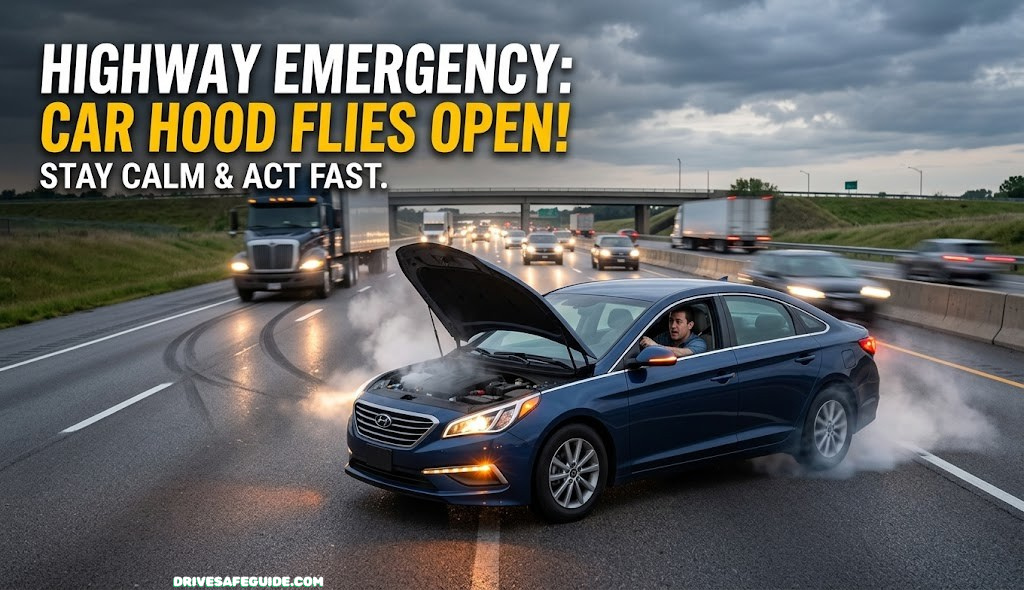
Hood Flying Open Protocol: A Driver’s Guide to Safety
A hood that suddenly whips upward and slams against the windshield is one of the most disorienting things that can happen behind the wheel. Here is exactly what to do in the first three seconds, why it happens, and how to make sure it never happens to you again.
There is a specific kind of silence that fills a car in the half-second after the hood slams up against the windshield. The engine noise is still there, the road is still moving underneath you, but your entire field of forward vision has just been replaced by sheet metal. It is one of the rarer vehicle malfunctions, but it is also one of the most panic-inducing, because unlike a flat tire or a warning light, it removes the one thing every driver depends on without thinking about it: the ability to see the road ahead.
This guide breaks down the hood flying open protocol into a sequence any driver can actually recall under stress, not a wall of theory you’ll forget the moment it matters. We’ll walk through why it happens, exactly what to do in the opening seconds, the physics behind why your instincts might betray you, and the maintenance habits and hardware upgrades that make sure this is a one-time event in your driving history rather than a recurring nightmare. If you’re the kind of driver who also prepares for other roadside emergencies, this pairs naturally with our guides on brake failure emergency procedures and stuck accelerator response, since all three share the same core skill: staying deliberate when your instincts want to panic.
What Actually Happens When a Hood Flies Open
Most drivers imagine a hood flying open as a dramatic, cartoonish event — the hood ripping backward off its hinges and cartwheeling into oncoming traffic. In reality, the vast majority of incidents look different and, in a strange way, more survivable. Because the hood is anchored at the rear by its hinges, it typically pivots upward and backward, coming to rest flat or nearly flat against the windshield and A-pillars rather than detaching completely. The engine compartment stays covered, the car keeps running normally, and the actual mechanical failure is almost always contained to the latch system rather than the hood itself tearing loose.
What changes instantly is your visual field. Depending on the vehicle’s hood length and your seating position, you may retain a narrow strip of visibility along the base of the windshield, some side visibility through the front side windows, or in worse cases, almost nothing forward at all. The steering, brakes, and throttle remain fully functional — this is a visibility emergency, not a mechanical control failure, which is an important distinction because it shapes the entire response strategy.
Full hood detachment, where the panel actually separates from the hinges and becomes a projectile, is far rarer and usually only occurs when hinges themselves have failed structurally, such as after severe corrosion or a prior collision that was never properly repaired. That scenario carries genuine risk to following vehicles and is one reason routine hinge inspection matters just as much as the latch itself.
Why Hoods Fly Open While Driving
Nearly every hood-flyaway incident traces back to one of a handful of root causes, and understanding which one applies to your situation directly informs how you prevent a repeat.
Incomplete Latching After Service
This is, by a wide margin, the most common cause. Whether it was a self-service oil change, a dealership visit, or a quick check of the windshield washer fluid at a gas station, a hood that was lowered but not pushed down firmly enough to engage the primary latch can appear closed while actually resting on the secondary safety catch alone — or, in a worst-case scenario, on nothing at all.
Secondary Latch Failure or Absence
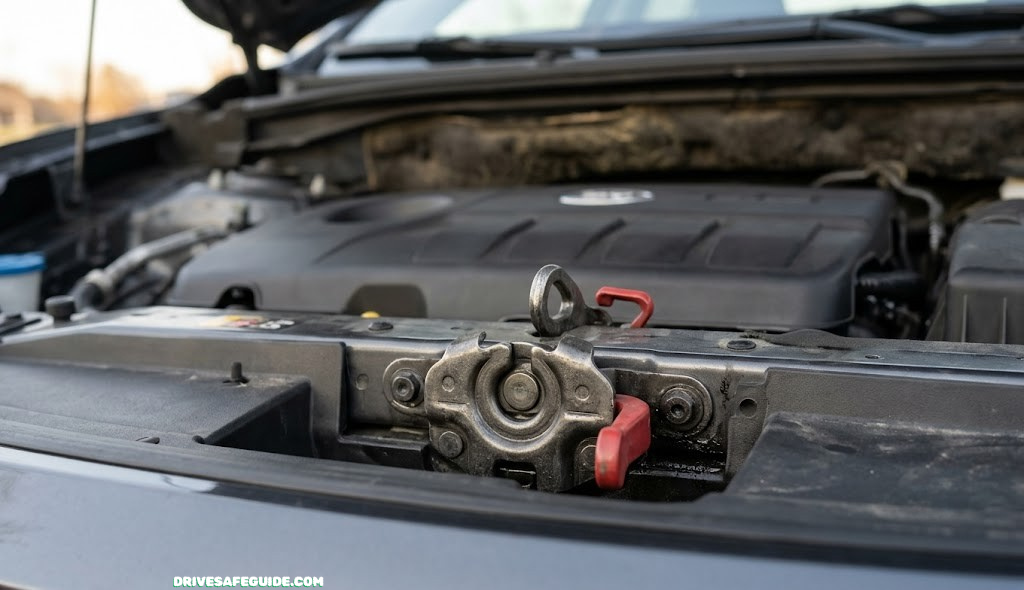
Every modern vehicle is engineered with two latch stages specifically to prevent this failure mode: a primary latch and a secondary “safety catch” that holds the hood partially closed even if the primary fails to engage. When that secondary catch is worn, rusted, misaligned, or missing a spring, the entire safety margin disappears.
Cable and Release Mechanism Wear
The cable connecting your interior hood release lever to the latch assembly stretches and corrodes over time. A cable with too much slack can prevent the latch from fully seating even when the hood appears shut, while a frayed or seized cable can cause the latch to release unexpectedly from vibration alone.
Aerodynamic Lift at Speed
Air doesn’t just push against a moving car — it also flows over and under the hood, creating a pressure differential. At highway speeds, that differential is strong enough to lift a hood that is only marginally secured, even one that looked and felt closed in a parking lot. This is why an incident often doesn’t happen until a driver merges onto a highway or accelerates past 55 mph, well after they last checked the hood.
Corrosion and Structural Hinge Fatigue
In regions with heavy road salt use, hinge bolts and latch strikers corrode from the inside out. A latch that has been quietly weakening for months can give way on an otherwise unremarkable drive, with no single dramatic trigger event.

The First Three Seconds: Your Immediate Protocol
Everything that determines whether this becomes a story you tell later or a genuine collision happens in the first three seconds. The protocol below is designed to be short enough to actually remember under adrenaline.
Ease off the accelerator — do not stomp the brake
Your first instinct will likely be to slam the brakes. Resist it. Sudden hard braking while you can’t see the road risks a rear-end collision from traffic behind you and can unsettle the car’s balance right when you need it most stable. Instead, lift off the accelerator smoothly and let the car begin decelerating on its own through engine drag.
Find your visual reference point immediately
Look for any sliver of visibility — the gap at the base of the windshield below the hood, a view through the side window, or the roofline of vehicles ahead visible around the hood’s edges. Some drivers find that leaning slightly toward the driver’s side window opens up a usable line of sight along the road’s edge or lane markings.
Hold the wheel steady with both hands
Do not make sharp corrective movements. Small, steady inputs keep the car tracking straight. Oversteering while blind is how a hood incident turns into a lane departure or a guardrail strike.
Activate your hazard lights
As soon as you have a hand free and the car is tracking straight, hit the hazards. This is the single biggest thing you can do to protect yourself from the traffic behind you, since drivers approaching from the rear have no idea anything is wrong until they see your lights or your hood.
Check mirrors, signal, and move toward the shoulder
Once the car is stable and decelerating, use whatever peripheral vision remains to check your mirrors, signal, and guide the vehicle gradually toward the shoulder or nearest safe stopping point. Do not attempt an abrupt lane change.
Come to a complete, controlled stop off the roadway
Once you’re clear of traffic, bring the car to a full stop, put it in park, and only then step out to assess and re-secure the hood. Never attempt to reach out and hold the hood down while the car is still moving.
This exact sequence — reduce speed smoothly, find a visual reference, hold steady, signal your distress, then exit traffic — is the same underlying skeleton used across nearly every sudden-visibility-loss scenario, including dense night driving glare situations and black ice loss-of-traction events. The common thread is always the same: smooth inputs beat panicked ones.
What Not To Do
Just as important as the correct protocol is knowing which instincts will actively make things worse.
The pattern across all four of these mistakes is the same: they all trade a small, uncertain chance of fixing the hood for a much larger, certain increase in crash risk. The protocol above accepts the visibility loss as a temporary condition to be managed, not a problem to be solved mid-drive.
The Physics of Losing Forward Visibility
Understanding why this feels so much more disorienting than other malfunctions helps explain why the protocol emphasizes calm, minimal inputs. Human drivers rely heavily on what’s called the optical flow field — the pattern of visual motion streaming past as you move forward — to judge speed, lane position, and closing distance to other vehicles. When a hood blocks that field almost instantly, the brain doesn’t have a graceful way to compensate; there’s no gradual transition the way there is with, say, fog rolling in.
This abrupt removal of visual input is part of why the instinctive reaction is so often disproportionate to the actual mechanical severity of the event. Your vehicle’s brakes, steering, and stability systems are unaffected. What’s been taken away is purely informational. That’s a critical mental reframe in the moment: this is a “flying blind” problem to manage with smooth, deliberate control, not a structural vehicle failure requiring a dramatic maneuver.
There’s a useful parallel to power steering failure handling, where the vehicle also remains fundamentally driveable, but a driver’s exaggerated correction in response to unexpected wheel resistance often causes more instability than the failure itself. In both cases, the safest path is the one that looks the least dramatic from inside the car.
Highway Speeds vs. City Streets
The correct protocol stays the same regardless of setting, but the risk profile and priorities shift meaningfully between environments.
On the Highway
Higher speeds mean the aerodynamic force lifting the hood is stronger, and your following distance to nearby traffic shrinks faster than it feels like it should. Prioritize hazard lights immediately and a gradual, multi-second deceleration rather than any quick move toward the shoulder, since abrupt lane changes at highway speed while partially blind carry outsized risk. Look for a wide shoulder or the next exit rather than attempting to stop in a narrow breakdown lane if traffic density makes that unsafe.
On City Streets
Lower speeds work in your favor since aerodynamic lift is weaker and stopping distances are shorter, but the environment introduces more variables: pedestrians, cross-traffic, parked cars, and intersections. Your priority shifts toward finding any safe, legal stopping point — a parking lane, a driveway apron, even a gas station — rather than holding out for a formal shoulder that may not exist on a city street.
| Factor | Highway | City Street |
|---|---|---|
| Aerodynamic force on hood | High — increases with speed | Low to moderate |
| Primary hazard | Rear-end collision, high closing speeds | Pedestrians, cross-traffic, parked vehicles |
| Stopping priority | Widest available shoulder or next exit | Nearest legal, safe pull-off point |
| Deceleration style | Gradual, multi-second glide | Steady but can be quicker given lower speed |
| Visibility recovery odds | Lower — force keeps hood pinned up | Slightly higher at very low speed |
Pulling Over and Securing the Hood
Once you’re stopped safely off the roadway, resist the urge to immediately jump out. Take a breath, confirm the car is fully in park, engage the parking brake, and only then step out — checking for passing traffic before opening your door, especially on a highway shoulder.
Inspecting and Re-Securing
With the engine off and the hood cooled slightly if it’s been running hard, lift the hood the rest of the way and inspect the latch mechanism and striker for visible damage, bending, or debris. If the latch appears intact and simply wasn’t fully engaged, you can typically lower the hood and press down firmly near the front edge until you hear and feel the latch click into its primary position — always test by trying to lift the hood slightly afterward to confirm it’s secure.
If the latch mechanism looks bent, cracked, or if the hood won’t stay down when tested, do not continue driving at normal speed. A rope, a bungee cord, or a ratchet strap run through the front grille opening and secured to the underside of the bumper or a tow hook can serve as a temporary hold for a slow, careful drive to the nearest repair shop — but this is a stopgap, not a fix, and should never be treated as safe for highway speeds.
Post-Incident Inspection Checklist
Even after the hood is re-secured and you’re back underway, a thorough inspection matters before you consider the incident closed. A hood that slammed backward against the windshield or A-pillars can cause damage that isn’t obvious from a quick glance.
- Windshield glass: Check for chips, cracks, or stress lines near where the hood contacted the glass, especially along the lower edge.
- Hood alignment: Look for uneven panel gaps along the sides compared to before the incident, which can indicate bent hinges.
- Hinge integrity: Inspect both hinges for visible bending, cracked mounting points, or loose bolts.
- Latch and striker: Confirm the primary latch engages fully and the secondary safety catch still functions independently.
- Paint and body damage: Look for creasing near the base of the windshield or the cowl panel where the hood may have flexed backward.
- Wiper arms and cowl: A hood slamming back can occasionally bend wiper arms or crack the cowl trim beneath them.
- Hood release cable: Test the interior release lever to confirm the cable wasn’t stretched or damaged during the event.
If you notice any windshield damage, address it before your next drive rather than assuming a small chip won’t spread — the same logic that applies to unusual highway vibration you’d never ignore on a tire applies here too. Small mechanical warning signs are cheaper to fix early than after they cascade.
Preventing a Repeat Incident
The good news is that this is one of the most preventable roadside emergencies in this entire category, because nearly every root cause is something you can catch during routine maintenance.
Build a Post-Service Habit
Every single time your hood has been opened — for an oil change, a fluid top-off, a battery check, anything — make it an automatic habit to press down firmly on the front edge of the hood before driving away and confirm you hear the latch click. This single habit alone eliminates the most common cause of hood-flyaway incidents entirely.
Inspect the Secondary Latch Seasonally
Twice a year, check that your secondary safety catch moves freely and isn’t rusted or bent. A light coat of white lithium grease on both the primary and secondary latch mechanisms keeps them functioning smoothly and resists corrosion, particularly important if you live somewhere with heavy winter road salt exposure similar to the conditions covered in our winter driving safety guide.
Address Warning Signs Immediately
A hood that pops slightly over bumps, a new rattle from the front of the car, or resistance when pulling the interior release lever are all early warnings. Treat them the same way you’d treat a strange sound from your brakes or a shudder at highway speed — worth ten minutes with a flashlight rather than weeks of hoping it goes away.
Make It Part of Your Pre-Drive Routine After Any Roadside Stop
Beyond routine service visits, plenty of hood-flyaway incidents happen after informal, unplanned stops — checking a warning light, glancing at a coolant reservoir after seeing steam, or popping the hood on a whim to show a curious passenger the engine bay. None of these situations come with the built-in reminder of a shop receipt or a service light resetting, which is exactly why they’re higher-risk moments. Build the habit of treating every hood opening the same way regardless of the reason: closed, pressed firmly at the front edge, and tested with a light upward tug before you drive away. This single consistent habit costs about three seconds and eliminates the majority of preventable incidents described throughout this guide.
Keep a Simple Maintenance Log
If your vehicle has already had one latch-related scare, even a minor one, it’s worth jotting down the date and what you found when you inspected it. A simple note — “latch striker showed light rust, greased and tested fine” — gives you and any future mechanic a useful reference point for whether the problem is progressing or was fully resolved. This mirrors the same disciplined approach recommended for tracking recurring issues like transmission slipping causes or intermittent TPMS sensor faults, where a pattern over time tells you far more than any single inspection.

Hood Pins and Aftermarket Locks
For drivers who want a mechanical backup that doesn’t rely on cables, springs, or factory latch geometry at all, aftermarket hood pins are a well-established solution, common on trucks, off-road vehicles, and towing setups where hood security matters even more than usual.
A hood pin kit replaces or supplements the factory latch with a direct, visible pin-and-clip system through the hood itself. Because the pin is visible from outside the vehicle, checking hood security becomes a five-second visual glance rather than a guess about whether an internal latch engaged properly. Many drivers who tow trailers or drive frequently on rough, unpaved roads — similar to the terrain discussed in our guide on preparing your car for road trip safety checks — treat hood pins as standard equipment rather than an upgrade.
Pros of Hood Pins
- Visible, instantly checkable security
- Doesn’t depend on cable tension or spring wear
- Extremely resistant to vibration-based failure
- Popular, inexpensive upgrade for towing and off-road use
Cons of Hood Pins
- Requires drilling into the hood on most installations
- Slightly slower to open than a factory pull-release
- Purely cosmetic pin styles offer less real security than locking versions
- Not a substitute for fixing an already-failing primary latch

Comparing Hood Security Options
Not every driver needs the same solution. Here’s how the common options stack up against each other for everyday reliability, cost, and maintenance demands.
| Option | Reliability | Cost | Maintenance | Best For |
|---|---|---|---|---|
| Factory latch (well maintained) | High | None — routine care only | Seasonal lubrication | Most everyday drivers |
| Factory latch (neglected) | Low | None until it fails | None — that’s the problem | Nobody — this is the failure state |
| Locking hood pins | Very high | Low to moderate | Minimal | Towing, off-road, high-mileage drivers |
| Cosmetic-only hood pins | Moderate | Low | Minimal | Appearance more than function |
| Emergency strap or bungee | Low — temporary only | Very low | None | Getting to a shop, not daily driving |
The consistent theme across every reliable option is a visible, physically checkable point of security — exactly the same principle behind carrying visible, easy-to-verify gear in a car emergency kit rather than something you have to hope is still working.
Legal and Insurance Considerations
There’s generally no specific traffic law that criminalizes driving with a hood that unexpectedly flew open — it’s treated as a mechanical malfunction rather than a moving violation in most jurisdictions. That said, a few practical considerations matter.
If your hood detaches entirely and strikes another vehicle, liability questions can arise around whether the failure was reasonably foreseeable — for instance, if you knew the latch was already faulty and continued driving anyway. This is one more reason the seasonal inspection habit discussed earlier matters beyond just your own safety.
On the insurance side, coverage for resulting damage — a cracked windshield, a dented hood, bent hinges — typically falls under comprehensive or collision coverage depending on your policy’s specific language and the classification of the incident. It’s worth a quick call to your insurer to understand how a mechanical-failure-triggered incident is categorized under your specific policy, since this can vary. If the incident happened alongside other vehicle trouble, such as an engine warning light that appeared around the same time, it’s also worth reviewing our guide on solid vs. flashing check engine lights to determine whether it’s safe to continue driving before your repair appointment.
If You Were Recently Serviced Elsewhere
If a hood-flyaway incident occurs shortly after a service visit at a shop, dealership, or quick-lube location, it’s reasonable to document the timeline and reach out to that facility. Many shops carry their own liability coverage for exactly this kind of oversight, and a documented pattern — a service date, mileage, and the date of the incident — is far more persuasive than a verbal account weeks later. Photograph any damage before repairs begin, and keep the original repair estimate as part of that record.
Documenting the Incident Properly
Even when no other vehicle or property was involved, it’s worth taking a few photos of the hood, latch area, and any windshield contact points immediately after the incident, along with a note of your approximate speed and location. This kind of documentation costs nothing in the moment and can save considerable back-and-forth later if a warranty claim, insurance claim, or shop dispute arises down the line.
What Belongs in Your Emergency Kit
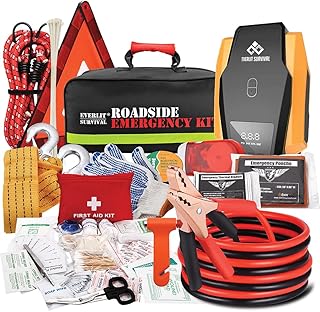
A well-stocked emergency kit turns a hood-flyaway incident from a stressful ordeal into a five-minute roadside fix. A few specific items are especially relevant to this scenario.
- A short ratchet strap or heavy-duty bungee cord for temporarily securing a hood that won’t latch.
- A small flashlight or headlamp to properly inspect the latch mechanism, especially at night — the same tool that matters for the low-light situations covered in our night driving safety checklist.
- A small can of white lithium grease or all-purpose lubricant to free up a sticking latch on the spot.
- Reflective triangles or road flares to mark your stopped vehicle, similar to what’s recommended in our review of durable LED road flares.
- Basic hand tools for tightening a loose striker bolt or adjusting a latch cable enough to get you safely to a repair shop.
If you haven’t put together a full roadside kit yet, our complete walkthrough on how to build a car safety kit covering tires, battery, and first aid is a solid foundation to build from, with the hood-specific items above as a natural addition.
It’s worth thinking about where these items live in your vehicle as well. A ratchet strap buried under luggage in the trunk does you no good if you’re stopped on a highway shoulder in heavy traffic and need it quickly. Many drivers keep a small dedicated pouch in the glovebox or driver’s door pocket with just the hood-related essentials — a short strap, a mini flashlight, and a small tube of grease — separate from the larger emergency kit stored in the trunk. This mirrors the same accessibility principle behind keeping something like a seatbelt cutter or window breaker within immediate arm’s reach rather than packed away, a concept covered in more depth in our review of emergency car escape tools. The items that matter most in a sudden roadside moment are the ones you can reach without digging.
If you regularly drive in conditions where a roadside stop carries its own risks — heavy snow, isolated rural roads, or extreme temperatures — it’s worth cross-referencing your hood emergency items with broader guides like our blizzard stranded survival guide or our desert breakdown water rationing guide, since a hood incident that forces an unplanned roadside stop in extreme weather introduces its own layer of risk beyond the mechanical issue itself.
How Vehicle Type Changes the Risk
Not every vehicle behaves the same way when a hood comes loose, and the differences matter for how you should think about both prevention and response. Hood length, hinge design, and even the angle at which the hood sits relative to the windshield all play a role in how much visibility you lose and how the panel tends to move once it’s no longer latched.
Sedans and Compact Cars
Shorter hoods on compact and mid-size sedans tend to produce a slightly less severe visibility loss than longer-hooded vehicles, since there’s less panel to swing upward and the angle of travel often leaves a narrow strip of visibility along the base of the windshield. That said, the shorter distance between the front axle and the windshield also means the hood reaches the glass faster once it releases, giving you marginally less warning.
Pickup Trucks and Body-on-Frame SUVs
Long hoods common on full-size trucks and traditional SUVs create a larger surface area for aerodynamic lift to act on, which is part of why hood pins are so popular in the truck and off-road community even among drivers who’ve never experienced a flyaway incident firsthand. The higher seating position in these vehicles can sometimes preserve slightly more peripheral visibility through the side windows, which helps when navigating toward a shoulder.
Older Vehicles and High-Mileage Latches
Latch components wear gradually, and a vehicle well past its original warranty period is statistically more likely to have a striker, spring, or cable nearing the end of its service life. If you drive an older vehicle, particularly one you didn’t purchase new, it’s worth having a mechanic specifically inspect the hood latch and secondary catch during your next routine service rather than assuming it was included in a general inspection. This is the same logic that applies to catching early alternator failure symptoms or serpentine belt wear before they leave you stranded — aging components rarely fail without some warning if you know where to look.
Vehicles With Aftermarket Hood Modifications
Custom hood scoops, vented hoods, or lightweight aftermarket hood replacements sometimes ship without a proper secondary latch catch, or with a catch that wasn’t correctly calibrated during installation. If your vehicle has any non-factory hood, it’s worth specifically confirming both latch stages function independently rather than assuming the aftermarket part matched factory tolerances exactly.
Real-World Scenario Walkthroughs
Reading a numbered protocol is useful, but seeing how it plays out across a few different realistic situations makes the sequence easier to recall when it actually matters.
Scenario One: Highway Merge After a Gas Station Stop
You’ve just topped off oil at a gas station, closed the hood by pushing down near the center, and merged onto the highway. Around 60 mph, the hood suddenly lifts and slams back against the windshield. In this case, the most likely cause is that pushing near the center rather than the front edge left the primary latch unengaged. The correct response: ease off the throttle, find your visibility strip along the windshield base, hold the wheel steady, hazards on, and glide toward the shoulder over several seconds rather than braking hard. Once stopped, pressing firmly on the front edge of the hood — the correct latch point — usually resolves it completely, and the drive can continue at reduced speed with periodic checks until you’re confident it’s holding.
Scenario Two: Sudden Failure With No Recent Service
You haven’t opened the hood in months, and while driving on a local road at 40 mph, the hood pops and partially lifts, held only by the secondary catch, creating a smaller but still significant visibility reduction. This pattern usually points to a worn or corroded primary latch rather than an incomplete closing. After safely stopping, a visual inspection showing rust or play in the latch mechanism confirms it’s time for a repair rather than a quick re-latch, and driving to a shop at reduced speed with a temporary strap securing the hood is the appropriate next step rather than resuming normal driving.
Scenario Three: Full Hood Detachment
Rare, but worth understanding: on a vehicle with severely corroded hinge bolts, the entire hood tears free and becomes airborne rather than pivoting back against the windshield. In this scenario, visibility loss happens differently — often briefly total, followed by a return of forward vision once the panel clears the vehicle — but the risk to following traffic is significant. The response remains the same core sequence: ease off the throttle, hold the wheel steady through the brief blind moment, hazards on immediately once vision returns, and pull over to call for assistance, since a detached hood is not a temporary-fix situation and the vehicle should not continue under its own hood-less power beyond reaching a safe stop.
Across all three scenarios, the underlying skill is identical to what’s covered in our highway vibration and tire balance guide and our breakdown of early coolant leak detection: the earlier you can correctly diagnose what’s actually happening mechanically, the calmer and more appropriate your response becomes.
Frequently Asked Questions
What should I do first if my hood flies open while driving?
Ease off the accelerator immediately, resist the urge to slam the brakes, and look through the gap at the base of the windshield or lean your head toward the side window to find a reference point for steering. Signal, check your mirrors as best you can, and guide the car toward the shoulder at a reduced but steady speed.
Why do car hoods fly open while driving?
Most incidents trace back to a hood that was not fully latched after service or a DIY task, a failed primary or secondary latch mechanism, a broken hood release cable, or aerodynamic lift at highway speed acting on a hood that was already slightly ajar.
Is it safe to keep driving with the hood partially open?
No. Even a hood that appears to be sitting flat can still lift further at highway speed due to airflow pressure differences. Pull over as soon as it is safe, re-latch or secure the hood, and inspect the latch mechanism before continuing.
Can a flying hood cause an accident?
Yes. A hood that suddenly blocks the windshield removes forward visibility in an instant, which is one of the most disorienting failures a driver can experience at speed. Sudden braking or oversteering in response is often more dangerous than the hood event itself.
Does a secondary hood latch actually help?
Yes. The secondary latch is a backup safety catch designed to hold the hood partially closed even if the primary latch fails or was not engaged. A functioning secondary latch is one of the most effective, low-cost defenses against a full hood-flyaway event.
How do I know if my hood latch is failing?
Warning signs include a hood that pops slightly when going over bumps, a rattling or clunking sound from the front of the vehicle, visible rust or wear on the latch striker, or resistance when the hood release lever is pulled from inside the car.
What is the correct emergency steering technique when vision is blocked?
Keep both hands on the wheel, avoid abrupt corrections, and use peripheral references such as the shoulder line, guardrail, or the tops of nearby vehicles visible around the edges of the hood to hold a straight line while decelerating gradually.
Should I use hazard lights if my hood flies open?
Yes, activate your hazard lights as soon as you have regained partial control, since this warns following traffic that something unusual is happening and gives them time to react before you reach the shoulder.
Are aftermarket hood pins worth installing?
For drivers who tow, off-road, or simply want a mechanical backup that does not depend on a factory latch cable, aftermarket hood pins provide a direct, visible, and highly reliable second point of security that is easy to inspect at a glance.
Is it legal to drive after a hood flying open incident without inspecting it?
There is no law against continuing to drive, but doing so without inspecting the latch, hinges, and any resulting hood or windshield damage risks a repeat incident and can leave you liable if the hood detaches entirely and strikes another vehicle.
Can a body shop repair hood damage from a flyaway event?
In most cases, yes. Bent hinges, a sprung hood, cracked latch housings, and cosmetic dents from the hood snapping backward can typically be repaired or replaced, though a full realignment is often needed to restore proper closure.
Does insurance cover damage from a hood flying open?
Coverage depends on your policy and the cause. Mechanical failure of a latch is often treated differently from collision damage caused by the hood strike itself, so it is worth reviewing your comprehensive and collision terms with your insurer directly.
Final Word: Preparedness Beats Panic
A hood flying open while driving is rare, but it’s exactly the kind of rare event where knowing the protocol in advance makes the difference between a controlled, minor incident and a genuine crash. The core of it is simple enough to remember under stress: ease off the gas, don’t brake hard, find whatever sliver of visibility you can, hold the wheel steady, flip on your hazards, and guide the car calmly off the road. Everything else — the prevention habits, the hood pins, the emergency kit items — exists to make sure you never actually need that protocol in the first place.
Pair this guide with a broader look at defensive driving habits that reduce collision risk, since the same calm, deliberate mindset applies whether you’re dealing with a hood, a sudden mechanical failure, or simply unpredictable traffic around you.
Shop Hood Security Kits on Amazon🛡️ Be Prepared
Every Car Needs an Emergency Kit
Breakdowns happen without warning. A well-stocked car emergency kit can keep you safe until help arrives — don’t drive without one.
🏗 Shop Emergency Kits on AmazonAffiliate link — we earn a small commission that keeps DriveSafeGuide running. Thank you!