Mastering Power Steering Failure Handling for Safe Driving
One second the wheel feels normal. The next, it locks up or goes eerily loose, and the car stops going where you point it. Here’s exactly what’s happening under the hood, how to keep control in the moment it fails, and how to make sure it never catches you off guard again.

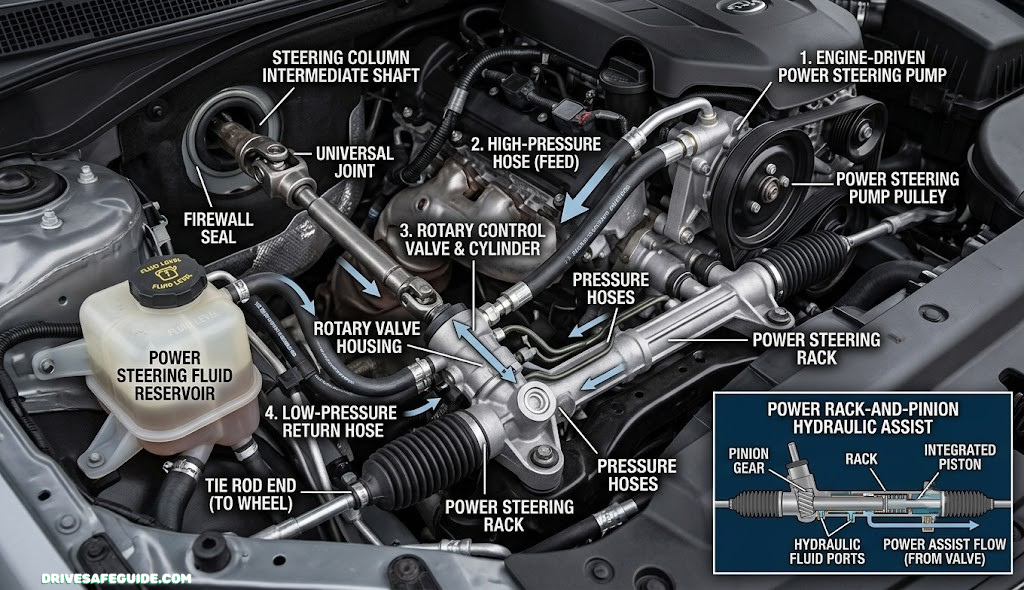
Power steering failure is rare, sudden, and manageable — if you know the physics behind it before it happens.
Why Power Steering Failure Deserves Your Full Attention
Most drivers never think about power steering until the moment it’s gone. It’s one of those systems that works so quietly in the background that its absence feels violent by comparison — the wheel suddenly fights you, or goes limp, or groans like it’s straining against something invisible. Neither reaction is dangerous on its own. What’s dangerous is not knowing what to do in the two or three seconds it takes to figure out you’re now steering a much heavier, much less forgiving vehicle than you were a moment ago.
This guide breaks the topic into two halves. The first half explains the mechanics — what power steering actually does, why it fails, and how to catch the warning signs weeks or months before you’re ever forced to react in traffic. The second half is the part that matters most in the moment itself: a clear, rehearsed sequence for keeping the car pointed where you want it when the assist disappears without warning. If you only read one section, make it the step-by-step emergency response section, and consider bookmarking it. For a broader library of emergency handling guides covering everything from brake failure emergency procedures to a stuck accelerator response, this article is part of a larger series designed to help you handle mechanical failures calmly rather than reactively.
It’s worth saying upfront that a total, unannounced power steering failure is genuinely uncommon. Modern vehicles are engineered with redundancies, fail-safes, and dashboard alerts specifically designed to give you a window of warning before assist disappears completely. That said, “uncommon” isn’t the same as “impossible,” and the drivers who handle it best aren’t the ones who’ve never experienced it — they’re the ones who understood the mechanics well enough that the moment, when it came, felt like a known problem rather than a mystery. That’s the goal of this guide: to take something that sounds frightening in the abstract and turn it into a short, rehearsed, almost boring checklist by the time you finish reading.
How Power Steering Actually Works
Before you can react correctly to a failure, it helps to understand what’s actually missing when it happens. Power steering doesn’t turn your wheels for you — it amplifies the force you apply to the steering wheel so that turning the front tires, which are pressing against the full weight of the vehicle and the friction of the road surface, doesn’t require the forearm strength of a competitive arm-wrestler. Without it, every turn, every parking maneuver, and every lane correction becomes a full-body effort, especially at low speeds where the tires are under the most resistance.
In a traditional hydraulic system, an engine-driven pump pressurizes fluid that pushes against a piston inside the steering gear, multiplying your input force. In an electric power steering (EPS) system, a small electric motor mounted on the steering column or rack does the same job, guided by a torque sensor that measures how hard you’re turning the wheel and how fast you’re driving. A third category, electro-hydraulic power steering, blends both: hydraulic assist driven by an electric pump instead of a belt off the engine, giving some of the fuel-efficiency benefits of EPS with some of the road feel of a traditional hydraulic setup.
The reason this matters for failure handling is simple: each system fails differently, feels different when it fails, and requires a slightly different response. A hydraulic failure often announces itself with fluid loss, a whining noise, and a wheel that gets progressively heavier. An EPS failure is often instant and silent — a warning light, a chime, and steering effort that jumps dramatically in less than a second. Knowing which one you’re dealing with changes how you interpret the first two seconds of the event.

Check Prices on Amazon
Hydraulic vs. Electric vs. Electro-Hydraulic: Why the Distinction Matters
Not every vehicle on the road handles a steering failure the same way, and the biggest reason is architecture. Older vehicles and many trucks and SUVs still rely on fully hydraulic systems, where a belt-driven pump keeps fluid pressurized continuously whenever the engine is running. These systems are mechanically simple and tend to fail gradually — a slow leak, a worn belt, or a failing pump usually gives you days or weeks of subtle warning before a full failure.
Electric power steering, now standard on the vast majority of new passenger cars, removes the belt, pump, and fluid entirely. A motor built into the column or rack applies assist based on real-time input from sensors. EPS systems are more fuel-efficient and allow for features like lane-keeping assist and variable steering effort, but their failures tend to be electrical rather than mechanical — a bad sensor, a blown fuse, a software fault, or a wiring issue can disable the entire system almost instantly, sometimes with no gradual warning at all beyond a dashboard icon.
Electro-hydraulic systems sit in between. They still use hydraulic fluid and a piston-based assist mechanism, but the pump is powered by an electric motor rather than the engine belt. This means a serpentine belt issue won’t affect your steering, but a wiring or module failure can still knock out the pump. If you’re unsure which system your car uses, your owner’s manual will specify it, and it’s worth checking now rather than during an emergency — the two failure modes genuinely feel different from behind the wheel.
Hydraulic Systems — Strengths
- Failures are usually gradual, giving more warning time
- Strong, direct road feel
- Mechanically simple to diagnose and repair
- Continues working even with some electrical faults
Hydraulic Systems — Weaknesses
- Vulnerable to belt failure and fluid leaks
- Constant pump load reduces fuel efficiency
- Fluid degrades over time and needs service
- Leaks can be messy and slow to notice
Why Power Steering Fails: The Root Causes
Power steering failure is almost never random. It’s the end point of a specific, identifiable cause that usually starts small. Understanding these causes is what lets you catch a failure while it’s still an inconvenience in your driveway instead of an emergency on the freeway.
1. Fluid Leaks (Hydraulic and Electro-Hydraulic Systems)
The most common cause of hydraulic power steering failure is simple fluid loss. Hoses crack with age and heat cycling, seals harden and shrink, and the rack itself can develop leaks at its end seals. Once fluid drops below the level needed to maintain pressure, the pump starts drawing in air, which is what produces the telltale whining or groaning noise associated with failing power steering.
2. Worn or Broken Serpentine Belt
In belt-driven hydraulic systems, the pump only works if the belt connecting it to the engine is intact and properly tensioned. A cracked, glazed, or snapped belt cuts off the pump instantly. This is one of the more sudden hydraulic failures and is worth understanding alongside our dedicated guide on serpentine belt replacement signs, since belt failure often takes out the alternator and cooling system at the same time.
3. Failing Pump
Pumps wear out. Internal components degrade, seals fail, and the pump eventually loses its ability to build pressure even with good fluid and an intact belt. A failing pump typically produces noise well before it fully dies, which is a useful early warning window.
4. Electrical and Sensor Faults (EPS Systems)
Electric power steering depends on a torque sensor, a control module, and a healthy electrical connection. Corroded connectors, a failing sensor, a blown fuse, or a software fault in the steering control unit can disable assist instantly. Because there’s no fluid or belt involved, there’s often little to no physical warning — the first sign is frequently a dashboard warning light paired with an immediate change in steering weight.
5. Low Battery Voltage or Charging System Issues
EPS motors draw significant current, and many systems are programmed to reduce or disable assist if voltage drops below a safe threshold — which can happen with a failing alternator or a weak battery. This is one reason it’s worth understanding alternator failure symptoms, since a charging problem can quietly set up a steering problem days later.
6. Contaminated or Degraded Fluid
Power steering fluid breaks down over time, accumulating heat-damaged particles that can clog the narrow passages inside the pump and rack. Manufacturers specify fluid change intervals for exactly this reason, and skipping them accelerates wear on every hydraulic component in the system.
7. Rack and Pinion Wear or Damage
Physical damage from potholes, curb strikes, or simple age can damage the steering rack itself, leading to internal leaks or binding that no amount of fluid top-up will fix.
Early Warning Signs You Should Never Ignore
Almost every hydraulic power steering failure gives some warning before it becomes a genuine emergency. Learning to recognize these signs early is the single most effective thing you can do to avoid ever needing the emergency response steps in this guide.
| Warning Sign | What It Usually Means | Urgency |
|---|---|---|
| Whining or groaning noise when turning | Low fluid or air in the system | Check within days |
| Steering feels stiff at low speed only | Weak pump, degraded fluid, or belt slipping | Check within days |
| Steering wheel shudders or vibrates when turning | Air in fluid, worn pump, or belt issue | Check within days |
| Reddish/amber fluid spots under the front of the car | Active hydraulic leak | Check immediately |
| Squealing on startup or during turns | Belt slipping due to wear or tension loss | Check within days |
| EPS or steering warning light on dash | Sensor, module, or wiring fault | Check immediately |
| Steering suddenly feels inconsistent or delayed | Intermittent electrical fault | Check immediately |
| Wheel is hard to turn only when cold | Fluid viscosity or early pump wear | Monitor closely |

Shop Power Steering Fluid
What Actually Happens the Moment Power Steering Fails
This is the part most drivers get wrong in their heads before it happens to them. Power steering failure does not mean you lose the ability to steer. It means you lose the assist that makes steering easy. The steering system itself — the rack, the tie rods, the linkage — is still fully mechanically connected to your front wheels. You can still turn the wheel. It will just require dramatically more effort, especially at low speeds and during sharp maneuvers like parking or tight turns.
At highway speed, the difference is often smaller than people expect, because aerodynamic and mechanical forces required to hold a straight line or make a gentle lane change are much lower than the forces needed to turn sharply while stationary or crawling through a parking lot. This is genuinely reassuring: the moment power steering fails is rarely the moment you’re most vulnerable. The most dangerous window is usually the half-second of surprise immediately after the failure, when an unprepared driver overcorrects, jerks the wheel, or panics and brakes hard mid-turn.
In an EPS failure specifically, the loss can feel more abrupt because there’s no fluid pressure bleeding off gradually — the assist simply switches off, sometimes with a brief chime or dashboard alert a moment before or after. In a hydraulic failure, the wheel typically gets progressively heavier over a second or two as pressure drops, giving your hands and arms a slightly more gradual cue to brace against.
Step-by-Step Emergency Response When Power Steering Fails While Driving
This is the sequence to memorize. It’s short by design — in a real moment of surprise, you need three or four simple actions, not a checklist.
If the failure happens in a turn or during a lane change rather than on a straightaway, the same principles apply, just compressed into a shorter window: grip firmly, don’t panic-brake, and complete the maneuver with steady, sustained pressure rather than short corrective jerks. Most drivers are surprised by how manageable this actually feels once the moment passes — the car doesn’t become unsteerable, it becomes a workout.
Shop Roadside Kits
Handling an EPS Failure vs. a Hydraulic Failure: Key Differences
While the core emergency response is the same, there are a few practical differences worth knowing depending on which system your vehicle uses.
Hydraulic Failure
Because hydraulic failures usually stem from a leak or belt issue, you’ll often notice a whining noise and gradually increasing effort before a total loss of assist. This gives you a brief buffer to plan your move to the shoulder before the wheel becomes fully heavy. A hydraulic failure also frequently coincides with a temperature warning, since a broken serpentine belt can affect the water pump and alternator at the same time — treat any sudden combination of dashboard warnings as a cue to pull over sooner rather than later.
Electric Power Steering (EPS) Failure
EPS failures tend to be more binary — full assist one moment, none the next — triggered by a warning chime and a dashboard icon. Because there’s no fluid to leak or belt to inspect, there’s rarely a visible clue at the roadside. If your EPS light comes on but assist hasn’t fully failed yet, treat it as a “check immediately” situation rather than a “monitor” situation, since many EPS faults escalate from intermittent to total within a short window.
| Factor | Hydraulic System | Electric Power Steering (EPS) |
|---|---|---|
| Typical warning window | Minutes to days (noise, stiffness) | Seconds to none (often instant) |
| Common trigger | Fluid leak, belt failure, pump wear | Sensor, module, or wiring fault |
| Roadside diagnosis | Visible fluid, audible whine | Dashboard light only |
| Feel at failure | Gradually heavier | Sudden jump in effort |
| Safe to limp home? | Sometimes, briefly, at low speed | Not recommended — get it scanned first |
Spotting Fluid Leaks Before They Become a Failure
If your vehicle uses a hydraulic or electro-hydraulic system, fluid checks are the cheapest insurance you have against an on-road failure. The reservoir is usually a translucent plastic container near the front of the engine bay, often labeled with “MIN” and “MAX” markings. Checking it takes under a minute and can be done cold, without the engine running.
Low fluid alone doesn’t tell you where the leak is, but a few visual clues narrow it down quickly. Fluid pooling near a hose clamp usually means a degraded fitting or cracked hose. Fluid concentrated near the steering rack, often visible as a wet film along the boots at each end, points to a worn rack seal. Fluid near the pump pulley, especially combined with a chirping noise, suggests a failing pump shaft seal. If you’re not confident diagnosing it yourself, a mechanic can usually pinpoint the source with a UV dye test in under twenty minutes.
Failure Mode Comparison: What To Expect By System Type
Here’s a consolidated view of how each type of power steering system tends to behave across the full lifecycle of a failure, from first symptom to complete loss of assist.
| System | First Sign | Progression Speed | Roadside Fixable? | Typical Root Cause |
|---|---|---|---|---|
| Hydraulic (belt-driven) | Whining noise, stiffness | Gradual (days) | Sometimes (fluid top-up) | Leak, belt wear |
| Electro-hydraulic | Warning light or noise | Moderate (hours to days) | Rarely | Pump module or fluid leak |
| Electric (EPS) | Dashboard alert | Sudden (seconds) | No — requires diagnostics | Sensor, wiring, or module fault |
Reassuring Facts
- You never lose the mechanical ability to steer — only the assist
- Highway-speed steering effort increases far less than parking-lot effort
- Most hydraulic failures give measurable warning time
- Vehicles remain fully brakeable during a steering failure
Genuine Risks
- Panic-driven overcorrection is the leading cause of loss of control
- EPS failures can happen with almost no warning
- Low-speed maneuvers (parking, tight turns) become physically demanding fast
- Combined failures (belt + charging system) can compound quickly

Shop Leak Detection Kits
Preventive Maintenance Schedule: Making Failure Unlikely
The single best way to “handle” a power steering failure is to have already done the maintenance that prevents it. Here’s a practical schedule most owners can follow regardless of make or model, though you should always defer to your owner’s manual for exact intervals.
| Interval | Task | System Type |
|---|---|---|
| Every fuel fill-up | Quick visual check for fluid puddles under the front of the car | Hydraulic / Electro-hydraulic |
| Monthly | Check fluid level against MIN/MAX markings | Hydraulic / Electro-hydraulic |
| Every 6 months | Inspect belt for cracking, glazing, or fraying | Hydraulic |
| Every 30,000–50,000 miles | Flush and replace power steering fluid | Hydraulic / Electro-hydraulic |
| Annually | Scan for stored fault codes even with no warning light | Electric (EPS) |
| As needed | Inspect battery terminals and charging voltage | Electric (EPS) |
| Every oil change | Visual inspection of hoses, boots, and rack seals | All systems |
What Power Steering Repairs Actually Cost
Cost is often the reason drivers delay a fix once a warning sign shows up, so it helps to know the range ahead of time. These are general U.S. estimates and will vary by region, vehicle, and shop.
| Repair | Typical Cost Range | Urgency If Ignored |
|---|---|---|
| Fluid top-up / minor leak seal | $20–$80 | Low, but monitor closely |
| Serpentine belt replacement | $100–$250 | Moderate — can fail suddenly |
| Power steering hose replacement | $150–$400 | Moderate to high |
| Power steering pump replacement | $300–$750 | High once noise appears |
| Steering rack replacement | $500–$1,500+ | High — affects handling directly |
| EPS motor or module replacement | $400–$1,200 | High — often triggers total assist loss |
| Torque sensor replacement (EPS) | $250–$600 | Moderate to high |
The takeaway across nearly every row of that table is the same: catching a problem at the fluid-top-up or belt-replacement stage is dramatically cheaper than waiting for a pump, rack, or module failure. A $60 fluid service is a rounding error compared to a $1,200 EPS module replacement, and the earlier repair almost always prevents the roadside scenario entirely.
It’s also worth asking any shop for a written estimate before repairs begin, and, where the vehicle allows it, getting a second opinion on anything above the pump-replacement tier. Steering-related repairs vary more by labor time than by parts cost in many cases, since accessing the rack or pump on some vehicles requires removing surrounding components. If your vehicle is still under a powertrain or extended warranty, check whether steering components are covered — some manufacturers include the pump and rack under extended coverage even after the base warranty has expired, which can turn a four-figure repair into a simple deductible.
After the Incident: What To Do Next
If you’ve just experienced a power steering failure and made it safely to the shoulder, there are a few things worth doing before you drive again.
- Don’t restart and continue driving on instinct. Even if the wheel feels normal again after a restart, an intermittent fault can return without warning. Have the system scanned before your next trip.
- Photograph any visible fluid or damage under the car for your mechanic and, if relevant, your insurance record.
- Have the vehicle towed rather than limped home if the wheel was significantly harder to turn, if a warning light stayed on, or if you’re unsure of the cause.
- Get a full diagnostic scan, not just a visual inspection — EPS faults in particular often store codes that a mechanic needs a scanner to read, even if the light has gone out.
- Review your following distance and reaction habits going forward. Our guide on defensive driving habits that reduce collision risk covers how a few seconds of extra space compounds your safety margin during any mechanical surprise, not just steering failures.
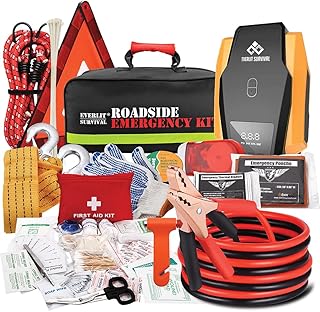
It’s also worth revisiting your car’s broader emergency preparedness after an event like this. If you don’t already carry a basic kit, our guide on how to build a car safety kit covering tire, battery, and first aid needs is a practical next step, and pairing it with a winter car emergency kit checklist if you live somewhere with harsh seasons rounds out your preparedness for the range of mechanical surprises a vehicle can throw at you.
Finally, take a moment to log what happened, even informally. Note the approximate speed, the maneuver you were performing, any noises or warning lights, and how the vehicle behaved once you regained full control. This kind of detail is genuinely useful to a mechanic trying to diagnose an intermittent EPS fault, since those faults often don’t reproduce on demand in a shop environment. A clear, specific account from the moment it happened can shave real diagnostic time off the repair and reduce the chance of a repeat incident down the road.
Gear That Helps You Prepare and Respond
None of the items below prevent a power steering failure outright, but each one shortens the gap between “something feels wrong” and “I know exactly what’s happening and what to do about it.”
| Item | Why It Helps |
|---|---|
| OBD2 scanner | Reads EPS and pump-related fault codes before dashboard lights appear |
| Power steering fluid (correct spec) | Lets you top off a minor leak and buy time to reach a shop |
| UV dye leak kit | Pinpoints the exact source of a hydraulic leak |
| LED road flares / reflective triangles | Improves visibility once you’re stopped on a shoulder |
| Jump starter | Addresses low-voltage situations that can affect EPS assist |
If you’re building out a broader roadside kit, our road trip essentials checklist and guide to choosing the right amp jump starter for your engine are both good companion reads, especially before a long-distance trip where a slow-developing steering issue is more likely to become a full failure far from home.
None of this gear needs to be expensive or elaborate. The point isn’t to turn your trunk into a mobile repair shop — it’s to remove the guesswork from a handful of predictable situations so that a minor mechanical surprise stays minor. A scanner that reads one fault code, a bottle of fluid that buys you thirty extra miles, and a couple of reflective triangles that make you visible on a dark shoulder collectively do more for your safety margin than most drivers realize until the day they actually need them.

Shop Jump Starters
Related Emergency Handling Guides
Power steering failure is just one of several mechanical surprises worth understanding ahead of time. This article is part of a broader series on emergency vehicle handling, and we’d recommend reading it alongside these related guides: brake failure emergency procedures, brake fade vs. hydraulic failure reactions, stuck accelerator response, hood flying open protocol, and engine fire extinguishing basics. Each covers a different failure mode using the same calm, rehearsed-sequence approach used in this guide.
If age-related reaction time or confidence behind the wheel is part of what brought you here, our senior driver refresher course covers emergency handling fundamentals in a lower-pressure format, and our guide on managing driving anxiety may help if the idea of a sudden mechanical failure has been weighing on you more than it should. For anyone dealing with wrist or grip discomfort that makes firm steering harder during an emergency, our piece on carpal tunnel and steering grip and our roundup of easy-install non-slip steering wheel covers are both worth a look.
How Power Steering Failure Plays Out in Different Driving Scenarios
The emergency response sequence in this guide stays the same regardless of where you are, but the specific challenges you’ll face shift quite a bit depending on the situation you’re in when assist disappears. Walking through each scenario ahead of time makes the real moment feel far less foreign if it ever happens to you.
On the Highway
This is, counterintuitively, one of the more forgiving scenarios. At sustained speed, the steering inputs required to hold a lane or make a gradual lane change are small, and the extra effort from a lost assist is noticeable but rarely overwhelming. The real danger on the highway isn’t the physical difficulty of steering — it’s the psychological jolt of the sudden change combined with traffic moving at speed around you. Keep your hands at a firm nine-and-three position, resist any urge to swerve, and use your indicator early so surrounding traffic has time to react to your gradual move toward the shoulder. If you’re navigating a merge or an on-ramp when it happens, treat it the same way you would treat any moment of highway merging anxiety — smooth, telegraphed movements beat quick, forceful ones every time. Our guide on highway merging anxiety tips covers many of the same calm-and-deliberate principles that apply here.
In a Parking Lot or at Low Speed
This is where a power steering failure is felt most acutely, because tight, low-speed turns require the most raw torque at the wheel. If assist fails while you’re maneuvering into a space or executing a three-point turn, stop the vehicle if it’s safe to do so, take a breath, and use both hands together with your body weight rather than wrist strength alone. It may take noticeably more effort to complete the turn, but it remains entirely possible. If you’re practicing tight maneuvers like a parallel park or a three-point turn, this is a good moment to slow down completely rather than trying to power through the maneuver at your usual pace.
On a Mountain Road or While Towing
Steering effort increases further when the front axle is carrying extra load, such as during a tight switchback or while towing a trailer. If you notice early warning signs like whining or stiffness before a trip like this, address them beforehand rather than risking a failure on a road with limited shoulder space and steep grades. If a failure does occur here, prioritize finding the widest, flattest pull-off available rather than stopping the instant you’re clear of the travel lane, since a partial shoulder on a mountain grade can be more dangerous than a few hundred extra feet of heavy steering.
In Wet or Icy Conditions
A power steering failure combined with a slick road surface demands extra restraint, because the natural instinct to muscle the wheel harder can translate into an oversteer input the tires can’t grip. Ease off the accelerator gently rather than braking hard, and make smaller, more deliberate corrections than you would on dry pavement. If you already have experience handling reduced traction from guides like black ice driving survival or rain driving safety, the same measured, low-input mindset applies directly here.
Common Myths About Power Steering Failure, Debunked
Misconceptions about this topic tend to make drivers either overly panicked or overly dismissive, and neither reaction serves you well. Here are the myths worth clearing up.
Myth: “If power steering fails, the wheel locks completely and you lose control.”
This is the most common and most damaging myth. A true mechanical lockup is rare and typically points to a separate problem, such as a seized rack, rather than a standard loss of hydraulic or electric assist. In the overwhelming majority of failures, the wheel becomes heavier, not immovable.
Myth: “Power steering failure only happens in old cars.”
Hydraulic failures are indeed more common in older vehicles simply because hoses, belts, and pumps degrade with age and mileage. But electric power steering faults can affect brand-new vehicles too, usually stemming from a sensor, wiring, or software issue rather than wear and tear.
Myth: “You should slam the brakes the moment it happens.”
Hard braking mid-turn shifts weight forward onto the front tires in a way that can make an already heavy wheel feel even more resistant, and it does nothing to restore steering assist. Easing off the accelerator and braking smoothly, only once you’re stabilized, is the safer approach.
Myth: “A power steering warning light always means immediate danger.”
Not necessarily immediate danger, but it should never be ignored either. Some EPS warning lights reflect a minor sensor glitch that a dealership can reset in minutes, while others precede a total loss of assist. Since you can’t tell which one you’re dealing with just by looking at the dashboard, the safe move is always to have it scanned rather than gambling on which category it falls into.
Myth: “Topping off the fluid fixes the underlying problem.”
Topping off fluid buys you time; it doesn’t fix a leak, a worn pump, or a failing belt. Treat a top-up as a bridge to a proper repair, not a solution on its own — the fluid will simply leak back out again if the root cause isn’t addressed.
Frequently Asked Questions
Yes. Power steering only amplifies your input — it doesn’t create the mechanical connection to the front wheels. Without it, steering requires significantly more physical effort, especially at low speeds, but the car remains fully steerable.
It’s not recommended. A warning light means the system has detected a fault, and many electric power steering faults can escalate from partial to total loss of assist without further notice. Have it scanned before continuing to drive.
The wheel suddenly feels much heavier and slower to respond. In hydraulic systems this often builds over a second or two; in electric systems it can happen almost instantly, sometimes paired with a dashboard chime.
Low fluid typically makes steering harder rather than causing a true lockup, though severe air intrusion in the pump can occasionally create brief resistance spikes. A full mechanical lockup is uncommon and usually points to a separate rack or linkage issue.
It depends heavily on the cause. A simple fluid top-up may cost under $80, while a full pump, rack, or EPS module replacement can range from $400 to $1,500 or more.
Not necessarily less reliable overall, but its failures tend to be more sudden and harder to predict from the driver’s seat, since there’s no fluid or belt to visually inspect ahead of time.
Most commonly a whining or groaning sound that gets louder when turning the wheel, especially at low speed or when the fluid is low or aerated.
Yes, once you can do so safely. Steering effort at highway speed is typically much lower than at low speed, so you generally have enough control to signal, ease off the accelerator, and move gradually to the shoulder.
In vehicles with electric power steering, low voltage from a weak battery or failing alternator can cause the system to reduce or disable assist, since the motor requires stable electrical power to function properly.
Most manufacturers recommend a flush somewhere between 30,000 and 50,000 miles, though this varies by vehicle. Check your owner’s manual for the exact interval.
Most roadside assistance plans cover towing for a disabled vehicle regardless of cause, though on-site repair of the steering system itself is not typically included. Check your specific plan’s coverage details.
It depends on the cause and severity. A brief, mild loss of assist with no warning light may be manageable at low speed for a very short distance, but a persistent warning light, significant stiffness, or fluid loss should be treated as a tow-worthy situation rather than a limp-home one.
The Bottom Line
Power steering failure feels alarming precisely because it’s rare and unfamiliar — most drivers go their entire driving life without experiencing one. But the physics behind it are genuinely on your side: you don’t lose steering, you lose ease of steering, and the moment it happens at highway speed is almost always more manageable than it feels in the first half-second of surprise. The drivers who handle it best aren’t the strongest ones; they’re the ones who already know the sequence — grip firm, ease off the gas, signal early, and move deliberately to the shoulder.
Combine that rehearsed response with the maintenance habits in this guide — a monthly fluid glance, an annual EPS scan, a belt check twice a year — and a full roadside failure becomes something you’re prepared for rather than blindsided by. If you found this guide useful, our broader library of defensive driving habits and vehicle warning sign guides is worth exploring next.
Build Your Roadside Emergency Kit🛡️ Be Prepared
Every Car Needs an Emergency Kit
Breakdowns happen without warning. A well-stocked car emergency kit can keep you safe until help arrives — don’t drive without one.
🏗 Shop Emergency Kits on AmazonAffiliate link — we earn a small commission that keeps DriveSafeGuide running. Thank you!