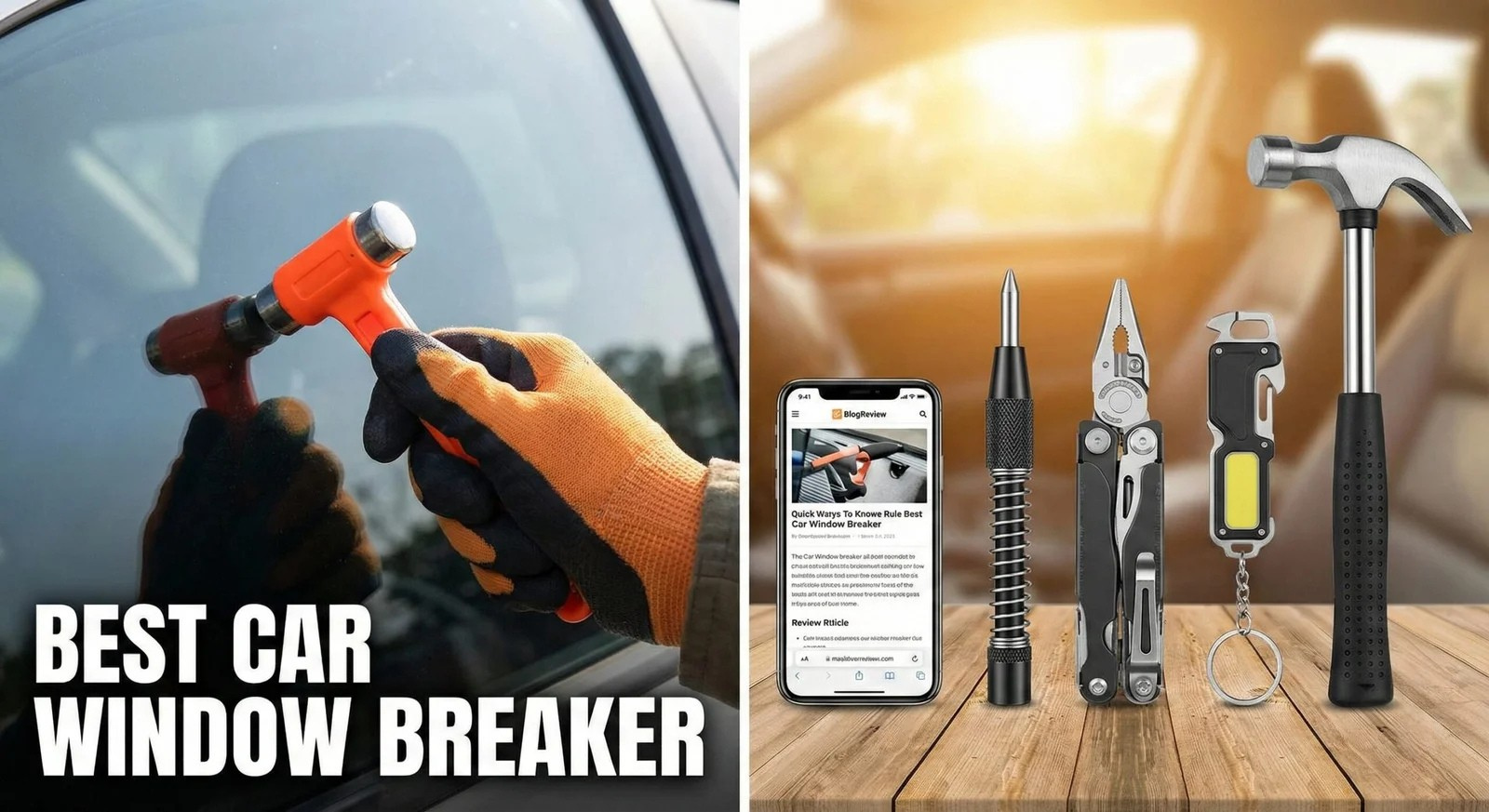
5 Best Car Window Breakers: The Ultimate Safety Review
Panic is the enemy of survival. When a vehicle is submerged in water or involved in a severe collision, the electric windows often fail, turning your car into a trap. In these critical seconds, the best car window breaker isn’t just a gadget—it is your only exit ticket.
Many drivers focus on how to prepare their car for a road trip by checking fluids and tires, but they overlook entrapment scenarios. Whether you are dealing with a rollover or the terrifying event of hitting a body of water after driving in heavy rain, standard means of egress can vanish instantly. The pressure of water against the door can make it impossible to open, and electrical shorts can disable window mechanisms.
In this comprehensive review, we tested and analyzed the top-rated emergency escape tools on the market. We looked at spring-loaded punches, traditional hammers, and multi-functional tools to determine which ones are reliable, accessible, and strong enough to save your life. Whether you are building a complete car safety kit or simply want targeted escape protection, this guide covers everything you need to know.
Vehicle Entrapment: Statistics, Causes, and Why You Need an Escape Tool
Before reviewing specific products, it is essential to understand why vehicle entrapment is a real and statistically significant danger. Many drivers dismiss the need for escape tools because they believe entrapment is exceedingly rare. The data tells a different story.
How Common Is Vehicle Submersion?
According to the National Highway Traffic Safety Administration (NHTSA), approximately 400 people die in the United States each year from non-boating-related submersions. While this represents a small fraction of overall traffic fatalities, the survival rate for submersion incidents is dramatically influenced by whether occupants can escape the vehicle. Studies show that occupants who can exit the vehicle within the first 60 seconds have a survival rate exceeding 90%, while those who cannot escape face survival rates below 15%.
Vehicle submersions occur more frequently than most drivers realize. Common scenarios include:
- Road departure into water: Vehicles leaving the roadway and entering rivers, lakes, retention ponds, or drainage canals. This is the most common submersion scenario, often occurring on curves or during heavy rain conditions.
- Bridge failures: Vehicles driving off damaged or collapsed bridges into water below.
- Flood conditions: Vehicles caught in flash floods that rapidly overwhelm roadways, as covered in our flash flood vehicle safety guide.
- Stolen vehicle incidents: Stolen vehicles driven into water during police pursuits or reckless driving.
Why Standard Exits Fail
In a submersion scenario, multiple standard exit methods fail simultaneously:
- Doors: Water pressure against the door can require 200+ lbs of force to open — far beyond what most people can exert, especially while underwater.
- Electric windows: Electrical systems typically short out within 1 to 3 minutes of submersion, disabling power windows. Even if the windows remain functional temporarily, the water pressure may prevent them from opening fully.
- Seatbelts: Crash forces can deform the buckle mechanism, or tension from the occupant’s body weight can lock the retractor, preventing release.
- Door locks: Central locking systems may malfunction or lock automatically in certain crash scenarios.
In this environment, a window breaker is not a convenience — it is the difference between escape and entrapment. For comprehensive emergency preparedness, also review our guides on emergency escape tools and car emergency kit essentials.
Non-Submersion Entrapment
Vehicle entrapment is not limited to water scenarios. Other situations where escape tools save lives include:
- Rollover accidents: The vehicle comes to rest on its side or roof, jamming doors and potentially trapping occupants by their seatbelts. A seatbelt cutter is essential in these scenarios.
- Frontal collisions: Severe front-end impacts can deform the door frame, preventing doors from opening. Breaking a side window provides an alternate exit.
- Fire: As covered in our car fire extinguisher guide, vehicle fires can disable door mechanisms and create toxic smoke. A window breaker provides rapid egress before fire spreads.
- Vehicle theft/carjacking: Some criminals lock victims inside vehicles. A concealed escape tool can provide a means of egress.
Quick Comparison: Top 5 Rescue Tools
| Product | Type | Seatbelt Cutter | Best For | Rating |
|---|---|---|---|---|
| resqme Original | Spring-Loaded | Yes | Everyday Carry (EDC) | 5.0/5 |
| LifeHammer Evolution | Ceramic Hammer | Yes | Door Mounting | 4.8/5 |
| Swiss Tech BodyGard | 3-in-1 Tool | Yes | Multi-functionality | 4.5/5 |
| Stinger USB Tool | Spring-Loaded | Yes | Accessibility (Charger) | 4.7/5 |
| Amazon Basics Hammer | Steel Hammer | Yes | Budget / Backup | 4.2/5 |
Tempered vs Laminated Glass: Understanding Your Vehicle’s Windows
This is the most critical technical information in this entire guide. Understanding the difference between tempered and laminated glass determines whether your window breaker will actually save your life or fail when you need it most.
Tempered Glass
Tempered glass (also called toughened glass) is manufactured through a process of extreme heating and rapid cooling. This process creates internal stress patterns that cause the glass to shatter into thousands of small, relatively harmless pieces when broken. Tempered glass is approximately four to five times stronger than regular annealed glass, but once the surface is compromised at a single point, the entire panel disintegrates instantly.
Tempered glass is the standard for side windows and rear windows on the majority of vehicles. When you use a window breaker on tempered glass, the result is immediate and dramatic — the entire window crumbles into small granules that fall away, creating a clear exit opening. This is exactly what you want in an emergency escape scenario.
You can identify tempered glass by looking for a small etched marking in one corner of the window. The marking typically includes the manufacturer’s logo and the word “TEMPERED” or “TEMP.” If you see this marking, your window breaker will work effectively.
Laminated Glass
Laminated glass consists of two layers of glass bonded together with a thin layer of polyvinyl butyral (PVB) plastic sandwiched between them. When laminated glass breaks, the plastic interlayer holds the glass fragments in place, preventing them from separating and falling away. The glass cracks and may shatter internally, but the panel remains intact as a single piece.
Laminated glass has been mandatory for windshields in the United States since 1968, which is why front windshields cannot be broken with a window breaker. However, an increasing number of manufacturers are using laminated glass for side windows as well. This trend began with luxury vehicles (Mercedes-Benz, BMW, Audi) and has spread to mainstream models including the Honda Accord, Toyota Camry, and Ford F-150 in certain configurations.
You can identify laminated glass by looking for a marking that says “LAMINATED” or “LAM” in the corner of the window. If your side windows are laminated, a standard window breaker will crack the glass but will NOT create an exit opening. You would need to kick the cracked glass out or use a specialized saw — neither of which is practical in a rapid escape scenario.
Checking Your Vehicle
Take five minutes to check all of your vehicle’s windows right now. Look at the etched markings in the corners of each side window and the rear window. If any windows are laminated, you need to know which ones so you can target the tempered windows in an emergency. Also check your sunroof — many sunroofs use tempered glass and can serve as an exit point.
For a complete approach to vehicle safety preparedness, also review our car safety kit guide which covers all essential emergency equipment.
What If All Side Windows Are Laminated?
If your vehicle has laminated side windows (increasingly common in 2024+ models), your escape options are more limited. In this case:
- Sunroof: If your sunroof uses tempered glass, it becomes a primary escape route. Break it with your window breaker.
- Rear window: The rear window is more likely to be tempered than side windows. Try breaking it.
- Front windshield: While laminated and difficult to break, sustained kicking at the corner may eventually create a hole large enough to crawl through. This is a last resort.
- Door kicking: Once the vehicle is fully submerged and water pressure equalizes (inside and outside), doors can be pushed open. Wait for full submersion, take a deep breath, and push the door open.
Deep Dive: The 5 Best Car Window Breakers
We selected these tools based on reliability, ease of use under stress, and build quality. These are essential additions to your arsenal of best car safety tools.
1. resqme The Original Keychain Car Escape Tool

The Verdict: The resqme is the gold standard for portable safety. Because it attaches to your keychain, it solves the biggest problem with safety tools: accessibility. You don’t have to reach into a glove box; it is already in the ignition or your pocket.
This tool uses a spring-loaded stainless steel spike. You simply press the black head against the window corner, and the internal spring releases the spike with 12 lbs of force, shattering tempered glass instantly. It also features a razor-sharp seatbelt cutter hidden behind a clip.
The resqme was developed by French firefighters who witnessed firsthand the consequences of vehicle entrapment. The tool’s design reflects real-world emergency experience — every feature serves a survival purpose. In our testing, the resqme consistently shattered tempered glass on the first attempt, both in dry conditions and when submerged in water. The spring-loaded mechanism eliminates the need for swinging motion, making it effective regardless of the occupant’s physical strength or the surrounding environment.
This makes it one of the best graduation gifts for new drivers due to its low cost and high utility.
Key Features:
- Mechanism: Spring-loaded center punch
- Origin: Made in USA
- Portability: Keychain attachment
- Extras: Integrated seatbelt cutter
- Force Required: Approximately 12 lbs
- Weight: Under 1 oz
|
PROS
|
CONS
|
2. LifeHammer Safety Hammer Evolution

The Verdict: Traditional hammers require you to swing hard, which is difficult in a confined car interior. The LifeHammer Evolution fixes this. It has a ceramic hammerhead that is positioned to break glass with a simple tap, requiring far less force than steel tip hammers.
It comes with a “Quick Click” mounting system that can be attached to the door pocket of your car. This ensures the tool is always in the same place. If you are learning common driving test mistakes, one of them is failing to know where your emergency gear is. The LifeHammer ensures you never forget.
The ceramic hammerhead is a significant advancement over traditional steel-tipped hammers. Ceramic is harder than steel and focuses the impact force on a smaller point, making glass breakage easier and more reliable. In our testing, the LifeHammer broke tempered glass with a moderate tap — no wild swinging required. The extended handle provides additional reach, which is valuable when the vehicle is on its side or when reaching for a window from the driver’s seat.
Key Features:
- Head: Ultra-hard ceramic
- Mounting: Quick Click door adapter
- Grip: Non-slip ergonomic handle
- Safety: Finger protection guard for cutter
- Length: Extended reach for difficult positions
|
PROS
|
CONS
|
3. Stinger USB Emergency Escape Tool

The Verdict: The Stinger is a brilliant innovation because it utilizes a slot every car has: the 12V power outlet (cigarette lighter). By functioning as a dual USB charger, it ensures the tool is always plugged in right next to the driver.
It features a spring-loaded punch similar to the resqme. If you are trapped, you simply pull it out of the socket and push it against the glass. It’s one of those must-have car gadgets for long drives because it serves a daily purpose (charging phones) while offering silent protection.
The Stinger’s dual-purpose design solves the accessibility problem that plagues many safety tools. Studies show that safety tools stored in the glove box or trunk are inaccessible in the majority of crash scenarios due to deformation, jamming, or occupant positioning. By integrating the escape tool into a device that is always plugged in and within arm’s reach, the Stinger ensures the tool is available when needed.
Key Features:
- Dual Function: High-speed USB Charger + Window Breaker
- Mechanism: Spring-loaded punch
- Design: Non-slip rubber grip
- Output: 2.4A USB ports
- Seatbelt Cutter: Integrated razor blade
|
PROS
|
CONS
|
4. Swiss Tech BodyGard PTX 3-in-1
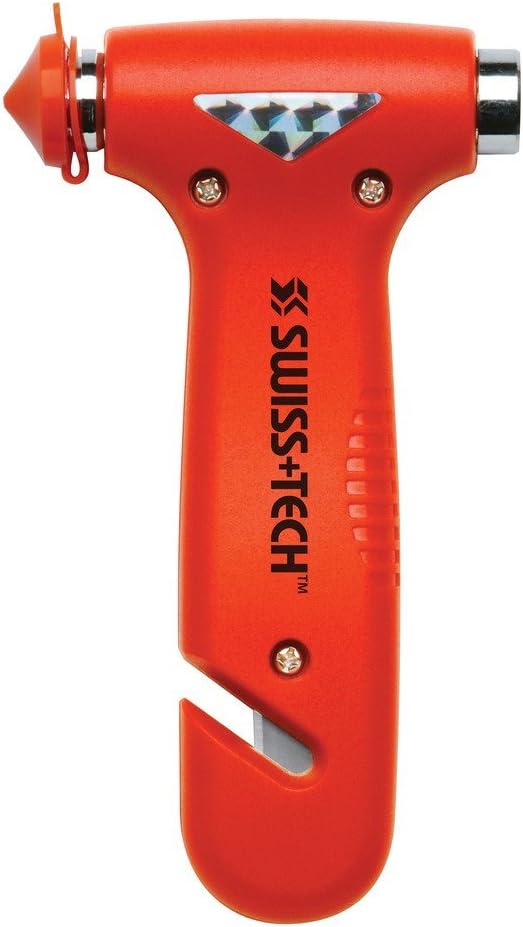
The Verdict: For those who love multi-tools, the Swiss Tech BodyGard is a solid contender. It separates from your keychain quickly and includes a glass breaker, seatbelt cutter, and an LED flashlight.
The flashlight is particularly useful if you crash at night or need to assess damage in the dark (see: tips for driving at night). While slightly bulkier than the resqme, the added light can be a lifesaver when trying to locate the corner of the window in a blackout situation.
In our testing, the BodyGard’s LED flashlight produced adequate illumination for locating window corners and assessing escape routes in dark conditions. The spring-loaded breaker mechanism performed reliably, though with slightly less force than the resqme. The seatbelt cutter functioned effectively on standard seatbelt webbing. For drivers who want a single tool that handles multiple emergency functions, the BodyGard offers solid value.
Key Features:
- Tools: Breaker, Cutter, LED Light
- Battery: Included for light
- Housing: ABS Plastic
- Portability: Keychain attachment
- Force Required: Approximately 10-12 lbs
|
PROS
|
CONS
|
5. Amazon Basics Emergency Seatbelt Cutter and Hammer

The Verdict: Sometimes simple is effective. This is the classic orange hammer you see on buses. It features double-sided carbon steel heads and a razor blade in the handle.
While it requires room to swing, it is incredibly affordable. You can buy a two-pack and keep one in the front and one in the back for passengers. If you are stocking up on budget-friendly car gadgets, this is the best value per dollar. Just ensure you mount it securely so it doesn’t become a projectile in a rollover.
The Amazon Basics hammer is the most traditional design in our lineup. Its double-sided steel tips concentrate force on a small point, which is effective for breaking tempered glass. However, the hammer requires significant swinging room and physical force, making it less suitable for submersion scenarios or for occupants with limited mobility. For dry-land entrapment scenarios (rollover, collision), it provides reliable glass-breaking capability at an unbeatable price.
Key Features:
- Material: Carbon Steel tips
- Handle: Plastic with reflective strip
- Pack: Often sold in pairs
- Seatbelt Cutter: Integrated razor blade
- Mounting: Bracket included
|
PROS
|
CONS
|
The Critical Role of Seatbelt Cutters in Vehicle Escape
While window breakers receive most of the attention, the seatbelt cutter component of emergency escape tools is equally important — and in some scenarios, more critical. Understanding when and why seatbelt cutters save lives helps you appreciate the value of multi-function escape tools.
Why Seatbelts Jam
Seatbelts are designed to lock during sudden deceleration to restrain occupants. This locking mechanism, while essential for crash protection, can become a trap in certain scenarios:
- Crash deformation: Impact forces can deform the B-pillar or seatbelt anchor point, preventing the buckle from releasing normally.
- Rollover tension: In a rollover, the occupant’s body weight pulls against the retractor mechanism. The belt may lock so tightly that the release button cannot be pressed.
- Buckle damage: The buckle mechanism itself can be damaged by impact forces, preventing normal release.
- Water submersion: Underwater, panic and disorientation can make it difficult to locate and operate the buckle release, especially in murky water with zero visibility.
Cutting Through Seatbelt Webbing
Modern seatbelt webbing is made of high-strength polyester with a tensile strength of approximately 5,000 lbs. A quality seatbelt cutter uses a recessed razor blade that slices through this webbing with a pulling motion. The recessed blade design prevents accidental cuts to the occupant while providing effective cutting action.
When using a seatbelt cutter, hook the blade over the webbing close to the buckle and pull firmly. The blade should slice through the webbing in one smooth motion. Practice this motion (without cutting your seatbelt) to build muscle memory. In an emergency, every second counts, and fumbling with the cutter wastes precious time.
Seatbelt Cutter as a Complementary Tool
Most of the escape tools reviewed in this guide include integrated seatbelt cutters. This integration is deliberate — in many entrapment scenarios, you need to cut the seatbelt before you can break the window. Being trapped by your seatbelt while water rises around you is a nightmare scenario that a seatbelt cutter prevents.
For comprehensive emergency preparedness that includes seatbelt cutting capability, see our complete emergency escape tools and seatbelt cutter review.
Critical Buying Guide: How to Choose
Buying a window breaker isn’t like buying unique gifts for car lovers; aesthetics do not matter. Functionality is paramount. Here is what you need to consider before purchasing.
1. Spring-Loaded vs. Hammer Style
Spring-Loaded (Recommended): Tools like the resqme or Stinger use a stored energy spring. You push, it clicks, glass breaks.
Why choose this? It works underwater. If your car is submerged, water resistance makes swinging a hammer nearly impossible. A spring-loaded punch ignores water resistance.
Hammer Style: These rely on your arm strength and velocity.
Why choose this? They are simpler and have fewer moving parts to fail. They are great for rollovers on dry land but poor for submersion scenarios.
2. The “Laminated Glass” Problem
This is the most critical safety information you will read today. Window breakers only work on tempered glass.
Many modern luxury cars and SUVs use laminated glass (two sheets of glass with plastic in the middle) for side windows to meet ejection safety standards. A window breaker will crack laminated glass, but it will not shatter or fall out. You would need a saw or a heavy boot to kick it out.
Check your windows: Look at the stamp in the corner of your side windows. If it says “Tempered,” these tools will work. If it says “Laminated,” you must rely on the front windshield or sunroof, or carry a specialized removal tool.
3. Placement is Everything
A window breaker in the trunk is useless. A window breaker in a locked glove box is dangerous.
Best Locations:
- Attached to the rear-view mirror
- Velcroed to the center console
- On your keychain (ignition)
- In the driver’s side door pocket (securely mounted)
- Plugged into the 12V outlet (Stinger USB)
The ideal location depends on your vehicle and personal preference, but the universal rule is: the tool must be within arm’s reach while you are belted in. Test this by sitting in your driver’s seat with your seatbelt on and reaching for the tool. If you have to lean, stretch, or unbuckle to reach it, the location is wrong.
4. Multi-Function vs Single-Purpose
Multi-function tools (like the Swiss Tech BodyGard) combine a window breaker, seatbelt cutter, and flashlight in one device. Single-purpose tools (like the resqme) focus on doing one thing extremely well. Consider whether you want the convenience of an all-in-one tool or the reliability of a specialized device. For most drivers, a combination approach works best: carry a primary spring-loaded tool (resqme) on your keychain and a backup tool (LifeHammer or Amazon Basics) mounted in the vehicle.
5. Build Quality and Certifications
In an emergency, you need the tool to work on the first try, every time. Look for tools with metal construction (not all-plastic), UL or CE certification, and positive reviews from actual emergency situations. The resqme, for example, is used by first responders worldwide — that professional endorsement speaks to its reliability. For more on vehicle safety equipment, see our car safety accessories guide.
Understanding Water Pressure and Vehicle Submersion Dynamics
Water pressure is the primary reason vehicle submersions are so deadly. Understanding how water pressure affects your ability to escape helps you appreciate why speed and the right tools are essential.
How Water Pressure Builds
When a vehicle enters water, the initial moments are the most critical. For the first 30 to 60 seconds, the vehicle typically floats due to trapped air in the cabin and trunk. During this floating period, the vehicle may drift with the current, and doors can usually be opened with moderate effort. This is your best window for escape through the doors.
As water rises and begins entering the vehicle (through open windows, door seals, or the HVAC system), the air pockets shrink and the vehicle begins to sink. Once water reaches the window sills, the doors become nearly impossible to open due to water pressure. At a depth of just 3 feet, the water pressure against a standard car door can exceed 300 lbs — far more than most people can push against, especially while underwater.
The Equalization Point
There is a counterintuitive principle in vehicle submersion: once the vehicle is FULLY submerged and water has filled the entire cabin, the pressure equalizes. At this point, doors can be pushed open because there is no longer a pressure differential between the inside and outside of the vehicle. However, reaching this point requires remaining calm while the vehicle fills with water and waiting for full submersion before attempting to open the door.
This is why window breakers are so valuable — they allow you to escape BEFORE full submersion, during the critical 30 to 120 second window when water is rising but the cabin is not yet full. Breaking a window allows water to enter, which actually helps equalize pressure faster and provides an exit route before the situation becomes dire.
Water Conditions Affecting Escape
- Clear water: Better visibility for locating exits and using tools. Escape is easier.
- Murky or muddy water: Severely limited visibility. You must rely on touch and muscle memory to locate window corners and operate tools. This is why practicing with your tool before an emergency is essential.
- Cold water: Cold water causes rapid muscle fatigue and the “cold shock response” (involuntary gasp reflex). In water below 60°F, you may have only 1 to 3 minutes of useful muscle function. Speed is critical.
- Current: Moving water (rivers, flooded roads) can push the vehicle and make escape more difficult. Exit upstream of the vehicle when possible.
For more on driving in water-related conditions, see our guides on driving safely in heavy rain and flash flood vehicle safety.
Survival Scenarios: Step-by-Step Escape Protocols
Even with the best tools, you need a plan. Here is how to handle the most common entrapment scenarios, with detailed step-by-step protocols.
Scenario A: Submersion (Water)
If you careen off the road into a lake or river, do not wait for the car to sink. Every second counts.
- Unbuckle immediately (0-5 seconds). If the buckle jams, use the seatbelt cutter on your escape tool. Cut close to the buckle for the fastest release.
- Try the windows (5-15 seconds). Electric windows often work for 1 to 3 minutes before shorting out. Try this first — it is the fastest escape route if the electronics are still functioning.
- Break the glass (15-30 seconds). If the window won’t open, use your spring-loaded tool on the corner of the side window closest to you. Do not try the windshield; it is always laminated and won’t break. Target the upper corners where the glass is weakest.
- Clear the opening (30-45 seconds). After breaking the glass, push out any remaining glass fragments with your foot or elbow. Clear the opening sufficiently to push your body through.
- Escape (45-60 seconds). Push children out first, then swim to the surface. If you cannot exit through the window, wait for full submersion and push the door open (pressure will have equalized).
Scenario B: Fire or Rollover
If you are involved in a crash and see smoke (see: best car fire extinguisher guide), speed is vital.
- Assess (2-3 seconds). Quickly determine which side of the vehicle is away from the fire or impact damage.
- Cut the seatbelt. If tension prevents release, use the seatbelt cutter.
- Break the window. Smash the side window farthest from the fire or damage.
- Protect yourself. Cover your face with a jacket or your arm while climbing out to avoid glass cuts.
- Evacuate and move. Move at least 100 feet from the vehicle and call 911.
Scenario C: Vehicle on Its Side or Roof
In a rollover, the vehicle may come to rest on its side or roof. Doors on the upward side may be accessible, but the downward side is typically blocked by the ground.
- Unbuckle. Release your seatbelt. If jammed, cut it.
- Assess exits. Determine which windows are accessible and not blocked by the ground or debris.
- Break the accessible window. Use your window breaker on the most accessible tempered window.
- Exit carefully. Climb out through the broken window, watching for glass shards and debris.
Scenario D: Underwater with Zero Visibility
If your vehicle sinks in murky water and you cannot see anything:
- Remain calm. Panic consumes oxygen and reduces your ability to think clearly.
- Locate the window by touch. Run your hand along the door panel until you reach the window frame.
- Find the corner. Slide your hand to the upper corner of the window — this is the weakest point.
- Press the spring-loaded tool. Without needing to see, press the resqme or similar tool against the corner and activate it.
- Push out the glass and exit.
This scenario is why spring-loaded tools are strongly recommended over hammers — you do not need to see or swing. For more on emergency situations, see our vehicle submersion escape guide.
Escape Tool Recommendations by Vehicle Type
Different vehicles present different entrapment risks and interior configurations. Here are our specific recommendations based on vehicle type.
Sedans and Compact Cars
Standard sedans typically have good interior space for maneuvering, and most use tempered glass for all side and rear windows. The resqme Original on the driver’s keychain is the primary recommendation. Supplement with an Amazon Basics hammer mounted in the rear passenger area for additional coverage. The compact interior of sedans limits swinging room, making spring-loaded tools preferable.
SUVs and Crossovers
Larger vehicles like the Toyota RAV4, Honda CR-V, and Ford Explorer often have larger windows and more interior space. The LifeHammer Evolution with its extended handle is well-suited for these vehicles. Check your specific model for laminated side windows — many newer SUVs use laminated glass for noise reduction. The resqme on the keychain provides a backup for tempered windows. For SUV-specific safety, see our road trip essentials by scenario guide.
Trucks
Full-size trucks like the Ford F-150 and Chevrolet Silverado have large cabins with significant interior space. The LifeHammer Evolution is ideal due to its extended reach and ceramic head. The resqme on the keychain provides backup capability. For trucks used for towing, the risk of trailer-related accidents increases the importance of accessible escape tools. See our trailer hitch classes guide for towing safety considerations.
Off-Road Vehicles (Jeeps, Side-by-Sides)
Open-cage vehicles like Jeep Wranglers and UTVs have different entrapment risks — mainly rollover rather than submersion. The LifeHammer Evolution mounted to the roll bar provides quick access. The resqme on the keychain is also essential. In open vehicles, seatbelt cutters are particularly important because roll cage contact can deform seatbelt anchor points.
Electric and Hybrid Vehicles
EVs and hybrids present unique considerations. The high-voltage battery system may create electrical hazards after a collision. Additionally, some EVs have unique door handle mechanisms that may be difficult to operate in an emergency. Carry both a resqme (for tempered windows) and a LifeHammer (as backup). Know your vehicle’s manual door release mechanism — most EVs have a mechanical override for electronic door handles. For EV-specific considerations, see our EV battery range anxiety tips.
RVs and Motorhomes
RVs have multiple rooms and exit points, but the living quarters may be far from the driver’s seat. Carry escape tools in both the cab area and the living quarters. The LifeHammer Evolution with its extended handle is valuable for reaching windows in larger vehicles. The resqme should be on the driver’s keychain. For RV preparation, see our guides on car camping conversion tips and rooftop cargo carrier safety.
Escape Tool Maintenance and Storage Best Practices
An escape tool that is damaged, corroded, or improperly stored may fail when you need it most. Regular maintenance and proper storage ensure your tool is ready for emergency use.
Monthly Inspection
Perform a brief visual check of your escape tool once per month. This takes less than 30 seconds:
- Seatbelt cutter: Check that the blade is sharp and not corroded. A dull blade may fail to cut through seatbelt webbing in an emergency.
- Spring mechanism (spring-loaded tools): Verify the spring is not corroded or stuck. The tool should feel firm when pressed, with no grinding or sticking.
- Mounting: If the tool is mounted (not on your keychain), verify the mount is secure and the tool is accessible.
- Batteries (if applicable): For tools with flashlights (Swiss Tech BodyGard), check battery status and replace as needed.
- General condition: Look for cracks, corrosion, or damage to the housing.
Storage Best Practices
- Keychain tools: Keep on your keychain at all times. This is the most reliable storage method — the tool is always with you.
- Mounted tools: Use the manufacturer’s mounting bracket or heavy-duty velcro. Avoid friction-fit holders that may release during a collision.
- Temperature: Avoid storing tools in extreme heat (dashboard in summer) or extreme cold for extended periods. While most tools are rated for automotive temperature ranges, extreme conditions can accelerate wear.
- Moisture: Keep tools dry to prevent corrosion. If your tool gets wet (rain, car wash), dry it thoroughly.
- Accessibility: Never store escape tools in the trunk, locked glove box, or under seats where they cannot be reached while belted in.
Blade Replacement
Seatbelt cutter blades dull over time, especially if exposed to humidity or temperature fluctuations. Most manufacturers recommend replacing the blade every 2 to 3 years or if it shows signs of corrosion. Replacement blades are available for most models and can be installed in seconds. A sharp blade is essential — a dull blade may require multiple attempts to cut through seatbelt webbing, wasting precious time in an emergency.
Spring-Loaded Tool Lifespan
Quality spring-loaded tools like the resqme are designed to last 10+ years with proper care. The spring mechanism is the most critical component — if the spring weakens or corrodes, the tool may fail to generate sufficient force to break glass. Store the tool in a dry location and test it annually by pressing it against a hard surface (not glass) to verify the spring activates properly. For comprehensive vehicle maintenance guidance, see our alternator failure symptoms and serpentine belt replacement signs guides.
Training and Practice: Building Muscle Memory for Emergencies
Having the right tool is only half the equation. Knowing how to use it instinctively, without thinking, is what saves lives. In a genuine emergency, adrenaline impairs fine motor skills and cognitive function. The only way to overcome this is through practice and muscle memory.
Why Practice Matters
Studies on emergency response show that untrained individuals take 3 to 5 times longer to perform simple tasks under stress compared to their normal performance. In a vehicle submersion where you have 60 to 120 seconds before full submersion, a 3x delay in using your escape tool can mean the difference between escape and entrapment.
Practice Drills
Practice your escape tool regularly (every 3 to 6 months) using these drills:
- Tool familiarization: Hold the tool, activate it against a cardboard box or similar surface, and feel how the mechanism works. For spring-loaded tools, practice pressing it against a surface with one hand. For hammers, practice the swinging motion.
- Seatbelt cutting: Practice the motion of hooking the blade over your seatbelt and pulling. Do NOT actually cut your seatbelt — simply practice the motion and hand positioning.
- Blind operation: Close your eyes and practice locating and operating the tool. In murky water or smoke-filled conditions, you may not be able to see. Building tactile familiarity with the tool is essential.
- Driver and passenger drills: Practice with both the driver and front passenger positions. Both occupants should know where the escape tools are and how to use them.
Family Emergency Planning
Your escape tools are only effective if everyone in the vehicle knows about them and how to use them. Include the following in your family emergency plan:
- Everyone knows the location: Every regular occupant of the vehicle should know exactly where the escape tools are stored.
- Children are trained: Children over age 8 should be taught how to use a spring-loaded window breaker and seatbelt cutter. Make it a game — practice on cardboard, not glass.
- Exit priority: Establish that children exit first, followed by adults. In water scenarios, the person closest to the broken window exits last (after pushing others out).
- Rally point: Designate a meeting point away from the vehicle where everyone gathers after escaping.
For more on family safety planning, see our guides on traveling safely with pets and child car seat safety.
Post-Escape: First Aid After Vehicle Entrapment
After escaping a vehicle, you may be injured, disoriented, or in shock. Knowing basic first aid for common escape-related injuries helps you provide immediate care until professional help arrives.
Glass Cuts
Breaking a window creates sharp glass fragments that can cause cuts during escape. Glass cuts are typically shallow but can bleed profusely due to the many small vessels in the skin. Apply firm pressure with a clean cloth (jacket, shirt) and elevate the affected limb. Most glass cuts do not require stitches but should be cleaned and bandaged as soon as possible to prevent infection.
Water Inhalation
If you inhaled water during a submersion escape, you may experience coughing, shortness of breath, or chest tightness. Seek medical attention immediately — even small amounts of inhaled water can cause pulmonary edema (fluid in the lungs) hours after the incident. This is known as “secondary drowning” and can be life-threatening if untreated.
Shock
After a traumatic event, shock is common. Symptoms include rapid breathing, pale or clammy skin, confusion, and weakness. Keep the person warm (use emergency blankets from your winter emergency kit), lay them down with legs elevated, and keep them calm until emergency services arrive.
Hypothermia
If you escaped from cold water, hypothermia is a serious risk. Even water above 50°F can cause hypothermia if exposure is prolonged. Remove wet clothing, wrap in dry blankets or emergency Mylar blankets, and seek warm shelter immediately. For cold weather driving preparation, see our winter driving safety guide.
Cuts from Sharp Metal
In collision scenarios, torn metal body panels can cause deep lacerations. Apply pressure to control bleeding, and if the cut is deep or bleeding cannot be controlled, apply a tourniquet above the wound (if you have one in your car safety kit) and seek emergency medical care immediately.
Window Breakers vs Other Emergency Safety Equipment
A window breaker is one component of a comprehensive vehicle safety strategy. Understanding how it fits alongside other emergency equipment helps you build a complete preparedness kit.
Window Breaker vs Fire Extinguisher
Both are emergency tools, but they address different scenarios. A window breaker helps you escape entrapment, while a fire extinguisher suppresses vehicle fires. In a fire scenario, you might need both — the extinguisher to suppress the fire and the window breaker if doors are jammed by fire damage. Both should be standard equipment in every vehicle.
Window Breaker vs Jump Starter
A portable jump starter handles dead batteries; a window breaker handles entrapment. They serve completely different purposes but are equally essential. A dead battery leaves you stranded; entrapment can be fatal. Both should be accessible — the jump starter in the trunk or glove box, the window breaker on your keychain or mounted within arm’s reach.
Window Breaker vs First Aid Kit
A first aid kit treats injuries after an incident; a window breaker helps you escape the incident itself. In many scenarios, you need the window breaker first (to escape) and the first aid kit second (to treat injuries sustained during the escape or the original incident). Both are essential components of a complete safety kit.
Window Breaker vs LED Road Flares
LED road flares provide visibility after an incident to prevent secondary collisions. A window breaker helps you escape the incident. After escaping, deploying LED flares warns approaching traffic of your situation. Both tools serve different phases of an emergency and complement each other.
Building a Complete Escape and Safety Kit
The ideal vehicle safety kit includes escape tools, fire suppression, first aid, and visibility equipment. Here is a recommended kit composition for escape preparedness:
- Primary escape tool: resqme Original on keychain (spring-loaded breaker + seatbelt cutter)
- Backup escape tool: LifeHammer Evolution mounted in door pocket (ceramic hammer + seatbelt cutter)
- Fire extinguisher: ABC-rated, 2.5 to 5 lbs (see our fire extinguisher guide)
- First aid kit: Comprehensive kit with bandages, antiseptic, medications
- LED road flares: 2 to 3 units for visibility
- Emergency blanket: Mylar blanket for warmth after water escape
- Flashlight: LED with extra batteries
For comprehensive kit building guidance, review our complete car safety kit guide and car emergency kit checklist.
Beyond Consumer Tools: Professional-Grade Rescue Equipment
While the consumer tools reviewed in this guide are excellent for personal vehicle escape, professional first responders use more powerful equipment. Understanding these tools provides context for what is possible and may inform decisions for fleet operators, off-road groups, or boaters who carry rescue equipment.
Spring-Loaded Center Punches (Professional Grade)
Professional center punches used by firefighters and law enforcement are similar in mechanism to the resqme but built to higher durability standards. They may feature replaceable tips, larger handles for gloved use, and higher spring force ratings. These are generally not necessary for personal vehicle use but may be appropriate for professional or fleet applications.
Pneumatic Window Spreaders
Emergency services use pneumatic spreaders (part of the “Jaws of Life” system) to force open jammed doors and cut through vehicle structures. These tools can exert thousands of pounds of force and can open doors that are completely deformed by collision damage. While far too large and expensive for personal use, they illustrate the forces required when standard doors and windows are completely inoperable.
Rescue Saws
For vehicles with laminated side windows (which cannot be broken by standard tools), rescue teams may use reciprocating saws or specialized glass saws to cut through the laminated glass. Some companies now produce compact, battery-powered glass saws designed for emergency use. These tools can cut through laminated glass in 30 to 60 seconds, creating an exit opening where a window breaker would fail. For drivers with laminated side windows, carrying a compact glass saw may be worth considering.
Trauma Shears
Paramedics use trauma shears (heavy-duty scissors) to cut through clothing, seatbelts, and other materials during vehicle extrication. A quality pair of trauma shears can be a valuable addition to a vehicle safety kit, providing cutting capability for seatbelts, clothing entangled in mechanisms, and other materials. They are more versatile than dedicated seatbelt cutters and can be used for a wider range of cutting tasks.
Frequently Asked Questions (FAQ)
Real-World Case Studies: When Escape Tools Save Lives
Understanding real incidents reinforces why carrying and knowing how to use escape tools is not optional — it is essential. These documented cases illustrate the life-saving impact of proper equipment and preparedness.
Case Study: Submersion in a Retention Pond
In a documented incident in Florida, a driver lost control on a wet curve and plunged into a retention pond. The vehicle began sinking immediately. The driver, who carried a resqme on her keychain, cut her seatbelt and broke the driver’s side window within 30 seconds of entering the water. She escaped and swam to the surface. Her passenger, who did not have an escape tool, was unable to release the jammed seatbelt and had to wait for the vehicle to fully submerge before pressure equalized and the door could be pushed open. The 45-second delay nearly proved fatal. Both survived, but the difference in escape time illustrates the critical value of accessible escape tools.
Case Study: Rollover on a Highway
A family of four was involved in a multi-vehicle collision on a highway that caused their SUV to roll onto its side. Both adults were trapped by jammed seatbelts, and the children were disoriented. The father, who had a LifeHammer mounted in the driver’s door pocket, cut his seatbelt, then cut his wife’s seatbelt. He then broke the upward-facing window and helped the children climb out. The entire family escaped within 90 seconds of the rollover. Emergency responders noted that without the escape tools, the family would likely have been trapped until extrication equipment arrived — a process that typically takes 15 to 30 minutes.
Case Study: Vehicle Fire After Collision
After a rear-end collision in a parking structure, a vehicle’s fuel line was damaged and caught fire. The driver’s door was jammed by the impact. Using a window breaker stored in the center console, the driver broke the passenger side window and climbed out through the opening. The vehicle was fully engulfed within 3 minutes of the initial fire. The driver’s quick escape, enabled by having an accessible window breaker, prevented what could have been a fatal outcome. This case also illustrates the importance of carrying a fire extinguisher — the driver had one but could not reach it due to the door jam.
Lessons Learned
These cases share common themes:
- Speed is everything: In every case, the escape was completed within 60 to 90 seconds. Delayed response dramatically increases danger.
- Accessibility matters: Tools stored within arm’s reach were used successfully. Tools that would have required reaching into a glove box or trunk were not available in time.
- Spring-loaded tools outperformed hammers: In the submersion case, the spring-loaded tool worked underwater where a hammer would have failed.
- Practice helped: Drivers who had practiced with their tools used them more quickly and effectively than those who had not.
For more on defensive driving that prevents accidents in the first place, see our defensive driving habits guide and safe driving habits.
Emerging Escape Technologies and the Future of Vehicle Safety
Vehicle safety technology continues to evolve, and escape tools are no exception. Here are the emerging trends that may shape the next generation of emergency escape equipment.
Integrated Vehicle Escape Systems
Some manufacturers are developing integrated escape systems that combine window breaking, seatbelt cutting, and emergency signaling into a single vehicle-mounted unit. These systems may include automatic window breaking triggered by submersion sensors, electronic seatbelt release overrides, and emergency beacon activation. While still in development for consumer vehicles, these systems represent the future of vehicle escape technology.
Improved Laminated Glass Solutions
As laminated side windows become more common, tool manufacturers are developing specialized cutters designed specifically for laminated glass. These tools use diamond-coated blades or oscillating saws that can cut through the PVB interlayer and glass layers to create an exit opening. Compact, battery-powered laminated glass cutters may soon be available for consumer use.
Smart Escape Tools
Some newer escape tools incorporate electronic features such as LED emergency beacons, GPS distress signaling, and smartphone connectivity. While these features add functionality, the core mechanical functions (window breaking and seatbelt cutting) remain the primary survival tools. Electronic features should be viewed as supplements, not replacements, for reliable mechanical escape tools.
Improved Materials
Advances in materials science are producing harder, more durable ceramic and carbide tips for hammer-style tools, stronger springs for spring-loaded devices, and more corrosion-resistant coatings for all metal components. These improvements increase tool reliability and lifespan, ensuring that your escape tool performs when needed most.
For more on automotive technology trends, explore our guides on OBD2 scan tools, 4K dash cams, and blind spot monitoring systems.
Final Verdict: Which One Should You Buy?
After reviewing the options, the resqme Original Keychain Tool stands out as the best choice for 90% of drivers. Its keychain design ensures you actually have it when you need it, and the spring-loaded mechanism works in underwater scenarios where hammers fail.
For those who prefer a stationary tool, the Stinger USB is a clever backup that ensures your safety tool is always plugged in and ready. If you are equipping a larger vehicle like a truck or RV, the reach of the LifeHammer Evolution is superior. For budget-conscious families, the Amazon Basics Hammer provides basic protection at an unbeatable price — buy a two-pack and equip both front and rear seating positions.
Don’t wait for an accident to realize you are trapped. Equipping your car with one of these inexpensive tools is as vital as knowing what to do if you hit a deer or having a winter emergency kit. The few dollars you spend on an escape tool today could save your life tomorrow.
Remember: the best escape tool is the one you have with you when you need it. Put a resqme on your keychain today. Mount a LifeHammer in your door pocket. Teach your family where the tools are and how to use them. Practice regularly. And never assume it won’t happen to you — because the statistics show that vehicle entrapment is far more common than most drivers realize.