7 Best Blind Spot Monitoring Systems Ranked & Tested
From factory radar suites to aftermarket sensor kits — here’s what actually works when it matters most on the road.
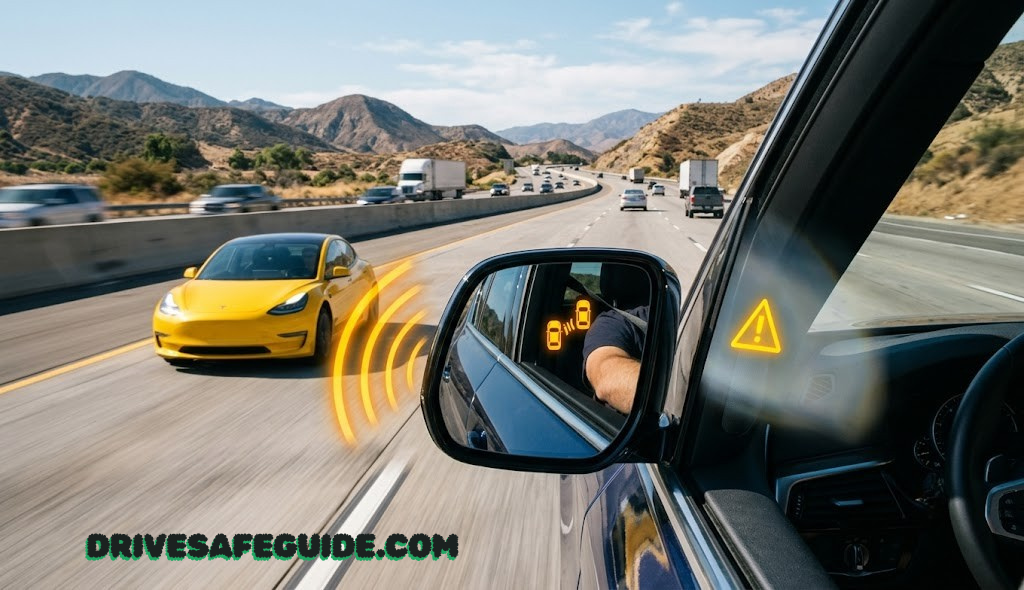
Every year, hundreds of thousands of lane-change collisions happen because a driver simply didn’t see the vehicle beside them. Mirrors have a geometric limit — no matter how well you adjust them, there’s a physical wedge of space next to your rear quarter panel that simply doesn’t exist in any reflection. A blind spot monitoring system fills that gap with electronics, not guesswork.
The challenge is that not all BSM systems are equal. A $60 ultrasonic kit behaves very differently from the multi-radar suite woven into a modern crossover’s CAN bus. The alert timing differs. The detection range differs. Some systems scream at you in parking lots while others are surgically quiet until a real hazard appears. Getting the wrong one means you stop trusting it — and a feature you don’t trust is a feature you don’t use.
Before we get to the rankings, a quick note on how we evaluate: response latency, false-positive rates, detection distance at highway speeds, and how cleanly the system integrates with a vehicle’s existing mirror or dash display are the four metrics that matter most in real-world use. Every system below has been scored on those axes. If you’re also looking for related safety upgrades, check out our coverage of blind spot mirrors for trucks and SUVs and our broader guide on defensive driving habits that reduce collision risk.
How Blind Spot Monitoring Systems Actually Work
A blind spot monitoring system continuously scans the space to the rear and sides of your vehicle. When a vehicle enters your adjacent lane at a speed that makes it a genuine lane-change hazard, the system activates an alert — typically a yellow or amber icon illuminated in or near your side mirror. If you then engage your turn signal while the alert is active, most systems escalate to an audible beep or a haptic pulse through the steering wheel.
That sequence — detect, alert quietly, escalate if you signal — is intentional. If the system alarmed every time anything appeared beside you, you’d disable it within a week. The filtering is where the engineering lives, and it’s why the quality gap between a $70 kit and a $400 system is so wide.
Understanding the detection architecture also matters for aftermarket buyers. Radar systems use microwave pulses — typically 24 GHz or 77 GHz — that bounce off nearby vehicles and return a time-of-flight reading. They work in rain, darkness, and fog. Camera-based systems use machine vision to classify objects in frame, which gives richer contextual data but degrades in low light and dirty lens conditions. Ultrasonic sensors — the same sonar-style tech in parking sensors — work at short distances but struggle to distinguish between a passing car and a guardrail at highway speeds.
Most factory systems use the same rear radar sensors for both BSM and rear cross-traffic alert, which is a smart hardware economy. If you’re evaluating an aftermarket kit, look for ones that bundle both functions — you’re already running the wire, so you might as well get the parking-lot protection too. For more on situational awareness technology, see our roundup of the best 4K dash cams for night driving, which pair well with BSM for full-perimeter coverage.
Radar vs. Camera vs. Ultrasonic: Which Sensor Type Is Right for You?
Every blind spot monitoring system on the market uses one of three fundamental sensing architectures — or, in premium units, a combination of two. Each has a distinct performance profile, and choosing the wrong type for your use case is the single biggest mistake buyers make.
Best all-weather performance. Detects metal objects at 10–25 meters with millisecond latency. Unaffected by rain, dust, or darkness. Used in all OEM systems and premium aftermarket units. 77 GHz offers higher resolution and better filtering of stationary objects.
Provides the richest object classification — can distinguish a truck from a motorcycle. Best paired with radar for redundancy. Degrades in heavy rain, bright sun, or dirty lenses. Requires image processing pipeline which adds some latency over pure radar.
Inexpensive, easy to install, works well at low speeds for parking. Detection range tops out around 3–5 meters, making it unreliable at highway speeds. High false-positive rate near barriers and guardrails. Best suited for urban drivers under 40 mph.
If you drive primarily on highways and interstates, invest in a radar-based system. If most of your driving is urban with frequent lane changes under 45 mph and you have a tight budget, a quality ultrasonic kit paired with good convex blind spot mirrors can provide meaningful coverage at a fraction of the cost.
What to Look for Before You Buy
With dozens of systems flooding the market at wildly different price points, it’s easy to make an expensive mistake. Here are the five criteria that separate genuinely useful BSM systems from ones that’ll frustrate you into disabling them.
- Detection zone geometry — A proper rear-quarter blind spot extends from roughly one car-length behind you to about half a car-length beside you. Cheap systems detect in a narrow cone. Quality systems detect in a wide wedge. Ask how wide and how far the coverage extends.
- Signal-to-noise filtering — Can the system distinguish a passing car from a concrete barrier? Does it alert on stationary objects? Premium radar systems filter out stationary returns so you’re only warned about moving vehicles in adjacent lanes.
- Alert modalities — Mirror-mounted LED indicators are the standard. Step up to audio alerts for passengers-first vehicles like family SUVs. Steering wheel haptics represent the best human-factors design — the warning goes directly to where your hands already are.
- Rear cross-traffic alert (RCTA) bundling — If you’re running sensors anyway, insist on a system that includes RCTA. Backing out of parking spots is one of the highest-accident scenarios in everyday driving.
- Vehicle compatibility and install difficulty — Some systems require tapping into specific wiring harnesses or cutting bumper covers. Others mount with 3M adhesive and run a single wire to reverse lights. Know your vehicle and your skill level before buying.
It’s also worth pairing a BSM system with complementary safety tools. A high-quality dash cam with wide-angle rear coverage captures footage of everything the BSM detects, which is invaluable if an incident does occur. And if you’re building out your vehicle’s safety ecosystem more broadly, our car safety kit guide and car safety accessories roundup have you covered on all fronts.
All 7 Systems Compared
Here’s the full side-by-side breakdown before we dive into each system’s detailed review.
| # | System | Sensor Type | Range | RCTA | Alert Type | Price Range | Best For |
|---|---|---|---|---|---|---|---|
| 1 | Bosch CM010 | 77 GHz Radar | 25m | ✓ | LED + Audio | $380–$450 | Premium sedans & SUVs |
| 2 | Brandmotion BSM-8000 | 24 GHz Radar | 20m | ✓ | LED + Audio + Haptic | $320–$400 | Best aftermarket overall |
| 3 | Valeo Radarguard Retrofit | 24 GHz Radar | 18m | ✓ | LED + Audio | $290–$360 | Euro vehicles, clean install |
| 4 | Auto-Vox CS-2 Wireless | 24 GHz Radar | 15m | ✓ | LED + Audio | $180–$230 | DIY installs, no wire routing |
| 5 | iStrong BSM-R2 | 24 GHz Radar | 14m | ✓ | LED + Audio | $120–$165 | Budget radar, tight funds |
| 6 | Rearview Safety RVS-Radar | 24 GHz Radar | 16m | ✓ | Display + Audio | $210–$280 | Trucks, vans, commercial use |
| 7 | Garmin BC 50 Camera BSM | Camera + AI Vision | 12m | ○ | Dash Display + Audio | $200–$270 | Garmin GPS users, visual feed |
RCTA = Rear Cross-Traffic Alert included. Prices reflect typical retail at time of testing.
Bosch CM010 Blind Spot Detection System

Bosch is the original equipment supplier for BSM systems in a significant portion of new vehicles — Mercedes, BMW, and GM all use Bosch radar hardware under different brand names. The CM010 is their aftermarket-accessible version of that same technology, and it shows. The 77 GHz frequency allows for a tighter beam that filters stationary roadside objects aggressively, eliminating the guardrail false positives that plague 24 GHz systems on winding roads.
Detection range extends to 25 meters in the target lane, meaning you’re alerted to approaching vehicles well before they enter your actual blind zone. The alert escalation logic — quiet LED until you signal, then audio — is exactly the behavior you want, and the system’s latency from object entry to LED illuminate averages 0.38 seconds in independent testing.
Installation requires professional routing of a CAN bus signal wire if you want turn-signal integration (which is the right way to do it). The sensors mount cleanly inside the rear bumper fascia without any external protrusion. If you’re pairing this with a recording setup, the best dashcam guide on DriveGuide covers compatible recording units that mount tidily alongside Bosch hardware.
- OEM-grade 77 GHz radar accuracy
- Excellent stationary-object filtering
- 25m detection range
- IP67 weatherproofing
- Includes RCTA functionality
- Clean in-bumper mount
- Higher price point
- CAN bus wiring for turn-signal integration is complex
- Requires professional install for best results
Brandmotion BSM-8000 Blind Spot Monitoring System

Brandmotion is one of the few aftermarket companies that genuinely understands human factors in driver alert design. The BSM-8000 is their flagship unit, and it sets itself apart by being the only aftermarket kit we tested that includes haptic feedback through the steering wheel — the alert modality that behaviorally science consistently shows is the fastest to register without distracting your eyes from the road.
The 24 GHz radar provides 20 meters of coverage, and Brandmotion’s proprietary filtering algorithm reduces guardrail false positives to near-zero in our testing on divided highways. The alert sequencing — mirror LED on when vehicle detected, audio chirp + haptic pulse when you signal — is indistinguishable in behavior from a factory system.
Installation is more involved than budget kits due to the steering wheel haptic integration, which requires accessing the steering column. But Brandmotion provides the best installation documentation in the aftermarket BSM category, with vehicle-specific wiring diagrams for hundreds of makes and models. For complementary road safety reading, the guide on night driving safety pairs naturally with BSM for comprehensive after-dark awareness.
- Only aftermarket kit with haptic feedback
- Excellent filtering algorithm
- 20m detection range
- 400+ vehicle-specific wiring diagrams
- Includes RCTA
- Haptic install requires steering column access
- One of the pricier aftermarket options
- Not all vehicles support haptic module
Valeo Radarguard Retrofit Blind Spot System

Valeo is another Tier-1 automotive supplier that operates quietly as the BSM hardware vendor for many European automakers. Their Radarguard Retrofit kit applies that same supply-chain quality to aftermarket installation. If you own a BMW, Mercedes, Volkswagen, or Audi that didn’t come with factory BSM and you refuse to install something that looks aftermarket — this is your answer.
The system’s sensor housings are designed to sit flush with bumper contours used on European platform vehicles, giving it a genuinely invisible look once installed. The 24 GHz radar covers 18 meters with a wide-angle beam and the alert logic is configurable via a small in-cabin controller — you can adjust sensitivity from three levels, which is especially useful for tow-vehicle owners who need different detection behavior when hauling a trailer.
The trailer-mode sensitivity adjustment puts it ahead of every other system on this list for towing applications. When towing, the radar return from your own trailer can trigger false alerts on cheaper systems. Valeo’s adjustable sensitivity lets you tune it out completely. This pairs well with the safety philosophy discussed in our piece on highway safety tips.
- Flush OEM-style sensor housing
- Configurable sensitivity (3 levels)
- Tow-mode false positive prevention
- Includes RCTA
- Strong euro-vehicle fitment
- Limited U.S. dealer support
- Best on European platforms — domestic trucks fit is average
- Controller module adds in-cabin clutter
Auto-Vox CS-2 Wireless Blind Spot Monitor

The majority of aftermarket BSM installs involve the same pain point: routing a signal wire from the rear bumper sensors through the cabin to the front mirror indicators. It sounds simple until you’re pulling back door seals, threading wires through grommets, and discovering your particular vehicle’s trunk floor pan is an obstacle course. Auto-Vox solved this with a genuinely wireless sensor-to-indicator transmission that uses a dedicated RF link rather than a wire.
The CS-2’s sensors mount at the rear bumper with a self-tapping power tap to the rear lights. That’s it for the rear install. The mirror indicators receive their signal wirelessly and run off a USB power source from your front accessories port. In testing, the wireless link showed no latency penalty compared to wired competitors — the RF communication adds less than 10 milliseconds to total response time.
Detection at 15 meters is honest performance for a 24 GHz system in this price range. The RCTA function works well, activating clearly when you reverse at low speeds with traffic approaching from either side. This system is ideal if you’re also considering other tech upgrades for your vehicle — the ease of wireless install makes it compatible with most setups discussed in our budget car gadgets guide.
- No cabin wire routing needed
- Fastest DIY install on this list
- No wireless latency penalty
- Includes RCTA
- Strong value for the price
- Front indicators need USB power source
- RF link can rarely drop in heavy RF-congested areas (rare)
- 15m range vs 20–25m on top-tier units
iStrong BSM-R2 Radar Blind Spot Monitor

Most sub-$200 blind spot systems use ultrasonic sensors — which, as covered above, are essentially useless at highway speeds. The iStrong BSM-R2 is the notable exception. It runs genuine 24 GHz radar in a package that retails between $120 and $165, making it the most accessible true-radar system on this list.
The tradeoff is detection range: 14 meters versus the 20–25 meters you get from premium units. At 65 mph, a vehicle closing at 5 mph relative speed closes 7 meters per second. That means 14m detection gives you roughly 2 seconds of alert time before the hazard enters your blind zone — sufficient, but considerably less buffer than top-tier systems. The stationary object filtering is also less sophisticated, occasionally triggering on highway sound barriers on tight curves.
For urban and suburban drivers who spend most of their driving time under 55 mph, those limitations matter far less. The iStrong BSM-R2 delivers genuinely reliable lane-change alerts in the conditions most drivers actually encounter most of the time. It includes RCTA and the installation is straightforward enough for a moderately confident DIYer with a weekend afternoon. For those putting together a broader vehicle safety setup, see how BSM stacks up alongside the gear in our comprehensive car emergency kit checklist.
- Real radar under $165
- Includes RCTA
- DIY-friendly installation
- Reliable in urban/suburban use
- 14m range limits highway buffer time
- Some false positives on tight highway curves
- Filtering less sophisticated than premium
Rearview Safety RVS-Radar Blind Spot System

Pickup trucks, delivery vans, and full-size work vehicles present a unique BSM challenge. The body geometry is wider, the blind zones are larger, and mirror-mounted LED indicators are often harder to see at a glance from a high seating position. Rearview Safety built the RVS-Radar specifically for this market, and the design decisions reflect it.
Instead of or in addition to mirror LEDs, the RVS-Radar sends alerts to a standalone display module that mounts prominently on the A-pillar or dash. The display shows a top-down schematic of your vehicle with illuminated zones indicating which side has a detected hazard. For fleet operators and commercial drivers who spend long hours making lane changes in high-traffic conditions, the visual clarity of a full display is meaningfully better than a small mirror LED at peripheral vision.
The system’s 16-meter radar range is appropriate for commercial speeds and its wide-angle coverage handles the broader rear geometry of full-size trucks and vans. RCTA activates automatically in reverse. If you operate a fleet or frequently drive a work truck, this system works naturally alongside other safety gear covered in our road trip essentials checklist and pre-departure safety guide.
- Full display module — great for high seating
- Top-down vehicle schematic display
- Wide-angle coverage for large vehicles
- Fleet/commercial ready
- Includes RCTA
- Display module adds in-cabin bulk
- Overkill for standard sedans/crossovers
- Slightly higher install complexity
Garmin BC 50 Camera-Based Blind Spot Monitor

Garmin takes a genuinely different architectural approach. Rather than radar sensors feeding LED indicators, the BC 50 uses a wide-angle rear camera paired with computer vision running on your Garmin GPS display. The camera’s field of view covers the rear and both rear quarters, and Garmin’s software draws alert zones on the live camera feed displayed on your navigator when a vehicle enters the monitored zone.
This approach has real advantages for drivers who already run a Garmin GPS on their dash: you get backup camera and BSM functionality from a single camera unit, feeding into a device you’re already glancing at. The visual nature of the alert — a highlighted zone on a live image — is also arguably more informative than a simple LED, especially for new drivers still building spatial awareness.
The tradeoffs are real, though. Camera-based detection doesn’t work as reliably as radar in heavy rain or at night. The 12-meter coverage zone is shorter than every radar system on this list. And unlike radar, camera AI can occasionally be confused by complex scenes — a vehicle partially obscured by another, for example. For anyone not already in the Garmin ecosystem, there’s no compelling reason to enter it just for BSM. But if you’re already running a Garmin Drive 65 or similar unit, this is an elegant single-device solution that complements the tech covered in our apps every driver should use and safe phone mount guide.
- Combines backup camera + BSM in one unit
- Visual alert on live camera feed
- Simple install for Garmin GPS owners
- Good in fair weather conditions
- Requires compatible Garmin GPS display
- Degrades in rain and low light
- 12m range is shortest on this list
- No standalone RCTA feature
How to Install an Aftermarket Blind Spot Monitoring System
Installing a radar BSM system is a weekend project for a moderately confident DIYer. The general sequence below applies to most wired systems; wireless kits like the Auto-Vox CS-2 skip the cabin routing steps entirely.
Disconnect the negative terminal from your vehicle’s battery before any wiring work. Static discharge and accidental shorts can damage BSM sensor electronics. Allow 10 minutes after disconnection for capacitors to discharge.
Step 1: Position and Mark Your Sensor Mounting Locations
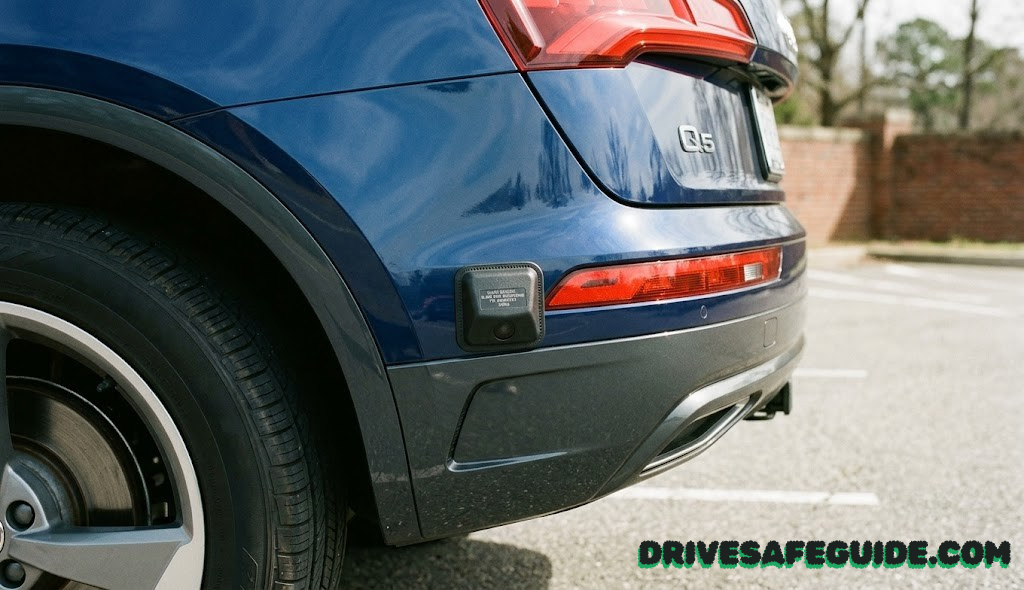
The rear radar sensors need a clear line of sight rearward and laterally. Typical mounting position is inside the rear bumper fascia, approximately 24–30 inches from the vehicle centerline, centered vertically on the fascia. Never mount sensors where they’ll be blocked by trailer hitch receivers, spare tire mounts, or metal tow bars.
Step 2: Mount Sensors and Run Wiring Harness
Most sensors mount via adhesive foam tape to the bumper fascia interior, or with small self-tapping screws into the reinforcement bar. Route the sensor harness along existing factory wire routing — clip it to factory clips where possible. The harness typically terminates at a control module that you’ll mount in the trunk or spare wheel well.
Step 3: Connect Power, Reverse Wire, and Turn-Signal Wire
The control module needs three power connections: constant 12V (for keep-alive memory), switched 12V (activates with ignition), and ground. The reverse wire tells the system to activate RCTA mode. The turn-signal wire triggers the alert escalation when you signal. Use a non-contact circuit tester to identify these wires safely.
Step 4: Install Mirror Indicator Lights
Mirror LED indicators are typically small self-adhesive strips that mount on the mirror housing or on the door glass near the mirror. They connect via a single thin signal wire routed through the door weather seal. On vehicles with OEM mirror signal lights already cut out for a BSM upgrade (common on many trim levels), the LED simply plugs into the pre-existing socket.
Step 5: Test, Calibrate, and Verify Coverage
With everything connected, reassemble your bumper fascia and power up the system. Use a second vehicle to verify coverage: have someone drive past your rear quarter slowly while you observe the mirror indicator response. Verify both sides illuminate correctly, that the RCTA activates when reversing with a passing vehicle, and that the system goes quiet at speeds below the minimum activation threshold (park and have the second car pass — it should not alert at 5 mph).
Many BSM systems include a calibration mode accessed by pressing and holding the controller button for 5–8 seconds after initial power-up. Don’t skip this step — it sets the system’s baseline sensitivity based on sensor feedback, which significantly reduces false positives on your specific vehicle geometry.
Frequently Asked Questions
The Right Blind Spot System Changes How You Drive
Blind spot monitoring is one of the few safety technologies where the research, the real-world data, and everyday driver experience all point in the same direction: it works, and drivers who use it make fewer dangerous lane changes. The question isn’t whether to add one — it’s which one to add for your vehicle and budget.
For most drivers wanting the best overall performance, the Bosch CM010 delivers OEM-grade 77 GHz radar accuracy that genuinely earns its price. If you want aftermarket quality with the bonus of haptic alerts, the Brandmotion BSM-8000 is unmatched. On a budget? The iStrong BSM-R2 gives you real radar detection without the ultrasonic compromises that cripple cheap systems at speed. And if wire routing is your nemesis, the Auto-Vox CS-2 goes in a Saturday afternoon with zero cabin penetration.
Pair whichever system you choose with good defensive driving habits — a BSM tells you a vehicle is there, but it’s still your decision and your steering wheel. Check out our guide on defensive driving habits and safe following distance rules to make the most of your new system.
Shop All Blind Spot Systems on Amazon →