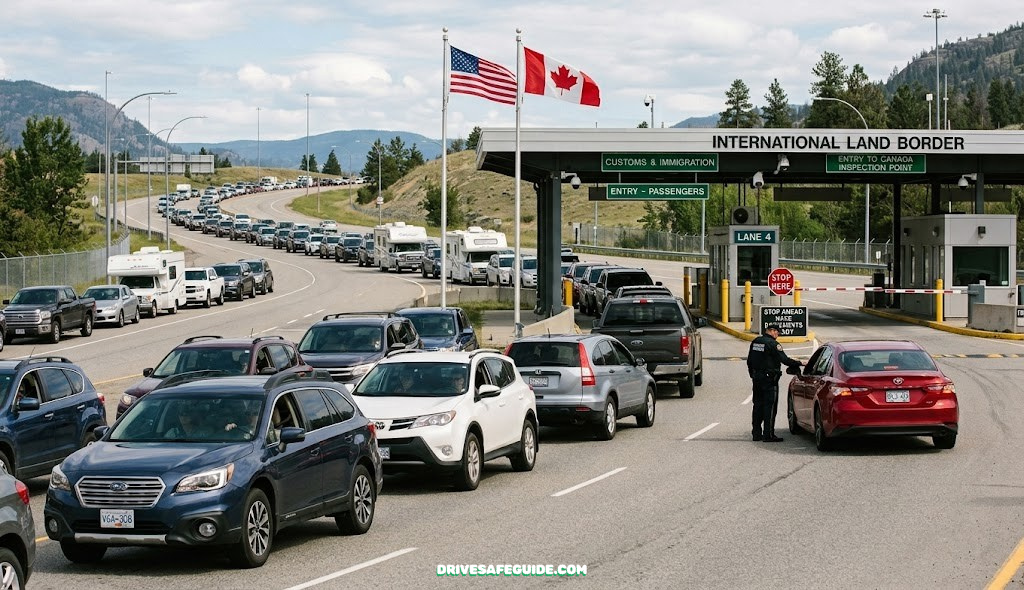
Border Crossing Vehicle Inspection: What to Expect
What agents actually check, which documents matter, and how to keep a routine stop from turning into a lost afternoon.
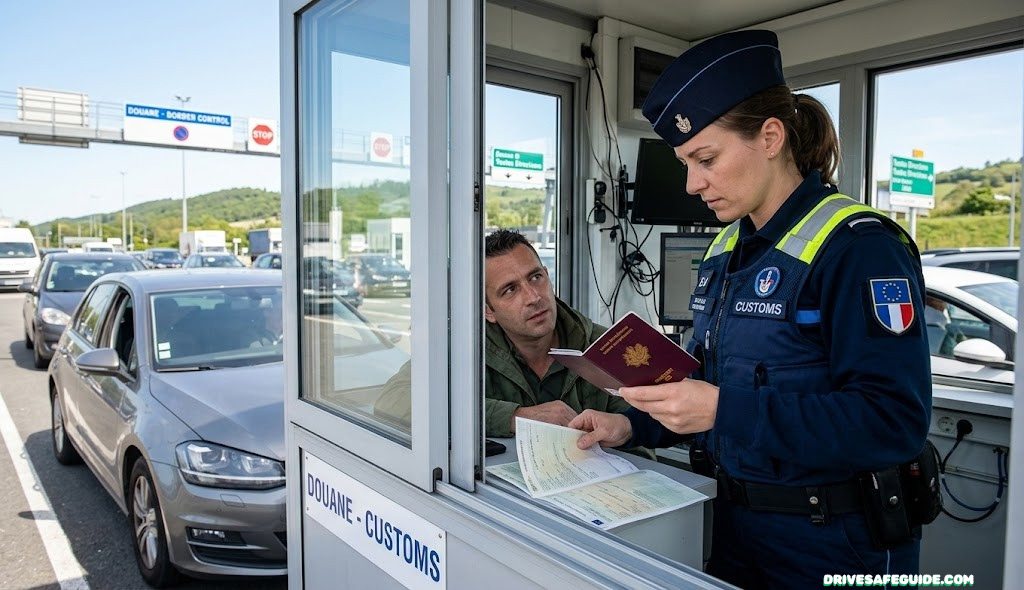
There’s a particular kind of quiet that settles over a car in the last hundred yards before a border checkpoint. Conversations trail off. Someone double-checks the glovebox. The person in the passenger seat starts flipping through passports like they’re counting cards. That tension is almost always disproportionate to the actual risk, and it’s almost always caused by the same thing: not knowing exactly what’s about to be asked of you. A border crossing vehicle inspection isn’t an interrogation. It’s a routine, procedural check that the vast majority of travelers pass in a few minutes, provided they’ve done a small amount of homework beforehand. This guide walks through that homework in full: the documents agents expect to see, what they physically inspect on and inside your vehicle, which items will get you flagged, and how to build a simple system so none of it has to be improvised at the booth.
Whether you’re driving from the United States into Canada for a long weekend, heading south into Mexico for a coastal road trip, moving between countries in a region with open internal borders, or planning a longer international overland route, the underlying logic of a vehicle inspection is remarkably consistent. Agents are trying to answer three questions quickly: who is in this vehicle, what is in this vehicle, and does everything you’re telling me match what I can verify. Everything in this guide exists to help you answer those three questions cleanly, the first time, without hesitation.
Why Border Crossing Inspections Matter More Than You Think
It’s tempting to treat a border inspection as a formality, something to get through rather than something to prepare for. That mindset is exactly what turns a two-minute stop into a two-hour one. Border agents are trained to notice inconsistency and hesitation far more than they’re trained to interrogate honest travelers, and unprepared drivers produce both in abundance. Fumbling for a document you thought was in the glovebox, giving a trip purpose that doesn’t match your luggage, or looking surprised when asked a basic question about your own vehicle are the kinds of small signals that shift a routine wave-through into a closer look.
There’s also a practical cost dimension that’s easy to underestimate before you’ve experienced it firsthand. A delayed crossing can mean missed hotel check-ins, blown ferry reservations, expired parking windows on the other side, or simply hours lost from a trip that was supposed to be about the destination, not the doorway to it. For anyone road-tripping on a schedule, treating the inspection itself as a planned leg of the journey, with its own preparation and checklist, pays off every single time.
It helps to think of the checkpoint the same way you’d think of airport security: a system designed to process a very high volume of mostly ordinary travelers as efficiently as possible, with extra scrutiny reserved for the small percentage of cases that genuinely warrant it. Agents aren’t looking for reasons to complicate your day. They’re looking for a fast, confident match between what you say and what they can verify, and the fastest way to provide that match is to already know, before you roll down the window, exactly what you’re going to be asked and exactly where the answer lives in your vehicle.
None of this is meant to induce anxiety. The overwhelming majority of vehicle crossings are uneventful, brief, and entirely forgettable in the best possible way. The goal of this guide is simply to move you from the group that gets waved through in ninety seconds into the group that gets waved through in ninety seconds on purpose, rather than by luck. If border crossings are one leg of a much longer route, it’s worth pairing this guide with a broader cross-country driving checklist so the rest of the trip is just as dialed in as the checkpoint itself.
Documents You Must Have Before You Reach the Checkpoint
Paperwork is where nearly every avoidable delay originates. The good news is that the list of documents border agents actually want to see is short, predictable, and easy to assemble days before you ever start the engine. The bad news is that “I have most of it” is functionally the same as “I have none of it” once you’re sitting at the booth with a line of cars behind you.
- A valid passport for every single occupant of the vehicle, including infants and small children.
- Vehicle registration in the name of the driver, or a notarized letter of permission if the vehicle belongs to someone else.
- Proof of insurance valid in the destination country, since many domestic policies stop covering you the moment you cross.
- A valid driver’s license, and in some regions, an International Driving Permit as a supporting document.
- Any visas, entry permits, or pre-cleared travel authorizations required for your specific nationality and destination.
- A written itinerary or return-trip evidence if you’re asked to demonstrate the purpose and length of your visit.
If your route requires an International Driving Permit, don’t leave that step until the week of departure. Processing and mailing times vary, and showing up without one when the destination country expects it is a completely avoidable reason to be turned back. The full breakdown of who needs one and how the process works is covered in our guide to international driving permit requirements.
Field Tip
Photograph every document, front and back, and store the images in a cloud folder you can access without a data connection. If a passport or registration is ever lost or damaged mid-trip, having a clear photo drastically speeds up replacement and re-entry procedures at consulates or secondary checkpoints.
One detail that surprises first-time cross-border travelers: the person in the passenger seat is subject to exactly the same documentation standard as the driver. Every occupant needs their own passport and, where applicable, their own visa or entry authorization. A shared family passport, where such a thing still exists in a handful of jurisdictions, is increasingly rare and should never be assumed to be sufficient without checking current rules first.
Frequent cross-border drivers should also look into trusted traveler programs available for their specific route. These programs involve a background check and an enrollment interview, but in exchange they offer dedicated lanes that dramatically cut wait times for pre-approved, low-risk travelers. If you cross the same border more than a few times a year, the enrollment cost is almost always recovered in saved time within the first handful of trips, and the presence of that pre-clearance itself tends to make any interaction with an agent shorter and more routine.

RFID Travel Document Organizer
A dedicated slot for every passport, registration slip, and insurance card keeps the booth interaction fast and hands-free.
Check Price on AmazonVehicle Registration, Insurance, and Ownership Proof Across Borders
A vehicle inspection isn’t only about who’s inside the car; it’s also about proving you have a legitimate right to be driving it in the first place. Agents want to see a clean, verifiable chain: this registration matches this license plate, which matches this vehicle identification number, which matches the name on the license in your hand. Any break in that chain, even an innocent one like a recently purchased vehicle whose title hasn’t caught up with the registration database, can trigger extra questions.
If you’re driving a car that isn’t registered in your own name, whether it belongs to a parent, a partner, or a friend, bring a signed and ideally notarized letter authorizing you to take the vehicle across the border. This single piece of paper resolves what is otherwise one of the most common causes of secondary inspection referrals for otherwise straightforward family road trips.
| Document | Who Needs It | Common Pitfall |
|---|---|---|
| Vehicle registration | Every driver | Registration expired mid-trip |
| Proof of insurance | Every driver | Policy excludes foreign travel |
| Third-party owner letter | Borrowed or family vehicles | Letter not notarized or undated |
| Lease or loan authorization | Financed or leased vehicles | Lienholder permission not obtained |
| Temporary import permit | Extended stays in some countries | Permit not surrendered on exit, blocking future entry |
Insurance deserves special attention because it’s the document travelers most often assume is handled when it isn’t. Many domestic auto policies, especially in North America, explicitly limit coverage to a defined geographic area and stop protecting you entirely once you cross into another country. Call your insurer well before departure, ask directly whether your policy extends across the specific border you’re planning to cross, and if it doesn’t, purchase a supplemental policy designed for that route. Arriving at a checkpoint with a policy that technically doesn’t cover you is a risk not worth taking, both for the inspection itself and for what happens if you’re in a collision on the other side.
Before departure, it’s also worth running through a broader mechanical and paperwork pass on the vehicle itself. Our pre-road-trip safety check guide covers the fluid, tire, and light checks that matter regardless of whether a border is involved, and catching a small issue at home is always cheaper than catching it at a checkpoint.
Financed and leased vehicles add one more layer worth confirming ahead of time. Many loan and lease agreements include a geographic restriction clause that technically requires lienholder permission before the vehicle leaves the country, separate from anything the border agent will ask about. It rarely comes up during the inspection itself, but it matters enormously if the vehicle is ever involved in a collision or theft claim on the far side of the border and the insurer discovers the trip violated the financing terms. A quick call to your lender before departure closes this gap permanently.
What Border Agents Actually Inspect (Inside and Out)
Understanding the physical scope of a vehicle inspection removes a lot of the mystery from the process. Agents are trained to move through a vehicle systematically, and while the exact sequence varies by station and by how much attention your specific vehicle draws, the areas below are consistently in scope.
- Passenger cabin: glovebox, door pockets, under and between seats, and any visible compartments.
- Trunk and cargo area: luggage, coolers, boxes, and anything stored beneath a false floor or spare tire well.
- Undercarriage: agents may use mirrors on wheeled poles or drive-over mirror pits to check for concealed compartments.
- Vehicle identification number: checked against your registration on the dash plate and door jamb.
- Windows and lights: illegal tint levels or non-functioning lights can prompt an equipment-based stop layered onto the inspection.
A dash cam running quietly through this entire process is a useful, low-effort form of documentation, both for your own peace of mind and as a record in the rare event a dispute arises about how an inspection was conducted. If you don’t already run one, our comparison of 4K dash cams built for challenging light conditions is a good starting point.
Preparing Your Vehicle: A Pre-Crossing Checklist
A little vehicle prep the night before a crossing does more to smooth the experience than almost anything you can do at the booth itself. The goal is a vehicle with nothing hidden, nothing loose, and nothing that raises a question you’d rather not answer under time pressure.
- Consolidate luggage so nothing needs to be dug out at the booth if an agent asks to see the trunk.
- Move all travel documents to a single, dedicated location within the driver’s reach, not scattered across bags.
- Empty or clearly separate any food, especially fresh produce, meat, or dairy, so it can be declared without a search.
- Check headlight, tail light, and window tint legality against the destination country’s standards, not just your own.
- Top off fuel and check tire pressure; some crossings involve idling in line for extended periods.
- Charge phones and any GPS devices fully, since navigation on the other side of the border may rely on data you don’t yet have.
If your route includes an extended stretch of unfamiliar highway on the other side, pairing this checklist with our general road trip essentials checklist ensures nothing outside the border-specific items gets overlooked either.
Prohibited and Restricted Items: What Gets You Turned Away
This is the section most travelers skim and most regret skimming. Every country maintains its own list of prohibited and restricted items, but there’s substantial overlap in categories that consistently cause trouble regardless of which border you’re approaching.
Usually Fine to Bring
- Personal electronics for your own use
- Sealed, commercially packaged snack foods in small quantities
- Prescription medication in original, labeled packaging
- Camping and road trip gear with no weapon components
- Reasonable amounts of personal clothing and toiletries
Commonly Prohibited or Restricted
- Firearms, ammunition, and many self-defense tools
- Fresh fruit, vegetables, meat, and dairy products
- Large amounts of undeclared currency or cash equivalents
- Certain plants, seeds, and untreated wood products
- Counterfeit goods and unlicensed pharmaceuticals
Agricultural restrictions exist for reasons that have nothing to do with distrust of travelers and everything to do with preventing pests and diseases from crossing into new ecosystems, so agents tend to enforce them strictly regardless of how reasonable your produce looks. If you’re unsure whether an item is restricted, the safest move is always to declare it and let the agent make the call rather than deciding for yourself and hoping it doesn’t come up.
Prescription medication deserves its own moment of caution, because the gap between “legal at home” and “legal at the destination” is wider here than most travelers expect. A medication that’s routine and unremarkable in one country can be a controlled or entirely banned substance in another, regardless of whether you have a valid prescription. Carry medication in its original, pharmacy-labeled packaging, bring a copy of the prescription itself, and check the destination country’s specific rules for anything beyond the most common over-the-counter items. This same caution applies even more strongly to cannabis products, which remain illegal to transport across the vast majority of international borders even when legal on both sides individually.
Emergency and safety gear is generally welcome and rarely causes issues, but it’s still worth knowing what’s in your kit before you’re asked. If you haven’t assembled one yet, our guide to building a car safety kit covers the tire, battery, and first-aid basics that travel well across almost any border.
Declaring Goods, Cash, and Gifts Correctly
Declaration exists to close the gap between what you’re carrying and what the border authority knows about. Getting it right is less about memorizing a legal code and more about adopting one simple habit: when in doubt, say so out loud before you’re asked.
Cash and cash-equivalent instruments above a set threshold, commonly ten thousand dollars or the local equivalent though the exact figure varies by country, must be formally declared regardless of whether the money is entirely legitimate. Failing to declare cash over the threshold is treated as a serious offense on its own, separate from any question about where the money came from, and can result in seizure even when the traveler has done nothing else wrong.
| Item Type | Typical Rule | Best Practice |
|---|---|---|
| Cash / monetary instruments | Declare above set threshold | Declare even if you’re unsure you’re over it |
| New purchases & gifts | Duty may apply above exemption limit | Keep receipts accessible |
| Alcohol & tobacco | Personal exemption limits apply | Know the quantity limit before buying |
| Business samples / equipment | Often requires separate documentation | Carry an itemized list with values |
Gifts and new purchases fall into a similar pattern. Most countries allow travelers a personal exemption value before duty applies, and going even modestly over that threshold without declaring it is one of the more common, and entirely avoidable, reasons a routine crossing turns into a longer conversation. Keep receipts for anything purchased on the trip in an easily accessible pocket of your document organizer, not buried in a suitcase.
The underlying principle worth internalizing is that declaration mistakes are treated far more leniently than concealment. An honest overestimate of what you’re carrying rarely causes a problem beyond a quick clarifying question. An undeclared item discovered during a search, even an innocuous one, changes the entire tone of the interaction.
Crossing With Children, Pets, or Rental Vehicles
These three situations account for a disproportionate share of avoidable delays, largely because the extra documentation each one requires isn’t always obvious until you’re already standing in line.
Traveling With Children
Every child needs their own valid passport; there is no substitute for this in almost any modern border system. If a child is traveling with only one parent, a grandparent, or another guardian, many border authorities expect a notarized letter of consent from the absent parent or legal guardian, sometimes on both entry and exit. This single document prevents what is otherwise one of the most stressful possible outcomes at a checkpoint: a genuine, good-faith family being questioned at length about a child’s travel status.
Traveling With Pets
Pets typically require proof of current vaccinations, particularly rabies, along with a health certificate issued within a specific window before travel, often thirty days or less. Some destinations add microchip requirements or a mandatory waiting period after vaccination before entry is allowed. Research your specific destination’s pet import rules well in advance, since these requirements tend to be less forgiving of last-minute gaps than human documentation is.
Rental and Borrowed Vehicles
Rental agreements very frequently prohibit cross-border travel outright, or require a separate authorization and additional insurance purchased specifically for that purpose. Driving a rental vehicle across a border without that authorization can void your insurance entirely and, in some cases, results in the vehicle itself being denied entry regardless of your own documentation being in order. Contact the rental company directly, get the authorization in writing, and carry a printed copy in the vehicle.

Portable GPS Tracker
Useful peace of mind for family road trips and rental vehicles alike, especially across unfamiliar territory.
Check Price on AmazonWhat Happens During Secondary Inspection
Being sent to secondary inspection is not, by itself, a sign that anything has gone wrong. Many secondary referrals are random, part of routine sampling that every checkpoint performs regardless of how clean a traveler’s documentation is. Understanding the process in advance takes most of the anxiety out of an experience that, for most people, ends with nothing more than a longer wait.
- You’ll typically be directed to park in a designated area away from the main lanes.
- A different agent, or team of agents, conducts a more thorough review of documents and may ask follow-up questions.
- The vehicle may be searched more comprehensively, including trunk, cabin, and sometimes undercarriage inspection.
- Passengers may be asked to step out of the vehicle during the search.
- Processing time ranges from roughly thirty minutes to several hours depending on staffing and findings.
The most useful thing you can do during secondary inspection is stay calm, answer questions directly, and avoid volunteering more information than asked, without ever being evasive. Agents are trained to notice both extremes: someone who’s clearly hiding something, and someone who’s over-explaining out of nervousness. Straightforward, consistent answers move the process along fastest.
Field Tip
If you’re traveling with young children, ask in advance whether there’s a designated waiting area for families during secondary inspection. Most stations have one, and it’s far more comfortable than remaining in the vehicle during an extended search.
It’s worth planning for secondary inspection the same way you’d plan for a flight delay: not because you expect it, but because a small amount of slack in your schedule makes it a non-event if it happens. Building an extra hour of buffer into hotel check-ins or reservations on the far side of a border you’re less familiar with is a cheap form of insurance against a routine, statistically expected part of the process.
Common Mistakes That Cause Delays or Denials
Most border crossing problems trace back to a small handful of repeatable mistakes rather than genuinely complicated legal issues. Recognizing these patterns in advance is the fastest way to avoid becoming a case study in one of them.
- Assuming a domestic driver’s license alone is sufficient identification for international travel.
- Forgetting that insurance coverage frequently stops at the border without a supplemental policy.
- Giving a trip purpose or duration that contradicts visible luggage, bookings, or return travel evidence.
- Failing to declare cash, gifts, or food items out of uncertainty rather than intent to deceive.
- Bringing a rental vehicle across without written authorization from the rental company.
- Traveling with a child and only one parent without a notarized consent letter from the other.
- Not checking whether window tint, aftermarket lights, or modified exhausts meet the destination country’s equipment standards.
None of these mistakes are exotic or hard to avoid; they simply require being handled before departure rather than improvised at the booth. Running through this list alongside your own pre-departure risk elimination checklist the week before you leave is enough to close almost every one of these gaps.
Officer Etiquette: How to Handle the Interview Itself
Documents and vehicle prep solve most of the practical side of a border crossing, but the human interaction at the window matters just as much. Most agents form an impression of a vehicle within the first ten to fifteen seconds of the interaction, well before any document has actually been reviewed in detail. Tone, eye contact, and how quickly you can produce what’s asked for all factor into whether that first impression reads as routine or worth a second look.
- Roll the window all the way down and remove sunglasses so the agent can see your face clearly.
- Turn off music or podcasts before you reach the booth, not after you’re asked to.
- Have the driver answer questions directed at the driver; let passengers answer only what’s asked of them.
- Give short, direct answers to questions about trip purpose and duration rather than a long unprompted narrative.
- Keep hands visible on the wheel or in your lap when not actively handing over a document.
A surprising number of delays trace back not to anything found in the vehicle, but to answers that shift or contradict each other between the driver and a passenger. If everyone in the car has a rough shared understanding of the trip’s purpose, route, and length before you reach the booth, that alone resolves one of the most common triggers for a closer look. It costs nothing to spend two minutes in the fuel line or rest stop before the crossing simply confirming the story everyone already knows is true.
It’s also worth remembering that agents interact with hundreds of vehicles a day and are, in the overwhelming majority of cases, simply doing a repetitive job as efficiently as they can. Treating the interaction as a brief, polite, professional exchange, rather than either a confrontation to brace for or a conversation to over-explain, is consistently what produces the shortest stops.
Special Considerations for Overnight, Remote, and Off-Peak Crossings
Not every crossing happens at a major, well-staffed checkpoint during daylight hours. Travelers routing through remote border stations, crossing overnight to avoid daytime traffic, or combining a border crossing with backcountry or national park travel on the other side face a slightly different set of considerations than a straightforward daytime crossing at a major hub.
Smaller and more remote stations tend to have reduced hours, fewer staffed lanes, and less redundancy if something goes wrong with a document or a payment system. Confirm operating hours for your specific crossing well in advance rather than assuming a border station operates around the clock; a surprising number don’t, and arriving to a closed gate after dark with nowhere nearby to wait is a genuinely unpleasant way to end a travel day. If your route also involves overnight stops in the vehicle itself before or after the crossing, our guide to car camping conversion tips covers how to set up safely and legally.
If your destination side of the border includes national park or protected land travel, confirm what passes or permits are required separately from your border paperwork; these are two entirely different systems and one doesn’t substitute for the other. Our breakdown of national park vehicle passes is worth a look before you finalize the second half of the itinerary. Likewise, if the route on the far side is more about scenery than speed, planning it against a proper scenic byway route planning guide makes the payoff of getting through the border smoothly feel a lot more worthwhile.
Field Tip
For overnight or off-peak crossings, top off fuel before you get in line. Some smaller stations have limited services nearby, and idling in a queue is not the moment to discover the nearest gas station is on the wrong side of the checkpoint.
Border Crossing Norms by Region: A Practical Comparison
No two border systems are identical, and travelers moving between different parts of the world are often surprised by how differently “routine” is defined from one crossing to the next. The table below offers a general orientation; always confirm current requirements with the specific checkpoint or consulate before departure, since rules shift more often than most drivers expect.
| Region / Route | Typical Wait | Key Requirement | Notable Quirk |
|---|---|---|---|
| US–Canada land crossings | Minutes to an hour | Passport for all occupants | Trusted traveler programs speed up frequent crossers |
| US–Mexico land crossings | Highly variable by time of day | Passport plus vehicle permit for interior travel | Border zone vs. interior travel have different rules |
| EU internal (Schengen) borders | Often no formal stop | Passport or ID carried at all times | Random checks can still occur without notice |
| Overland routes outside North America/EU | Can extend to several hours | Carnet or temporary import permit | Vehicle-specific import paperwork is often the bottleneck |
The single most useful habit across every region on this list is the same: check the specific, current rules for your exact route within a few weeks of departure rather than relying on general knowledge, even reliable general knowledge like the summary above. Border policy shifts with political relationships, seasonal enforcement priorities, and public health considerations far more often than most casual travelers assume.
If part of your route involves a ferry crossing in addition to a land border, the loading and documentation process has its own logic worth understanding ahead of time; our car ferry loading procedure guide covers that separately.
Essential Gear and Products to Keep Border Crossings Smooth
A short list of physical tools does more to reduce border-crossing friction than almost any amount of research. None of this gear is border-specific by design, but each item solves a problem that disproportionately shows up during international travel.

Compact Portable Tire Inflator
Long idling lines and unfamiliar road surfaces on the other side make tire pressure management worth having on hand.
Check Price on AmazonBeyond the document organizer and tire inflator already mentioned, a jump starter is worth keeping in the trunk for any international road trip, since roadside assistance coverage from your home country frequently doesn’t extend across a border the way you’d expect. Choosing the right one comes down mostly to matching output to your engine size, which our jump starter amperage guide walks through in detail.

Lithium Jump Starter Pack
Small enough for a glovebox, powerful enough to matter on the far side of a border where roadside help may be limited.
Check Price on AmazonAn emergency escape tool combining a seatbelt cutter and window breaker is another small item that earns its place in a cross-border kit, particularly on longer overland routes through less-developed infrastructure. If you’re building out a broader emergency kit for the trip rather than just the crossing itself, the road trip essentials checklist covers the full list beyond what’s specific to the border itself.
A basic OBD2 scan tool is a less obvious addition, but a genuinely useful one for longer international trips. If a warning light appears on the far side of a border, in a country where you don’t yet know a trusted mechanic, being able to read the actual fault code yourself before deciding whether to pull off the route saves both time and money. Our guide to OBD2 scan tools for real-time sensor monitoring breaks down which features actually matter for a road trip context rather than a home garage.

Bluetooth OBD2 Diagnostic Scanner
Read a warning light yourself before deciding whether it’s safe to continue past the border.
Check Price on AmazonFinally, don’t overlook simple comfort gear on longer international routes. Extended waits at a checkpoint, followed by hours more of driving on the other side, add up to a long day in the seat. A supportive cushion or lumbar accessory is a small investment that pays off far more than its price tag suggests once you’re several hours past the border with still more road ahead.
Building Your Border-Crossing Document and Emergency Kit
The single highest-leverage thing you can do before any international road trip is consolidate everything from this guide into one physical kit that lives in a consistent, known location in the vehicle. When every document and tool has a fixed home, the inspection stops being a search-and-recall exercise and becomes a simple, practiced handoff.
- All passports and visas, organized in a dedicated RFID-blocking document holder.
- Vehicle registration, insurance proof, and any third-party owner authorization letters.
- Printed copies of pet vaccination records or child travel consent letters, if applicable.
- A basic first-aid kit and any prescription medication in original packaging.
- A portable tire inflator, jump starter, and emergency escape tool.
- An offline map or downloaded navigation data for the region beyond the border.
Building this kit once and reusing it for every future crossing turns border preparation from a recurring source of pre-trip stress into a five-minute check before you leave the driveway. Pair it with a general road trip essentials guide organized by scenario to make sure the rest of the vehicle is just as ready as the paperwork is.
Field Tip
Do a final “booth rehearsal” the morning of departure: sit in the driver’s seat and physically locate every document you’d need to hand over, timing yourself. If it takes longer than a minute, reorganize before you leave, not after you’re already in line.
The Bottom Line
A border crossing vehicle inspection rewards preparation more than almost any other part of a road trip. The documents are predictable, the physical inspection zones are consistent, and the mistakes that cause delays are avoidable with a small amount of planning done days, not minutes, before you arrive. Build the kit once, know what’s in your vehicle, declare honestly, and the checkpoint becomes exactly what it should be: a brief, forgettable pause between one country’s roads and the next.
Build Your Full Road Trip ChecklistFrequently Asked Questions
Do I need a passport to cross a land border by car?
Yes. Nearly every land border crossing that involves leaving your home country now requires a valid passport, or in some regional cases a compliant enhanced ID. A standard driver’s license alone is not sufficient at most international vehicle checkpoints.
Can I bring my rental car across an international border?
Only if your rental agreement explicitly permits it. Most rental companies restrict or ban cross-border travel, and driving past a checkpoint without written authorization can void your insurance and lead to the vehicle being denied entry.
What happens if I forget to declare something at the border?
Undeclared goods, cash over the reporting threshold, or restricted food items discovered during inspection can result in confiscation, fines, or a referral to secondary inspection, even when the omission was accidental. When in doubt, always declare.
How long does a typical vehicle border inspection take?
A routine primary inspection usually takes two to five minutes when documents are organized and answers are consistent. Secondary inspection, triggered by random selection or by an inconsistency, can add thirty minutes to several hours.
Can border agents search my vehicle without my consent?
At international checkpoints, agents generally hold broad authority to inspect vehicles, including trunks, compartments, and undercarriages, without a warrant. Declining a search typically results in denied entry rather than a legal dispute at the booth.
Is it illegal to bring firearms across a land border?
In most cases, yes, unless you’ve obtained specific advance permits from the destination country. Firearms, ammunition, and many self-defense tools that are legal at home are commonly prohibited or heavily restricted across international borders.
Do children need their own passport to cross a border in a car?
Yes, every traveler regardless of age typically needs their own passport. If a child is traveling with only one parent or a non-parent guardian, many border authorities also expect a notarized consent letter from the absent parent.
What foods are commonly banned at vehicle border crossings?
Fresh fruits, vegetables, meat, dairy, and certain plants are frequently restricted due to agricultural pest and disease control. Rules vary significantly by country and even by which specific station you use, so checking current lists before departure matters.
Will a dash cam recording cause problems at a border checkpoint?
Generally no, a dash cam running normally isn’t an issue, but some agents may ask you to turn off active recording during the inspection itself. Knowing your device’s settings in advance means you can comply quickly if asked.
Can I be denied entry even with all my paperwork correct?
Yes. Complete paperwork substantially lowers your risk but doesn’t guarantee entry. Officers retain discretion based on the interview, vehicle condition, prior travel history, and other factors evaluated at the checkpoint itself.
Do I need special insurance to drive into another country?
Often yes. Many domestic auto policies stop providing coverage the moment you cross a border. Confirm with your insurer before departure, and consider a supplemental cross-border policy sold specifically for your route if needed.
What is the best way to organize documents before reaching the checkpoint?
Use a dedicated travel document organizer kept within the driver’s reach, with passports, registration, insurance, and any permits sorted in the order an agent typically requests them. Offline digital backups are a smart supplement, never a replacement.
🚗 Recommended for Drivers
Drive Safer Every Day
Explore our top picks for car safety gear — from dashcams to emergency kits — all hand-picked to help you stay safe on the road.
🚗 Shop Car Safety EssentialsAffiliate link — we earn a small commission that keeps DriveSafeGuide running. Thank you!