Driving with a Cracked Windshield: Illegal, Dangerous, or Both?
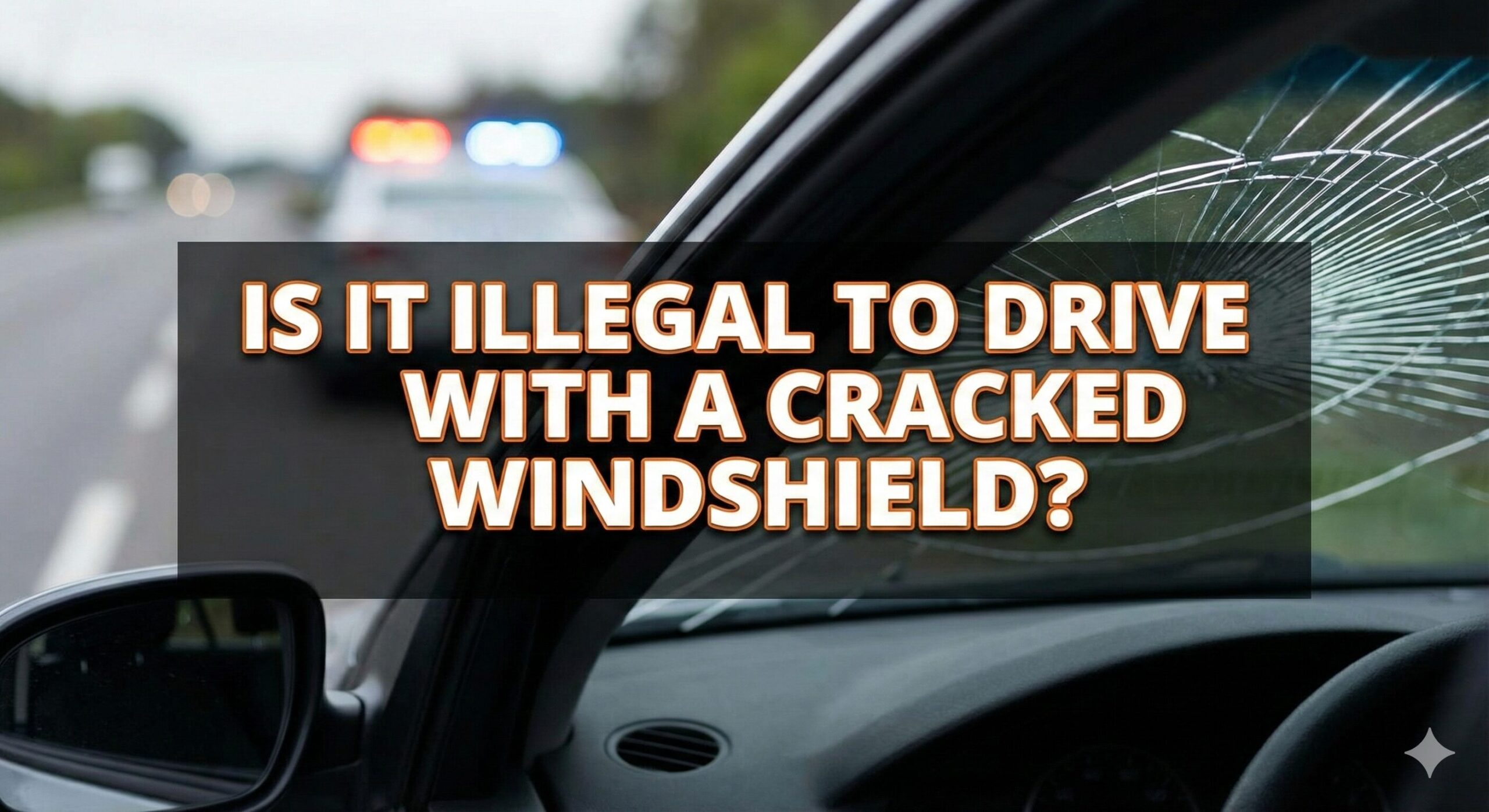
It starts with a loud SNAP on the highway. You flinch, scan the glass, and spot it: a tiny starburst chip right in your line of sight. You tell yourself you’ll fix it later, but weeks pass, and the chip grows into a jagged line snaking across the passenger side.
We have all been there. But beyond the annoyance, a cracked windshield poses a serious question: Is it illegal to drive like this?
The answer is rarely a simple “yes” or “no.” It usually depends on the size of the crack, its location, and the specific traffic laws of your state. While a small chip in the corner is generally fine, a spiderweb crack obstructing your view is a guaranteed ticket in almost every jurisdiction.
This guide breaks down the complex web of Department of Transportation (DOT) regulations and state statutes to help you avoid fines—and more importantly, keep you safe.
Windshield damage is one of the most common vehicle issues drivers face. According to the National Windshield Repair Association, over 11 million windshields are replaced annually in the United States alone. The average driver will experience at least two significant windshield impacts during their lifetime. Understanding your legal obligations and safety requirements isn’t just about avoiding tickets—it’s about protecting yourself, your passengers, and other road users.
Many drivers underestimate how quickly minor damage can escalate into a serious safety hazard. Temperature fluctuations, road vibrations, and even the structural flexing of your vehicle during normal driving can cause a small chip to spread across the entire windshield within days. What starts as a barely noticeable nick can become a blinding crack that compromises your ability to see pedestrians, cyclists, and other vehicles.

Federal vs. State Regulations: Who Rules the Road?
Understanding the law requires looking at two levels of government. While states write the traffic tickets, federal regulations set the safety standards for the vehicle itself.
Federal Standards (U.S. Department of Transportation)
The Federal Motor Carrier Safety Administration (FMCSA) sets strict rules, primarily for commercial vehicles, but many states adopt these as their baseline for passenger cars. Section 393.60 of the federal code states:
- Vision Acuity: Drivers must have a clear view of the road.
- The Critical Area: No cracks or chips larger than ¾ of an inch (roughly the size of a quarter) are allowed within the area swept by the windshield wipers.
- Intersecting Cracks: Any two cracks that intersect are an automatic violation.
If you drive a commercial truck or are crossing state lines, these federal rules apply strictly. For everyday passenger vehicles, local state laws take precedence, though they often mirror these federal guidelines.
National Highway Traffic Safety Administration (NHTSA) Standards
The NHTSA establishes Federal Motor Vehicle Safety Standards (FMVSS) that all vehicles must meet. Standard 205 specifically addresses glazing materials, requiring that windshields meet specific transparency and strength requirements. When a windshield cracks, it no longer meets these federal standards, which technically means your vehicle is no longer in compliance with federal safety regulations.
Standard 205 also specifies requirements for windshield mounting and retention. The windshield must remain in place during impacts to maintain structural integrity and prevent ejection. Laminated glass used in modern windshields consists of two layers of glass with a polyvinyl butyral (PVB) interlayer that holds shattered pieces together. When cracks penetrate both layers, this safety feature is compromised.
How Federal Standards Influence State Laws
While federal regulations primarily target manufacturers and commercial carriers, they create the framework that state legislators use when drafting traffic codes. Most states adopt language similar to FMCSA regulations when defining what constitutes an obstructed view or unsafe vehicle condition. This harmonization means that even without explicit state statutes, officers can reference federal standards when issuing citations for severe windshield damage.
The American National Standards Institute (ANSI) also provides guidelines adopted by many states. ANSI Z26.1 establishes safety glazing material standards used in all 50 states for vehicle inspections. When inspectors evaluate windshield damage, they often refer to these ANSI standards to determine whether glass meets minimum safety requirements.
The 3 Factors That Determine if You Get a Ticket
Police officers generally use “discretion” when issuing equipment violations. However, three specific factors will almost always result in a citation:
1. Location (The “Driver’s Box”)
The most critical area is the “Acute Area” (an 8.5 x 11-inch box directly in front of the driver). Any damage here is illegal because it distorts your view of the road, pedestrians, and traffic signals. This connects directly to broader safety concerns, similar to why driving barefoot is often debated—control and visibility are paramount.
The acute area extends from the top of the steering wheel to the top of the windshield and spans the width of the driver’s seat. Some states define this more precisely using the windshield wiper sweep pattern—any damage within the area cleaned by the driver’s side wiper blade falls under increased scrutiny. Law enforcement officers are trained to assess whether damage in this zone creates a safety hazard, and their judgment on scene typically holds up in traffic court.
2. Size of the Damage
As a general rule of thumb used by law enforcement:
- Chips: Anything smaller than a quarter is usually a warning.
- Cracks: Any single crack longer than 6 inches is a violation in many states (like Florida).
- Star Breaks: If a rock hit creates a “star” pattern larger than 1.5 inches in diameter, it is illegal.
3. Structural Integrity (Spiderwebbing)
If the glass is “spiderwebbed” (shattered but held together by the laminate), the vehicle is considered unsafe to operate. This glass cannot support the roof in a rollover or properly deflect the passenger airbag.
Additional Factors Officers Consider
Beyond the primary three factors, officers evaluate several additional elements when deciding whether to issue a citation. Multiple cracks across different areas of the windshield indicate overall glass degradation and increase the likelihood of a ticket. Damage that creates sharp edges or glass separation presents immediate safety concerns for both occupants and pedestrians. Cracks that have allowed moisture penetration, evidenced by cloudy or discolored areas around the damage, indicate the inner laminate layer has been compromised. Officers also consider whether damage interferes with the driver’s ability to see traffic control devices, emergency vehicles, or vulnerable road users like cyclists and pedestrians.
The time of day and weather conditions also influence enforcement decisions. Damage that creates minimal visibility issues during bright daylight may become dangerously blinding when headlights hit it at night or when sunlight hits it at certain angles. Officers patrolling during adverse weather conditions are more likely to cite windshield damage because rain, snow, or fog already reduces visibility, and windshield damage compounds this risk.

State-by-State Breakdown
While we cannot list the full text of every statute, here is how the states generally group their windshield laws.
| Category | Description | Example States |
|---|---|---|
| Zero Tolerance | No cracks allowed in the wiper sweep area whatsoever. | Minnesota, Pennsylvania, Ohio |
| Size Limits | Allows cracks if they are under a certain length (usually 6 inches) or not in driver’s view. | Florida, California, Texas |
| Discretionary | Illegal only if the officer deems the vehicle “unsafe” or visibility is “obstructed.” | New York, Illinois, Massachusetts |
| Inspection States | Vehicle will fail annual safety inspection if glass is damaged. | Virginia, Texas, Maine, Vermont |
Note: If you live in a state with annual safety inspections (like Texas or Virginia), a cracked windshield is an automatic fail, meaning you cannot legally renew your registration until it is fixed.
Detailed State Law Examples
California Vehicle Code Section 26710 states that it is unlawful to operate any motor vehicle with a windshield that does not provide the driver with a clear and reasonably undistorted view. The California Highway Patrol has established guidelines that any crack over 6 inches in length or any chip larger than a quarter within the driver’s field of vision constitutes a violation. California also prohibits stickers or objects affixed to the windshield that obstruct vision, except for specifically permitted items like rearview mirrors and GPS devices mounted in the lower corners.
Florida Statute 316.2952 requires that windshields be free of cracks that materially obstruct the driver’s clear view of the highway. Florida courts have consistently interpreted “materially obstruct” to mean damage that distorts or interferes with vision, not merely cosmetic imperfections. The sunshine state’s unique environmental conditions, including intense heat and frequent temperature fluctuations, accelerate crack propagation, which is why Florida law also mandates insurance companies offer zero-deductible windshield replacement coverage.
Texas Transportation Code Section 547.613 prohibits operating a vehicle when the windshield has a crack that makes it unsafe to drive. During vehicle inspections, certified inspectors use the “business card rule”—if a crack is longer than a standard business card (3.5 inches), it fails inspection regardless of location. Star breaks exceeding 1 inch in diameter also result in inspection failure, as do pits or chips that have penetrated beyond the outer layer of glass.
New York State Vehicle and Traffic Law Section 375 specifies that windshields must be free from defects that distort or obstruct vision. The state’s strict annual inspection program requires that no cracks be present in the acute area, and any damage outside this zone must not exceed 11 inches in length. New York inspectors also check for proper windshield wiper function, as damaged glass combined with non-functional wipers presents an aggravated safety hazard during the state’s harsh winter conditions.
Minnesota takes one of the strictest approaches with a zero-tolerance policy for windshield damage. Any visible crack or chip in the windshield, regardless of size or location, can result in a citation. This stringent approach reflects the state’s challenging winter driving conditions, where visibility is already compromised by snow, ice, and reduced daylight hours.
The Hidden Danger: Why the Law Exists
It is easy to think of a windshield as just a wind blocker, but in modern cars, it is a structural component. The laws aren’t just about being able to see; they are about surviving a crash.
1. Airbag Deployment
Passenger-side airbags deploy upward, bouncing off the windshield to cushion the passenger. If the glass is cracked, the explosive force of the airbag can shatter the windshield completely, causing the airbag to deploy outside the car, offering zero protection to the passenger.
2. Roof Crush Protection
In a rollover accident, the windshield prevents the roof from collapsing on the occupants. A crack creates a weak point in this support system. If the glass fails, the roof is much more likely to cave in.
3. Nighttime Glare
At night, cracks refract light from oncoming headlights and street lamps, creating blinding prisms. This reduces contrast and reaction time. For more on managing visibility, read our guide to safe night driving.
4. Ejection Prevention
The windshield plays a critical role in preventing occupant ejection during a collision. According to NHTSA research, approximately 75% of occupants completely ejected from vehicles during crashes die from their injuries. The windshield, when properly intact, creates a barrier that keeps unbelted occupants inside the vehicle during rollover events. A cracked windshield may not withstand the forces required to contain occupants, significantly increasing the risk of ejection and catastrophic injury or death.
5. Structural Frame Support
Modern vehicles utilize unibody construction where the windshield contributes to the overall torsional rigidity of the chassis. Engineers calculate windshield strength as part of the vehicle’s crashworthiness design. When the windshield is compromised, the entire front structure of the vehicle becomes less stable. In offset frontal collisions, which account for approximately 40% of all frontal crashes, the windshield helps distribute impact forces across the vehicle frame. A damaged windshield alters this load distribution, potentially causing the passenger compartment to deform more than designed.

Understanding Different Types of Windshield Damage
Not all windshield damage is the same. Different impact types create distinct damage patterns, each with unique repair challenges and safety implications. Understanding your specific damage type helps determine whether repair or replacement is necessary and how urgently you should address the issue.
Bull’s Eye Impact
A bull’s eye damage pattern features a circular break with a dark-colored center surrounded by a lighter outer ring, resembling a target. This damage occurs when a rounded object like a small rock strikes the glass perpendicularly. The circular nature of bull’s eye damage makes it one of the most repairable types, as the resin can evenly fill the cavity. Bull’s eye impacts up to one inch in diameter are typically repairable if they haven’t penetrated both glass layers.
Star Break
Star breaks radiate outward from a central impact point, creating short cracks that extend in multiple directions. The star pattern occurs when the impact creates microfractures that spread along the glass surface. Small star breaks with few legs are often repairable, but once star cracks extend beyond three inches from the center, replacement becomes necessary. The challenge with star breaks is that the radiating legs can continue spreading even after repair if not properly sealed.
Combination Break
Combination breaks feature characteristics of both bull’s eye and star patterns, with a circular impact crater surrounded by radiating cracks. These complex damage patterns present more challenging repair scenarios because the technician must address multiple break types simultaneously. The success rate for combination break repairs depends heavily on the number and length of radiating cracks.
Half-Moon or Partial Bull’s Eye
When impact occurs at an angle, the resulting damage creates a crescent or half-moon shape rather than a complete circle. These partial breaks typically have less structural stability than full bull’s eyes because the asymmetrical damage creates uneven stress distribution across the glass surface.
Edge Crack
Edge cracks originate within two inches of the windshield’s perimeter and are among the most serious damage types. The edge of the windshield experiences the highest stress concentration, making edge cracks highly unstable and prone to rapid spreading. Edge cracks that exceed three inches in length almost always require complete windshield replacement because they compromise the glass-to-frame seal and structural integrity.
Floater Crack
Floater cracks appear in the central area of the windshield, at least two inches from any edge. These cracks can grow in any direction and are influenced by temperature changes, road vibrations, and vehicle flexing. Single floater cracks under six inches can sometimes be repaired, but multiple floater cracks or cracks that intersect always require replacement.
Stress Crack
Unlike impact damage, stress cracks develop without any visible point of impact. These cracks result from manufacturing defects, improper installation, or extreme temperature differentials between the interior and exterior of the vehicle. Stress cracks often appear suddenly, particularly during rapid temperature changes, and typically require complete windshield replacement since they indicate fundamental glass weakness or installation problems.
Surface Pit
Surface pits are small, shallow depressions in the outer glass layer caused by sand, gravel, or road debris impact at low velocity. While individually harmless, accumulated surface pitting over years creates a sandblasted effect that causes significant glare during night driving and low-angle sunlight conditions. Severely pitted windshields should be replaced even without visible cracks because the micro-damage impairs visibility and increases eye fatigue.
How Weather Conditions Affect Windshield Damage
Environmental conditions play a crucial role in how quickly windshield damage spreads and how severe it becomes. Understanding weather-related risks helps drivers make informed decisions about repair timing and preventive measures.
Temperature Fluctuations
Glass expands when heated and contracts when cooled. Temperature changes create internal stress within the windshield, and any existing crack becomes a stress concentration point where expansion and contraction forces focus. A temperature change of just 20 degrees Fahrenheit can cause a small chip to begin spreading into a crack. During winter months, the temperature differential between a frost-covered exterior and a heated interior can exceed 60 degrees, creating extreme stress conditions.
Running defrosters on high heat when the windshield is frozen represents one of the most common causes of rapid crack propagation. The sudden thermal shock from extreme cold to intense heat causes the glass to expand unevenly, and existing damage points serve as initiation sites for major cracks. Experts recommend gradually warming the vehicle interior and using lukewarm defroster settings initially to minimize thermal stress.
Direct Sunlight Exposure
Prolonged exposure to direct sunlight heats the windshield unevenly, particularly when part of the glass is shaded by the roof, pillars, or nearby structures. This uneven heating creates differential expansion rates across the glass surface. Dark-colored vehicles absorb more solar radiation, increasing interior temperatures and the temperature gradient between interior and exterior glass surfaces.
In southern states like Arizona, Texas, and Florida, summer interior vehicle temperatures can exceed 150 degrees Fahrenheit. Under these conditions, windshield surface temperatures can vary by 40 degrees or more between shaded and sun-exposed areas. Existing cracks act as expansion joints, and the repeated daily heating and cooling cycles cause incremental crack growth that can extend cracks by several inches per day during peak summer conditions.
Moisture and Humidity
Water infiltration into windshield cracks creates several problems. When moisture penetrates the laminate layer between glass sheets, it can cause delamination, permanently clouding the affected area. In freezing conditions, water trapped in cracks expands by approximately 9% when it turns to ice, exerting tremendous pressure that widens and extends existing damage.
Humid environments also complicate windshield repair. Resin adhesives used in repair kits require dry surfaces for proper bonding. Moisture contamination at the repair site prevents resin from achieving full adhesion strength, resulting in incomplete repairs that fail prematurely. Professional repair technicians use specialized drying equipment to remove moisture from damage sites before applying repair resin.
Barometric Pressure Changes
Changes in atmospheric pressure, particularly during severe weather systems, affect the pressure differential between the air trapped within cracks and the outside atmosphere. Rapid pressure drops associated with approaching storms can cause trapped air pockets within cracks to expand, applying additional stress to crack tips. While less significant than temperature effects, pressure-related crack propagation becomes relevant in regions experiencing frequent severe weather patterns.
Road Salt and Chemical Exposure
Winter road treatments introduce corrosive chemicals that can accelerate damage around windshield edges and mounting seals. Magnesium chloride and calcium chloride de-icers can penetrate small cracks and corrode the metal windshield frame, compromising the mounting structure. Salt crystals can also work into surface damage, expanding when wet and mechanically wedging open small cracks. Regular washing during winter months removes accumulated chemicals and reduces this deterioration mechanism.
Commercial Vehicle Windshield Regulations
Commercial motor vehicles face stricter windshield regulations than passenger cars due to their size, weight, and the potential for catastrophic accidents. Understanding these enhanced requirements is essential for fleet operators, commercial drivers, and anyone operating vehicles subject to Department of Transportation oversight.
Federal Motor Carrier Safety Regulations
The FMCSA enforces comprehensive windshield standards under 49 CFR Part 393. These regulations apply to vehicles with a gross vehicle weight rating exceeding 10,000 pounds, vehicles designed to transport more than 15 passengers, and vehicles used to transport hazardous materials. Commercial vehicle inspections conducted at weigh stations and roadside checkpoints include thorough windshield assessments as part of the vehicle’s overall safety rating.
Under FMCSA regulations, any crack or discoloration in the critical vision area automatically places a vehicle out of service until repairs are completed. The critical vision area extends across the entire windshield width and from the top of the steering wheel to the top of the windshield. Unlike passenger vehicle enforcement, commercial vehicle inspectors have zero discretion for windshield damage—any violation results in immediate out-of-service orders and significant fines.
Commercial Driver’s License Implications
Commercial drivers cited for operating vehicles with unsafe windshield conditions face consequences beyond simple fines. CDL holders operate under stricter standards, and equipment violations appear on their driving records. Multiple equipment violations can result in CDL suspension or revocation, particularly when violations indicate a pattern of neglecting vehicle safety. Employers increasingly review driver violation histories when making hiring decisions, making windshield citations career-impacting events for professional drivers.
Fleet Management Responsibilities
Companies operating commercial vehicle fleets bear responsibility for maintaining windshields across all vehicles. Fleet managers must implement regular inspection protocols, maintain repair records, and ensure prompt replacement when damage occurs. Corporate safety policies typically require daily pre-trip inspections where drivers document windshield condition. Failure to maintain proper windshield condition exposes companies to liability in accident situations and can result in increased insurance premiums and regulatory scrutiny.
Advanced Driver Assistance Systems and Windshield Replacement
Modern vehicles increasingly feature Advanced Driver Assistance Systems that rely on cameras and sensors mounted behind the windshield. When windshields are replaced on these vehicles, proper calibration of these systems becomes essential for continued safe operation.
Understanding ADAS Dependencies
Many safety systems depend on forward-facing cameras mounted to the windshield. Lane departure warning systems, automatic emergency braking, adaptive cruise control, and traffic sign recognition all rely on clear, properly positioned camera views. Even minor misalignment during windshield replacement can cause these systems to malfunction, creating dangerous situations where drivers expect safety interventions that may not occur.
Camera-based systems require specific optical properties from the windshield glass. Replacement glass must match original equipment specifications for light transmission, distortion, and optical clarity in the camera mounting area. Aftermarket windshields that don’t meet these specifications can cause camera systems to misread distances, fail to recognize obstacles, or generate false warnings.
Static vs. Dynamic Calibration
Static calibration requires the vehicle to be positioned precisely in front of specialized calibration targets in a controlled workshop environment. Technicians use laser alignment equipment and manufacturer-specific software to adjust camera systems to within millimeter tolerances. This process typically takes one to two hours and must be performed whenever the windshield is replaced or the camera mounting bracket is disturbed.
Dynamic calibration requires driving the vehicle under specific conditions while connected to diagnostic equipment. The vehicle must travel on well-marked roads at specific speeds while the system self-calibrates using lane markings and roadside features. Weather conditions, road quality, and traffic density all affect dynamic calibration success rates.
Cost Implications for Consumers
Windshield replacement on ADAS-equipped vehicles costs significantly more than on older vehicles. Calibration alone typically adds $200 to $500 to the replacement cost, depending on vehicle make and model. Luxury vehicles and those with multiple camera systems may require calibration costing over $1,000. Some vehicles require dealer-only calibration, limiting consumer choice and increasing costs.
Insurance coverage for ADAS calibration varies significantly between providers and policies. Some comprehensive coverage policies include calibration in windshield replacement claims, while others exclude it or require separate endorsements. Consumers should verify calibration coverage before filing windshield claims to avoid unexpected out-of-pocket expenses.
The “Free” Windshield States
Good news for drivers in certain states: you might not have to pay a dime for repairs. To encourage safety, several states have laws requiring insurance companies to waive the deductible for windshield replacement.
States with Zero-Deductible Glass Coverage laws include:
- Florida (Famous for this law)
- Kentucky
- South Carolina
- Massachusetts (Often included in comprehensive)
- Arizona (Available as a separate low-cost endorsement)
If you have comprehensive coverage in these states, check your policy immediately. Driving with a crack when you could fix it for free is a risk you don’t need to take.
Understanding Comprehensive Coverage for Glass Damage
Comprehensive insurance covers damage from non-collision events including falling objects, vandalism, weather events, and road debris impact. Glass damage specifically falls under comprehensive coverage, not collision coverage. Policyholders should understand that comprehensive claims typically don’t increase premiums as significantly as at-fault collision claims, making glass replacement claims less financially punitive.
How Zero-Deductible Laws Work
States with zero-deductible windshield laws require insurance companies to offer comprehensive coverage without deductible application to windshield repairs or replacements. In Florida, this coverage is mandatory—every comprehensive policy automatically includes full glass coverage with no deductible. Kentucky and South Carolina require insurers to offer zero-deductible glass coverage as an option, though policyholders must specifically request it.
The Economic Rationale Behind These Laws
Legislators enacted zero-deductible glass laws recognizing that prompt windshield repair prevents accidents and reduces overall insurance costs. A $50 chip repair prevents a $400 windshield replacement, which itself prevents a potential accident costing insurers tens of thousands in liability claims. These laws create incentives for drivers to address damage immediately rather than delaying repairs due to cost concerns.
Filing Glass Claims Without Affecting Premiums
Most insurance companies treat comprehensive glass claims differently from other claims when calculating premiums. Glass-only claims typically don’t trigger rate increases because they’re considered no-fault events outside the policyholder’s control. However, multiple glass claims within a short period may result in increased scrutiny or non-renewal, particularly if insurers suspect fraud or inadequate maintenance.
Windshield Replacement Cost Breakdown
Understanding windshield replacement costs helps drivers budget appropriately and avoid overpaying for necessary repairs. Costs vary significantly based on vehicle type, glass quality, and geographic location.
Factors Affecting Replacement Cost
Vehicle make and model represent the primary cost determinant. Economy cars with basic windshields may cost $200 to $400 for replacement, while luxury vehicles with specialized glass, heating elements, or acoustic interlayers can cost $1,500 or more. Vehicles with rain-sensing wipers, heads-up displays, or integrated antennas require specialized glass that significantly increases costs.
OEM vs. Aftermarket Glass
Original Equipment Manufacturer glass matches the specifications of the factory-installed windshield exactly. OEM glass provides guaranteed fit, optical quality, and compatibility with vehicle systems. However, OEM windshields cost 50% to 100% more than aftermarket alternatives. Aftermarket glass from reputable manufacturers meets federal safety standards but may have slight variations in tint, optical properties, or mounting precision.
Labor Costs and Installation Quality
Professional installation labor typically ranges from $100 to $300 depending on vehicle complexity and local market rates. Proper installation is critical—improperly installed windshields can leak, create wind noise, fail to support airbag deployment, or separate during collisions. Certified technicians follow manufacturer-specific procedures for adhesive application, curing times, and trim replacement.
Mobile vs. Shop Installation
Mobile installation services provide convenience but may cost 10% to 20% more than shop installation. Mobile services are particularly valuable in zero-deductible states where insurers coordinate direct-bill replacement at the policyholder’s home or workplace. However, mobile installations face limitations in adverse weather conditions—urethane adhesives require specific temperature and humidity ranges for proper curing.
Repair vs. Replace: What Can You DIY?
Not every rock chip requires a trip to the shop. Modern resin kits are surprisingly effective if used early.
When to DIY:
- The chip is smaller than a quarter.
- The crack is less than 3 inches long.
- The damage is NOT in the driver’s direct line of sight.
When to Replace:
- The crack goes all the way to the edge of the glass (this compromises the seal).
- The glass is pitted (tiny micro-craters from sandblasting over time).
- The inner layer of glass is damaged (run your fingernail over the inside; if it catches, replace it).
Having the right tools is essential for car maintenance. Check out our list of best car safety tools for other essential items every driver needs.
Step-by-Step DIY Repair Process
Successful windshield repair requires careful preparation and technique. Begin by cleaning the damaged area thoroughly with glass cleaner and allowing it to dry completely. Any moisture or debris trapped in the crack will prevent resin adhesion and create visible imperfections in the finished repair. Use a pin or needle to remove loose glass fragments from the impact crater, being careful not to enlarge the damaged area.
Apply the resin according to the kit manufacturer’s instructions. Most kits use a syringe or applicator bridge that creates suction to draw resin into the crack while expelling air. Patience during this step produces better results—allowing the resin adequate time to penetrate completely fills microscopic fractures that would otherwise continue spreading. Apply steady, consistent pressure rather than forcing resin rapidly.
After resin application, curing time depends on the product and environmental conditions. UV-cured resins require direct sunlight exposure, typically 15 to 30 minutes on a sunny day or longer under overcast conditions. Chemical-cured resins harden through evaporation or two-part mixing. Do not rush the curing process—incomplete curing results in weak repairs that fail quickly.
Common DIY Repair Mistakes
The most frequent DIY repair failure results from attempting to fix damage that has already spread beyond repairable limits. Once cracks exceed three inches or reach the windshield edge, no consumer repair kit can restore structural integrity. Another common mistake involves applying excessive pressure during resin injection, which can cause the crack to extend beyond its original boundaries. Finally, many DIY repairers neglect to create a proper surface seal, allowing moisture and debris to enter the repair area and cause failure within weeks.
Professional Repair Standards
Professional windshield repair technicians follow established standards from organizations like the National Windshield Repair Association. Professional repairs typically achieve 80% to 95% optical clarity improvement and restore significant structural strength. The primary advantage of professional repair lies in the equipment—commercial-grade vacuum pumps achieve more complete resin penetration than consumer kits, and professional UV curing lamps ensure complete hardening regardless of weather conditions.

Preventing Windshield Damage
While not all windshield damage can be avoided, adopting preventive driving habits and maintenance practices significantly reduces your risk of experiencing cracks and chips.
Defensive Driving Techniques
Maintain increased following distance behind trucks, particularly dump trucks and construction vehicles. Rocks and debris falling from these vehicles cause a disproportionate percentage of windshield damage. When passing trucks, do so quickly and safely to minimize exposure time in debris zones. Avoid driving in the right lane on highways where road debris accumulates, particularly near construction zones and gravel entrances.
Speed Considerations
The force of stone impact increases exponentially with speed. A pebble that bounces harmlessly off a windshield at 30 mph can create significant damage at 70 mph. Reducing speed in areas with loose road surfaces, construction activity, or visible debris reduces both the likelihood and severity of windshield impacts. The aerodynamic profile of your vehicle also affects debris trajectories—vehicles with more vertical windshields experience more direct impacts than those with steeply raked glass.
Protective Measures
Windshield protection films, similar to paint protection films used on vehicle exteriors, provide an additional layer of impact resistance. These clear urethane films absorb impact energy and prevent chip formation. While not preventing all damage, protective films significantly reduce the incidence of repairable chips becoming large cracks. Professional installation ensures optical clarity and proper adhesion, though these films require periodic replacement as they accumulate damage.
Regular Maintenance Inspections
Inspect your windshield weekly for new damage, paying particular attention to the edges where cracks often initiate without being noticed. Early detection of small chips allows for inexpensive repair before cracks spread. During inspections, check wiper blade condition—worn blades with exposed metal frames can scratch glass surfaces, creating weak points where cracks later develop. Replace wiper blades every six to twelve months or whenever streaking or chattering occurs.
Parking Considerations
Where you park affects windshield damage risk. Parking under trees exposes vehicles to falling branches, nuts, and sap that can damage glass. Parking near construction sites, sports fields, or playgrounds increases the likelihood of impact from airborne objects. Covered parking provides the best protection, while open parking in areas with high bird populations risks damage from dropped objects. During hailstorms, seek covered shelter immediately—hail causes extensive windshield damage that requires complete replacement.
Legal Consequences Beyond Traffic Tickets
Driving with a cracked windshield creates legal exposure beyond simple traffic citations. Understanding the full scope of potential consequences motivates timely repair and protects your legal interests.
Accident Liability Implications
If you’re involved in an accident while driving with a known windshield crack, the other party’s insurance company may argue that your compromised visibility contributed to the collision. Even if the other driver was primarily at fault, comparative negligence laws in many states allow liability apportionment based on contributing factors. A cracked windshield in the driver’s field of vision provides strong evidence for partial fault, potentially reducing your compensation by thousands of dollars.
Criminal Liability Concerns
In severe cases, particularly accidents involving injuries or fatalities, prosecutors may consider known vehicle defects when determining criminal charges. Operating a vehicle with known safety defects that contribute to accident severity can elevate charges from negligence to recklessness or even vehicular manslaughter. While rare, documented cases exist where drivers received enhanced sentences because they continued operating vehicles with severely compromised windshields despite knowing the risks.
Insurance Coverage Disputes
Insurance companies may deny collision claims if they determine that pre-existing windshield damage contributed to accident causation. Policy terms typically require maintaining vehicles in safe operating condition, and significant windshield damage violates this requirement. If an insurer can demonstrate that the crack obstructed your view of the hazard that caused the accident, they may deny coverage entirely, leaving you personally responsible for all damages.
Registration and Inspection Consequences
In states with mandatory vehicle inspections, a failed inspection due to windshield damage prevents registration renewal. Operating an unregistered vehicle carries separate penalties including fines, impoundment, and misdemeanor charges for repeat offenses. The administrative burden of resolving registration issues often exceeds the inconvenience of timely windshield replacement.
Common Windshield Myths Debunked
Misinformation about windshield damage leads many drivers to make poor decisions about repair timing and methods. Separating fact from fiction helps you protect your safety and your wallet.
Myth: “A Small Crack Won’t Spread If I Ignore It”
This dangerous misconception leads to countless preventable windshield replacements. All cracks spread over time—the question is how quickly. Even microscopic vibrations from normal driving, daily temperature cycles, and chassis flexing cause incremental crack propagation. A chip that costs $50 to repair today becomes a $400 replacement within weeks or months. The “it hasn’t spread yet” observation reflects luck rather than stability.
Myth: “Clear Nail Polish Works as Well as Professional Repair”
Nail polish fills surface voids but doesn’t penetrate into the crack network or restore structural strength. Professional repair resins have specific optical properties matching glass refractive index, while nail polish creates visible distortion. Nail polish also lacks the flexibility to move with the glass during thermal expansion, causing it to separate within days. The only legitimate use for nail polish is temporary moisture sealing if you cannot repair the damage immediately.
Myth: “Insurance Will Always Cover Windshield Replacement”
Coverage depends entirely on your policy terms. Liability-only policies provide no glass coverage whatsoever. Comprehensive coverage applies, but deductibles often exceed replacement costs for basic windshields. Even with comprehensive coverage, some policies exclude glass damage or require separate glass endorsements. Never assume coverage exists—verify your policy terms before damage occurs.
Myth: “Windshield Repair Is Always Visible”
Modern repair techniques achieve remarkable optical clarity improvements. While repairs remain detectable upon close inspection, quality repairs are often invisible at normal viewing distances. The repair fills the crack with resin matching the glass’s optical properties, and UV curing creates a durable bond that prevents light refraction. Poor-quality repairs remain visible, but professional work often satisfies even meticulous vehicle owners.
Myth: “My Car’s Safety Systems Will Still Work With a Cracked Windshield”
Many drivers don’t realize their vehicle’s safety systems depend on the windshield. Forward collision warning, automatic emergency braking, lane keeping assist, and adaptive cruise control often rely on windshield-mounted cameras. Cracks in the camera’s field of view can cause system malfunction, false alerts, or failure to detect genuine hazards. Never assume safety systems compensate for reduced visibility from windshield damage.
What to Do When Damage Occurs While Driving
Knowing how to respond when your windshield is struck while driving can prevent panic, reduce additional damage, and keep you safe.
Immediate Response Protocol
When a rock or object strikes your windshield, maintain your lane position and avoid sudden steering inputs. The instinctive flinch response causes many drivers to swerve, creating accident risk far exceeding the actual danger from the impact. Assess the damage visually without taking your attention from the road—determine whether the impact created a chip, crack, or complete penetration. If the windshield remains intact and visibility is adequate, continue driving to a safe location before inspecting the damage thoroughly.
Complete Windshield Failure While Driving
In extremely rare cases of complete windshield failure while driving, remain calm and follow established emergency procedures. Windshield glass is laminated and designed to remain largely in place even when shattered. Reduce speed gradually while activating hazard lights. Avoid sudden braking that could cause the damaged glass to separate from the frame. Look through any remaining clear areas or, if necessary, carefully push out damaged glass to create a viewing aperture. Pull over immediately once you can safely exit the roadway.
Temporary Measures to Reach a Repair Shop
If damage occurs far from repair facilities, temporary measures can prevent crack spread until professional help is available. Apply clear packing tape over the exterior of the damage to prevent moisture and debris entry. The tape serves only as a temporary barrier—it provides no structural reinforcement. Avoid using the defroster at high settings, as thermal stress accelerates cracking. Drive at moderate speeds on smooth roads when possible, and avoid potholes and rough surfaces that jar the vehicle.
Frequently Asked Questions
Don’t let a small chip become a big legal headache. For more advice on vehicle safety standards and myths, check out our article on essential safety tools and glass breakers.