Personal Safety · Field Guide
Preventing Carjacking: Essential Safety Tips for Drivers
Carjacking is rare, fast, and almost always preventable with the right habits. This guide walks through the real-world tactics that keep you a hard target — from the moment you approach your car to what to do if someone is already standing at your window.
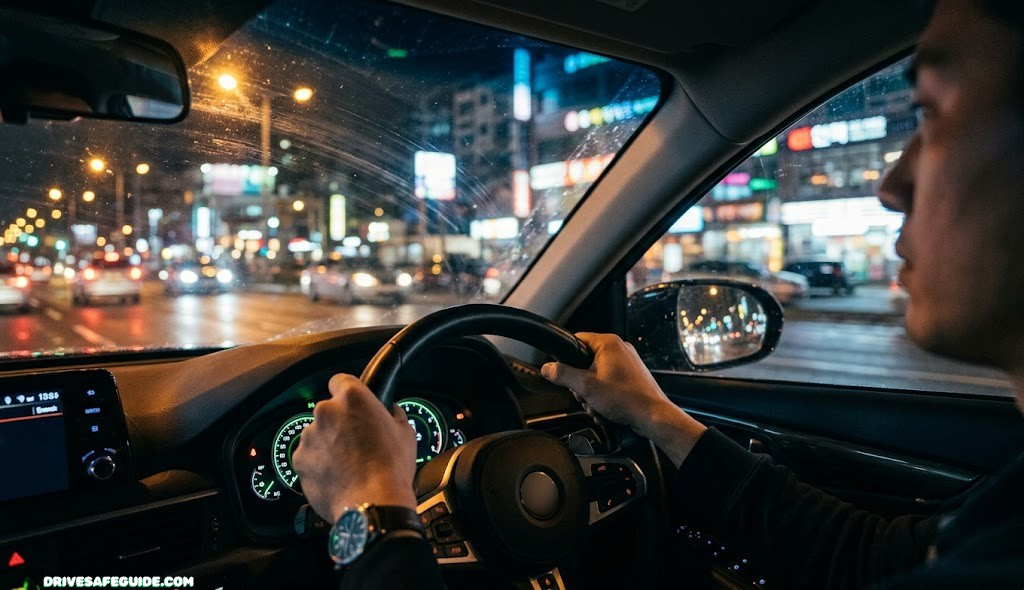
Most carjackings take under 60 seconds and happen within arm’s reach of your own driver’s door. The goal of this guide isn’t to make you afraid of your car — it’s to close the small windows of opportunity that carjackers rely on, so you’re simply not worth the risk to them.
Every section below is built around that same idea: small, repeatable habits that cost you nothing in time or money, layered on top of one another until the opportunity a carjacker is looking for simply isn’t there. Read it once in full, then come back to the quick reference near the end whenever you want a fast refresher.
01 What Carjacking Actually Is — and Why It Happens
Carjacking is the theft of a vehicle by force or threat of force while the driver or passengers are present. That distinction matters: it’s not the same crime as a car being stolen from an empty driveway overnight. It’s a confrontation crime, which means the offender has already decided they’re willing to interact directly with a person to get what they want.
That single fact should shape everything else in this guide. Carjackers are not looking for a fight, a chase, or a scene. They are looking for a fast, low-resistance transaction: a car that’s already running, a driver who’s distracted, a door that’s unlocked, or a window that’s down. Remove the easy opening and most carjackers move on to the next target rather than escalate.
Who Carjackers Target
Offenders typically select targets based on opportunity rather than the driver’s identity. Vehicles left running and unattended, drivers absorbed in their phones, cars stopped with windows down in slow traffic, and isolated parking areas with poor sightlines all create the same opportunity profile regardless of who’s behind the wheel. Newer vehicles, vehicles with visible valuables, and vehicles idling for an extended period (like at a drive-thru or loading dock) also draw disproportionate attention.
Why Awareness Beats Aggression
A driver who is scanning their surroundings, keeps doors locked the moment they’re seated, and leaves working space between their bumper and the car ahead at a stop signals something specific to a would-be carjacker: this target requires effort, noise, and time — three things carjackers actively avoid. This is the same underlying logic behind defensive driving habits that reduce collision risk: consistent, boring vigilance is what keeps you safe, not last-second heroics.
Field Note
Carjackers overwhelmingly prefer targets who appear unaware. A driver who makes eye contact, sits upright, and visibly checks mirrors before unlocking a car is statistically far less likely to be approached than one staring at a phone with the door already unlocked.
The Three Phases of a Carjacking Attempt
Almost every carjacking follows a recognizable three-phase pattern, and understanding it gives you a chance to interrupt the process at any point rather than only at the last, highest-stakes moment.
- Selection. The offender scans an area — a lot, a stoplight, a driveway — and picks a target based on visible opportunity: unlocked doors, a distracted driver, a running unattended vehicle, or an isolated location with no witnesses.
- Approach. The offender closes distance quickly, often from a blind angle, aiming to reach the driver’s door or window before the driver reacts. This phase typically lasts only a few seconds.
- Extraction. The offender demands the vehicle, the keys, or both, using a verbal threat, a visible weapon, or physical force, and wants the driver out and the car moving as fast as possible.
Every habit in this guide is aimed at breaking the chain at the earliest possible phase. Denying selection — locked doors, good lighting, visible alertness — is far easier and lower-stakes than trying to manage an extraction attempt already in progress.
Why This Differs From General Vehicle Theft
Standard auto theft is a property crime aimed at an empty, unattended car, the kind of risk covered by a steering wheel lock or a hidden kill switch. Carjacking is a person-present confrontation crime, which means the countermeasures that work well against theft, like alarms and immobilizers, matter far less than the countermeasures that reduce your exposure as a person: awareness, distance, and locked doors. Conflating the two leads a lot of drivers to over-invest in anti-theft tech while under-investing in the two-second habits that actually reduce confrontation risk.
02 High-Risk Locations and Times
Carjacking risk isn’t evenly distributed across your day. It clusters heavily around specific environments where a driver’s attention is naturally divided and an offender has an easy escape route. Recognizing these patterns lets you tighten your habits exactly where it counts, instead of running at maximum vigilance everywhere, all the time.
| Location / Situation | Why It’s High-Risk | Key Countermeasure |
|---|---|---|
| Gas station pumps | Driver often steps away from an unlocked, running vehicle | Lock doors, take keys, stay within arm’s reach |
| ATM / bank drive-up | Cash visibility plus a stationary, distracted driver | Scan surroundings before lowering the window |
| Parking garage stairwells | Poor lighting, blind corners, limited witnesses | Use elevators near cameras, walk with keys ready |
| Residential driveway at night | Predictable arrival routine, low ambient light | Vary timing, use exterior lighting, scan before exiting |
| Red lights / stop-and-go traffic | Vehicle stationary with windows sometimes down | Leave a car-length gap, keep windows up, doors locked |
| Highway on/off-ramps | Isolated shoulders, slower speeds, forced stops | Avoid unnecessary shoulder stops; drive to a lit public area |
Time of day matters too. Carjackings skew toward early morning and late evening hours when fewer bystanders are present and lighting is reduced, though daytime incidents in parking structures are common enough that visibility alone is not a substitute for locked doors and situational scanning.
Urban Density vs. Rural Isolation
Dense urban environments produce more carjacking incidents in raw numbers simply because there are more vehicles and more opportunities, but rural and suburban drivers shouldn’t assume they’re exempt. Isolated rural stretches remove the witness deterrent almost entirely, and an offender who does choose to act in a low-traffic area often has considerably more time to work with before anyone notices. If you regularly drive long, low-traffic rural roads, the same habits from this guide apply, with extra weight on avoiding unnecessary stops on isolated shoulders, something also covered in our escape ramp and runaway truck safety guide for similar isolated-roadway situations.
Rideshare, Delivery, and Gig Drivers Face Elevated Exposure
Drivers who pick up unknown passengers or make repeated stops at unfamiliar addresses, particularly rideshare and food-delivery drivers, face a meaningfully higher carjacking exposure than the average commuter, largely because their work requires interacting with strangers in unfamiliar locations by design. If this describes your work, consider requiring pre-payment or app-verified pickups where possible, keeping doors locked between stops, and trusting your instincts enough to cancel a pickup that feels wrong before you’ve committed to it.
Seasonal and Holiday Patterns
Parking lots around shopping centers see a measurable uptick in vehicle-related crime, including carjacking attempts, during high-traffic shopping periods when lots are crowded, visibility is reduced by parked cars and shopping carts, and shoppers are frequently distracted by bags and packages. The same awareness habits apply, just with extra attention paid to loading groceries or packages quickly and locking the vehicle immediately rather than leaving it open while making multiple trips.

A motion-activated driveway light removes one of the biggest risk factors on this list — poor lighting at your point of arrival — for a few dollars a month in electricity.
Check Price on Amazon03 Before You Approach the Car
The most dangerous ten seconds of your day are often the walk from a building to your parked car, not the drive itself. This is where offenders wait, because a driver walking with keys buried in a bag, phone in hand, and headphones in is the softest possible target.
Scan Before You’re Committed
Do a visual sweep of the area around your vehicle while you’re still 15–20 feet away — under the car, in the back seat through the windows, and at anyone loitering nearby. This costs you two seconds and closes off the entire “surprise ambush” category of carjacking.
Keys Out, Bag Secured
Have your key or fob out and ready before you reach the door. Fumbling through a purse or bag at the driver’s door is one of the single most common triggers cited in carjacking incidents, because it guarantees several seconds of divided attention right at the point of vulnerability.
Lock the Instant You’re In
Lock your doors the moment you sit down, before you put on a seatbelt, adjust mirrors, or plug in your phone. Many vehicles auto-lock at a certain speed, but that leaves a gap of several seconds to a full minute where doors sit unlocked in a parking lot — exactly the window an opportunistic offender is watching for.
- Approach with keys already out, not mid-search in a bag
- Check the back seat and surrounding cars before unlocking
- Lock doors immediately after entering — don’t wait for auto-lock
- Start the engine and pull away without lingering to check your phone
These same principles show up throughout building a complete car safety kit, where preparation before you need it is consistently the difference-maker.
Turning It Into a Habit Loop, Not a Mental Checklist
Consciously running through a five-item checklist every time you approach a car is exhausting and won’t survive contact with a busy morning. The more durable approach is to anchor each habit to a physical cue you already perform. For example: keys come out of your pocket or bag the moment you stand up from your desk or exit a store, not when you reach the driver’s door. The scan of your surroundings happens naturally as you glance up to check for traffic before crossing the lot. Locking the door becomes the very next motion after closing it, before your hand even reaches for the seatbelt. Within a couple of weeks, this sequence runs on autopilot, at which point it costs you nothing in mental effort while still closing off nearly every opportunistic opening.
What to Avoid Carrying Visibly
Avoid leaving bags, laptops, or shopping bags visible on seats, since visible valuables are a documented factor in target selection even when the underlying crime shifts from simple theft to a confrontation carjacking. Stow items in a trunk or under a seat before you arrive at your destination, not after you’ve parked in view of anyone nearby who may be watching.
04 Staying Safe at Stoplights and in Traffic
Stopped traffic is a carjacker’s preferred hunting ground because it does the hardest part of the job for them — it parks your car and holds it still. Your countermeasures here are almost entirely about maintaining an escape option and denying easy access.
Leave Room to Move
Stop far enough behind the car in front of you that you can see its rear tires touch the pavement. That gap gives you room to steer around if you ever need to pull away from a threat at a red light — a car boxed in bumper-to-bumper has nowhere to go.
Windows Up, Doors Locked
Keep windows fully up and doors locked any time you’re stopped in traffic, especially in unfamiliar areas, at night, or near highway ramps. A partially open window is often enough for an arm to reach a door handle or unlock switch.
Stay Present, Not Buried in a Screen
Glance at mirrors and surroundings while stopped rather than defaulting to a phone. This overlaps directly with broader strategies for preventing road rage incidents, since both hinge on staying alert and non-reactive in stationary traffic.
Common Mistake
Rolling a window down partway to wave off a panhandler, ask for directions, or take a photo at a stoplight is one of the most frequently cited openings in carjacking reports. If you need to interact with someone outside the car, keep the window cracked no more than an inch.
Highway Ramps and Merge Points
On-ramps, off-ramps, and merge zones create brief forced-slowdown windows that some offenders specifically target, since a driver navigating a merge is momentarily focused on traffic rather than surroundings. Keep the same door-locked, window-up standard through these zones, and resist the urge to stop on a shoulder near a ramp unless it’s a genuine emergency; if you must stop, pull as far onto the shoulder as safely possible and keep your hazards on while remaining alert to anyone approaching on foot. This overlaps with the guidance in our highway merging anxiety guide, since calm, confident merging reduces both collision risk and the amount of time you spend distracted in a vulnerable position.
Left Turns Across Traffic
Waiting to turn left across oncoming traffic is another moment of prolonged, stationary vulnerability, particularly at intersections without a protected turn signal. Keep scanning your mirrors and immediate surroundings while waiting rather than fixating exclusively on the gap in oncoming traffic.
05 Parking Lots and Parking Garages
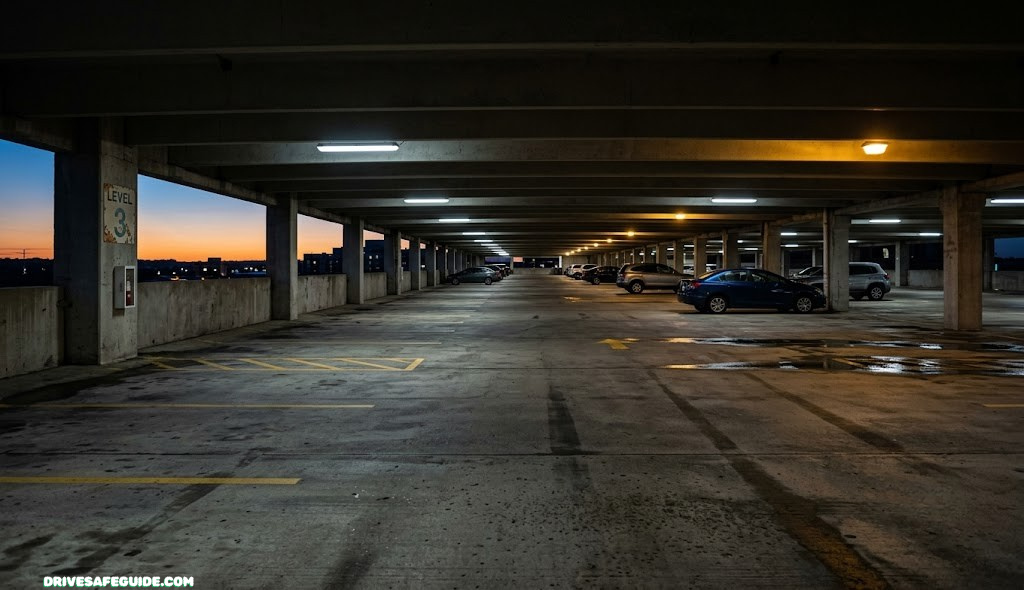
Parking structures combine several risk factors at once: reduced lighting, limited sightlines around pillars and ramps, and a predictable moment where a driver is either fully focused on backing out or fully distracted while walking to or from the car.
Choosing a Spot
Park close to entrances, elevators, and attendant booths when available, and under working lights at night. Reverse into spaces where possible so you can pull straight out later instead of backing into a blind area under pressure.
Returning to Your Car
Walk with purpose, keys ready, scanning rows as you go rather than staring at a phone. If something feels off — a running car with no one visibly getting in, someone sitting in a vehicle near yours for no clear reason — walk back toward a populated entrance rather than continuing to your car.
| Parking Choice | Relative Risk | Notes |
|---|---|---|
| Ground level, near entrance, well-lit | Lowest | Best overall option when available |
| Upper garage levels, open-air | Low-Moderate | Better sightlines than enclosed levels |
| Enclosed lower garage levels | Higher | Poor lighting, limited visibility around columns |
| Stairwells vs. elevators | Stairwells higher | Elevators near cameras are generally preferable at night |
If your vehicle has a factory blind-spot or surround-view camera, use it while backing out slowly rather than relying purely on mirrors; pairing that with aftermarket options covered in our blind-spot mirrors guide for trucks and SUVs improves both collision and situational awareness in tight garage rows.
Valet and Attended Parking
Handing your keys to a valet removes your ability to control who has access to the vehicle for a period of time, but the walk to and from the valet stand carries the same risks as any other lot. Stay in well-lit, populated areas near the stand, and if a valet area feels unusually quiet or poorly staffed at night, consider parking yourself in a visible, well-lit spot instead.
Navigating Multi-Level Structures at Night
If you must use an enclosed lower level after dark, walk in the center of the lane rather than hugging a row of parked cars, which keeps more distance between you and anyone who might be crouched or waiting between vehicles. Avoid narrow gaps between vans or larger vehicles that block sightlines, and if you have the option, choose a level with an attendant booth or visible security camera coverage over one that appears unmonitored.
06 Gas Stations and Drive-Thru Vulnerabilities
Fueling up creates a uniquely risky combination: your car is running, unattended, and unlocked, all at once, often for several minutes. Drive-thru lines create a milder version of the same problem — a stationary vehicle with a driver often reaching for a wallet, food, or a phone.
At the Pump
- Lock the car and take your keys, even for a “quick” fill-up
- Park at a pump you can see from where you’re standing, not around a blind corner
- Keep your wallet and phone on your person, not visible on the seat
- Pay attention to anyone approaching who isn’t a station employee
In the Drive-Thru
Keep doors locked and only lower the window enough to complete payment or receive food. Leave a gap ahead of you so you’re never fully boxed in against a curb, wall, or the car in front.
EV Charging Stations
Electric vehicle charging introduces a new version of the same old vulnerability: a stationary vehicle for an extended period, often at night, sometimes at a poorly trafficked charging bank away from a main building. Choose charging stations near lit entrances or convenience stores rather than isolated standalone chargers when possible, and stay near your vehicle rather than wandering off for an extended period during a fast-charge session, particularly after dark. Our EV range anxiety guide covers planning charging stops that balance convenience with exactly this kind of safety consideration.

A loud keychain alarm draws immediate attention in exposed environments like gas stations, where a few seconds of noise is often enough to make an opportunistic offender back off.
Check Price on Amazon07 If Someone Approaches Your Car
This is the moment every earlier habit in this guide is designed to prevent — but if it happens anyway, your response in the first few seconds matters more than anything else.
Create Distance First
If you notice someone approaching with concerning intent while you’re stopped and it’s safe to do so, drive away. A locked door and a moving vehicle, even at low speed, removes most of the opportunity a carjacker needs.
Use the Horn
Laying on the horn draws attention fast, which is exactly what most carjackers want to avoid. Noise and witnesses are consistently cited as the fastest way to disrupt an attempted carjacking before it escalates.
Don’t Engage in Conversation
Avoid rolling down the window to talk, explain, or negotiate. Every second spent in conversation is a second the offender is closer to the car, and it does not reduce risk — it extends the exposure window.
Field Note
If you’re ever forced to stop suddenly by another vehicle blocking your path (a known “bump and rob” or “block” tactic), resist the instinct to get out and inspect damage. Stay locked in, check mirrors, and if anything feels wrong, reverse away and drive to the nearest police station or well-lit public location before stopping again.
Body Language That De-escalates
If you do end up in direct contact with an offender before you can create distance, keep your movements slow and visible, your hands where they can be seen, and your voice level rather than raised. Sudden movements, shouting, or reaching quickly toward a bag or pocket can be misread as reaching for a weapon and tends to escalate rather than calm a tense situation. The goal in these seconds is to appear cooperative and non-threatening, not passive, which keeps the encounter moving toward its fastest possible resolution.
What Not to Say
Avoid arguing, bargaining, or making statements about the car’s value, insurance status, or how “it’s not worth it.” None of this changes the offender’s calculation and only extends a conversation that’s safer kept as short as possible. A simple, calm “okay, it’s yours” said while stepping back is far more effective than any attempt at persuasion.
08 Comply or Resist? The Decision Framework
If an armed offender does reach your window or door and demands the vehicle, the near-universal guidance from law enforcement is the same: give up the car. A vehicle is replaceable; you are not, and most carjackers want the car, not a confrontation with the driver.
Why Compliance Is Generally Safer
- Removes the immediate reason for violence
- Ends the encounter in seconds rather than minutes
- Vehicles are insured; injuries are not reversible
- Reduces risk to any passengers in the vehicle
Where Judgment Still Matters
- If a child or dependent is still inside, say so immediately and clearly
- If you’re already moving and can safely drive away, that may be preferable to stopping
- Never fight over property once you’re out of the vehicle
- Don’t chase or follow the vehicle afterward
The moment you’re asked to exit, do so calmly, keep your hands visible, and step clearly away from the vehicle. Announce anything the offender needs to know — most critically, a child in a car seat — in a calm, clear voice rather than a raised or panicked one.
Priority One
If your child is in the back seat, say it immediately and plainly: “My baby is in the back seat.” The overwhelming majority of carjackers do not want a child in the vehicle and will allow you to remove them before driving off.
The First 60 Seconds After You Step Away
Once you’re clear of the vehicle, move further away rather than staying close, and get to a phone as quickly as possible, whether that’s your own if you kept it on your person, or by flagging down help from a nearby business or bystander. Do not attempt to note down more than a plate number or direction of travel if it’s safe to observe briefly; your physical safety in the immediate aftermath matters more than the completeness of your report, which can be filled in during the 911 call once you’re safe.
Weighing an Armed vs. Unarmed Threat
The compliance recommendation holds regardless of whether a weapon is visible, but an offender who has shown a weapon has already signaled a higher willingness to use force if resisted, which makes immediate, calm compliance even more clearly the lower-risk path. Do not assume an unarmed demand is automatically safer to resist; many carjackings involve no visible weapon at all and are backed purely by physical intimidation or the presence of multiple offenders.
09 Technology and Aftermarket Tools That Actually Help
No gadget replaces awareness, but several tools meaningfully reduce your exposure or improve outcomes if the worst happens. The goal with all of these is layering: cheap, low-effort additions that each close off one more opportunity.
| Tool | What It Solves | Notes |
|---|---|---|
| Dash cam with parking mode | Documents an incident and license plates automatically | See our guide to 4K dash cams for night driving |
| GPS tracker (hidden, factory or aftermarket) | Helps recover a stolen vehicle quickly | Covered in our GPS tracker buying guide |
| Keyless entry with auto-lock | Reduces the window where doors sit unlocked | Set auto-lock to trigger at the shortest available delay |
| Personal alarm / whistle | Draws attention fast in open, exposed areas | Keep it accessible on the keyring, not buried in a bag |
| Window tint (legal limit) | Reduces visibility of valuables and occupants inside | Check your state’s legal tint percentage first |
Aftermarket kill switches and steering wheel locks primarily deter opportunistic theft of an unattended vehicle rather than an active carjacking, but they still add friction that can matter in edge cases where a vehicle is briefly left running.
Keyless Entry and Relay Attacks
Modern keyless entry fobs constantly emit a low-power signal, and thieves have used signal-relay devices to capture and amplify that signal from inside a home to unlock and start a car parked outside, all without the owner’s fob ever leaving a drawer. This is technically a theft vector rather than a direct carjacking, since the owner isn’t present during the act, but it’s worth addressing here because the same relay-resistant habits reduce your overall vehicle vulnerability. Storing your fob in a signal-blocking pouch or a metal container overnight neutralizes this risk at negligible cost.
OBD Port Security
Programmable key cloning through a vehicle’s OBD-II diagnostic port is another theft vector some offenders use after gaining brief unsupervised access to a car, which is one more reason locking doors immediately, even for a “quick” errand, matters more than most drivers assume. Devices exist that lock or obscure the OBD port itself for owners who want an added layer of protection, particularly on vehicle models known to be frequent targets; our OBD2 scan tool guide covers the legitimate diagnostic side of this same port for comparison.

A dash cam with parking mode keeps recording even with the engine off, capturing license plates and faces if your vehicle is ever tampered with in a lot or garage.
Check Price on Amazon10 Driving With Kids and Family Passengers
Passengers change the calculus slightly, but the core habits stay identical: lock doors immediately, keep windows up, and maintain space in traffic. What changes is your plan if you’re ever forced out of the vehicle with a child aboard.
Before You Drive
Practice, out loud, what you’d say if this ever happened: a short, calm sentence naming that a child is in the vehicle. Rehearsing it once removes the risk of freezing under stress.
Car Seat Considerations
A child in a rear-facing car seat cannot exit on their own, which is exactly why announcing their presence immediately and clearly is the single most important action a parent can take in this scenario. This pairs with broader guidance in our child car seat guide on keeping restraint systems accessible and quick to release in an emergency.
If you’re ever unsure whether a situation at a stoplight or parking lot is escalating, trust that instinct and create distance early rather than waiting for confirmation. With children aboard, the cost of leaving early is nothing; the cost of waiting too long is not one you want to test.
Teaching Teen Drivers
New drivers are often taught extensively about mechanical control of a vehicle but rarely taught anything about personal security while driving it. Before handing over the keys for solo trips, walk a teen driver through the same core habits covered in this guide: locking doors on entry, scanning a lot before approaching the car, and never rolling a window down more than a crack for a stranger. These same conversations pair naturally with broader lessons in our guide for parents teaching teen drivers.
Elderly and Mobility-Limited Drivers
Drivers who move more slowly to and from a vehicle, whether due to age, injury, or mobility aids, face a longer exposure window during the highest-risk phase of any trip: the walk to the car. Parking as close as legally and physically possible to an entrance, using a personal alarm clipped to a cane, walker, or keyring, and asking a companion or store employee for an escort to the vehicle after dark are all reasonable, low-effort adjustments worth building into a routine.
11 After an Incident: Reporting and Recovery
If a carjacking does occur, what you do in the following minutes and days materially affects both your safety and the odds of recovering the vehicle.
Immediate Steps
- Move to a safe location and call 911 immediately, providing the vehicle description, direction of travel, and any details about the offender
- Do not pursue the vehicle yourself under any circumstances
- Write down every detail you can recall — clothing, height, voice, any names used — before memory fades
- Contact your insurer and, if equipped, activate any GPS tracking or remote immobilization features through the manufacturer’s app
In the Days After
Cancel or freeze any garage door openers, toll transponders, or registration documents that were left in the vehicle, since these can enable follow-on crimes like home burglary. Request a copy of the police report for your insurer, and consider a brief consultation with a counselor if the encounter was frightening — this is a normal and common response to a confrontation crime, not an overreaction.
If the incident happened while traveling, our road trip risk-elimination checklist covers how to rebuild a travel plan and document replacement process quickly.
Documentation That Speeds Up Recovery
Keep a photo of your license plate, VIN, and a recent photo of the vehicle itself stored somewhere accessible outside the car, such as a phone’s cloud backup or an email to yourself, so this information is available immediately even if your phone was also taken during the incident. This small step, done once, removes a significant delay from the reporting process when every hour matters for recovery odds.
It’s Normal to Feel Shaken Afterward
A direct confrontation, even one resolved quickly and without physical injury, is a genuinely frightening experience, and feeling shaken, hypervigilant, or anxious about driving again in the days that follow is a common and understandable reaction rather than a sign of overreacting. Talking with a trusted friend, family member, or a professional counselor in the days after an incident is a reasonable and often helpful step, and most people find that this response eases with time and support.
12 Building Long-Term Vigilance Without Paranoia
The habits in this guide work precisely because they’re small and repeatable, not because they require constant high alert. Locking a door on entry, scanning before you approach, and leaving space in traffic take no extra time once they’re automatic — they simply replace autopilot with a slightly more awake version of the same routine.
Make It a Routine, Not a Reaction
Vigilance that only shows up after a scare fades within a few weeks. Building it into your normal entry-and-exit routine — the same way you’d buckle a seatbelt without thinking about it — is what makes it durable long after reading an article like this one.
Pair It With Broader Safety Habits
Carjacking prevention overlaps heavily with general driver preparedness. Reviewing your road trip essentials checklist and keeping emergency escape tools within reach builds the same layered-preparedness mindset that keeps you safe across many different risks, not just this one.
Neighborhood and Workplace Habits
If your neighborhood, apartment complex, or workplace has a shared parking area, small collective changes make a bigger difference than any single driver’s individual habits. Requesting better lighting from a property manager, reporting broken security cameras promptly, and simply parking in visible, well-used areas rather than isolated back corners all lower the ambient risk for everyone using that same lot, not just you.
Reviewing the Habit Every Few Months
Habits drift over time, especially ones built around vigilance rather than a fixed task. Revisit this list every few months, particularly after a change in routine like a new job, a move, or a new vehicle, since new environments reset the assumptions your old habits were built around.
Bottom Line
You cannot eliminate risk entirely, but you can consistently make yourself a slower, noisier, less appealing target than the car two spaces over. That’s the entire strategy, repeated every time you get in and out of your vehicle.
◆ Quick Reference: The Core Habits
If you take nothing else from this guide, these are the handful of habits that do the most work, distilled from everything above. None of them cost money, none of them take more than a few seconds, and together they close off the large majority of opportunities a carjacker looks for.
| Moment | Habit |
|---|---|
| Walking to your car | Keys out early, scan the area before you’re within reach of the vehicle |
| Sitting down | Lock doors the instant you’re seated, before anything else |
| Stopped in traffic | Windows up, doors locked, a car-length gap ahead of you |
| Fueling up | Lock the car and take the keys, even for a quick fill-up |
| Approached unexpectedly | Drive away if safe, or sound the horn to draw attention |
| Forced out of the vehicle | Comply calmly, announce any child in the car, step clearly away |
None of these habits require a change in personality or a constant state of alert. They work precisely because they’re small, boring, and repeatable, which is exactly what makes them durable enough to still be running on autopilot months or years after you first build them.
◉ Frequently Asked Questions
Is it better to fight back or give up my car during a carjacking?
Law enforcement guidance overwhelmingly recommends compliance when an offender demands your vehicle. A car is replaceable and insured; resisting increases the odds of physical harm with very little chance of a better outcome.
What should I do first if I notice someone suspicious approaching my car?
If you’re not yet inside, walk back toward a populated, well-lit area rather than continuing to your vehicle. If you’re already inside with doors locked, drive away calmly if it’s safe to do so.
Are carjackings more common at gas stations than other locations?
Gas stations carry elevated risk because vehicles are frequently left running and unlocked while the driver steps away, which is exactly the opportunity profile most carjackers look for.
Should I keep my windows up even in slow-moving traffic?
Yes. Keeping windows fully up and doors locked in any stopped or slow-moving traffic removes one of the easiest points of entry for an opportunistic offender.
What’s the safest way to park in a parking garage at night?
Choose spots close to entrances, elevators, or attendant booths under working lights, and reverse into the space so you can pull straight out later without a blind-spot maneuver.
Does a dash cam actually help prevent or resolve a carjacking?
A dash cam won’t prevent an in-progress carjacking, but a model with parking mode can capture footage of tampering or theft attempts and provide evidence that helps investigators and insurers afterward.
What should I say if I have a child in the car during a carjacking attempt?
State it clearly and calmly right away — for example, “My child is in the back seat.” Most offenders will allow the child to be removed before taking the vehicle.
Is it safe to get out and check for damage if another car bumps mine unexpectedly?
Not automatically. A sudden, deliberate bump is a known carjacking tactic. If anything feels off, stay locked inside and drive to the nearest police station or well-lit public area before stopping.
Do GPS trackers help recover a carjacked vehicle?
Yes, a hidden GPS tracker — factory-installed or aftermarket — significantly speeds up recovery efforts by giving law enforcement a real-time location to work from.
Should I honk my horn if someone approaches my car aggressively?
Yes. Sounding the horn draws immediate attention from bystanders, which most carjackers actively want to avoid, and can disrupt an attempt before it escalates.
What time of day carries the highest carjacking risk?
Early morning and late evening hours carry elevated risk due to reduced lighting and fewer bystanders, though daytime incidents in parking structures are common enough to warrant the same precautions around the clock.
Can locking doors immediately after entering my car really make a difference?
Yes. Many carjacking incidents occur in the few seconds between a driver entering a vehicle and it auto-locking at speed. Manually locking on entry closes that entire window.
Make These Habits Automatic
Preventing carjacking isn’t about living on high alert — it’s about a handful of two-second habits that remove the opportunity offenders look for: scanning before you approach, locking the instant you’re seated, leaving space in traffic, and staying present instead of buried in a screen. Layer in a dash cam, a hidden tracker, and a plan for what you’d say if you’re ever forced out with family aboard, and you’ve closed off nearly every angle a carjacker relies on.
For the next layer of preparedness, review our complete car safety kit checklist and keep your emergency escape tools within reach every time you drive.
Shop Car Safety Essentials