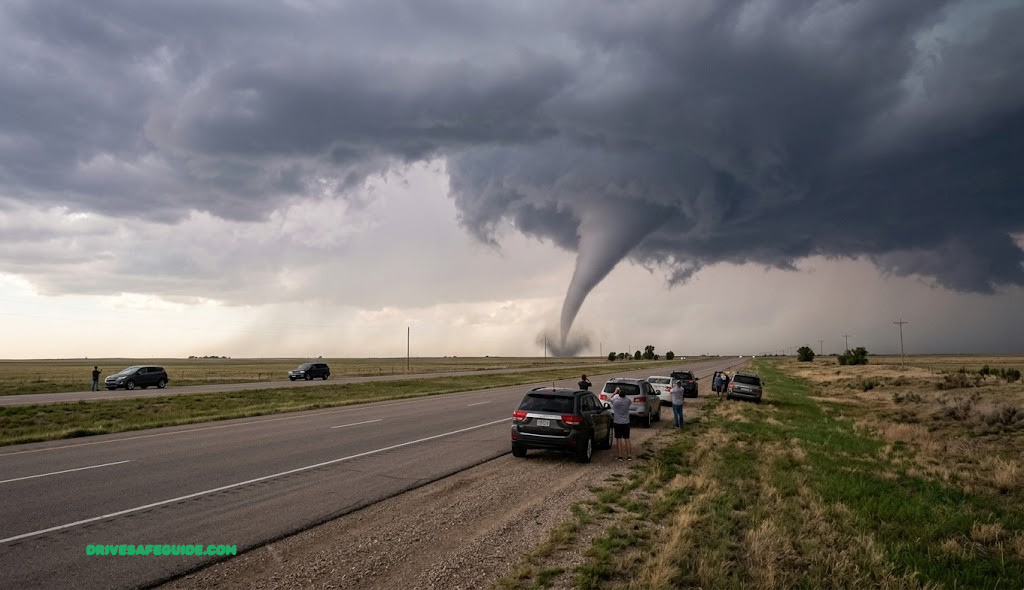
Tornado Vehicle Shelter Options: Staying Safe on the Road
What to do — and what never to do — when a tornado warning catches you behind the wheel, ranked from safest to last resort.
Why Tornado Safety While Driving Is Different
Most tornado safety advice assumes you’re at home with a basement, an interior room, or a purpose-built shelter nearby. On the road, none of that is guaranteed. You’re moving, your visibility is limited by the windshield pillars and mirrors, and the terrain around you — flat farmland, a bridge, a strip mall parking lot — decides your options more than your own preparation does.
Every year, a small but consistent share of tornado fatalities happen in vehicles. That’s not because cars are inherently unsafe in every storm, but because a moving vehicle is one of the worst places to be caught by a violent tornado, and drivers often make the decision that feels fastest rather than the one that’s actually safest. A car has almost no structural mass compared to a building, and it can be rolled, lifted, or thrown by winds well below what a violent tornado can produce.
Part of the problem is psychological, not just physical. A car feels like a controllable space — you can lock the doors, roll up the windows, and start driving away from almost anything. That sense of control is exactly what makes vehicles risky in a tornado, because the instinct to keep driving or to “wait it out” behind the wheel often overrides the harder, less intuitive choice: get out, get low, and put distance and structure between yourself and the storm. Meteorologists who study storm fatalities consistently point to this gap between what feels safe and what actually is safe as one of the biggest contributors to preventable injuries on the road.
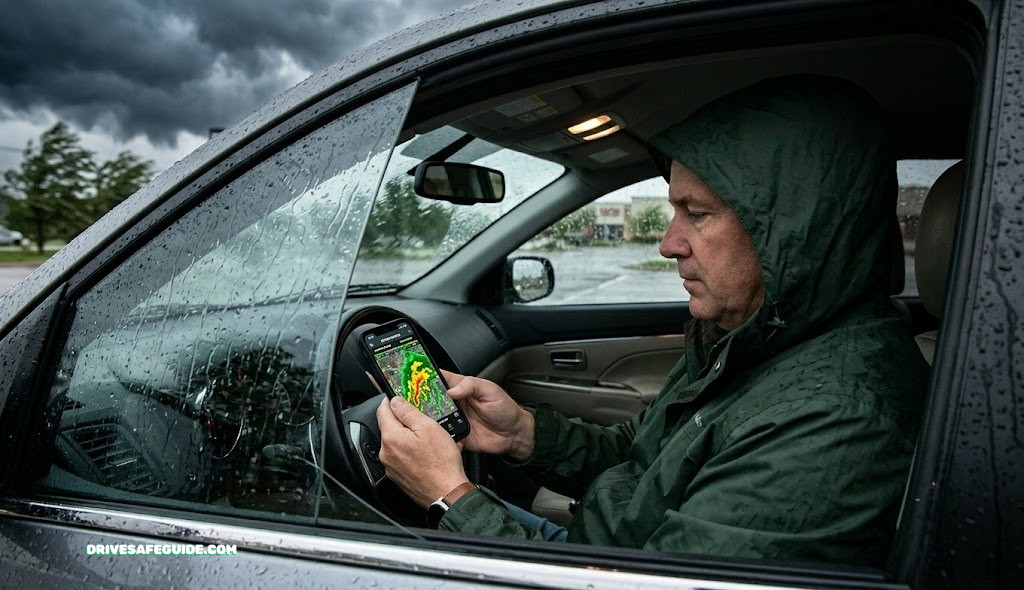
There’s also a timing problem unique to driving. At home, you usually have advance notice from a phone alert, a TV broadcast, or a weather radio, and you can move to a known safe spot inside your own house. On the road, your first warning might be a wireless emergency alert buzzing on your dashboard mount while you’re already in moving traffic, with unfamiliar exits and no idea which nearby buildings are sturdy enough to help. That’s exactly why this guide is structured as a ranked list rather than a single rule — the “right” answer changes constantly based on what’s actually around you at the moment the warning hits.
This guide breaks every shelter option down in the order safety researchers and meteorologists actually recommend, explains why some once-common advice — like sheltering under an overpass — is now considered dangerous, and gives you a simple framework to use in the field when there’s no time to overthink it. If you’re building out a broader emergency plan for the car, it pairs well with a complete car safety kit and a road trip essentials checklist, since the gear you carry directly affects how you ride out severe weather. It’s also worth reading alongside our broader library of defensive driving habits, since the same mindset — scanning ahead, avoiding reactive decisions, and building in a safety margin — applies just as much to severe weather as it does to everyday traffic.
Recognizing a Tornado Before It’s Close
Shelter decisions only work if you make them early. Waiting until a funnel is visible in your rearview mirror removes most of your good options. Watch for these warning signs well before the tornado itself is visible:
- A rotating, wall-shaped cloud base lowering from a dark green or greenish-black storm cell.
- A sudden, eerie calm after intense wind and rain, often followed by a loud, sustained roar described as similar to a freight train.
- Debris lofted in the air even if a visible funnel hasn’t touched down yet — this is a confirmed tornado, not a “maybe.”
- Large hail followed by a wind shift, which frequently precedes tornadic development in supercell thunderstorms.
- A tornado warning — not a watch — pushed to your phone via wireless emergency alerts, NOAA weather radio, or a trusted weather app.
A “watch” means conditions are favorable; a “warning” means one has been spotted or indicated on radar. Treat every warning as active until it expires, and don’t wait for visual confirmation if you’re already under a warning polygon. If you regularly drive through storm-prone regions, cross-reference conditions with the same kind of situational awareness used for other hazardous drives, such as dust storm driving protocol or driving through wildfire smoke — in both cases, the earlier you recognize the hazard, the more shelter options remain open.

The Golden Rule: Get Off the Road First
Before comparing shelter types, understand the one decision that matters more than any of them: stop trying to outrun the tornado on unfamiliar roads, and get off the road entirely.
Tornadoes can move at wildly unpredictable speeds and can change direction with little warning. Attempting to outdrive one on a road grid you don’t know — especially with dead ends, gravel roads, or heavy storm traffic — is one of the riskiest choices available. The exception is a very specific, well-informed maneuver: if the tornado is clearly visible, far away, and moving in a predictable direction across open, uncongested roads, driving at a right angle away from its projected path can work. But this only applies when you have a clear sightline and reliable information, which is rarely the case in heavy rain or at night.
In practice, that means the first move in almost every scenario is the same: pull off the roadway completely, out of traffic lanes, and start evaluating the shelter options below — starting with the strongest one that’s realistically reachable in the time you have.
Option 1: A Sturdy Building (Your Best Option, By Far)
If there is any permanent structure within a short, safe drive or walk — a gas station, a retail store, a restaurant, a public building — it beats every other option on this list. A building doesn’t need to be a purpose-built storm shelter to help; even standard interior construction removes you from flying debris, which is what actually causes most tornado injuries and deaths, far more than wind pressure alone.
What makes a building a good shelter
- An interior room on the lowest floor, away from windows and exterior walls
- A basement or storm cellar, if available
- A small, windowless room like a bathroom, closet, or interior hallway, ideally under a stairwell
- Solid construction — brick, block, or reinforced concrete beats a lightweight metal pole barn or mobile structure
When a building isn’t a good idea
Skip large, open-span buildings like big-box stores, gyms, or auditoriums if you have another option, since wide roof spans are more prone to collapse. Mobile homes and lightweight outbuildings offer very little protection and, statistically, are almost as dangerous as being in a vehicle — don’t treat them as a safe destination.
Why it works
- Removes you from flying debris entirely
- Solid structures absorb wind loads a car body can’t
- Often available faster than people assume — gas stations, convenience stores, and restaurants count
Limitations
- Requires enough lead time to actually reach one
- Rural stretches may have nothing suitable for miles
- Not every building is equally strong — mobile structures don’t count
If you’re planning routes through rural or storm-prone regions, it helps to mentally note sturdy buildings as you pass them, the same way you’d track fuel stops on a pre-road-trip safety check. Knowing where the nearest solid structure is before a warning is issued saves precious minutes.
Option 2: A Ditch or Low-Lying Area
When no sturdy building is reachable in time, getting fully out of the vehicle and into a low-lying area — a ditch, culvert, or depression well away from the car — is the next best option according to current guidance from the National Weather Service. This isn’t intuitive for most drivers, since it means abandoning the perceived safety of the vehicle, but the logic is sound: a tornado’s strongest winds occur above ground level, and getting your body low, flat, and away from a vehicle that could roll onto you meaningfully reduces risk.
How to do this correctly
- Choose a ditch or depression that is not prone to flash flooding — check for standing or fast-moving water first
- Move as far from the car as time allows; a rolling or tumbling vehicle is a serious secondary hazard
- Lie face-down, flat, with your hands covering the back of your head and neck
- Avoid areas directly under trees, power lines, or anything that could fall on you
Why it works
- Gets you below most flying and rolling debris
- Doesn’t depend on finding a structure
- Can be executed almost anywhere with open terrain
Limitations
- Full exposure to hail, rain, and wind
- Flash flood risk in the exact spot you’re trying to use
- Emotionally difficult to choose over staying in the car
Option 3: The Underpass Myth — Why This Is Not a Shelter
This one deserves its own section because it’s still one of the most persistent pieces of bad advice in circulation. Older guidance suggested that a highway underpass could act like a shelter because it looks similar to a small, enclosed space. Current research and real-world storm footage contradict that completely.
An underpass actually concentrates and accelerates wind, similar to how air speeds up moving through a narrowed pipe — a phenomenon sometimes called the “Venturi effect.” Instead of protecting you, the structure can funnel debris and wind directly at anyone sheltering underneath it. It also puts you higher off the ground than a roadside ditch, directly in the path of flying debris, and blocks other drivers from passing, creating a dangerous traffic bottleneck during an active warning.
This kind of outdated advice tends to persist the same way old myths about black ice survival or brake failure reactions do — repeated because it sounds logical, not because it’s been tested against how the hazard actually behaves.
Option 4: Staying in the Vehicle (Last Resort)
Sometimes there’s genuinely no time and no terrain that allows for anything else — heavy traffic, a raised highway with no shoulder, or a tornado that’s already close. In that scenario, staying in the vehicle with specific precautions is safer than standing outside exposed and unprotected, or attempting a risky maneuver in traffic.
If you must stay in the car
- Pull off the roadway completely and park, keeping the engine running only if it’s safe to do so
- Keep your seatbelt fastened the entire time
- Get your head down below window level, either in the seat or footwell
- Cover your head and neck with your arms, a blanket, coat, or cushion if one’s available
- If there’s a slightly lower area immediately beside the road that’s safer than the shoulder itself, and you have a few extra seconds, moving the car there before getting low can help — but don’t spend precious time hunting for the “perfect” spot
This is deliberately listed last. Vehicles offer very little structural protection compared to a building, and they’re vulnerable to rollover and being lifted in strong tornadoes. Treat “stay in the car” as the option you use only when the other three are genuinely unavailable, not as a default plan.

For a deeper look at this exact tool category, see our full emergency car escape tools review, and if submersion or entrapment is a concern in your region, pair it with our notes on vehicle submersion escape.

Shelter Options Compared
Here’s how the four options stack up side by side. Use this as a quick reference, not a strict script — real conditions will always dictate the final call.
| Shelter Option | Protection Level | Best When | Key Risk |
|---|---|---|---|
| Sturdy building | Highest | Any building is reachable within minutes | Large open-span roofs, mobile structures |
| Ditch / low ground | High | No structure nearby but open terrain is | Flash flooding, full exposure to hail |
| Underpass | Low — not recommended | Never recommended as a primary plan | Wind acceleration, blocks other drivers |
| Stay in vehicle | Lowest reasonable option | No time or terrain for anything else | Rollover, being lifted by strong winds |
Notice that the ranking isn’t about convenience — it’s entirely about how much distance and structure sits between your body and the wind. That same logic shows up across other severe-weather driving situations, from driving in high winds to hydroplaning recovery, where the safest choice is rarely the most obvious one in the moment.
Common Myths, Debunked
“Rolling down the windows relieves pressure and protects the car”
This has been thoroughly debunked. Pressure differences between the inside and outside of a vehicle are not what damages structures in a tornado — wind force and debris impact are. Opening windows does nothing but let wind and debris in faster, and wastes time you should spend getting to shelter.
“A parking garage is always safe”
It depends heavily on the structure. Lower levels away from open sides can offer real protection similar to a sturdy building, but upper levels and ramps exposed to wind offer very little benefit over staying outside.
“You can always outrun a tornado in a car”
Tornado paths and speeds are unpredictable, and this strategy fails badly in unfamiliar areas, heavy traffic, or low visibility. It’s only ever appropriate with a clear sightline, known roads, and a tornado that’s moving predictably away from your path.
“Overpasses are designed for this”
They aren’t. As covered above, this is one of the most dangerous myths still in circulation, largely because of a single, widely circulated storm-chaser video from the 1990s that didn’t reflect the actual physics involved.
Building a Car Tornado Emergency Kit
Preparedness doesn’t just mean knowing where to shelter — it means having a few specific items on hand that make sheltering safer and more comfortable, whether that’s in a ditch, a stranger’s gas station, or the car itself.
- A weather radio or reliable alert app that works without a strong data connection
- A sturdy blanket or cushion to cover your head and neck if you’re caught in the vehicle
- A seatbelt cutter and window breaker, stored somewhere reachable, not buried in the trunk
- A basic first aid kit for cuts and impact injuries from debris
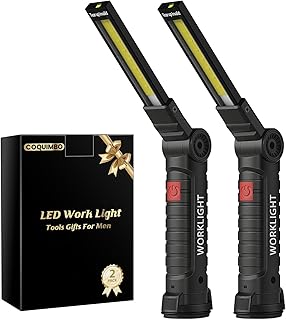
- A bright flashlight, ideally hands-free, for low-visibility conditions after the storm passes
- Sturdy shoes kept in the car, since debris fields are hazardous to walk through in sandals or bare feet
This overlaps heavily with kits built for other roadside emergencies. If you haven’t put one together yet, our guides on the car emergency kit checklist and winter car emergency kit checklist cover the broader list, while durable LED road flares and magnetic-base flashlights are worth adding specifically for low-visibility storm aftermath.
A Quick Decision Framework for the Moment It Happens
When a warning hits and you’re behind the wheel, you won’t have time to reread this article. Use this simplified order of operations instead:
- Get off the road — pull over completely, out of traffic lanes.
- Look for a sturdy building within a minute or two of driving or walking. If one exists, go there.
- If none exists, look for a ditch or low, open area away from standing water, trees, and power lines. Get out, get low, cover your head.
- Never choose an underpass as your shelter, even if it’s the closest structure in sight.
- If neither is reachable in time, stay belted in the car, get your head below window level, and cover your head and neck.
This same “distance and structure first” logic applies broadly to severe weather driving. If tornado season overlaps with other regional hazards where you drive, it’s worth reviewing driving in hail protection and extreme heat engine care as companion topics, since spring and summer storm systems often bring more than just tornado risk.
After the Tornado Passes
The minutes right after a tornado passes carry their own risks — downed power lines, gas leaks, unstable structures, and debris-covered roads. Move carefully and methodically rather than immediately continuing your trip.
- Stay where you are briefly and check for injuries before moving
- Watch for downed power lines and treat all of them as live
- Avoid driving through debris-covered roads until you can see the surface clearly — punctured tires and undercarriage damage are common afterward
- Check for a second wave; some storm systems produce multiple tornadoes in sequence
- Contact family or your emergency contact once it’s safe, since cell networks are often congested immediately after a major storm
Once you’re able to move again, a general vehicle check is worthwhile even if nothing looks obviously wrong — similar to the inspection habits covered in preparing your car for road trip safety checks, since impact debris can cause damage that isn’t visible at a glance.

Frequently Asked Questions
Is it ever safe to stay in the car during a tornado?
Only as a last resort, when no sturdy building or open low-lying ground is reachable in time. If you must stay, stay belted, get your head below window level, and cover your head and neck.
Why is sheltering under a highway overpass dangerous?
Overpasses can accelerate and funnel wind rather than block it, and they put you higher off the ground and directly in the path of debris, while also blocking traffic during an active warning.
Should I try to outrun a tornado in my car?
Generally no. Tornado paths and speeds can change unpredictably. Outrunning one is only reasonable with a clear sightline, familiar roads, and a tornado moving predictably away from your route.
What’s safer, a ditch or staying in the car?
Current guidance from the National Weather Service considers a low-lying ditch away from flooding, trees, and power lines safer than remaining in a vehicle, since it gets you below most flying debris.
Does rolling down the windows help protect the car?
No. This is a widely repeated myth. Wind force and debris impact cause tornado damage, not pressure differences, so opening windows offers no protection and wastes valuable time.
How do I know the difference between a tornado watch and a warning?
A watch means conditions are favorable for tornado development in your area. A warning means a tornado has been spotted or indicated on radar and requires immediate action.
Is a parking garage a good place to shelter?
Lower levels away from open sides can offer meaningful protection similar to a sturdy building. Upper levels and open ramps exposed to wind offer very little benefit.
What items should I keep in my car specifically for tornado season?
A weather radio or reliable alert app, a blanket or cushion, a seatbelt cutter and window breaker, a first aid kit, a flashlight, and sturdy shoes for walking through debris afterward.
Can a mobile home or small outbuilding be used as shelter?
No. Mobile homes and lightweight outbuildings offer very little structural protection and carry risk levels closer to being in a vehicle than in a sturdy building.
What should I do immediately after a tornado passes near my car?
Check for injuries, watch for downed power lines and treat them as live, avoid driving over debris until you can see the road surface clearly, and watch for additional tornadoes from the same storm system.
Make the Decision Before You Need To
Tornado shelter decisions are made in seconds, which means the planning has to happen long before the warning ever sounds. Know the ranking — sturdy building, then low ground, never an underpass, and the vehicle only as a last resort — and keep a basic emergency kit within reach so you’re not scrambling for a flashlight or a seatbelt cutter while a storm bears down.
Shop Car Emergency Kits on Amazon🚗 Recommended for Drivers
Drive Safer Every Day
Explore our top picks for car safety gear — from dashcams to emergency kits — all hand-picked to help you stay safe on the road.
🚗 Shop Car Safety EssentialsAffiliate link — we earn a small commission that keeps DriveSafeGuide running. Thank you!