
Front-Only vs. Dual-Channel Dashcam: The Decision You Need to Make Before You Buy
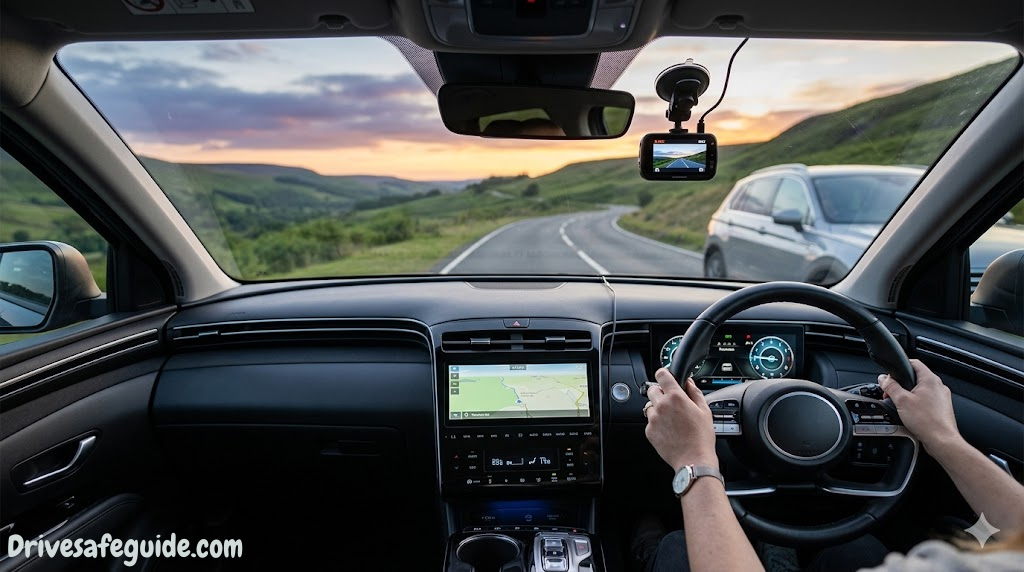
Here’s the situation: you’ve decided a dashcam is worth having. Smart call — video evidence has settled insurance disputes, cleared drivers of false accusations, and captured everything from wildlife encounters to genuine hit-and-run incidents. What you haven’t decided is whether you need footage from just the front of your car, or from both front and rear simultaneously.
This decision matters more than most buyers realize before they pull the trigger. A front-only dashcam records everything your car is driving toward. A dual-channel system adds a second camera — typically mounted at the rear window — capturing what’s happening behind you as well. The difference sounds simple, but the implications span cost, installation complexity, video quality trade-offs, storage demands, and the specific types of incidents each setup can and cannot document.
This guide covers all of it — objectively, with real numbers and real scenarios — so you make the right call for your actual driving situation, not just the one the marketing copy nudged you toward.
Front-only dashcams are simpler, cheaper, and cover the majority of incidents. Dual-channel systems add rear coverage that’s critical for rear-end collisions, parking incidents, and tailgating documentation — at the cost of higher price and more involved installation.
The Core Difference: What Each Setup Actually Records
Before diving into scenarios and specs, let’s establish exactly what each configuration captures — and what it doesn’t.
- Single camera, windshield-mounted
- Records forward field of view only
- Captures collisions you drive into
- Documents road conditions ahead
- Simpler install, one cable to manage
- No rear incident evidence
- Two cameras: front + rear
- Simultaneous 360-ish coverage
- Captures rear-end collisions
- Documents tailgaters and following traffic
- More complex hardwire install
- Complete incident documentation
The diagram above makes the fundamental trade-off visually clear. A front-only setup leaves the entire rear quadrant undocumented. In most everyday driving, that’s acceptable — the majority of fault-establishing incidents happen in front of you. But rear-end collisions are the most common type of multi-vehicle accident in the United States, accounting for roughly 30% of all crashes. A front camera captures none of them from your car’s perspective.
The dual-channel system closes that gap. By adding a rear camera — wired through the headliner or A-pillars and connected to the main unit — you create a continuous recording of everything both ahead of and behind your vehicle simultaneously. The footage is synchronized and timestamped, which is exactly what insurance adjusters and law enforcement need when liability is disputed.
Think of it this way: a front camera protects you when you’re the one who sees the accident happening. A dual-channel system protects you when someone hits you from behind before you even knew something was wrong.
Coverage Compared: Where Each Camera Setup Actually Helps
Coverage isn’t just about which direction a lens is pointing — it’s about which real-world incidents each configuration can and cannot document. Let’s go through the most common incident types:
Head-On and Intersection Collisions
Both front-only and dual systems capture these equally well. Your forward-facing lens records everything ahead — traffic signals, the other vehicle’s behavior before impact, road conditions, and your own speed (if GPS-enabled). This is where dashcams first built their reputation, and a decent front camera handles it well regardless of configuration.
Rear-End Collisions
This is the dual system’s defining advantage. When someone hits you from behind — whether you’re stopped at a red light, decelerating on a highway, or parked — only a rear camera captures the moment of impact and the approaching vehicle’s speed and behavior. A front camera shows nothing useful in this scenario; you might capture your own sudden deceleration on the accelerometer data, but there’s no visual evidence of the impact or the other driver’s fault. If you’ve ever been rear-ended and wished you had video, that’s your answer.
Parking Incidents and Hit-and-Runs
When your car is stationary and something hits it — another door opening into your quarter panel, a shopping cart, a reversing vehicle — the direction of impact is unpredictable. Dual-channel systems with parking mode coverage give you both the front and rear angles. Some advanced dual-channel units add a cabin-facing or side camera option, expanding coverage further. A front-only camera in parking mode can miss incidents that happen entirely behind the vehicle.
Tailgating Documentation
Rear cameras capture the vehicle behind you — its proximity, erratic behavior, and the moments before a road rage incident or forced stop. This footage is directly useful for police reports and insurance documentation in aggressive driving scenarios. Front cameras provide no evidence of tailgating by definition. If you spend significant time on highways where aggressive following behavior is common, a rear camera changes your documentation capability dramatically.
Wild Animal Collisions
A deer, dog, or other animal darting in front of your vehicle is a front-camera event — both systems capture it equally. If an animal strikes the side or rear of the vehicle (rarer but not unheard of), only a dual system with rear coverage documents it. For specific guidance on this scenario, our deer collision safety guide covers defensive strategies alongside documentation.
The pattern is clear: dual-channel systems fill in the coverage gaps that front-only cameras structurally can’t address. For a broader review of how dashcam technology works and what to look for across all configurations, the complete dashcam guide covers the fundamentals in depth — and our dashcam comparison overview is worth reading alongside this article.
Real-World Scenarios: Front-Only vs Dual in Action
Abstract coverage arguments are useful, but real scenarios make the decision concrete. Here’s how each setup performs in situations drivers actually face:
Red Light Runner — Front Records It All
Someone runs a red light and clips the front of your car. Your front camera captured the light cycle, their speed, and the point of impact. This is an open-and-shut case with front-only footage. A dual system adds nothing here — the incident is fully in front of you.
Stopped at Traffic — Rear-Ended
You’re stopped at a light. The driver behind you is looking at their phone and hits you at 40 mph. Your front camera recorded… the traffic light. The rear camera recorded the approaching vehicle, its speed, and the second of impact. Without the rear camera, you have no footage.
Wet Road Spinout — Front Has Evidence
Hydroplaning on a rainy highway leads to a collision with a guardrail. Your front camera shows the road conditions, your speed, and the sequence of events. Both configurations capture this equally — though our rain driving safety guide can help you avoid it entirely.
Parking Lot Hit-and-Run
You return to a dented car in a parking lot. Parking mode was active. The front camera shows the adjacent car — untouched. The rear camera shows the SUV that backed into you, including a clear plate number. A front-only camera would have missed this incident entirely.
Road Rage Tailgating
An aggressive driver follows you for 10 miles at a two-car distance, brake-checking repeatedly. Your rear camera captures their plate, behavior, and proximity continuously. This footage is exactly what police need for a harassment report. Front cameras see nothing of this.
Deer Strike on Rural Highway
A deer jumps out at night and you strike it. Your front camera captures the moment, documenting it as unavoidable for insurance. Both setups handle this identically. Pairing this with our night driving safety checklist reduces risk significantly.
Based on typical driving incident patterns, a front-only camera provides useful documentation in roughly 60–65% of multi-vehicle collision scenarios. A dual-channel system covers an additional 25–30%, pushing overall incident coverage capability to roughly 85–90% of common crash types.
True Cost Analysis: What You’re Actually Paying For
The price difference between front-only and dual-channel dashcams is one of the most cited factors in buying decisions — and also one of the most misunderstood. Let’s break down what the numbers actually mean.
Device Purchase Price
Budget front-only dashcams start around $40–60 and climb to $200–350 for premium units with 4K recording, good low-light sensors, and built-in GPS. Dual-channel systems start around $80–120 for entry-level front+rear setups and reach $350–600+ for flagship dual-4K systems like the BlackVue DR900X-2CH or Viofo A129 Pro Duo. The premium tier gap is significant, but the mid-range overlap is notable: a solid dual system at $130–180 often outperforms a premium front-only unit at a similar price if rear coverage is your primary need.
Installation Cost
Front-only cameras can almost always be self-installed: plug into the 12V outlet or add-a-circuit fuse, attach the magnetic or suction mount, and you’re done in under 20 minutes. A dual-channel system with a rear camera requires routing a cable through the headliner to the back of the vehicle — a job that takes 60–90 minutes for a competent DIY installer, or $80–150 at a professional audio/video shop if you prefer a clean install. Don’t ignore this cost when comparing total price.
| Cost Category | Front-Only | Dual-Channel |
|---|---|---|
| Entry-level device | $40–80 | $80–140 |
| Mid-range device | $100–180 | $150–280 |
| Premium device | $200–350 | $280–600+ |
| DIY installation time | 15–25 min | 60–120 min |
| Pro installation cost | $0–60 | $80–180 |
| Storage card requirement | 32–64GB typical | 64–256GB typical |
| Total first-year cost (mid) | ~$130–200 | ~$240–420 |
Storage Requirements
Two cameras recording simultaneously generates roughly double the footage. A front-only 1080p camera recording continuously needs about 32–64GB to maintain 4–8 hours of loop storage. A dual-channel system at the same resolution needs 64–128GB for equivalent retention. If you upgrade to 4K front + 1080p rear, plan for 128–256GB cards. This isn’t a deal-breaker, but it’s an ongoing cost consideration — quality cards in those sizes run $30–80 and should be replaced every 1–2 years under continuous recording stress.
The Insurance Math
Here’s the calculation many people skip: what’s one rear-end collision worth without footage? If you can’t document a fault determination in a dispute where you were not at fault, your insurer may split liability — meaning you eat a deductible, your rates may increase, and the incident stays on your record. A single avoided fault determination can save $500–1,500 or more. Against a $150–200 one-time camera cost, the math strongly favors having the footage, especially rear footage where you’re vulnerable as a stationary target.
For a broader view of car safety investments that pay off, our car safety accessories guide contextualizes dashcams alongside other high-value tools.

Viofo A129 Pro Duo — Front + Rear 4K
Our top-rated dual-channel system. 4K front, 1080p rear, Sony STARVIS sensor, and a clean install kit.
🛒 Check Price on AmazonInstallation Complexity: The Honest Breakdown
Installation is where the front vs dual decision gets real for many buyers. Not everyone has the patience or tools for a headliner cable run, and that’s perfectly valid — it affects which configuration actually makes sense for your situation.
Front-Only Installation: What It Looks Like
Front-only installation is genuinely beginner-friendly. The hardest part is usually hiding the power cable neatly behind the A-pillar trim. Most vehicles have enough gap to tuck a USB cable behind the rubber door seal without any special tools. The process takes 15–25 minutes for most people.
Dual-Channel Installation: The Additional Steps
The additional complexity for a dual-channel system is the rear camera cable routing. Most vehicles require running a 15–25 foot cable from the front unit, along the headliner across the roof, and down to the rear window mount. This means removing trim clips along the headliner edge — a task that requires a plastic trim tool and some patience, but no drilling or cutting. In most vehicles this is well within the capability of any moderately handy person spending an afternoon on it.
The two specific challenges are the C-pillar run (the rear vertical trim piece) and the rear window’s inner mounting surface, which varies significantly between vehicles — hatchbacks are easier than sedans, wagons easier than SUVs. Our general wired vs. wireless dashcam guide covers the hardwire process in more depth for those wanting to eliminate the cable to the 12V outlet entirely.
Invest in a plastic trim pry tool set ($8–15) before attempting any cable routing behind vehicle trim. Fingernails and screwdrivers damage clip heads and trim finishes. Plastic tools pop clips cleanly and can be reseated without visible damage.
Video Quality Trade-Offs: Resolution, Bitrate, and What Actually Matters
One of the most common questions about dual-channel systems: does adding a rear camera compromise front video quality? The honest answer is nuanced — it depends entirely on the specific unit and how the manufacturer engineered the encoding pipeline.
How Dual-Channel Affects Video Encoding
When both cameras record simultaneously, the system’s processor handles two video streams at once. Lower-end dual-channel units sometimes cope with this by reducing the front camera’s bitrate or resolution relative to what a single-camera unit could deliver at the same price point. This is why a $90 dual-channel camera sometimes delivers worse front footage than a $90 front-only camera — the budget got split.
Mid-range and premium dual-channel units ($150+) generally solve this through more capable processors (Novatek 96660, Ambarella A12A, Sony IMX series) that handle both streams without compromising front quality. The Viofo A129 Pro Duo and BlackVue DR900X-2CH both achieve 4K front recording while simultaneously maintaining 1080p rear — a genuinely impressive feat given the encoding demands.
Resolution Is Only Part of the Story
Dashcam buyers frequently focus on resolution (4K vs 1440p vs 1080p) while undervaluing bitrate — the amount of data per second devoted to encoding the image. A 1080p stream at 20 Mbps produces noticeably sharper license plates in motion than 1080p at 8 Mbps. The difference between a clear plate at 60 mph and a blurry smear isn’t just resolution; it’s how aggressively the encoder compresses the signal.
For a thorough breakdown of resolution and sensor choices, see our dedicated 4K vs 1080p dashcam comparison — the conclusions there apply to both front and dual configurations.
The takeaway: at the same price, front-only cameras typically deliver marginally better forward image quality, while dual-channel systems deliver dramatically better total incident documentation. As you move into the $200+ tier, the quality gap between front-only and dual narrows considerably — premium dual-channel units stop compromising front quality to feed two sensors.
Best Front-Only Dashcams Worth Buying
If you’ve decided a front-only setup fits your needs, these are the dashcams that consistently deliver the best balance of image quality, reliability, and feature set at their respective price points.
Garmin Dash Cam Mini 2 — Best Ultra-Compact
The Garmin Mini 2 is about the size of a car key fob. It shoots 1080p with Garmin’s voice control feature and connects to the Vault cloud storage system. The ultra-compact design means it’s nearly invisible behind a rearview mirror — ideal for drivers who want discreet coverage without a visible bulky unit. It doesn’t have a screen, which takes getting used to, but the Garmin app handles all playback needs capably.
✓ Pros
- Nearly invisible footprint
- Garmin ecosystem reliability
- Voice control convenience
- Excellent app and cloud backup
- Simple plug-and-play setup
✗ Cons
- No screen for live preview
- 1080p only, no 4K option
- Cloud storage requires subscription
- No rear camera option available

Garmin Dash Cam Mini 2
The most discreet front-only dashcam with rock-solid Garmin reliability and a clean app ecosystem.
🛒 Check Price on AmazonGarmin Dash Cam 67W — Best Wide-Angle Front-Only
The Garmin 67W expands to a 180-degree field of view — capturing more of the peripheral scene than any standard lens can. At 1440p, it delivers sharp enough footage for clear license plate reads at 60 mph. The wide lens makes it particularly useful in urban environments where incidents occur from unexpected angles, including pedestrians and cyclists entering from the side. Parking mode and driver alerts are included.
Vantrue E1 Lite — Best Compact Value
The Vantrue E1 Lite punches above its price class with excellent low-light performance and a straightforward interface. It’s a capable choice for buyers who want reliable 1080p footage without complexity or premium pricing. Clean mount design, solid heat tolerance, and dependable continuous recording make it a workhorse for everyday front documentation.

Garmin Dash Cam 67W — 180° Field of View
1440p with a 180-degree lens captures peripheral incidents that narrow FOV cameras miss.
🛒 Check Price on AmazonBest Dual-Channel Dashcams Worth Buying
Dual-channel systems require more from their engineering than front-only units — managing two sensors, two encoding streams, and more complex heat management. These are the systems that do it right.
Viofo A129 Pro Duo — Best Mid-Range Dual
The Viofo A129 Pro Duo consistently earns its position as the go-to dual-channel recommendation for value-conscious buyers who don’t want to compromise. Front camera uses the Sony IMX335 sensor — capable of 4K recording with excellent night performance. The rear camera delivers 1080p. GPS is included, allowing speed and route overlays on footage. The parking mode via a hardwire kit is genuinely robust. Compare it against the Thinkware U1000 in our dedicated Viofo vs Thinkware head-to-head.
✓ Pros
- Sony IMX335 sensor — outstanding low-light
- 4K front, 1080p rear simultaneously
- Built-in GPS for speed overlay
- Reliable parking mode
- Excellent community support and firmware updates
✗ Cons
- No cloud connectivity
- App is functional but not elegant
- Rear cable routing takes time
- CPL filter sold separately
Viofo A129 Pro Duo — 4K Front + 1080p Rear
Sony STARVIS sensor, GPS, robust parking mode, and outstanding overall dual-channel value.
🛒 Check Price on AmazonBlackVue DR900X-2CH — Best Premium Dual
The BlackVue DR900X-2CH represents the premium tier — a dual 4K system with built-in cloud connectivity (over LTE with a SIM or via Wi-Fi), allowing you to access live and recorded footage remotely through the BlackVue Over the Cloud platform. For fleet managers, parents, and high-value vehicle owners who want remote access to footage, this capability is worth the significant price premium. Build quality is exceptional, heat tolerance is among the best tested, and the ecosystem is mature and well-supported.
Vantrue N4 Pro — Best 3-Channel Option
The Vantrue N4 Pro goes a step further than standard dual-channel by adding a cabin-facing camera in addition to front and rear, creating a three-channel setup that’s particularly valuable for rideshare drivers and anyone wanting passenger documentation. The front camera shoots 4K, interior 1080p, and rear 1080p simultaneously. Night vision in the cabin camera uses built-in infrared, which works remarkably well for interior documentation in complete darkness.

Vantrue N4 Pro — Triple Channel Recording
Front, interior (IR), and rear simultaneously. Ideal for rideshare drivers and maximum coverage needs.
🛒 Check Price on AmazonNextbase 622GW — Best for Technology Features
The Nextbase 622GW pairs with a separately purchased rear camera module and brings genuinely differentiated features: Alexa built-in, Emergency SOS automatic crash detection with location transmission, and a Quicklink system for rapid video sharing. The front camera achieves 4K recording with optical image stabilization — uncommon in dashcams and genuinely useful on rough roads. If you value ecosystem features and smart connectivity over raw video metrics, the Nextbase platform is the most thoughtfully developed option in the market.
Who Should Choose What: A Direct Decision Guide
Enough analysis — here’s the direct answer for common driver profiles:
If you’re a new driver looking for the full safety picture, our practical gifts for teen drivers guide pairs dashcam recommendations with other safety essentials worth adding alongside the camera. For parents setting up monitoring tools, combining a dashcam with a GPS tracker covers both location and incident documentation comprehensively.
If you park in lots, experience frequent stop-and-go traffic, or want complete incident coverage, go dual. If you drive mostly open roads with low traffic density and want the simplest possible setup, a quality front-only camera covers the vast majority of your actual risk.
Night Performance: How Front vs Dual Compares After Dark
Nighttime incident documentation is where sensor quality matters most — and where the gap between budget and premium units is most visible. Both front-only and dual-channel cameras must contend with the challenge of capturing license plates and vehicle details in low-ambient light conditions.
The Physics of Night Dashcam Footage
Dashcam sensors need light. At night, the only sources are your headlights, streetlights, and other vehicles’ lights. The sensor’s size, its pixel count relative to its physical size, and its maximum aperture all determine how well it gathers available light. Larger sensor pixels (not more pixels — larger ones) gather more photons per capture, producing cleaner, less noisy footage. Sony’s STARVIS and STARVIS 2 sensor lines dominate the premium dashcam market precisely because they’re engineered for low-light performance.
Our dedicated 4K night driving dashcam guide covers sensor specs in full detail — if night performance is your primary evaluation criterion, it’s worth reading before choosing any dashcam, front-only or dual.
Night Performance of Dual-Channel Systems
Rear cameras in dual-channel systems face a harder night challenge than front cameras. While your front camera is aided by your headlights illuminating the scene ahead, the rear camera relies entirely on following traffic’s headlights and ambient light to capture approaching vehicles. This is partially an advantage — approaching vehicles are typically illuminated by their own headlights, which face the camera. But at distance, in darkness between streetlights, rear camera footage can be surprisingly difficult to read on budget systems.
Premium systems address this with higher-sensitivity rear sensors (Viofo A129 Pro Duo uses a Sony IMX307 for the rear), and some units add IR illumination strips around the rear lens for close-range night capture. If clear nighttime rear footage is critical for your needs, verify the rear sensor spec specifically — don’t assume a well-reviewed front sensor automatically means a capable rear one.
Nighttime driving safety also depends on more than your equipment. Our night driving safety checklist covers headlight maintenance, glare management, and fatigue prevention — all critical companions to documentation capability.
| Night Performance Factor | Front Camera | Rear Camera (Dual) |
|---|---|---|
| Light source availability | Headlights + streetlights | Following traffic headlights |
| License plate legibility at 60 mph | Good on premium units | Variable — sensor dependent |
| Close-range clarity | Excellent | Good to excellent (premium) |
| Parking mode night incidents | Front only | Front + rear |
| Low-light sensor options | Sony STARVIS / IMX series | Sony IMX335/307 on premium |
Advanced Features: Parking Mode, GPS, ADAS, and Cloud
Modern dashcams — especially in the dual-channel tier — ship with a range of features beyond basic video recording. Here’s what each means in practice and whether it changes the front vs dual calculus.
Parking Mode
Parking mode keeps the camera active (in a low-power state) after the ignition is off, triggering full recording when motion or impact is detected. This is one of the most practically valuable dashcam features — it’s the one that captures the parking lot hit-and-run, the door ding, and the overnight vandalism incident. Dual-channel systems cover both front and rear in parking mode, which is significantly more comprehensive than front-only parking coverage for vehicles parked in lots or on streets.
Parking mode requires either a hardwire kit (tapping a fused constant power source) or an external battery pack — the 12V outlet loses power when you turn the ignition off in most vehicles. Factor in the cost of a hardwire kit ($15–25) if you plan to use parking mode regularly.
GPS and Speed Logging
Built-in GPS records your vehicle’s coordinates, speed, and direction alongside the video. In insurance and legal contexts, this data can be decisive — it shows you were traveling at the speed limit when an incident occurred, or documents that you were stationary when struck. GPS is available in both front-only and dual configurations; it’s a function of the specific unit, not the channel count. Both the Garmin 67W and the Viofo A129 Pro Duo include GPS by default.
ADAS (Advanced Driver Assistance)
Many mid-range and premium dashcams include software-based driver assistance features: lane departure warnings, forward collision alerts, and headway monitoring. These are processed from the forward camera feed and are available in both configurations. Quality varies significantly — dashcam ADAS is generally less reliable and accurate than purpose-built ADAS systems in modern vehicles, but as a supplementary alert layer it can be useful, particularly for fatigue-prone drivers. Our defensive driving habits guide covers how technology-assisted awareness complements rather than replaces skilled driving practice.
Cloud Connectivity
Cloud-connected dashcams like the BlackVue DR900X-2CH transmit footage to secure servers accessible via smartphone app, allowing remote access to live and recorded footage without physically retrieving the SD card. This is genuinely transformative for fleet management and for parents monitoring teen drivers — you can pull up last night’s trip from your phone without touching the vehicle. Dual-channel cloud systems capture both angles remotely. The trade-off is subscription cost and the need for cellular connectivity (either via vehicle Wi-Fi hotspot or an embedded SIM).
Parking Mode
Dual cameras in parking mode cover front AND rear — critical for multi-angle parking lot protection.
GPS Logging
Speed + route data overlaid on footage. Available on both configs; check the specific unit spec.
ADAS Alerts
Software lane departure and collision warnings from the forward camera. Present in both configs.
Cloud Access
Remote footage access via app. Dual-channel cloud systems stream both camera angles remotely.
Emergency SOS
Crash detection triggers location transmission. Available on Nextbase series. Front cameras only typically.
App Ecosystem
Quality varies widely. Garmin and Nextbase lead on app polish; BlackVue leads on cloud features.
If you’re building a comprehensive vehicle technology setup alongside your dashcam decision, our essential driver apps guide covers the smartphone layer, and our OBD2 scan tool guide covers the diagnostic layer — both pair naturally with dashcam documentation.
The Head-to-Head Summary
| Feature / Factor | Front-Only | Dual-Channel | Winner |
|---|---|---|---|
| Forward incident coverage | Full | Full | TIE |
| Rear incident coverage | None | Full | DUAL |
| Total incident documentation | ~65% | ~90% | DUAL |
| Entry-level purchase cost | $40–80 | $80–140 | FRONT |
| Installation complexity | Simple (20 min) | Moderate (60–120 min) | FRONT |
| Storage requirement | 32–64 GB | 64–256 GB | FRONT |
| Front video quality (same price) | Slightly better | Comparable at $150+ | FRONT |
| Parking lot protection | Front only | Front + rear | DUAL |
| Tailgating documentation | None | Complete | DUAL |
| Insurance fault documentation | Partial | Comprehensive | DUAL |

Nextbase 622GW + Rear Camera Module
4K with optical stabilization, Emergency SOS, Alexa built-in, and the most polished dashcam ecosystem available.
🛒 Check Price on AmazonFrequently Asked Questions: Front vs Dual Dashcam
On budget dual-channel systems (typically under $100), the processor may reduce front camera bitrate or resolution to handle both streams simultaneously, resulting in slightly lower front image quality compared to a dedicated front-only camera at the same price. At mid-range and premium price points ($150+), capable processors handle both streams without meaningful front quality compromise — and units like the Viofo A129 Pro Duo and BlackVue DR900X achieve full 4K front recording alongside 1080p rear simultaneously. Always check the front camera’s resolution and bitrate spec specifically when evaluating dual systems.
For most urban and suburban drivers, yes — and strongly so. Rear-end collisions are the most common multi-vehicle incident type, and without a rear camera you have no footage when someone hits you from behind while you’re stopped. A single incident where rear footage would have cleared you of fault can save far more than the camera’s cost in insurance deductibles, rate impacts, and legal expenses. The exception is very rural, low-traffic driving where rear-end risk is substantially lower and head-on incident types dominate — in that context, a quality front-only camera may cover your actual risk profile adequately.
Front-only installation takes 15–25 minutes for most drivers with no tools beyond the included mount — primarily routing the power cable behind the A-pillar trim to the 12V outlet. Dual-channel installation adds the rear camera cable routing: running a 15–25 foot cable along the headliner from the front unit to the rear window. This requires removing headliner edge clips using a plastic trim tool, takes 60–90 minutes for a careful DIY install, and produces a completely clean result with no visible cables. It’s within the ability of any patient, moderately handy person. Professional installation at an audio/video shop typically costs $80–150.
It depends entirely on your current dashcam. Some front-only units have a dedicated rear camera input port — Nextbase and Garmin both sell add-on rear camera modules for compatible units. If your front camera has this port, adding a rear module is straightforward. Most front-only cameras, however, have no rear camera expansion capability at all — they’re designed as standalone units. In those cases, adding rear coverage means purchasing a complete dual-channel system. Before buying a new front-only camera, check whether the manufacturer offers a compatible rear module if you think you might want to expand coverage later.
Plan for at least 64GB for a dual-channel 1080p+1080p setup — this provides approximately 4–6 hours of loop recording before older footage is overwritten. For systems with 4K front recording, 128GB is the practical minimum for adequate loop duration. 256GB cards are recommended for drivers who use parking mode extensively, as parking mode footage accumulates overnight. Always use a dashcam-rated endurance card (Samsung Pro Endurance, Sandisk High Endurance, or Lexar equivalent) — standard consumer cards degrade significantly faster under continuous recording and high heat conditions in vehicles.
All dashcams in parking mode draw current from the vehicle’s battery when the ignition is off. Dual-channel systems draw roughly 1.5–2x the current of front-only units in parking mode because both cameras are active. Most dual-channel units in motion-triggered parking mode consume 200–350mA — meaning a standard 60Ah car battery could theoretically power them for 170+ hours, but manufacturers typically recommend limiting parking mode to 24–48 hours to maintain reliable engine starts. Most dashcam hardwire kits include a low-voltage cutoff that disables the camera when battery voltage drops below a safe threshold (typically 11.6–11.8V), preventing complete battery drain.
Rear cameras in dual-channel systems typically offer 130–170 degrees field of view. A wider angle captures more of the adjacent lanes but introduces more fisheye distortion, which can affect license plate legibility at distance. The sweet spot for most rear dashcams is 130–140 degrees — wide enough to capture adjacent lane mergers and rear-corner incidents without the extreme barrel distortion of 170-degree lenses. If clear license plate capture at distance is your priority, look for rear cameras that combine a moderate FOV (130–140°) with a higher-resolution sensor (2MP or better).
In the United States, dashcam footage is generally admissible as evidence in civil court proceedings and insurance claim adjudication. There are no federal laws prohibiting dashcam use, and no states have outlawed dashcam footage for personal use in your own vehicle. However, audio recording laws vary — some states require two-party consent for audio recording, which affects whether the sound portion of your dashcam footage can be legally used. This is typically addressed by disclosing the presence of a recording device (a small sticker in the vehicle) or by disabling audio recording in dashcam settings. For specific legal questions, consult an attorney in your jurisdiction.
A small number of U.S. insurers offer direct premium discounts for dashcam-equipped vehicles, though this practice is more established in the UK than in North America. More broadly, the insurance value of a dashcam comes from clearing disputed claims — preventing undeserved fault assignments and protecting your driving record. A single incident where dashcam footage proves you weren’t at fault can save far more in premium increases, deductibles, and surcharges than any direct discount would provide. Contact your insurer directly to ask whether they offer any dashcam-related discounts, as policies vary considerably between carriers.
These serve completely different functions. A backup camera is a safety tool that activates when you shift into reverse, displaying a wide-angle view of immediately behind your vehicle to assist with reversing and parking. It typically has no recording capability and is not active while driving forward. A rear dashcam in a dual-channel system records continuously (or in motion-triggered parking mode) while the vehicle is in motion and parked — it’s a documentation device facing rearward through the window, capturing following traffic and rear incidents. Some vehicles have both systems simultaneously: the factory backup camera for reversing assistance and an aftermarket dual dashcam for incident documentation. They complement rather than replace each other. See our backup camera guide for details on that separate category.
The Verdict: Front or Dual — Make the Call That Fits Your Driving Life
If there’s a single line answer: most drivers who park in public spaces, commute in traffic, or care about complete incident documentation should go dual-channel. The coverage gap left by a front-only system — rear collisions, tailgating incidents, parking lot hits — is exactly where the most ambiguous and disputed insurance claims originate.
That said, a quality front-only camera genuinely covers the majority of highway and rural driving scenarios. If you’re on a tight budget, a good $80 front-only camera consistently outperforms a poor $80 dual-channel system. Don’t buy dual just to have the checkbox — buy it because your driving situation specifically benefits from rear coverage.
Whatever you choose, pair it with a proper hardwire installation for parking mode capability, a quality high-endurance SD card, and the habit of reviewing footage whenever something notable happens on the road. The camera is only as useful as the evidence it’s positioned to capture — and the awareness to use it.