Understanding License Plate Obstruction Fines and Regulations
A decorative frame, a bike rack, or a $12 tinted cover can turn into a citation, points on your license, or worse. Here’s exactly what the law actually requires — and how to stay clear of it.
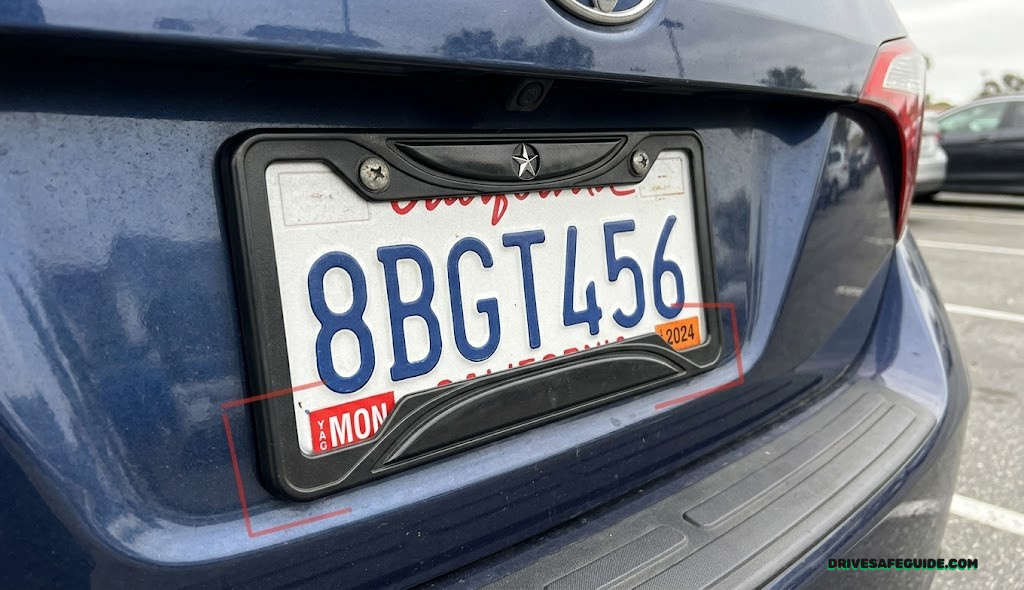
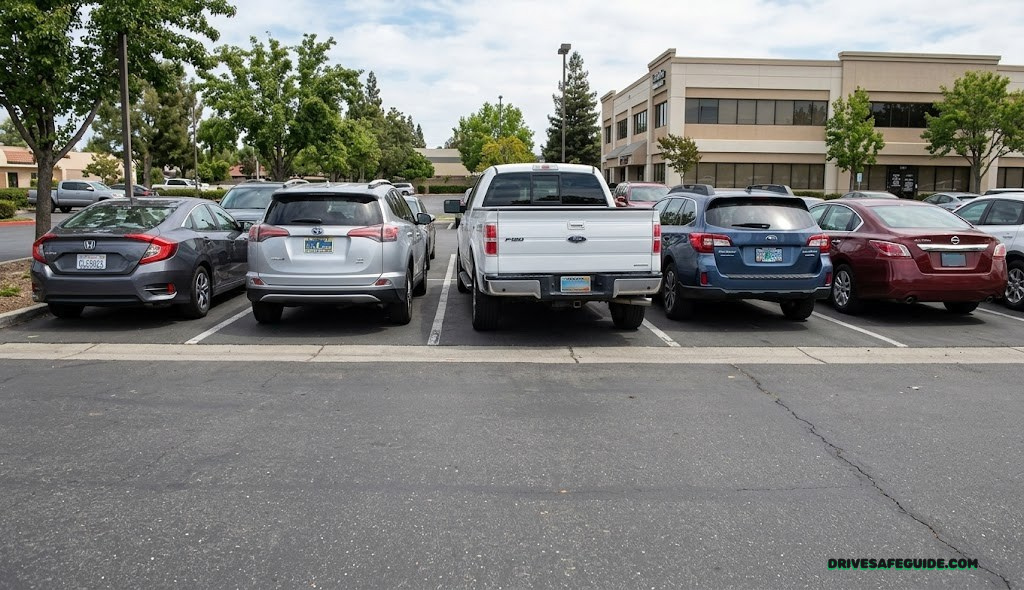
License plate obstruction means anything — a frame, tinted cover, dirt, a bike rack, or a device — that blocks, blurs, or alters the state name, registration numbers, expiration sticker, or any other required marking on a plate. Nearly every state treats it as a citable equipment violation, with fines that typically run from roughly $25 for a first-offense dirty plate up to $500 or more for a frame or cover, and penalties that can climb into misdemeanor territory — fines up to $2,500, license points, and even jail time — for devices designed to defeat cameras or evade tolls.
The safest rule of thumb: if you can’t read every character, the state name, and the sticker from a reasonable distance in daylight, it’s an obstruction — regardless of intent.
Most drivers never read their state’s vehicle code. Why would they? A license plate is one of the most mundane objects on a car — a stamped piece of aluminum bolted to a bumper. But that small plate carries an outsized amount of legal weight, and the rules governing exactly how visible it has to be are stricter, more specific, and more actively enforced than almost anyone realizes until a patrol car’s lights come on.
Over the past couple of years, that enforcement has accelerated. States that once treated an obstructed plate as an afterthought — the kind of thing an officer might mention only while writing you up for something else — have started passing standalone laws with real teeth: misdemeanor charges, thousand-dollar-plus fines, and registration suspensions for repeat offenders. The driver behind this shift isn’t really about frames and bumper stickers. It’s about toll evasion, red-light and speed camera enforcement, and a rising concern about vehicles that can’t be identified when something goes wrong.
This guide walks through what obstruction actually means under the law, where ordinary decoration crosses into a citable offense, what a violation typically costs beyond the ticket itself, and — most usefully — how to check your own plate in about thirty seconds and fix a problem before an officer ever gets the chance to write you up.
It’s also worth setting expectations up front: there is no single federal license plate law. Plate design, mounting requirements, and obstruction rules are set state by state, which means the exact same accessory can be perfectly legal in the state where you bought it and a citable violation the moment you drive it across a state line. That patchwork is one of the main reasons this topic generates so much confusion — and so much conflicting advice online.
What Legally Counts as “License Plate Obstruction”
Every state requires a vehicle’s license plate to remain visible, legible, and unaltered while the car is on the road. The exact statutory language varies, but the underlying test is consistent across almost all fifty states: can a person standing a reasonable distance away, in ordinary daylight, read every number, letter, the issuing state’s name, and the registration or expiration sticker without difficulty? If the answer is no, the plate is considered obstructed — and it doesn’t matter whether you intended to hide anything.
That definition sweeps in a surprisingly wide range of everyday situations. It covers obvious cases like a tinted plastic cover or a novelty frame that swallows the state name. But it also covers things most drivers would never think of as a “violation” at all:
- Dirt, mud, road salt, or snow buildup that blurs the characters, even if it happened on the drive itself.
- A bent, faded, or peeling plate where the reflective coating has degraded enough that the numbers aren’t legible at night.
- A bike rack, cargo carrier, spare tire, or trailer hitch that blocks part of the plate from certain angles.
- A frame whose bottom or top bar overlaps the state name, county name, or a registration decal.
- A cover, spray, or film marketed specifically to defeat cameras — which most newer laws treat as a far more serious offense than an accidental cover-up.
The common thread is legibility, not intent. A parent who never noticed a bike rack was riding an inch too high, and a driver who deliberately installed a smoked cover to dodge a toll camera, can both be cited under the same basic statute — though, as later sections cover, the penalties attached to each scenario are no longer treated the same way. If you’ve ever wondered whether other small, easy-to-miss items in your car — like an object hanging from your rearview mirror — can trigger a similar “obstruction” ticket, the logic is nearly identical: anything that blocks a required line of sight or a required piece of visible information is fair game for a citation, regardless of how small or decorative it looks to you.
Why This Law Exists: Tolls, Cameras, and Public Safety
It’s worth understanding why states care so much about a piece of stamped metal, because the reasoning explains why enforcement has gotten noticeably tougher rather than more relaxed. Three forces are driving it.
1. Toll and camera revenue
Modern toll roads, congestion pricing zones, and red-light or speed cameras depend entirely on being able to photograph a plate and match it to a registered owner. A single obscured plate isn’t a rounding error — multiplied across a metro area, uncollected tolls and unenforceable citations add up to real money. Multiple state transportation agencies have pointed to obstruction and “ghost plate” devices as a direct and growing source of lost toll revenue, which is a large part of why several states passed or strengthened obstruction laws recently rather than leaving decades-old statutes untouched.
2. Automated license plate recognition (ALPR)
Police departments increasingly rely on automated license plate readers — camera systems mounted on patrol cars, traffic signals, and fixed poles — that scan every plate that passes and check it against databases of stolen vehicles, active warrants, and vehicles connected to ongoing investigations. These systems process large volumes of plates continuously, and even a partially blocked character can cause a false negative or false match. An obstructed plate doesn’t just annoy the officer who pulls you over; it can quietly defeat an entire detection network.
3. Criminal accountability
Law enforcement officials have repeatedly flagged plate concealment as a tool used by people fleeing the scene of a crime, evading arrest warrants, or avoiding identification after a hit-and-run. When a plate can’t be read, officers lose the single fastest way to identify a vehicle and its registered owner — which is why several recent state laws frame obstruction devices not as a parking-ticket-level nuisance, but as a public-safety issue worth misdemeanor charges and jail exposure.
None of this means every obstruction case involves a criminal mastermind dodging tolls. The overwhelming majority are ordinary drivers with a frame that’s a little too wide or a plate that hasn’t been washed in a month. But because the law can’t easily distinguish “accidental” from “deliberate” at the moment of citation, it’s written broadly — and enforced that way too.
It also helps to understand why this has changed so quickly. A decade ago, most plate-visibility statutes were short, generic, and rarely updated — a single sentence requiring plates to be “clean and legible” was often the entire law. As toll roads, congestion pricing, and camera-based enforcement expanded into more cities, lawmakers discovered that the old, vague language wasn’t specific enough to keep pace with purpose-built evasion products showing up online. The newer wave of legislation you’ll see referenced throughout this guide — in New York, Florida, Kansas, Tennessee, and California — is largely a direct response to that gap, which is why so many of these laws share a publication date within the last couple of years rather than being decades-old holdovers.
License Plate Frames: Where Decoration Crosses Into a Violation
Plate frames are the single most common source of obstruction tickets, mostly because they’re so ordinary. Dealerships bolt on branded frames before a car ever leaves the lot. Drivers add them to show school pride, a favorite sports team, or a hobby. Almost nobody re-checks the fit after installation — and that’s exactly where the problem starts.
The near-universal rule, regardless of state, is that a frame cannot cover or crop any part of the plate’s required information: the registration numbers and letters, the state name, and any registration or inspection sticker. Several states go further and specifically protect a state motto or slogan printed at the bottom of the plate — which sounds trivial until you learn that courts in more than one state have upheld traffic stops specifically because a frame covered a state motto, even though the registration numbers themselves were perfectly legible. In other words, “I could still read the important part” is not always a legal defense.
Common frame mistakes that trigger citations
- A wide-bottom dealership frame that clips the state name or a county sticker.
- A “thick” decorative frame designed for looks rather than fit, mounted slightly too high or low.
- Frames with mirrored, chrome, or dark tinted borders that create glare and reduce legibility at night, even if they don’t physically overlap any characters.
- Frames with built-in LED accent lighting, which a number of states prohibit outright regardless of placement.
Frames that are generally safe
- Slimline or “no-cover” style frames that only border the outer edge
- Frames that leave the full plate face, sticker, and state name unobstructed
- Non-reflective, matte-finish frames
Frames that commonly draw tickets
- Wide-bottom advertising or dealer frames
- Frames with lights, mirrored trim, or heavy tint
- Any frame installed without rechecking the fit against the actual plate
If you’re also curious where the line sits on other cosmetic modifications — say, aftermarket exhaust work that alters more than just how a car sounds — the same “does it change something the state requires to remain intact” logic applies; you can see how that plays out in our guide to modified exhaust legality.
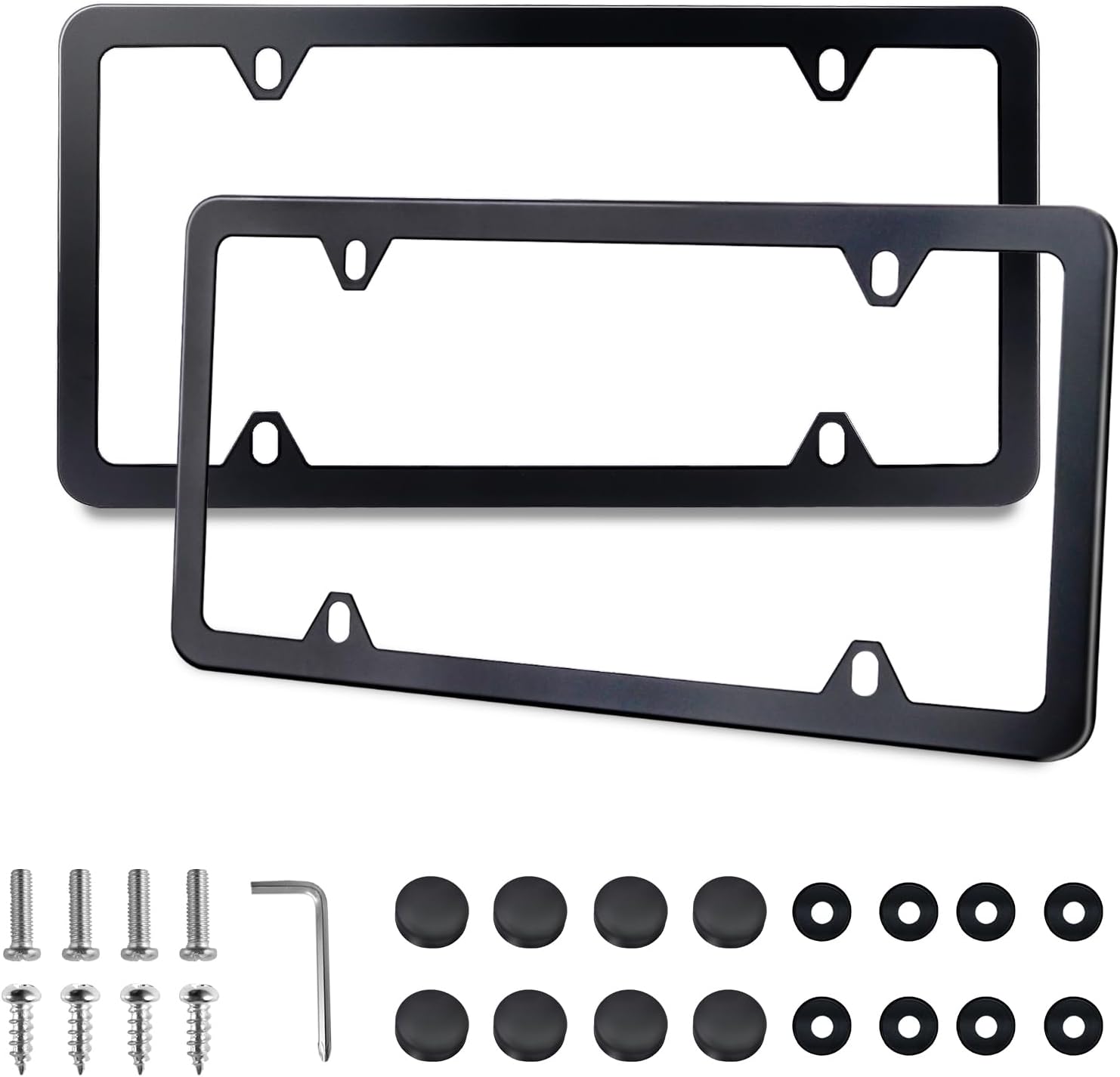
Slimline “No-Cover” License Plate Frame (2-Pack)
Borders the edge only — never overlaps the state name, numbers, or stickers. Rust-resistant stainless construction.
Check Price on AmazonAs an Amazon Associate, DriveSafeGuide earns from qualifying purchases.
The Plate Visibility Zone Map
Every state’s rule boils down to the same handful of protected zones on the plate face. Use this as a mental checklist before you buy any frame, cover, or hitch-mounted accessory.
Notice that the sticker corner and the bottom slogan band are the two zones drivers forget about most often — frames are usually sized around the numbers, not the small print. If your frame’s inner edge crosses that dashed line anywhere on the plate, treat it as a candidate for replacement.
Tinted, Smoked, and Reflective Plate Covers: Legal in Any State?
Plate covers are treated more harshly than frames almost everywhere, and for good reason: a cover sits directly over the entire plate face rather than just bordering the edge, which makes it far more effective at defeating both human eyes and camera sensors. Clear, uncolored, unscratched covers are permitted in a number of states specifically to protect the plate from road grime and fading. The moment a cover adds tint, a smoked finish, a reflective coating, or an angle-dependent distortion effect, it crosses into illegal territory almost everywhere.
New York is a useful example of how quickly this area of law has moved. The state recently banned the retail sale of plate covers outright and raised fines for anyone convicted of intentionally obscuring a plate with a cover or similar material, with penalties reaching as high as $500 and repeat offenders — three or more convictions within five years — facing a 90-day registration suspension. Florida took an even sharper turn, reclassifying any plate obstruction, including a cover that hides so much as the state name or a sticker, as a second-degree misdemeanor carrying up to 60 days in jail alongside a $500 fine.
| Accessory Type | Typical Legal Status | Primary Risk Factor |
|---|---|---|
| Clear, uncolored, undistorted cover | Permitted in many states | Scratches or fogging over time can still trigger a citation |
| Tinted or “smoked” cover | Illegal in most states | Reduces legibility at night and to cameras |
| Reflective / angle-distortion cover | Illegal virtually everywhere | Specifically designed to defeat ALPR cameras |
| Bubble or convex cover | Illegal in most states | Distorts characters from common camera angles |
Beyond plate covers, drivers researching what modifications quietly cross a legal line often ask the same question about their windshield — how dark is too dark, and where does personal preference end and a citation begin. If that’s relevant to your vehicle, our breakdown of window tint darkness limits covers the equivalent rules for glass rather than plates.

Clear Anti-Fog License Plate Cover
100% clear, zero tint, distortion-free — designed to protect against road grime without affecting legibility.
Check Price on AmazonAs an Amazon Associate, DriveSafeGuide earns from qualifying purchases.
Plate Flippers and Concealment Devices: The Escalating Crackdown
A license plate flipper is a small motorized or manual mechanism, usually mounted behind the plate, that rotates or swaps the visible plate on command — historically marketed for car-show enthusiasts who wanted to switch between a show plate and a street-legal plate. In practice, flippers have become one of the most aggressively targeted obstruction devices in the country, because they let a driver hide their real plate at the push of a button while passing a toll gate, a red-light camera, or a police checkpoint.
States have responded with some of the toughest penalties anywhere in vehicle law. Tennessee’s recent ban on purchasing, selling, possessing, or manufacturing plate flippers carries up to six months in jail and a $500 fine. Kansas passed a broader plate-visibility law that treats an obscuring frame or device as a violation carrying fines up to $2,500 and up to six months in jail. California’s newest legislation goes further still, prohibiting the manufacture and sale — not just the use — of plate covers, tints, and flip mechanisms specifically marketed to defeat cameras or readers, treating the sale of such a device as its own separate offense.
Devices now facing tightened restrictions
- Motorized or manual flippers that rotate the plate out of view
- Reflective sprays or coatings marketed as “photo blocker” or “flash shield” products
- Infrared-blocking films designed to appear normal to the eye but obscure a plate to camera sensors
- Electromagnetic or remote-actuated covers that swing a physical shield over the plate
It’s worth being clear about the distinction that keeps coming up throughout this guide: a frame that’s an inch too wide is an equipment violation. A device engineered specifically to defeat detection is treated, in a growing number of states, as a deliberate evasion tool — and the fines, jail exposure, and collateral consequences reflect that difference. If you’re weighing any aftermarket accessory that claims to “protect your privacy” from cameras, treat that marketing language itself as a warning sign rather than a selling point.
Unintentional Obstruction: Bike Racks, Hitches, Trailers, Snow & Grime
Not every citation involves a frame, a cover, or a device — and this is the category that catches the most genuinely surprised drivers. Bike racks, cargo carriers, spare-tire mounts, and towed trailers routinely block part or all of a rear plate, and unlike a frame you installed once and forgot about, this kind of obstruction changes every time you load the car differently.
Some states build a narrow, specific exception into their vehicle code for exactly this situation. Washington State, for example, allows a single rear plate to be temporarily obstructed by a properly attached trailer, bike rack, or similar accessory — but only if the vehicle also displays a second plate that remains fully visible, and only if the accessory is installed according to the manufacturer’s specifications. Most states don’t offer that exception at all, which means a bike rack blocking your only rear plate is a citable violation the moment an officer notices it, regardless of how practical the rack is.
Everyday sources of accidental obstruction
- Bike, kayak, or cargo racks mounted on a rear hitch or trunk
- Trailers, boats, or campers towed without a supplemental plate light or relocated plate
- Winter driving: packed snow, ice, or road salt residue building up over a horizontal plate
- Mud and dust accumulation on trucks and SUVs driven on unpaved roads
- A spare tire or tire carrier mounted directly over a rear plate on off-road-style vehicles
The practical fix in most of these cases is a hitch-mounted plate relocation bracket, which moves the plate to a lower, unobstructed position specifically designed to clear rack and trailer hardware. It’s a five-minute install and, unlike constantly wiping snow off a plate, it solves the problem permanently. If winter driving conditions are a bigger concern for you generally, it’s worth pairing this fix with a broader look at winter driving safety fundamentals, since plate visibility tends to be the least of your problems on an icy road.

Hitch-Mount License Plate Relocation Bracket
Moves your rear plate below rack and trailer hardware so it stays fully visible — with an included LED light kit.
Check Price on AmazonAs an Amazon Associate, DriveSafeGuide earns from qualifying purchases.
What a Ticket Actually Costs: Fines, Fees, and Court Assessments
The fine printed on your citation is rarely the whole bill. Most jurisdictions layer court processing fees, a state surcharge, and sometimes a “victim assistance” or administrative fee on top of the base fine, which is why a $65 obstruction ticket can land closer to $150–$200 once you actually pay it. And as the earlier sections showed, the base fine itself has been climbing in a lot of states over the past couple of years.
Because the underlying statutes vary so widely, treat the ranges below as a representative snapshot rather than an exhaustive or current-for-your-address answer — the only way to know the exact number for your situation is your citation and your local court or DMV.
Illustrative ranges compiled from state statutes and enforcement reporting referenced throughout this guide. Figures change as legislatures act — always confirm against your current state code.
Two patterns hold up across almost every state. First, a single accidental issue — a muddy plate, a rack that’s blocking things today — is usually treated far more leniently than a frame or cover that’s clearly been installed on purpose, and many officers will simply give a fix-it notice for a first, obviously unintentional offense. Second, the penalty curve gets steep fast once a device or repeated pattern is involved; this is not a category where being a repeat offender saves you money.
If you’d rather avoid the guesswork around fines altogether, it’s worth building the habit of a quick pre-drive visual check — the same five-minute discipline covered in our guide to preparing your car for a road trip, just applied every time you load a rack or trailer rather than only before long drives.
If you want the exact number rather than a range, your state DMV’s vehicle code or your court’s traffic-fine schedule is the only fully reliable source — search your state name plus “license plate obstruction statute” or check the citation itself, which typically lists the specific code section and base fine. Traffic law firms in your state often publish plain-language breakdowns of that same code section, which can be a faster read than the statute text itself, though they’re not a substitute for the actual law.
Beyond the Fine: Points, Insurance Impact, and Registration Suspension
The fine is often the smallest part of the real cost. Many states attach license points to an obstruction conviction — New York, for example, adds two points to a driver’s record for a plate obstruction violation, which sits on your license alongside points from other moving violations and can push you toward a Driver Responsibility Assessment fee or, if points accumulate, a suspension.
Insurance is where this quietly gets expensive. Most insurers review a driver’s motor vehicle record at renewal, and a moving or equipment violation conviction — even one that feels as minor as a frame ticket — can nudge your premium upward for the next several years, depending on your insurer’s scoring model and your state’s regulations. It’s rarely a dramatic spike on its own, but it stacks with any other violations on your record, and it resets the clock on how long you have to stay clean before your rates settle back down.
Repeat offenses carry the sharpest escalation. Kansas’s law imposes up to six months in jail for violations on top of the $2,500 maximum fine. New York suspends the vehicle registration of a driver with three or more plate-covering convictions within five years for 90 days — a real disruption if that vehicle is how you get to work. Florida’s reclassification of plate obstruction as a second-degree misdemeanor means a conviction can appear on a criminal record, not just a driving record, which is a meaningfully different consequence than a routine traffic ticket.
Since an obstructed-plate stop is still, at its core, a traffic stop, it’s worth knowing your rights during any roadside encounter — our guide on checkpoint and stop refusal rights covers the broader context of what officers can and can’t require of you once you’ve been pulled over, regardless of the reason for the stop. And if a violation or accident down the line ever leaves you dealing with an uninsured driver, it’s worth understanding your own coverage ahead of time — see our breakdown of uninsured motorist coverage for what that protection actually includes.
How Officers and Automated Systems Detect an Obstructed Plate
Plate obstruction gets caught two very different ways, and understanding both explains why “I didn’t think anyone would notice” isn’t a reliable strategy.
Manual observation
Patrol officers are trained to visually scan plates during any traffic stop, at red lights, and while driving parallel to other traffic — it’s one of the fastest ways to check a vehicle’s registration status without pulling anyone over. A frame or cover that blocks even part of a plate is often the visible trigger for a stop that then leads to other findings, which is part of why courts have generally upheld obstruction as valid legal grounds to initiate a traffic stop in the first place.
Automated License Plate Recognition (ALPR)
A growing share of detection now happens without an officer present at all. ALPR systems — camera arrays mounted on patrol vehicles, traffic signals, bridges, and fixed poles — continuously photograph passing plates, run the characters through recognition software, and check them against databases of stolen vehicles, active warrants, and vehicles connected to open investigations. According to federal research on the technology, a large majority of larger law enforcement agencies now use some form of ALPR, and the system’s usefulness depends entirely on being able to read a clean, unobstructed plate — which is exactly why states with heavy toll and camera infrastructure have been the fastest to toughen their obstruction laws.
An obstructed plate doesn’t just risk a specific citation for the obstruction itself; it can also break the chain that would otherwise let a toll authority or investigating officer identify the vehicle at all, which is part of why penalties for deliberate concealment devices have escalated so much faster than penalties for an ordinary dirty plate. If you’re generally interested in how modern enforcement and driver-assist technology intersects with the law, our guide to radar detector legality by state covers a closely related area where the legal patchwork is just as uneven.

Dual-Channel Dash Cam with Parking Mode
If you’re ever cited for an obstruction you believe was minor or accidental, timestamped footage of your plate’s actual condition is the clearest evidence you can offer.
Check Price on AmazonAs an Amazon Associate, DriveSafeGuide earns from qualifying purchases. See our full 4K dash cam buying guide for a deeper comparison.
State-by-State Snapshot: How Widely the Rules Really Vary
License plate law is one of the clearest examples of how differently individual states treat what looks, on paper, like a single uniform rule. Below is a representative sample — not a comprehensive fifty-state table, since these statutes are actively being amended — showing just how differently the same basic violation is punished depending on where you’re registered.
| State (example) | Recent Approach | Notable Penalty Range |
|---|---|---|
| New York | Banned retail sale of plate covers; raised fines for intentional obstruction | $100–$500, plus 2 license points; 90-day registration suspension after 3 convictions in 5 years |
| Florida | Reclassified any obstruction as a second-degree misdemeanor | Up to 60 days jail + $500 fine |
| Kansas | New statewide law defining exactly which plate elements must stay visible | Up to $2,500 fine + up to 6 months jail |
| Tennessee | Banned purchase, sale, possession, and manufacture of plate flippers | Up to 6 months jail + $500 fine |
| California | New law bans manufacture/sale of camera- and toll-defeating covers, tints, and flip devices | Citation plus potential criminal exposure for sellers |
| Washington | Allows narrow, specific exception for trailer/rack obstruction if a second plate stays visible | Up to $500 for related plate-transfer or display violations |
This kind of patchwork isn’t unique to plate law — it shows up across almost every category of state-level driving rule. If you’re curious how far the variation goes, compare how differently states handle right-on-red rules, school bus stopping requirements, or open container laws. The practical takeaway is the same in every case: whatever you assume based on where you learned to drive may simply not apply once you cross a state line, and plate accessories bought online rarely come with a state-specific legality guarantee.
Front-Plate vs. Rear-Plate States and Why It Matters for Obstruction Risk
A detail that changes your actual obstruction exposure more than most drivers realize: whether your state requires one plate or two. Roughly a little over half of U.S. states require both a front and a rear plate; the rest require only a rear plate. That single distinction changes how forgiving the law can afford to be about temporary or accidental obstruction.
In a two-plate state, a bike rack or trailer hitch blocking the rear plate is a less severe practical problem, because the front plate remains fully visible and identifiable — which is exactly the logic behind Washington’s narrow exception described earlier. In a one-plate state, that same rack blocks the only legally required identifier on the vehicle, and most one-plate states don’t extend any similar exception, because doing so would leave the car completely unidentifiable from behind.
Why this matters when you buy accessories
- Bike and cargo racks: In a one-plate rear-only state, budget for a plate relocation bracket as a standard part of the install, not an afterthought.
- Trailer hitches and tow packages: Confirm your hitch-mounted accessory doesn’t sit directly in front of your only plate before you tow anything long-distance.
- Aftermarket front bumpers or brush guards: In two-plate states, these frequently create front-plate mounting problems that owners don’t notice until a citation.
- Moving between states: An accessory that was perfectly legal in your old one-plate state can become a violation the moment you register in a two-plate state, or vice versa.
If your travel plans regularly take you across state lines — a cross-country trip, a long highway commute, or frequent moves — it’s worth pairing this check with a broader look at cross-country driving preparation, since plate compliance is exactly the kind of small detail that’s easy to overlook until you’re already three states away from home.
How to Fix an Obstructed Plate and Avoid a Citation
The good news buried in all of the statutes above: fixing an obstruction problem is almost always fast, cheap, and permanent once you know what to check. Run through this sequence about once a season, or any time you add a rack, hitch accessory, or new frame.
- Stand back and read it cold. From about 15–20 feet in daylight, read the state name, every character, and the sticker without walking closer. If you hesitate on any of them, that’s your answer.
- Check the frame’s inner edge against every zone shown in the Plate Visibility Zone Map above — not just the numbers, but the state name, bottom slogan, and sticker corner specifically.
- Clean the plate itself. A simple wash removes the single most common accidental obstruction — road grime — and takes under a minute.
- Reassess after installing any rack, hitch item, or trailer. Load the accessory exactly as you’ll drive with it, then walk behind the vehicle and check the plate again.
- Replace a degraded plate. If the reflective coating has faded to the point the plate is hard to read at night even when clean, most DMVs allow a low-cost replacement plate request.
- Skip anything marketed as a “privacy” or “camera-blocking” cover or spray, regardless of how it’s advertised — as covered earlier, these are the fastest way to convert a minor equipment issue into a misdemeanor-level problem.
If you do get pulled over for an obstruction you believe is unintentional or already fixed, most officers will document the current condition of the plate; timestamped photos or dash cam footage showing the plate clean and legible before the stop can support a request to have the citation dismissed or reduced, particularly for a first offense. Beyond plates specifically, it’s worth building this kind of quick visual walk-around into your regular routine — the same habit covered in our car safety kit and pre-drive check guide — since a thirty-second habit is consistently cheaper than a citation.

LED License Plate Light Bulb Kit
A burned-out plate light is its own separate citation in most states. This plug-and-play LED kit fixes the most commonly overlooked companion violation in under five minutes.
Check Price on AmazonAs an Amazon Associate, DriveSafeGuide earns from qualifying purchases.
Frequently Asked Questions
Is a license plate frame illegal by itself?
No. A frame is only a violation if some part of it covers or crops the state name, the registration numbers, a sticker, or another required marking. A slim, well-fitted frame that borders the outer edge only is legal in virtually every state.
Can I get pulled over just for a license plate frame?
Yes. Courts have generally held that an officer’s reasonable belief a frame violates the display statute is sufficient legal grounds for a traffic stop, even if nothing else about the vehicle drew attention.
Are tinted license plate covers legal anywhere?
Tinted, smoked, or reflective covers are illegal in the large majority of states, and several states have banned their retail sale entirely. Clear, uncolored, distortion-free covers are the only category commonly permitted.
What’s the difference between an obstruction ticket and a misdemeanor charge?
A standard obstruction ticket is usually a civil or infraction-level fine. Several states now reclassify obstruction as a misdemeanor — carrying potential jail time and a criminal record — when it involves a device designed to defeat cameras, repeated violations, or clear intent to evade tolls or enforcement.
Does a license plate obstruction ticket add points to my license?
In some states, yes. New York, for example, adds two points for a plate obstruction conviction. Point systems and their consequences vary significantly by state, so check your state DMV’s specific point schedule.
Will an obstruction ticket raise my insurance rates?
It can. Most insurers review violations on your motor vehicle record at renewal, and a conviction — even a relatively minor equipment violation — can contribute to a premium increase depending on your insurer and state.
Is it illegal if my bike rack accidentally blocks my plate?
In most states, yes — the law generally doesn’t distinguish between intentional and accidental obstruction. A small number of states, like Washington, allow a narrow exception if a second plate remains fully visible, but most one-plate states offer no such exception.
Are license plate flippers legal anywhere in the U.S.?
Their legal status is narrowing quickly. A growing number of states, including Tennessee, now ban the purchase, sale, possession, and manufacture of plate flippers outright, with penalties including jail time.
Can a dirty or muddy license plate get me a ticket?
Yes, if it’s obscured enough that the characters aren’t legible. Most officers will give a warning or fix-it notice for an obviously accidental case like snow or mud, but it remains a citable offense in every state that requires plate legibility.
How do automated license plate readers detect obstruction?
ALPR cameras photograph passing plates and run the image through character-recognition software. Anything that blocks, blurs, or distorts even part of a character can cause a failed read, which is part of why states with heavy toll and camera infrastructure have tightened obstruction laws the fastest.
What should I do if I’m cited for an obstruction I think was accidental?
Document the plate’s actual condition with photos or dash cam footage as soon as possible, fix the issue immediately, and consider contesting the citation — many courts treat a promptly corrected, clearly unintentional first offense more leniently than a device or repeated violation.
Related Driver Law & Safety Guides
License plate rules are just one corner of a much larger web of equipment and traffic laws that vary by state. These related guides cover the rest of that landscape:
The Bottom Line
License plate obstruction sits in an unusual spot in vehicle law: the rule itself is simple — keep it fully visible — but the penalties attached to breaking it have quietly gotten much more serious, and the definition is broad enough to catch drivers who never meant to hide anything. A frame that’s a little too wide, a bike rack mounted an inch too high, or a plate that hasn’t been washed since the last snowstorm can all trigger the same statute that now carries jail time in several states when a device or repeat pattern is involved.
The fix costs almost nothing compared to the ticket. Spend thirty seconds walking behind your car after you install any new accessory, keep the plate clean, and steer clear of anything marketed as a “privacy” cover — and you’ll never have to find out the hard way what your state’s current fine schedule actually looks like.
Build Your Complete Car Safety Kit →This article is for general informational purposes and reflects publicly reported state laws and enforcement trends at the time of writing. It is not legal advice. Vehicle codes change frequently and enforcement varies by jurisdiction — confirm current requirements with your state DMV or a licensed attorney before making decisions based on this guide.
🛡️ Be Prepared
Every Car Needs an Emergency Kit
Breakdowns happen without warning. A well-stocked car emergency kit can keep you safe until help arrives — don’t drive without one.
🏗 Shop Emergency Kits on AmazonAffiliate link — we earn a small commission that keeps DriveSafeGuide running. Thank you!