How Do Paralyzed People Drive? Hand Controls, Adapted Vehicles, and the Real Steps to Get Back Behind the Wheel
Paralysis does not automatically end a driving life. Here is how adaptive equipment, specialist training, and thoughtful vehicle choices make independent driving possible for many people.
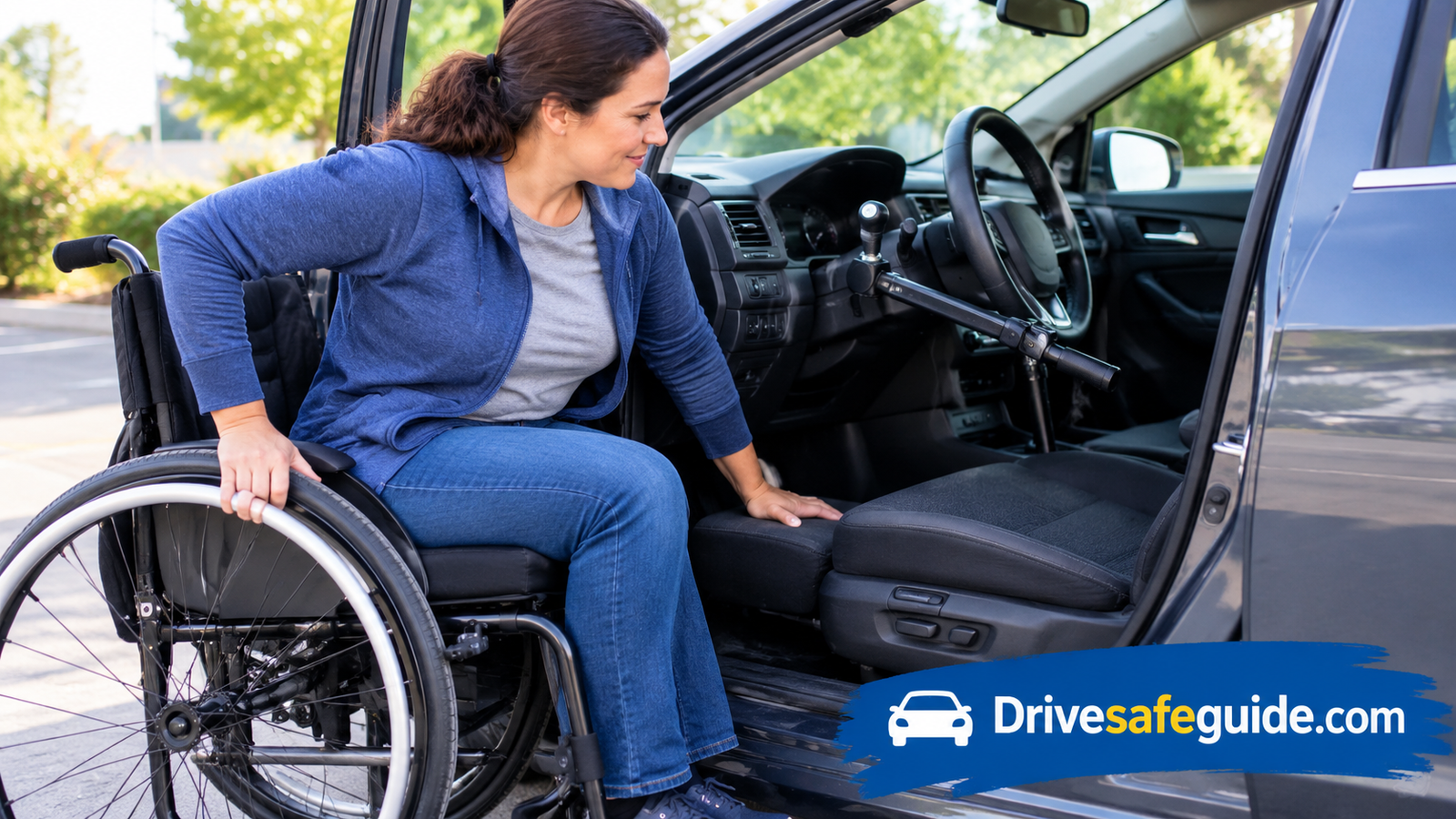
Picture a woman in her thirties pulling into a grocery store parking lot, folding her lightweight wheelchair, sliding it behind the seat, and heading inside. Or a veteran pulling a minivan up to a trailhead, rolling down a ramp, and heading off on a hand cycle. These are ordinary scenes, and they answer a question many people quietly wonder about: how do paralyzed people drive?
The honest answer is that they drive with adaptations. Paralysis covers a wide range of conditions, from partial loss of leg function to complete loss of movement below the neck, and the equipment matched to each person varies just as widely. Some drivers need only a small lever that lets the hand do the work of the pedals. Others use joysticks, voice commands, and electronically assisted steering. All of them rely on the same thing underneath: a careful evaluation, the right equipment, and practice until the new setup feels natural.
This guide walks through the whole picture in plain language. You will learn what the equipment is, how people get in and out of vehicles, what a driver rehabilitation evaluation involves, how licensing works, what it costs, and how to stay safe. If you are newly injured, supporting a family member, or simply curious, you will come away with a clear map of the road ahead.
1. The Short Answer: Yes, Many Paralyzed People Drive
Yes. Large numbers of people with paraplegia, quadriplegia (also called tetraplegia), spina bifida, multiple sclerosis, cerebral palsy, muscular dystrophy, and limb loss drive every day. They do it legally, with a standard driver’s license that carries a few added restrictions or endorsements describing the equipment they need.
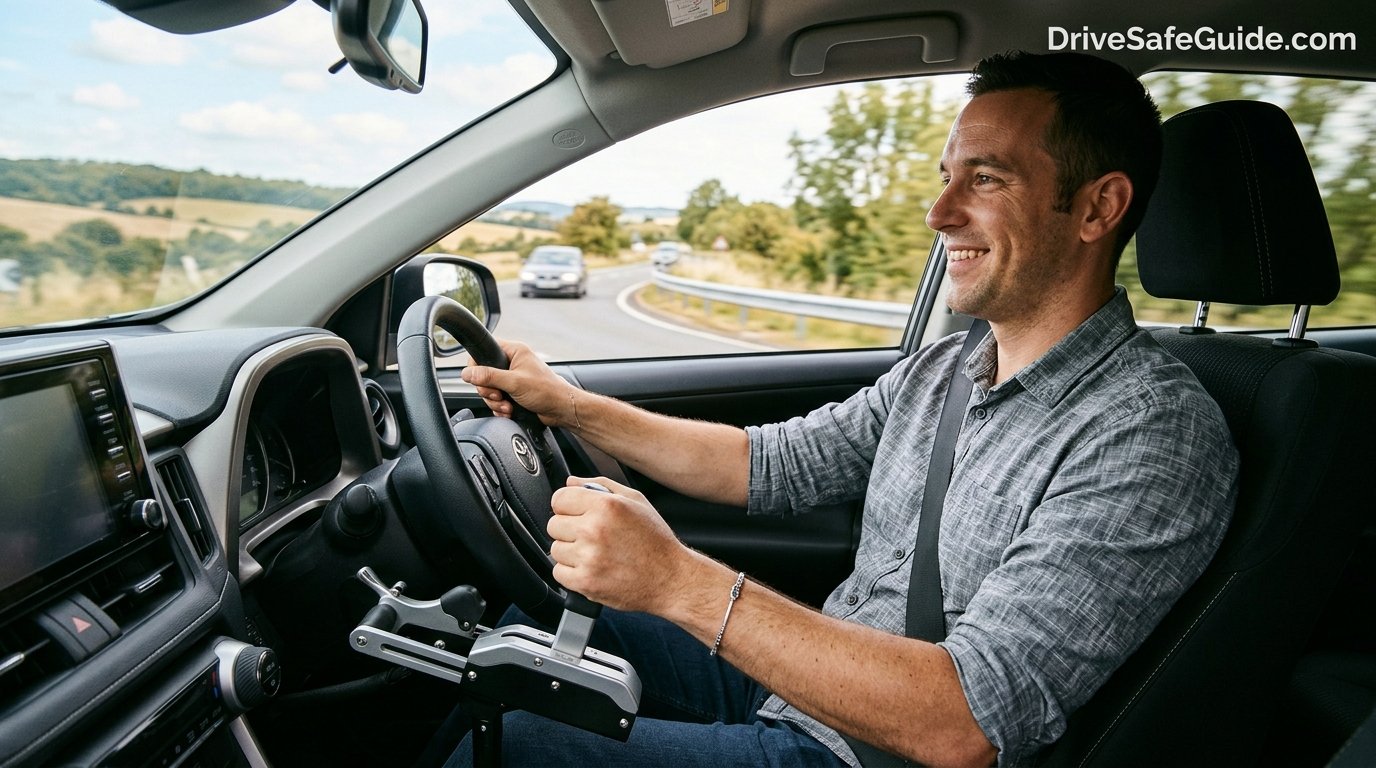
The core idea is simple. Driving needs four basic functions: steering, accelerating, braking, and operating secondary controls such as turn signals, wipers, headlights, and the horn. A person who cannot use their feet for pedals can often use their hands for acceleration and braking. A person who cannot grip a standard wheel can use a knob, a cuff, or a joystick. A person with very limited strength can use electronic systems where light touches or small movements do the work.
Who typically drives with adaptive equipment?
- People with paraplegia who have full arm and hand function but limited or no leg function. They most often use hand controls for the pedals.
- People with lower-level quadriplegia who have partial hand or arm function. They may use hand controls with steering aids or low-effort systems.
- People with higher-level quadriplegia who have limited arm strength. They may use joysticks, reduced-effort steering and braking, and sometimes voice or switch controls.
- People with progressive conditions such as multiple sclerosis or muscular dystrophy, who may update their equipment as needs change.
Driving matters beyond convenience. It means getting to work without scheduling a ride, picking up children, visiting friends on a whim, and attending medical appointments on your own terms. For many people, getting back behind the wheel is one of the most meaningful steps in rebuilding independence after an injury.
Explore popular driver comfort and safety gear to pair with adaptive equipment.
Shop Driving Aids on Amazon2. Understanding Paralysis and Why It Shapes Driving Options
To understand why equipment differs so much from person to person, it helps to understand how paralysis varies. The words people hear most often are paraplegia and quadriplegia, but those labels only scratch the surface.
Paraplegia versus quadriplegia
Paraplegia generally means loss of movement and sensation in the legs and sometimes parts of the trunk, with the arms and hands working normally. Quadriplegia affects all four limbs, though the degree varies enormously. Someone with a lower cervical injury may keep shoulder, elbow, and some wrist function. Someone with a higher injury may have little arm strength.
Complete versus incomplete injuries
An incomplete injury means some signals still pass through the damaged area. Two people with injuries at the same spinal level can have very different abilities. One may have partial leg strength and sensation; another may have none. This is why a diagnosis alone never determines what a driver needs.
Other factors that matter as much as muscle strength
- Trunk balance and control: Sitting stability affects steering and reaching controls, especially in turns and during braking.
- Sensation: Reduced feeling in the hands or legs affects how a driver senses vibration, pressure, and temperature, and may call for protective measures.
- Endurance and fatigue: Some conditions, including multiple sclerosis, bring fatigue that affects how long a person can drive comfortably.
- Spasticity: Involuntary muscle movements can interfere with controls, and equipment may need to be arranged to avoid accidental activation.
- Vision, thinking, and reaction time: Driving is a mental task as much as a physical one, and these factors are part of any proper evaluation.
- Blood pressure and temperature regulation: Some spinal cord injuries affect how the body regulates both, which matters for long drives and hot or cold climates.
Driving ability with a disability is always judged by function rather than diagnosis. The same principle shows up in other areas. For instance, readers often wonder about the rules for deaf drivers or whether people with a learning disability can drive, and the answer in each case turns on whether the person can operate a vehicle safely, not on the label itself. Conditions that involve sudden loss of control, such as seizures, follow their own medical reporting rules, covered in this guide to epilepsy driving restrictions.
| Ability Profile | Typical Pedal Solution | Typical Steering Solution |
|---|---|---|
| Full arm and hand function, no leg function | Mechanical push/pull or push/rock hand controls | Spinner knob or standard wheel |
| Partial hand grip, good shoulder function | Hand controls with a palm or cuff grip | Tri-pin or amputee ring, possibly reduced-effort steering |
| Limited arm strength | Electronic or low-effort hand controls | Reduced-effort steering, small-diameter wheel, or joystick |
| Very limited upper body movement | Joystick or switch-based system | Joystick, touchpad, or drive-by-wire controls |
Sensation deserves special attention. A driver without feeling in the legs may not notice a limb sliding into an awkward position, so many people use leg straps or positioning supports. The right kind of cushioning also matters because pressure injuries are a serious risk in anyone who sits for long periods; this overview of the best car seat cushions for long drives offers a general starting point, though a clinician should confirm any cushion is suitable for your skin and seating needs.
Comfort and positioning accessories can make longer drives easier.
Browse Seat Cushions on Amazon3. Hand Controls: The Most Common Solution
For drivers who cannot use their feet, hand controls are the workhorse of adaptive driving. They are mechanical or electronic levers mounted near the steering column or on the dash that operate the accelerator and brake through linkages attached to the factory pedals. The pedals remain in place, so another person can still drive the car normally.
The four main styles
Push/pull controls. The driver pushes the handle forward toward the dashboard to brake and pulls it back toward the body to accelerate. This is one of the most widely used designs because the motion is intuitive and the pushing motion uses strong chest and shoulder muscles in an emergency stop.
Push/rock controls. The driver pushes forward to brake and rocks the handle downward or back to accelerate. This style keeps the hand supported and is popular with drivers who prefer a rocking motion over a pulling one.
Push/right-angle controls. The driver pushes forward to brake and pushes downward at a right angle to accelerate. It suits people who find that motion comfortable and who want to avoid the pulling action.
Push/twist controls. The driver pushes to brake and twists the grip, much like a motorcycle throttle, to accelerate. It is a good fit for drivers with strong wrist rotation.
| Control Style | To Brake | To Accelerate | Often Suits |
|---|---|---|---|
| Push/Pull | Push forward | Pull back | Drivers with good shoulder and chest strength |
| Push/Rock | Push forward | Rock down or back | Drivers wanting a supported hand position |
| Push/Right-Angle | Push forward | Push downward | Drivers who prefer to avoid pulling motions |
| Push/Twist | Push forward | Twist grip | Drivers with strong wrist rotation |
Why the left hand and right hand question matters
Most hand controls mount on the left side of the steering column, so the left hand operates the pedals while the right hand steers. Some drivers reverse this setup, and a specialist chooses what works best for each person’s dominant hand and strength. A spinner knob on the wheel lets the steering hand turn the wheel with one hand, which is why the two systems are usually installed together.
Pros of hand controls
- Widely available and well proven
- Pedals stay usable by other drivers
- Can be installed in many standard cars
- Typically much less expensive than electronic systems
- Many styles to fit different abilities
Cons of hand controls
- One hand is always busy with the pedals
- Secondary controls may be harder to reach while driving
- Requires training to build smooth technique
- Not suited to people with very limited arm strength
The learning curve is real but manageable. Most new users describe an initial period of feeling clumsy, followed by a point where the motion becomes second nature. Smooth braking takes the longest, because the hand has to judge pressure the way a foot would. A good trainer will start in an empty parking lot, move to quiet streets, and only then advance to highways and heavy traffic. If you are just building general habits again, this overview of safe driving habits is a good refresher alongside formal training.
Add convenience gear that works alongside hand controls.
See Hand Control Accessories on Amazon4. Steering Aids: Spinner Knobs, Tri-Pins, and Reduced-Effort Systems
When one hand is on the hand control, the other needs to steer comfortably and safely. Steering aids make that possible, and they come in several forms depending on grip strength and hand function.
Spinner knobs
A spinner knob is a rotating handle that clamps to the steering wheel, letting a driver turn the wheel in a continuous motion using one hand. It is inexpensive, quick to attach, and one of the most common accessories. Quality models include a quick-release feature so other drivers can remove them. Safety standards matter here, because a loose or poorly designed knob can be a hazard in a crash, so installation by a qualified shop is the safest route.
Tri-pins and amputee rings
A tri-pin is a three-pronged grip that lets drivers with limited finger function steer using the whole hand or wrist. An amputee ring is a loop that allows steering with a residual limb or a weak grip. Both provide control without requiring a strong grasp.
Palm and cuff grips
Drivers with limited finger movement may use a palm grip or a cuff that secures the hand to the control. These attachments hold the hand in position without needing to grasp tightly, which helps in turns and while braking.
Reduced-effort and zero-effort steering
Standard power steering still takes some strength. Reduced-effort systems modify the power steering to need far less force, and some drivers prefer a smaller-diameter wheel as well. For people with significantly limited arm strength, these modifications can be the difference between driving and not driving. They should always be installed and tested by a qualified mobility dealer because steering is a safety-critical system.
While most steering adaptations work on the existing wheel, comfort accessories can still help. A grippy cover reduces slipping for drivers with weak or numb hands, and models like these easy-install non-slip steering wheel covers are worth discussing with your specialist before purchase, since added thickness can change how steering aids fit. People who deal with hand pain or numbness may also find useful tips on steering grip techniques, though adaptive equipment decisions are best made with a professional.
Look at steering accessories that improve grip and comfort.
Shop Steering Accessories on Amazon5. High-Tech Driving Systems: Joysticks, Voice, and Drive-by-Wire
For people with high-level quadriplegia or other conditions that limit arm strength, mechanical levers may be too demanding. This is where electronic systems come in. They replace physical force with small, precise inputs, and they represent some of the most impressive progress in mobility technology.
Joystick driving systems
A joystick system lets a driver steer, accelerate, and brake with a single hand-operated control. Push forward to accelerate, pull back to brake, and move side to side to steer. Some versions use two small joysticks, one for steering and one for pedals. These systems are powered electronically, so the driver provides direction rather than muscle. They require significant modification to the vehicle and are installed only by specialized mobility companies.
Low-effort and electronic hand controls
Electronic hand controls need only a light touch to operate the accelerator and brake. They suit drivers who can use a hand but cannot push or pull against much resistance. Many systems can be adjusted to match a driver’s specific range of motion.
Voice and switch-based controls
Secondary controls such as turn signals, wipers, headlights, climate control, and the horn can be placed on a touchpad, voice command system, or switches positioned close to the driver’s best point of movement. This matters because in a standard car, secondary controls are scattered around the cab where a limited-reach driver cannot get to them.
Drive-by-wire and automation features
Modern vehicles increasingly use electronic connections instead of direct mechanical linkages, which opens the door to new adaptive options. Modern driver assistance features, including adaptive cruise control, lane keeping, and automatic emergency braking, can reduce workload and add a safety margin. These are not a replacement for an attentive driver, but they can help.
| System | Best For | Considerations |
|---|---|---|
| Joystick | Limited arm strength and range of motion | Extensive installation, higher cost, extended training |
| Electronic hand controls | Light touch, reduced strength | Requires a compatible vehicle and professional install |
| Voice and touchpad secondary controls | Limited reach for switches and knobs | Reliability in noisy conditions should be tested |
| Driver assistance features | Adding a safety margin for any driver | Supports but does not replace attention |
Technology also helps in smaller, everyday ways. Smartphone navigation and driving tools reduce the mental load of route planning, and reviews of safe driving apps for smartphones can help you choose tools that keep your attention on the road. A sturdy mount, such as the options covered in this guide to car phone mounts, keeps the screen in a position that does not require reaching. Drivers who prefer a dashboard display may find ideas in this look at aftermarket heads-up displays, and drivers who want a simple wireless link to their phone’s maps may like wireless CarPlay adapters.
Because these systems are life-critical, they come with built-in redundancy. A well-designed electronic driving system includes backup power and fail-safe features so a single fault does not leave the driver without control. Ask any installer to explain the backup system in detail, and never accept a conversion that cannot describe how it behaves in a failure.
Find mounts and in-car tech that reduce reaching and distraction.
Shop In-Car Tech on Amazon6. Getting In and Out: Transfers, Lifts, Ramps, and Loading Devices
Driving ability is only half the story. A driver also needs to get into the vehicle and bring along a wheelchair. Those logistics shape which vehicle makes sense just as much as the driving controls.
Transferring into the driver’s seat
Many people with paraplegia transfer directly from the wheelchair into the driver’s seat. They position the chair beside the car, slide across using a transfer board if needed, and then lift the chair into the vehicle. Strength, flexibility, and practice make this efficient. Many experienced drivers can complete the whole routine in a minute or two.
Wheelchair loading devices
If lifting a chair behind the seat is not practical, loading devices can do the work. These include:
- Roof-top loaders: A powered arm lifts a folded chair into a roof-mounted box, keeping the interior clear.
- Robotic or powered arms: A mechanical lift picks up the chair and stows it in the back or beside the seat at the push of a button.
- Hoists and cranes: Hoists can place a chair into a van or SUV cargo area.
Swivel and transfer seats
A powered swivel seat rotates and extends outward toward the open door, then lowers to chair height. This makes the transfer shorter and safer, and it is especially useful for people with limited balance or strength.
Ramps and lifts
For people who drive or ride from a power wheelchair, ramps and lifts provide access. Ramps can be manual or automatic and fold out from the side or rear of a vehicle. Platform lifts raise a chair and its occupant into the vehicle. Both need adequate door height, interior space, and a secure way to lock the chair in place.
Pros of transferring to the seat
- Lets you drive a regular car, often at a lower cost
- Keeps you in the factory seat with standard crash protection
- Easier parking in tighter spaces
Cons of transferring to the seat
- Requires strength and balance to transfer repeatedly
- Loading the chair can be tiring over time
- Becomes harder as needs change or in bad weather
Weather and daily routines count too. Winter conditions make transfers harder, and slippery ground adds risk. Packing the right supplies matters; a good winter car emergency kit and some preparation for winter driving help you stay safe. Starting the car and warming it up in advance can also make cold-weather transfers more comfortable, which is one reason some drivers look into remote start installation. And because key fobs are used constantly, it helps to keep a spare and know how to handle key fob battery replacement before a dead fob strands you.
Explore transfer aids and accessories that make entering the vehicle easier.
Browse Transfer Aids on Amazon7. Wheelchair-Accessible Vans and Vehicle Choices
Choosing a vehicle is one of the biggest decisions in adaptive driving. The right choice depends on your abilities, your chair, your budget, and how you live.
Driving from a wheelchair
Some people, especially those with higher-level injuries, drive while seated in their power wheelchair rather than transferring to the factory seat. The chair is secured to the floor using an automatic docking system, and controls are arranged around the chair’s position. This is common in lowered-floor minivans and full-size vans. The vehicle’s interior is modified to provide adequate headroom and the correct driving position.
Side-entry versus rear-entry conversions
Side-entry vans let the driver or passenger enter from the curb side, so parking spaces next to a curb work well, though you need a wide space beside the vehicle for the ramp to deploy. Rear-entry vans use the back of the vehicle, which can be easier in many parking lots but means you must make room behind the vehicle, and it can limit cargo space and leave you exposed to traffic in on-street parking.
| Option | Advantages | Trade-Offs |
|---|---|---|
| Standard car with hand controls | Lowest cost, familiar driving experience | Requires transfers and chair loading |
| SUV or crossover with a loader | Good ground clearance, loads chair automatically | Higher entry, equipment adds cost |
| Side-entry accessible minivan | Drive or ride from the chair, flexible seating | Needs wide parking space, higher cost |
| Rear-entry accessible minivan | Often lower cost, works in many lots | Needs rear clearance, less cargo space |
| Full-size van conversion | Most room and headroom | Largest vehicle, higher cost and harder to park |
Buying new, used, or converting your own
New accessible vans come from manufacturers and specialist dealers with certified conversions. Used accessible vans can lower the cost but require a careful inspection because ramps, lifts, and lowered floors have moving parts that wear out. Converting a vehicle you already own is possible in some cases, but only with an established mobility dealer and after confirming the vehicle is compatible. Never accept a conversion that is not backed by a warranty and proper crash and fit documentation.
Practical vehicle considerations
- Door opening and headroom: Measure your seated height in your chair, including head and any headrest, against the interior height.
- Parking and garage fit: Check clearance at home, work, and your regular destinations.
- Drive type: Climate matters. If you live where snow is frequent, learn about drivetrains in a guide such as what is all-wheel drive.
- Electric and hybrid options: Some accessible vehicles are hybrids or electric. If you are considering one, read about hybrid vehicle maintenance and EV range anxiety tips to plan for charging and range.
- Visibility aids: A seated driver in a modified vehicle may have different sightlines, so blind spot mirrors, blind spot monitoring systems, and a quality backup camera can add real safety value.
If you add a camera yourself, see this walkthrough of backup camera installation, though for a modified vehicle it is wise to have a mobility dealer confirm that nothing interferes with the conversion.
Add visibility and monitoring tools to your vehicle.
Shop Visibility Gear on Amazon8. The Driver Rehabilitation Evaluation: Your Most Important First Step
If you remember only one thing from this guide, make it this: before you buy any equipment, see a driver rehabilitation specialist. This professional evaluates your abilities, recommends the right equipment, and trains you to use it. Skipping this step is one of the most common and expensive mistakes people make.
Who is a driver rehabilitation specialist?
Driver rehabilitation specialists are typically occupational therapists or other trained professionals who focus on driving with a disability. Many hold a certification through the Association for Driver Rehabilitation Specialists, often abbreviated as CDRS. Hospitals, rehabilitation centers, and independent programs offer these services. If you are in a rehabilitation program after an injury, ask your care team about referrals.
What the evaluation includes
- Clinical assessment: Strength, range of motion, sensation, coordination, balance, and endurance are tested.
- Vision and thinking skills: Visual fields, reaction time, attention, and judgment are measured.
- Equipment trial: You try different controls in a simulator or a specially equipped vehicle to see what feels natural.
- Behind-the-wheel assessment: On a closed course or quiet roads, a specialist watches you drive and measures how you handle real conditions.
- Recommendations: You receive a written report listing the equipment you need and the training required.
Training follows. Learning to use adaptive equipment safely takes time, and a specialist will set a training plan based on how quickly you adjust. Many programs include several sessions before recommending that you go for a license test or drive independently. Some departments of motor vehicles also use the specialist’s report to decide on license restrictions.
Beyond the first evaluation
Needs change over time. People with progressive conditions, aging drivers, and people whose injuries evolve may need a re-evaluation. Many specialists encourage periodic check-ins, and some offer refresher training. For older drivers in particular, a senior driver refresher course can complement a specialist’s recommendations.
Keep a safety toolkit in your vehicle while you build your skills.
Shop Emergency Kits on Amazon9. Licensing, Restrictions, and Legal Rules
Paralyzed drivers hold the same kind of license as everyone else. What changes is the paperwork around adaptive equipment. Rules differ by state and country, so always confirm details with your local licensing agency, but the general process looks similar almost everywhere.
Getting licensed with a disability
- Existing drivers: If you already hold a license and acquire a disability, you typically must notify the licensing agency or complete a medical review. Some agencies require a driver evaluation before you may drive again.
- New drivers: People who have never held a license usually follow the standard learner’s permit process, with adaptive training added. A guide such as permit test practice questions can help with the written exam, and parents who are helping a teen with a disability may find tips for teaching teen drivers useful.
- Road test: You take the test in a vehicle equipped with your adaptive controls. Some agencies allow a specialist to attend or use their own vehicle.
Restrictions and endorsements
Your license may include codes indicating required equipment, such as hand controls, a spinner knob, or specific mirrors. These are not penalties; they are a record that you drive safely using specific tools. Driving without the required equipment can result in fines or a suspended license, so make sure your adaptive equipment is always installed and working. Some places also apply conditions to graduated licensing for younger drivers.
Parking permits and placards
Most areas offer disabled parking placards or plates for people who qualify. A healthcare provider usually certifies the need. These permits provide access to wider spaces with room for ramps and transfers, and rules for use are strict, so keep your placard with you and follow local regulations.
Insurance considerations
Tell your insurer about adaptive equipment so it is covered if damaged or stolen. Adaptive devices and modified vans are expensive, and a standard policy may not cover them unless you list them. It is also wise to understand uninsured motorist coverage, since a crash with an uninsured driver can have outsized consequences when your vehicle is difficult to replace.
Another everyday rule worth knowing is the move over law, which applies to every driver and matters even more if you break down on a roadside where help may take longer to reach you.
Keep your documents and essentials organized in the car.
Shop Organizers on Amazon10. What It Costs and How People Pay for It
Costs vary dramatically depending on the equipment, so treat any numbers you read as rough ranges rather than quotes. Simple mechanical hand controls and a spinner knob are often in the range of several hundred to a couple of thousand dollars installed. Reduced-effort steering and braking, transfer seats, and loading devices push totals higher. Accessible minivans and high-tech joystick systems can add tens of thousands of dollars on top of the vehicle price.
| Item | Rough Cost Level | Notes |
|---|---|---|
| Spinner knob | Low | Inexpensive but should be professionally fitted |
| Mechanical hand controls | Low to moderate | Price varies by style and vehicle |
| Wheelchair loading device | Moderate to high | Depends on lift type and vehicle |
| Transfer or swivel seat | Moderate to high | Helpful for limited strength or balance |
| Accessible minivan conversion | High | Added cost on top of the base vehicle |
| Joystick or electronic driving system | Very high | Includes training and extensive modification |
Where funding may come from
- State vocational rehabilitation programs: If driving helps you work, your state’s vocational rehabilitation agency may help fund evaluations and equipment.
- Veterans benefits: Eligible veterans and service members with certain service-connected disabilities may qualify for help with adaptive automotive equipment through veterans programs.
- Manufacturer mobility programs: Many automakers offer reimbursement toward adaptive equipment installed in a new vehicle. Ask a dealer for details.
- Workers’ compensation and insurance: If your disability resulted from a workplace injury or covered accident, some costs may be covered.
- Nonprofits and charities: Several organizations offer grants or loans for mobility equipment.
- Medical expense deductions: Some adaptive equipment costs may qualify for tax deductions, so ask a tax professional.
Plan for ongoing costs too. Lifts and ramps need servicing, and electronic systems may need inspection. Basic car care becomes more important when your vehicle is a lifeline. A car battery tester helps you catch a weak battery before it strands you, a portable jump starter avoids depending on another driver for a boost, and a good air compressor for car tires plus attention to TPMS sensors keeps your tires safe.
A warning on cost: if you are tempted to buy equipment online without an evaluation, resist. The wrong controls can be unsafe, may not be accepted by your licensing agency, and often cannot be returned. The evaluation fee is small compared with the cost of a mistake.
Stay ahead of maintenance with reliable car care tools.
Shop Car Care Tools on Amazon11. Safety, Emergencies, and Everyday Gear
Every driver should prepare for emergencies. A driver who cannot easily exit a vehicle on their own needs to think about it more carefully, because the usual advice assumes quick physical escape.
Plan for breakdowns
Know who you will call, keep a charged phone, and consider a roadside assistance plan that understands your needs. Keep a flashlight, reflective triangles or flares, a first aid kit, and water in the car. A bright, dependable emergency flashlight is a basic tool, and this car emergency kit checklist covers what else to carry. Longer trips deserve extra planning, and a safety checklist before a road trip and a guide to preparing your car for a road trip are good starting points. A complete road trip essentials checklist helps you pack with confidence.
Fire and water emergencies
Because getting out may take longer, keep a car fire extinguisher within reach. A window breaker and seat belt cutter should be stored where you can grab it from your seat, not in the trunk. Rare as they are, water emergencies require quick action, and this guide to vehicle submersion escape explains the essentials. Talk through these scenarios with your specialist, who can recommend where to mount tools and how to practice.
Equipment failures
Adaptive systems are built for reliability, but you should still know what to do if something fails. Review how to respond to brake failure, the emergency procedures that apply, and how to handle a stuck accelerator. Ask your installer how each adaptive control behaves in failure and how to switch to a safe state.
Weather and visibility
Poor conditions challenge every driver, and they can be harder with adaptive equipment because fine control matters. Study guides on driving safely in heavy rain, driving on black ice, driving in fog, and driving at night. Glare is also a hazard, and ideas from sun glare visor solutions can help. When the weather is truly bad, the safest choice is to wait.
Comfort, posture, and long drives
Pressure sores, fatigue, and poor posture are real risks for people who sit for long periods. Take regular breaks, shift your weight where possible, and use supports recommended by your care team. For back pain, lumbar support adjustment for drivers and sciatica driving cushions offer general ideas, and long haul driver exercises may inspire movements you can adapt with your therapist. If heat is a concern, ask your doctor about temperature regulation, and if cold is the concern, heated seat cushions are worth discussing, though people with reduced sensation must be careful with heat because burns can go unnoticed.
Cameras and tracking
A dash cam provides a record in case of a crash or dispute, and dash cams for cars are a worthwhile addition for many drivers. Some families also use a GPS tracker for peace of mind, especially for new drivers.
Equip your vehicle with core emergency safety tools.
Shop Safety Tools on Amazon12. Learning to Drive Again and Building a Daily Routine
The technical details matter, but so does the human side. Returning to driving after a life-changing injury can bring excitement, nerves, and frustration all at once. Knowing what to expect makes the process easier.
The emotional side
Many people feel anxious about driving after an injury, especially if the injury happened in a crash. That is normal. If anxiety is getting in the way, resources like this guide to driving anxiety treatment and support from a counselor or peer group can help. Many rehabilitation centers connect new patients with peer mentors who drive, and talking to someone who has been through it is often the most encouraging thing you can do.
A realistic learning path
- Simulator and parking lot practice: Build basic control without traffic.
- Quiet streets: Practice turns, stops, and starts at low speeds.
- Moderate traffic: Learn to merge, change lanes, and handle intersections.
- Highway driving: Add higher speeds and longer distances gradually.
- Special conditions: Try night, rain, and other conditions with your trainer before facing them alone.
Common test mistakes are the same for every driver, and a review of common driving test mistakes can help you avoid them. For people who prefer to study at home, online drivers ed comparisons are a useful starting point, and daily skills like parallel parking deserve extra practice with adaptive controls.
Making driving part of daily life
- Set up your cockpit: Arrange mirrors, controls, phone mount, and essentials so everything is reachable without strain.
- Build a loading routine: A consistent routine for loading the chair makes each trip faster and less tiring.
- Know your parking: Scout accessible parking at places you visit often.
- Respect your energy: Fatigue affects reaction time, so plan breaks and avoid driving when you are exhausted.
- Stay current: Schedule periodic equipment checks and re-evaluations as your needs change.
Over time, adaptive driving stops feeling like an adaptation and becomes ordinary. People talk about the freedom of it, from spontaneous errands to long road trips with friends. With a thorough evaluation, careful equipment choices, and a good routine, many people with paralysis find that driving restores much of the independence they feared they had lost.
Make every trip easier with practical gear for your routine.
Shop Helpful Car Accessories on AmazonFrequently Asked Questions
Can a person with paralysis legally drive?
Yes. People with paralysis can hold a standard driver’s license and drive legally, provided they can operate a vehicle safely, usually with adaptive equipment. Their license may list restrictions that require the equipment to be used.
How do paraplegics drive without using their legs?
Most use hand controls that operate the accelerator and brake. A lever near the steering column replaces the pedals, so the hands handle both speed and stopping while a spinner knob or similar aid helps with steering.
Can quadriplegics drive?
Many can. Drivers with partial arm and hand function may use low-effort hand controls and steering aids, while those with limited arm strength may use joystick or electronic systems. A driver rehabilitation specialist determines what is realistic for each person.
What are hand controls on a car?
Hand controls are levers that connect to a car’s accelerator and brake pedals so the driver can operate them by hand. Common styles include push/pull, push/rock, push/right-angle, and push/twist.
Can anyone else still drive a car with hand controls?
Usually yes. Most mechanical hand controls leave the pedals in place, so another person can drive normally. Some controls can also be removed or folded away.
How does a paralyzed person get a wheelchair into a car?
Some fold or take apart a lightweight chair and lift it in themselves. Others use a roof-top loader, a powered arm, or a hoist. People who use a power chair often drive a van with a ramp or lift.
Do I need a special license to drive with hand controls?
You generally hold a regular license, but it may carry a restriction or endorsement for adaptive equipment. You may also need to pass a road test using your equipment. Requirements vary by location, so confirm with your motor vehicle agency.
How much do hand controls and adaptive vehicles cost?
Simple hand controls and spinner knobs are on the lower end, while loading devices, transfer seats, and accessible vans cost significantly more. Joystick systems are among the most expensive. Funding may be available through vocational rehabilitation, veterans programs, and manufacturer rebates.
What is a driver rehabilitation specialist?
A driver rehabilitation specialist is a trained professional, often an occupational therapist, who evaluates your abilities, recommends adaptive equipment, and trains you to use it safely. Many hold a CDRS certification.
Can someone with a newly acquired paralysis drive right away?
Not usually. Most people need medical clearance, an evaluation, equipment installation, and training first. The timeline depends on the injury, recovery, and how quickly you adapt to the controls.
Is it safe for paralyzed people to drive?
Yes, when equipment is properly chosen, installed, and practiced. Adaptive drivers are evaluated for safety, and well-built systems include redundancy. Good habits, regular maintenance, and emergency preparation add more protection.
Can a paralyzed person drive a regular car?
Often yes. Many people drive a standard car or SUV with hand controls and transfer from their chair. Others need a modified van, especially if they drive from a power wheelchair.
Conclusion: The Road Back to Independence
So, how do paralyzed people drive? They drive with equipment designed around what their bodies can do. Hand controls stand in for pedals, steering aids replace a strong grip, electronic systems turn small movements into full control, and accessible vehicles bring everything together. Behind every successful driver is a thoughtful evaluation, quality equipment, patient training, and a vehicle that fits their life.
If you are starting this journey, begin with a driver rehabilitation specialist, ask questions, and explore funding before committing to a vehicle. Stay patient while you learn, prepare for emergencies, and keep your equipment maintained. The goal is not simply to drive again but to drive with confidence.
Ready to equip your car for confident, comfortable driving?
Explore Driving Essentials on AmazonAs an Amazon Associate, we may earn from qualifying purchases at no extra cost to you. This article is general information and not medical, legal, or professional advice. Always consult a qualified driver rehabilitation specialist and your care team.