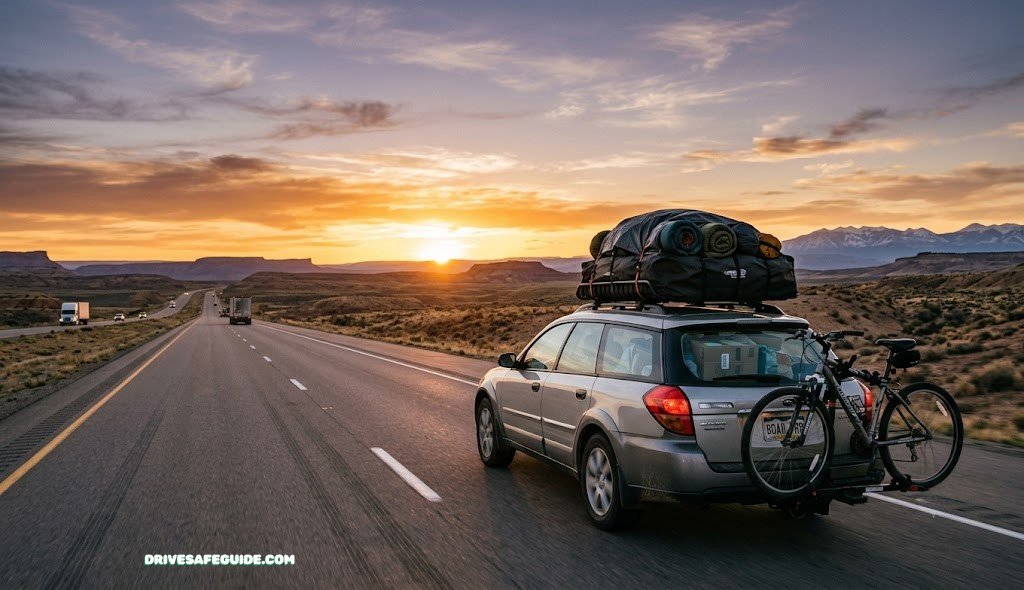
The Ultimate Cross Country Driving Checklist for a Safe Road Trip
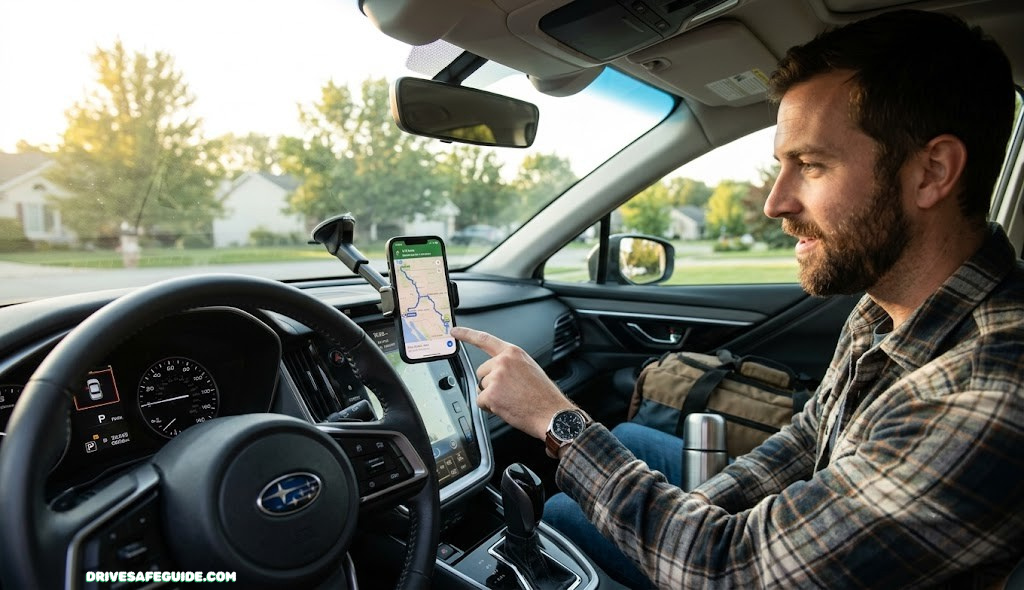
Driving across the country is one of those trips that sounds simple until you actually start packing for it. A weekend getaway forgives a lot of mistakes — a worn wiper blade, a half-charged phone, a vague idea of where you’ll sleep. A cross country trip doesn’t. You’re going to hit five, six, maybe ten different climates, a dozen different state laws, and stretches of highway where the nearest tow truck is ninety minutes out. The margin for error shrinks the farther you get from home.
This checklist is built for exactly that reality. It walks through every layer of preparation that separates a smooth 2,500-mile drive from one that ends with a call to roadside assistance in the middle of nowhere — the vehicle inspection, the paperwork, the emergency kit, the weather curveballs, the tech worth bringing, and the legal quirks that change the moment you cross a state line. Work through it a few days before departure and you’ll spend the trip actually enjoying the miles instead of white-knuckling through them.
Why Cross Country Trips Need a Different Kind of Prep
A regular road trip usually stays inside one climate and one set of state laws. A cross country drive rarely does either. Leave the Southeast in humid heat and you could be dealing with mountain snow by day three, then desert wind by day five. Your tires, your battery, and your own body all get tested in ways a short trip never asks for.
That’s the core idea behind this checklist: treat the trip like a system, not a single event. The vehicle is one part of the system. The kit in your trunk is another. Your route, your sleep schedule, and your knowledge of state-by-state rules all matter just as much as whether your oil was changed on time. If you’ve already worked through a general road trip essentials checklist, think of this guide as the extended, cross-country version — the one built for trips measured in days, not hours.
The goal isn’t to scare you into over-packing. It’s to make sure that when something does go sideways — a warning light, a sudden storm, a wrong turn onto a closed road — you’re not improvising for the first time in the moment. You’ve already thought it through.
Pre-Departure Vehicle Inspection Checklist
Most breakdowns on long trips aren’t random — they’re a small problem that was already showing symptoms before departure. A proper pre-trip inspection catches the majority of them. Give yourself at least a week before departure so there’s time to actually fix what you find, rather than discovering a bad belt the night before you leave.
Under the Hood
- Check oil level and color; if you’re within 1,000 miles of your next scheduled change, do it before you leave, not after.
- Inspect belts and hoses for cracking, glazing, or sponginess — early serpentine belt wear signs are easy to miss on a quick glance.
- Look for coolant residue around hose clamps and the radiator seam; a slow coolant leak that’s tolerable around town can become an overheating emergency on a mountain grade.
- Test the battery’s cold-cranking performance, especially if it’s more than three years old.
- Watch for early alternator failure symptoms like dimming headlights or a battery warning light — an alternator that dies on the interstate leaves you with no charging system at all.
Tires and Brakes
Tires do more work on a cross country trip than almost any other component. Check tread depth, look for uneven wear patterns, and don’t ignore a subtle vibration — shaking at highway speeds is very often a balance or alignment issue that gets worse, not better, over 2,000 miles. Check your spare too; a flat spare is worse than no spare, because it gives you false confidence.
For brakes, look past the pedal feel. Visually check brake pad wear indicators through the wheel spokes, and if you hear a metallic squeal that wasn’t there a month ago, get it looked at before departure, not somewhere in rural Nebraska.
Systems Worth a Second Look
| System | What to Check | Why It Matters Cross Country |
|---|---|---|
| Check engine light | Solid vs. flashing | A flashing light can mean it’s unsafe to keep driving at all |
| Transmission | Fluid level, shift smoothness | Slipping gets worse under sustained highway load |
| TPMS sensors | Dashboard warning, sensor age | Pressure swings with altitude and temperature changes |
| Wipers & washer fluid | Streaking, fluid level | You will hit rain somewhere on a multi-state route |
| Cabin air filter | Airflow, odor | Long hours in the cabin means air quality matters more |
If your dash lights up mid-trip, don’t guess. A solid vs. flashing check engine light means very different things, and knowing the difference can save you from turning a $200 fix into a $2,000 one. It’s also worth reviewing preparing your car for road trip safety checks in full before you commit to a departure date, and giving your transmission slipping causes a look if you’ve noticed any hesitation between gears.

Documents & Paperwork You’ll Actually Need
Paperwork is easy to forget precisely because it doesn’t feel urgent — until you’re asked for it at a checkpoint, a rental counter, or after a fender bender in a state where you don’t know anyone. Build a single folder, physical or digital, before you leave.
- Valid driver’s license, registration, and proof of insurance — check expiration dates against your return date, not your departure date.
- Roadside assistance membership card or app login.
- Understanding of your uninsured motorist coverage, since coverage minimums vary significantly by state.
- If your route crosses into Canada or Mexico, confirm international driving permit requirements ahead of time — some border crossings will not accept a US license alone.
- Know what to expect at the border itself; border crossing vehicle inspection procedures can add significant time if you’re unprepared with the right documents.
Building Your Road Trip Safety & Emergency Kit
Short trips can get away with a phone charger and a bottle of water. Cross country trips need an actual system, because you may be hours from the nearest service station when something goes wrong. If you haven’t already, start from a proven framework to build a car safety kit covering tires, battery, and first aid, then layer in the extras below for longer distances.
Core Kit Checklist
- Jump starter or jumper cables, first aid kit, flashlight, basic tool set
- Tire inflator and a plug/patch kit for slow leaks
- Reflective triangles or durable LED road flares for nighttime breakdowns
- A properly rated car fire extinguisher mounted somewhere you can reach it quickly, not buried under luggage
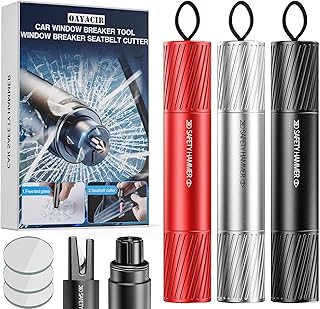
- Window breaker and seatbelt cutter — a low-cost tool that matters enormously in a submersion or entrapment scenario
Reviewing a set of emergency car escape tools before you buy is worth the ten minutes; not all of them perform the way their packaging claims. If any part of your route crosses mountain passes or northern states, don’t skip a dedicated winter car emergency kit checklist even if you’re departing in warm weather — conditions can flip in a single day of elevation gain.
Worth Packing
- Compact 12V tire inflator
- Lithium jump starter pack
- Basic first aid + medications
- Extra phone charging cable
Skip or Minimize
- Bulky full-size tool chests
- Glass water containers
- Anything requiring a manual you haven’t read
- Expired flares or first aid supplies

Route Planning & Navigation Strategy
The fastest route on a map isn’t always the smartest one to drive. Elevation changes, seasonal road closures, and fuel stop spacing all matter more on a cross country trip than they do locally. Before you commit to a route, check for seasonal pass closures, confirm cell coverage gaps, and identify where the long stretches without services actually are.
If your trip has any flexibility, building in a few detours pays off. Planning around a scenic byway or two, stopping at a handful of worthwhile roadside attractions, and checking whether you’ll need national park vehicle passes ahead of time all turn a straight-line drive into an actual trip worth taking.
For navigation itself, don’t rely on a single app or a single data source. A short list of apps every driver should use for fuel prices, live traffic, and weather overlays is worth setting up before you leave cell service in a rural stretch, since some of them cache maps for offline use and some don’t.
Weather-Proofing the Trip
This is where cross country trips diverge most sharply from local driving. You are statistically likely to hit at least one weather event you didn’t plan for, simply because of how much geography you’re covering. Knowing the playbook for each one in advance beats improvising in the moment.
Rain, Fog, and Reduced Visibility
Heavy rain and highway speeds are a bad combination, and cruise control makes it worse, not better, in a downpour — reviewing rain driving safety and cruise control risks before your trip is worth the five minutes. Fog is its own hazard entirely; a handful of solid fog driving strategies — low beams instead of high beams, following the right edge line, resisting the urge to speed up between patches — make a real difference.
Winter and Ice
If any part of your route crosses colder terrain, take black ice survival guidance seriously — it’s one of the few hazards where the correct response (ease off, don’t brake hard, steer gently) is the opposite of most drivers’ instinct. Front-wheel-drive vehicles handle winter differently than all-wheel-drive ones, so run through a front-wheel-drive winter safety checklist if that’s what you’re driving, and understand freezing rain versus sleet conditions, since they demand different speeds and following distances.
Wind, Heat, and Everything Else
Crosswinds on open interstate stretches can push a high-profile vehicle out of its lane without warning; knowing how to drive in high winds without losing control matters especially in the Midwest and desert Southwest. In hot, dry regions, watch for dust storm driving protocol and give your cooling system the attention it deserves with basic extreme heat engine care. If you’re routing anywhere near wildfire-prone areas in dry season, plan an alternate route in case of driving through wildfire smoke advisories.
| Condition | Key Adjustment | Common Mistake |
|---|---|---|
| Heavy rain | Disable cruise control, increase following distance | Keeping cruise engaged through downpours |
| Black ice | Ease off gas, no hard braking | Slamming brakes at first sign of a slide |
| Dense fog | Low beams, follow right edge line | Using high beams, which reflect back |
| High crosswinds | Two-handed grip, reduce speed | Overcorrecting after a gust |
| Dust storm | Pull fully off road, lights off, foot off brake | Stopping with brake lights on in the travel lane |

Night Driving & Fatigue Management
Long trips tempt drivers into pushing extra hours after dark to “make progress,” which is exactly when fatigue-related risk spikes. Run through a proper night driving safety checklist covering headlight aim, oncoming glare, and realistic stopping distances before you plan any after-dark stretches.
Drowsiness doesn’t announce itself clearly — by the time you feel sleepy, reaction time has often already slipped. A useful habit is the 30-minutes-from-rest-stop drowsy driving checklist: if you’re catching yourself drifting or losing track of the last few miles, you’re already past the point of “pushing through it.”
Comfort matters more than people expect on multi-day drives. A supportive neck pillow for co-driver naps and a gel seat cushion for the driver both measurably reduce the physical fatigue that compounds into mental fatigue over an 8-hour driving day.
Tech & Gadgets Worth Bringing
You don’t need every gadget on the market, but a handful genuinely change how a long drive goes. A dash cam is the clearest example — beyond insurance documentation, a 4K dash cam with strong low-light performance is invaluable on unfamiliar highways at night.
An OBD2 scan tool with real-time sensor monitoring lets you catch a developing engine issue before a warning light even appears. If your trip includes remote stretches, a standalone GPS tracker gives peace of mind independent of cell coverage, and blind spot mirrors are a cheap upgrade if you’re towing or driving an SUV loaded with gear that blocks rear visibility.
Jump Starters: What Actually Matters
Not all jump starters are created equal, and picking the wrong one for your engine size is a common mistake. Before buying, check how many amps a jump starter needs for your engine, and weigh a jump starter against traditional jumper cables — a self-contained unit means you’re never dependent on finding a second car.

Food, Hydration & Rest Stop Strategy
What you eat and drink behind the wheel affects alertness more than most drivers realize. Heavy, sugar-loaded gas station meals produce an energy crash right when you need sustained focus. Pack water, protein-forward snacks, and plan actual sit-down breaks rather than eating one-handed at 70 mph.
Physical stiffness builds up fast on long stretches. A short routine of long-haul driver stretches at each rest stop keeps circulation moving and reduces the stiffness that quietly saps focus by hour six. If you deal with car sickness as the driver — which is more common than people admit — a few practical tips for motion sickness while driving are worth reading before winding mountain roads. Drivers managing chronic back pain should also look at a sciatica driving cushion, since a bad flare-up mid-drive is both painful and genuinely distracting.
Driving With Pets or Kids Cross Country
Traveling with pets or children changes the calculus on stops, restraint systems, and even route choice. Loose pets in a moving vehicle are both a distraction and a genuine safety hazard in a sudden stop — check pet restraint crash test ratings before assuming any harness will do, since performance between products varies enormously. For general trip logistics with a dog along, a dedicated car ride with a dog guide covers stop frequency, temperature safety, and motion sickness in pets.
For kids, don’t assume last year’s setup is still correct — growth spurts change what seat and harness position is actually appropriate. A current child car seat guide is worth a re-read even for experienced parents, particularly if you’re renting a vehicle partway through the trip and need to reinstall a seat you don’t normally use.
Legal Rules That Change by State
This is the part of cross country driving that surprises even experienced drivers: the rules of the road are not uniform. What’s legal in one state can be a ticketable offense two hours later.
- Window tint darkness limits vary widely, and a tint legal at home can trigger a stop elsewhere.
- Right-on-red rules aren’t universal, especially in dense urban cores.
- Move-over law requirements for emergency vehicles differ in required distance and applicable lanes.
- Radar detector legality changes at state lines — legal in most states, restricted in a few.
- Modified exhaust legality is enforced far more strictly in some states than others.
- Open container laws and passenger alcohol rules also shift, and passenger alcohol consumption in a moving vehicle is legal in a smaller number of states than most travelers assume.
A few less obvious ones are worth knowing too, especially if you’re unsure whether you’re one of the drivers this applies to. If you have questions about fitness to drive, look into whether deaf drivers are allowed to drive under US law or driving rights and strategies with dyslexia, ADHD, or dyspraxia. And yes, some questions really do come up: barefoot driving legality across all 50 states and driving in flip-flops both have more nuance than most drivers assume.
Emergency Scenarios & How to React
The best cross country checklist in the world still won’t prevent every incident. What it can do is make sure you already know the right response instead of freezing or guessing under pressure.
On the Road
- A deer in the road: know why you should never swerve for a deer and what to do instead — swerving causes far more serious crashes than the collision itself.
- Standing water at speed: understand hydroplaning recovery steps before it happens, because there’s no time to look it up mid-slide.
- Brake trouble: learn the difference between brake fade and full hydraulic failure, and review brake failure emergency procedures so you’re not discovering the parking brake for the first time in a crisis.
- Persistent vibration at speed often traces back to tire balance issues and shouldn’t be ignored for the rest of a long trip.
Stranded or Extreme Conditions
If a storm strands you, blizzard stranded survival guidance centers on staying with your vehicle and managing exhaust risk if you run the engine for heat. In hot, remote regions, desert breakdown water rationing principles matter far more than most drivers expect until they actually need them.
Frequently Asked Questions
How long before departure should I start my cross country driving checklist?
Start at least one to two weeks out. This gives enough time for a real vehicle inspection, any needed repairs, and gathering emergency kit items without a last-minute rush that skips important checks.
What’s the single most important item to check before a long road trip?
Tires. More cross country breakdowns and near-misses trace back to tire condition — tread depth, balance, and pressure — than almost any other single factor, simply because tires log more sustained stress than any other part on a long drive.
Do I need a different emergency kit for a cross country trip than a local one?
Yes. A local kit can get away with basics like a flashlight and jumper cables. A cross country kit needs to account for multiple climates, longer response times for roadside help, and the possibility of being stranded for hours rather than minutes.
How many hours a day is safe to drive on a multi-day trip?
Most safety guidance points to 8–9 hours as a reasonable daily cap, with a break at least every two hours. Pushing beyond that regularly leads to the kind of fatigue that impairs reaction time similarly to driving drowsy.
Are state driving laws really that different across a cross country route?
Yes, more than most drivers expect. Window tint limits, right-on-red rules, radar detector legality, and open container laws can all change at a state line, so it’s worth a quick review of any state you’ll be driving through for an extended stretch.
What should I do if a warning light comes on mid-trip?
Note whether it’s solid or flashing — a flashing check engine light generally signals a more urgent issue that can worsen if you keep driving. Pull over safely when you can and use an OBD2 scanner if you have one before deciding whether to continue.
How do I prepare for driving through multiple weather zones in one trip?
Check the forecast for each leg individually rather than just your starting point, pack layered clothing and weather-specific gear (ice scraper, sunshade, rain gear), and build in schedule flexibility so you’re not forced to drive through a serious storm to stay on schedule.
Is it safe to drive with pets loose in the car on a long trip?
It’s not recommended. An unrestrained pet can become a projectile in a sudden stop and can also distract the driver. A crash-tested harness or secured carrier is a safer setup for multi-day travel.
What documents should I carry on a cross country road trip?
At minimum: driver’s license, registration, proof of insurance, and roadside assistance information. If your route crosses an international border, confirm permit requirements for that country well before departure.
How do I handle a tire blowout on the highway?
Grip the wheel firmly, avoid braking hard or jerking the wheel, ease off the accelerator gradually, and steer straight while the car slows on its own before pulling off safely. Sudden braking or overcorrection is what typically turns a blowout into a loss of control.
Your Route Is Only as Safe as Your Prep
A cross country drive rewards the driver who treats preparation as part of the trip, not an obstacle before it. Work through the vehicle inspection, pack the kit, know the weather playbook, and check the state laws along your route — and the miles ahead will feel like the adventure they’re supposed to be, not a string of avoidable risks.
For a broader look before you lock in your route, run through eliminating road trip risks before departure and tailor your prep by trip type with safe road trip essentials by scenario.
Shop Road Trip Safety Essentials🗺 Recommended Navigation
Never Get Lost Again — Best GPS Devices
Whether you’re on a road trip or navigating city traffic, a reliable GPS makes every drive safer and stress-free.
🗺 Shop Top GPS DevicesAffiliate link — we earn a small commission that keeps DriveSafeGuide running. Thank you!