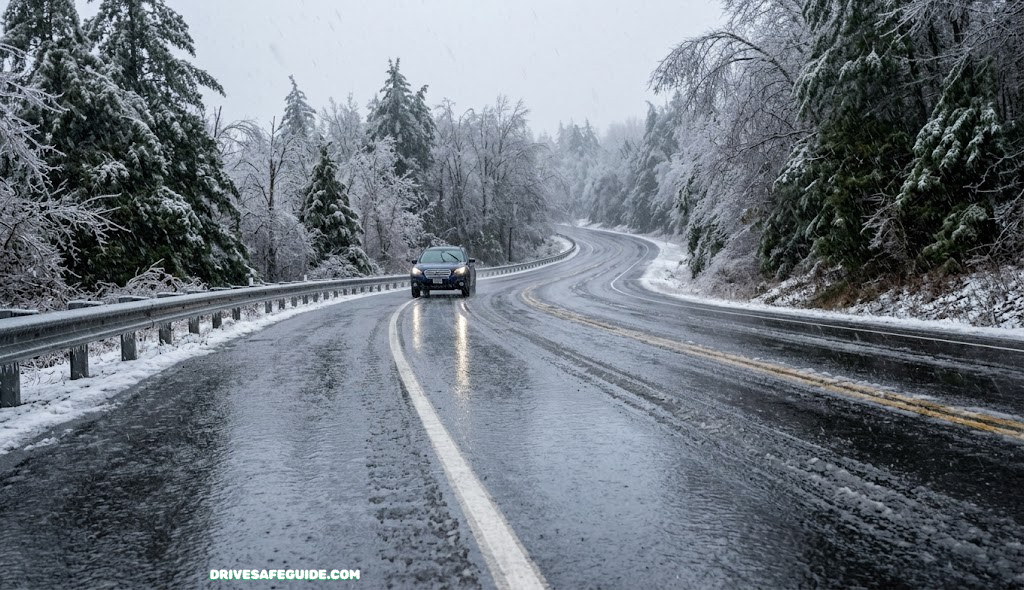
Freezing Rain vs Sleet Driving: Safety Tips for Winter Roads
They look similar from behind the wheel, but freezing rain and sleet create very different hazards. Here’s how to tell them apart and drive safely through both.
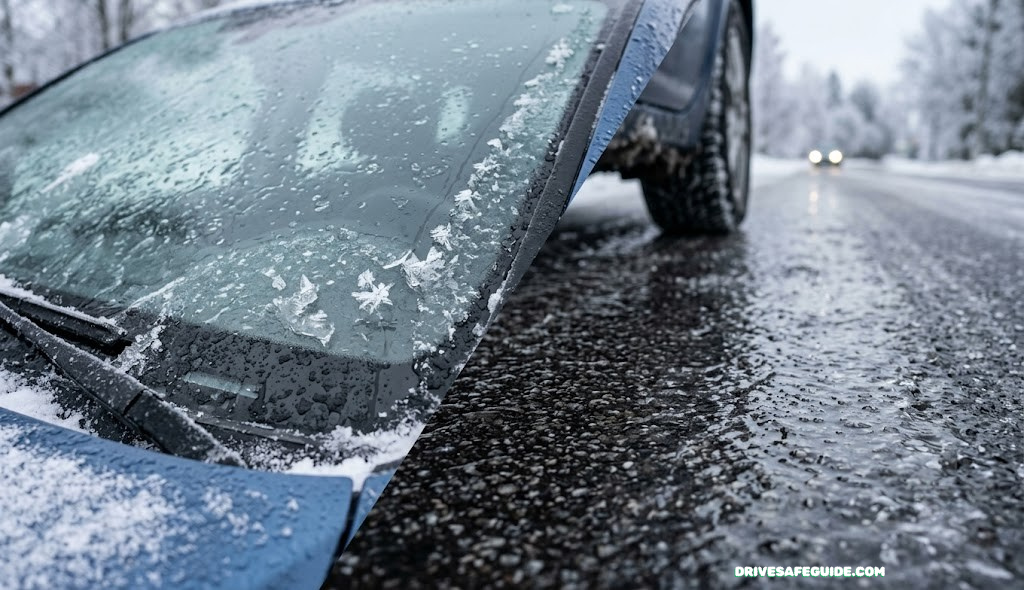
Same storm, different threat — knowing whether you’re driving through freezing rain or sleet changes almost everything about how you should handle the road.
Freezing rain and sleet fall from similar storms but behave nothing alike once they hit the road — and treating them the same is how drivers get caught off guard.
Weather reports often lump freezing rain and sleet together under a generic “wintry mix” label, but from behind the wheel, the two create fundamentally different problems. Freezing rain forms a nearly invisible, glass-smooth glaze that can turn an ordinary road into a skating rink in minutes. Sleet, by contrast, bounces and accumulates like tiny ice pellets, adding a gritty, unstable layer that behaves more like loose gravel than solid ice.
Knowing which one you’re actually driving through changes your speed, following distance, braking technique, and even your route planning. This guide breaks down both hazards individually, then walks through the driving techniques that keep you in control whether the storm outside is glazing the road or piling pellets onto it.
For the broader fundamentals that apply across every kind of winter precipitation, pair this guide with our winter driving safety guide, and if your storm eventually turns to snow, our guide to driving in snow without chains picks up where this one leaves off.
Both hazards are often grouped under the same watch or advisory from local weather services, which can make it hard to know from a forecast alone which specific driving adjustments to make. This guide is written to close that gap — by the end, you’ll be able to recognize which hazard you’re actually facing from the road itself, not just the forecast, and adjust your speed, spacing, and inputs accordingly.
What Is Freezing Rain? How It Forms and Why It’s So Dangerous
Freezing rain begins as ordinary liquid rain falling through a layer of warm air high in the atmosphere. As it descends, it passes through a thin layer of sub-freezing air near the ground — too thin for the raindrops to freeze mid-fall, but cold enough that the moment those drops touch a surface at or below freezing, they instantly form a smooth, clear layer of ice known as glaze.
Why Glaze Ice Is So Hard to See
Glaze ice is transparent and often forms directly over dark pavement, making it visually indistinguishable from a simply wet road until a tire loses grip. This is the same mechanism behind classic black ice, and it’s part of why freezing rain events are responsible for some of the most severe multi-vehicle pileups in winter driving history.
How Quickly Freezing Rain Can Change Road Conditions
Because the ice forms on contact, road conditions during freezing rain can shift from merely wet to dangerously glazed in a matter of minutes, without any visible change in the precipitation itself. A road that was fine on your drive in can be a different hazard entirely an hour later, even if the rain looks unchanged from inside the car.
The Temperature Layer That Creates the Hazard
Meteorologists describe freezing rain as requiring a specific atmospheric structure: a warm layer aloft thick enough to fully melt any falling snow into rain, sitting above a shallow, sub-freezing layer near the surface. If that near-surface cold layer is too thick, the rain refreezes into sleet before landing instead. It’s this narrow, precise band of conditions that makes freezing rain both less common and more dangerous than ordinary snow or sleet — the atmosphere has to line up in a fairly specific way for glaze ice to form at all.
Why a Small Amount of Freezing Rain Can Still Be Severe
Unlike snow, where depth roughly correlates with driving difficulty, freezing rain doesn’t need to accumulate much to become extremely hazardous. A glaze as thin as a few hundredths of an inch can reduce road friction dramatically, which is why official warnings for freezing rain are issued at far lower accumulation thresholds than warnings for snow.
What Is Sleet? How It Forms and How It Differs
Sleet forms when snowflakes fall through a layer of warm air and partially melt, then pass through a deeper layer of sub-freezing air near the ground, refreezing into small, semi-transparent ice pellets before they ever reach the pavement. Unlike freezing rain, sleet is already frozen solid by the time it lands.
Why Sleet Behaves Differently on the Road
Because sleet pellets are already ice when they hit the pavement, they don’t bond to the road surface the way freezing rain does. Instead, they accumulate as a loose, granular layer — closer in behavior to marbles or coarse sand than to a solid ice sheet. This changes the type of traction loss a driver experiences: instead of a frictionless glaze, sleet creates an unstable, shifting surface that can still cause a slide, particularly under braking or sharp steering.
Sleet Accumulation and Visibility
Because sleet is opaque rather than clear, it’s usually easier to see accumulating on the road than freezing rain’s glaze — a meaningful advantage for a driver trying to judge conditions in real time. However, heavy sleet can also accumulate quickly on wiper blades and side mirrors, reducing visibility in a way that freezing rain typically doesn’t.
Identifying Sleet by Sound
Sleet often announces itself audibly before it’s easy to see, producing a distinct tapping or ticking sound against the windshield and roof that differs noticeably from the softer patter of rain or the near-silence of falling snow. Drivers who learn to recognize this sound gain an extra few seconds of warning before visually confirming changing road conditions.
Sleet vs. Graupel: A Common Mix-Up
Sleet is sometimes confused with graupel, a softer, opaque, snow-like pellet that forms through a different process entirely and tends to crush more easily underfoot or under a tire. While the driving caution required is similar for both, true sleet pellets are harder and more ice-like, contributing more directly to the loose, marble-like traction loss described throughout this guide.
Freezing Rain vs Sleet: Side-by-Side Comparison
Once you understand how each forms, the practical differences become much easier to plan around.
| Factor | Freezing Rain | Sleet |
|---|---|---|
| Physical State on Fall | Liquid, freezes on contact | Already frozen ice pellets |
| Road Surface Result | Smooth, clear glaze ice | Loose, granular ice layer |
| Visibility of Hazard | Often invisible (like black ice) | Usually visible accumulation |
| Traction Loss Type | Sudden, near-zero friction | Gradual, shifting instability |
| Highest-Risk Locations | Bridges, overpasses, shaded curves | Any flat, exposed roadway |
| Typical Onset Speed | Minutes, without visual warning | Gradual buildup, more visible warning |
✔ What Makes Sleet More Manageable
- Visible accumulation gives more warning time
- Doesn’t bond directly to pavement like glaze ice
- Often clears with plowing more easily than solid glaze
✘ What Makes Freezing Rain More Dangerous
- Frequently invisible until a tire loses grip
- Can form within minutes with no warning
- Creates near-zero friction, closer to glare ice than snow
In short: sleet is a traction problem you can usually see coming, while freezing rain is a traction problem that often announces itself only after control is already lost. Both deserve real caution, but the specific technique you lean on differs, which the next sections cover in detail.
Route Planning Around Each Hazard
Because freezing rain forms most readily on elevated, exposed, or shaded terrain, route planning during a freezing rain event should prioritize avoiding bridges, overpasses, and mountain corridors where possible. Sleet, by contrast, tends to affect broader areas more uniformly, so route choice matters less than simply reducing speed and increasing following distance across the entire drive. If you’re weighing route options ahead of a storm, our pre-trip vehicle safety checklist pairs well with checking real-time road condition reports before departure.
Documenting Conditions if a Collision Occurs
If a crash does happen during freezing rain or sleet, note the specific type of precipitation and general road conditions at the time, since this distinction can matter for insurance claims and accident reports. A road glazed by freezing rain and a road covered in loose sleet represent genuinely different hazard conditions, and documenting which one was present helps establish an accurate record of what a driver could reasonably have anticipated.
Pre-Drive Preparation for Freezing Rain and Sleet Events
The single best safety decision available during a freezing rain or sleet event is often the decision to delay a trip until conditions stabilize. When driving is unavoidable, a short pre-drive check makes a measurable difference.
Checking Current Conditions, Not Just the Forecast
Freezing rain and sleet forecasts can shift within a single storm system, so checking live road-condition reports immediately before departure is more reliable than relying on a forecast from earlier in the day. Our driver app guide covers tools that layer live road-condition data over standard navigation, which is especially useful for routes that cross bridges or elevated terrain.
Clearing the Vehicle Completely
Both freezing rain and sleet can bond to windshields, mirrors, and sensors in ways that resist a quick swipe of the wipers. Clear every window, mirror, camera, and light fully rather than just a driver’s-eye peephole, and check that wiper blades aren’t frozen to the glass before starting the engine.
Battery and Fluid Checks
Cold, wet conditions are especially hard on aging batteries, since both low temperatures and constant electrical draw from wipers, defrosters, and lights increase strain. If your battery is more than a few years old, review our guide to the best cold-weather car batteries before a storm arrives, not during one.
Timing Your Trip Around the Storm
If a freezing rain event is forecast to last only a few hours, delaying a non-essential trip until the precipitation clears — or until road crews have had time to treat major routes — often eliminates the hazard entirely rather than requiring you to manage it. Sleet events, which tend to be more visible and gradual, still benefit from the same patience, particularly on lightly-traveled roads that see less traffic-driven compaction.

Clear Glaze Ice Completely
A long-handled scraper removes bonded ice from windshields, mirrors, and roof panels safely.
Shop Ice Scrapers →Braking and Speed Control on Ice-Glazed Roads
Braking is where freezing rain’s near-zero friction becomes most dangerous, and where technique matters more than in almost any other winter condition.
Threshold Braking on Glaze Ice
With anti-lock brakes, apply firm, steady pressure and allow the system to pulse on its own rather than pumping the pedal manually. On true glaze ice, even ABS has a limited amount of friction to work with, which makes early, gradual braking far more effective than late, hard braking.
Why Early Braking Matters More Here Than in Snow
Because glaze ice offers so little friction, stopping distances can be two to three times longer than on packed snow, let alone dry pavement. Begin slowing far earlier than feels necessary — a habit that feels overly cautious on dry roads but is simply accurate physics once freezing rain has glazed the surface.
Braking on Sleet-Covered Roads
Sleet’s granular texture behaves more like loose gravel, so braking can trigger a different kind of instability — a shifting, unsettled feeling rather than a sudden frictionless slide. Steady, moderate brake pressure still applies, but be prepared for a slightly different sensation through the pedal and steering wheel than pure ice produces.
For a deeper look at what happens when braking fails entirely rather than just losing grip, see our guide on brake fade vs. hydraulic failure, and if your pads haven’t been inspected recently, our brake pad wear indicators guide explains what to check before winter storms arrive.
Engine Braking on Icy Descents
Downshifting to use engine compression as a braking aid reduces reliance on the brake pedal and lowers the chance of triggering a skid, particularly on downhill grades glazed by freezing rain. This works in both manual and automatic vehicles with selectable gear ranges, and it’s worth practicing on a familiar, low-traffic hill before you need it during an actual storm.
What ABS Pulsing Actually Means on Glaze Ice
On true glaze ice, ABS may pulse almost continuously rather than the occasional pulsing felt on snow, since the system is working to find any available friction across a nearly frictionless surface. This is normal system behavior, not a sign of a fault, but it’s also a clear signal that the vehicle is operating at the very edge of available traction — a strong cue to slow down further and increase following distance even more.
Steering and Skid Recovery in Freezing Rain
Glaze ice removes steering feedback almost entirely, which makes smooth, minimal inputs even more critical than in snow.
Counter-Steering Into a Skid
If the rear of the vehicle begins sliding, steer gently in the direction the rear is sliding toward, not away from it, keeping the front tires aligned with the direction the car is actually traveling. On glaze ice, oversized or sudden corrections are far more likely to send the vehicle into a second skid than to resolve the first one.
Hand Position and Precision
A firm, low grip near nine-and-three on the wheel gives more precise control than a loose or high-handed grip, and precision matters most exactly when friction is lowest. Keep arms relaxed enough to feel subtle resistance changes through the wheel — often the earliest warning sign that a tire is approaching the edge of available grip on glaze ice.
Our dedicated skid control techniques guide and black ice survival guide both go deeper into recovery mechanics that apply directly to freezing rain conditions.
Understeer vs. Oversteer on Glaze Ice
Understeer — where the front tires lose grip first — feels like the car continuing straight despite steering input, and the correct response is to ease off the throttle and avoid sudden steering corrections until grip returns. Oversteer — where the rear tires lose grip first — feels like the back end swinging wide, and this is where gentle counter-steering applies most directly. On glaze ice, both can happen with almost no warning, which is exactly why smooth, minimal inputs matter more here than in nearly any other winter condition.
Driving Safely Through Sleet Accumulation
Sleet’s granular texture demands a slightly different mental model than glaze ice, even though caution levels should remain just as high.
Managing Momentum Through Loose Ice Pellets
Accumulated sleet behaves similarly to loose gravel or coarse sand — tires can dig through a thin layer to find pavement, but deeper accumulation reduces steering precision and increases stopping distance. Build and hold speed smoothly rather than making sudden throttle changes, which can cause a tire to spin through the loose surface layer rather than gripping the pavement beneath it.
Sleet on Highways vs. Local Roads
Highway sleet accumulation tends to clear faster due to consistent traffic compacting and displacing it, while local roads with lighter traffic can retain a loose sleet layer far longer. Treat quiet residential streets and rural roads as higher-risk during sleet events, even if the highway itself feels manageable.
Refreezing After Sleet Stops
Once sleet accumulation stops falling, the pellets themselves can melt slightly under tire friction and refreeze into a harder, more solid layer as temperatures drop again — particularly after sunset. A road that felt manageable during active sleet can become considerably more hazardous once the storm passes and refreeze sets in.
Following Distance and Lane Changes in Sleet
Because sleet’s loose surface layer reduces both braking and steering precision, following distance should increase well beyond the standard three-second rule — closer to eight or nine seconds, similar to the buffer recommended for snow. Merges and lane changes deserve extra planning as well, since they combine steering and speed adjustment at the same time. Our safe following distance guide and highway merging guide both apply directly, with the caveat that every input should be gentler than it would be on dry pavement.
Defensive Positioning During Sleet
Avoid driving directly behind large trucks during sleet, since spray and kicked-up pellets can reduce visibility instantly, and avoid lingering beside other vehicles in adjacent lanes any longer than necessary. Our full defensive driving habits guide expands on positioning strategies that apply well beyond sleet-specific conditions.
Reading the Road: Glaze Ice, Black Ice, and Refreeze Zones
Both freezing rain and sleet events create predictable high-risk zones that experienced winter drivers learn to anticipate before reaching them.
Bridges and Overpasses
Bridges lose heat from both the top and bottom surfaces, so they glaze and freeze well before the surrounding road does. Treat every bridge and overpass as icy by default during any freezing rain or sleet event, regardless of how the approach road looks.
Shaded Curves and Tree Cover
Shaded stretches retain ice and glaze longer than open, sun-exposed roads, since reduced sunlight slows melting even after a storm has passed. Curves under heavy tree cover deserve extra caution well after the precipitation itself has stopped.
Intersections and Stop-Sign Approaches
Repeated braking at intersections compacts and polishes accumulated ice or sleet, often making the final approach to a stop sign or light more slippery than the open road leading up to it. Begin slowing earlier than usual when approaching any controlled intersection during these conditions.
These same principles overlap closely with our black ice survival guide, since freezing rain glaze and classic black ice share nearly identical driving hazards.
Rural Roads vs. Treated Urban Routes
Municipal and state highway crews typically prioritize salt and sand treatment for major arterial roads and highways, which means rural, lightly-traveled roads often retain glaze ice or sleet accumulation far longer after a storm passes. If your route includes a mix of highway and rural roads, expect the rural portion to demand significantly more caution, even after the highway itself feels well managed.
Wildlife Movement During Winter Precipitation
Both freezing rain and sleet events can push deer and other wildlife toward roads and tree lines, and reduced visibility during precipitation means less warning before an animal enters your path. Resist the instinct to swerve hard around an animal on a glazed or sleet-covered road — a sudden steering input on an already low-friction surface is often more dangerous than the collision itself. Our deer collision safety guide explains why controlled braking almost always beats swerving, a principle that applies with even more force once ice or sleet is involved.

Verify Pressure Before You Drive
Cold, wet weather drops tire pressure fast — a digital gauge removes the guesswork.
Compare Tire Gauges →Visibility Challenges During Freezing Rain and Sleet
Both hazards reduce visibility in different ways, and each demands a slightly different response from the driver.
Windshield Glazing and Wiper Strain
Freezing rain can glaze a windshield faster than defrosters and wipers can clear it, especially during heavy bursts. If wiper blades begin skipping or streaking rather than clearing cleanly, pull over in a safe location rather than continuing with reduced visibility — a compromised windshield in freezing rain rarely improves on its own while driving.
Headlight and Taillight Buildup
Sleet and freezing rain both accumulate on headlights and taillights, reducing your visibility to other drivers even when your own view of the road feels adequate. Stop periodically to clear lights fully, particularly on longer drives through sustained precipitation.
Low-Visibility Driving Fundamentals
Slow down before visibility drops rather than reacting once it has, use low beams to avoid glare reflecting off ice or wet pavement, and increase following distance well beyond your normal buffer. Our fog and low-visibility driving strategies guide and night driving safety checklist both apply directly if your freezing rain or sleet commute overlaps with darkness.
Interior Fogging and Defroster Settings
Freezing rain and sleet both bring high humidity into the cabin as wet clothing, boots, and umbrellas add moisture to the air inside the vehicle, which can fog interior glass even faster than exterior ice accumulates. Run the defroster on a cooler, drier setting rather than max heat alone, and crack a window briefly if fogging persists, since max heat with recirculated air can actually worsen interior fogging in humid winter conditions.
Emergency Scenarios: Stuck or Sliding in Icy Precipitation
Even careful drivers can be caught off guard by freezing rain’s sudden onset or a deeper-than-expected sleet accumulation. Knowing the right first response prevents a manageable moment from escalating.
If You Start Sliding on Glaze Ice
Stay off the brakes initially, since braking mid-slide on true glaze ice often extends the slide rather than stopping it. Steer smoothly toward the direction you want the front of the car to go, ease off the throttle, and wait for tires to regain contact before making further corrections.
If You Get Stuck in Sleet Accumulation
Avoid spinning the wheels, which packs loose sleet into a denser, more slippery layer beneath the tire. Clear the area around all four wheels, place a traction mat or floor mat under the drive wheels, and use slow, steady throttle rather than a sudden burst of power.
If You’re Stranded
Stay with your vehicle unless help is clearly visible nearby, run the engine intermittently for warmth while keeping the exhaust pipe clear of ice or sleet, and use your phone or a reflective marker to signal your location. Our blizzard stranded survival guide covers a complete plan for extended waits in severe winter weather.
Fatigue During Extended Storm Driving
Sustained concentration through freezing rain or heavy sleet is mentally exhausting, and reaction times can slow noticeably after an hour of constant hazard-scanning. Treat slowing reflexes or drifting attention the same way you’d treat any drowsy-driving warning sign — our drowsy driving checklist is built for exactly this kind of situation.
Planning for a Multi-Hour Delay
Severe freezing rain events can close roads and strand drivers for hours while road crews treat surfaces, occasionally beyond what a typical emergency kit anticipates. If your route regularly crosses bridges, rural corridors, or mountain terrain, treat the possibility of a multi-hour delay as a real scenario rather than a worst-case exception — pack accordingly, tell someone your route and expected arrival time, and keep your phone charged rather than running navigation continuously in the background.
Building a Winter Precipitation Safety Kit
The techniques in this guide work best paired with a vehicle that’s actually equipped for freezing rain and sleet events specifically, not just generic winter weather.
Core Items Worth Keeping in the Trunk
- Ice scraper and snow brush — for glaze ice that bonds tightly to glass
- Portable traction mats — for the moment tires spin without moving in sleet accumulation
- Jump starter or jumper cables — cold, wet conditions strain aging batteries fast
- Sub-freezing-rated washer fluid — standard fluid can freeze on contact with the windshield
- Blanket, gloves, and extra layers — for any stranded-vehicle scenario
- Reflective triangles or flares — visibility in low-light, ice-glazed conditions
For a complete, categorized checklist, see our winter car emergency kit checklist and our broader guide to building a full car safety kit. If you’re comparing specific gear, our jump starter buying guide and tire inflator buying guide go deeper on individual categories.
Maintenance Items That Matter More in Icy Precipitation
A handful of maintenance issues become more urgent once freezing rain and sleet enter the picture. Weak alternators tend to reveal themselves in these conditions, when wipers, defrosters, and headlights all draw power simultaneously; our alternator failure symptoms guide covers early warning signs. And since freezing rain often precedes a snowfall, our tire storage checklist helps if you’re planning a seasonal swap to winter tires before conditions worsen further.
Wiper Blades Deserve Special Attention
Standard wiper blades can freeze stiff or develop small cracks in sustained sub-freezing precipitation, reducing their ability to fully clear glaze or sleet from the windshield. Winter-specific wiper blades, designed with a rubber boot that resists ice buildup along the blade’s frame, clear both freezing rain and sleet more reliably than standard blades and are worth installing before the season’s first storm rather than waiting for a blade to fail mid-drive.
Washer Fluid Reservoir Levels
Freezing rain and sleet both consume washer fluid faster than ordinary rain, since drivers tend to use it more frequently to clear road spray and residual grime kicked up by other vehicles. Check reservoir levels before any storm and keep a spare jug of sub-freezing-rated fluid in the trunk for longer trips, since running out mid-drive removes one of your primary tools for maintaining windshield visibility.
Driving Through Freezing Rain and Sleet by Vehicle Type
The core techniques in this guide apply broadly, but how they play out depends heavily on your vehicle’s drivetrain and weight distribution.
Front-Wheel Drive (FWD)
FWD vehicles carry more weight over the drive wheels, which helps with acceleration traction on sleet-covered roads. On true glaze ice from freezing rain, however, that advantage shrinks considerably, since the front tires are asked to both steer and drive on a surface offering almost no friction at all. Smooth, early steering inputs matter even more in FWD vehicles under these conditions. Our FWD winter safety checklist covers this in more depth.
Rear-Wheel Drive (RWD)
RWD vehicles are more prone to oversteer on glaze ice, since the rear tires both propel the car and carry less weight than the engine-heavy front end. A lighter throttle foot and extra caution during acceleration make a meaningful difference, particularly when pulling away from a stop on a freshly glazed road.
All-Wheel Drive (AWD) and Four-Wheel Drive (4WD)
AWD and 4WD systems distribute power across more wheels, which helps when accelerating from a stop or climbing a grade covered in sleet. None of that extra traction helps with braking or cornering on glaze ice, since both depend entirely on tire grip rather than drivetrain layout — a distinction that catches many confident AWD drivers off guard during freezing rain specifically.
Electric Vehicles
EVs deliver near-instant torque, which can translate into wheel spin faster than a comparable gas vehicle if throttle inputs aren’t managed carefully on sleet or glaze ice. Most EVs offer adjustable regenerative braking, and lowering that setting during freezing rain or sleet events can prevent sudden deceleration from unsettling the rear wheels on a low-friction surface.
Trucks, SUVs, and Trailers
Taller vehicles and those towing a trailer face compounded risk during freezing rain and sleet, since a higher center of gravity increases rollover risk during a skid, and a trailer can jackknife or sway independently of the towing vehicle on a low-friction surface. Reduce speed further than you would in a passenger car, increase following distance substantially, and avoid sudden lane changes that could set a trailer swaying on glaze ice. If towing is a regular part of your winter driving, our trailer hitch classes guide is worth reviewing to confirm your setup matches your vehicle’s rated capacity before winter routes add extra risk.
Common Myths About Freezing Rain and Sleet
A few persistent misconceptions lead drivers to underestimate exactly the conditions that deserve the most caution.
“If I can’t see ice, the road is probably fine.”
This is precisely the assumption that makes freezing rain so dangerous. Glaze ice is often completely transparent, and a road that looks merely wet can offer no more friction than a hockey rink. Treat any freezing rain event as an ice event, regardless of visible appearance.
“Sleet is basically the same as light snow.”
Sleet’s granular, already-frozen pellets behave more like loose gravel than the compressible, sipeable surface that snow provides. Traction loss in sleet tends to feel more sudden and less predictable than in an equivalent depth of fresh snow.
“If it’s not accumulating, it’s not dangerous.”
Freezing rain can create a hazardous glaze with minimal visible accumulation, since even a thin layer of ice dramatically reduces friction. Judging risk by accumulation depth is a habit better suited to snow than to freezing rain.
“Four-wheel drive means I don’t need to slow down.”
4WD improves acceleration traction but does nothing to prevent a vehicle from sliding on glaze ice or losing control while braking. Speed reduction remains just as important in a 4WD vehicle as in any other.
“Salt and sand trucks make the road safe again immediately.”
Road treatment reduces risk but doesn’t eliminate it instantly, especially during active freezing rain, when new glaze can form on top of treated pavement within minutes. Treat a road as improved rather than fully safe until you’ve confirmed conditions yourself at a low, controlled speed.
“Parking the car for a few hours will let ice melt on its own.”
Ambient temperatures during freezing rain events are often at or below freezing throughout the storm, meaning ice on a parked vehicle can persist or even thicken rather than melting, particularly overnight. Plan to actively clear a vehicle before driving rather than assuming time alone will resolve the problem.
Frequently Asked Questions
What’s the actual difference between freezing rain and sleet?
Freezing rain is liquid water that freezes on contact with a cold surface, forming a smooth, often invisible glaze. Sleet is already frozen into small ice pellets before it lands, creating a loose, granular layer that’s usually easier to see.
Which is more dangerous to drive in, freezing rain or sleet?
Freezing rain is generally considered more dangerous because the glaze ice it creates is often invisible and offers near-zero friction, while sleet accumulation is usually visible and behaves more like loose, gritty material than solid ice.
Why do bridges freeze before regular roads during freezing rain?
Bridges lose heat from both the top and bottom surfaces, so they cool and glaze faster than road sections built directly on the ground, which only lose heat from one side.
Should I use cruise control during freezing rain or sleet?
No. Cruise control removes the fine throttle control needed to respond to shifting traction and can delay your reaction if the vehicle begins to slide on glaze ice or loose sleet.
Is it safe to drive on sleet if it’s not accumulating much?
Light sleet accumulation is generally more manageable than freezing rain, but conditions can change quickly, especially if temperatures continue dropping. Reduce speed and increase following distance even during light sleet.
How much should I slow down during freezing rain?
Because glaze ice can create stopping distances two to three times longer than dry pavement, reducing speed by half or more compared to posted limits is a reasonable starting point, adjusted further based on how the vehicle actually feels.
Can sleet damage my car if I keep driving through it?
Sustained sleet exposure can accelerate wiper blade wear and, in heavy accumulation, add strain to washer fluid systems if fluid isn’t rated for sub-freezing temperatures. Neither is usually severe, but both are worth monitoring on longer drives.
What should I do if my windshield glazes over faster than my wipers can clear it?
Pull over in a safe location rather than continuing with reduced visibility. A windshield glazing faster than wipers can manage rarely improves while the vehicle is still moving through the same conditions.
Does four-wheel drive help in freezing rain?
Four-wheel drive improves acceleration traction but does nothing for braking or cornering grip on glaze ice, both of which depend entirely on the tires. Many 4WD drivers overestimate their vehicle’s limits in freezing rain for exactly this reason.
How long after freezing rain stops is the road still dangerous?
Glaze ice can persist for hours after precipitation ends, particularly in shaded areas, on bridges, and after sunset when temperatures drop further. Treat “the rain stopped” as separate from “the road is safe.”
Knowing the Difference Is Half the Safety Equation
Freezing rain and sleet demand different instincts, but both reward the same underlying habits: earlier braking, smoother steering, longer following distances, and a healthy respect for how quickly conditions can shift. Learn to recognize which hazard you’re actually driving through, and the rest of the technique falls into place.
Before your next winter storm, take a few minutes to review your wiper blades, top off your emergency kit, and bookmark this guide for a refresher the next time the forecast calls for a wintry mix. None of these steps take long, but together they’re what separate a driver caught off guard by a glazed bridge from one who saw it coming a mile away.
Shop Winter Driving Essentials →🚗 Recommended for Drivers
Drive Safer Every Day
Explore our top picks for car safety gear — from dashcams to emergency kits — all hand-picked to help you stay safe on the road.
🚗 Shop Car Safety EssentialsAffiliate link — we earn a small commission that keeps DriveSafeGuide running. Thank you!