
The Short Answer
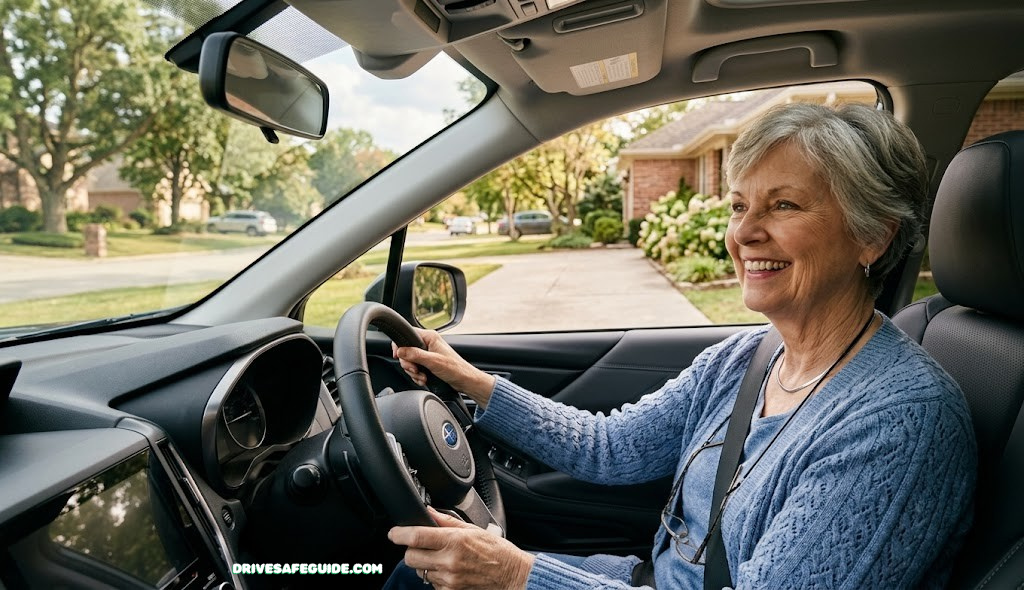
A senior driver refresher course is a short, voluntary class — usually four to eight hours, online or in a classroom — that updates older drivers on current traffic laws and defensive driving techniques while addressing age-related changes like slower reaction time and reduced night vision. It is not a driving test, it will not put your license at risk, and in most states it can unlock a multi-year discount on your car insurance.
If you’ve noticed a few more close calls than usual, or a family member has gently brought up the topic, a refresher course is one of the lowest-stakes, highest-payoff ways to stay independent on the road longer.
01 What Is a Senior Driver Refresher Course, Exactly?
A senior driver refresher course is a short, voluntary class — usually somewhere between four and eight hours — built for licensed drivers who already know how to drive but want to sharpen what they know.
Unlike driver’s ed for a sixteen-year-old, nobody is learning to parallel park for the first time here. Instead, the curriculum focuses on what’s changed since you first got your license: updated right-of-way rules, roundabouts that didn’t exist in most towns thirty years ago, new vehicle technology like lane-departure warnings and adaptive cruise control, and — most importantly — practical strategies for adjusting to the physical changes that come with getting older.
These courses are typically run by national organizations such as AARP Driver Safety and AAA, though many state DMVs, local senior centers, and insurance companies offer or recognize their own versions too. They’re held in classrooms, community centers, libraries, and increasingly online, where you can work through the material on your own schedule. A growing number of drivers also start by reviewing core defensive driving habits on their own before ever signing up, just to see how much they already remember.
The single most important thing to understand up front: a refresher course is education, not evaluation. There’s no behind-the-wheel test, no instructor riding shotgun grading your three-point turn, and no report sent to the DMV. You attend, you participate, you walk away with a certificate. That distinction alone is why so many drivers who’d otherwise put this off for years end up finding the experience far less intimidating than they expected.
Most programs set a minimum age — commonly 50 or 55 — though anyone with a valid license can usually register regardless of age if they want a refresher. For a broader look at habits that apply to drivers of every age, the guide to building safer driving habits is a useful companion piece to keep in your back pocket alongside this one.
02 Why Aging Quietly Changes the Way We Drive
None of this happens overnight, and none of it means you’ve suddenly become a dangerous driver. It happens gradually enough that most people don’t notice until someone else points it out.
Vision is usually the first thing to shift. Night driving becomes harder not because your eyes are “worse” in the way glasses can simply fix, but because the eye’s ability to recover from glare slows down — headlights from an oncoming car can leave a lingering blind spot for a few extra seconds. Contrast sensitivity drops too, which makes it tougher to spot a pedestrian in dim, rainy conditions or a gray car merging on an overcast day.
Reaction time is the second big factor. Plenty of research on driver performance shows that the gap between “seeing a hazard” and “foot moving to the brake” lengthens gradually starting in a driver’s fifties and sixties. It’s measured in fractions of a second, but at highway speed those fractions translate into real following distance.
Then there’s flexibility. Checking a blind spot requires rotating your neck and torso — something that gets harder with arthritis, a stiff shoulder, or a fused vertebra from an old injury. Drivers compensate without realizing it, relying more on mirrors and less on a direct over-the-shoulder glance, which can leave a gap in coverage right where it matters most.
Hearing changes can mean missing a siren until it’s close, or not noticing a rattling brake pad that would have caught a younger driver’s attention sooner. And medication is an underrated factor: many drivers in their sixties and seventies are managing two, three, or more prescriptions, and a fair number of common drugs — antihistamines, muscle relaxants, some blood pressure medications — list drowsiness or dizziness as a side effect that most people never connect back to their driving.
None of this is a verdict. It’s simply the backdrop a refresher course is designed for — and it’s exactly why the strategies covered overlap so much with general defensive driving techniques: bigger following distances, more deliberate mirror checks, and routes planned around your strongest hours of the day.

Polarized Anti-Glare Driving Glasses
A simple, inexpensive way to soften headlight glare and improve contrast on overcast or rainy days — pairs well with everything a refresher course teaches about vision changes.
Check Today’s Price on Amazon03 Telltale Signs It Might Be Time for a Refresher
There’s rarely one dramatic moment that signals it’s time. It’s usually a handful of small things that, taken together, are worth paying attention to.
Common signs worth noticing
- New dents or scrapes on the car, garage doorframe, or mailbox that weren’t there before.
- More honks from other drivers at intersections or while merging.
- A family member has mentioned something — even gently or in passing.
- Getting turned around on familiar routes you’ve driven for years.
- Avoiding left turns, highways, or night driving more than you used to.
- Leaning on GPS for trips you once knew by heart.
- Feeling unusually tired after a short drive.
- More near-misses — moments where you reacted just a beat late.
One or two of these on their own usually aren’t a red flag — everyone has an off day, and a single missed turn doesn’t mean much. But a pattern across several of them is worth treating as useful information rather than something to brush aside. It’s also worth checking whether any of it lines up with specific situations, like fatigue late in the day; the drowsy driving checklist is a quick way to rule that piece out.
If you’re someone who’s started leaning harder on your phone’s navigation just to feel oriented, a secure, properly positioned mount keeps that tool from becoming its own distraction — worth setting up before your next long drive.

Easy-Grip Dashboard Phone Mount
Keeps navigation at eye level and within arm’s reach, so glancing at directions doesn’t mean taking your eyes far from the road — small change, real difference.
See Options on AmazonIt’s also worth remembering that none of these signs, even several together, automatically mean a refresher course will fix everything. They’re simply a nudge to take a closer look — whether that’s a course, an honest conversation, or a quick check-in with a doctor about a recent change in vision or medication. A pattern of the same mistakes that show up on driving tests — missed signals, rolling stops, drifting out of a lane — tends to be the same pattern a refresher course directly targets.
01 What Is a Senior Driver Refresher Course, Exactly?
A senior driver refresher course is a short, voluntary class — usually somewhere between four and eight hours — built for licensed drivers who already know how to drive but want to sharpen what they know.
Unlike driver’s ed for a sixteen-year-old, nobody is learning to parallel park for the first time here. Instead, the curriculum focuses on what’s changed since you first got your license: updated right-of-way rules, roundabouts that didn’t exist in most towns thirty years ago, new vehicle technology like lane-departure warnings and adaptive cruise control, and — most importantly — practical strategies for adjusting to the physical changes that come with getting older.
These courses are typically run by national organizations such as AARP Driver Safety and AAA, though many state DMVs, local senior centers, and insurance companies offer or recognize their own versions too. They’re held in classrooms, community centers, libraries, and increasingly online, where you can work through the material on your own schedule. A growing number of drivers also start by reviewing core defensive driving habits on their own before ever signing up, just to see how much they already remember.
The single most important thing to understand up front: a refresher course is education, not evaluation. There’s no behind-the-wheel test, no instructor riding shotgun grading your three-point turn, and no report sent to the DMV. You attend, you participate, you walk away with a certificate. That distinction alone is why so many drivers who’d otherwise put this off for years end up finding the experience far less intimidating than they expected.
Most programs set a minimum age — commonly 50 or 55 — though anyone with a valid license can usually register regardless of age if they want a refresher. For a broader look at habits that apply to drivers of every age, the guide to building safer driving habits is a useful companion piece to keep in your back pocket alongside this one.
02 Why Aging Quietly Changes the Way We Drive
None of this happens overnight, and none of it means you’ve suddenly become a dangerous driver. It happens gradually enough that most people don’t notice until someone else points it out.
Vision is usually the first thing to shift. Night driving becomes harder not because your eyes are “worse” in the way glasses can simply fix, but because the eye’s ability to recover from glare slows down — headlights from an oncoming car can leave a lingering blind spot for a few extra seconds. Contrast sensitivity drops too, which makes it tougher to spot a pedestrian in dim, rainy conditions or a gray car merging on an overcast day.
Reaction time is the second big factor. Plenty of research on driver performance shows that the gap between “seeing a hazard” and “foot moving to the brake” lengthens gradually starting in a driver’s fifties and sixties. It’s measured in fractions of a second, but at highway speed those fractions translate into real following distance.
Then there’s flexibility. Checking a blind spot requires rotating your neck and torso — something that gets harder with arthritis, a stiff shoulder, or a fused vertebra from an old injury. Drivers compensate without realizing it, relying more on mirrors and less on a direct over-the-shoulder glance, which can leave a gap in coverage right where it matters most.
Hearing changes can mean missing a siren until it’s close, or not noticing a rattling brake pad that would have caught a younger driver’s attention sooner. And medication is an underrated factor: many drivers in their sixties and seventies are managing two, three, or more prescriptions, and a fair number of common drugs — antihistamines, muscle relaxants, some blood pressure medications — list drowsiness or dizziness as a side effect that most people never connect back to their driving.
None of this is a verdict. It’s simply the backdrop a refresher course is designed for — and it’s exactly why the strategies covered overlap so much with general defensive driving techniques: bigger following distances, more deliberate mirror checks, and routes planned around your strongest hours of the day.

Polarized Anti-Glare Driving Glasses
A simple, inexpensive way to soften headlight glare and improve contrast on overcast or rainy days — pairs well with everything a refresher course teaches about vision changes.
Check Today’s Price on Amazon03 Telltale Signs It Might Be Time for a Refresher
There’s rarely one dramatic moment that signals it’s time. It’s usually a handful of small things that, taken together, are worth paying attention to.
Common signs worth noticing
- New dents or scrapes on the car, garage doorframe, or mailbox that weren’t there before.
- More honks from other drivers at intersections or while merging.
- A family member has mentioned something — even gently or in passing.
- Getting turned around on familiar routes you’ve driven for years.
- Avoiding left turns, highways, or night driving more than you used to.
- Leaning on GPS for trips you once knew by heart.
- Feeling unusually tired after a short drive.
- More near-misses — moments where you reacted just a beat late.
One or two of these on their own usually aren’t a red flag — everyone has an off day, and a single missed turn doesn’t mean much. But a pattern across several of them is worth treating as useful information rather than something to brush aside. It’s also worth checking whether any of it lines up with specific situations, like fatigue late in the day; the drowsy driving checklist is a quick way to rule that piece out.
If you’re someone who’s started leaning harder on your phone’s navigation just to feel oriented, a secure, properly positioned mount keeps that tool from becoming its own distraction — worth setting up before your next long drive.

Easy-Grip Dashboard Phone Mount
Keeps navigation at eye level and within arm’s reach, so glancing at directions doesn’t mean taking your eyes far from the road — small change, real difference.
See Options on AmazonIt’s also worth remembering that none of these signs, even several together, automatically mean a refresher course will fix everything. They’re simply a nudge to take a closer look — whether that’s a course, an honest conversation, or a quick check-in with a doctor about a recent change in vision or medication. A pattern of the same mistakes that show up on driving tests — missed signals, rolling stops, drifting out of a lane — tends to be the same pattern a refresher course directly targets.
04 Inside the Curriculum: What These Courses Actually Cover
Most refresher programs are broken into units you move through in order, whether you’re sitting in a classroom or working from a laptop at your kitchen table.
A typical course opens with a short, ungraded quiz just to get a sense of where you’re starting from, followed by a look at national crash statistics for context — not to scare anyone, but to show which situations cause the most trouble for experienced drivers specifically. From there, the material usually moves through updated traffic laws and right-of-way rules, a deep dive on age-related physical changes and how to work around them, a unit on how medications can affect driving, a review of newer vehicle safety technology like blind-spot warnings and adaptive cruise control, and a closing section on planning routes and trip timing around your own strongest hours.
A lot of this overlaps directly with general following-distance guidelines and roundabout navigation rules that have simply changed or expanded since many drivers first learned them decades ago.
Here’s the part that surprises a lot of people: almost none of these programs include a behind-the-wheel component. You won’t be asked to drive anywhere, parallel park for an instructor, or demonstrate a three-point turn. The entire course happens in a classroom or on a screen. That’s a deliberate design choice — the goal is building awareness and refreshing knowledge, not pass/fail testing.
This is genuinely different from a driving evaluation or reassessment, which is a separate, much less common process — usually triggered by a physician’s report, a family member’s formal concern, or a flag from the DMV after an incident — where a trained evaluator actually rides along and assesses your driving in real time. That kind of evaluation can affect your license. A standard refresher course cannot.
05 AARP Smart Driver vs. AAA RoadWise vs. Local DMV-Approved Courses
The two names you’ll see most often are AARP Smart Driver and AAA RoadWise Driver. Both are well-established, both are widely accepted by insurers, and both cover very similar ground — so the choice usually comes down to convenience, membership, and price rather than one being meaningfully “better” than the other.
| Program | Typical Minimum Age | Formats | Typical Length | Typical Cost | Driving Test? |
|---|---|---|---|---|---|
| AARP Smart Driver | 50+ | Online (self-paced) or in-person classroom | 4–8 hours, depending on your state | Roughly $20–$30; AARP members usually pay a few dollars less | No |
| AAA RoadWise Driver | 55+ | Online everywhere; in-person in select areas | 4–8 hours, depending on format and state | Roughly $15–$25; AAA members typically get a discount | No |
| Local DMV-approved / insurer course | Varies by provider, often 50–55+ | Varies — online, classroom, or hybrid | Varies, often 4–8 hours | Wide range; some community centers offer it for very little or free | Almost always no, but confirm with the specific provider |
A few details worth keeping in mind: both AARP and AAA give you a window of time to finish an online course once you register (commonly around 60 days, shorter in a couple of states), and both issue a certificate that’s good for about three years before you’d need to retake the course to keep an insurance discount active. Pricing and exact program availability shift over time and by location, so it’s worth a quick look at the current options on the AARP Driver Safety site or your local AAA club before registering.
If neither program has a session near you, ask your insurance agent directly — many companies maintain a short list of other state-approved courses that qualify for the same discount.
06 Online vs. In-Person: Which Format Fits Your Life?
Both formats teach essentially the same material and qualify for the same insurance discounts. The real question is which one fits how you actually like to learn.
Online — What Works Well
- Go at your own pace, in multiple short sessions if you’d rather not sit through it all at once
- No driving to a classroom or coordinating a ride
- Re-watch or re-read any section that didn’t fully sink in
- Often a few dollars cheaper than the classroom version
Online — Worth Knowing
- Requires a reasonably steady internet connection and basic comfort with a computer, tablet, or phone
- No instructor in the room to ask a quick follow-up question
- Easy to lose your spot if you’re not used to logging back into a course portal
In-Person — What Works Well
- A live instructor you can ask questions in real time
- A social morning or afternoon — many people genuinely enjoy the group setting
- Nothing to log into, download, or troubleshoot
In-Person — Worth Knowing
- Fixed date and time, sometimes a full day with limited breaks
- Requires getting to and from the location
- Fewer sessions available in rural areas
If you’re already comfortable emailing photos to your grandkids or video-calling a friend, the online course will likely feel easy and saves you a trip. If screens generally aren’t your thing, or you’d simply enjoy a morning out with other people working through the same material, the classroom version delivers the identical certificate without any of the tech.
07 The Insurance Discount Angle: What You Can Realistically Save
This is often the detail that gets someone to finally sign up, even if safety alone wasn’t quite enough motivation.
More than thirty states have laws on the books requiring auto insurers to offer some kind of premium discount to older drivers who complete an approved course — Pennsylvania and Florida are two well-known examples where it’s written directly into state law rather than left up to each insurer’s discretion. In states without that kind of mandate, most major carriers offer a version of the discount anyway, simply because statistically it’s good business for them too: a refreshed driver is a lower-risk driver.
The size of the discount and how long it lasts depends entirely on your insurer and state. A few real-world examples to set expectations: one major carrier offers up to a 5% discount for three years after course completion, while others in the 10–15% range aren’t unusual, and some companies advertise total three-year savings in the low hundreds of dollars depending on your existing premium. None of these numbers are guaranteed for your specific policy — the only way to know your real number is to call your agent and ask directly what their mature-driver discount looks like.
What is consistent across nearly every program is the renewal pattern: certificates are typically valid for about three years, after which you’d retake the course to keep the discount active. Survey data from AARP found that the overwhelming majority of people who finish the course go on to actually redeem it for a discount, so this isn’t a benefit that gets left on the table very often once people know it exists.

Compact Front-Facing Dash Cam
Continuous footage is genuinely useful if you’re ever in a dispute over fault — and a documented clean driving record only helps your case for keeping that insurance discount.
View Dash Cams on Amazon08 License Renewal Rules and Testing Requirements for Older Drivers
Let’s clear up a persistent rumor first: there is no federal law requiring older drivers to take annual road tests or cognitive exams. Driver licensing is, and always has been, controlled entirely by individual states.
That said, most states do treat license renewal differently once a driver passes a certain age, usually through one or more of three levers: a shorter interval between renewals, a requirement to renew in person rather than by mail or online, or a mandatory vision test at every renewal. The age at which any of this kicks in varies enormously — anywhere from the early sixties in a few states to the late seventies in others, with 70 or 75 being the most common threshold nationally.
A handful of illustrative examples, since the differences from state to state are significant:
| State (example) | What typically changes with age |
|---|---|
| Illinois | The only state with an age-triggered road test — and lawmakers there recently moved the starting age considerably higher than it used to be, so check the current threshold before assuming it applies to you. |
| Arizona | Renewal interval shortens once you reach the mid-sixties, compared with a much longer cycle for younger drivers. |
| Texas | Drivers in their mid-eighties move to a shorter renewal cycle than the standard eight-year license. |
| Florida | An age-based vision test requirement applies starting around 80, alongside a shorter renewal cycle. |
| California | In-person renewal becomes mandatory at 70 — online or mail renewal is no longer an option past that point. |
Road tests, by contrast, are rare. Outside of Illinois, age alone almost never triggers a mandatory behind-the-wheel re-test anywhere in the country — that kind of evaluation is typically reserved for situations involving a specific medical report, a documented crash pattern, or a formal referral, which connects back to the same evaluation-versus-refresher distinction covered earlier. Most states also have some pathway for a physician, law enforcement officer, or even a family member to file a confidential concern that can trigger a medical review, separate from the normal renewal cycle. This sits in the same general category as other medically-linked driving questions, like the considerations covered for epilepsy and driving restrictions.
If you do get called in for a vision test and don’t pass on the first try, that alone doesn’t mean your license is gone. Most states simply refer you to an eye doctor for a more complete exam, and many drivers end up licensed with a corrective-lens restriction rather than losing driving privileges altogether. Because these rules genuinely do change and vary block by block, the most reliable move is always a quick check of your own state DMV’s website a few months before your renewal is due, rather than relying on what a neighbor or a forwarded email says.
09 The Practical Skills a Refresher Course Helps You Rebuild
Beyond the legal updates and statistics, the most lasting value of a refresher course is usually a handful of physical habits that quietly slipped over the years.
Mirror and blind-spot checking is the big one. Surveys of course graduates consistently show that “checking blind spots more deliberately” is the single most common behavior change people report afterward. The course walks through exactly where your mirrors should be angled and reinforces the quick head-turn that mirrors alone can’t replace — directly tied to the flexibility changes covered earlier in this guide.
Following distance is the second major focus, since slower reaction time means the old three-second rule often needs to stretch a bit further at highway speed; the full breakdown lives in the guide to the safe following distance rule. Intersection scanning gets similar attention — deliberately checking left-right-left an extra beat longer before proceeding, especially at intersections without a protected turn signal.
Merging and lane changes on busier roads come up too, particularly for drivers who’ve quietly started avoiding highways altogether; the strategies in the guide to easing highway merging anxiety echo a lot of what’s taught in a typical course. The same goes for navigating roundabouts, which have become far more common in the years since many drivers first learned the rules of the road and trip up plenty of confident, experienced drivers the first few times.

Wide-Angle Convex Blind Spot Mirrors (2-Pack)
Clip-on convex mirrors widen your existing mirror’s field of view, shrinking exactly the blind-spot zones a refresher course spends so much time on.
Check Price on Amazon10 Smart Vehicle Upgrades That Pair Perfectly With a Refresher Course
A refresher course rebuilds habits. A handful of inexpensive add-ons can quietly support those habits every single time you get behind the wheel.
Start with visibility, since that’s where most of the age-related changes covered earlier in this guide actually show up. A proper backup camera removes most of the guesswork from reversing out of a driveway or parking spot, and a set of blind spot mirrors closes the gap that a stiffer neck can leave open. If you’re shopping for a vehicle with these features already built in, the comparison of dash cams suited for night driving is worth a look too, since several double as parking and rear-visibility aids.

Wireless Backup Camera System
An aftermarket option for vehicles without one built in — a clear rear view turns reversing from a guessing game into a glance.
Browse Backup CamerasGrip and comfort matter more than people expect. Arthritis and mild carpal tunnel symptoms can make a hard plastic steering wheel genuinely uncomfortable on a longer drive, which is where a textured, non-slip steering wheel cover earns its keep — better grip with noticeably less hand fatigue.

Non-Slip Textured Steering Wheel Cover
An easy, no-tools installation that softens grip pressure on hands dealing with arthritis or general stiffness.
See Covers on AmazonSeating comfort is the upgrade people underestimate the most. Lower back pain genuinely shortens how long someone is willing to stay behind the wheel, and shorter trips planned around discomfort, not destination, is its own quiet safety issue. A supportive lumbar cushion, the kind of relief covered in the guide to driving cushions for sciatica, or one of the gel seat cushions built for fatigue relief can meaningfully extend a comfortable driving window. Pair it with one of the orthopedic neck pillows for longer family trips.

Memory-Foam Lumbar & Seat Cushion Set
Reduces the lower-back fatigue that quietly shortens comfortable driving time — especially useful on longer errands or road trips.
Shop Seat CushionsNone of these are required to take or pass a refresher course — they’re simply small, low-cost ways to make every drive after the course a little easier on your body and a little easier to focus on the road instead of discomfort.
11 How to Bring This Up With an Aging Parent (Without a Fight)
Research from the AAA Foundation has found that the large majority of older drivers have never actually talked with a family member or doctor about their driving — which means most families are avoiding a conversation that, handled well, usually goes a lot better than they expect.
The biggest mistake is leading with an accusation. “I don’t think you should be driving anymore” puts a parent immediately on the defensive and shuts the conversation down before it starts. A gentler entry point works better: bring it up as something you’re doing too, or considering for yourself down the road, rather than something being done to them. “I saw this refresher course AARP runs — apparently it can knock a chunk off your car insurance. Want to look at it together?” lands very differently than a warning.
A few things tend to help:
- Pick a calm moment — not right after a scary near-miss or a fender bender, when emotions are already high.
- Lead with the insurance savings, which is a genuinely practical, non-judgmental reason to take the course.
- Offer to take it together, even if you don’t strictly need it — it reframes the whole thing as a shared activity, not a verdict.
- Listen more than you talk. Most older drivers already have some awareness of what’s changed; they often just haven’t said it out loud.
- Keep it ongoing, not a single big conversation. A light check-in every so often is far less threatening than one serious sit-down.
It can help to remember this is the same conversation in reverse from parents teaching their teenagers to drive a few decades earlier — the roles have simply swapped, and a little of that same patience tends to go a long way in both directions.
12 How to Choose — and Actually Enroll In — the Right Course
With the background out of the way, narrowing down an actual choice usually only takes a few short steps.
Assess. Look back at the signs covered earlier in this guide. Are you mainly chasing the insurance discount, addressing a specific habit a family member mentioned, or just due for a refresh after years of driving the same routes on autopilot? Knowing your “why” makes the rest of the decision easier.
Compare. Check whether your insurer has a preferred or required provider before you register — most accept both AARP and AAA, but it costs nothing to confirm first. From there, weigh online against in-person based on what you read in the format comparison above, and check pricing for AARP and AAA members versus non-members, since membership can shave several dollars off either option.
Enroll. Sign up directly through the AARP or AAA site, your local AAA club, or a community center offering an approved class. Keep the confirmation email and, once finished, store the certificate somewhere easy to find — your insurance agent will need a copy to apply the discount, and you’ll want it again in about three years when it’s time to renew.
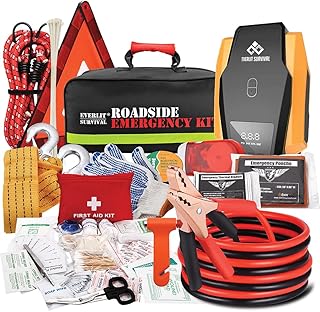
Compact Roadside Emergency Kit
While you’re tightening up good habits, it’s a good moment to make sure your trunk is, too — a basic kit covers most of the small surprises a longer drive can bring.
Check Kits on Amazon13 Frequently Asked Questions
Will taking a refresher course put my license at risk?
No. A standard refresher course — whether through AARP, AAA, your state DMV, or an insurer-approved provider — is purely educational. There is no driving test, no instructor who rides along, and nothing reported to the DMV. You attend, complete the material, and receive a certificate. That’s the entire process.
How much does a senior driver refresher course cost?
Most courses fall somewhere between $15 and $30. AARP Smart Driver typically runs around $20–$30, with a small discount for AARP members. AAA RoadWise Driver is usually $15–$25, with a similar member discount. Some community centers, senior centers, and local libraries offer DMV-approved versions for very little or even free — worth asking about if cost is a concern.
How long does the course take?
Most approved courses run four to eight hours total. Online versions can be split across multiple sessions — you log out, life happens, you log back in and pick up where you left off. Classroom versions are usually completed in a single day, sometimes split across two mornings. Your state may specify a minimum number of hours, which is why the exact length varies.
Does every insurance company offer a discount?
More than thirty states legally require insurers to offer a mature-driver discount to eligible policyholders who complete an approved course. In states without that mandate, most major carriers offer one anyway. The size of the discount — and whether your specific policy qualifies — varies, so the most reliable step is a direct call to your agent before you register. That way you know exactly what to expect and which provider they prefer.
How long is the certificate valid?
Most certificates are valid for approximately three years. After that, you’d need to retake the course to keep an insurance discount active. Both AARP and AAA send reminders when renewal is approaching, and the retake process is identical to the first time — same material, same certificate, same discount.
Can I take the online course on a tablet or phone?
Yes, both AARP Smart Driver Online and AAA RoadWise Driver Online are designed to work on tablets and most modern smartphones, not just desktop computers. If you’re comfortable reading email or watching a video on your device, you’ll have no trouble navigating either course. A steady Wi-Fi connection is helpful for sessions with video content.
Is a refresher course the same as a driving evaluation?
No — and that distinction matters. A refresher course is voluntary, education-only, and has no impact on your license. A driving evaluation (sometimes called a reassessment) is a separate, much less common process that involves an actual behind-the-wheel assessment by a trained evaluator. Evaluations are typically triggered by a physician’s referral, a specific incident, or a DMV flag — not by age alone, and not by a refresher course.
Do I have to be a certain age to enroll?
Most programs set a minimum of 50 or 55 for the mature-driver discount to apply. That said, any licensed driver can typically register regardless of age — you just may not qualify for the insurance discount if you’re below the insurer’s age threshold. Check with your agent if you’re younger than 50 and wondering whether the discount would apply to your policy.
What happens after I finish the course?
You receive a completion certificate — usually delivered by email for online courses, or handed out at the end of a classroom session. Make a copy and send the original (or a scan) to your insurance agent, who will apply the discount to your next billing cycle. Store the certificate somewhere you can find it again in about three years, when it’ll be time to renew.
Final Thoughts: Independence Is the Goal
A senior driver refresher course is not about admitting something’s wrong. It’s about keeping something right — your independence, your routine, your ability to get yourself where you need to go without asking for a ride.
The case for taking one is straightforward: it takes four to eight hours, costs less than a tank of gas, can knock a meaningful percentage off your insurance premium for the next three years, and sends you back behind the wheel with a handful of habits that are genuinely sharper than before. The downside risk is essentially zero — there’s no test to fail, no report sent anywhere, and nothing to lose by finishing except a morning or an afternoon.
If you’ve been putting it off because it felt like an admission of something, consider this a reframe: experienced drivers take courses. Pilots recertify. Surgeons do continuing education. A refresher isn’t a flag — it’s what people who take their skills seriously actually do.
Find a Course Near You → AARP Driver SafetyDriveSafeGuide participates in the Amazon Associates program. Links marked with product recommendations are affiliate links — if you purchase through them, we may earn a small commission at no additional cost to you. Prices and program details (course fees, insurance discount amounts, state renewal rules) are subject to change; verify current information directly with your insurer and state DMV before making decisions.
🏆 Recommended Course
Take a Defensive Driving Course Online
Reduce your insurance premium, dismiss a traffic ticket, or simply become a safer driver — all from home, at your own pace.
💻 Start Your Course — From $24.95Affiliate link — we earn a small commission that keeps DriveSafeGuide running. Thank you!