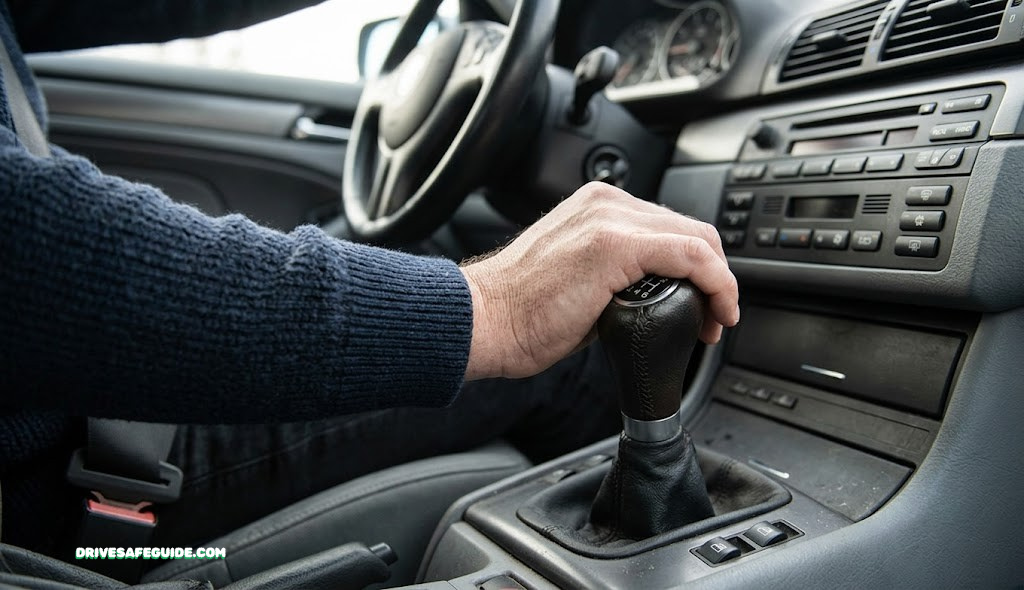
Mastering the Art of Manual Transmission: A Guide to Fixing Stalls
Every stick-shift driver stalls at some point — the difference between a frustrated beginner and a confident driver is understanding exactly why it happens and building the muscle memory to stop it.
Why Manual Transmission Cars Stall in the First Place
Stalling feels random the first few weeks behind a stick shift, but it almost never is. A stall happens when the engine’s crankshaft speed drops below the point where it can keep running under load — and in a manual car, you are the one controlling that load through the clutch pedal.
Think of the engine as a person walking on a treadmill. As long as the treadmill (the road, through the wheels) moves at a pace the person can match, everything is fine. The clutch is the mechanism that lets you gradually connect the spinning engine to that treadmill. Release it too quickly, or without enough throttle to support the sudden load, and the engine gets yanked to a stop before it has the momentum to keep spinning on its own. That abrupt disconnect is what you feel and hear as a stall — a lurch, a shudder, and silence.
New drivers often assume stalling is a sign they are bad at driving, but it is really a timing and coordination skill, no different from learning to ride a bike or type without looking at the keyboard. The good news is that the physics involved are consistent and predictable, which means the fix is also consistent and predictable. Once your feet learn the correct sequence of motions, stalling becomes rare, and eventually it becomes something you have to think back to remember.
It also helps to understand that stalling is not damaging your car. A stall simply cuts power to the wheels and shuts the engine off; it is not comparable to redlining an engine or grinding gears. The embarrassment of stalling at a green light is real, but the mechanical consequence is essentially zero. Keeping that in mind takes the pressure off while you are learning, which — counterintuitively — makes you far less likely to stall, since tension in your legs is one of the biggest contributors to jerky clutch control.
It’s also worth separating the emotional experience of stalling from the technical one. Most new drivers describe the same sequence of feelings: a jolt of embarrassment, a flush of heat in the face, and an urge to restart the car as fast as humanly possible before anyone notices. That rush actually works against you, because restarting in a panic tends to repeat the exact same rushed clutch release that caused the stall in the first place. Experienced instructors often teach a small pause — a full second of stillness after a stall — specifically to break that panic-repeat cycle. Put the car in neutral, take a breath, and restart deliberately rather than reflexively.
There’s also a useful distinction between a “single-cause” stall and a “compound” stall. A single-cause stall happens from one clear mistake, like releasing the clutch too fast at a stop sign. A compound stall happens when several small errors stack on top of each other — a slightly wrong gear, slightly too little throttle, and a slightly rushed release all at once. Compound stalls feel more mysterious because no single mistake stands out, but they respond to the exact same fundamentals: slow down through the biting point and give the engine enough throttle to carry the load. Isolating and practicing each piece individually, rather than trying to fix “everything” at once, is what actually resolves compound stalling patterns.
The Clutch-Gas Balance: The Real Skill You’re Building
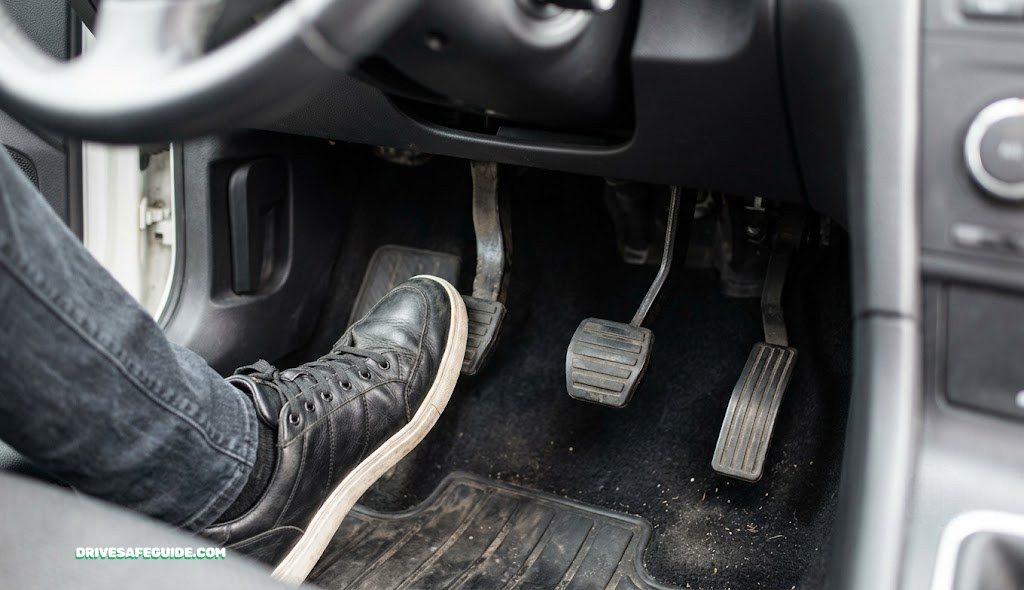
At the center of every stall is the relationship between two pedals: the clutch and the accelerator. The clutch disconnects the engine from the transmission so you can shift gears or come to a stop without the engine dying. The accelerator controls how much power the engine is producing at any given moment. Stalling happens almost exclusively when these two pedals get out of sync — usually when the clutch is released faster than the throttle can compensate.
Every clutch has a “biting point” — the narrow window in the pedal’s travel where the clutch plates first begin to make contact and start transferring engine power to the wheels. Below that point, releasing the clutch does almost nothing. Above it, the clutch is fully engaged and behaves like a solid connection. The skill of smooth manual driving is entirely about slowing down inside that narrow window and adding gas at the same time, so the engine has enough power to absorb the new load instead of being dragged down by it.
A simple mental model: bring the clutch up quickly through the “dead zone” until you feel the car want to move or the engine note change slightly, then slow way down and add light throttle as you finish releasing. Most stalls happen because a driver treats the entire pedal travel as one uniform motion instead of two distinct phases — fast, then slow.
For a broader look at building safe habits behind the wheel beyond clutch control, our guide to defensive driving habits that reduce collision risk pairs well with the fundamentals covered here.
It helps to think of the clutch pedal not as an on-off switch but as a dimmer. Beginners tend to treat it in binary terms — fully down or fully up — because that mental model matches how the brake and accelerator work. But the clutch spends most of its useful life somewhere in the middle, gradually transferring more and more engine torque to the transmission as it rises through the biting zone. The dimmer analogy also explains why practicing with your eyes closed, or at least without watching your feet, often improves clutch feel faster than staring down at the pedals — you’re forced to rely on the sound and feel of the engine rather than a visual guess at pedal position, which is exactly the sense you’ll depend on once driving becomes automatic.
Every clutch also has a slightly different “feel” depending on whether it’s cable-operated or hydraulic. Hydraulic clutches, common in most modern cars, tend to have a smoother, more linear pedal feel with a clearly defined biting point. Older cable-operated clutches can feel slightly heavier and may have a biting point that shifts subtly as the cable stretches over time. If you’re switching between different manual vehicles — a driving school car one week and a family car the next — expect to spend the first few minutes recalibrating your foot to a new biting point rather than assuming it will be identical to the last car you drove.
The Most Common Reasons New Drivers Stall
Almost every stall traces back to one of a small handful of root causes. Recognizing which one applies to you is the fastest way to fix the habit, because “just be smoother with the clutch” is not actionable advice on its own.
- Releasing the clutch too fast through the biting point. This is by far the most common cause, especially in the first two weeks of driving stick. The fix is slowing down specifically in the middle third of the pedal’s travel.
- Not adding enough gas when releasing the clutch. Many new drivers are so focused on the clutch that they forget the accelerator entirely, releasing the clutch into an idling engine that has no reserve power to spare.
- Riding the clutch and then panicking off it. Some drivers hover at the biting point too long out of nerves, then suddenly release fully when a car behind them honks, causing an abrupt stall.
- Choosing the wrong gear for the situation. Trying to pull away in second gear, or downshift into first at 20 mph, puts a mismatch between engine speed and required torque that the clutch cannot smooth over.
- Tense, jerky footwork caused by nerves. Stiff ankles transmit every small movement of your leg directly into pedal movement, turning smooth intentions into abrupt clutch releases.
- Distraction at the moment of engagement. Checking mirrors, talking, or watching a pedestrian at the exact second you’re releasing the clutch breaks the concentration this early skill still requires.
If you’re teaching a teenager or new driver these fundamentals, our resource on parents teaching teen drivers lays out a structured approach that pairs naturally with clutch-control practice.
It’s worth noting that most of these causes overlap and reinforce one another in the first few weeks of learning. Nerves cause tension, tension causes jerky footwork, jerky footwork causes a stall, and the stall itself increases nerves for the next attempt — a feedback loop that can feel discouraging if you don’t recognize it for what it is. Breaking the loop usually doesn’t require fixing every cause at once; addressing the throttle-timing issue alone, for instance, often resolves several of the downstream symptoms, since a well-timed throttle input gives you more margin for error on gear selection and clutch speed as well. This is why instructors often focus a beginner’s very first lessons almost entirely on the clutch-and-gas relationship in a straight line, well before introducing turns, hills, or traffic — mastering the core skill in isolation makes every subsequent scenario easier to layer on top.
Step-by-Step: Preventing Stalls When Starting From a Complete Stop
Starting from a stop is where the vast majority of stalls happen, because it requires the biggest jump from zero momentum to forward motion. Here is the sequence that eliminates the guesswork:
- Fully depress the clutch and select first gear. Confirm the gear is fully engaged, not sitting between gates.
- Bring the clutch up quickly to the biting point. You’ll typically feel the front of the car dip slightly or hear the idle note change — that’s your cue.
- Add light, steady throttle the instant you feel the bite. Around 1,200–1,500 RPM is usually enough for a flat surface.
- Release the remaining clutch travel slowly while keeping the throttle steady or gently increasing it.
- Once the clutch is fully up, ease off the clutch pedal pressure entirely and drive normally, adjusting throttle as needed.
| Symptom | Likely Cause | Quick Fix |
|---|---|---|
| Engine dies immediately, no jerk | Too little throttle at biting point | Add slightly more gas before releasing further |
| Car lurches hard, then dies | Clutch released too fast past the biting point | Slow the release specifically in the middle third of travel |
| Engine revs high, car barely moves | Too much throttle, clutch not engaged enough | Release clutch slightly further before adding more gas |
| Stall only on an incline | Insufficient throttle to counter gravity | Add 300–500 more RPM than on flat ground |

Keep an Eye on Engine Health While You Practice
A basic OBD2 scanner lets you check idle-related fault codes in seconds if stalling ever feels mechanical rather than technique-related.
Check Prices on AmazonHill Starts: Stopping the Stall-and-Rollback Combo
Hill starts intimidate new manual drivers more than almost anything else, because gravity adds a second force pulling against your forward momentum right as you’re trying to coordinate the clutch and throttle. The fear of rolling backward into the car behind you often causes drivers to rush the clutch release, which ironically causes the exact stall they were trying to avoid.
The handbrake method removes the rollback problem entirely: apply the handbrake before you stop rolling backward at all, then find the clutch’s biting point and add throttle exactly as you would on flat ground. Once you feel the engine straining slightly against the handbrake — a subtle tug forward — release the handbrake smoothly while keeping the clutch and throttle steady. The car will move forward without rolling back even an inch, and without needing your right foot to juggle brake and gas.
For drivers without a handbrake habit yet, the “roll-back and catch” method also works: allow a small, controlled roll backward while finding the bite point, then release the brake pedal the instant you feel the clutch engage and add throttle immediately. This method requires more confidence and is best practiced in an empty lot before trying it on an actual hill with traffic behind you.
Our detailed walkthrough on hill starts without rollback expands on both techniques with additional troubleshooting for steep grades and heavier vehicles.
Stalling at Low Speed, in Roundabouts, and During Turns
Low-speed stalling is different from stalling at a stop because you’re usually already in motion, which means the engine has some momentum working in your favor — but it also means you’re often managing steering, observation, and gear selection simultaneously, which divides your attention right when precise clutch control matters most.
Roundabouts and tight turns are common stall points because drivers frequently ride the clutch through the turn instead of committing to a gear. Riding the clutch at partial engagement for too long causes the engine to labor against a load it cannot sustain at low RPM, and eventually it stalls even without any sudden pedal movement. The fix is to fully commit: either stay in first gear with the clutch fully engaged and throttle matched to the turn’s speed, or hold the clutch fully depressed while coasting through the turn and re-engage once you’re ready to accelerate out.
Multi-point turns and parking maneuvers create similar pressure, since you’re moving at walking pace and constantly modulating the clutch. Practicing the biting point in a straight line first, before attempting parking maneuvers, removes one variable at a time. Our guides to parallel parking and three-point turn dimensions both assume solid clutch control as a prerequisite, so it’s worth mastering low-speed clutch work before tackling those maneuvers. Roundabout-specific technique is covered separately in our roundabout navigation rules guide.
- Commit fully to either engaged or disengaged clutch through a turn
- Match your gear to your actual speed, not your destination speed
- Keep RPM slightly elevated through tight, low-speed maneuvers
- Ride the clutch at partial engagement through an entire turn
- Let RPM drop toward idle while still partially engaged
- Try to steer, shift, and check mirrors at the exact same instant early on
Traffic circles and busy intersections add a layer of social pressure that pure parking-lot practice doesn’t replicate. Knowing that other drivers are waiting for you to merge or proceed can push even a competent driver back into rushed, tense clutch inputs. A useful mental reframe here is that a two-second pause to steady your clutch input costs you almost nothing in real traffic terms, while a stall in the middle of a roundabout costs far more time and creates a genuine hazard. Prioritizing a slightly slower, more deliberate takeoff over a fast one nearly always works out better once you account for the cost of a potential stall.
Wet or uneven road surfaces add one more variable worth mentioning: reduced traction can make a car feel like it’s bogging down even with correct clutch and throttle input, because some of the engine’s power is being lost to slight wheel slip rather than forward motion. In these conditions, slightly more throttle than usual — paired with the same smooth clutch release — compensates for the traction loss without needing to change your fundamental technique.
Downshifting Mistakes That Cause Unexpected Stalls
Stalls don’t only happen when pulling away — they also happen when slowing down, and this type catches experienced drivers off guard because it feels less predictable. Downshift stalls occur when you release the clutch into a gear that’s mismatched with your current road speed, forcing the engine to a speed it cannot sustain.
The most common version happens when a driver brakes hard, drops straight into second or first gear too early, and releases the clutch while still traveling faster than that gear supports at idle. The transmission essentially tries to force the engine to spin at a speed matching the wheels, and if that speed is below idle, the engine stalls instead of revving up to match.
The fix is matching engine speed to gear before fully releasing the clutch, using light throttle blips on the way down through the gears (sometimes called “rev-matching”) so the engine is already spinning near the speed the new gear requires. Even without perfect rev-matching, simply waiting until your speed has dropped enough for the intended gear — rather than shifting down out of habit at a fixed speed — prevents the vast majority of downshift stalls.
This connects closely to safe following distance and braking planning; our guide on the safe following distance rule covers how early braking gives you the room to downshift smoothly instead of rushing gear changes under pressure.
When Stalling Isn’t a Technique Problem: Mechanical Causes to Rule Out
If you’ve been driving stick confidently for months or years and suddenly start stalling — especially at idle, at stoplights, or independent of clutch use — the cause is very likely mechanical rather than technique-related. It’s worth ruling these out before assuming you’ve forgotten how to drive.
- Low or unstable idle speed. A dirty throttle body or failing idle air control valve can drop idle RPM low enough that any small load causes a stall.
- Worn or failing clutch components. A worn clutch disc, weak pressure plate, or a hydraulic clutch losing fluid pressure can create an inconsistent biting point that shifts from day to day.
- Fuel delivery issues. A failing fuel pump or clogged fuel filter can starve the engine of fuel exactly when it needs a burst of power to avoid stalling. Our guide on symptoms of a failing fuel pump covers the warning signs in detail.
- Vacuum leaks. Unmetered air entering the intake confuses the engine’s fuel calculations, often causing rough idle and stalling especially when cold.
- Failing sensors. A faulty crankshaft position sensor, mass airflow sensor, or idle control sensor can each independently cause intermittent stalling that has nothing to do with driver input.
- Alternator or battery issues. In rare cases, a failing alternator causes enough electrical strain that the engine control unit misbehaves under load. Symptoms are covered in our alternator failure symptoms guide.
A simple diagnostic first step is checking your idle RPM against the manufacturer’s spec (usually 700–900 RPM) using an OBD2 reader, since idle that’s noticeably below spec is one of the most common hidden causes of “phantom” stalling that has nothing to do with clutch technique.
Timing matters too. If stalling started immediately after a specific service — an oil change, a battery replacement, or new spark plugs — that timing is a strong clue pointing toward a technician error, a disconnected sensor, or a reset that changed the engine control unit’s idle learning values. Many modern engines “relearn” idle behavior gradually after a battery disconnect, which can cause a temporary rough idle and occasional stalling for the first several dozen miles that resolves on its own. If the stalling persists well beyond that adjustment period, it’s worth returning to whoever performed the service. Keeping a simple log — noting the date, whether the engine was warm or cold, and what you were doing at the moment of the stall — makes it far easier for a mechanic to diagnose the issue quickly rather than guessing from a vague description of “it sometimes stalls.”

Stalling in Cold Weather or After a Long Idle Break?
A compact lithium jump starter is worth keeping in the trunk if repeated stalling has left your battery drained.
See Jump Starters on AmazonHow Vehicle Type Changes Your Stalling Risk
Not all manual vehicles behave identically, and understanding these differences prevents a lot of unnecessary self-doubt when a technique that worked perfectly in one car suddenly seems to fail in another.
Diesel engines generally produce far more low-end torque than comparable petrol engines, which means they’re often more forgiving of a slightly late throttle input — the engine simply has more grunt available at low RPM to absorb the clutch engagement. Drivers moving from a petrol car to a diesel one often find stalling becomes noticeably rarer, sometimes to the point where they assume they’ve simply “gotten better,” when in reality the vehicle itself is doing more of the work.
Small-displacement petrol engines, particularly in older or entry-level vehicles, tend to have a narrower forgiving window and require slightly more deliberate throttle input, since there’s less reserve torque available at idle. Turbocharged small engines add another wrinkle: they can feel gutless right off idle before the turbo spools up, meaning you may need a touch more clutch patience before the engine’s power delivery catches up with your inputs.
Trucks, vans, and heavier vehicles require more consistent throttle to avoid stalling, particularly when loaded, since the extra mass increases the load the engine must overcome during engagement. This is especially noticeable on hill starts, where the combination of extra weight and gravity can catch an inexperienced driver off guard even if they’ve mastered hill starts in a lighter car.
High-performance and sports cars sometimes have unusually light, short-travel clutches tuned for quick, aggressive engagement rather than smooth, forgiving takeoffs. These can actually be trickier for beginners despite feeling “sportier,” because the biting point window is often narrower and less forgiving of a slow, gradual release.
If you split time between multiple manual vehicles — a personal car and a work truck, for instance — budgeting a minute or two at the start of each drive to reacquaint your foot with that specific clutch is a small habit that prevents a surprising number of otherwise avoidable stalls.
Common Myths About Stalling, Debunked
A lot of well-meaning advice about manual driving is outdated, oversimplified, or simply wrong. Clearing up a few persistent myths can save you from picking up habits that actually make stalling more likely.
| Myth | Reality |
|---|---|
| “Always start in second gear in the rain or snow to avoid wheelspin.” | Starting in second on slippery surfaces is a valid technique for wheelspin, but it dramatically increases stall risk since second gear requires far more throttle and a much more precise biting point to avoid dying at low speed. |
| “Riding the clutch slightly makes starts smoother.” | Riding the clutch at partial engagement causes premature wear and can cause a delayed, unpredictable stall a few seconds after you thought you were safely moving. |
| “You should never look at the pedals while learning.” | Brief visual checks are fine early on; the real goal is to stop relying on sight entirely over time, not to avoid it from day one. |
| “A stall means you’re not cut out for manual driving.” | Stalling is a universal, temporary phase of learning clutch coordination, not an indicator of long-term ability. |
| “Bigger engines never stall.” | Engine size affects how forgiving the car is, but any manual vehicle can stall if the clutch is released too fast with too little throttle. |
Manual vs. Automatic: Comparing Stall Risk and Control
It’s worth understanding how manual transmissions compare to automatics on this specific issue, since it explains why stalling is a manual-only concern in almost every driving scenario.
| Factor | Manual Transmission | Automatic Transmission |
|---|---|---|
| Stall risk from driver input | Present, especially for beginners | Essentially none |
| Learning curve | Moderate to steep initially | Minimal |
| Driver control over engine engagement | Full manual control | Automatic, driver has no direct input |
| Mechanical failure points related to stalling | Clutch, flywheel, hydraulic clutch line | Torque converter, valve body (different failure modes) |
| Fuel efficiency on well-driven examples | Often comparable or slightly better | Comparable in modern automatics |
| Anti-theft advantage | Notable in high-theft areas | Minimal |
The tradeoff is straightforward: manual transmissions ask more of the driver upfront in exchange for more direct control, often better long-term clutch and brake wear when driven well, and a genuine skill that pays off in emergency situations where manual control over engine braking or gear selection matters — such as descending long grades or recovering from a skid, both covered in our skid control techniques guide.
Tools and Accessories That Help New Manual Drivers
While no product replaces practice, a few tools genuinely shorten the learning curve or help you diagnose whether a stubborn stalling issue is mechanical.
Worth Having
- Bluetooth OBD2 scanner for checking idle RPM and fault codes
- A properly adjusted driver’s seat for full clutch pedal travel
- Comfortable, thin-soled shoes for pedal feel
- A dash cam to review your own clutch timing on tricky maneuvers
Not Necessary
- Aftermarket “quick shift” kits before basic technique is solid
- Performance clutch upgrades for a daily learning car
- Steering wheel accessories unrelated to pedal control
If you’re also building a broader roadside and diagnostic kit while you practice, our guide to OBD2 scan tools for real-time sensor monitoring compares options in more depth, and our car safety kit guide covers the essentials every driver should carry regardless of transmission type.
One often-overlooked factor is footwear. Thick-soled boots, platform shoes, or anything that reduces the sensitivity of your ankle and foot makes it noticeably harder to feel the exact moment the clutch bites. Many driving instructors quietly recommend keeping a pair of thin, flat-soled shoes in the car specifically for practice sessions, since the improvement in pedal feedback is immediate and requires no financial investment at all. Seat position matters just as much: if your knee is nearly locked straight at full clutch depression, you lose the fine motor control needed for a gradual release. Adjusting the seat slightly closer, so your knee maintains a slight bend even with the clutch fully pressed, gives your leg muscles far more precision to work with.

Review Your Own Clutch Technique
A simple dash cam facing the cabin (or a phone mount) lets you rewatch your foot timing after a stall to spot the exact moment it went wrong.
Browse Dash Cams on AmazonPractice Drills That Build Real Muscle Memory
Reading about clutch control only gets you so far — the biting point has to become a physical sense in your leg, not a mental calculation. These drills, done in an empty parking lot, build that sense quickly and safely.
- Static biting point drill: With the handbrake on and the car in first gear, slowly release the clutch until the engine note changes and the car strains slightly against the brake. Hold it there for several seconds, then fully depress the clutch again. Repeat 15–20 times to build a physical sense of exactly where the bite point sits.
- Clutch-only crawl: Using only the clutch pedal (no throttle), practice creeping forward at idle speed and stopping by fully depressing the clutch again, without touching the brake. This isolates clutch feel completely.
- Stop-and-go loop: Drive a slow loop around an empty lot, coming to a complete stop and pulling away again every 15–20 feet. Repetition here builds speed and confidence in the full start sequence.
- Simulated hill start: Find a very gentle incline and practice the handbrake method repeatedly until releasing the handbrake at the exact right moment feels automatic.
- Rev-matched downshift practice: While coasting at low speed with no traffic around, practice downshifting with a small throttle blip before releasing the clutch, to feel the difference a matched engine speed makes.
New drivers preparing for a licensing test may also find it useful to combine these drills with our permit test practice questions and to review common instant-fail mistakes, since stalling during a driving test is common but rarely disqualifying on its own unless it happens repeatedly or creates a hazard.
Consistency matters more than duration when it comes to these drills. Fifteen focused minutes of biting-point practice every day for a week builds far more reliable muscle memory than a single three-hour session once a month, because motor skills like this consolidate through frequent, spaced repetition rather than sheer volume in one sitting. If you have access to a quiet street or lot at different times of day, varying the practice conditions — slightly uphill, slightly downhill, warm engine, cold engine — also builds a more adaptable sense of the biting point than practicing in identical conditions every time.
It’s also worth practicing recovery, not just prevention. Deliberately stalling the car in a safe, empty lot and then restarting calmly, in gear, without rolling, builds confidence that a stall in real traffic isn’t an emergency. Many nervous drivers have never actually practiced the restart sequence under low pressure, so the first time it happens for real — at a light, with cars behind them — it feels far more chaotic than it needs to. A calm, practiced restart takes under three seconds: clutch in, confirm neutral or first gear, restart the engine, find the bite point again.
Pros and Cons of Sticking With Manual Transmission
If the stalling learning curve has you questioning whether manual transmission is worth the effort, it helps to weigh the tradeoffs honestly rather than in the frustration of a stalled engine at a busy intersection.
Pros
- Direct control over gear selection and engine braking
- Often lower repair costs long-term (no complex torque converter or valve body)
- Genuine anti-theft benefit in areas where few drivers know how to operate one
- A transferable skill for international driving and certain vehicle types
- Many drivers report feeling more engaged and alert behind the wheel
Cons
- Real learning curve, including an initial stalling phase
- More physically demanding in heavy stop-and-go traffic
- Clutch wear is directly tied to driver technique
- Fewer available models in some markets as automatics dominate
- Not ideal for drivers with certain mobility limitations
Drivers managing conditions like carpal tunnel or steering-related discomfort may want to review our guide on carpal tunnel and steering grip for ergonomic adjustments that make manual driving more comfortable over long periods.
Most drivers who push through the early stalling phase report that the payoff is worth it, not just in terms of driving satisfaction but in genuine emergency preparedness. Manual transmission drivers tend to develop a more intuitive sense of engine braking, load management, and mechanical sympathy simply because the car demands active participation rather than passive operation. That said, there’s no shame in deciding an automatic better fits your lifestyle, particularly for drivers who spend most of their time in dense, stop-and-go city traffic where constant clutch use becomes physically tiring rather than enjoyable.
How to Tell If It’s You or the Car
After working through technique fixes, some drivers still stall occasionally, and it’s worth having a clear framework for deciding whether more practice or a mechanic visit is the right next step.
| Pattern | Likely Explanation |
|---|---|
| Stalls only when starting from a stop or on hills | Technique — keep practicing biting point control |
| Stalls at random idle, even in neutral or park | Mechanical — idle control or sensor issue |
| Stalling has gotten worse over recent weeks | Mechanical — likely worsening clutch or fuel delivery issue |
| Only stalls when cold, resolves once warmed up | Mechanical — common with vacuum leaks or cold-start sensors |
| Only happens under specific driver-error conditions (rushed hill starts, downshifts) | Technique — targeted drills will resolve it |
If your transmission also feels like it’s slipping between gears or hesitating under load in addition to stalling, that’s a separate and more serious symptom worth investigating on its own — see our guide on transmission slipping causes for a full diagnostic breakdown.
You’ll Stop Stalling Sooner Than You Think
Every confident manual driver you’ve ever ridden with stalled repeatedly when they were learning — the skill simply takes repetition to become automatic. Focus on the biting point, commit fully through turns and downshifts, and rule out mechanical causes if the pattern changes suddenly. Within a few weeks of deliberate practice, the coordination that feels so effortful today will happen without a single conscious thought.
Explore More Driving Confidence GuidesFrequently Asked Questions
If you’re releasing the clutch slowly but still stalling, the most common cause is insufficient throttle. A slow clutch release only helps if the engine has enough power reserve to absorb the increasing load — without light gas input, even a perfectly smooth release can stall the engine, especially on an incline or with a heavier vehicle.
Occasional stalling causes no meaningful mechanical harm. The engine simply shuts off; there’s no grinding or damage involved. The only real downside is the inconvenience and the momentary loss of power steering and power brakes, so always be mindful of your position relative to other vehicles and intersections.
With the handbrake engaged and the car in first gear, slowly lift the clutch pedal while listening and feeling for a change in engine note or a slight forward tug against the handbrake. That point is the biting point, and it varies slightly between vehicles, especially between hydraulic and cable-operated clutches.
Nervousness causes muscle tension, and a tense ankle transmits pedal movements far less smoothly than a relaxed one. Anxiety also narrows attention, making it easier to rush the clutch release under perceived pressure, such as when cars are waiting behind you at a light.
It’s not required, but it’s the most reliable method for beginners and remains useful on steep grades even for experienced drivers, since it removes the need to precisely balance brake, clutch, and throttle simultaneously.
Yes. A worn clutch disc or a pressure plate losing tension can create an inconsistent or unusually high biting point that shifts over time, which can cause stalling even in drivers with otherwise solid technique. If your biting point has noticeably changed recently, it’s worth having the clutch inspected.
Around 1,200 to 1,800 RPM is typically sufficient on flat ground for most passenger vehicles, with slightly higher RPM helpful on inclines or with a full load of passengers. Exact figures vary by engine size and torque characteristics.
This usually happens when you release the clutch into a gear that requires an engine speed lower than idle at your current road speed. Waiting until your speed has dropped enough for that gear, or rev-matching with a small throttle blip, resolves this.
In most testing jurisdictions, a single stall is not an automatic fail as long as you recover safely and don’t create a hazard. Repeated stalling, especially in a way that endangers other road users, is more likely to count against you.
Most new drivers see a dramatic drop in stalling frequency within two to four weeks of regular practice, and stalling becomes rare to nonexistent within a couple of months of consistent driving.
Yes. Cold engines often idle slightly rough or lower until warmed up, leaving less power reserve to absorb clutch engagement. Giving the car a brief warm-up period and using slightly more throttle during cold starts helps offset this.
Occasional stalling itself doesn’t accelerate clutch wear meaningfully. What does accelerate wear is prolonged riding of the clutch at partial engagement, which generates friction and heat over time — a habit worth avoiding independent of stalling concerns.
🔧 Recommended Tool
Read Your Car’s Fault Codes at Home
An OBD2 scanner lets you diagnose check engine lights, clear fault codes, and monitor your car’s health — without paying a mechanic every time.
🔧 Shop OBD2 Scanners on AmazonAffiliate link — we earn a small commission that keeps DriveSafeGuide running. Thank you!