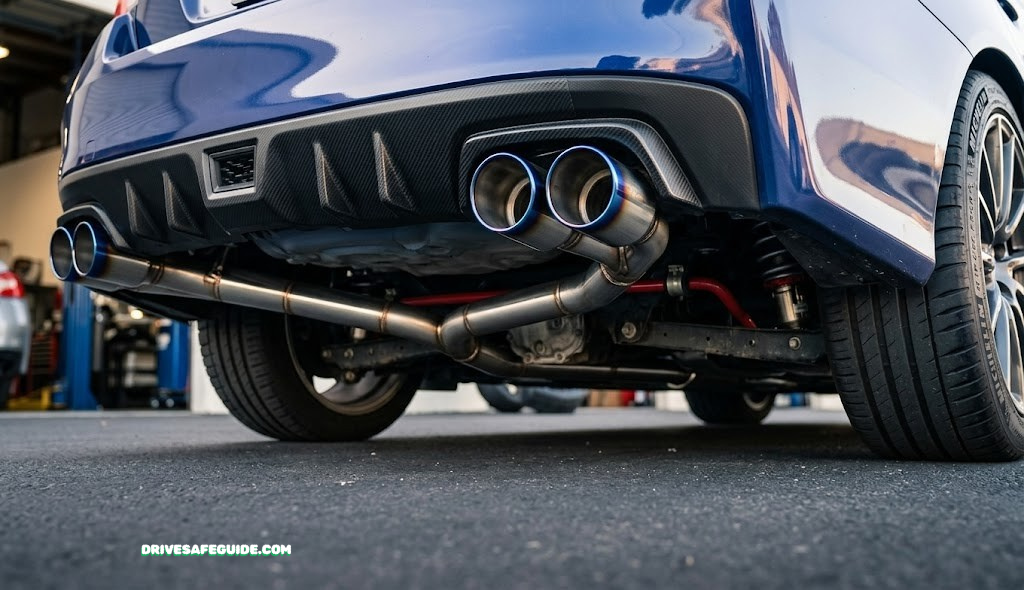
Modified Exhaust Legality: What You Need to Know
Before you bolt on that cat-back system or delete a resonator, here’s exactly where the legal line sits — federal EPA rules, state decibel limits, catalytic converter law, and how to get more sound without a ticket.
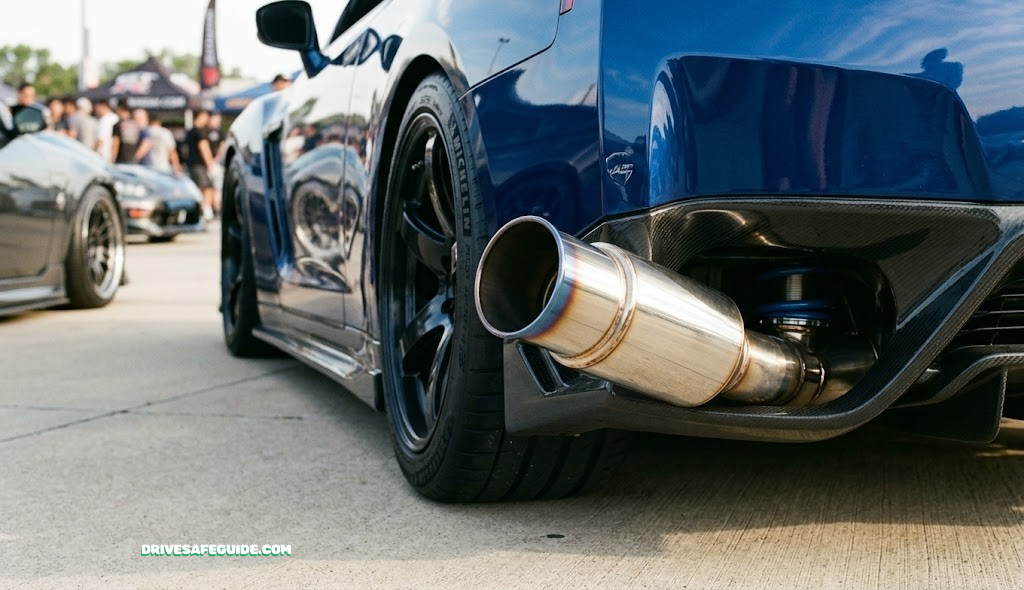
Aftermarket exhaust systems range from fully street-legal cat-back kits to track-only setups that will fail inspection in every state.
Why Exhaust Laws Exist in the First Place
Exhaust regulations didn’t appear out of nowhere. They sit at the intersection of two separate government interests: air quality and noise pollution, and each is enforced by a different layer of authority.
On the emissions side, your exhaust system is the last stop for combustion byproducts before they leave the vehicle, and the catalytic converter inside it is one of the most effective single pieces of pollution-control hardware ever mandated on a passenger car. Federal law treats tampering with that hardware as a serious offense because a single vehicle running an unfiltered exhaust can emit dramatically more hydrocarbons, carbon monoxide, and nitrogen oxides than a compliant one.
On the noise side, states and municipalities have their own interest that has nothing to do with the EPA: keeping residential streets, highways, and downtown corridors from becoming unbearably loud. A modified exhaust that removes sound-deadening components can push a vehicle’s output well past what most local noise ordinances allow, and that’s an entirely separate violation from anything related to emissions.
Understanding this split matters because it explains why the rules feel inconsistent from state to state. Emissions tampering is federal and applies everywhere the same way. Noise limits are set locally and vary enormously, which is why the exact same exhaust system can be perfectly legal in one state and a citable offense two states over.
If you’re also dealing with other equipment questions on the same vehicle, it’s worth reading our breakdown of window tint darkness limits by state, since tint and exhaust modifications are frequently cited together during the same traffic stop.
Federal vs. State Authority Over Your Exhaust
The cleanest way to think about exhaust legality is as two separate legal systems stacked on top of each other.
Federal Layer: The Clean Air Act
The federal Clean Air Act prohibits removing, disabling, or rendering inoperative any emissions control device on a motor vehicle. This applies to the catalytic converter, the oxygen sensors that feed data to it, and any other emissions-related hardware in the exhaust path. This rule applies in all 50 states regardless of local law, and it applies whether the vehicle is used on public roads or not, with the EPA historically focused enforcement on shops, manufacturers, and sellers of tampering products rather than individual private owners — though that doesn’t mean individuals are exempt.
State Layer: Noise, Safety, and Inspection Codes
Once you’re past federal emissions law, each state layers its own vehicle code on top. This is where decibel limits, muffler requirements, and “excessive or unusual noise” language come from. Some states measure noise with a fixed decibel ceiling. Others use vaguer language like “no louder than reasonably necessary” that gives officers broad discretion. A smaller group of states run formal vehicle inspection programs that include a noise or exhaust visual check as part of passing an annual inspection.
| Layer | Who Enforces It | What It Covers | Applies Where |
|---|---|---|---|
| Federal (Clean Air Act) | EPA | Catalytic converter, O2 sensors, emissions hardware | All 50 states, uniformly |
| State vehicle code | State DMV / Highway Patrol | Decibel limits, muffler requirements | Varies significantly by state |
| Local ordinance | City / county police | Time-of-day noise limits, residential zoning | Varies by municipality |
| Inspection program | State inspection stations | Annual safety/emissions pass-fail | Only in states that require inspection |
This layered structure is why the same question — “is my exhaust legal?” — genuinely doesn’t have one universal answer. It depends on what you changed, where you drive, and which of these four systems is looking at your car that day.
EPA Rules and Catalytic Converter Tampering
This is the section that carries the most serious legal weight, so it’s worth being precise about it. The EPA’s tampering rule doesn’t just apply to the shop that installs an aftermarket part — it applies to manufacturers who make defeat devices, retailers who sell them, and, under the plain language of the statute, the individual who knowingly removes or disables emissions equipment.
In practice, everyday enforcement against individual drivers is inconsistent, and most day-to-day traffic stops for exhaust issues are handled at the state noise-violation level rather than a federal emissions case. But that gap in routine enforcement isn’t a legal loophole. States with their own emissions inspection programs actively fail vehicles with a missing or bypassed catalytic converter, and a growing number of states have added specific catalytic converter statutes covering both theft and illegal removal, partly in response to the converter theft wave tied to precious metal prices.
If your vehicle has ever had catalytic converter issues, our guide on catalytic converter theft prevention covers how to protect the factory unit, which is also the cheapest way to avoid ever facing a tampering question in the first place.

Check Emissions Readiness Before You Modify
A basic OBD2 scanner lets you confirm your catalytic converter and O2 sensors are reading clean before and after any exhaust work — cheap insurance against an inspection failure.
Check Price on AmazonState Decibel Limits: The Number That Actually Matters
For the average driver adding an aftermarket exhaust purely for sound, the decibel limit — not emissions law — is the rule that determines legality day to day. Most states set their limit somewhere between 80 and 95 decibels, measured either at idle from a set distance, under a stationary rev test, or via a moving pass-by measurement similar to the SAE J1492 procedure used by many law enforcement agencies.
| Typical Limit Range | Measurement Style | How Common |
|---|---|---|
| 80–86 dB | Stationary idle test | Common in noise-strict states |
| 86–92 dB | Fixed-distance drive-by | Most common range nationally |
| 92–95 dB | Stationary rev / RPM-based test | Used in states with looser thresholds |
| No fixed number | “Reasonable” / officer discretion | Handful of states, rural counties |
The RPM-based stationary test deserves a closer look, since it’s one of the more common methods police departments actually use in the field. Rather than measuring your car cruising at 60 mph, the officer parks you, places a decibel meter at a set distance from the tailpipe, and revs the engine to a percentage of its redline — often around 75 percent — while reading peak output.
Typical stationary decibel test geometry used in roadside exhaust noise enforcement.
Because this test measures a percentage of your specific engine’s redline rather than a flat RPM number, a high-revving four-cylinder and a low-revving V8 are tested to roughly comparable relative loads, which is part of why the method has stayed popular with state patrol agencies over the decades.
How Officers Actually Test and Enforce Exhaust Noise
In the real world, most exhaust citations start with something far less technical than a calibrated meter: a visual and auditory judgment call. An officer who sees a missing muffler, an obviously modified tip, or hears noise well beyond what’s typical for that vehicle’s class has grounds to initiate a stop in most jurisdictions, even before any instrument is used.
From there, enforcement generally falls into one of three tracks.
Visual / Auditory Judgment
- No equipment required, fastest and most common method
- Missing mufflers or resonators are an easy visual flag
- Often paired with a warning rather than an immediate citation
Instrument-Based Testing
- Requires a calibrated decibel meter and trained operator
- Used more in states with codified numeric limits
- Produces a defensible number if the citation is contested
A smaller number of jurisdictions also fold exhaust noise into their annual vehicle inspection process, checking for both a functioning muffler and, in emissions-testing states, confirming the catalytic converter is present and the OBD system reports no tampering-related codes. If your inspection also touches on visibility equipment, it’s worth cross-checking our guide on license plate obstruction fines, since both issues frequently get flagged during the same roadside stop.
Aftermarket Exhaust Types, Explained Simply
Not all exhaust modifications carry the same legal risk, and understanding where each type sits on the spectrum is the fastest way to make a safe buying decision.
| Modification Type | What It Changes | Emissions Risk | Noise Risk |
|---|---|---|---|
| Axle-back | Muffler and tips only, rear of the axle | None — converter untouched | Low to moderate |
| Cat-back | Everything behind the catalytic converter | None — converter untouched | Moderate |
| Resonator delete | Removes a mid-pipe resonator only | None — converter untouched | Moderate to high |
| Muffler delete | Removes the muffler entirely | None — converter untouched | High |
| Header-back / test pipe | Can bypass or replace the converter | High if converter is removed | Very high |
| True straight pipe | Removes muffler and converter | Severe — federal violation | Extreme |
Lower-Risk Choices
- Axle-back and cat-back systems from reputable brands
- Kits that ship with an EO number (California) or EPA compliance note
- Systems that retain factory resonators or add a quieter aftermarket resonator
Higher-Risk Choices
- Any “test pipe” or “high-flow cat” sold as a race-only part for street use
- Muffler deletes on vehicles driven daily in noise-strict states
- Kits with no documentation on decibel output or emissions compliance
For drivers upgrading a truck or SUV specifically, it’s also worth reading our comparison of blind spot mirrors for trucks and SUVs, since larger vehicles tend to get pulled over for multiple equipment issues at once during a single stop.

Shop Cat-Back Exhaust Systems
A quality cat-back kit adds meaningful sound while keeping your factory catalytic converter fully intact — the lowest-risk way to modify.
Shop Cat-Back KitsCatalytic Converter Law: A Closer Look
Because catalytic converter issues sit at the center of both federal emissions law and a wave of newer state theft statutes, this topic deserves its own deep dive separate from general exhaust noise questions.
Under federal law, it is illegal to remove, disable, or replace a catalytic converter with a non-compliant part on any vehicle that came equipped with one from the factory, regardless of the vehicle’s age or mileage. The only real exception involves vehicles specifically built or certified for competition use that never operate on public roads, and even that carveout is narrower than many people assume.
Separately, in response to the surge in catalytic converter thefts tied to the value of the platinum, palladium, and rhodium inside them, a large number of states have passed their own converter-specific statutes. These laws primarily target the sale of loose, unmarked converters through scrap yards, but several also strengthen penalties for operating a vehicle with a removed or bypassed converter.
If theft — rather than intentional removal — is your concern, protective measures like converter shields and etching the VIN onto the unit are the most effective steps, covered in more depth in our catalytic converter theft prevention guide.
State-by-State Spotlight: How Enforcement Really Differs
Rather than trying to memorize fifty separate statutes, it helps to understand a few representative patterns that most states fall into.
| State Pattern | Example Approach | What Drivers Should Know |
|---|---|---|
| Strict emissions state | California-style CARB compliance | Aftermarket parts need an EO number; strict decibel cap around 95 dB |
| Fixed decibel state | Numeric limit written into code | Clear pass/fail number, easiest to plan around |
| “Reasonable noise” state | Vague, discretion-based language | Harder to predict; depends heavily on the individual officer |
| Inspection-program state | Annual safety/emissions check | Loud or modified exhaust can cause an outright inspection failure |
| Minimal-enforcement state | Rules exist but rarely enforced | Lower practical risk, but not a legal green light |
Because state patterns shift and local ordinances can be stricter than the state baseline, always check your specific state DMV or highway patrol page before finalizing a build — especially if you plan to drive the vehicle across state lines regularly, which introduces the added complexity of needing to comply with whichever state’s law is strictest on your route.
If you split time between states or drive for work, our guide on international driving permit requirements is a useful companion resource for understanding how documentation and compliance expectations shift across borders.
Track-Only and Off-Road Exhaust: The “Race Use Only” Label
Almost every performance exhaust part that deletes the catalytic converter or dramatically increases noise output carries a “for off-road or competition use only” disclaimer on the box. That label exists for a legal reason, and it’s worth understanding exactly what it does and doesn’t protect you from.
The disclaimer is the manufacturer’s attempt to sell a part without being classified as a defeat device manufacturer under the Clean Air Act — it shifts tampering liability toward whoever installs and drives the part on public roads. It does not create an exemption for you as the driver. If a vehicle carrying a race-only exhaust is registered, insured, and driven on a public street, it is subject to the same emissions and noise laws as any other vehicle, disclaimer or not.
Genuine track builds — cars trailered to the circuit, never registered for street use — are a different situation entirely and generally fall outside state vehicle codes, since those codes apply to vehicles operated on public roads.
Penalties, Fines, and Inspection Failures
The financial consequences of an illegal exhaust setup vary dramatically depending on which layer of law you’re dealing with.
| Violation Type | Typical Consequence |
|---|---|
| First-offense noise violation | Fix-it ticket or fine in the roughly $50–$300 range |
| Repeat noise violation | Escalating fines, possible court appearance |
| Failed vehicle inspection | Registration held until corrected and re-inspected |
| State catalytic converter statute | Fines that can run into the hundreds to low thousands |
| Federal Clean Air Act tampering | Substantially higher penalties, historically aimed at repeat/commercial violators |
Beyond the direct fine, a failed inspection or open equipment violation can also complicate insurance claims if the vehicle is involved in an incident while non-compliant, which is a good reminder to keep your uninsured motorist coverage and general policy details current alongside any modifications you make.
How to Stay Legal While Still Upgrading Your Exhaust Sound
None of this means you have to keep a bone-stock exhaust. It means being deliberate about what you buy and how you verify it before it becomes a daily-driven habit.
1. Keep the Catalytic Converter in the Exhaust Path
This single decision eliminates the entire federal tampering risk and most state converter-specific statutes in one move. Cat-back and axle-back systems are built around this principle by design.
2. Check Your State’s Actual Decibel Number
Don’t rely on forum guesses. Pull up your state’s vehicle code or DMV equipment page and confirm the specific number, then choose a system with a published decibel rating that leaves margin below that limit rather than sitting right at the edge.
3. Test the Finished Build Yourself
A simple handheld decibel meter lets you replicate the stationary test method roughly the way an officer would, giving you a real number instead of a guess based on how loud the exhaust “sounds.”
Relative sound output by modification type against a hypothetical state decibel ceiling.
4. Save Documentation
Keep the receipt, product listing, and any published decibel or EO/CARB compliance information for the part you installed. If you’re ever stopped, being able to show the part was sold as street-legal is a meaningfully better position than having no documentation at all.
5. Watch for Related Equipment Issues
Exhaust stops frequently turn into multi-issue stops. Make sure other common flags — window tint, license plate visibility, and general vehicle condition — are also compliant, and review our driving test instant-fail mistakes guide if you’re prepping a newly modified vehicle for a licensing test, since inspectors apply similar scrutiny.

Test Your Exhaust Before You Drive It Daily
A handheld decibel meter takes the guesswork out of whether your build is under your state’s noise limit.
Check Price on AmazonFrequently Asked Questions
Is it illegal to modify your exhaust?
Not automatically. Most states allow exhaust modifications as long as the system stays under the state’s decibel limit, keeps the catalytic converter in place, and doesn’t violate local noise ordinances. Legality depends on the specific modification and where you drive, not on the act of modifying itself.
Can you get pulled over for a loud exhaust?
Yes. Excessive noise is a valid basis for a stop in nearly every state, whether through direct observation, a decibel meter reading, or the SAE J1492 stationary test procedure many agencies use.
Is deleting a catalytic converter illegal?
Yes. Removing or bypassing a factory-installed catalytic converter violates the federal Clean Air Act everywhere in the country, and many states add their own penalties through inspection failures or converter-specific statutes.
What is the legal exhaust decibel limit?
There’s no single national number. Most states set limits between roughly 80 and 95 decibels, measured either at idle, through a fixed-distance drive-by test, or an RPM-based stationary test, so the same exhaust can be legal in one state and not in another.
Do resonator deletes affect legality?
A resonator delete usually leaves emissions equipment untouched, so it doesn’t trigger federal tampering law, but the resulting volume increase can easily push a vehicle over a state’s decibel limit.
Can a cat-back exhaust fail inspection?
A properly installed cat-back system that keeps the converter intact generally passes emissions testing, but it can still fail a separate noise or safety inspection in states that measure sound as part of the process.
Are aftermarket mufflers legal in California?
California enforces strict standards through CARB, generally requiring an executive order (EO) number on aftermarket exhaust parts sold for street use, along with a statewide decibel cap of roughly 95 dB for most passenger vehicles.
How much is a fine for an illegal exhaust?
Noise violations typically run from around $50 to a few hundred dollars for a first offense. Catalytic converter tampering carries substantially steeper federal penalties, particularly for repeat or commercial violations.
Are straight pipes street legal?
A true straight pipe that removes both the muffler and catalytic converter is illegal for street use in essentially every state, since it violates both federal emissions law and virtually every state noise ordinance simultaneously.
Do exhaust laws apply to motorcycles too?
Yes. Motorcycles have their own decibel limits in most states, often measured differently than passenger vehicles, and many states require an EPA-compliant muffler stamp on aftermarket motorcycle exhaust systems.
Can I make my exhaust louder without breaking the law?
Yes. Choosing a cat-back or axle-back system that keeps the factory converter intact and stays under your state’s decibel limit is the standard way to add sound legally, and verifying the finished build with a decibel meter is a reliable final check.
Will a loud exhaust show up on a vehicle inspection?
In states with a noise or safety component built into the inspection program, yes — a loud exhaust can cause a failed inspection. In emissions-only states, the focus is typically on the catalytic converter and OBD readiness rather than sound level.
The Bottom Line on Modified Exhaust Legality
Exhaust legality comes down to two separate questions asked at the same time: did you touch the emissions hardware, and how loud did you end up? Keep the catalytic converter in place, confirm your state’s actual decibel number instead of guessing, and test the finished build before you drive it daily. That combination covers roughly every legal risk this article has walked through.
If you’re planning any other equipment upgrades alongside your exhaust — lighting, tint, or diagnostic tools — browse the rest of our vehicle equipment guides for the same level of state-by-state detail.
Shop Street-Legal Exhaust Systems🚗 Recommended for Drivers
Drive Safer Every Day
Explore our top picks for car safety gear — from dashcams to emergency kits — all hand-picked to help you stay safe on the road.
🚗 Shop Car Safety EssentialsAffiliate link — we earn a small commission that keeps DriveSafeGuide running. Thank you!