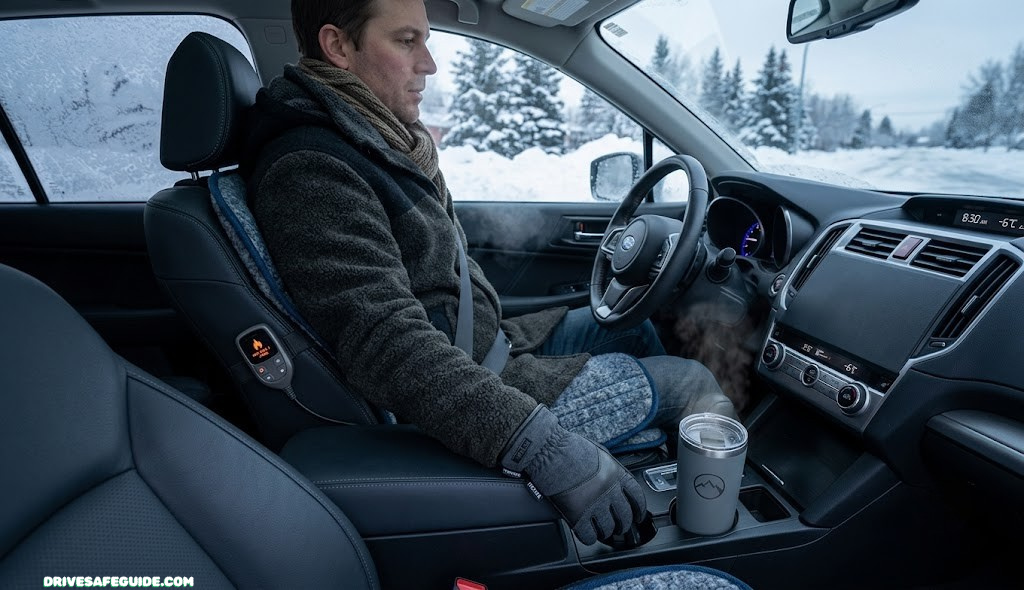
Heated Seat Cushion Comparison: Stay Warm and Safe on the Road
Winter mornings have a way of turning a five-minute warm-up into a ten-minute negotiation with your own steering wheel. If your factory seats don’t come with built-in heating, or if the heating element in an older vehicle has finally given out, a heated seat cushion is one of the cheapest, fastest ways to fix that problem. But “heated seat cushion” covers a surprisingly wide range of products, from bare-bones single-zone pads that plug into a 12V outlet to multi-zone, app-controlled cushions with battery packs built for people who spend eight hours a day behind the wheel.
This guide breaks down how these cushions actually work, what separates a safe, durable model from one that will let you down (or worse, overheat) on a cold night, and which types make sense for different kinds of drivers — commuters, long-haul truckers, rideshare drivers, and anyone dealing with back pain or poor circulation. We’ll also walk through a full side-by-side comparison table so you can see the tradeoffs at a glance before you buy.
Why Heated Seat Cushions Matter for Winter Driving Safety
It’s tempting to file heated seat cushions under “comfort accessory” and move on, but there’s a real safety argument buried in there too. Cold muscles are stiff muscles, and stiff muscles react slower. When your lower back, hips, and legs are tense from sitting in a cold seat, your reaction time to sudden braking, a swerving vehicle, or black ice on the road drops slightly — not dramatically, but enough to matter in the kind of split-second situations that define whether a near-miss stays a near-miss.
There’s also a distraction factor. Drivers who are uncomfortably cold tend to fidget, shift position constantly, and split their attention between the road and their own discomfort. Anyone who has driven for twenty minutes with numb hands and a frozen lower back knows how much mental bandwidth that discomfort eats up. A heated cushion solves that specific problem directly, at the point of contact, instead of waiting for the cabin’s air heater to slowly bring the whole interior up to temperature.
This matters even more on longer drives. If you’re heading out on a winter road trip, the kind of trip covered in our winter driving safety guide, staying physically comfortable for hours at a stretch is part of staying alert. Fatigue and cold compound each other; a driver who is cold is more likely to feel drowsy sooner, which ties directly into the kind of early warning signs we cover in our drowsy driving checklist.
There’s also a practical angle for vehicles that simply don’t have heated seats at all — many economy trims, older used cars, and even some newer budget-focused EVs skip seat heating entirely to cut costs. For drivers in colder climates who didn’t get that option, a cushion is the only realistic retrofit that doesn’t involve tearing into the seat’s upholstery or wiring in a professional heating element.
The Circulation Connection
Cold temperatures naturally cause blood vessels near the skin’s surface to constrict, a process the body uses to preserve core heat. For a driver sitting still for an extended period, that constriction in the legs and lower back can lead to the kind of pins-and-needles numbness that makes it harder to feel pedal pressure accurately. Warming the seat directly counteracts this by keeping blood flow closer to normal in the exact areas that spend the most time in contact with cold upholstery. This is a bigger deal than it sounds for older drivers or anyone with existing circulation issues, since reduced sensation in the feet and legs translates directly into less precise control over the brake and accelerator.
A Small Fix With an Outsized Return
Compared to most vehicle safety upgrades, which can run into hundreds or thousands of dollars, a heated seat cushion is one of the least expensive ways to meaningfully change how a cold-weather drive feels. It doesn’t replace proper winter tires, a well-stocked emergency kit, or defensive driving habits, but it removes one specific, constant source of physical discomfort that otherwise competes for a driver’s attention every single mile. When you consider how many hours the average commuter spends behind the wheel each winter, even a small improvement in comfort and reaction readiness adds up over a season.
How Heated Seat Cushions Actually Work
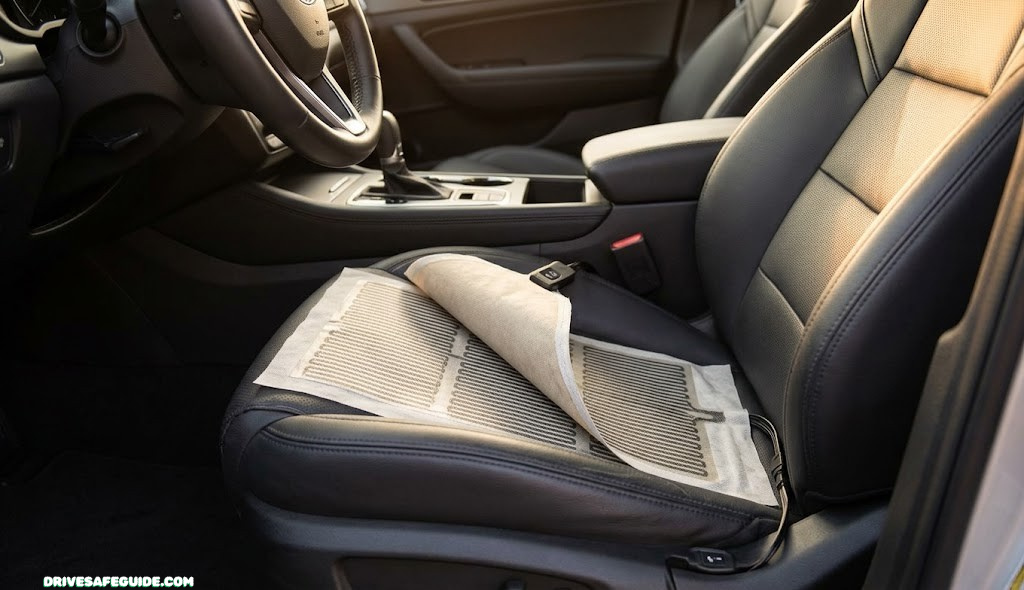
Every heated seat cushion, regardless of price point, is built around the same basic idea: a thin resistive heating element — usually a carbon fiber wire or a printed carbon film — is sandwiched between layers of foam or fabric padding. When power runs through that element, resistance generates heat, which radiates outward through the seat material and into your body. It’s the same principle behind an electric blanket, just shaped and reinforced to handle the weight and friction of someone sitting on it for hours.
The Power Source Determines Everything Else
Where the cushion gets its power from is really the defining feature that shapes everything else about how it performs. A cushion plugged directly into a 12V outlet draws steady power from the car’s electrical system, which means consistent heat output but a cord running across your cabin. A USB-powered cushion pulls less wattage, which usually means gentler warmth better suited to a passenger seat or an office chair than a driver’s seat in freezing conditions. Battery-powered cushions cut the cord entirely, trading convenience for a limited runtime that depends on battery capacity and how high you run the heat setting.
Zones and Heating Elements
Better cushions split the heating element into separate zones — typically one for the seat base and one for the lower back — so you can direct warmth to whichever area needs it most. Multi-zone cushions with independent controls tend to feel noticeably more effective than single-zone pads, especially for people dealing with lower back stiffness, since you can crank up lumbar heat without overheating the seat base underneath you.
| Heating Element Type | Typical Lifespan | Heat Distribution | Common Use Case |
|---|---|---|---|
| Carbon fiber wire | 2–4 years | Even, flexible around bends | Mid-range and premium cushions |
| Printed carbon film | 3–5 years | Very even, thin profile | Premium multi-zone cushions |
| Basic resistive coil | 1–2 years | Uneven, hot spots common | Budget single-zone pads |
If you’ve ever dealt with numbness or tingling from long stretches at the wheel, it’s worth pairing this section with our guide on carpal tunnel and steering wheel grip, since cold, stiff joints often make those symptoms worse.
Insulation Layers Matter as Much as the Heating Element
A heating wire by itself doesn’t do much good without the right layers around it. Cheap cushions often use a single thin layer of foam both above and below the heating element, which lets heat escape downward into the seat rather than upward into your body. Better-engineered cushions include a reflective insulating layer beneath the heating element specifically to direct warmth toward the surface you’re sitting on, rather than wasting it on the seat cushion underneath. This single design choice explains why two cushions with seemingly identical wattage ratings can feel dramatically different in real-world use — one wastes half its output heating the seat itself, while the other channels nearly all of it toward you.
Controller Design and Response Time
The controller — usually a small inline switch or dial along the power cord — determines how quickly you can adjust heat levels and how intuitive that adjustment feels while driving. Simple rotary dials are easy to adjust by feel without looking away from the road, while some touch-button controllers require a glance to confirm the setting has actually changed. From a safety standpoint, a dial or a controller with a distinct tactile click for each setting is preferable to one that requires visual confirmation, since it lets you make adjustments without taking your eyes off the road for more than a fraction of a second.
Types of Heated Seat Cushions: 12V vs USB vs Battery-Powered
Most buyers get stuck at this exact decision point, and for good reason — the power source you choose determines where you can realistically use the cushion, how hot it gets, and how much maintenance it needs over time.
12V Plug-In Cushions
These plug into your car’s 12V accessory outlet (the old “cigarette lighter” port) and draw power directly from the vehicle’s electrical system while the engine is running or the battery has charge. They heat up the fastest and reach the highest sustained temperatures of any cushion type, which makes them the go-to choice for genuinely cold climates. The tradeoff is the cord itself, which needs to be routed and secured so it doesn’t interfere with pedals or seat adjustments.
USB-Powered Cushions
USB cushions draw less current, so they run cooler and are gentler on both your body and the cushion’s internal wiring. They’re a reasonable fit for passenger seats, home office chairs, or mild climates where you just want to take the edge off rather than blast heat. For a daily winter commute in a genuinely cold region, most USB cushions won’t get hot enough to satisfy drivers used to full seat heaters.
Battery-Powered Cushions
Battery-powered cushions are the most flexible option since they don’t need to be tethered to any port at all — useful for rideshare drivers who hop between vehicles, or for using the same cushion in a car, at a desk, or at an outdoor event. The catch is battery life: most rechargeable cushions run somewhere between 3 and 8 hours on a full charge depending on heat setting, and battery packs add weight and bulk to the cushion itself.
Hybrid Cushions
A smaller category worth knowing about is the hybrid cushion, which includes a built-in rechargeable battery but also accepts a 12V or USB cord for continuous power when a longer runtime is needed. These tend to cost more than either single-power-source option, but they solve the core weakness of each: no more worrying about a dead battery mid-drive, and no more being stuck if you step away from the vehicle and want to keep the cushion running. For drivers who genuinely can’t predict whether they’ll need portability or all-day runtime on a given day, a hybrid model removes the guesswork, though it does add a bit more bulk and a higher price tag than a single-purpose cushion.
Choosing between these three core types often comes down to a simple question: how much of your winter driving happens in one specific vehicle versus multiple vehicles or contexts? Commuters who drive the same car every day rarely need the flexibility of a battery-powered unit and are usually better served by the stronger, unlimited heat of a 12V plug-in. Drivers who bounce between a personal vehicle, a rental, or a rideshare fleet car benefit far more from something they can simply pick up and bring along.
When 12V Makes Sense
- Genuinely cold climates and long winters
- Daily commuters who want consistent, strong heat
- Drivers who keep the same cushion in one vehicle
When to Avoid 12V
- You frequently switch between multiple vehicles
- Your 12V outlet is also needed for other accessories
- You want a cord-free passenger seat setup

Check Price on Amazon
Key Features to Compare Before Buying
Once you’ve settled on a power type, the real differences between models come down to a handful of features that don’t always show up clearly in a product listing photo.
Heat Settings and Temperature Range
Look for at least three heat settings. A single “on/off” cushion either isn’t hot enough for real winter mornings or gets uncomfortably hot within twenty minutes, with no middle ground. Multi-level controllers let you start high to warm up quickly, then drop to a low or medium setting for the rest of the drive.
Auto Shutoff Timers
This is a genuine safety feature, not a nice-to-have. Cushions that stay on indefinitely pose a real fire and overheating risk if a driver forgets to turn one off, especially in a parked vehicle. Look for models with an automatic shutoff after 1–2 hours of continuous use.
Material and Breathability
Cushions covered in non-breathable synthetic fabric can trap moisture against your body, which is uncomfortable on longer drives and can shorten the lifespan of the padding underneath. Mesh-backed or moisture-wicking covers hold up better over repeated seasonal use.
Certification and Build Quality
UL or ETL certification on the power adapter and internal wiring is a meaningful signal that the product has been independently tested for electrical safety. Cheaper uncertified cushions cut corners here more often than buyers realize.
Fit and Strap System
A cushion that slides around on the seat is more than an annoyance — it can bunch up under you at an inconvenient moment, or expose the heating element to unnecessary friction and wear. Adjustable elastic straps that anchor around the seatback keep the cushion in place through normal driving movement.
Cord Length and Placement
An often-overlooked detail is how much cord length a cushion actually gives you between the seat and the 12V outlet. Outlets positioned low in the center console or far forward on the dash can leave very little slack once the cord runs up and over the seat, which forces an awkward routing path that’s more likely to get caught during normal seat adjustments. Look for a cord length of at least four feet, and check reviews specifically for complaints about cord length before buying if your vehicle’s outlet placement is unusual.
Wattage and Real-World Heat Output
Wattage numbers on a spec sheet only tell part of the story, since two cushions rated at the same wattage can distribute that heat very differently depending on element quality and insulation, as covered above. As a general guideline, cushions in the 15–25 watt range tend to deliver comfortable, sustained warmth for driver’s seats, while anything under 10 watts is usually better suited to a passenger seat or milder climates where you just want to take the chill off rather than generate serious heat.
Full Comparison Table: Heated Seat Cushions Side by Side
Here’s how the major categories stack up against each other across the criteria that actually matter for daily driving.
| Category | Heat Output | Portability | Runtime | Typical Price Range | Best For |
|---|---|---|---|---|---|
| 12V Single-Zone | High | Low (tethered) | Unlimited (engine on) | $15–$30 | Budget-conscious daily commuters |
| 12V Multi-Zone | High | Low (tethered) | Unlimited (engine on) | $30–$60 | Long-haul drivers, cold climates |
| USB Single-Zone | Low–Medium | Medium | Unlimited (power bank) | $12–$25 | Passenger seats, mild climates |
| Battery Rechargeable | Medium | High (cordless) | 3–8 hours per charge | $35–$80 | Rideshare drivers, multi-vehicle use |
| Premium App-Controlled | High, precise | Medium | Depends on power type | $60–$120 | Drivers wanting fine temperature control |
Notice that price alone doesn’t tell the full story here. A $20 single-zone cushion with a fused plug and auto shutoff can genuinely outperform a poorly built $50 model in terms of safety and reliability. The comparison table is meant as a starting filter, not a final ranking — the deeper category breakdowns below go further into which specific type suits which kind of driver.
Best Heated Seat Cushion for Long-Haul Truckers and Commuters
Drivers who spend six, eight, or more hours at a stretch behind the wheel need something fundamentally different from someone using a cushion for a fifteen-minute commute. Durability and consistent heat over long periods matter more here than portability.
What Long-Haul Drivers Should Prioritize
- Dual-zone heating so the lower back can run warmer than the seat base without either area overheating.
- Reinforced stitching around high-friction points, since the cushion will be sat on for thousands of hours over its lifespan.
- 12V plug-in power rather than battery, since runtime limitations become a real problem on multi-hour routes.
- A washable or wipeable cover, since long-haul seats accumulate sweat, spills, and general wear faster than a commuter’s seat.
Long-haul driving comes with its own set of physical strain issues beyond just cold seats — stiff shoulders, sore wrists, and lower back fatigue are common complaints. If that sounds familiar, it’s worth reading through our roundup of long-haul driver exercises alongside whichever cushion you choose, since heat alone won’t fully offset hours of static posture.
Balancing Heat and Fatigue on Overnight Routes
There’s a subtle tradeoff long-haul drivers should be aware of: excessive heat over many hours can actually contribute to drowsiness, since warmth naturally encourages the body toward a more relaxed, sleep-ready state. Drivers running heated cushions on overnight routes often do better keeping the setting on low or medium rather than high, reserving the higher settings for the coldest stretches of a shift rather than running them continuously for eight or more hours straight. This keeps the comfort benefit without tipping into the kind of drowsy, overly relaxed state that shows up in the warning signs covered in our drowsy driving checklist.
Fleet and Owner-Operator Considerations
Owner-operators who invest in their own cab often prefer a permanently mounted 12V cushion wired into an always-available power source, while fleet drivers who rotate between trucks tend to get more value out of a portable, strap-on cushion they can move from cab to cab. Either way, durability under repeated use should weigh more heavily in the buying decision than it would for an occasional commuter, since a cushion used daily for years needs to hold up to far more wear than one used a handful of cold mornings each winter.

Check Price on Amazon
Best Budget Heated Seat Cushion
Not everyone needs a premium multi-zone cushion, and there’s a legitimate case for spending under $25 if your climate is only cold for a few months a year. The trick is finding a budget cushion that still includes the two non-negotiable safety features: a fused 12V plug and some form of auto shutoff or overheat protection.
What You Can Skip on a Budget Model
- App connectivity or Bluetooth controls
- Multiple independent heating zones
- Premium leather-look covers
What You Should Never Skip, Even on a Budget
- A fused plug on the 12V adapter
- At least two heat settings
- Basic overheat cutoff protection
Pairing a budget heated cushion with other low-cost winter driving upgrades — like the ones covered in our guide to budget car gadgets with the biggest upgrades — is a smart way to improve comfort and safety without a big total spend.
How to Spot a Corner-Cutting Budget Cushion
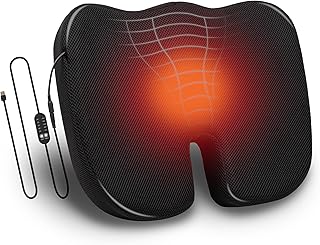
Reading reviews carefully is more useful than reading the product description on a budget purchase, since manufacturers rarely advertise missing safety features directly. Watch for review language mentioning a cord that gets warm to the touch, a plug that doesn’t fit snugly in the outlet, or heat that feels wildly inconsistent across the surface of the cushion — all of these are indirect signs of a poorly built heating element or missing fuse protection. A budget cushion doesn’t need to be fancy, but it does need to be built by a manufacturer that takes basic electrical safety seriously, and that’s usually visible in how consistently reviewers describe the same experience rather than a scattered mix of complaints about overheating or failure.
Check Price on Amazon
Best Heated Seat Cushion for Bad Backs and Sciatica
Heat and support solve two different problems, and drivers dealing with chronic back pain or sciatica often need both at once. Heat helps relax tight muscles around the lower back and glutes, while proper support keeps the spine in a more neutral position so those muscles don’t tense up again five minutes later.
Look for Combined Heat and Support Features
The best cushions in this category integrate a firmer gel or memory foam base with a heating element layered on top, rather than just adding heat to a flat, unsupportive pad. If you’re already using a separate lumbar support or gel cushion, check whether it’s compatible with an add-on heating pad before buying a whole new combined unit.
It’s also worth noting that heat alone isn’t a substitute for proper seat positioning. A heated cushion that raises the seat height too much, or shifts your hip angle relative to the pedals, can actually work against good driving posture. Test the fit at home before relying on it for a long trip, and if pain persists, this is a case where a conversation with a physical therapist matters more than any product recommendation.
Timing the Heat for Maximum Relief
Applying heat before a flare-up gets severe tends to work better than waiting until the pain is already sharp. Many drivers with recurring back issues find it helpful to turn the cushion on a few minutes before getting in the car, so the seat is already warm by the time they sit down, rather than starting cold and warming up gradually over the first part of the drive. This small habit change can matter more than which specific cushion model you choose, since consistent, early heat application tends to prevent muscles from tightening up in the first place rather than trying to relax them after they already have.
When to See a Professional Instead
A heated cushion is a comfort tool, not a treatment for an underlying medical condition. If back pain is worsening over time, radiating down one leg, or accompanied by numbness that doesn’t resolve after a drive, that’s a signal to talk to a doctor or physical therapist rather than relying on a cushion to manage the symptom indefinitely.
| Cushion Type | Heat | Support Level | Best Use |
|---|---|---|---|
| Basic heated pad | Yes | Low | Mild stiffness, short drives |
| Heated gel-infused cushion | Yes | Medium | General lower back discomfort |
| Heated orthopedic cushion | Yes | High | Sciatica, chronic pain, long drives |

Check Price on Amazon
Heated Seat Cushions vs Built-In Heated Seats: Pros and Cons
If you’re shopping for a car and heated seats are on the options list, it’s worth understanding what you’d actually be trading if you skip that upgrade and rely on an aftermarket cushion instead.
Heated Cushion Advantages
- Far cheaper than factory-installed heated seats
- Portable between multiple vehicles
- No dealership installation or wiring required
- Easy to replace if it wears out
Built-In Heated Seat Advantages
- Integrated directly into seat upholstery, no bulk
- Typically more even heat distribution
- No visible cords or straps
- Longer-lasting when factory-installed correctly
For most drivers, a quality aftermarket cushion closes about 80–90% of the comfort gap for a fraction of the cost of a factory heated seat upgrade or a professional heated seat retrofit. The remaining gap is mostly about aesthetics and integration, not warmth.
Resale and Long-Term Value Considerations
One angle worth considering if you’re weighing a factory upgrade versus an aftermarket cushion is resale value. Factory-installed heated seats are a documented feature that shows up in a vehicle’s listing and can modestly improve resale price, particularly in colder regions where buyers actively look for that option. An aftermarket cushion doesn’t transfer any value to the vehicle itself, but it also isn’t tied to the vehicle at all — if you sell the car, the cushion goes with you to the next one, which is its own kind of value that a factory-installed system simply can’t offer.
Safety Considerations: Fire Risk, Overheating, and Certification
This is the section that matters most, and it’s the one buyers skip most often. Any product that generates heat and sits directly against your body for hours at a time deserves a closer look at how it’s built and how it’s used.
Fire and Overheating Risk
The main risk with any heated cushion comes from damaged wiring — a heating element that’s been folded too sharply, pinched under a seat track, or worn thin from years of use can develop hot spots or, in rare cases, short circuit. This is why auto shutoff timers and fused plugs aren’t optional extras; they’re the built-in safeguards that catch a malfunction before it becomes a real problem.
Never Leave a Cushion On Unattended
Even certified cushions shouldn’t be left running in a parked, unattended vehicle for extended periods. Treat a heated cushion the way you’d treat any other electric heating appliance: on while you’re actively using it, off when you step away.
Certification Marks to Look For
UL, ETL, or CE certification on the power adapter indicates the product has passed independent electrical safety testing. This doesn’t guarantee the entire cushion is flawless, but it substantially reduces the odds of buying something with dangerously cut corners in the wiring.
Safety around vehicle electronics is a theme that runs through a lot of winter driving prep — our guide on best cold-weather car batteries covers a related concern: making sure your electrical system can actually support accessories like a 12V heated cushion without straining the battery on short trips.
Children and Heated Cushions
Heated cushions marketed for adult use generally aren’t designed with the thinner skin and different heat tolerance of young children in mind. If you’re considering a heated accessory for a child’s car seat or booster, look specifically for products designed and rated for that purpose rather than repurposing an adult driver’s cushion, and never place a heated cushion directly beneath or behind a child safety seat’s harness system without confirming it’s compatible with that specific seat’s manufacturer guidelines.
Interaction With Existing Seat Heaters
If your vehicle already has functioning built-in seat heaters, running an aftermarket cushion on top at the same time can occasionally cause both systems to work harder than necessary, generating more combined heat than either was designed to produce alone. It’s generally better to use one heat source at a time rather than stacking a cushion on top of an already active factory heated seat.
Installation and Maintenance Tips
Most heated seat cushions require zero tools and take under five minutes to set up, but a few small habits make a noticeable difference in how long they last and how well they perform.
Setup Tips
- Route the 12V cord along the seat frame, not across the floor where it can catch on pedals.
- Use the elastic straps around the seatback rather than just letting the cushion sit loose — this prevents bunching and uneven heat contact.
- Test all heat settings once before your first cold-weather drive so you’re not troubleshooting controls in freezing temperatures.
Maintenance Tips
- Spot clean the cover rather than fully submerging or machine washing it, since water can damage the internal heating element.
- Store the cushion flat or loosely rolled during warmer months — tight folding over a long period can crease and eventually damage the heating wire.
- Inspect the plug and cord for fraying at the start of each winter season.
If you’re already building out a broader cold-weather setup for your vehicle, our winter car emergency kit checklist is a good companion resource, since a heated cushion pairs naturally with the kind of preparation that keeps you safe if you ever get stuck in genuinely severe conditions.
End-of-Season Storage
How you store a heated cushion during the warmer months has a bigger impact on its lifespan than most buyers expect. Stuffing it into a tight storage bin under other gear, or leaving it folded sharply for months at a time, puts repeated stress on the internal heating wire at the exact fold points. A better approach is to store it loosely rolled, ideally in a breathable bag rather than sealed plastic, in a spot that doesn’t see extreme temperature swings like a hot attic or a freezing unheated garage.
Troubleshooting Common Issues
If a cushion stops heating evenly, the most common culprits are a partially damaged internal wire from a sharp fold, a loose connection at the plug, or a failing controller. Before assuming the cushion is dead, check the connection points and try a different 12V outlet or USB port to rule out a power source issue rather than a cushion defect. If uneven heat or hot spots appear suddenly rather than gradually, that’s more likely a genuine wiring issue and a sign the cushion should be retired rather than continued to be used.
Pairing Heated Cushions With Other Cold-Weather Driving Gear
A heated seat cushion solves one specific problem, but it works best as part of a broader cold-weather setup rather than a standalone fix. A few combinations worth considering:
Heated Cushion + Heated Blanket
For passengers or for drivers in extremely cold climates, pairing a seat cushion with a heated car blanket covers both the seat contact points and general cabin chill while the engine and cabin heater are still warming up.
Heated Cushion + Steering Wheel Cover
Cold, stiff hands on a cold steering wheel is its own separate discomfort. An easy-install, non-slip steering wheel cover addresses grip and warmth at the one other major contact point between you and the car.
Heated Cushion + Winter Emergency Prep
If you’re driving through genuinely severe winter weather, comfort accessories are secondary to survival basics. Make sure you’re also prepared for worst-case scenarios covered in our blizzard stranded survival guide and our broader black ice driving survival guide, since no seat cushion helps if the drive itself turns dangerous.

Check Price on Amazon
Frequently Asked Questions
Are heated seat cushions safe to leave on for a full drive?
Yes, as long as the cushion has a fused plug and, ideally, an auto shutoff timer. Most modern cushions are designed for continuous use throughout a normal drive, but they shouldn’t be left running in a parked, unattended vehicle for extended periods.
Do heated seat cushions drain a car battery?
A 12V cushion draws a modest amount of current, generally comparable to charging a phone, so it won’t meaningfully drain a healthy battery while the engine is running. On very short trips with an already weak battery, it can add a small extra load, which is worth considering if your battery is already near the end of its life.
Can I use a heated seat cushion with existing built-in heated seats?
Yes, though it’s usually unnecessary. If your factory heated seats already get warm enough, adding a cushion on top mostly just adds bulk. Some drivers with mild factory heating do layer a cushion on top for extra warmth in especially cold climates.
How long do heated seat cushions typically last?
Most quality cushions last two to five years with regular seasonal use, depending on the heating element type and how carefully the cord and plug are handled. Cheaper models with basic resistive coils tend to wear out faster than those using carbon fiber or printed film elements.
Is a battery-powered or plug-in cushion better for cold climates?
Plug-in 12V cushions generally reach higher, more sustained temperatures and don’t run out of power, making them the better choice for genuinely cold climates and daily winter commuting. Battery-powered models are better suited to flexibility and portability rather than maximum heat output.
Can heated seat cushions be used in trucks with cloth or leather seats?
Yes, most heated cushions are designed to work on any seat material. Leather seats tend to conduct heat slightly more directly, while cloth seats may take a bit longer to feel warm since the fabric absorbs some heat before it reaches you.
Do heated seat cushions work for outdoor use, like camping chairs or stadium seats?
Many battery-powered and USB cushions are versatile enough for outdoor use, though 12V models obviously require a vehicle outlet or a portable power inverter to function away from a car.
What heat setting should I use for a normal winter commute?
Most drivers find a medium setting comfortable for sustained use, reserving the highest setting for the first few minutes to warm up quickly before dropping down. Running on the highest setting for a multi-hour drive can feel uncomfortably hot and puts more strain on the heating element over time.
Can a heated seat cushion help with sciatica or lower back pain?
Heat can help relax tight muscles around the lower back and hips, which many people with sciatica find provides temporary relief during a drive. It isn’t a substitute for proper ergonomic support or medical treatment, but combined with a supportive cushion base, it can meaningfully improve comfort on long drives.
Are cheaper heated seat cushions dangerous?
Not inherently, but the cheapest models are more likely to skip safety features like fused plugs and auto shutoff timers. It’s worth spending slightly more for a cushion with basic certification and overheat protection rather than choosing purely on lowest price.
Can I install a heated seat cushion myself, or does it need a professional?
Heated seat cushions are designed for simple do-it-yourself setup. They typically just strap onto the existing seat and plug into a 12V outlet or a charged battery pack, with no wiring, tools, or professional installation required.
Do heated seat cushions work well for rideshare or delivery drivers?
Yes, especially battery-powered or portable models, since rideshare and delivery drivers often need warmth without being tied to a single vehicle’s 12V outlet, particularly if they switch cars or use a personal vehicle inconsistently.
Final Verdict: Choosing the Right Heated Seat Cushion
If you drive through a genuinely cold winter and want the most reliable warmth, a 12V plug-in cushion with dual-zone heating and a fused plug is the safest, most effective choice for daily use. If you split time between multiple vehicles or want something you can use outside the car entirely, a battery-powered model trades some heat output for real flexibility. And if budget is the deciding factor, a simple single-zone 12V cushion with basic overheat protection still solves the core problem without unnecessary extras.
Whatever you choose, don’t treat the safety features as optional add-ons — a fused plug, an auto shutoff timer, and basic certification are the difference between a comfort upgrade and an avoidable risk. Pair your cushion with the rest of your cold-weather driving setup, from your winter emergency kit to your cold-weather battery, and you’ll be noticeably more comfortable and more alert behind the wheel all season long.

Shop Heated Seat Cushions
🌟 Recommended for Comfort
Drive More Comfortably Every Day
From lumbar supports to seat cushions, the right accessories can transform long drives from painful to comfortable. Browse our top picks on Amazon.
📯 Shop Comfort AccessoriesAffiliate link — we earn a small commission that keeps DriveSafeGuide running. Thank you!