Understanding Open Container Laws by State for a Safer Drive
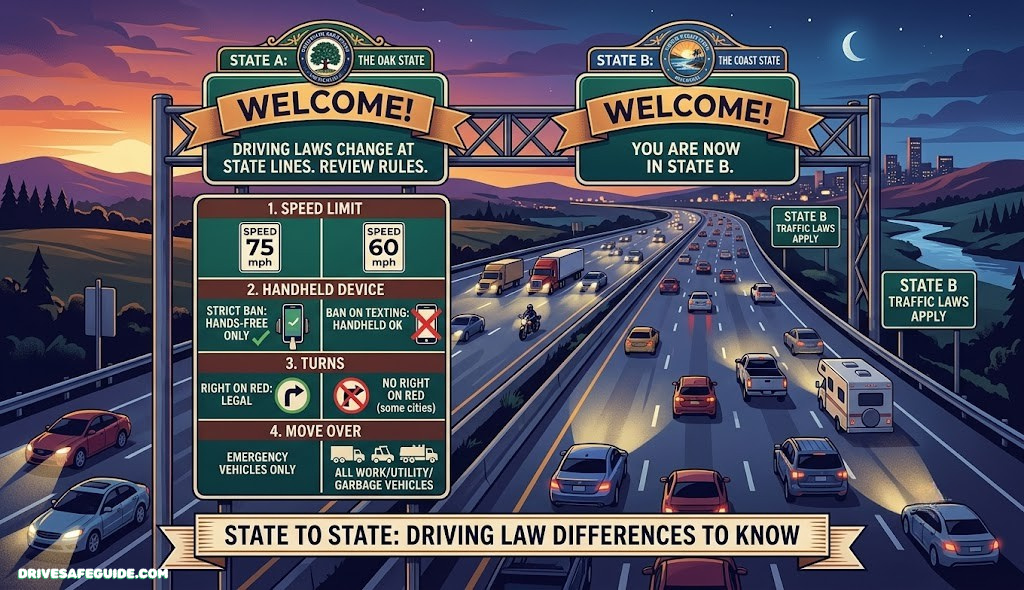
The same six-pack that’s a non-issue in your driveway can become a citation the moment you cross into the next state. Here’s how open container law actually works, state by state, and what most drivers get wrong about it.
What an Open Container Law Actually Restricts
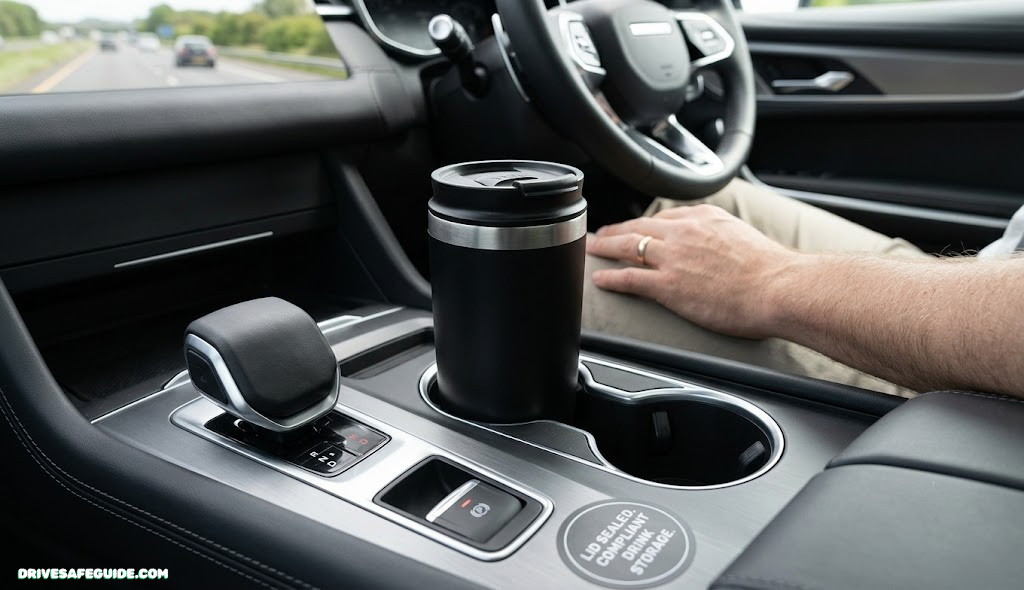
Open container laws sound simple on the surface: no drinking and driving, obviously. But the actual statutes are narrower and stranger than most people assume. An open container law doesn’t ask whether anyone is impaired. It doesn’t even require anyone to take a sip. It regulates possession of an unsealed alcoholic beverage inside the passenger area of a vehicle that’s on a public road, regardless of who’s drinking, whether the car is moving, or whether the driver has had a drop.
That distinction matters because it means an open container citation can be issued to a completely sober driver who just forgot to reseal a bottle of wine after a dinner, or to a passenger holding a can they haven’t touched, purely because the container’s seal has been broken. It’s a possession-based traffic law layered underneath the more familiar impairment-based DUI framework, and the two operate on separate tracks even though officers frequently cite both during the same stop.
What makes this genuinely confusing for anyone who drives across state lines, whether on a cross-country trip or a weekend trip over a nearby border, is that this is one of the least federally uniform areas of traffic law in the country. Unlike, say, seatbelt requirements, which are close to universal, open container rules vary in three separate ways at once: whether a state has one at all, who exactly it applies to, and how the “passenger area” is legally defined. If you’re the kind of driver who also keeps a road trip essentials checklist for long drives, this is the one line item that’s easy to overlook because it isn’t about equipment, it’s about jurisdiction.
There’s also a jurisdictional layer that catches people off guard: open container statutes are typically written as vehicle code, not alcoholic beverage control code, which means they’re enforced by the same officers and under the same procedural rules as speeding tickets or equipment violations rather than by liquor-licensing authorities. That classification matters practically, because it’s why an open container citation shows up on a driving record in most states rather than a separate regulatory record, and why it can be resolved through traffic court rather than a liquor board hearing.
It’s also worth separating “the law” from “the practice.” A statute might technically apply to a given situation, but enforcement patterns vary just as much as the underlying text. In dense urban corridors, officers may treat an open container as an automatic stop, while in rural stretches of interstate, it’s far more common for it to surface only as an add-on charge once a vehicle has already been pulled over for something else, such as following too closely or a lapsed registration tag. None of that changes the legal exposure, but it does explain why two drivers doing the exact same thing in different parts of the same state can walk away with very different outcomes.

Keep Unsealed Drinks Out of the Passenger Area
An insulated cargo cooler bag makes it simple to store opened beverages in the trunk, exactly where most state laws expect them to be.
Check Price on AmazonThe Federal Rule Behind Every State Law
The reason most states, but not all, have similar-sounding open container statutes traces back to a single piece of federal legislation: the Transportation Equity Act for the 21st Century, commonly abbreviated TEA-21, passed in the late 1990s. Rather than mandating open container laws directly, which would exceed federal authority over what is fundamentally a state policing matter, Congress used the highway funding formula as leverage. States that didn’t adopt a “compliant” open container law by a set deadline faced the redirection of a percentage of their federal highway construction dollars into alcohol-impaired driving countermeasure programs instead.
That’s a meaningful financial incentive, and most states adopted qualifying statutes to keep their infrastructure funding flowing normally. The federal model law that qualifies for compliance has a fairly specific definition: it must prohibit possession of any open alcoholic beverage container, and the consumption of alcohol, by both the driver and passengers, anywhere in the passenger area of a motor vehicle located on a public highway or right-of-way.
Why Some States Never Fully Conformed
A handful of states decided the funding penalty was worth the trade-off, or wrote a law that only partially met the federal definition, whether that meant restricting only the driver, exempting passengers in certain vehicle types, or declining to legislate the issue at all. Those states still receive federal highway money, just with a small percentage of it earmarked for safety programs rather than construction. This is precisely why the legal landscape isn’t a simple fifty-state yes-or-no; it’s a spectrum with several distinct tiers, which is exactly what the next section breaks down.
It’s also worth understanding this alongside related enforcement mechanics, like how move-over law requirements were adopted through a similar patchwork of state-by-state legislation rather than a single federal mandate, which is a recurring pattern in American traffic law generally.
Why Congress Chose an Incentive Rather Than a Mandate
Traffic and vehicle-operation law has traditionally been treated as a matter reserved to the states under general police-power principles, rather than something Congress can regulate directly the way it can, say, interstate commerce. The highway-funding incentive structure sidesteps that constitutional friction entirely: Congress isn’t ordering states to pass a law, it’s simply attaching a condition to money the federal government is already choosing to distribute for road construction. States remain free, at least in theory, to decline the condition and accept reduced funding instead, which is exactly the path a few states have taken. This incentive-based approach, rather than a direct mandate, shows up across several other areas of state traffic law as well, including how minimum drinking-age and seatbelt-use laws were originally standardized nationally.
The Four Legal Categories, State by State
Every state’s approach to open container law falls into one of four broad categories. Understanding these categories first makes the state-by-state table in the next section far easier to read at a glance, rather than treating each of the fifty entries as an isolated fact to memorize.
Category A — Full Federal-Model Ban
No open container anywhere in the passenger area, for the driver or any passenger, at any time the vehicle is on a public road. This is the majority approach and the one that satisfies TEA-21 in full.
Category B — Driver-Only Restriction
Only the driver is prohibited from possessing or consuming an open container. Passengers, including those in the front passenger seat, may legally hold one. This does not meet the federal model, so these states forfeit a portion of highway funds.
Category C — Partial or Conditional Ban
The law exists but carves out specific exceptions, such as allowing open containers in certain vehicle types, or restricting only consumption rather than mere possession.
Category D — No Statewide Law
No general statute addresses open containers in a private passenger vehicle at all, though this doesn’t mean anything goes: local ordinances and DUI-related statutes can still apply.
It’s worth pausing on Category D specifically, because it’s the one that surprises people most. A state having no open container law doesn’t mean alcohol in the car is a non-issue; it just means the specific possession-based citation doesn’t exist there as a standalone charge. Impairment-based enforcement, meaning actual DUI law, still applies everywhere without exception, and a visible open container remains something an officer can and will use as probable cause or supporting evidence during a stop, similar to how a cracked windshield can be legal grounds for a stop in a state with visibility-obstruction statutes.

A Personal Breathalyzer Removes the Guesswork
Whether your state bans open containers for everyone or just the driver, a compact breathalyzer gives you an objective read before you turn the key.
Check Price on AmazonHow Neighboring States Can Differ Sharply
Because open container law is legislated state by state rather than regionally, it’s entirely possible for the legal reality to flip completely during a single highway drive, even between states that otherwise share a border, a culture, and a climate. This is one of the clearest illustrations of why “the South” or “the Midwest” isn’t a useful legal category here; each state’s legislature made its own independent call.
A Gulf Coast Example
Consider a drive along the Gulf Coast that passes through Louisiana, Mississippi, and Alabama in a single afternoon. Louisiana permits passengers, though not the driver, to have an open container, a rule tied to the state’s broader cultural tolerance for public drinking in places like New Orleans. Cross into Mississippi and the entire statewide restriction effectively disappears for a private vehicle, though a local ordinance in a specific city might still apply. Continue into Alabama and you’re back under a full federal-model ban that covers everyone in the car. Three states, three completely different legal postures, in the space of roughly one tank of gas.
A Mid-Atlantic Example
The same pattern shows up moving between Virginia and its neighbors. Virginia’s general framework is notably more permissive around passenger-area possession than Maryland or North Carolina on either side of it, both of which follow the standard full-ban approach. A family driving from Washington, D.C. down through Virginia to the Carolina coast crosses through at least three distinct legal environments before reaching the beach.
The practical lesson isn’t to memorize every regional boundary, since that’s not realistic for most drivers. It’s to treat “I’m not sure what this state’s rule is” as the default assumption on any unfamiliar route, and default to the most conservative behavior, unsealed drinks in the trunk, until you’ve actually confirmed otherwise. That same conservative-default mindset is worth applying to other rules that vary regionally, such as school bus stopping laws, which also differ by state in ways that surprise out-of-state drivers.
Full State-by-State Breakdown
The table below groups all fifty states plus the District of Columbia by category, along with a short note on the specific quirk each one is known for. Treat this as a starting orientation rather than a substitute for checking your specific state’s current statute, since local amendments do happen.
| State | Category | Applies To | Notable Detail |
|---|---|---|---|
| Alabama | Full Ban | Driver & passengers | Passenger area strictly defined; trunk exempt |
| Alaska | Full Ban | Driver & passengers | Applies on any highway, including gravel roads |
| Arizona | Full Ban | Driver & passengers | Motorhome living area exempted |
| Arkansas | Full Ban | Driver & passengers | Enforced as a primary offense |
| California | Full Ban | Driver & passengers | Limousine and party bus passenger areas exempt |
| Colorado | Full Ban | Driver & passengers | Parallel statute added for unsealed cannabis |
| Connecticut | Full Ban | Driver & passengers | Applies to parked vehicles on public roads too |
| Delaware | Full Ban | Driver & passengers | Narrow chartered-vehicle exemption |
| Florida | Full Ban | Driver & passengers | Secondary offense for the general statute |
| Georgia | Full Ban | Driver & passengers | Distinguishes possession from active consumption |
| Hawaii | Full Ban | Driver & passengers | Applies to public beach-access parking areas |
| Idaho | Full Ban | Driver & passengers | Standard federal-model language |
| Illinois | Full Ban | Driver & passengers | City of Chicago layers stricter local rules |
| Indiana | Full Ban | Driver & passengers | Standard federal-model language |
| Iowa | Full Ban | Driver & passengers | Standard federal-model language |
| Kansas | Full Ban | Driver & passengers | Standard federal-model language |
| Kentucky | Full Ban | Driver & passengers | Limousine exemption requires a partition |
| Louisiana | Driver-Only | Driver only | Famous for allowing passenger consumption |
| Maine | Full Ban | Driver & passengers | Standard federal-model language |
| Maryland | Full Ban | Driver & passengers | Standard federal-model language |
| Massachusetts | Full Ban | Driver & passengers | Standard federal-model language |
| Michigan | Full Ban | Driver & passengers | Standard federal-model language |
| Minnesota | Full Ban | Driver & passengers | Standard federal-model language |
| Mississippi | No Statewide Law | Neither, statewide | Some cities and counties impose local bans |
| Missouri | Partial/Conditional | Driver restricted; private vehicle passengers largely unrestricted | One of the more permissive statutes nationally |
| Montana | Full Ban | Driver & passengers | Adopted comparatively late among Category A states |
| Nebraska | Full Ban | Driver & passengers | Standard federal-model language |
| Nevada | Partial/Conditional | Driver restricted; limited passenger allowance | Casino shuttle and limo carve-outs |
| New Hampshire | Full Ban | Driver & passengers | Standard federal-model language |
| New Jersey | Full Ban | Driver & passengers | Standard federal-model language |
| New Mexico | Full Ban | Driver & passengers | Enhanced penalties if a minor is present |
| New York | Full Ban | Driver & passengers | Standard federal-model language |
| North Carolina | Full Ban | Driver & passengers | Standard federal-model language |
| North Dakota | Full Ban | Driver & passengers | Standard federal-model language |
| Ohio | Full Ban | Driver & passengers | Standard federal-model language |
| Oklahoma | Full Ban | Driver & passengers | Standard federal-model language |
| Oregon | Full Ban | Driver & passengers | Standard federal-model language |
| Pennsylvania | Full Ban | Driver & passengers | Standard federal-model language |
| Rhode Island | Full Ban | Driver & passengers | Standard federal-model language |
| South Carolina | Full Ban | Driver & passengers | Standard federal-model language |
| South Dakota | Full Ban | Driver & passengers | Standard federal-model language |
| Tennessee | Full Ban | Driver & passengers | Standard federal-model language |
| Texas | Full Ban | Driver & passengers | Statute is separate from, but often paired with, DUI charges |
| Utah | Full Ban | Driver & passengers | Among the strictest general alcohol frameworks nationally |
| Vermont | Full Ban | Driver & passengers | Standard federal-model language |
| Virginia | Partial/Conditional | No general passenger-area possession ban | Consumption by the driver while operating is separately restricted |
| Washington | Full Ban | Driver & passengers | Standard federal-model language |
| West Virginia | Full Ban | Driver & passengers | Standard federal-model language |
| Wisconsin | Driver-Only | Driver only | Passengers may legally possess open containers |
| Wyoming | Full Ban | Driver & passengers | Standard federal-model language |
| District of Columbia | Full Ban | Driver & passengers | Standard federal-model language |
This table reflects the general framework each state has historically followed. Statutes are amended over time, so before a trip through an unfamiliar state, a quick check of that state’s current vehicle code is the safest habit, especially if you’re already reviewing a broader pre-road-trip safety check.
Key Legal Terms, Defined Plainly
A few recurring terms show up across nearly every state’s statute. Knowing them makes it much easier to read an actual vehicle code section if you ever look one up directly.
- Passenger area / passenger compartment: The space designed for the driver and passengers to occupy, generally including the front and rear seats and any area within the driver’s immediate reach. It typically excludes a separate trunk, and in pickup trucks it usually excludes the bed.
- Primary offense: A violation an officer can stop a vehicle for on its own, without needing any other reason.
- Secondary offense: A violation that can only be cited once the vehicle has already been legally stopped for a separate, unrelated reason.
- Right-of-way: The full width of a public road, including shoulders, and in many statutes the definition extends to publicly accessible parking areas as well.
- Constructive possession: A legal concept where a container doesn’t need to be in someone’s hands to count as “possessed”; being within reach in the passenger area is generally sufficient.
These same definitional habits, precise, narrow, and often broader than plain-English intuition suggests, show up throughout traffic law generally, including in how states define distraction-related violations like driving with headphones.
Driver-Only vs. Everyone-in-the-Car Rules
The single most consequential legal distinction in this entire topic is whether a state’s law binds only the driver or extends to every occupant. It changes the entire risk calculus for a road trip with multiple people in the vehicle.
Why Driver-Only States Exist
States that restrict only the driver generally reason that the person actually operating the vehicle is the one whose judgment matters for safety purposes, and that a sober passenger holding a drink poses no operational risk. Critics counter that this framing ignores how quickly a passenger’s open container can end up in the driver’s hand, and that it complicates enforcement, since an officer has to determine seating position rather than simply the presence of an open container anywhere in the car.
Why the Federal Model Covers Everyone
The federal incentive law takes the more conservative position: an open container anywhere in the passenger compartment is treated as a risk regardless of who’s holding it, partly because it removes ambiguity for officers and partly because it closes the loophole of a passenger “holding” a drink for a driver who takes occasional sips.
In a Full-Ban State
Neither you nor anyone in your car, front or back seat, can have an unsealed drink anywhere in the passenger area, full stop, regardless of who’s actually drinking it.
In a Driver-Only State
You personally cannot possess or drink from an open container while behind the wheel, but your passengers legally can, which matters most for group road trips and rideshare-adjacent situations.
This distinction is also worth knowing alongside rules around passengers consuming alcohol in a moving vehicle by state, which digs deeper into exactly which states permit this and under what specific conditions.
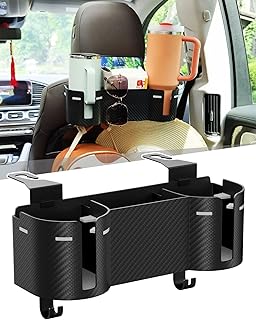
Give Every Passenger Their Own Secure Cup Holder
A backseat organizer with individual drink pockets keeps sealed beverages upright and contained, useful in any state’s legal category.
Check Price on AmazonWhat Legally Counts as “Open”
Most people picture an open container law applying to a can that’s been cracked and is actively being sipped from. The legal definition is broader and catches situations that feel, intuitively, like they should be fine.
- Broken factory seal: The moment the manufacturer’s seal is broken, cracked, or removed, the container is legally open, even if the cap has been screwed back on and nothing has been consumed.
- Missing lid or cap: Any container without its original closure, even one that’s never been filled with alcohol, such as an empty but uncapped bottle that once held wine, can trigger a violation if it still contains any residual alcohol.
- Partial consumption: A container where any portion of the contents has been removed, regardless of how it was resealed afterward, generally still qualifies as open under most statutes.
- Unsealed growlers and mixed drinks: Refillable containers such as growlers, and any homemade or bar-poured mixed drink in a cup, are considered open by default, since they were never factory-sealed to begin with.
This is conceptually similar to how some states define visibility obstructions for hanging keychains that can trigger a ticket: the letter of the law is often broader and stricter than common intuition would suggest.
RVs, Limos, and Other Exceptions
Nearly every state that adopts the federal-model ban also writes in a set of narrow, well-defined exceptions for vehicle types where the “passenger area” concept doesn’t map cleanly onto a typical car interior.
| Vehicle Type | Typical Rule | Common Caveat |
|---|---|---|
| Motorhomes & RVs | Living quarters exempt from the ban | The driver’s cab area is still restricted in almost every state |
| Limousines | Passenger compartment exempt if for-hire | Usually requires a physical partition from the driver |
| Party Buses | Passenger area exempt if operated commercially | Private, non-commercial party buses often do not qualify |
| Taxis & Rideshares | Passenger area often exempt for hired transport | Some states still restrict the driver regardless of vehicle type |
| Truck Beds | Generally not the “passenger area” | Open container there may be legal, but riding in a truck bed can trigger separate passenger-restraint laws |
| Boats on Trailers | Not applicable while trailered on a public road | Separate boating-under-the-influence laws apply once on the water |
The unifying logic behind every one of these exceptions is the same: if the vehicle’s design physically separates the driver’s operating space from the area where alcohol is present, and the vehicle is being used for hired passenger transport, most legislatures have judged the safety risk to be substantially lower. A privately owned RV or party bus without that professional-transport context usually loses the exception.
There’s a practical trap hiding inside the motorhome exception specifically. The living-quarters exemption almost always requires that the space be physically separated from the driving compartment by a wall, door, or comparable barrier, not simply by distance. In many smaller Class B camper vans and converted cargo vans, the “living area” and the driver’s seat share one continuous open space with no dividing wall at all, which means the vehicle may not actually qualify for the exemption even though it looks, from the outside, exactly like the larger motorhomes that do. Anyone converting a van for road trips or long-term travel is worth double-checking this specific detail against their home state’s statute, since it’s a common and costly assumption to get wrong.

A Dedicated Cargo Bin Keeps Drinks Out of the Cab
Whether you’re driving a motorhome or a sedan, a collapsible cargo bin gives opened beverages a compliant, spill-contained home in the trunk or living area.
Check Price on AmazonPenalties and How They Escalate
Open container penalties are, by design, far lighter than DUI penalties, since the underlying law addresses possession rather than impairment. That said, they still escalate meaningfully with repeat offenses, and in many states they add points to a license even on a first citation.
| Offense Level | Typical Fine Range | Additional Consequences |
|---|---|---|
| First offense | $20 – $200 | Usually a non-moving infraction; may or may not add license points |
| Second offense | $100 – $350 | License points more likely; possible court appearance requirement |
| Third or subsequent | $250 – $500+ | Some states escalate to a misdemeanor classification |
| Combined with DUI | Separate, additional fine | Charged alongside impairment penalties, not in place of them |
Whether the citation counts as a primary or secondary offense also affects how often it’s actually enforced in practice. In primary-offense states, the presence of an open container alone is legal grounds for the stop. In secondary-offense states, an officer needs an independent reason, such as a lane violation, a broken taillight, or a right-on-red violation that varies by state, before the open container becomes an additional charge layered onto that stop.
The Indirect Cost: Insurance and Points
The posted fine is rarely the full financial picture. In states where an open container violation adds points to a driving record, even a modest citation can trigger an insurance premium increase at the next renewal cycle, sometimes for two or three years depending on the insurer’s lookback window. This is a meaningful distinction from a pure parking-style infraction, which typically carries no points and therefore no downstream insurance effect. Because the point-assignment decision is made state by state along with everything else covered in this guide, the same violation that’s a flat fifty-dollar fine with no points in one state might carry both a fine and a points penalty in the next state over.
How Repeat Offenses Are Tracked
Most states track open container offenses the same way they track other moving and non-moving violations, through the driver’s license record tied to their name and license number rather than the vehicle’s registration. That means a violation follows the driver across vehicles, and in states with graduated penalty schedules, a second offense committed in a completely different car still counts as a second offense for sentencing purposes. This tracking mechanism is also why the charge shows up during routine background checks for commercial driving positions, even though it’s a considerably lesser offense than a DUI.
Open Container vs. a DUI Charge
These two charges get confused constantly, but they measure fundamentally different things, and understanding the difference explains why you can receive one without the other.
Open Container Violation
Based purely on possession. No blood alcohol testing required. Can be issued to a completely sober driver or a passenger who hasn’t had a drop.
DUI / DWI Charge
Based on measured or observed impairment, typically via blood alcohol concentration testing or field sobriety evaluation. Carries dramatically heavier penalties, including potential license suspension and jail time.
An open container in plain view is one of the most common triggers for an officer to escalate a routine traffic stop into a broader DUI investigation, since it provides visible, immediate justification for further questioning or a breath test request. This is part of why understanding your rights around a DUI checkpoint refusal is worth reading alongside this topic, since the two situations frequently overlap in practice.
It’s also worth noting that an open container charge doesn’t require the vehicle to be moving. A car legally parked on a public street, with an open container inside and someone in the driver’s seat, can still generate a citation in most full-ban states, even though a DUI charge in that same scenario would require additional evidence of intent to drive or actual operation.
A Walkthrough of How the Two Charges Typically Unfold
A common real-world sequence looks like this: an officer stops a vehicle for a burned-out taillight, a wholly unrelated equipment issue. During the stop, an open container is visible in the center console. That observation alone can justify both an open container citation and further investigation, including field sobriety tests, if the officer also notices signs consistent with impairment, such as the smell of alcohol or slurred speech. If no such signs are present, the stop may end with only the open container citation and a fix-it notice for the taillight. If impairment indicators are present, the stop can escalate into a full DUI investigation, at which point the driver is potentially facing both charges simultaneously, each following its own separate legal standard and its own separate penalty schedule.
This layered structure is precisely why an open container violation, even though it’s the far less serious of the two charges on its own, is worth taking seriously as a preventable risk. It’s one of the few citations that can single-handedly open the door to a much larger legal exposure, in a way that, say, a minor windshield obstruction citation typically does not.
Mistakes Drivers Make Most Often
- Assuming the trunk rule is universal. Storing an open container in the trunk is compliant in federal-model states, but hatchbacks, SUVs, and wagons without a physically separate trunk compartment are treated differently, since there’s no clear boundary between “passenger area” and “cargo area.”
- Forgetting about the back seat. In full-ban states, rear passengers are just as restricted as the driver, a detail many groups overlook on longer trips.
- Confusing consumption with possession. Some drivers believe that not drinking from an open container is enough to stay compliant. In most states, merely possessing it in the passenger area is the violation, regardless of consumption.
- Not knowing the state changed at all. On long interstate drives, it’s easy to cross a state line without registering it, especially at night or on rural highways without a prominent welcome sign.
- Mixing this up with cannabis rules. In states where cannabis is legal, many have parallel open-container-style statutes for unsealed cannabis products, which drivers accustomed only to the alcohol rule sometimes overlook entirely.
- Treating a rideshare or taxi as automatically exempt. The commercial-transport exception generally applies to the vehicle’s designated passenger area, not to every private car simply because a driver happens to be using a rideshare app that day; the exemption is about the vehicle’s classification and physical layout, not the app running on someone’s phone.
- Overlooking passengers who are minors. Several states apply enhanced penalties specifically when a minor is present in the vehicle during an open container violation, a detail that’s easy to miss since it isn’t part of the base statute and only shows up in the sentencing provisions.
None of these mistakes require bad intent to trigger a citation. That’s really the throughline across this entire topic: open container law punishes a configuration, not a state of mind, which is exactly why a small habit change, rather than trying to memorize the nuance of each mistake individually, tends to be the more reliable fix.
Several of these mistakes compound the same way lesser-known citations do, similar to how many drivers are unaware of specifics around license plate obstruction fines until they’re already holding a ticket.

Reseal Cans and Bottles With Reusable Lids
Reusable silicone lids let you cap an opened can or bottle securely, useful for keeping drinks contained during stops even though the legal “open” status remains unchanged.
Check Price on AmazonStaying Compliant on a Road Trip
The practical takeaway for anyone planning a multi-state drive is straightforward, even if the underlying law is not: treat every unsealed alcoholic beverage as something that belongs in the trunk or cargo area, not the passenger compartment, for the entire duration of the trip, regardless of which state you’re currently in.
Do
Store opened bottles and cans in the trunk. Keep factory-sealed drinks in coolers if you want them accessible in the cabin. Check the specific state’s rule before a trip through an unfamiliar region.
Avoid
Assuming a “no drinking” rule for the driver alone covers you. Assuming your home state’s category applies elsewhere. Assuming resealing a cap makes a container legally closed again.
This pairs naturally with a broader pre-departure risk elimination routine, and if you’re the kind of driver who already keeps a documented car safety kit with tire, battery, and first aid supplies, adding “beverage storage location” as a five-second mental check before crossing a state line costs nothing and closes one of the more avoidable citation risks on a long drive.
Building the Habit Into Your Packing Routine
The drivers who never think about this rule twice tend to share one habit: they decide where opened drinks live in the vehicle before the trip starts, not reactively once a bottle is already open in someone’s hand. That usually means designating the trunk, a cargo area, or a specific cooler as the only place an unsealed container is allowed to exist, and treating the front and rear seats as off-limits for anything without an intact factory seal, regardless of who’s holding it. Once that’s an established habit rather than a case-by-case judgment call made mid-drive, the actual state-by-state variation covered earlier in this guide stops being something you need to consciously track, because your default behavior already satisfies the strictest version of the rule everywhere you go.
Why Some States Have No Law at All
It’s worth addressing directly why a small number of states never adopted a general open container statute, since it isn’t due to oversight. In these states, legislators generally concluded that existing DUI law already addressed the core safety concern, that a separate possession-based statute added enforcement complexity without a proportional safety benefit, or that local ordinances were a more appropriate level of government to regulate the issue rather than a blanket state law.
The financial trade-off is real but often smaller than assumed: the redirected highway funding percentage under TEA-21 is a fraction of a state’s total federal transportation allocation, not the whole amount, which is part of why a few states have been willing to accept it rather than adopt a law they viewed as duplicative of existing impairment statutes.
None of this changes the practical advice for a driver passing through: the absence of a specific open container statute does not mean alcohol in a vehicle is risk-free. Local ordinances, DUI enforcement, and officer discretion during a stop for an unrelated reason, such as a dome light left on while driving, can still put an open container squarely into the conversation even where no dedicated statute exists.
Frequently Asked Questions
Is it illegal to have an open container of alcohol in a car in every state?
No. Most states ban it in the passenger area, but a small number, including Mississippi and Virginia, have no general statewide restriction for private vehicles, though local ordinances may still apply.
Does the open container law apply to the driver, the passengers, or both?
It depends on the state. The federal model covers everyone in the passenger area, but states like Louisiana and Wisconsin restrict only the driver, leaving passengers legally free to have one.
What counts as an open container under state law?
A container is generally open once its factory seal is broken, its cap is removed, or any portion of the contents has been removed, regardless of whether it’s currently capped.
Can passengers drink in a limousine, party bus, or motorhome?
Most states exempt the passenger compartment of a for-hire limousine or party bus, and the living quarters of a motorhome, though the driver’s area is almost always still restricted.
Is an open container violation the same as a DUI?
No. Open container is a possession-based infraction, while DUI requires evidence of impairment. They’re often charged together but are legally separate matters.
What happens if I put an open beer in the trunk?
In federal-model states, storing it in the trunk or another area not normally occupied by passengers is generally compliant, since the restriction applies to the passenger compartment.
Do open container laws apply to passengers in the back seat?
In full-ban states, yes. In driver-only states, rear passengers may legally hold an open container even though the driver cannot.
Can I get pulled over just for having an open container in my car?
In primary-offense states, yes, an officer can stop the vehicle for that alone. In secondary-offense states, the vehicle must already be stopped for another violation.
Does an open container law apply if the vehicle is parked?
Most statutes apply whenever the vehicle is on a public roadway or right-of-way, which typically includes being legally parked on a public street, though private driveways are usually excluded.
How much is a typical open container fine?
Fines generally range from about $20 to $500 depending on the state and offense number, with some states adding a misdemeanor charge for repeat violations.
Do open container laws cover marijuana as well as alcohol?
In states where cannabis is legal, many have adopted parallel statutes treating an unsealed cannabis package similarly to an open alcohol container.
Which states have no open container law at all?
Mississippi and Virginia are the most commonly cited examples for private vehicles, though local city or county ordinances can still restrict it.
The Rule That Changes at Every State Line
Open container law is one of the few areas of driving regulation where the safest habit isn’t memorizing all fifty statutes, it’s building a single default behavior that happens to satisfy every one of them at once: unsealed drinks go in the trunk, sealed drinks can stay in a cooler up front, and that one rule keeps you compliant whether you’re in a full-ban state, a driver-only state, or a state with no law on the books at all. Pair it with the rest of your defensive driving habits and it stops being something you have to think about mid-trip.

A Trunk Cooler Solves This for Every Future Trip
One insulated cooler bag in the trunk means unsealed drinks always have a compliant place to live, no matter which state you’re driving through.
Check Price on Amazon