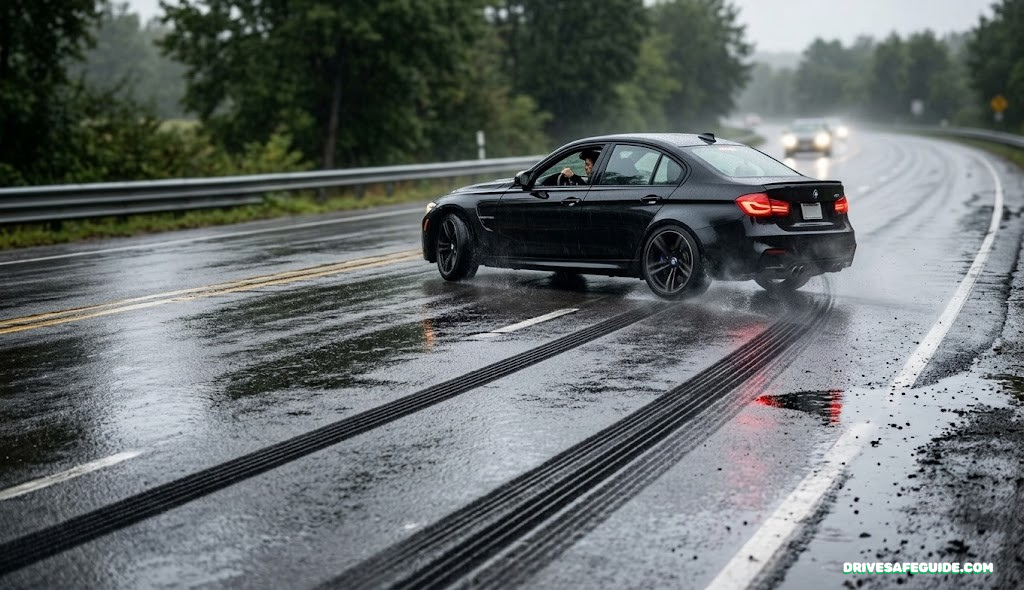
Mastering Skid Control Techniques for Safer Driving
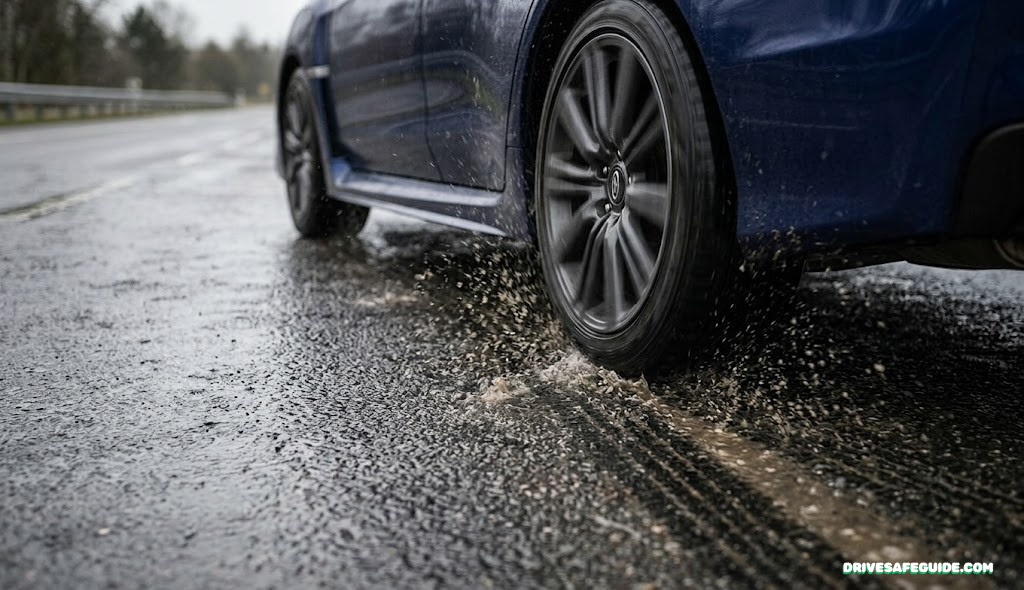
What Is a Skid — and Why Do They Happen?
A skid is not an accident. It is a physical event with a precise cause, and understanding that cause is the first step toward handling it confidently. At its most fundamental level, a skid occurs when the force being asked of one or more tires exceeds the amount of grip those tires can provide. The tire stops rolling in a controlled way and begins to slide — and once a tire is sliding, it follows the laws of momentum rather than your steering intentions.
Every tire has what engineers call a friction circle or traction circle: a theoretical budget of grip that can be spent on braking, cornering, or accelerating — but not all at once in unlimited amounts. Demand too much braking while also turning, or too much cornering force while also accelerating, and the tire’s budget runs out. It crosses from the grip regime into the slide regime, and the rules change entirely.
What makes skid control genuinely challenging is that the sensation is alien. The steering stops responding the way you expect. The rear of the car may swing. The car may push wide. And every human survival instinct — grip the wheel harder, mash the brake, look at the thing you’re about to hit — is wrong. Mastering skid control means training yourself to override those instincts with practiced, physics-based responses.
The good news is that skids follow patterns. There are not infinite varieties — there are three primary skid types, each with its own cause, sensation, and recovery sequence. Learn all three and you have a mental toolkit that applies everywhere from icy intersections to emergency lane changes on dry highway.
Oversteer
Rear tires lose grip. Tail swings out. Car rotates more than commanded.
Understeer
Front tires lose grip. Car pushes wide. Steering feels disconnected.
4-Wheel Skid
All tires lose grip simultaneously. Car slides in a straight line.
Before diving into each technique, it is worth connecting this to the broader context of wet-road hazards. Many skids happen in conjunction with hydroplaning or slippery conditions — our full guide to hydroplaning recovery steps covers the specific scenario where tires lose grip due to water lift, which shares important principles with general skid recovery but requires slightly different inputs.
The Three Skid Types: Causes, Sensations, and Triggers
Before you can recover from a skid, you need to identify which type you are in. Each produces a distinct physical sensation, each has a different primary cause, and crucially, each demands a different corrective input. Applying the wrong correction — steering into an understeer as though it were oversteer, for example — will make the situation dramatically worse.
| Skid Type | Primary Cause | What You Feel | Which Axle | First Corrective Input |
|---|---|---|---|---|
| Oversteer | Too much power or cornering load on rear tires | Rear slides out; car rotates excessively | Rear | Counter-steer + ease throttle |
| Understeer | Too much speed or braking into a corner | Front pushes wide; steering goes light | Front | Ease off throttle/brake, reduce steer angle |
| 4-Wheel Skid | Hard braking on low-grip surface (no ABS) | Car slides straight; no steering response | All four | Release brakes fully; allow wheels to roll |
| Acceleration Skid | Too much throttle on driven wheels | Rear spin (RWD) or front scrub (FWD) | Driven axle | Ease throttle progressively |
In a real skid, you typically have 0.5 to 2 seconds to identify the type and apply the correct input before the situation escalates beyond recovery. The only way to act that fast is to have already rehearsed the identification mentally — reading this article counts as that rehearsal.
Skid awareness also connects to general vehicle instability caused by mechanical issues. If your car is already shaking at highway speeds due to tire imbalance, that instability lowers the threshold at which a skid can be triggered — a reminder that skid prevention starts before you even leave the driveway.
Understeer: When the Front End Refuses to Turn
Understeer is the most common skid type in everyday driving, particularly in front-wheel-drive vehicles. It is also the skid type that feels most deceptively manageable — right until the moment the car is heading for a barrier or the opposite lane. The sensation is a gradual loss of steering authority: you turn the wheel, and the front of the car keeps tracking in a straight line or a gentle curve that is too wide for the corner you are navigating.
The physics are straightforward. The front tires are being asked to do too much simultaneously — carry lateral cornering force, braking force, and in FWD cars, also drive the car forward. When the combined demand exceeds their grip, they transition from a controlled roll into a slip angle that produces sliding rather than directional change. More steering input in this state does not help — it makes things worse, because turning the wheel further increases the demand on the already-overwhelmed tires.
1Recognize the Understeer Signature
Steering feels vague or artificially light. The car’s nose is tracking wider than your intended line. On wet roads, the front tire noise drops away slightly. The car responds to steering inputs with a delay or not at all. Your intended exit from the corner is being missed — the car is running wide.
2Ease Off Throttle and Reduce Brake Pressure
The moment understeer is confirmed, smoothly ease off the accelerator. This transfers weight forward onto the front tires, increasing their load and therefore their available grip. Simultaneously, if you were braking into the corner, ease the brake pressure — hard braking while turning diverts all available front grip to deceleration and leaves nothing for steering. Weight transfer to the front wheels is your ally here.
3Reduce Steering Angle — Then Gently Re-Apply
Counter-intuitively, turn the steering wheel back slightly toward straight. This reduces the slip angle demand on the front tires. Once traction begins to return (you will feel the steering weight increase), gently re-apply steering in the direction you want to travel. The sequence is: straighten — feel grip — steer. Not: steer harder — still no grip — panic.
✅ Understeer Corrections
- Ease off accelerator gently
- Reduce brake pressure if braking
- Slightly unwind steering angle
- Wait for front grip to return
- Re-apply steering progressively
❌ Understeer Mistakes
- Turning the wheel harder in
- Stamping on the brakes
- Accelerating to “push through”
- Panicking and freezing inputs
- Looking at the obstacle ahead
Understeer is particularly prevalent in winter conditions where front traction is already compromised. Our in-depth guide to winter driving safety, traction, and braking on snow covers understeer-specific techniques for low-mu surfaces including ice and compacted snow.

A tire engineered for progressive, predictable grip limits — meaning you feel understeer and oversteer developing earlier and have more time to correct. Consistently top-rated for wet and dry cornering stability.
View on AmazonOversteer and Counter-Steering: Catching the Tail
Oversteer is simultaneously the most dramatic and the most teachable skid type. When the rear tires lose grip, the back of the car swings outward — the tail slides wide while the nose tucks in. In a rear-wheel-drive vehicle with too much throttle mid-corner, this is the classic “snap oversteer” that catches inexperienced drivers entirely off guard. In any vehicle on a slippery surface, it can arrive just as suddenly from excessive cornering speed or a mid-corner bump.
The physical sensation is unmistakable: the rear of the car feels like it is being swept by an external force. If you are watching your side mirror, the barrier or verge appears to rush toward you from behind. The car rotates more than your steering commanded, and the gap between your intended line and where the car is heading grows rapidly.
1Steer Into the Skid — Counter-Steer Immediately
Turn the steering wheel in the same direction the rear is sliding. If the rear swings left, steer left. If it swings right, steer right. This is counter-steering, and it is the foundational skill of oversteer recovery. The goal is to align the front wheels with the direction the car is actually traveling — which is no longer the direction you originally intended — so that you can gradually redirect the vehicle back onto your desired line.
The amount of counter-steer needed is proportional to the severity of the slide. A mild tail slip requires a small input; a full slide may require significant opposite lock. The key is applying it smoothly and quickly, without snatching the wheel violently.
2Ease the Throttle — But Not Violently
In a rear-wheel-drive oversteer situation, the throttle is often the cause. Ease off the throttle progressively — do not snap it closed. A sudden full throttle lift in mid-slide can cause the pendulum effect, where the tires suddenly re-grip and flick the car in the opposite direction. The throttle should be reduced as smoothly as your counter-steer is applied: controlled, proportional, and without snap inputs.
In front-wheel-drive oversteer (rarer but possible on snap lift-off), a small amount of continued throttle can actually help by loading the rear tires. This is a nuance that driver training programs teach — knowing your drivetrain matters.
3Correct the Counter-Steer as the Car Straightens
This is the step most drivers get wrong in practice. As the rear grip returns and the car begins to straighten, you must progressively unwind the counter-steer. If you hold full opposite lock past the point of recovery, the car will snap back in the original direction — often more violently than the initial skid. Feel the car rotating back, and feed the steering wheel back to straight with the same smoothness you used to apply the counter-steer.
Professional drivers describe this as “catching the car on the way back” — the recovery is a continuous dialogue between car and driver, not a single corrective action.
The second most common cause of oversteer crashes — after failing to counter-steer at all — is holding opposite lock too long. As soon as the rear grip returns, the car wants to rotate back. If you are still at full counter-steer when that happens, you have triggered a new skid in the opposite direction, typically more violent than the first.
Oversteer recovery is also connected to black ice driving survival — oversteer on ice follows identical physics but with virtually zero grip margin, making the response window even shorter and the inputs that work even more gentle.

A high-performance all-season tire that delivers progressive grip limits — giving drivers more warning before the onset of oversteer or understeer, and more room to recover. Excellent wet-road cornering stability.
View on AmazonFour-Wheel Skid: When Everything Locks Up
A four-wheel skid — sometimes called a total-traction-loss event — is the most disorienting experience available to a driver, because the vehicle suddenly behaves as though it has become a steel box on rollers. All four tires are no longer rolling; they are sliding. Steering does almost nothing. Braking does nothing. The car simply continues in the direction of its momentum until physics intervenes.
The most common cause is emergency braking without ABS on a slippery surface. When all four wheels lock simultaneously under hard braking, the rotating tires transition from grip to slide. Because all four contact patches are now sliding in the same direction, the car tracks in whatever direction it was already going — straight on a straight road, but potentially at a dangerous angle if you were mid-corner when the lockup occurred.
1Release the Brakes Fully and Immediately
The only recovery for a four-wheel lockup skid is to release the brake pressure completely. This is devastatingly counter-intuitive — your instinct is to push harder. But there is no grip to exploit by pushing harder. The tires are already at zero. Releasing the brakes allows them to start rotating again, and rolling tires have vastly more grip than locked tires. Even a split second of rolling contact restores your ability to steer and to re-apply more controlled braking pressure.
2Re-Apply Controlled Braking
Once the wheels are rolling again and you have some steering back, re-apply the brakes with progressive, controlled pressure. For vehicles without ABS, the goal is to stay just below the lockup threshold — maximum deceleration without triggering another lockup. This is threshold braking, and it produces shorter stopping distances than locked-wheel sliding. For ABS-equipped vehicles, the system handles this automatically — press firmly and hold.
3Steer Toward Safety
With rolling tires and at least partial grip restored, you can now steer. Look where you want to go — not at the obstacle you are trying to avoid. Your hands follow your eyes, and studies of emergency maneuvers consistently show that drivers who look at the hazard steer toward it while drivers who look at the escape route steer toward that instead. Fix your gaze on the space you want to reach.
If your vehicle has ABS (mandatory on all modern cars), a four-wheel lockup skid during braking cannot occur under normal conditions — the system pulses each wheel independently to keep them at the threshold of grip. The pedal vibration you feel is confirmation it is working. Do not pump the pedal; hold it down and steer.
ABS, Electronic Stability Control, and Traction Control: Your Electronic Safety Net
Modern vehicles come equipped with a suite of electronic systems designed specifically to prevent, detect, and correct skids before they develop into loss-of-control events. Understanding what each system does — and what it cannot do — helps you work with these systems rather than inadvertently fighting them.
Anti-Lock Braking System (ABS)
ABS monitors the rotational speed of each wheel during braking. When it detects that a wheel is decelerating too rapidly relative to the others (approaching lockup), it modulates brake pressure at that wheel — typically pulsing it many times per second — to keep it at the very edge of maximum grip without crossing into lockup. The result is shorter stopping distances on most surfaces and, crucially, preserved steering ability while braking hard. When you feel the brake pedal pulsing or buzzing under hard braking, ABS is working correctly. Do not release pressure.
Electronic Stability Control (ESC)
ESC is the most sophisticated and broadly useful skid prevention system. It continuously compares the vehicle’s actual rotation rate (measured by a yaw sensor) against what the driver’s steering input is commanding. When the car understeers or oversteers beyond the driver’s intent, ESC selectively applies braking force to specific individual wheels to counteract the rotation. To correct understeer, it brakes the rear inside wheel. To correct oversteer, it brakes the front outside wheel. These corrections happen faster than any human can react, and they are applied with far more precision than any human foot can deliver.
ESC has limits. At extreme speeds, on very low-grip surfaces, or when the vehicle is already mid-spin, its authority is insufficient. It also cannot compensate for severely worn tires or severely compromised suspension. It is a safety margin expander — it makes the car more forgiving — not a replacement for driving skill.
Traction Control
Traction control specifically addresses acceleration skids — when the driven wheels spin under power. It applies braking to the spinning wheel(s) and/or reduces engine torque until grip is restored. In winter conditions or on loose surfaces, traction control can sometimes be counterproductive — it may cut power when you actually need momentum to keep moving. Most modern vehicles allow you to disable traction control for these situations.
| System | What It Prevents | How It Works | What It Cannot Do |
|---|---|---|---|
| ABS | Wheel lockup under braking | Pulses individual wheel brakes | Prevent cornering or acceleration skids |
| ESC | Oversteer and understeer | Selectively brakes individual wheels | Overcome extreme speed or zero-grip surfaces |
| Traction Control | Wheelspin under acceleration | Brakes spinning wheel, reduces torque | Help in mud/snow where wheelspin is needed |
| All Three Combined | Most common skid scenarios | Coordinated electronic intervention | Replace driver skill or compensate for bald tires |
For a comprehensive look at how electronic aids interact with your braking system in genuine emergencies, our guide on brake fade versus hydraulic failure explains the scenarios where ABS and ESC can and cannot save you.
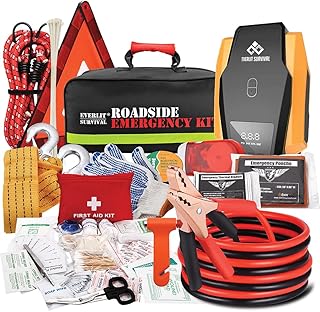
When a skid leads to a collision or roadside stop, having reflective triangles, a high-vis vest, jumper cables, and a first-aid kit in one bag turns a crisis into a manageable situation. Essential for any serious driver.
View on AmazonSkids During Emergency Braking
Emergency braking is one of the highest-stakes driving scenarios — a moment where the gap between effective technique and panic response directly determines whether you stop in time or cause a collision. Skids during braking occur when the deceleration force demanded of the tires exceeds their available grip, and they are particularly hazardous because they occur at exactly the moment when you most need the car to slow down predictably.
The Physics of Braking Grip
A tire’s grip is finite and shared between the demands placed on it. During normal driving, most of that budget goes to rolling resistance and minor lateral forces. During hard braking, nearly all of it must go to deceleration. On dry pavement, modern tires have enough grip budget that they can stop a car from highway speed in an impressively short distance. On wet pavement, that budget drops by 30–50%. On ice, it drops by 90% or more.
The key insight is that a tire produces maximum stopping grip when it is rolling at approximately 10–15% slip (meaning it is rotating slightly slower than pure rolling but not locked). ABS keeps tires in this zone automatically. Without ABS, the driver must do it manually through threshold braking.
Threshold Braking Without ABS
Threshold braking means applying pressure to the brake pedal until you feel or hear the tire beginning to protest — the faintest onset of scrubbing or steering vagueness — then easing off fractionally to stay at that edge. It requires feel and practice, which is one reason professional driver training programs use it as a core skill. In everyday emergency situations, a rough approximation is to press firmly and progressively without the foot-stomp panic response, and release immediately if the car starts to push or skid.
Effective braking techniques go hand-in-hand with following distance — because the farther back you are from the vehicle ahead, the less emergency braking you need. Our guide to safe following distance rules explains the precise gap calculations that keep you in the manageable braking zone rather than the panic zone.
Skids in Corners: Speed, Vision, and the Line
The corner is where skids are born. The physics are unforgiving: lateral cornering force rises with the square of your speed, which means that entering a corner 20% too fast does not create 20% more lateral force — it creates roughly 44% more. This is why the vast majority of cornering skids feel sudden and overwhelming to drivers who were “only going a little too fast.” The tire’s grip threshold can be crossed with very small speed increments at the wrong moment.
The Correct Cornering Sequence
Racing drivers and advanced driving instructors share a universal principle: Slow In, Fast Out. All your braking should be completed before the steering wheel begins to turn into the corner. Once you are turning, brake pressure should be largely zero — transferring weight forward and reducing rear grip simultaneously is a recipe for oversteer. The clean sequence is: brake on the straight, release brakes as you begin to steer, apply gentle progressive throttle through the apex and out. This sequence respects the tire’s traction budget at every phase.
Mid-Corner Skid Recovery
If a skid develops mid-corner, the response depends on which end is sliding. Front-end push (understeer) — ease throttle, unwind steer slightly, wait for front grip. Rear-end slide (oversteer) — counter-steer toward the slide, ease throttle gently. In either case, do not apply mid-corner braking. Adding brake force to an already-overloaded tire during cornering is almost always the last mistake before a spin.
For those dealing with skid anxiety that manifests as broader driving avoidance, our resource on driving anxiety treatment addresses the psychological side of fear responses on challenging roads — understanding that you have the knowledge and tools to manage skids is a significant part of reducing that anxiety.

A dash cam with wide-angle recording captures cornering incidents, skid events, and their aftermath clearly — essential for insurance disputes, driver coaching, and understanding what happened and when.
View on AmazonSkid Behavior on Different Road Surfaces
The same technique applied at the same speed will produce very different results on different surfaces. A correction that smoothly resolves an oversteer on dry asphalt may be insufficient — or dangerously excessive — on wet tarmac, gravel, or ice. Calibrating your response to the surface is as important as knowing the response itself.
| Surface | Relative Grip | Skid Onset | Recovery Notes |
|---|---|---|---|
| Dry asphalt | Very high | Clear warning, progressive | Standard techniques work well; quick snap corrections are survivable |
| Wet asphalt | Moderate (40–60% of dry) | Earlier, less warning | Gentler inputs required; avoid mid-corner braking entirely |
| Ice | Very low (5–20% of dry) | Almost no warning | Micro-inputs only; even breathing on the controls feels like too much |
| Snow (loose) | Low and inconsistent | Gradual but unpredictable | Lower speeds; use momentum to maintain direction on uphill sections |
| Gravel / dirt | Moderate but loose | Early, predictable | Controlled slides possible; avoid heavy braking; use Scandinavian flick technique if experienced |
| Wet leaves / debris | Very low, unpredictable | Sudden, no warning | Treat as ice; reduce speed significantly before leaf-covered sections |
Ice: The Zero-Grip Scenario
Ice demands a complete recalibration of driving inputs. Every correction that would work on wet asphalt needs to be scaled down by a factor of five to ten. Counter-steering inputs should be almost imperceptibly small. Throttle and brake inputs should be feather-light and progressive over several seconds rather than fractions of a second. The car will take much longer to respond — and will also take much longer to recover — than on any other surface.
Our guide to black ice driving survival and the connected article on driving in freezing rain versus sleet provide the specific techniques for these worst-case grip scenarios.
Gravel: Predictable Slides for Those Who Know Them
Loose gravel allows tires to slide with more predictability than wet asphalt — experienced rally drivers exploit this to rotate cars precisely in corners. For everyday drivers, the key understanding is that gravel gives gradual warning and responds well to smooth inputs. The surface itself provides some resistance to slides through loose particle movement. Avoid hard braking on gravel, which creates a skimming effect similar to hydroplaning, and reduce your speed significantly on unsealed surfaces.
Skid Characteristics by Drivetrain
Front-wheel drive, rear-wheel drive, all-wheel drive, and four-wheel drive vehicles each have distinct personalities when grip is exceeded. Knowing your drivetrain’s tendencies lets you anticipate which skid type is most likely and respond accordingly before panic sets in.
Front-Wheel Drive (FWD)
FWD vehicles are naturally prone to understeer, particularly when the driven front tires are being asked to both steer and power the car. In a corner with too much throttle, the fronts scrub and push wide. The recovery is intuitive: ease throttle and unwind steering. FWD oversteer is rare but can occur in lift-off situations — suddenly removing throttle mid-corner in a FWD car can shift weight backward, unloading the fronts and allowing the rear to rotate. The correction is to reapply a small amount of throttle smoothly. Our checklist on front-wheel drive safety in winter covers how FWD understeer multiplies in cold conditions.
Rear-Wheel Drive (RWD)
RWD vehicles are naturally prone to oversteer, particularly on powerful acceleration. The rear tires must handle all the driving force plus cornering load — a demanding combination that exceeds their grip budget more easily than in FWD or AWD. The counter-steer technique is essential knowledge for any RWD driver, and smooth, graduated throttle inputs during cornering are non-negotiable. Many RWD sports cars have very progressive oversteer that experienced drivers can exploit for performance — but the margin between controlled slide and spin is narrow for those without practice.
All-Wheel Drive (AWD) and Four-Wheel Drive (4WD)
AWD systems distribute torque dynamically between axles, reducing the likelihood of single-axle skids significantly. However, AWD vehicles are not immune to understeer or oversteer — they are simply more resistant to triggering them, and the onset is often more progressive. When AWD vehicles do skid, the recovery follows the same principles. The common danger with AWD is overconfidence — drivers enter corners too fast because the car “feels planted,” then discover that AWD provided excellent entrance grip but no magic at the exit when all four tires simultaneously exceed their limits.
THE FUNDAMENTAL TRUTH ABOUT AWD
All-wheel drive multiplies traction during acceleration. It provides zero benefit once all four tires are sliding. The physics of grip — the friction circle — applies equally to two-wheel-drive and all-wheel-drive vehicles once the tires have crossed into the slide regime. The correction techniques are identical.

A discreet, tiny camera that records continuously in 4K — capturing road conditions, skid events, and secondary incidents with enough resolution to identify road hazards, other vehicles, and your lane position at the time of any event.
View on AmazonPrevention: Tires, Speed Management, and Vehicle Setup
Every skid has a cause, and every cause can be managed or eliminated through proactive prevention. The best skid you ever deal with is the one that never happens.
Tires: The Single Most Impactful Variable
No electronic system, no driving technique, and no vehicle design can compensate for inadequate tires. The tire is the only point of contact between a multi-ton vehicle and the road surface, and its condition determines the entire grip budget available for braking, cornering, and acceleration. Worn tires do not just reduce grip linearly — they degrade it precipitously and, worse, they reduce the warning the driver receives before grip fails. New tires give progressive feedback. Worn tires give sudden onset.
Check tread depth with a quarter-coin test monthly. Replace tires when they reach 4/32 inch regardless of how they look. Ensure all four tires are at the manufacturer’s recommended pressure — checked when cold — before any journey on challenging roads. For winter conditions specifically, fit winter tires: no all-season tire matches a dedicated winter tire’s grip on cold wet tarmac below 45°F. Our comparison of summer tires versus all-season tires quantifies these grip differences with real-world test data.
Speed: Respect the Friction Circle
Speed management is preventive skid control. Because cornering force rises with the square of speed, even small speed reductions produce disproportionate safety gains. Entering a corner at 45 mph instead of 50 mph reduces lateral force by approximately 19%. More importantly, it gives you a larger buffer before grip is exceeded — a buffer you can use for a sudden correction or an obstacle avoidance maneuver.
Slow down earlier than you think necessary on wet roads, in fog, and at night when visibility limits your ability to judge corner severity. Our fog driving strategies guide specifically addresses speed calibration when you cannot see far enough ahead to know what grip demands are coming.
Suspension and Alignment
Worn suspension components — shock absorbers, bushings, tie rod ends — change the way a car handles and can shift a vehicle’s handling balance unexpectedly. A car with worn front shocks will exhibit more pronounced understeer than when new. A car with mismatched rear bushings may have a tendency to oversteer in one direction but not the other. Annual inspection of suspension components is worthwhile for any vehicle used regularly on challenging roads. If your car is shaking at highway speeds, worn suspension or wheel balance is almost certainly the cause — and both conditions lower the skid threshold.
✅ Skid Prevention Habits
- Maintain 4/32″+ tread on all tires
- Check tire pressure monthly
- Slow 10–20% on wet surfaces
- Brake before corners, not during
- Inspect suspension components annually
- Fit winter tires in cold climates
❌ Habits That Cause Skids
- Running tires below legal tread minimum
- Underinflating tires for “comfort”
- Carrying speed into unfamiliar corners
- Braking and turning simultaneously
- Trusting AWD to compensate for speed
- Ignoring suspension knock or vagueness
How to Practice Skid Control Safely
Reading about skid control builds critical mental preparation, but physical practice is what turns knowledge into muscle memory. The challenge is that skid control practice on public roads is dangerous, illegal, and disrespectful to other road users. The solution is organized, professional training in controlled environments.
Skid Schools and Advanced Driver Training
Skid schools use purpose-built tracks or water-slicked concrete pads to create controllable low-grip scenarios at safe speeds. Instructors demonstrate each skid type, explain what is happening physically, and then guide students through recovery attempts until the correct inputs become reflexive. The best programs include both front-wheel-drive and rear-wheel-drive vehicles so you experience the different handling personalities directly.
Many racing circuits and driving clubs offer half-day or full-day skid training courses. Police advanced driving programs such as the Institute of Advanced Motorists (IAM) in the UK also offer public courses covering emergency vehicle control including skids. These are among the most cost-effective safety investments a driver can make.
Mental Rehearsal — The Second-Best Option
When physical practice is not available, detailed mental rehearsal produces measurable improvements in emergency response. This means sitting quietly and vividly imagining experiencing each skid type: feel the rear swinging, see the world rotating, and mentally execute the counter-steer and throttle release in sequence. Research in motorsport psychology shows that mental rehearsal activates the same neural pathways as physical practice, shortening real-world response time.
Build a mental map of the identification-and-response sequence for each skid type:
- Rear slides out (oversteer) → steer into slide, ease throttle, unwind counter-steer as car recovers
- Front pushes wide (understeer) → ease throttle and brake, reduce steer angle, re-apply gently when grip returns
- All four lock (4-wheel skid) → release brakes entirely, allow wheels to roll, apply controlled braking and steer
Drive on Low-Grip Surfaces Intentionally
Empty, icy parking lots in winter conditions offer a genuine low-risk practice environment for experiencing grip limits at very low speeds (under 10 mph). At walking pace to slow jogging pace, you can feel the onset of understeer in a tight circle, experience mild oversteer with a hand-brake pull (in cars equipped with one), and understand the weightlessness of four-wheel slip during gentle braking on ice — all without the danger of high-speed consequences. Many advanced driving instructors recommend exactly this approach for developing feel.
Teen drivers especially benefit from supervised grip-limit exploration before they encounter it unexpectedly. Our guide for parents teaching teen drivers includes structured approaches to introducing vehicle dynamics in safe environments, and our overview of defensive driving habits that reduce collision risk integrates skid avoidance into a complete everyday driving framework.
If you can only practice one thing, practice looking away from obstacles and toward your intended escape route. Find an open parking lot, place a cone 30 meters ahead, accelerate to 20 mph, then practice keeping your eyes firmly on the gap to the left of the cone as you brake and steer around it. The impulse to look at what you are trying to avoid is nearly universal — and overcoming it is the most valuable emergency driving skill you can develop.

Skid events can lead to secondary incidents including battery drain from running hazard lights, or minor collisions requiring roadside assistance. A compact lithium jump starter keeps you self-sufficient in any roadside scenario.
View on AmazonFrequently Asked Questions About Skid Control
Look and steer where you want to go, not where the car is heading. Your hands follow your eyes instinctively. The second rule is to ease off the accelerator or brake — whatever input triggered or is sustaining the skid — before making steering corrections.
Understeer is when the front tires lose grip and the car pushes wide instead of turning — the car goes straight instead of following your steering input. Oversteer is when the rear tires lose grip and the tail swings out — the car rotates more than your steering input commanded.
For rear-wheel oversteer skids, steer into the skid — meaning turn your front wheels in the direction the rear is sliding. For front-wheel understeer skids, straighten or reduce steering angle. The phrase “steer into the skid” applies specifically to oversteer, not to all skid types.
ABS prevents wheel lockup during braking, which is one specific type of skid. It does not prevent oversteer, understeer, or skids caused by excessive cornering speed. ABS allows you to maintain steering while braking hard — preserving directional control — which is its primary benefit.
A four-wheel skid happens when all four tires simultaneously lose grip. This most commonly occurs during emergency braking on slippery surfaces in vehicles without ABS, or when excessive speed combines with very low-grip surfaces such as ice, wet paint, or standing water.
ESC detects when the vehicle is rotating more or less than the driver’s steering input commands, and automatically applies targeted braking to individual wheels to counteract the skid. It can correct both oversteer and understeer but has limits — it cannot defy physics at extreme speeds or on extremely low-grip surfaces.
Counter-steering means turning the steering wheel in the opposite direction to the car’s intended cornering direction. In an oversteer skid where the rear swings left, you counter-steer by turning the wheel to the left (toward the skid) to align the front wheels with where the car is actually heading and prevent a spin.
It depends on the skid type. In most skids, the priority is to reduce the input causing the skid first — ease off the gas, reduce braking, or unwind steering — before adding corrective input. Braking and steering simultaneously during an active skid divides the tire’s available grip and usually makes things worse.
Yes. Skids happen whenever tire grip is exceeded, regardless of surface moisture. Entering a corner too fast, braking too hard, or accelerating aggressively out of a turn on dry asphalt can all trigger skids. Wet, icy, or gravel surfaces lower the grip threshold significantly, making skids much easier to trigger.
The best way is to attend a professionally run skid school or advanced driver training course on a closed proving ground. These facilities use water-slicked skid pads or purpose-built surfaces to let you experience and practice corrections at low speeds in a controlled environment. Attempting to practice on public roads is dangerous and illegal.
Significantly. Performance summer tires have very high dry grip but lose traction abruptly when exceeded. All-season tires offer more progressive grip loss, giving the driver more warning. Winter tires maintain the most grip on cold, wet, and icy surfaces. Worn tires of any type reach their grip limit much earlier and recover less predictably.
No car is skid-proof. Vehicles with ESC, modern ABS, and good all-season or performance tires have the best electronic safety net. Mid-engine sports cars and powerful rear-wheel-drive vehicles require the most active skid management. Front-wheel-drive vehicles are generally more forgiving to recover from in oversteer situations.