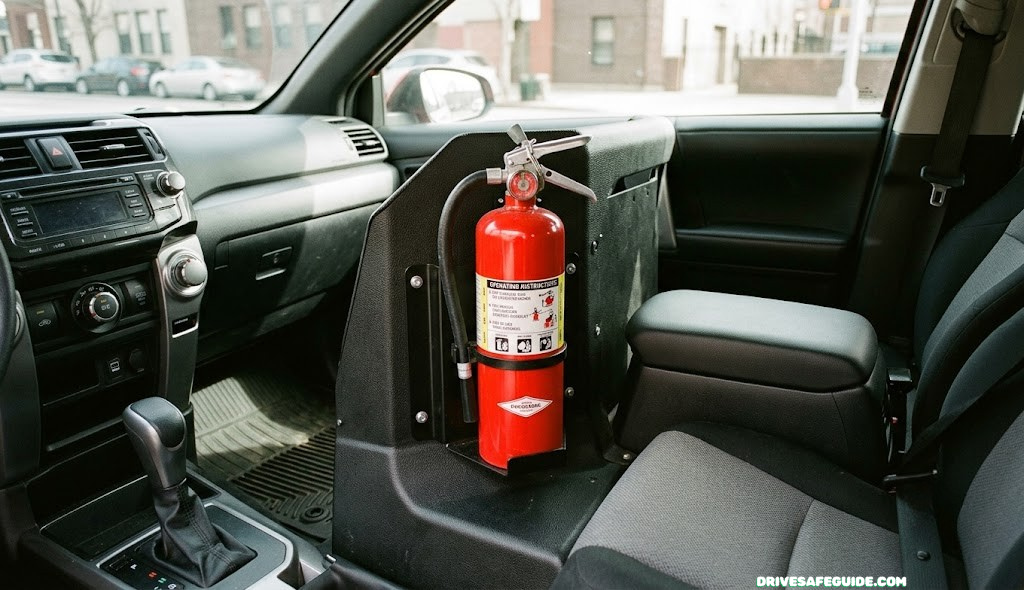
A fire extinguisher sitting in a hallway closet and a fire extinguisher meant to live in a car are not the same purchase, even when the label says the same thing. Vehicle fires involve fuel, wiring, and upholstery in a cramped, vibrating, temperature-swinging space — and the wrong extinguisher, or the right extinguisher mounted the wrong way, can cost you the thirty seconds that actually matter.
This guide walks through the decision in the order it actually needs to happen: which fire classes apply inside a car, which agent handles them, what size is realistic to keep on hand, how to read the rating label, where to mount it, and how to confirm it’s still good before you need it.
Why Car Fires Are Different From Home Fires
A kitchen fire extinguisher mostly needs to handle grease and paper. A car fire extinguisher needs to be ready for gasoline or diesel fuel, hot engine oil, plastic and foam interior components, and increasingly, high-voltage electrical systems in hybrid and electric vehicles. That’s a wider range of fuel types in a smaller, harder-to-access space than almost any other extinguisher use case in a typical household.
Vehicles also subject an extinguisher to conditions a wall-mounted home unit never sees: constant vibration, temperature swings from freezing overnight to well over 100°F in a closed cabin during summer, and the possibility of the extinguisher itself becoming a projectile in a crash if it isn’t properly secured. Every step below accounts for at least one of these vehicle-specific factors.
If you’re building a broader emergency kit rather than just this one item, see our full car safety kit guide and car emergency kit checklist, which cover the rest of what belongs alongside an extinguisher.
Identify the Fire Classes That Matter
Fire extinguishers are rated by the type of fuel they’re designed to handle, labeled as classes. Three of them show up regularly in a vehicle: Class A (ordinary combustibles like fabric, foam padding, and interior trim), Class B (flammable liquids like gasoline, diesel, and motor oil), and Class C (energized electrical equipment, relevant to wiring, the battery, and increasingly to hybrid and EV high-voltage systems).
Fig. 1 — The three fire classes a vehicle extinguisher needs to cover
Because a single vehicle fire can realistically start as any one of these three and spread to involve the others, the practical takeaway is straightforward: don’t buy a single-class extinguisher for a car. You want a unit rated for all three, commonly labeled “ABC” on the housing, rather than a Class A-only or Class B-only unit meant for a narrower household use case.
Choose the Right Agent Type
The extinguishing agent is the substance actually stored inside the canister, and it determines both how effective the unit is against each fire class and how much cleanup and secondary damage it leaves behind. Three agent types dominate the car extinguisher market.
Fig. 2 — Inside an ABC-rated canister: pressurized agent, gauge, and discharge hose
| Agent | Best For | Trade-off |
|---|---|---|
| Dry chemical (ABC) | All three classes; most common car extinguisher type | Corrosive residue; damages electronics and upholstery it touches |
| Clean agent (Halotron / similar) | Electrical and engine bay fires with minimal residue | Higher cost; typically less effective on deep-seated Class A fires |
| Foam (AFFF-type) | Fuel spills and Class B fires specifically | Not rated for electrical fires; less common in compact car-sized units |
For most personal vehicles, a dry chemical ABC extinguisher is the practical default — it’s the most widely available, handles the broadest range of vehicle fire scenarios, and costs less than clean-agent alternatives. Clean agent units are worth the premium if you’re specifically concerned about residue damage to a classic car’s interior or sensitive onboard electronics.

A Solid ABC Default
A compact dry chemical ABC extinguisher covers fabric, fuel, and electrical fires — the three classes most relevant inside a car.
Check Price on AmazonMatch Size & Weight to Your Vehicle
Car extinguishers are typically sold in the 1 to 5 pound range, and the size trade-off is real: bigger units carry more agent and fight a larger fire longer, but they’re heavier to hold, slower to grab in a hurry, and harder to store in a smaller vehicle’s limited cabin space.
Fig. 3 — Common car extinguisher sizes and where each realistically fits
| Size | Typical Storage Spot | Realistic Use Case |
|---|---|---|
| 1–1.5 lb | Glovebox, door pocket | Very small, early-stage fires only; more of a first-response than a primary tool |
| 2–2.5 lb | Under a seat, center console | The practical minimum most safety guides recommend for a passenger vehicle |
| 5 lb | Trunk-mounted bracket, cargo area | Best coverage; recommended for trucks, SUVs, and anyone towing or hauling |
As a starting point, most safety organizations recommend at least a 2 to 2.5 pound ABC-rated unit for a standard passenger car, sized up to 5 pounds for larger vehicles or anyone who regularly drives with cargo, passengers, or a trailer that raises the stakes of a slow response.
Decode the UL Rating Numbers
Every certified extinguisher label carries a rating code like “1-A:10-B:C,” and the numbers aren’t arbitrary — they indicate the relative firefighting capacity of that specific unit, tested and assigned by an independent certification body such as UL.
Fig. 4 — Reading a UL rating code on an extinguisher label
Higher numbers before the A and B letters mean greater firefighting capacity — a “2-A” unit handles roughly twice the Class A fire load of a “1-A” unit, and a “10-B” unit is rated for a larger flammable-liquid fire than a “5-B” unit. The letter C carries no number; it simply confirms the extinguishing agent is safe to use on energized electrical equipment without conducting current back toward the user.

Secure It Before You Need It
A quick-release mounting bracket keeps the extinguisher fixed in place during hard braking or a crash, instead of rolling around loose.
Check Price on AmazonDecide on a Mounting Location
An unsecured extinguisher is a liability in a crash — a 5-pound canister becomes a genuine projectile hazard under hard braking or a collision. Mounting location should balance quick access with secure, vibration-resistant fixing.
Fig. 5 — Three viable mounting zones, from fastest access to highest capacity
Good Mounting Practice
- Quick-release bracket bolted to a solid structural point
- Within arm’s reach from the driver’s seat when possible
- Positioned away from direct sun exposure (dashboard, rear window shelf)
Avoid
- Loose storage in a trunk or footwell with no bracket
- Mounting directly against metal that gets extremely hot in direct sun
- Locations that require moving cargo to access it quickly
For SUVs and trucks with more available cargo space, a trunk-mounted bracket accommodates a larger 5-pound unit without sacrificing cabin space — see our related notes on cargo area safety if you’re also managing other secured equipment back there.
Verify Certification & Gauge Zone
Before buying, confirm the unit carries a visible UL listing mark or equivalent independent certification — this is what confirms the rating label’s numbers were independently tested rather than self-reported by the manufacturer. After buying, the pressure gauge becomes your ongoing check.
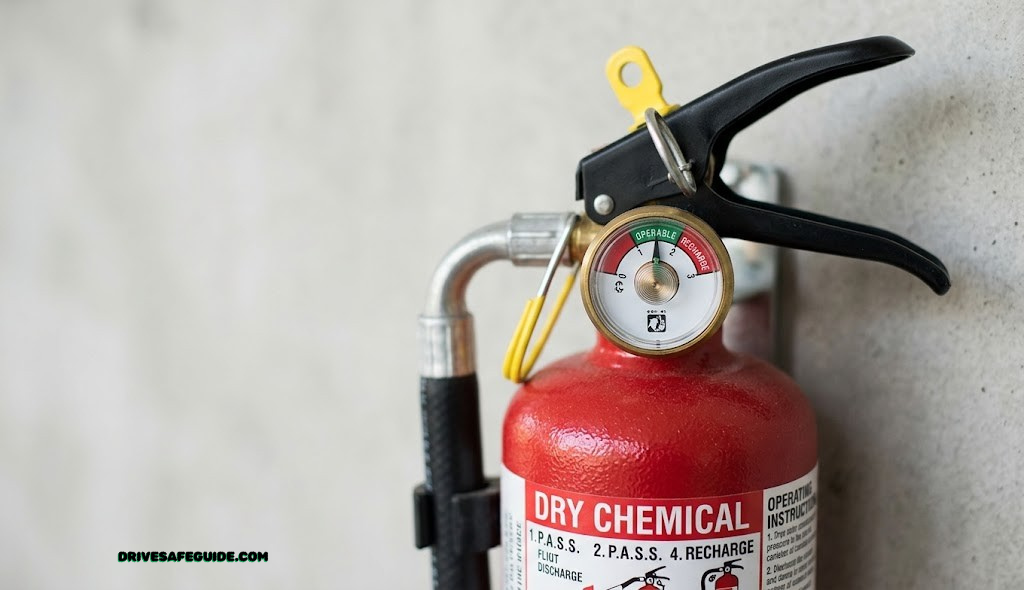
Fig. 6 — Reading the pressure gauge: green means ready, either red zone means service or replace
Check the gauge needle monthly as a habit — it takes about five seconds. A needle sitting in either red zone, whether under- or over-pressurized, means the unit needs servicing or replacement before it can be relied on. Disposable units without a rechargeable option should simply be replaced outright once out of the green zone or past the manufacturer’s stamped expiration date.
Match It to Your Specific Vehicle
The steps above cover the universal decision points. The final step is adjusting for what you actually drive and how you actually use it.
| Vehicle / Use Case | Recommendation |
|---|---|
| Compact or midsize sedan | 2–2.5 lb ABC dry chemical, mounted under a seat |
| SUV or truck | 5 lb ABC, trunk or cargo-area bracket, plus a smaller cabin unit if space allows |
| Hybrid or EV | ABC or clean agent unit clearly rated for energized/high-voltage systems; check the manufacturer’s specific EV guidance too |
| Classic or collector car | Clean agent (Halotron-type) to avoid corrosive dry chemical residue on original interior and chrome |
| Rideshare or commercial use | Check local commercial vehicle regulations — requirements often exceed personal vehicle minimums |
If you’re outfitting more than one vehicle in a household, our broader winter car emergency kit checklist and road trip essentials checklist are useful companions for making sure the extinguisher isn’t the only safety item getting attention.
Extinguisher Types Compared
Dry Chemical ABC — Pros
- Widest fire class coverage in a single unit
- Most affordable and widely available option
- Long shelf life with minimal maintenance beyond gauge checks
Dry Chemical ABC — Cons
- Corrosive residue can damage upholstery and electronics
- Reduced visibility during discharge in a small cabin
- Cleanup after use is more involved than clean-agent alternatives
Clean agent units cost more but leave little to no residue, which matters most for vehicles with sensitive electronics, a classic interior, or where discharge cleanup is a real ongoing concern. For the majority of daily drivers, the affordability and broad coverage of a dry chemical ABC unit outweighs the residue trade-off.
Legal Requirements by Vehicle Use
Most states don’t legally require a fire extinguisher in a personal passenger vehicle, though safety organizations universally recommend carrying one. Commercial use changes the picture significantly — rideshare and delivery driving, commercial trucking, and certain passenger-carrying vehicles often fall under specific regulatory requirements for extinguisher class, rating, and mounting.
Our guide to defensive driving habits that reduce collision risk covers broader preventive practices, since avoiding the collision that could trigger a fire is always the better outcome than fighting one after the fact.
Maintenance & Replacement Schedule
| Check | Frequency | What to Look For |
|---|---|---|
| Pressure gauge | Monthly | Needle in the green zone, not either red zone |
| Physical inspection | Monthly | No dents, rust, cracked hose, or damaged pin/seal |
| Mounting bracket | Every few months | Bracket still tight; extinguisher doesn’t shift when tugged |
| Expiration / recharge date | Annually, or per manufacturer stamp | Disposable units: replace. Rechargeable: professional recharge |
Extreme cabin temperature swings accelerate wear on the seal and gauge more than people expect — a unit that spends every summer day baking in a parked car’s interior has a shorter realistic service life than one stored in a garage. If you live somewhere with serious seasonal extremes, check our extreme heat vehicle care guide for related component considerations, and inspect the extinguisher gauge slightly more often during peak summer months.

Round Out the Kit
A compact first aid kit pairs naturally with a fire extinguisher as part of a complete vehicle emergency setup.
Check Price on AmazonCommon Buying Mistakes
Get This Right
- Choose an ABC-rated unit for full vehicle fire coverage
- Mount it securely rather than letting it roll loose
- Check the gauge monthly as a standing habit
- Size up for trucks, SUVs, or towing setups
Avoid These
- Buying the cheapest 1-lb unit and assuming it’s “good enough”
- Leaving it loose in the trunk with no bracket
- Ignoring the gauge until an actual emergency
- Assuming a home-rated extinguisher covers Class C electrical fires
If a vehicle fire has already started from an engine issue rather than a collision, understanding the early warning signs matters as much as the extinguisher itself — see our guides on coolant leak detection and alternator failure symptoms, both common precursors to an engine bay fire when left unaddressed. If you ever do face an active engine fire, our dedicated guide on engine fire response covers the specific steps beyond just having the right extinguisher on hand.
Frequently Asked Questions
What size fire extinguisher should I keep in my car?
Most safety organizations recommend at least a 2 to 2.5 pound ABC-rated unit for a standard passenger car, sized up to 5 pounds for SUVs, trucks, or vehicles that regularly tow or carry heavy cargo.
What does the “ABC” rating on an extinguisher mean?
It means the unit is rated for all three fire classes commonly relevant to a vehicle: Class A (fabric and ordinary combustibles), Class B (fuel and flammable liquids), and Class C (energized electrical systems).
Do I need a different extinguisher for an electric vehicle?
An ABC or clean agent unit rated for Class C electrical fires covers most EV cabin and wiring scenarios, but high-voltage battery pack fires are a specialized hazard — check your specific manufacturer’s emergency guidance in addition to carrying a standard extinguisher.
How often should I check my car fire extinguisher?
Check the pressure gauge and do a quick physical inspection monthly. It takes about five seconds and is the only reliable way to catch a slow pressure loss before it matters.
Is it legal to drive without a fire extinguisher?
In most states, yes, for personal passenger vehicles — it isn’t a legal requirement, though it’s widely recommended. Commercial vehicles, rideshare driving, and certain passenger-carrying vehicles often have separate requirements, so check local and platform-specific rules.
Where’s the best place to mount a fire extinguisher in a car?
Under the driver’s or front passenger’s seat offers the best balance of quick access and secure mounting for smaller units; trunk-mounted brackets work well for larger 5-pound units in SUVs and trucks.
Can I use a home fire extinguisher in my car instead of buying a separate one?
Only if it’s rated ABC and properly secured — many home extinguishers are Class A-only, which won’t handle a fuel or electrical fire. Check the label rating rather than assuming any extinguisher will do.
What’s the difference between dry chemical and clean agent extinguishers?
Dry chemical units cover the widest range of fire classes affordably but leave corrosive residue. Clean agent units cost more and leave little to no residue, making them a better fit for classic cars or sensitive electronics.
How long does a car fire extinguisher last before it needs replacing?
Disposable units are typically rated for around ten to twelve years, but heat exposure inside a parked car can shorten that in practice. Check the manufacturer’s stamped expiration date and the gauge monthly rather than relying on the printed date alone.
What do the numbers in a rating like “2-A:10-B:C” actually mean?
The number before A indicates Class A firefighting capacity, and the number before B indicates the approximate square footage of Class B fire the unit can handle. Higher numbers mean greater capacity. C carries no number — it simply confirms electrical safety.
Should I mount the extinguisher or just keep it loose in the trunk?
Always mount it. A loose canister becomes a genuine projectile hazard during hard braking or a collision, in addition to being harder to find quickly during an actual emergency.
Is a bigger extinguisher always better?
Not necessarily. A larger unit carries more capacity but is heavier and slower to deploy. Match the size to your vehicle type and realistic use case rather than defaulting to the largest available option.
Bottom Line
Choosing a car fire extinguisher comes down to picking an ABC-rated unit sized for your specific vehicle, understanding the rating numbers on the label well enough to compare products meaningfully, mounting it securely where you can actually reach it, and checking the gauge often enough that it’s never a surprise when you need it. Get those four things right and the extinguisher does its job the one time it actually matters.
Round out your vehicle emergency preparedness with our full car safety kit guide and emergency escape tools review.
Shop Car Fire Extinguishers