Overcoming EV Battery Range Anxiety: Expert Tips for a Worry-Free Drive
Range anxiety is the single biggest reason drivers hesitate to go electric — and the good news is that almost all of it is fixable with the right habits, tools, and mindset. Here’s exactly how to drive with confidence, no matter how far you’re going.
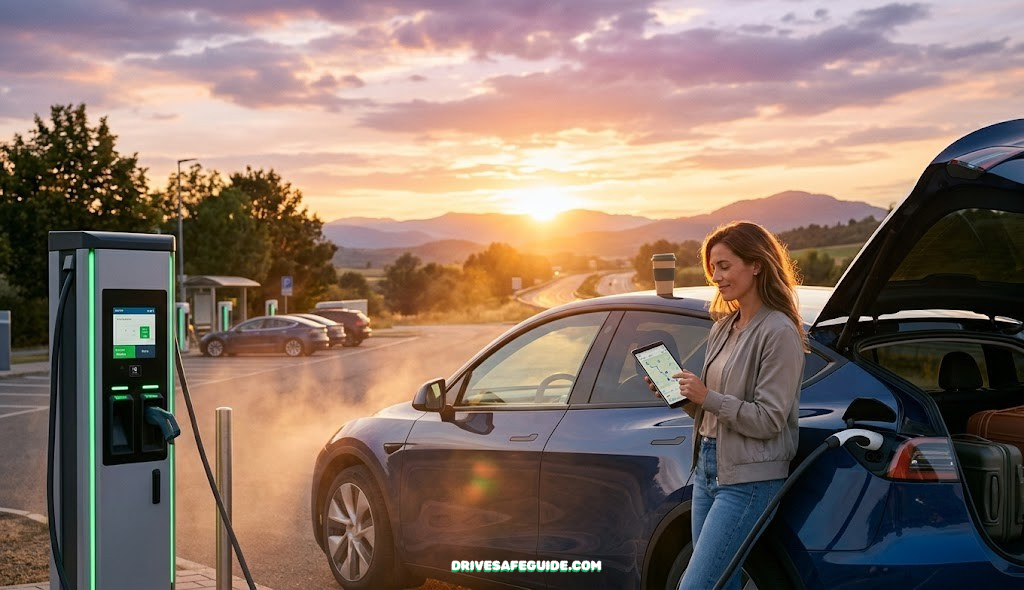
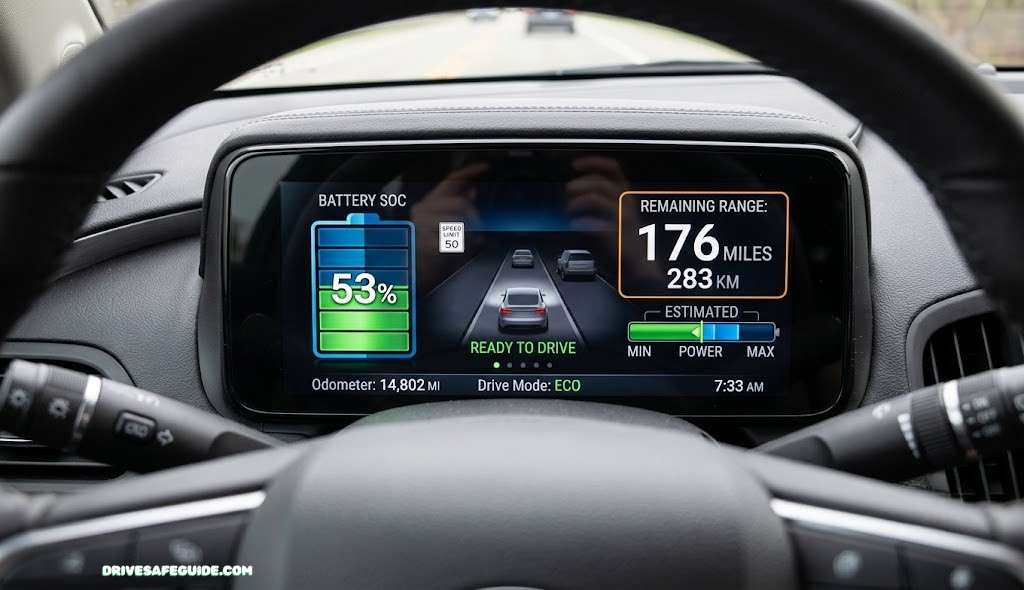
If the thought of your battery hitting zero somewhere between exits makes your stomach drop, you’re not alone — and you’re not wrong to plan ahead. Range anxiety is a real, measurable source of stress for new EV owners, and it doesn’t fully disappear on its own. What actually resolves it is a combination of understanding how your vehicle behaves, knowing where you can charge, and building a few simple habits into your routine. This guide walks through every layer of that process, from the physics of battery degradation to the exact apps experienced EV drivers keep on their home screen. By the end, “How far can I actually go?” stops being a source of dread and becomes a question you can answer in seconds.
1. What Range Anxiety Really Is (And Why It’s So Common)
Range anxiety is the persistent worry that your electric vehicle won’t have enough charge to reach your destination or the next available charger. It’s not irrational — it’s a natural response to a genuinely new kind of uncertainty. Gas vehicles have trained drivers for a century to think in terms of a five-minute refuel that’s available on nearly every corner. EVs ask you to think differently: charging takes longer, stations are less ubiquitous in some regions, and the number on your dashboard can shift based on speed, terrain, and temperature in ways a fuel gauge never does.
Surveys of prospective EV buyers consistently rank range anxiety among the top two or three reasons people delay switching from gas, even in markets where charging infrastructure has expanded significantly. The interesting part is that once drivers own an EV for a few months, the anxiety drops sharply — not because the technology changed, but because their mental model did. They learned their car’s real behavior, found their charging routine, and stopped treating every trip like an experiment.
This matters because it changes where you should focus your energy. Rather than fixating on battery specs alone, the highest-leverage moves are learning your car’s real-world range, mapping your regular routes against charging infrastructure, and building small safety margins into your planning — all of which we’ll cover in detail below. If travel-related stress extends beyond charging logistics into general nervousness behind the wheel, it can help to also look at broader driving anxiety strategies, since the two often reinforce each other.

A dedicated OBD2 scanner lets you monitor battery state, temperature, and efficiency trends beyond what the dashboard shows.
Check Price on Amazon2. How EV Range Estimates Actually Work (And Why They’re Often Wrong)
The range number on your dashboard is an estimate, not a promise. It’s typically calculated using a rolling average of your recent driving efficiency, combined with the battery’s current state of charge. That means the number you see after a week of highway commuting will look very different from the number you’d see after a week of gentle city driving, even with an identical battery.
The Gap Between EPA Ratings and Everyday Driving
Official range ratings are generated under controlled test conditions designed for consistency across manufacturers, not to mirror your specific commute. Real-world range is influenced by speed (highway driving at 75 mph can reduce efficiency substantially compared to 55 mph), climate control use, cargo weight, tire pressure, and terrain. It’s common for real-world range to land anywhere from 10% to 30% below the advertised figure, particularly on fast, sustained highway trips.
Why the Number Sometimes “Jumps”
New EV owners are often unsettled when the range estimate drops by more miles than they actually drove, or rises unexpectedly after a short trip. This happens because the algorithm is recalculating based on very recent driving efficiency rather than a fixed formula. Once you understand this is expected behavior rather than a malfunction, it stops feeling alarming.
Properly inflated tires play a bigger role in this than most drivers realize, since underinflation increases rolling resistance and quietly eats into range. Keeping an eye on tire pressure monitoring is one of the simplest, most overlooked ways to keep your range estimate accurate and your efficiency consistent.
3. Know Your Vehicle: Learning Your Real-World Range
The single most effective anxiety-reducing exercise any EV owner can do costs nothing and takes about two weeks: track your actual range across a variety of conditions. Note your battery percentage before and after a highway drive, a cold-morning commute, and a mixed city trip. Within a short period, you’ll have a personal reference chart that’s far more useful than any spec sheet.
Build a Simple Personal Range Log
Keep a note on your phone (or use your vehicle’s companion app) with three columns: trip type, starting charge, and miles driven per percentage point. After a dozen entries, patterns emerge quickly — for example, you might discover your highway range is 15% lower than city range, or that cold mornings cost you an extra five miles before the cabin warms up.
Signs Your Range Estimate Is Reliable
- Consistent percentage drop per mile across similar trips
- Estimate stabilizes after the first few minutes of driving
- Navigation-predicted arrival charge matches actual arrival charge
Signs You Need a Bigger Safety Margin
- Estimate swings more than 10% between similar trips
- Battery is several years old with unknown degradation
- You frequently drive in extreme heat or cold
If your EV is a hybrid or plug-in hybrid, the calculus is slightly different since you’re managing two power sources rather than one. Staying on top of hybrid vehicle maintenance keeps both systems working as intended, which keeps your range predictions honest.

A reliable digital tire gauge takes seconds to use and helps you catch slow leaks before they quietly cost you miles.
Check Price on Amazon4. Route Planning Tools and Apps That Kill the Guesswork
Modern route-planning tools have made range anxiety far less about willpower and far more about preparation. Built-in EV navigation systems now factor in elevation, weather, and battery state of charge to calculate whether you’ll actually make it to your next stop — and if not, they’ll route you through a charger automatically.
What a Good EV Route Planner Should Do
- Calculate arrival charge percentage, not just distance
- Show real-time charger availability and speed (not just location pins)
- Account for elevation changes and current weather
- Suggest charging stops that fit naturally into rest breaks
Third-party charging apps are worth pairing with your vehicle’s built-in system, since they often show live user reports of broken or occupied stalls — information your car’s native software may not have. It’s worth spending ten minutes browsing driver apps worth installing to find the combination that works best for your region and charging network.
5. Building Charging Network Confidence: Your Mental Map
One of the fastest ways to dissolve range anxiety is to stop thinking of charging stations as scarce, unpredictable resources and start treating them as a known network you’ve already mapped out. This is a one-time investment of effort that pays off for years.
Create Your “Charging Radius”
Spend twenty minutes identifying every fast charger within a comfortable radius of your home, workplace, and the routes you drive most often. Bookmark them. Note their charging speed and typical reliability based on recent user reviews. Once this map exists in your head, the anxiety of “what if I can’t find a charger” is replaced with concrete knowledge of exactly where the nearest three options are.
Understand Charging Speed Tiers
| Charging Type | Typical Use Case | Rough Speed Added |
|---|---|---|
| Level 1 (standard outlet) | Overnight home top-ups | ~3–5 miles per hour |
| Level 2 (home/public) | Overnight or all-day charging | ~15–30 miles per hour |
| DC Fast Charging | Road trips, quick top-ups | ~150–250+ miles per 30 minutes* |
*Varies significantly by vehicle, charger hardware, and battery state of charge; fast charging slows considerably above roughly 80% to protect battery health.
If your commute or road trips take you through less-developed charging corridors, it’s worth reviewing a GPS tracker setup as well — beyond location-sharing for peace of mind, some models double as a backup way to log your route history if you ever need to retrace a trip for charging planning purposes.
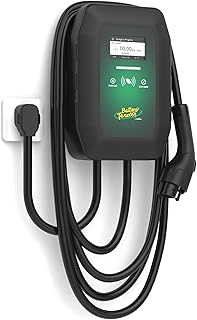
A portable Level 1/2 charging cable fits in your trunk and turns any standard outlet into an emergency charging source.
Check Price on Amazon6. Driving Habits That Stretch Every Mile
How you drive has a bigger impact on range than most people expect — often a larger swing than the difference between two competing vehicle trims. The good news is that the habits that save range are the same ones that make you a safer, calmer driver overall.
Smooth Inputs Beat Aggressive Ones
Hard acceleration and hard braking both waste energy: acceleration draws a disproportionate amount of power, while heavy braking converts less kinetic energy back into the battery than gentle regenerative braking does. Anticipating traffic flow and coasting into stops rather than braking late accomplishes two things at once — it extends range and reduces collision risk. This overlaps heavily with general defensive driving habits, which is a nice reminder that range-conscious driving and safe driving are rarely in conflict.
Speed Is the Single Biggest Lever
Aerodynamic drag increases sharply with speed, which means dropping from 75 mph to 65 mph on a highway stretch can meaningfully extend your range — often more than any other single adjustment you can make mid-trip.
Use Regenerative Braking Deliberately
Most EVs let you adjust regenerative braking strength. Learning to “one-pedal drive” in stop-and-go traffic recaptures energy that would otherwise be lost entirely, and it’s a skill that becomes second nature within a week or two of regular use.
7. Weather and Range: Cold, Heat, and Battery Chemistry
Temperature is the variable that surprises new EV owners most. Lithium-ion batteries are chemically less efficient outside a comfortable operating temperature range, and climate control adds an additional draw on the battery that gas vehicles simply don’t experience in the same way.
Cold Weather
In freezing conditions, it’s common to see a noticeable reduction in usable range, driven by both reduced battery efficiency and the energy cost of cabin heating. Preconditioning your vehicle while it’s still plugged in — warming the cabin and battery before you disconnect — is one of the most effective countermeasures, since it draws that energy from the wall instead of the battery. Reviewing cold-weather battery performance guidance and general winter driving safety practices together gives you a fuller picture, since traction and range planning both matter more once temperatures drop.
Hot Weather
Extreme heat affects range too, mostly through air conditioning use and, in sustained high temperatures, through battery thermal management systems working harder to keep cells within a safe range. Parking in shade and precooling while plugged in help for the same reason preconditioning helps in winter. If you regularly drive in hot climates, some of the same extreme heat vehicle care principles that apply to combustion vehicles — like minimizing unnecessary idling in direct sun — carry over usefully to EVs.

Thermal battery blankets and cabin preheating accessories can help offset winter range loss for garage-free parking situations.
Check Price on Amazon8. Home Charging Setup for Everyday Peace of Mind
The single biggest anxiety-reducer for most EV owners isn’t a public charging app — it’s a reliable home charging routine. Waking up every morning to a full or near-full battery removes the daily variable entirely and reserves your attention for the occasional long trip.
Level 1 vs. Level 2 at Home
A standard household outlet (Level 1) works fine for drivers with short daily commutes and plenty of overnight hours to charge. Drivers with longer commutes, multiple daily trips, or larger batteries generally benefit from a dedicated Level 2 home charger, which charges several times faster and virtually eliminates the possibility of starting your day below a comfortable threshold.
Set a Charging Habit, Not a Charging Decision
Rather than deciding each night whether to plug in, treat it like plugging in your phone — an automatic, unconsidered habit. Most charging software lets you schedule off-peak charging automatically, which also tends to be cheaper. This single habit change eliminates a large share of range anxiety before you even leave the driveway.
9. Road Trip Strategy: Planning Longer Trips Without Stress
Long trips are where range anxiety peaks, simply because they push you outside your known charging radius. The fix isn’t to avoid road trips — it’s to plan them with slightly more structure than you would in a gas vehicle.
Plan Charging Stops Around Rest Stops, Not the Other Way Around
Rather than treating charging as a delay, build your trip around the natural breaks you’d take anyway — meals, restroom stops, stretching your legs. A 20–30 minute fast-charge session fits neatly into a normal rest stop rhythm, especially on trips over three or four hours.
Keep a Buffer, Not Just a Plan
Experienced EV road-trippers rarely plan to arrive at a charger with an empty battery. Aim to arrive with roughly 10–20% remaining as a buffer against traffic, detours, or weather. This single habit removes the majority of “what if” scenarios before they happen.
It’s also worth working through a general cross-country driving checklist and a broader road trip essentials checklist alongside your charging plan — many of the same fundamentals around rest, navigation, and vehicle readiness apply regardless of what’s under the hood. Running through steps to eliminate road trip risks before you leave and completing standard pre-trip safety checks rounds out a solid preparation routine.

A compact emergency kit covers the basics for unexpected stops, whether you’re waiting on a charger or a tow.
Check Price on Amazon10. What To Do If You’re Actually Running Low
Even with good planning, occasionally you’ll find yourself with less range than you’d like. Knowing exactly what to do removes the panic from the equation.
Immediate Steps
- Turn off non-essential climate control and reduce fan speed
- Reduce speed — even 5–10 mph slower meaningfully extends remaining range
- Use your navigation system’s built-in low-range charger search rather than guessing
- Avoid unnecessary hills or detours; take the flattest, most direct route to the nearest reliable charger
Know Your Backup Options
Most EV manufacturers and roadside assistance providers offer emergency charging or towing services specifically for this scenario. Save the number before you need it, the same way you’d keep a car safety kit in your trunk for any other kind of roadside surprise. Being stranded briefly is inconvenient, but it’s rarely dangerous if you’ve prepared even minimally — treat it as a logistics problem, not an emergency, and it will feel like one.
11. Comparing Range Anxiety Across EV Types
Not every electric vehicle owner experiences range anxiety the same way. Battery size, charging speed, and typical use case all shape how much planning a given driver actually needs.
| Vehicle Type | Typical Range Anxiety Level | Best Mitigation Strategy |
|---|---|---|
| Short-range city EV | Moderate–High on long trips | Strong charging radius mapping; avoid highway-heavy routes when possible |
| Long-range battery EV | Low–Moderate | Focus on fast-charger route planning for road trips only |
| Plug-in hybrid | Low | Maximize electric-only trips; rely on gas engine as the built-in buffer |
| Standard hybrid | Very Low | Minimal planning needed; standard fueling behavior applies |
Regardless of category, the underlying advice is the same: know your real-world range, know your charging options, and build in a margin. Owners transitioning from any hybrid should also keep up with hybrid vehicle maintenance basics, since a well-maintained battery and drivetrain hold their efficiency far better over time than a neglected one.
12. Common Range Anxiety Myths, Debunked
Myth: “You’ll constantly be searching for a charger.”
In reality, the vast majority of charging happens at home overnight. Public charging is typically reserved for road trips, not daily driving — most owners plug in far less often than they expected before buying.
Myth: “Cold weather will strand you.”
Cold weather reduces range, but it doesn’t eliminate it. With preconditioning and a reasonable buffer, winter driving remains entirely manageable, and it overlaps closely with general winter driving safety practices every driver should already follow.
Myth: “Running out of charge is dangerous.”
Running low is inconvenient, but modern EVs give ample warning and reduce power draw automatically as charge drops. It’s a logistics inconvenience, not a safety emergency, provided you follow the low-range steps outlined earlier in this guide.
Myth: “You need a home charger to own an EV.”
A home charger is convenient, not mandatory. Many drivers rely entirely on workplace or public charging, especially in urban areas with dense fast-charging networks.

EVs still rely on a small 12V battery for accessories — a compact jump starter is cheap insurance against an unrelated dead-battery surprise.
Check Price on AmazonFrequently Asked Questions
How much does cold weather actually reduce EV range?
It varies by vehicle and temperature, but a noticeable reduction is normal in freezing conditions, driven mainly by cabin heating and reduced battery efficiency. Preconditioning while plugged in significantly softens the impact.
Is it bad to charge my EV to 100% every night?
Most manufacturers recommend charging to around 80–90% for daily use and reserving 100% charges for road trips, since consistently charging to full can accelerate long-term battery wear.
What happens if I actually run out of charge on the road?
The vehicle will give ample low-charge warnings before this happens. If it does occur, most manufacturers and roadside assistance providers offer emergency charging or towing specifically for EVs.
Does highway driving really use more range than city driving?
Yes — sustained high speeds increase aerodynamic drag significantly, while city driving benefits more from regenerative braking during frequent stops.
How do I find charging stations on an unfamiliar route?
Use your vehicle’s built-in navigation alongside a dedicated charging app for real-time availability and user-reported reliability, then cross-check both before a long trip.
Does driving with the AC on really hurt my range that much?
Climate control is one of the larger secondary power draws in an EV, especially on short trips. Preconditioning while plugged in and using seat heaters instead of cabin heat when possible both help.
Is range anxiety worse for used EVs with older batteries?
Battery capacity does gradually decline with age and charge cycles, so older or high-mileage EVs generally need a wider safety margin than new ones. A personal range log is especially useful here.
Should I always charge to 100% before a road trip?
Yes, for long trips a full charge is generally appropriate, since the goal is maximizing your starting range before you leave your known charging radius.
Do tire pressure and maintenance really affect range?
Yes — underinflated tires increase rolling resistance and reduce efficiency, so consistent tire pressure monitoring is one of the simplest ways to protect your range.
How long does it realistically take to stop worrying about range?
Most new EV owners report their anxiety drops substantially within the first month, once they’ve learned their vehicle’s real-world range and built a mental map of their regular charging options.
The Bottom Line: Confidence Comes From Knowledge, Not Just a Bigger Battery
Range anxiety fades the moment uncertainty turns into a plan. Learn your vehicle’s real-world range, map your charging radius, build small buffers into your trips, and adjust for weather — and the mental math that once felt stressful becomes almost automatic. None of this requires a bigger battery or a perfect charging network; it just requires the habits outlined in this guide.
Before your next long drive, take twenty minutes to plot your route, check your charging options, and pack a basic emergency kit. It’s the same preparation that makes any road trip safer, whether you’re running on electrons or gasoline.
Shop EV Road Trip Essentials on Amazon🔧 Recommended Tool
Read Your Car’s Fault Codes at Home
An OBD2 scanner lets you diagnose check engine lights, clear fault codes, and monitor your car’s health — without paying a mechanic every time.
🔧 Shop OBD2 Scanners on AmazonAffiliate link — we earn a small commission that keeps DriveSafeGuide running. Thank you!