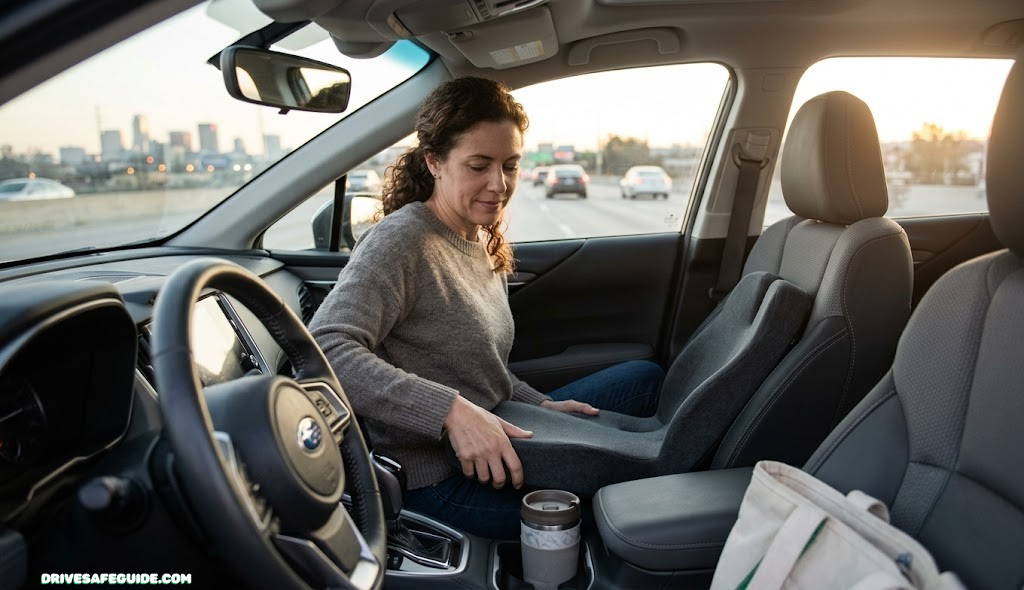
Finding Relief with the Best Sciatica Driving Cushion
If every red light feels like it’s testing your patience and your nerve pain at the same time, the seat underneath you might be more of the problem than you realize.
There’s a specific kind of dread that sets in when you know a drive is coming and your sciatica has been flaring up. The first ten minutes are fine. Then somewhere around a red light or a stretch of highway traffic, that familiar ache starts creeping down through the hip and into the back of the leg, and by the time you park, you’re gripping the door frame just to stand up straight. If that sounds familiar, you’re not imagining it, and you’re definitely not alone. Sitting is one of the worst positions for sciatic nerve compression, and a car seat — designed more for lumbar support during short trips than for people managing a genuine nerve condition — often makes things worse rather than better.
The good news is that a well-chosen sciatica driving cushion can change the entire experience of getting behind the wheel. This guide walks through why driving aggravates sciatica in the first place, what actually makes a cushion effective versus just marketing fluff, and which options are worth considering. We’ll also cover positioning, common mistakes, and how to combine a cushion with other adjustments for the best possible relief.
1. What Is Sciatica and Why Driving Makes It Worse
Sciatica isn’t a condition on its own so much as a symptom — pain that travels along the path of the sciatic nerve, which runs from the lower back through the hips and glutes and down each leg. It’s most often caused by a herniated disc, spinal stenosis, or piriformis muscle irritation pressing on the nerve root. The result is a sharp, burning, or electric sensation that can range from a dull ache to something sharp enough to stop you mid-step.
Driving is uniquely bad for this because it combines several aggravating factors at once. You’re seated, which already increases pressure on the lower spine compared to standing. You’re seated in a fixed position for extended periods, which prevents the small postural shifts your body naturally makes to relieve pressure points. Your right foot is doing repetitive, low-range movement between the gas and brake, which can tighten the piriformis muscle in a way that directly compresses the nerve. And most factory car seats are shaped for the average torso, not for someone dealing with nerve compression, which means the padding is distributed in ways that can actually increase pressure right where you need it least.
Add vibration from the road and the slightly reclined, hip-flexed position most seats encourage, and you have a near-perfect storm for sciatic flare-ups. If you’ve ever wondered why a 20-minute grocery run barely bothers you but a 45-minute commute leaves you in agony, this combination of factors is almost certainly why. If you’re also managing general lower back strain from long stretches at the wheel, our guide on lumbar support adjustment for drivers is a useful companion piece to this one.
2. How a Sciatica Driving Cushion Actually Works
A sciatica-specific cushion isn’t just a softer place to sit. The best ones are engineered around a few core principles that directly target the mechanics of nerve compression.
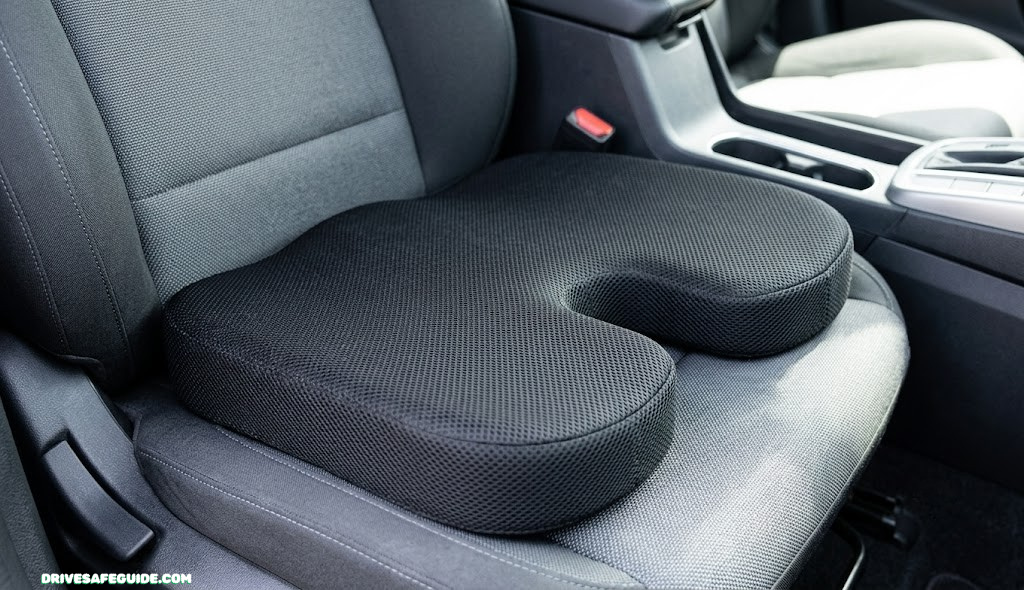
First, most feature a U-shaped or horseshoe cutout at the back of the cushion. This removes direct contact between the seat surface and the coccyx and lower sacrum, which is often the exact area where pressure translates into nerve irritation. Instead of your tailbone bearing weight, that weight is redistributed to the sit bones and thighs, which are far better suited to sustained pressure.
Second, quality cushions correct pelvic tilt. When you sit on a flat, unsupportive seat for too long, your pelvis tends to rotate backward, which flattens the natural curve of your lower spine and increases pressure on the discs and nerve roots. A properly contoured cushion tilts the pelvis slightly forward, restoring a more neutral spinal alignment and taking pressure off the nerve pathway.
Third, the material itself matters. Memory foam contours to your specific shape and slowly returns to form, which means it doesn’t create new pressure points the way a flat foam pad can. Gel layers add an additional buffer that spreads weight over a wider surface area while also managing heat, since prolonged sitting on dense foam can get uncomfortably warm on longer drives.
None of this eliminates the underlying nerve issue, and no cushion is a medical treatment. But by reducing the specific pressures that trigger flare-ups during driving, a well-designed cushion can turn a painful daily commute into something genuinely tolerable.

A contoured memory foam cushion with a coccyx cutout is the single most effective upgrade most sciatica sufferers can make to their daily drive.
Check Price on Amazon3. Key Features to Look for Before You Buy
Not every cushion marketed for “back pain” is designed with sciatica in mind, and the wrong purchase can leave you no better off — or occasionally worse off — than sitting on the bare seat. Here’s what actually matters.
- Coccyx cutout depth: The cutout should be deep enough that your tailbone never touches the base of the cushion, even when you shift position slightly.
- Foam density: Look for high-density memory foam (typically listed in the product specs). Low-density foam compresses flat within weeks and stops providing meaningful support.
- Non-slip base: A cushion that slides around on a leather or vinyl seat forces constant repositioning and undermines the pelvic alignment it’s supposed to provide.
- Breathable cover: Mesh or moisture-wicking covers prevent heat buildup, which matters more than people expect on drives over 30 minutes.
- Thickness relative to your seat: A cushion that’s too thick can push your hips uncomfortably close to the steering wheel or dashboard, especially in smaller vehicles.
- Portability: If you drive multiple vehicles or want to use it at a desk too, a lightweight design with a carry handle adds real everyday value.
- Machine-washable cover: Given how often it will be used, a removable and washable cover is close to essential for hygiene.
If you’re also dealing with numbness or tingling in your hands from long steering sessions, it’s worth reading our piece on carpal tunnel and steering wheel grip, since posture issues in the seat often show up as strain further up the body too.
4. Types of Cushions Explained: Memory Foam, Gel, Orthopedic, Coccyx-Cutout, Inflatable
Cushions aren’t one-size-fits-all, and understanding the differences between the main categories makes it much easier to pick the right one for your specific pain pattern and vehicle.
Memory Foam
The most common and generally most effective category for sciatica. Slow-recovery foam molds to your body shape and redistributes weight evenly. Higher-density versions hold their shape for years; cheaper versions flatten out within months.
Gel-Infused or Gel-Layered
These add a gel layer over or within the foam to improve pressure distribution and reduce heat retention. Gel alone (without foam) tends to feel supportive at first but can bottom out over long drives.
Orthopedic Contoured Cushions
Designed with a broader medical focus — often addressing the tailbone, hips, and lower back simultaneously with a more sculpted shape than a standard cushion.
Coccyx-Cutout Cushions
Specifically built around the U-shaped cutout described earlier. This is the category most directly associated with sciatica and tailbone pain relief.
Inflatable Cushions
Lightweight and packable, useful for travel, but generally offer less consistent long-term support and require manual adjustment of firmness.
| Cushion Type | Best For | Durability | Heat Retention |
|---|---|---|---|
| Memory Foam | Daily commuters, general sciatica relief | High | Moderate |
| Gel-Infused | Hot climates, longer drives | Moderate | Low |
| Orthopedic Contoured | Combined hip and lower back pain | High | Moderate |
| Coccyx-Cutout | Direct sciatic nerve compression | High | Moderate |
| Inflatable | Travel, occasional use | Low | Low |

If heat buildup on long drives is part of your discomfort, a gel-infused hybrid cushion adds cooling without sacrificing support.
View Gel Cushions on Amazon5. Top-Rated Sciatica Driving Cushions, Reviewed
Below are the categories of cushions that consistently earn strong feedback from drivers managing sciatica, along with what makes each one stand out and where it falls short. Rather than pushing a single “best” pick, this breakdown should help you match a cushion type to your specific vehicle, budget, and pain pattern.
1. Deep-Cutout Memory Foam Cushion
Pros
- Deepest tailbone relief of any category
- Holds shape for years with high-density foam
- Non-slip base works well on leather seats
Cons
- Adds noticeable seat height
- Can feel firm for the first week of use
2. Gel-Hybrid Cushion
Pros
- Excellent heat management on long drives
- Softer initial feel than pure memory foam
Cons
- Gel layer can compress unevenly over time
- Typically heavier and less portable
3. Slim Orthopedic Cushion
Pros
- Low profile, ideal for smaller vehicles or drivers close to the wheel
- Easy to move between car and office chair
Cons
- Less dramatic pressure relief than a deep-cutout design
4. Inflatable Travel Cushion
Pros
- Packs flat for road trips and rental cars
- Adjustable firmness by inflation level
Cons
- Requires more frequent repositioning
- Less consistent long-term support
| Cushion | Ideal Driver | Approx. Thickness | Portability |
|---|---|---|---|
| Deep-Cutout Memory Foam | Daily commuters with moderate to severe pain | 3–4 in | Moderate |
| Gel-Hybrid | Hot climates, long-haul drivers | 3 in | Moderate |
| Slim Orthopedic | Compact cars, mild discomfort | 1.5–2 in | High |
| Inflatable | Occasional travel, rental cars | Adjustable | Very High |
Whichever category fits your needs, pairing the cushion with a supportive backrest addition, like those covered in our high-density gel seat cushion fatigue guide, tends to produce noticeably better results than either product used alone.

Driving something smaller where seat height matters? A slim orthopedic cushion delivers relief without crowding you against the wheel.
Shop Slim Cushions on Amazon6. Memory Foam vs Gel vs Hybrid: Which Is Right for You
This is the comparison most people get stuck on, so it’s worth breaking down directly rather than leaving it as a vague “it depends.”
Choose memory foam if your primary issue is direct tailbone or nerve pressure and you want the longest-lasting shape retention. It’s the most clinically aligned option with how sciatica cushions are designed to function.
Choose gel if heat and sweating during long drives is a significant part of your discomfort, particularly in warmer climates or vehicles without strong seat ventilation.
Choose a hybrid if you want a balance of both — most hybrids place a thin gel layer over a memory foam core, giving you the shape-holding benefits of foam with a cooler surface feel.
| Factor | Memory Foam | Gel | Hybrid |
|---|---|---|---|
| Pressure Relief | Excellent | Good | Excellent |
| Heat Management | Fair | Excellent | Good |
| Shape Retention | Excellent | Fair | Good |
| Weight | Moderate | Heavier | Heavier |
| Typical Lifespan | 2–3 years | 1–2 years | 2 years |
7. How to Position Your Cushion Correctly for Maximum Relief
Even the best cushion underperforms if it’s positioned incorrectly, and this is the step most people skip. Start by placing the cushion so the cutout sits directly under your tailbone and lower sacrum — most cushions have the narrower, more pointed end of the U-shape facing the front of the seat. If the cutout is reversed, you’ll be sitting on the solid padded section instead of over the gap, which defeats the entire purpose.
Next, check your hip height relative to your knees. Your hips should sit slightly higher than your knees once the cushion is in place. If your knees end up higher than your hips, the cushion is too thick for your seat and vehicle combination, and you should consider a slimmer profile.
Finally, resist the urge to scoot forward on the cushion as the drive goes on. A slight forward slide is common and gradually removes you from the cutout’s protective gap. Periodically shifting back into position, especially after stops, keeps the pressure relief consistent for the whole drive.

Combining a seat cushion with a proper lumbar support pillow addresses both the pressure and alignment sides of sciatic pain at once.
Browse Lumbar Supports on Amazon8. Combining Your Cushion With Seat and Lumbar Adjustments
A seat cushion solves one part of the equation, but the seat itself still plays a major role in how much pressure reaches your sciatic nerve. Before relying on the cushion alone, check a few adjustments on the seat itself. Recline angle matters more than most drivers realize — a seat reclined too far back forces your pelvis into a rounded position that flattens the lower spine’s natural curve, which increases nerve compression even with a good cushion in place. Aim for a slight recline, generally somewhere close to a 100–110 degree angle between seat and backrest, rather than sitting bolt upright or leaning back excessively.
If your vehicle has adjustable lumbar support built in, use it in combination with the cushion rather than relying on either one exclusively. The built-in lumbar adjustment addresses the mid-to-upper lower back curve, while the seat cushion addresses the pelvic and tailbone area — together they cover the full range of the seated posture chain. For a deeper walkthrough of dialing in these settings correctly, our guide on lumbar support adjustment for drivers covers this step by step.
Seat height also matters. If your seat sits too low, your knees end up above your hips regardless of the cushion, which reintroduces the exact pelvic tilt problem the cushion is trying to solve. Raise the seat height if your vehicle allows it, then reassess whether the cushion thickness still feels correct.
9. Common Mistakes That Make Sciatic Pain Worse Behind the Wheel
A surprising number of well-intentioned habits actually work against sciatica relief. Here are the most common ones worth correcting.
- Sitting too far from the pedals: This forces a straighter leg position that can increase piriformis tension and indirectly aggravate the sciatic nerve.
- Wallet or phone in the back pocket: A surprisingly common and easily fixed cause of one-sided pelvic tilt and direct nerve irritation.
- Skipping breaks on long drives: No cushion fully replaces the need for periodic movement; see the long-haul section below for specifics.
- Using a cushion that’s too soft: Overly soft foam compresses fully within minutes and stops providing any real pressure redistribution.
- Ignoring seat recline angle: As covered above, an overly reclined seat undermines even the best cushion.
- Crossing legs or sitting asymmetrically: This shifts weight unevenly across the cushion and can reintroduce one-sided nerve pressure.
If general driving posture and fatigue are also a concern beyond sciatica specifically, our roundup of defensive driving habits that reduce collision risk touches on how fatigue and discomfort can compound each other on longer trips.
10. Long-Haul Driving Strategies for Sciatica Sufferers
Long-distance drives require a slightly different approach than the daily commute. Even the best cushion has diminishing returns after a couple of hours without a break, so building movement into the trip matters as much as the equipment itself.
Plan stops every 60 to 90 minutes, and use them for actual movement rather than just refueling. A short walk around the vehicle, a few standing hip stretches, or even just shifting your weight from foot to foot for a minute can reset the pressure buildup that accumulates during sustained sitting.
Bring a small rolled towel or secondary lumbar pillow for the second half of a long trip. Many drivers find their optimal seat position shifts slightly as fatigue sets in, and having a way to make small adjustments mid-drive helps maintain alignment rather than compensating for it after the fact.
If you’re prone to road-trip-specific aches beyond sciatica, our cross-country driving checklist and long-haul driver exercises guide both pair well with the seating adjustments covered here.

For long winter drives, a heated cushion layer can help relax tight muscles around the sciatic nerve pathway before pain sets in.
See Heated Cushions on Amazon11. When Cushions Aren’t Enough: Red Flags and When to See a Doctor
A driving cushion is a management tool, not a treatment for the underlying cause of sciatica. It’s worth being honest about when a product simply isn’t going to be enough on its own. If pain radiates below the knee and into the foot, if you notice numbness, tingling, or a sense of weakness in the leg, or if pain is worsening steadily over weeks rather than fluctuating with activity, these are signals worth bringing to a doctor or physical therapist rather than continuing to adjust cushions and seat angles on your own.
Loss of bladder or bowel control alongside back or leg pain is a medical emergency and requires immediate attention, as it can indicate a rare but serious condition affecting the nerves at the base of the spine.
For most people, sciatica ebbs and flows and responds well to a combination of posture correction, targeted stretching, and supportive seating. But a cushion should be one part of a broader approach that includes professional guidance if symptoms are severe or persistent.
12. Cleaning, Care, and Extending the Life of Your Cushion
A little maintenance goes a long way toward keeping a cushion effective for years rather than months. Most quality cushions have a removable, machine-washable cover — wash it on a gentle cycle in cold water and air dry rather than using high heat, which can degrade both the fabric and any moisture-wicking treatment.
The foam core itself should never go in a washing machine or be submerged in water, since saturated foam loses its structural integrity and can develop mold internally. Instead, spot clean with a damp cloth and mild soap, then allow it to air dry fully, ideally out of direct sunlight, before placing the cover back on.
To extend the cushion’s lifespan, rotate it occasionally if the design allows, and avoid leaving it in a hot car for extended periods, since sustained heat exposure accelerates foam breakdown. Most well-made memory foam cushions maintain effective support for roughly 12 to 18 months of daily use before the foam begins to lose its recovery properties — at that point, even a cushion that still looks fine may no longer be doing its job, and replacement is worth considering.
Pairing your cushion care routine with general interior upkeep, like the tips in our best car vacuum cleaners guide, helps keep the whole seating area cleaner and extends the life of everything on it.
Frequently Asked Questions
Can a driving cushion actually help sciatica?
Yes, for many people. A well-designed cushion redistributes pressure away from the sciatic nerve pathway, corrects pelvic tilt, and reduces the compression that triggers pain during seated driving. It won’t cure the underlying nerve condition, but it can meaningfully reduce flare-ups caused by prolonged sitting.
What type of cushion is best for sciatica while driving?
Coccyx-cutout memory foam cushions are generally the most effective for sciatica because the U-shaped cutout removes direct pressure from the tailbone and lower spine area, which is often where nerve compression originates.
Should I use a seat cushion or a lumbar pillow for sciatica?
Ideally both. A seat cushion addresses pressure distribution under the hips and thighs, while a lumbar support addresses spinal alignment. Sciatica often responds best when both are corrected together rather than relying on one alone.
How long can I sit on a sciatica cushion before I need a break?
Even with a high-quality cushion, most physical therapists recommend standing or walking for a few minutes every 45 to 60 minutes of driving to keep circulation moving and prevent stiffness from setting in.
Is memory foam or gel better for sciatic nerve pain?
Memory foam tends to offer more targeted pressure relief and shape retention, which many sciatica sufferers prefer. Gel layers add cooling and can reduce heat buildup on long drives, and hybrid cushions combine both for a balance of support and comfort.
Can a bad driving cushion make sciatica worse?
Yes. A cushion that is too thick, too soft, or positioned incorrectly can raise your hips out of alignment with the pedals and steering wheel, which increases lower back strain and can aggravate nerve compression rather than relieve it.
Do I need a special cushion for truck seats versus car seats?
Not necessarily a special cushion, but you may need a different thickness. Truck and SUV seats are often already well-bolstered, so a thinner cushion may prevent you from sitting too high relative to the wheel.
How do I know if my cushion is positioned correctly?
Your hips should sit slightly higher than your knees, your tailbone should hover over the cutout without touching the seat base, and your lower back should maintain its natural curve without leaning forward or slumping back.
Are inflatable cushions effective for sciatica?
Inflatable cushions can work well for travel because they pack flat, but they generally offer less consistent pressure relief than memory foam and may need frequent adjustment during a drive to stay effective.
Can I machine wash a sciatica driving cushion?
Most cushions have a removable, machine-washable cover, but the foam insert itself should never be machine washed or submerged. Spot clean the foam core and air dry it fully before reassembling.
How often should I replace a sciatica driving cushion?
Most memory foam cushions lose meaningful support after 12 to 18 months of regular daily use. If you notice permanent indentations, flattening, or the cutout no longer feels supportive, it’s time to replace it.
When should I see a doctor instead of just using a cushion?
If pain radiates below the knee, causes numbness, weakness, or loss of bladder or bowel control, a cushion is not a substitute for medical evaluation. Seek professional care promptly in those cases.
The Bottom Line
Sciatica doesn’t have to dictate whether you dread your commute or a road trip. Most of the pain triggered specifically by driving comes down to a fixable combination of pressure, alignment, and posture — all of which a well-chosen cushion, positioned correctly and paired with sensible seat adjustments, can meaningfully address. Start with a coccyx-cutout memory foam or hybrid cushion, dial in your seat recline and height, and build short movement breaks into longer drives. Small, consistent changes tend to matter more than any single “miracle” product.
If you haven’t already dialed in the rest of your seating setup, pair this guide with our walkthrough on lumbar support adjustment for drivers for a complete approach to pain-free driving.

Ready to make your next drive noticeably more comfortable? A quality coccyx-cutout memory foam cushion is the best starting point for most sciatica sufferers.
Shop Sciatica Driving Cushions on Amazon🌟 Recommended for Comfort
Drive More Comfortably Every Day
From lumbar supports to seat cushions, the right accessories can transform long drives from painful to comfortable. Browse our top picks on Amazon.
📯 Shop Comfort AccessoriesAffiliate link — we earn a small commission that keeps DriveSafeGuide running. Thank you!