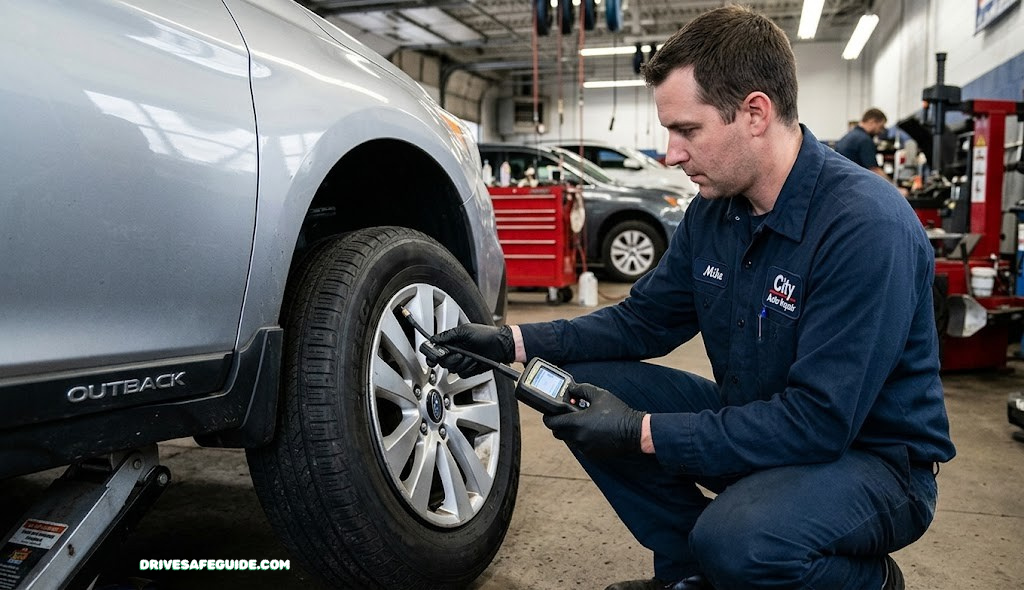
Your Guide to TPMS Sensor Replacement for a Safer Drive
Everything you need to know about spotting a failing sensor, understanding your options, and getting your tire pressure monitoring system back to full strength — without overpaying or guessing.
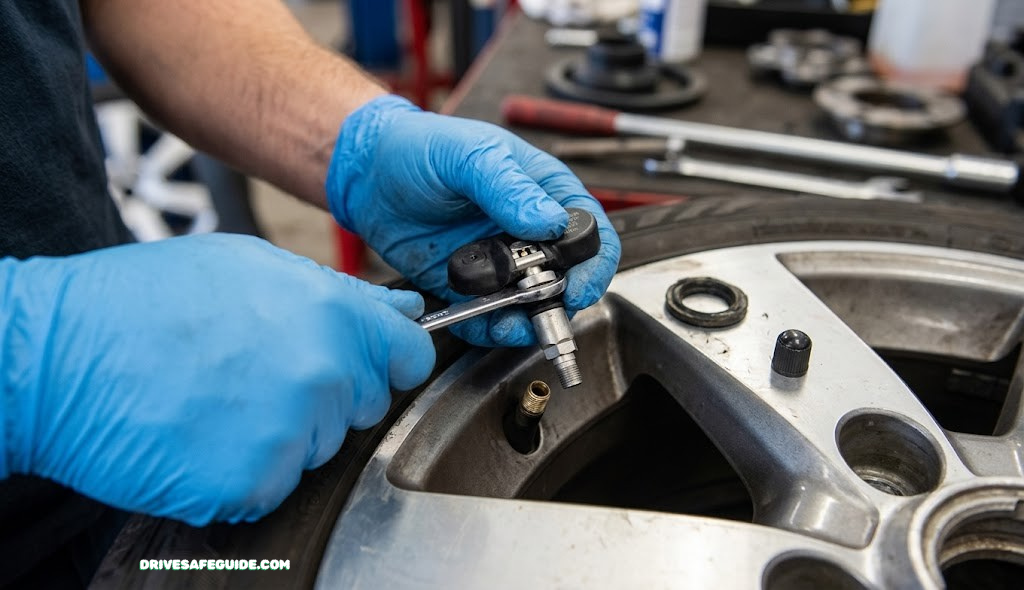
A dedicated TPMS sensor mounted inside the wheel, next to the valve stem.
There’s a particular kind of dread that comes with a tire pressure warning light that just won’t turn off, no matter how many times you fill your tires to spec. If you’ve been there, you already know the frustration of chasing a phantom pressure problem, only to find out later that the issue was never the air in your tires — it was the sensor reporting on it. A failing TPMS sensor is one of those small, unglamorous car parts that rarely gets attention until it fails, and by then it’s usually inconvenient, sometimes expensive, and always a little confusing to diagnose.
This guide walks through exactly what a TPMS sensor does, how to recognize when one is on its way out, what replacement actually costs, and how to decide between a quick DIY swap and a shop visit. Whether you’re staring down a dashboard warning right now or simply want to understand your vehicle’s tire pressure monitoring system before something goes wrong, you’ll find the practical detail you need here. For a broader look at the systems that quietly keep you safe on the road, our safe driving habits guide is a useful companion read.
Tire pressure issues rarely happen in isolation, either. A sensor problem discovered during a routine check is often the moment drivers start paying closer attention to the rest of their vehicle’s condition, from tread wear to seasonal readiness. If that sounds familiar, it’s worth glancing at our pre-road-trip safety checklist once your sensor issue is resolved, since the two tend to go hand in hand for anyone trying to stay ahead of avoidable roadside trouble.
What Is a TPMS Sensor and Why It Matters
A Tire Pressure Monitoring System, or TPMS, is the network of small electronic sensors — usually one per wheel — that continuously measure the air pressure inside each tire and relay that data to your vehicle’s onboard computer. When pressure drops below a manufacturer-set threshold, typically around 25% under the recommended cold inflation pressure, the familiar horseshoe-shaped warning light illuminates on your dashboard. It’s a simple concept, but the safety implications are significant.
Underinflated tires wear unevenly, generate excess heat, and are far more prone to blowouts at highway speed. They also increase stopping distances and reduce handling precision, which becomes especially dangerous during sudden maneuvers. A properly functioning TPMS sensor gives you the early warning you need to correct a pressure problem before it becomes a roadside emergency. This is part of why TPMS has been mandatory on new passenger vehicles sold in the United States since the mid-2000s under federal safety regulations.
Each sensor is a small, self-contained unit that includes a pressure transducer, a temperature sensor, a radio transmitter, and a battery, all packed into a housing about the size of a valve cap or slightly larger. Most sensors mount directly to the wheel at the valve stem, sitting inside the tire cavity where they’re exposed to heat, vibration, road debris, and moisture — conditions that eventually take a toll on the internal electronics and the battery that powers them.
Understanding this system also helps make sense of related dashboard warnings. If you’ve ever wondered whether a dash light means an emergency or a minor issue, our breakdown of a solid vs. flashing check engine light covers a similar diagnostic logic that applies across many vehicle warning systems.

Need a reliable replacement sensor on hand before your next service visit?
Shop TPMS Sensors on AmazonDirect vs. Indirect TPMS: How Your System Works
Not all tire pressure monitoring systems work the same way, and knowing which type your vehicle uses changes how you’ll approach replacement. There are two fundamentally different architectures on the road today, and mixing up which one you have can lead to buying the wrong parts entirely.
Direct TPMS
Direct systems use a physical pressure sensor mounted inside each wheel, typically attached to the valve stem or strapped to the wheel band. These sensors measure actual air pressure in real time and transmit that reading wirelessly to a receiver module, which then displays the information — sometimes down to the exact PSI per tire — on the dashboard or infotainment screen. Direct TPMS is the more common and more precise setup on modern vehicles, but it’s also the type that requires physical sensor replacement when a unit fails.
Indirect TPMS
Indirect systems don’t use dedicated pressure sensors at all. Instead, they infer pressure changes by monitoring wheel rotation speed through the anti-lock braking system’s existing wheel speed sensors. Since an underinflated tire has a slightly smaller rolling diameter, it spins marginally faster than properly inflated tires, and the system flags that discrepancy. Indirect TPMS is simpler and cheaper to manufacture, but it’s also less precise and typically requires a manual reset after tire rotations or pressure adjustments rather than continuous individual readings.
| Feature | Direct TPMS | Indirect TPMS |
|---|---|---|
| Measurement method | Physical pressure sensor in each wheel | Inferred from wheel speed differences |
| Reading precision | Exact PSI per tire | General low-pressure alert only |
| Replacement needed on failure | Yes, physical sensor swap | Rarely — usually a software reset |
| Typical cost to fix | Moderate to high | Low, often free at a shop |
| Common in | Most vehicles since 2008+ | Older or budget-oriented models |
If your dashboard shows individual tire pressure readings, you almost certainly have a direct system, and the rest of this guide will apply directly to your situation.
Signs Your TPMS Sensor Needs Replacement
TPMS sensors rarely fail without warning, though the warnings themselves are often subtle enough to dismiss at first. Recognizing the pattern early can save you a diagnostic fee and help you plan the repair on your own schedule rather than during an inconvenient breakdown.
- The warning light stays on even after you’ve verified correct pressure in all four tires with a reliable gauge. This is the clearest sign of a sensor communication failure rather than an actual pressure issue.
- The light flashes for 60–90 seconds at startup, then stays solid. Many vehicles use this specific pattern to indicate a system fault rather than a low-pressure condition.
- One tire consistently shows no reading or an erratic reading on vehicles with individual tire displays, while the other three report normally.
- The light comes on intermittently, especially in cold weather, which can point to a weakening sensor battery struggling to maintain a stable signal.
- A recent tire service resulted in a persistent warning that wasn’t present before. Sensors can be damaged during tire mounting or dismounting if a technician isn’t careful with the valve stem assembly.
If you’re also noticing unusual vibration alongside dashboard warnings, it’s worth ruling out a separate issue — see our guide on car shaking at highway speeds and tire balance for a related diagnostic path, since a poorly balanced wheel can sometimes accompany sensor damage from the same service event.
How Much Does TPMS Sensor Replacement Cost
Replacement cost depends heavily on whether you’re paying for parts alone, parts plus labor, or a full set replacement across all four wheels. Pricing also varies by vehicle make, since some luxury and European brands use proprietary sensors that cost noticeably more than universal aftermarket units.
| Service Type | Typical Cost Range | Notes |
|---|---|---|
| Single sensor, part only (aftermarket) | $20 – $65 | Universal programmable sensors are cheapest |
| Single sensor, part only (OEM) | $50 – $150 | Higher for luxury and EV brands |
| Labor per sensor (shop install + programming) | $15 – $40 | Often bundled with tire service |
| Full set of four, parts + labor | $150 – $500+ | Best done during a tire replacement |
| Diagnostic fee (if separate from repair) | $20 – $60 | Frequently waived if you proceed with the repair |
Timing your sensor replacement to coincide with new tires is one of the most cost-effective decisions you can make, since the tire is already dismounted and no additional labor is needed to access the valve stem. If you’re planning ahead for a full tire change, it’s worth reviewing your overall car safety kit essentials at the same time, since tire-related maintenance and emergency preparedness tend to go hand in hand.

Verify pressure accurately before assuming it’s a sensor problem.
Shop Digital Tire GaugesOEM vs. Aftermarket TPMS Sensors Compared
Once you’ve confirmed a sensor needs replacing, the next decision is whether to go with an OEM part matched exactly to your vehicle’s original specification, or an aftermarket programmable sensor that can be configured to work across a wide range of makes and models.
OEM Sensors — Pros
- Guaranteed compatibility with your exact vehicle
- Typically longer battery life and tighter manufacturing tolerances
- No programming ambiguity — plug and play in most cases
OEM Sensors — Cons
- Significantly higher price per unit
- Longer wait times if not in stock locally
- No cost advantage when replacing multiple sensors at once
Aftermarket Sensors — Pros
- Considerably cheaper, especially for full-set replacement
- Widely available and often in stock at local shops
- Many are pre-programmable for hundreds of vehicle profiles
Aftermarket Sensors — Cons
- Requires correct programming to your vehicle’s protocol
- Quality varies significantly between brands
- Some budget models report shorter battery life
For most drivers, a reputable aftermarket programmable sensor offers the best balance of cost and reliability, provided the installing shop has the correct tool to program it to your vehicle. If you’re the type of driver who prefers to monitor your vehicle’s systems directly rather than relying solely on dashboard alerts, pairing a sensor upgrade with an OBD2 scan tool for real-time sensor monitoring gives you a much clearer picture of what’s happening across all your vehicle’s systems, not just tire pressure.
What Happens During Professional Replacement
Understanding the replacement process helps set realistic expectations for both time and cost, and it also helps you spot a shop that’s cutting corners. A proper TPMS sensor replacement generally follows a consistent sequence regardless of where you have it done.
- Diagnosis. The technician uses a TPMS tool to individually query each sensor, checking pressure readings, battery status, and signal strength to identify which unit has actually failed.
- Tire dismounting. The affected wheel is removed from the vehicle, and the tire is broken down from the rim using a tire changing machine to expose the inside of the wheel where the sensor sits.
- Sensor removal. The old sensor, along with its valve stem grommet and retaining nut, is removed. Most direct TPMS sensors use a rubber grommet that should always be replaced along with the sensor, since it degrades over time and can cause slow leaks if reused.
- New sensor installation. The replacement sensor is mounted to the wheel and torqued to the manufacturer’s specification. Over-tightening is a common mistake that can crack the sensor housing.
- Programming. If an aftermarket sensor was used, it’s programmed to communicate with your vehicle’s specific receiver using a dedicated TPMS tool, matching the correct protocol for your make and model year.
- Remounting and balancing. The tire is remounted onto the wheel, rebalanced, and reinstalled on the vehicle.
- System relearn and verification. The vehicle’s onboard system is walked through a relearn procedure, and the technician confirms all four sensors report correctly before returning the keys.
The entire process for a single sensor typically takes 30 to 60 minutes, though a full-set replacement during a tire change can extend the overall service time. If your vehicle has had recent tire work and you’re noticing anything unusual afterward, it’s also worth reviewing signs of improper installation, similar to how our guide on diagnosing highway-speed vibration approaches post-service troubleshooting.
Can You Replace a TPMS Sensor Yourself? DIY vs. Professional
Technically, yes — a mechanically confident DIYer with the right tools can replace a TPMS sensor at home. Whether it’s worth doing yourself depends heavily on the tools you already own and how comfortable you are working with tire changing equipment.
What DIY Replacement Requires
- A tire changing machine or the willingness to have the tire broken down separately by a shop
- A TPMS programming tool compatible with your vehicle, if using an aftermarket sensor
- A torque wrench capable of precise low-torque settings for the sensor nut
- A replacement grommet and valve stem kit matched to your sensor
DIY — Pros
- Saves on labor costs, sometimes significantly
- Can be done on your own schedule
- Educational — you learn your vehicle’s systems firsthand
DIY — Cons
- Requires specialized tools most home garages don’t have
- Risk of damaging the tire bead or sensor during dismounting
- Programming errors can leave the system non-functional
For most drivers, the practical reality is that tire dismounting equipment alone makes DIY replacement impractical without a shop’s help, which is why many people opt to buy the sensor themselves and bring it to a shop for installation only, saving on the sensor markup while still getting professional programming and mounting.

Planning a DIY attempt? A dedicated relearn tool makes the process far more reliable.
Shop TPMS Relearn ToolsTPMS Sensor Battery Life and Replacement Cycle
Every direct TPMS sensor runs on a small internal lithium battery sealed inside the housing, and that battery is ultimately what determines the sensor’s usable life. Unlike a car key fob battery, there’s no accessible compartment to swap — once it’s depleted, the entire sensor is replaced as a unit.
Manufacturers typically rate sensor batteries for five to ten years of service, though real-world lifespan varies based on driving frequency, climate, and how often the sensor transmits data. Sensors that transmit more frequently, such as those in vehicles driven daily in extreme heat, tend to drain faster than those in vehicles driven occasionally in moderate climates.
| Factor | Effect on Battery Life |
|---|---|
| High daily mileage | Shortens lifespan due to more frequent transmission |
| Extreme heat exposure | Accelerates battery degradation |
| Long-term vehicle storage | Can extend lifespan due to reduced transmission activity |
| Frequent tire pressure changes | Increases transmission frequency, draining battery faster |
Because battery depletion is gradual, a persistent low-battery warning — rather than an outright pressure fault — is often your first real clue that a sensor is approaching end of life. Planning replacement proactively, especially when several sensors were installed around the same time, can prevent a cascade of individual failures spread across separate shop visits.
Programming and Relearning Procedures Explained
After a new sensor is installed, your vehicle’s computer needs to “learn” the sensor’s unique identification code before it will display accurate readings. This relearn process varies significantly by manufacturer, and using the wrong method is one of the most common reasons a freshly replaced sensor still triggers a warning light.
Auto-Relearn Systems
Some vehicles automatically detect and register new sensors simply by being driven at a steady speed for 10 to 20 minutes. No special tool is required, though the process can take longer than drivers expect, leading many to assume the replacement failed when it simply hasn’t finished registering yet.
Stationary Relearn Systems
Other vehicles require the ignition to be placed in a specific mode, sometimes with the vehicle stationary, while a TPMS tool is used to individually activate each sensor in a set sequence. This method is more precise but requires the correct tool and a clear understanding of the manufacturer’s sequence, since steps performed out of order won’t register correctly.
OBD-Based Programming
A growing number of shops use OBD-port-connected tools that can both program aftermarket sensors and initiate the relearn process in a single step, which tends to be the fastest and most reliable method available for multi-brand shops working across different vehicle platforms.
If your relearn procedure isn’t working as expected, it’s worth confirming your vehicle isn’t affected by a separate electronic issue. Persistent dashboard warning behavior sometimes overlaps with broader diagnostic questions, similar to those covered in our check engine light guide.
Common TPMS Sensor Problems and Troubleshooting
Even after a successful replacement, a handful of recurring issues can leave drivers puzzled. Working through these systematically usually resolves the confusion quickly.
- Warning light stays on after replacement: Almost always a relearn procedure that didn’t complete. Repeat the manufacturer-specific relearn steps before assuming the sensor itself is defective.
- Sensor reads pressure but not consistently: Often caused by a weak signal due to interference, a damaged antenna within the sensor, or a receiver module issue rather than the sensor itself.
- New sensor won’t program: Check that the correct vehicle profile was selected on the programming tool. A mismatched protocol is the single most common programming failure.
- Slow leak develops after service: Frequently traced back to a reused or improperly seated grommet rather than the sensor itself, which is why grommet replacement should never be skipped.
- Spare tire triggers a warning: Many vehicles monitor a fifth sensor in the spare. If your spare lacks a sensor or has a dead one, some systems will flag it even though it isn’t currently in use.
Persistent issues that resist standard troubleshooting sometimes point to a receiver module fault rather than the sensors themselves, which is a less common but valid possibility worth raising with your technician if multiple new sensors all show the same symptom.
It’s also worth ruling out unrelated causes before assuming the worst. A dashboard that’s throwing multiple warning lights at once, not just the TPMS icon, points toward a broader electrical issue rather than an isolated sensor problem, and it’s the kind of situation where a quick scan tool check saves considerable guesswork. If you’re building out a more complete home diagnostic kit, comparing options like a load tester vs. conductance tester can help you understand which tools are actually useful for tracking down electrical gremlins versus which are overkill for a simple sensor issue.
Choosing the Right Replacement Sensor for Your Vehicle
Not every sensor works with every vehicle, even within the aftermarket programmable category. Getting this step right avoids a frustrating return trip and wasted labor cost.
- Match the frequency band. TPMS sensors transmit on specific radio frequencies, and North American vehicles almost universally use 315MHz or 433MHz depending on the model. Using the wrong frequency sensor will never communicate with your receiver.
- Confirm valve stem type. Some sensors use a snap-in rubber valve stem while others use a metal clamp-in stem, and the two are not interchangeable without adapters.
- Check protocol compatibility. Programmable sensors need to be flashed with the correct manufacturer protocol, which your shop’s programming tool database should confirm before installation.
- Verify the year and trim. Even within the same model, sensor specifications can change across trim levels or mid-cycle refreshes, so always confirm using your VIN rather than the model name alone.
If you’re sourcing your own sensor ahead of a shop visit, bringing your VIN and, if available, your original sensor’s part number will make the selection process far more reliable than guessing from a generic parts listing.
It’s also worth thinking about how many sensors you’re likely to need over the vehicle’s remaining life. If one sensor has already failed due to age rather than damage, the remaining three are likely operating on batteries from the same production run, which means they’re probably not far behind. Buying and programming a matched set, even if only one is technically dead right now, can save you from paying separate labor fees three more times over the following couple of years. This is especially worth considering if you’re already investing in other longevity-focused upgrades, similar to the reasoning behind choosing reliable cold-weather batteries before the old one strands you rather than after.
Universal programmable sensors that cover a wide range of vehicle protocols.
Shop Programmable Sensor SetsTPMS Sensors on Electric and Hybrid Vehicles
Electric and hybrid vehicles rely on tire pressure monitoring just as heavily as gas-powered cars, but a few practical differences are worth knowing if you drive one. EVs tend to be noticeably heavier than comparable gas vehicles due to battery pack weight, which places additional stress on tires and, by extension, on the sensors mounted inside them. Manufacturers often specify tighter pressure tolerances on EVs to protect range and handling, which means the TPMS threshold for triggering a warning can be more sensitive than on a traditional vehicle.
There’s also a range consideration that doesn’t apply to combustion vehicles: underinflated tires increase rolling resistance, and on an EV that translates directly into reduced driving range. A sensor that’s working properly and catching pressure drops early isn’t just a safety feature on an EV — it’s also protecting the efficiency you’re paying a premium for. If you’re weighing the broader tradeoffs of running an electric or hybrid vehicle, our hybrid vehicle maintenance guide covers several related systems that behave differently from a standard combustion vehicle, and range anxiety concerns are addressed directly in our EV battery range anxiety tips.
From a replacement standpoint, EV-specific TPMS sensors are functionally similar to their gas-vehicle counterparts, though some manufacturers use proprietary protocols that aren’t yet covered by every universal programmable sensor on the market. If you drive a newer EV model, it’s worth confirming with your shop that their programming tool database has been updated to include your specific vehicle before committing to an aftermarket sensor.
TPMS Behavior After Tire Rotation
Tire rotation is one of the most overlooked triggers for TPMS confusion. Because each sensor is registered to a specific wheel position on many vehicles, physically moving tires from front to back or side to side can cause the system to display incorrect position data even though every sensor is functioning perfectly.
Some newer systems use auto-locating technology that figures out the new sensor positions automatically within a short drive cycle. Older systems, however, require a manual relearn procedure to be performed any time tires are rotated, even if no sensor was replaced. Skipping this step after a rotation is one of the most common reasons drivers see a dashboard warning immediately after what should have been routine maintenance, and it’s frequently mistaken for a sensor failure when nothing is actually broken.
If you handle your own tire rotations as part of a broader maintenance routine, it’s worth building the relearn step into your checklist every time, right alongside pressure and tread checks. Our guide on preparing your car for road trip safety checks walks through a similar pre-departure routine that pairs well with a rotation and TPMS verification schedule.
How to Choose a Shop for TPMS Sensor Work
Not every tire shop invests equally in TPMS equipment, and the gap between a well-equipped shop and a bare-minimum one shows up quickly when something goes slightly wrong. A few questions can help you separate the two before you commit to a repair.
- Ask whether they replace the grommet by default. A shop that automatically swaps the rubber seal with every sensor replacement is following best practice; one that reuses it to save a few dollars is cutting a corner that tends to cause slow leaks later.
- Ask what programming tool they use and whether it’s updated regularly. TPMS protocols are added and revised frequently as new vehicle models launch, and an outdated tool database is a common cause of failed programming attempts.
- Ask if they torque sensors to spec rather than by feel. Over-torquing is a leading cause of cracked sensor housings immediately after installation.
- Confirm they verify all four sensors before returning the vehicle, not just the one that was replaced. A quick verification catches a second failing sensor before it becomes a separate visit.
A shop that handles these details well is usually the same shop that’s careful with related tire work, so it’s reasonable to use the same criteria when evaluating who handles your rotations, balancing, and alignment. For drivers who prefer to stay informed about their vehicle’s systems between shop visits, an OBD2 scan tool can help confirm that a repair actually resolved the underlying issue rather than just clearing a warning light temporarily.
Common Mistakes That Lead to Repeat TPMS Failures
A surprising number of TPMS “failures” are really the same underlying mistake repeating itself across multiple service visits. Watching for these patterns can save you from paying for the same fix twice.
Reusing Old Valve Stem Components
The rubber grommet, valve core, and cap are inexpensive wear items that should be replaced alongside the sensor every time. Reusing them to save a small amount on parts is one of the most common causes of a slow leak that mimics sensor failure weeks later.
Mismatched Frequency Sensors
Installing a 315MHz sensor on a vehicle that expects 433MHz, or vice versa, will result in a sensor that physically fits but never communicates with the receiver. This mistake is more common with budget aftermarket parts purchased without confirming vehicle-specific compatibility first.
Incomplete Relearn Procedures
Stopping a relearn sequence partway through, whether due to interruption or a misunderstanding of the required steps, leaves the system in a partially registered state that can produce confusing, inconsistent warnings rather than a clean pass or fail result.
Ignoring a Low-Battery Warning
Some vehicles distinguish between a low-pressure warning and a low-battery warning on individual sensors. Treating a low-battery alert as a low-pressure issue and simply adding air does nothing to resolve the underlying problem and only delays the inevitable replacement.
Avoiding these mistakes largely comes down to working with a shop that treats TPMS service as its own specialized task rather than an afterthought tacked onto a tire change. It’s a small distinction, but it’s the difference between a repair that lasts for years and one that resurfaces within a few months.
Maintaining Your TPMS System Long-Term
A little routine attention goes a long way toward extending sensor life and avoiding premature replacement. None of the following takes more than a few minutes, and all of it pays off in fewer dashboard surprises.
- Check pressure monthly with a manual gauge, rather than relying solely on the dashboard system, so you catch slow leaks before the sensor even needs to flag them.
- Replace grommets at every tire change, even if the sensor itself tests fine, since the rubber seal degrades faster than the electronics inside.
- Avoid overtightening valve caps, which can stress the valve stem and sensor mount over time.
- Keep tires properly inflated, since consistent pressure reduces how often the sensor needs to transmit updates, indirectly extending battery life.
- Address warning lights promptly rather than assuming they’ll resolve on their own, since a small sensor issue caught early is far cheaper than a wheel-off diagnostic later.
Good TPMS habits fit naturally into a broader vehicle safety routine. If you haven’t reviewed your overall approach recently, our guide on defensive driving habits that reduce collision risk covers how proactive vehicle checks, including tire monitoring, tie directly into on-road safety outcomes. And if you’re preparing for a longer trip where tire reliability matters even more, the road trip essentials checklist is worth a look before you head out.
None of this needs to become a chore. A monthly pressure check takes less than five minutes across all four tires, and a quick glance at your dashboard each time you start the car costs nothing at all. The habit compounds over years of ownership, quietly extending the life of your sensors, your tires, and your peace of mind every time you get behind the wheel.
Warranty Coverage, Recalls, and When Replacement Might Be Free
Before paying out of pocket, it’s worth checking whether your situation is actually covered by an existing warranty or manufacturer program. TPMS components are sometimes included under a vehicle’s original bumper-to-bumper warranty for the first few years of ownership, and a sensor failing well within that window may qualify for free replacement at a dealership rather than an independent shop.
It’s also worth checking for open recalls tied to your specific make, model, and year. TPMS-related recalls do happen periodically, usually tied to a batch of sensors with a known premature failure rate or a software issue affecting how the receiver interprets sensor data. A quick VIN lookup through the manufacturer’s website or the National Highway Traffic Safety Administration’s recall database takes only a few minutes and can save you the entire cost of replacement if your vehicle happens to be affected.
If you purchased extended tire and wheel protection when you bought your vehicle or your tires, TPMS sensors are sometimes included under that coverage as well, particularly if the failure was caused by road debris or a service-related mishap rather than routine wear. It’s easy to forget these add-on policies exist until you actually need them, so it’s worth a quick check of your paperwork before assuming the repair is entirely out of pocket.
Seasonal Considerations for TPMS Reliability
Temperature swings put more stress on a tire pressure monitoring system than most drivers realize. As outdoor temperatures drop, the air inside a tire contracts, which can cause a genuinely correct pressure reading in warm weather to fall below the warning threshold once the season turns colder — even without any actual leak. This is one of the most common reasons TPMS warnings spike every year around the first cold snap, flooding shops with drivers who assume their sensors have suddenly failed in unison.
The reverse happens in extreme heat, where pressure can climb higher than expected during long summer highway drives, particularly on tires that were slightly underinflated to begin with. Neither scenario necessarily means a sensor is broken, but both are excellent reminders to adjust your tire pressure to the manufacturer’s cold-inflation specification at the start of each season rather than waiting for a warning light to prompt you.
If you drive somewhere with genuinely harsh winters, pairing seasonal pressure checks with a broader cold-weather readiness routine makes sense. Our winter car emergency kit checklist and winter driving safety guide both cover related seasonal prep that pairs naturally with a quick TPMS and pressure check before the temperature drops for good.
Frequently Asked Questions
How do I know if it’s my TPMS sensor and not just low tire pressure?
Check all four tires with a manual gauge first. If pressures are correct but the warning persists, or the light flashes at startup then stays solid, the issue is almost certainly the sensor or system rather than actual air pressure.
Can I drive with a bad TPMS sensor?
Yes, a failed sensor alone won’t affect drivability, but it does mean you lose the early warning for an actual pressure problem. Continue checking pressure manually until the sensor is replaced.
Do all four TPMS sensors need to be replaced at the same time?
No, sensors can be replaced individually as they fail. Some drivers choose to replace all four at once if they’re similarly aged and a tire change is already happening, purely for convenience.
How long does TPMS sensor replacement take?
A single sensor typically takes 30 to 60 minutes including programming and relearn, though this can extend if the tire also needs to be balanced or if the vehicle uses a more involved relearn sequence.
Will my TPMS light turn off immediately after replacement?
Not always. Some vehicles require a short drive cycle at steady speed before the system fully registers the new sensor and clears the warning light.
Is it cheaper to replace TPMS sensors during a tire change?
Generally yes, since the tire is already dismounted and no extra labor is needed to access the sensor, which reduces the total cost compared to a standalone sensor replacement visit.
What causes a TPMS sensor to fail early?
Common causes include battery depletion, physical damage during tire service, corrosion at the valve stem, and, less commonly, a manufacturing defect in the sensor housing itself.
Can I use a universal aftermarket sensor on any car?
Most programmable universal sensors cover a wide range of makes and models, but compatibility still depends on matching the correct frequency and protocol to your specific vehicle before programming.
Does a spare tire need a TPMS sensor?
It depends on your vehicle. Some systems monitor a five-sensor setup including the spare, while others only monitor the four road-use tires. Check your owner’s manual to confirm your setup.
How much does it cost to reset a TPMS system without replacing a sensor?
If no sensor replacement is needed and only a relearn or reset is required, many shops perform this quickly, often for a modest diagnostic or service fee.
Can cold weather trigger a false TPMS warning?
Yes, tire pressure naturally drops slightly with temperature, and a significant seasonal cold snap can trigger a genuine low-pressure warning even without a sensor fault. Always verify with a gauge before assuming sensor failure.
What tools does a shop use to program a new TPMS sensor?
Shops typically use a dedicated TPMS programming tool or an OBD-based scan tool with TPMS functionality, both of which can read, program, and relearn sensors according to the vehicle’s specific protocol.
Final Thoughts: Don’t Let a Small Sensor Become a Big Problem
A TPMS sensor is a small part with an outsized job — quietly keeping you informed about one of the most fundamental safety systems on your vehicle. Whether your sensor is nearing the end of its battery life or has already triggered a persistent warning, addressing it promptly is far cheaper and simpler than dealing with the consequences of an unnoticed pressure problem down the road. Pair a healthy TPMS system with routine manual pressure checks, and you’ll rarely be caught off guard.
The broader lesson here applies well beyond tire pressure. Vehicles communicate constantly through small warning lights, subtle noises, and gradual changes in feel, and the drivers who catch problems early are almost always the ones who treat those signals as worth investigating rather than ignoring. If this guide has you thinking more critically about your vehicle’s warning systems in general, our check engine light guide and defensive driving habits resource are both natural next reads, and together with this guide they cover a solid foundation for staying ahead of the kind of small issues that tend to turn into expensive ones if left alone.
Shop TPMS Replacement Kits on Amazon