Driver’s Ed Online Comparison: A Comprehensive Guide
Every online driver’s ed provider claims to be the easiest, the most engaging, or the most trusted. Here’s how the major platforms actually stack up on state approval, price, format, and what kind of student each one is really built for.


Choosing the right online course affects your price, your pace, and how well-prepared you actually are for the permit test.
Why the Right Online Course Actually Matters
On the surface, every online driver’s ed provider looks roughly the same: a state-approved curriculum, some videos, a handful of quizzes, and a certificate at the end. But the differences between platforms show up in ways that matter well beyond the checkout page — how engaged a teen actually stays through 30-plus hours of required instruction, how well the content maps to the specific test your state administers, and whether the price you see at signup is the price you actually pay once state fees and add-ons are included.
This guide compares the major providers side by side, breaks down what separates a genuinely good course from a barely-compliant one, and helps you match a platform to the kind of learner you’re shopping for — whether that’s a distractible fifteen-year-old who needs gamification to stay engaged, or an adult finishing a long-delayed license who just wants to get through the material efficiently. If you’re specifically prepping for the written exam itself rather than choosing a course, our permit test practice questions guide is a useful companion once you’ve enrolled.
One quick note before diving in: state approval lists and pricing for online driver’s ed providers change fairly often as companies expand into new states or adjust packages. Treat the comparisons here as directional and always confirm current approval and pricing directly with the provider and your state’s DMV or licensing authority before enrolling.
To build this comparison, we looked at publicly available pricing pages, state approval lists, format descriptions, and independent third-party reviews across each provider, rather than relying on any single company’s own marketing claims. Where a provider advertises being “the most popular” or “number one” in the industry, we treated that as marketing language rather than a verified fact — those superlatives are common across nearly every provider in this space and rarely carry independent verification behind them. What we focused on instead was concrete, checkable information: which states currently approve the course, what the realistic all-in price looks like once add-ons are included, and what actual students and parents report about the day-to-day experience of using the platform.
How Online Driver’s Ed Actually Works
Nearly every state that allows driver’s education online splits the requirement into two separate pieces: classroom instruction and behind-the-wheel training. Online courses only replace the classroom portion — the hours you’d otherwise spend sitting through lectures on traffic laws, road signs, and defensive driving. Behind-the-wheel hours still require an in-person instructor or, in parent-taught states, a qualifying supervising adult logging hours in the vehicle.
Once you complete the online classroom portion, most platforms issue a certificate or transcript that you either submit directly to your state’s DMV or bring to your behind-the-wheel provider to begin scheduling driving hours. Some states, like Texas, allow students to sit for the learner’s permit knowledge test after completing just the first module, which lets younger teens start their supervised driving practice sooner while finishing the remaining coursework in parallel.
The specific number of required hours, the minimum age to enroll, and whether a parent-taught option exists all vary meaningfully by state. Before comparing providers on price or polish, it’s worth confirming your own state’s baseline requirements, since a course that’s a great fit in one state may not even be approved in another. Our related guide on graduated licensing restrictions covers how these requirements tie into the broader staged-licensing system most states now use for teen drivers.
What to Look For When Choosing a Course
With dozens of platforms competing for the same students, it’s easy to end up choosing based on whichever ad you saw first. A few criteria matter far more than flashy marketing.
State Approval — Non-Negotiable
This is the single most important filter. A beautifully designed course is worthless if it isn’t approved in your state, because your DMV or licensing authority won’t accept the completion certificate. Always verify current approval directly on your state’s official licensing site rather than trusting a provider’s own claims, since approval lists shift as companies expand or lose accreditation in specific states.
Format Fit for the Student
A gamified, mobile-first course tends to hold a distractible teenager’s attention far better than a text-heavy, browser-only course — but an adult finishing a long-overdue license often prefers to move through dense material quickly without game mechanics slowing the pace. Matching format to learner type has more impact on completion rates than most people expect.
Total Price, Not Just Sticker Price
Many providers advertise a low base price that excludes state processing fees, permit test bundles, or behind-the-wheel add-ons. Read the full package details before comparing headline prices across providers.
Mobile Access and Progress Syncing
Teens in particular benefit from courses that sync progress across devices, letting them study in short bursts during downtime rather than needing to sit at a desktop for a full session.
Customer Support Responsiveness
Technical issues, login problems, or state-specific questions are common enough that responsive support — ideally with live chat or phone options — genuinely matters, especially close to a deadline.

Shop Permit Test Guides
Provider Comparison at a Glance
Here’s a consolidated snapshot of the major online driver’s ed providers, based on publicly available pricing and coverage information. Always confirm current details directly with the provider before enrolling, since pricing and state approvals change over time.
| Provider | Approx. Price Range | States Covered | Format | Best For |
|---|---|---|---|---|
| Aceable | $15–$95 | ~14 states | Mobile-first app, gamified | Tech-native teens |
| DriversEd.com | $25–$95 | 30+ states | Video & simulation based | Broad state coverage |
| iDriveSafely | $35–$115 | Wide multi-state coverage | Short-chapter, multimedia | Students who prefer bite-sized lessons |
| Safe2Drive | $13–$85 | 15+ states | Browser-based, content-focused | Budget-conscious, no-frills learners |
| AAA Driver’s Ed | $50–$80 | Regional (varies by AAA club) | Standard state-approved curriculum | Families already in the AAA ecosystem |
| Coastline Academy | Varies by package | 8+ states | Hybrid online + in-person | Students who also need local behind-the-wheel |
| DriverZ | $25–$60 | 11 states | Browser-based, entertainment-influenced | Students who want more personality than a standard course |
Aceable
Aceable built its reputation as a mobile-native course from day one, and it shows — the app works cleanly on phones, tablets, and browsers, with progress syncing automatically across devices. Its built-in adaptive study tool identifies weak topic areas and lets students build focused practice sessions around them rather than re-reading entire chapters, which tends to shorten total study time for students who use it consistently.
The trade-off is coverage: Aceable’s state approval list, while broad, is narrower than some of the long-established players like DriversEd.com. It’s an excellent fit if your state is on the list and your student is glued to their phone anyway; less compelling if you’re in a state it doesn’t cover.
Parents who’ve used the platform frequently point to its timed practice-exam mode as a genuine differentiator, since it mimics the pressure of the actual DMV knowledge test rather than presenting questions in a low-stakes, untimed format. If your student tends to freeze up on test day regardless of how well they know the material, that kind of simulated pressure can be worth more than an extra hour of passive video watching.
DriversEd.com
DriversEd.com has been operating in this space longer than almost any competitor, and its broad state coverage is the platform’s biggest practical advantage. The curriculum leans on video, interactive scenario-based decision points, and driving simulations rather than static text, which tends to hold attention better than a pure reading course without going as far into game mechanics as Aceable.
It also offers behind-the-wheel training options in some regions, letting a family handle both requirements through one provider rather than coordinating separately. It’s a dependable, no-surprises choice for students in a wide range of states.
Because the company has operated continuously for over two decades, it has weathered enough state regulatory changes to maintain a genuinely stable approval footprint, which matters if you’re enrolling well ahead of a move or simply want confidence that the course won’t lose its accreditation mid-term. The trade-off for that stability is a slightly more traditional feel than the newest mobile-native entrants — students who want cutting-edge gamification may find it comparatively conventional, even if the underlying instruction is solid.
iDriveSafely
iDriveSafely breaks its curriculum into short, digestible chapters rather than long continuous modules, which suits students who study in brief sessions between other commitments. The multimedia mix of short videos, interactive elements, and periodic knowledge checks keeps the pacing brisk without leaning as heavily into gamification as Aceable.
It’s a solid middle-ground option: more engaging than a pure text course, less game-like than the most gamified competitors, with pricing that sits toward the higher end of the market depending on state and package.
The short-chapter structure tends to work particularly well for students juggling driver’s ed alongside a full school course load, since a single chapter can realistically be finished in a spare ten or fifteen minutes rather than requiring a dedicated hour-long sitting. Reviewers also consistently mention the platform’s customer support as a strength when questions come up about state-specific requirements or technical login issues.
Safe2Drive
Safe2Drive prioritizes straightforward content delivery over flashy design, and its pricing reflects that — it consistently ranks among the least expensive state-approved options available. The platform also covers defensive driving, traffic school, and mature-driver improvement courses in addition to standard teen and adult driver’s ed, making it a useful one-stop option for families with a mix of needs across age groups.
Customer service responsiveness is frequently cited as a strength, which matters more than people expect when a technical hiccup threatens to delay a certificate near a deadline.
Because Safe2Drive also offers defensive driving and mature-driver improvement courses, it’s a genuinely convenient choice for households handling more than one licensing need at once — a parent brushing up for an insurance discount alongside a teen completing their first course, for example. The design is unlikely to win any awards for polish, but for students who just want to read the material, pass the required checks, and move on, that simplicity is arguably a feature rather than a limitation.
AAA Driver’s Ed
AAA’s online driver’s ed program is offered through regional AAA clubs rather than a single national platform, so availability and exact pricing vary depending on where you live. Existing AAA members typically receive a meaningful discount over non-members, which can make this an easy default choice for families already paying for AAA membership and roadside coverage.
The curriculum itself is standard and state-approved rather than particularly innovative in format, but the brand’s long-standing reputation for safety resonates with parents who value a well-known name over a flashier newcomer.
Because AAA operates through regional clubs rather than one unified national platform, the actual course content, price, and even the technology behind it can differ meaningfully depending on which AAA club serves your area. It’s worth calling your local club directly to confirm current course details rather than assuming the experience will match what a AAA program looks like in a different region.
Coastline Academy
Coastline Academy takes a different approach than the fully online providers on this list: students complete the classroom portion through a state-approved online course, then complete required behind-the-wheel hours with a licensed Coastline instructor at a nearby physical location. For families who want a single provider handling both halves of the requirement without piecing together separate vendors, this hybrid structure is genuinely convenient.
Because behind-the-wheel scheduling depends on local instructor availability, timelines can vary more than with fully remote providers, so it’s worth checking local wait times before assuming this route will be the fastest path to a license.
As the largest driving school operator in the country, Coastline benefits from economies of scale that smaller regional schools can’t match, which often translates into more flexible scheduling windows for behind-the-wheel sessions even in busier metro areas. Families who’ve had frustrating experiences trying to coordinate an online-only classroom course with a separate, unrelated local instructor tend to find the single-provider model genuinely simplifies the process.
DriverZ
DriverZ carries forward an entertainment-influenced approach to course design, aiming to make otherwise dry material feel less like a chore than a typical browser-based video course. Coverage is more limited than the largest national providers, but pricing stays competitive within the states it does serve, making it a reasonable mid-range pick for students who want a bit more personality than the most stripped-down platforms.
The rebrand from its earlier identity brought a refreshed interface without abandoning the core content structure that built its original reputation, so returning families familiar with the older version will find the underlying curriculum recognizable even if the visual presentation has been modernized. It remains a solid option specifically for students in its covered states who found purely text-based courses too dry to stay engaged with.
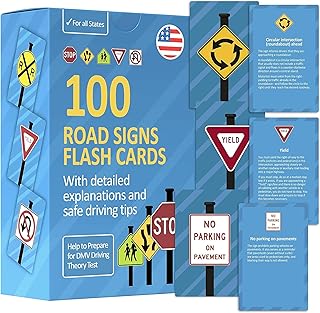
Shop Road Sign Flashcards
How State Requirements Vary
One of the most confusing parts of shopping for online driver’s ed is realizing that the requirements themselves aren’t national — they’re set individually by each state, and they can differ substantially in required hours, minimum age, and whether a parent-taught option even exists. Here’s a general illustration of how differently a handful of states approach the same basic requirement.
| State (Example) | Classroom Hours | Behind-the-Wheel Hours | Parent-Taught Option |
|---|---|---|---|
| Texas | 32 hours | 44 hours | Yes, TDLR-approved |
| California | 25 hours | 6 hours | Limited, varies by district |
| Florida | 4 hours (TLSAE course) | 50 hours (parent-logged) | Yes, common approach |
| Ohio | 24 hours | 8 hours | No, instructor required |
These figures are illustrative examples rather than a guarantee of current requirements, since states periodically revise their minimum hour requirements and eligibility rules. Always confirm exact numbers with your state’s official DMV or department of licensing before enrolling in any course, and don’t assume a provider’s marketing page reflects the very latest regulatory changes — cross-check directly with the state source.
The wide variation between states is also why national provider coverage matters so much for some families and so little for others. A family that’s likely to relocate mid-process may prioritize a provider like DriversEd.com with broad, consistent coverage, while a family firmly settled in one state can comfortably choose a smaller regional provider without worrying about portability.
What a Quality Course Curriculum Should Actually Cover
Beyond state approval, it’s worth understanding what separates a genuinely thorough curriculum from one that technically satisfies the hour requirement without building real competence. A strong online driver’s ed course should include, at minimum, the following core areas.
| Curriculum Area | Why It Matters |
|---|---|
| Traffic laws and right-of-way rules | Foundation for passing the written knowledge test |
| Road signs and signals | Heavily tested and essential for real-world recognition |
| Defensive driving techniques | Directly reduces collision risk beyond minimum legal knowledge |
| Distracted and impaired driving risks | Addresses leading causes of teen driving fatalities |
| Weather and low-visibility driving | Prepares students for conditions rarely covered in behind-the-wheel hours |
| State-specific graduated licensing rules | Clarifies passenger and curfew restrictions unique to new drivers |
| Vehicle maintenance basics | Builds baseline awareness of warning signs and safety checks |
If a course you’re considering skips several of these areas in favor of racing through the bare minimum required content, treat that as a signal to look elsewhere, even if it’s technically state-approved. A course that only checks the compliance box does the minimum legally required — a course that also builds genuine competence sets a new driver up for a much safer first few years behind the wheel. For a deeper look at the defensive driving component specifically, our defensive driving habits guide expands well beyond what most classroom courses have time to cover.
Online vs. Classroom Driver’s Ed: Which Format Actually Wins?
Traditional in-person driver’s ed hasn’t disappeared, and for some students it’s still the better fit. The right answer depends less on which format is objectively superior and more on how a specific student learns and what a family’s schedule can realistically accommodate.
Online Course Advantages
- Complete coursework on your own schedule, in short sessions
- Typically cheaper than in-person classroom programs
- No commuting to a fixed weekly class time
- Progress often syncs across phone, tablet, and computer
- Can usually be started immediately upon enrollment
Classroom Course Advantages
- Live instructor available for immediate questions
- Structured schedule can help students who struggle with self-pacing
- Peer discussion and group learning dynamics
- Some states still require a classroom component for certain age groups
- Less prone to distraction than studying at home
Most families land on a practical middle path: online classroom instruction paired with in-person behind-the-wheel training, which is how the majority of state programs are structured regardless of which classroom format you choose. If self-discipline is a genuine concern for your student, look specifically at providers with strong progress tracking and parent monitoring features, since these tools help replicate some of the accountability a physical classroom naturally provides.
Cost Breakdown: What You’re Actually Paying For
Sticker prices across providers can look deceptively similar until you account for what’s actually included. Here’s a general breakdown of where the money goes.
| Cost Component | Typical Range | Notes |
|---|---|---|
| Base online classroom course | $15–$95 | Varies heavily by state and provider tier |
| State processing / certificate fee | $0–$20 | Sometimes bundled, sometimes separate |
| Permit test bundle (if offered) | $5–$15 | Access to the official knowledge exam online |
| Behind-the-wheel training (separate) | $200–$600+ | Required in most states, usually a separate purchase |
| Parent-taught program guide (where applicable) | ~$20 | State-issued, not provider revenue |
Teen vs. Adult Courses: Why the Distinction Matters
Most providers offer separate teen and adult tracks, and the content requirements differ significantly between them. Teen courses are typically longer — often 30 or more hours — and cover foundational topics in greater depth, including graduated licensing rules, passenger restrictions, and nighttime driving limits specific to newer drivers. Adult courses, by contrast, are frequently shorter, sometimes as brief as six hours, since adult students are presumed to already have some real-world driving exposure even if they’ve never held a formal license.
If you’re an adult finishing a long-delayed license, look specifically for providers that clearly separate their adult track rather than routing everyone through the same lengthy teen curriculum — the difference in required hours can meaningfully affect both cost and time to completion. Our guide on parents teaching teen drivers is a useful companion resource if you’re the parent supervising a teen’s required practice hours alongside their online coursework.

Shop Phone Mounts
Tips for Actually Completing Your Course Successfully
Enrolling is easy. Finishing efficiently, and actually retaining the material, is where most students run into friction. A few habits make a measurable difference regardless of which provider you choose.
Break the Course Into Scheduled Sessions
Treat the course like any other recurring commitment rather than something to cram in one long sitting. Thirty or more required hours feels far less daunting spread across three or four weeks in 30- to 45-minute sessions than compressed into a single frantic weekend right before a deadline.
Take Notes Even When the Platform Doesn’t Require It
Passive video-watching is easy to disengage from. Jotting down a handful of key points per module, even briefly, keeps attention anchored and creates a quick reference sheet for reviewing before the knowledge test.
Use Practice Tests Repeatedly, Not Just Once
Most platforms include practice quizzes throughout the course and a longer mock exam near the end. Retaking these more than once, especially after a few days’ gap, reinforces material far more effectively than passing them a single time and moving on.
Don’t Skip the “Boring” Modules
Sections on topics like insurance basics, vehicle registration, or state-specific administrative procedures can feel like filler compared to defensive driving content, but they’re often directly tested and genuinely useful for a first-time driver navigating vehicle ownership independently for the first time.
Coordinate Timing With Behind-the-Wheel Scheduling
In states that allow parallel progress, starting to schedule behind-the-wheel hours partway through the classroom course, rather than waiting until full completion, can shave real time off the overall path to a license. Check your state’s specific rules on sequencing before assuming this is allowed.
Common Mistakes When Choosing an Online Course
- Enrolling before confirming state approval. Refunds aren’t always guaranteed if you discover after purchase that a course isn’t valid in your state.
- Comparing only the base price. A “cheap” course that excludes the permit test bundle or state fee can end up costing more once every required add-on is purchased.
- Ignoring device compatibility. A course that’s clunky on mobile can significantly slow down a teen who studies primarily on their phone.
- Assuming online course completion is the entire requirement. Nearly every state still requires separate behind-the-wheel hours, and forgetting to plan for that step can delay the licensing timeline by weeks.
- Choosing based on marketing claims alone. Terms like “most popular” or “#1 rated” are rarely independently verified — check for genuine third-party reviews and confirmed state approval instead.
Once your student has completed their classroom hours and moved into supervised practice, our guide on instant-fail mistakes on the driving test is worth reviewing together before the actual road test, since many of the most common failures stem from habits that online coursework alone doesn’t fully address.
Related Guides for New and Teen Drivers
This comparison works well alongside a few other resources on the site. If you’re weighing self-paced study against structured accountability, our broader look at parents teaching teen drivers covers the parent-taught path in more depth. For families navigating the staged rollout of driving privileges after licensing, graduated licensing restrictions explains how those rules typically phase in. And once a new driver is licensed, our defensive driving habits guide and car safety kit checklist are both practical next steps for building safe, independent driving habits.
Adult learners returning to driving later in life, or supporting a family member through the process, may also find our senior driver refresher course guide and approach to managing driving anxiety useful, since confidence-building matters just as much as the classroom material itself.
Signs of a Low-Quality or Non-Compliant Course
Not every course marketed as “state-approved” actually holds up to scrutiny, and a small number of low-quality providers exist purely to collect enrollment fees without delivering meaningful instruction or maintaining current accreditation. A few warning signs are worth watching for before you hand over payment information.
- No visible license or provider number. Legitimate state-approved courses typically display their provider license number somewhere on the site, often in the footer or an “about” page. Its absence is a reason to dig further before enrolling.
- Pricing that seems too low relative to the market. A course priced dramatically below every competitor in the same state can sometimes indicate a stripped-down, minimally compliant program rather than genuine value.
- No clear refund or cancellation policy. Reputable providers make their refund terms easy to find. Vague or missing policies are a red flag, especially for a purchase a family may need to reverse if a state approval issue surfaces after signup.
- Overwhelming reliance on urgency tactics. Countdown timers and “enroll now before the price increases” messaging are common marketing tools, but when they’re the primary selling point rather than actual course content, treat the pitch with skepticism.
- Reviews that are suspiciously uniform. A handful of generic five-star reviews with similar phrasing, especially on the provider’s own site rather than an independent review platform, is worth a second look.
When in doubt, cross-reference any course against your state’s official list of approved providers before enrolling, rather than relying solely on what the company’s own marketing claims about its accreditation status.
Technology Requirements and Accessibility
Most modern online driver’s ed platforms are designed to run in any current browser and on both iOS and Android devices, but there are a few practical considerations worth checking before enrollment, particularly for households sharing a single device among multiple students or working with an older computer.
Video-heavy courses require a stable internet connection to avoid interruptions during timed modules, and some states enforce activity-tracking measures — such as periodic on-screen prompts confirming the student is still actively engaged — that can flag a course as incomplete if triggered by an unstable connection. If your household regularly deals with spotty internet, look specifically for providers that offer offline-friendly formats or generous session-resume policies.
Accessibility features also vary meaningfully across platforms. Closed captioning, audio narration, and adjustable playback speed are increasingly common but not universal, and students with visual, auditory, or reading-related learning differences should confirm a course’s accessibility accommodations directly with the provider before enrolling. Our related guide on driving with dyslexia, ADHD, and dyspraxia covers additional strategies for students who benefit from adapted study approaches during both the classroom and behind-the-wheel phases of licensing.
Quick-Match: Which Course Fits Your Situation?
| Your Situation | Strong Fit | Why |
|---|---|---|
| Tech-savvy teen who studies mostly on their phone | Aceable | Mobile-first design with adaptive, gamified study tools |
| Family wants the widest possible state coverage | DriversEd.com | Broadest, most established approval footprint |
| Student studies in short bursts between activities | iDriveSafely | Short-chapter structure suits fragmented study time |
| Budget is the top priority | Safe2Drive | Consistently among the lowest-cost approved options |
| Family already has AAA membership | AAA Driver’s Ed | Member discount plus trusted brand reputation |
| Want one provider for both classroom and behind-the-wheel | Coastline Academy | Hybrid online-plus-local-instructor model |
| Student wants more personality than a standard course | DriverZ | Entertainment-influenced approach at mid-range pricing |
This table is meant as a starting point, not a final decision. Cross-check any candidate against your state’s current approval list and your own household’s budget and schedule before enrolling, since the right fit ultimately depends on details specific to your situation that a general comparison can’t fully capture.
Frequently Asked Questions
For most students, yes, provided the course is state-approved and reasonably engaging. Online courses cover the same required curriculum as classroom programs; the main difference is pacing and format rather than content depth.
No. Online courses almost always cover only the classroom portion of the requirement. Behind-the-wheel hours still need to be completed separately, either with a certified instructor or, in parent-taught states, a qualifying supervising adult.
Check your state’s official DMV or licensing authority website for a list of approved providers, and confirm the specific course you’re considering appears on it before enrolling.
Pricing shifts frequently, but budget-focused providers like Safe2Drive tend to sit toward the lower end of the market, particularly for adult courses. Always compare total cost including any required add-ons, not just the base price.
Yes, most major providers offer a separate, typically shorter adult course track designed for first-time adult license applicants.
Teen courses often require 30 or more hours of instruction, while adult courses can be as short as 6 hours, depending on the state. Total time to completion also depends on how quickly the student moves through the material.
Some do have enrollment or completion windows, so check the specific provider’s policy. Completion certificates themselves are generally valid for licensing purposes, but timing rules vary by state.
It depends on the learner. Gamified formats tend to improve completion rates and engagement for teens who might otherwise disengage from dense text, while some adult learners prefer a faster, less game-like format.
Some providers offer an in-app or online permit test option as part of a bundle, which can eliminate a trip to the DMV office for the written portion. Availability depends on both the provider and your state.
Most courses are state-specific, so moving to a new state mid-course typically means your progress and certificate may not transfer. Contact the provider directly, since policies vary.
It can be, particularly on the behind-the-wheel side, since a parent or guardian supervises those hours instead of paying an instructor. However, it requires more time commitment and state-specific approval steps for the parent.
Many insurers offer a good-student or driver-training discount for teens who complete an approved course, which can meaningfully offset the course’s cost over the course of a policy year. Check with your specific insurer for eligibility.
Most platforms allow retakes of the final course exam, sometimes after a short waiting period or a required review of missed topics. Policies vary by provider, so check the specific retake rules before assuming unlimited attempts are available.
Yes, within limits. Most states impose a daily maximum on how many hours of instruction can count toward the requirement in a single day, which prevents cramming the entire course into one or two sittings even with unlimited free time. Spreading sessions across several weeks is still the realistic fastest path for most students.
The Bottom Line
There’s no single “best” online driver’s ed provider — there’s a best fit for your state, your budget, and the way your specific student actually learns. A gamified, mobile-first course like Aceable might turn required hours into something a distracted teen actually finishes without prompting, while a straightforward, budget-focused option like Safe2Drive might be exactly right for an adult who just wants to get through the material efficiently. Start with state approval as a hard filter, then let format and price narrow the rest.
Whichever course you choose, treat it as the beginning of a driver’s education, not the end of one. Pairing solid classroom instruction with real supervised practice and the kind of defensive habits covered throughout this site is what actually builds a safe, confident driver — not just a licensed one.
Shop Permit Test Prep Essentials🏆 Recommended Course
Take a Defensive Driving Course Online
Reduce your insurance premium, dismiss a traffic ticket, or simply become a safer driver — all from home, at your own pace.
💻 Start Your Course — From $24.95Affiliate link — we earn a small commission that keeps DriveSafeGuide running. Thank you!