A Rental Car Was Due Back at 5. Now No One Knows Where It Is.

- 5:00 p.m. The rental is supposed to be back.
- 5:30 p.m. No word from the customer. The assigned space is empty and the next reservation is approaching.
The branch manager has to decide: routine delay, or something more serious?
It’s a familiar kind of uncertainty for anyone managing rental vehicles. A car is one of the most valuable assets in the business, yet once it leaves the lot, the operator can lose visibility over where it is and when it might return.
That’s why rental car GPS tracking is becoming an important part of fleet security. Not because every late customer is a threat, but because operators need reliable information before deciding what to do next.
A Late Return Isn’t Always a Theft. But Guesswork Is Still Expensive.
There are plenty of ordinary reasons a vehicle might come back late. Flights run behind schedule. Customers misunderstand return times. Traffic gets worse. Someone drops a car at the wrong branch.
The problem is that these situations can look similar at first to a vehicle that has been taken somewhere it shouldn’t be.
For a small rental company with six vehicles, one missing car can disrupt a substantial share of tomorrow’s reservations. For a multi-location operator, the challenge becomes identifying the correct vehicle, confirming its status, and coordinating with the appropriate branch.
Without dependable information, staff may spend hours making calls, reviewing booking records, and searching parking areas.
A location-tracking system doesn’t replace customer service or incident procedures. It gives the business another source of information to work with.
What GPS Tracking Actually Changes for Rental Operators
A rental vehicle tracker uses location technology and a communications connection to report where a vehicle is, subject to device settings, signal availability, and coverage. If you’re new to the hardware itself, our GPS tracker guide explains how the different device types work.
For a rental operation, the value goes beyond viewing a moving dot on a map.
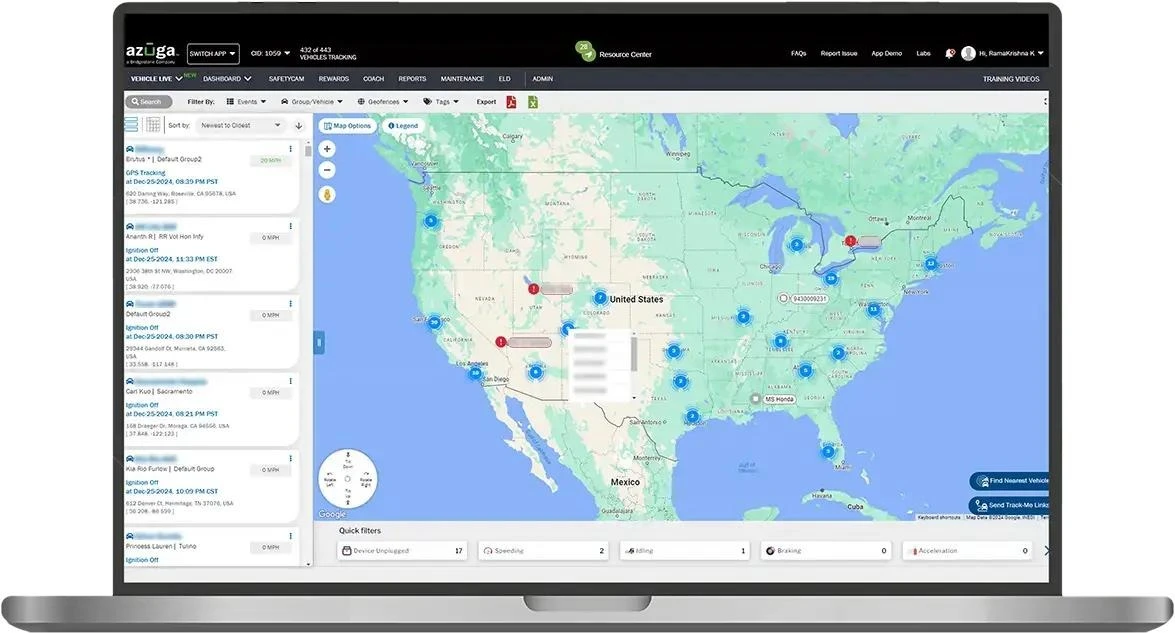
It helps answer practical questions:
- Is the vehicle still near the expected return location?
- When was its last recorded position?
- Did it leave a designated parking or service area?
- Has it been moving since the rental period ended?
- Is the tracking device still communicating?
For businesses managing several vehicles, those answers can help staff distinguish a routine exception from an issue that needs closer attention.
The most useful systems also preserve historical location records. That matters when managers need to reconstruct an event instead of relying on memory, phone calls, or assumptions.
Geofencing Turns a Map Into an Early-Warning Tool
Consider a rental company operating near a major airport.
Some vehicles are assigned to an airport return facility. Others are stored at a neighborhood branch or maintenance lot. An operator may also have vehicles moving between cities, depending on customer reservations and rental terms.
A geofence is a virtual boundary around a selected area. When a properly configured tracking system detects a vehicle entering or leaving that boundary, it can generate an alert.
For rental businesses, useful boundaries may include:
- Return facilities
- Identify vehicles entering or leaving the designated return area.
- Vehicle storage lots
- Flag unexpected movement outside normal operating procedures.
- Maintenance locations
- Help confirm that a vehicle has arrived for scheduled service.
- Contractually restricted areas
- Support the review of travel outside agreed operating areas, where such restrictions are lawful and clearly disclosed.
Alerts need sensible settings. If every routine movement triggers a notification, employees may begin ignoring them. The objective is to highlight meaningful exceptions, not create more noise.
Rental Fleet Security Is Also a Data-Security Problem
Installing a GPS device addresses only part of the risk.
A connected fleet also generates sensitive information. Vehicle locations, trip histories, customer assignments, login records, and driver-related data should not be accessible to everyone in the business.
A manager might need visibility across the entire rental fleet. A front-desk employee may need access only to vehicles assigned to one branch. Those are different responsibilities, and the software’s access permissions should reflect them.
Rental companies should evaluate tracking providers for account security, user access controls, data handling practices, and support procedures. They should also establish clear internal rules about who can review location history and why.
For U.S. operators, privacy requirements may vary by state and by the rental platform involved. Customers should receive appropriate notice about vehicle tracking, and companies should follow applicable laws and platform policies.
Good rental fleet security protects both the vehicle and the information associated with it.
What Happens When a Vehicle Doesn’t Come Back?
A GPS tracker is most useful when employees already know what to do with the information it provides.
A practical response starts with verifying the reservation. Check the return time, extension requests, permitted operating area, and most recent customer communications. Then review the vehicle’s latest reported location and whether that information is current.
Next, make reasonable contact attempts according to company policy.
If the situation indicates potential theft, unauthorized retention, or another serious incident, follow the appropriate reporting and recovery process. Location history may help document the situation for law enforcement or other authorized parties. For the on-the-ground side of vehicle crime, see our guide to carjacking prevention.
Staff should not assume that every late return is criminal, and they should avoid attempting unsafe, unauthorized vehicle recovery. Where a vehicle has compatible remote-control hardware, those functions should be governed by strict safety procedures and used only where lawful and appropriate.
The goal of GPS-assisted rental vehicle recovery is better information and a more organized response, not taking unnecessary risks.
From One Rental Car to a Fleet Spread Across the United States
A single rental location in Phoenix faces different operating conditions from a business with vehicles at multiple branches in Texas, Florida, California, or the Northeast.
Yet both need to know which assets are available, where vehicles have been, and whether an unexpected movement deserves attention.
A platform designed for rental fleet tracking can make that information easier to manage without requiring an employee to physically check each location.
For example, GPS tracking for rental cars from Trackhawk GPS brings location monitoring, trip history, configurable geofences, security alerts, and maintenance-related features into a rental-focused tracking solution.
The system is designed for different rental business models, including independent agencies, larger fleets, and owners managing vehicles through car-sharing platforms. Actual capabilities depend on the tracking hardware, installation, connectivity, and selected configuration.
For operators comparing providers, the important question isn’t simply whether a GPS tracking unit can show a vehicle’s position. It’s whether the system provides information the rental team can act on quickly and responsibly.
Five Things to Check Before Choosing a Rental Car Tracker
- Tracking reliabilityAsk how frequently the device reports, what happens when cellular coverage is interrupted, and whether historical locations remain available.
- Installation optionsA plug-in device may simplify deployment, while a professionally installed hardwired tracker may suit another use case. Choose based on compatibility, maintenance needs, and risk.
- Alerts that match real operationsGeofencing, movement notifications, and relevant device-status alerts should correspond to actual branch and fleet procedures.
- Account access and privacyEvaluate who can view location data, how access is controlled, and what happens when an employee leaves the company.
- Support when something goes wrongA fleet tracking service should have a clear process for device failures, account problems, missing data, and urgent operational questions.
The lowest device price isn’t necessarily the lowest operating cost if the system creates more work than it saves. Tracking also pairs well with other protective gear; browse our car safety accessories for options that complement it.

Better Visibility Should Mean Better Decisions
GPS technology won’t prevent every late return, eliminate every vehicle theft, or solve poor fleet management on its own.
But it can reduce uncertainty.
When a vehicle is overdue, managers can check recent location information instead of beginning with a blind search. When a branch needs a car for the next reservation, staff can work from a clearer picture of fleet availability. And when an incident requires investigation, location records can provide supporting context.
The rental business still needs reliable agreements, customer communication, employee training, security procedures, and responsible data practices. GPS tracking works best as part of that larger system.
Because when a car doesn’t come back at the expected time, the first thing a rental operator needs isn’t another problem. It’s useful information.