5 Best 4K Dash Cams for Night Driving: The Ultimate Low-Light Guide
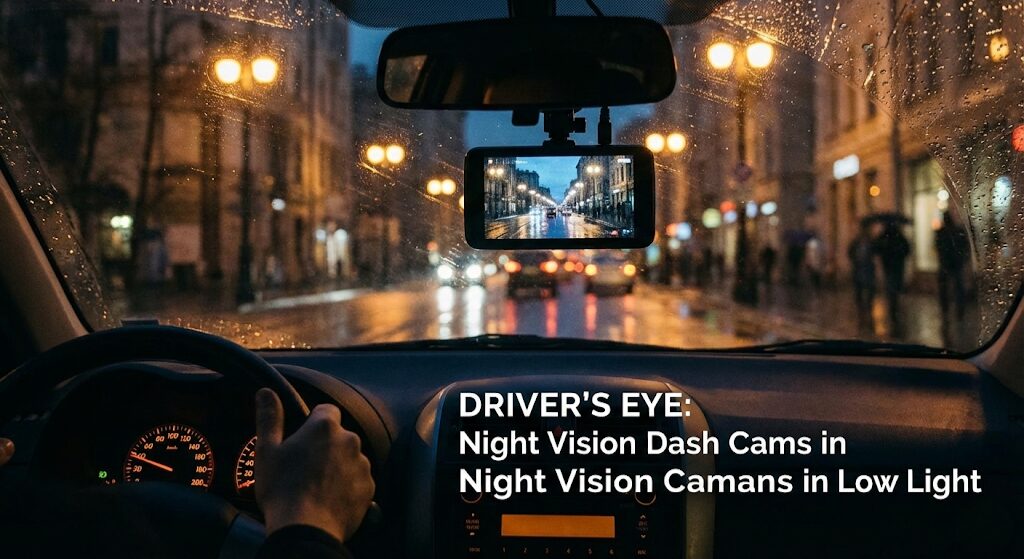
Driving at night is a statistical anomaly. While only 25% of driving takes place at night, nearly 50% of traffic deaths occur during these hours. The reduction in depth perception, peripheral vision, and color recognition creates a hazardous environment where accidents happen in the blink of an eye. In these high-stakes scenarios, standard dash cams often fail. They produce grainy, blown-out footage where license plates are nothing more than white rectangles reflecting your headlights.
If you are looking for the best 4K dash cam for night driving, you are looking for more than just high resolution. You need specific sensor technology capable of “High Dynamic Range” (HDR) to balance the blinding lights of oncoming traffic with the pitch-black shadows of the roadside. Without this capability, your 4K footage is just high-resolution noise.
In 2026, the market has shifted. The introduction of the Sony STARVIS 2 sensor has revolutionized low-light capture. This guide dives deep into the specific models that utilize this technology to provide courtroom-ready evidence, even on unlit country roads.
For a broader understanding of how visibility impacts safety, review our guide on Night Driving Safety Checklist: Headlights, Glare & Fatigue.
Why “Starvis 2” Changes Everything
For the last five years, the term “Night Vision” on dash cam packaging was largely a marketing gimmick. Most cameras used software to artificially brighten the image, which introduced digital noise (grain) that obscured details like license plates. That changed with the release of the Sony STARVIS 2 (IMX678) sensor.
The Physics of Pixels
A 4K image contains roughly 8 million pixels. On a small sensor, these pixels are microscopic. Smaller pixels capture less light. This is why a 1080p camera with a large sensor used to beat a 4K camera at night. However, the STARVIS 2 architecture uses a back-illuminated structure that significantly increases the light-gathering capability of these tiny pixels.
HDR vs. WDR
Most cameras boast WDR (Wide Dynamic Range), but true multi-exposure HDR is what you need for night driving.
- WDR: Software processing that lightens shadows and darkens highlights. It is decent, but often results in “ghosting” on moving objects.
- DOL-HDR (Digital Overlap HDR): The camera takes two images simultaneously (one short exposure for bright headlights, one long exposure for dark roads) and merges them. This effectively eliminates “plate bloom”—the blinding reflection that makes license plates unreadable at night.
How We Evaluated These Cameras
To determine the true leaders in night performance, we didn’t just look at spec sheets. We analyzed performance across three specific “failure points” where most cameras struggle:
- The Headlight Bloom Test: Following a car at night with high beams on. Can the camera dim the reflection on the license plate enough to make the characters readable?
- The “Tunnel Exit” Scenario: Driving from a dark environment into a well-lit street. How fast does the exposure adjust?
- Motion Blur at Speed: Capturing the plate of an oncoming vehicle traveling at 40mph on an unlit road.
It is important to note that while technology helps, your own habits play a role. Adopting defensive driving habits that reduce collision risk is always your first line of defense.

VIOFO A229 Pro 4K (3-Channel)
The VIOFO A229 Pro is currently the gold standard for night recording. Unlike competitors that mix and match cheap sensors, VIOFO went all-in. It utilizes the Sony STARVIS 2 IMX678 for the front 4K camera and the STARVIS 2 IMX675 for the rear 2K camera.
Why it wins at night: The implementation of DOL-HDR on the A229 Pro is aggressive. In our analysis, this camera consistently resolved license plates in high-contrast scenarios where others failed. The footage is crisp, with accurate color representation even under yellow sodium streetlights.
Pros
- Dual Sony STARVIS 2 Sensors (Front & Rear)
- Best-in-class License Plate readability
- Voice Control commands (“Video Start”, “Take Photo”)
- Superfast 5GHz Wi-Fi for file transfer
Cons
This unit is perfect for the driver who wants zero compromise on video evidence. It supports up to 3 channels, meaning you can add an interior camera later if needed.
Check Price on Amazon

Thinkware U3000 4K
If your car is parked on the street overnight, the Thinkware U3000 is your bodyguard. While it uses the same IMX678 sensor as the VIOFO for the front, the U3000 differentiates itself with built-in Radar. Conventional dash cams rely on motion detection via the image sensor, which consumes significant power. The U3000 uses radar waves to detect approaching objects, waking the camera up before an impact occurs.
Night Parking Performance: The “Super Night Vision 4.0” processing boosts sensitivity in parking mode, allowing the camera to see into shadows in unlit parking lots. Combined with the radar, it can stay in standby mode for weeks without draining your battery.
Pros
Cons
If you are investing in this level of security, consider also checking our list of budget car gadgets for big upgrades to complement your high-end camera.
Check Price on Amazon

Vantrue N4 Pro (3-Channel)
For gig workers driving the night shift, interior safety is just as important as exterior recording. The Vantrue N4 Pro updates the legendary N4 with—you guessed it—Sony STARVIS 2 sensors. It records Front (4K), Rear (1080p), and Interior (1080p) simultaneously.
Interior IR Technology: The interior cabin camera is ringed with four Infrared LEDs. When light levels drop, these activate automatically, illuminating the cabin in crisp monochrome (black and white). This allows you to record passenger behavior clearly even in total darkness.
Pros
Cons
This camera pairs perfectly with modern gig-work tools. See our article on Apps Every Driver Should Use in 2026 for software that complements this hardware.
Check Price on Amazon
BlackVue DR970X Box Plus (4K)
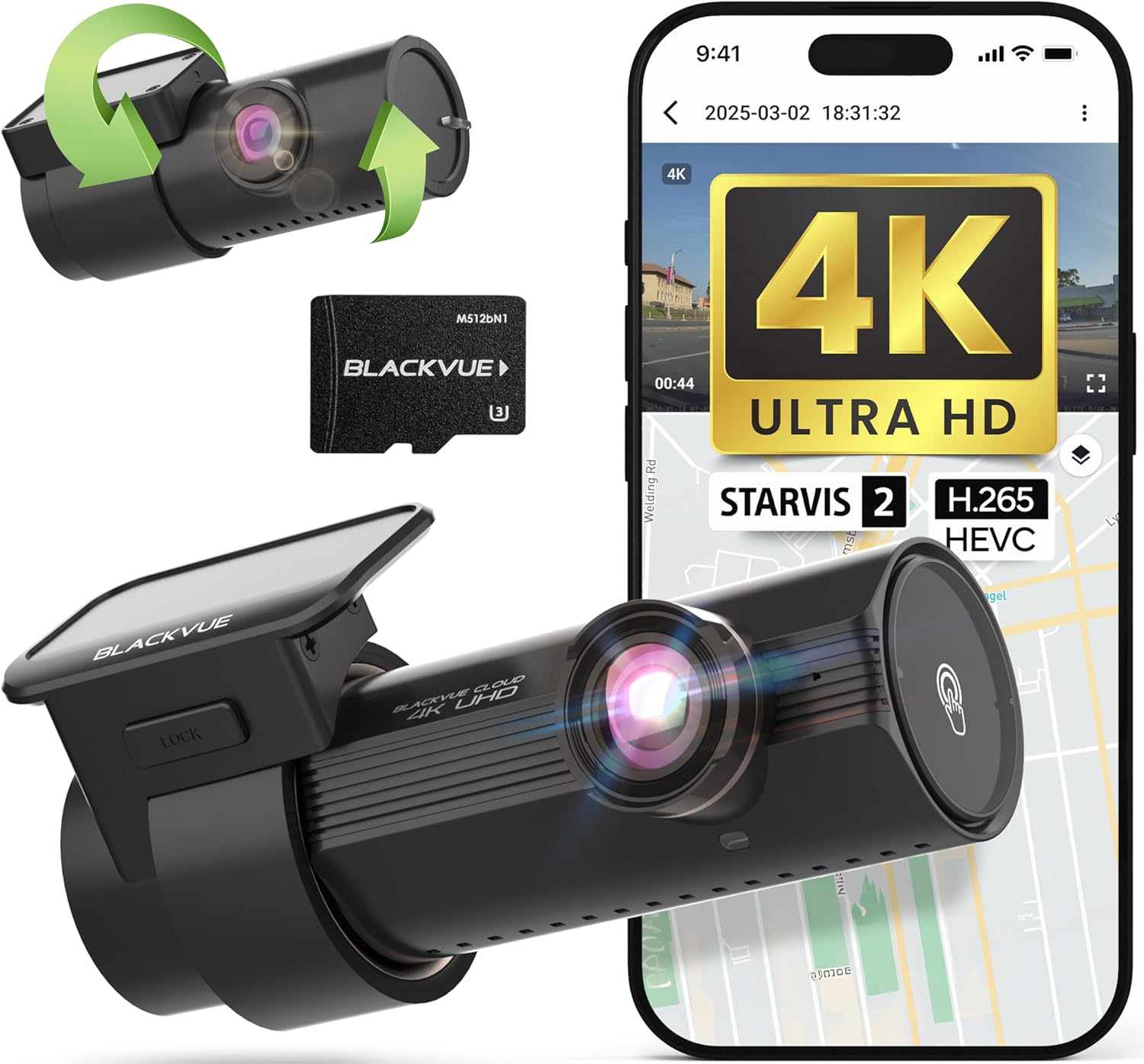
BlackVue is famous for its cylindrical, stealthy form factor. The DR970X “Box” Plus places the recording unit separately from the camera (under the seat or in the glovebox), making the camera head on the windshield incredibly tiny. The “Plus” designation indicates the upgraded Starvis 2 sensor.
The Cloud Advantage: With an optional LTE module, this camera is always online. If you are sleeping and your car is hit, it sends a push notification to your phone with the video clip instantly. This is the ultimate peace of mind for night parking in high-crime areas.
Pros
Cons
Check Price on Amazon

70mai A810 4K HDR
Typically, getting a Sony STARVIS 2 IMX678 sensor requires spending over $300. The 70mai A810 disrupts the market by offering the same sensor technology at nearly half the price. It captures true 4K video with HDR, providing night performance that rivals the premium VIOFO and Thinkware models.
The Trade-off: To hit this price point, 70mai uses a battery instead of a supercapacitor (though newer batches are improved) and the software is less “professional” than BlackVue. However, for raw video quality at night per dollar spent, the A810 is unbeatable.
Pros
Cons
Check Price on Amazon
Technical Comparison: Night Specs
| Model | Image Sensor | Lens Aperture | HDR Type | Parking Tech |
|---|---|---|---|---|
| VIOFO A229 Pro | Starvis 2 IMX678 | F1.8 | DOL-HDR | Buffered Motion |
| Thinkware U3000 | Starvis 2 IMX678 | F1.8 | Super Night Vision 4 | Radar + Motion |
| Vantrue N4 Pro | Starvis 2 IMX678 | F1.8 | Multi-Exposure HDR | Motion + IR |
| BlackVue DR970X | Starvis 2 IMX678 | F1.8 | Night Vision WDR | Cloud Event |
| 70mai A810 | Starvis 2 IMX678 | F1.8 | Dual Native ISO | AI Motion |
Buyer’s Guide: Critical Features for Night Use
1. The Necessity of a CPL Filter
A Circular Polarizing Lens (CPL) filter acts like sunglasses for your camera. It cuts down reflections from your dashboard that appear on the windshield. At night, these reflections can hide road debris. However, a CPL filter also reduces the amount of light entering the lens.
Tip: Ensure your dash cam has high ISO sensitivity (like Starvis 2 models) to compensate for the darkening effect of a CPL filter at night.
2. Aperture Size (F-Stop)
In photography, a lower “F-number” means a wider opening for light. Look for cameras with an aperture of F1.6 to F1.8. Anything higher (like F2.0 or F2.2) will struggle in dark alleys or rural roads without streetlights.
3. Heat Tolerance (Capacitors vs. Batteries)
While this guide focuses on night driving, heat is a camera killer. Lithium-ion batteries (found in cheap cams) degrade and can swell in hot cars. Always choose a Supercapacitor model. They store charge electrostatically, making them impervious to heat and cold cycles, ensuring your camera actually turns on when you start the car on a freezing winter night.
Installation Tips for Night Clarity
Placement is paramount. For night driving, your camera must be mounted within the sweep zone of your windshield wipers. If the lens is looking through a dirty, rain-streaked section of glass, the autofocus will hunt, and the glare from streetlights will streak across the footage.
Hardwiring for Parking Mode: To use parking features, you cannot simply plug into the cigarette lighter (which usually turns off with the car). You must use a “Hardwire Kit” connected to your fuse box. This taps into the vehicle’s constant power fuse. Don’t worry about draining your battery; modern kits have voltage cut-offs.
Conclusion
The difference between a generic 4K camera and a Starvis 2 equipped unit is the difference between seeing a blur of light and seeing a license plate number. For 2026, the VIOFO A229 Pro stands as the undisputed champion of night videography due to its aggressive HDR tuning and dual-sensor setup.
Remember, technology is only one part of the equation. Ensure your vehicle is ready for the road by checking our Night Driving Safety Checklist before your next late-night journey.
Shop All Recommended Dash CamsFrequently Asked Questions
Does 4K resolution actually help at night?
Yes, but only if paired with a large sensor. 4K allows you to zoom in on footage. Without a good sensor (like Starvis 2), 4K night footage can be grainy. With the right sensor, it captures details 1080p misses.
What is the “Starvis 2” sensor?
Sony STARVIS 2 is an image sensor technology designed specifically for surveillance and dash cams. It offers wider dynamic range and higher light sensitivity than previous generations, reducing motion blur at night.
Will a dash cam drain my battery while parked?
If you use a hardwire kit with a voltage cutoff, it is safe. The camera will record until the battery reaches a safe limit (e.g., 12V) and then shut down to ensure the car can still start.
Do I need a rear camera for night driving?
Yes. Rear-end collisions are common at night due to drunk or distracted drivers. A rear camera proves you were in your lane and stopped correctly.
Can dash cams see through tinted windows?
Standard factory tint is fine. However, dark aftermarket limo tint (5%) will severely degrade night recording on rear cameras. You may need to cut a hole in the tint for the lens.
What SD card is best for 4K recording?
Use “High Endurance” or “Max Endurance” cards (like SanDisk High Endurance). 4K video creates massive heat and data cycles that kill standard SD cards quickly.
Is voice control useful for night driving?
Extremely. It allows you to save a clip or take a photo without taking your hands off the wheel or eyes off the road, which is crucial in low-visibility situations.
Do dash cams record audio inside the car?
Yes, most have microphones. In many states, you must notify passengers if audio is being recorded. You can usually disable this in settings.
How do I view the footage?
Most 4K cams have Wi-Fi. You connect your phone to the camera’s Wi-Fi network and use the manufacturer’s app to view and download clips instantly.
Are capacitor dash cams better than battery ones?
Yes. Capacitors handle extreme heat and cold much better than lithium batteries, making them more reliable for long-term vehicle use.