5 Best Car Batteries for Cold Weather: Reviewed and Tested
There is a specific kind of silence that every driver dreads. It’s 6:00 AM, the temperature is -10°F, your breath is visible inside the cabin, and when you turn the key, you hear… nothing. Just a faint click.
Winter is the ultimate stress test for your vehicle. While we often focus on tires—asking is front-wheel drive good in snow? or learning how to drive on black ice—the battery is the unsung hero that gets the whole system moving. As temperatures drop, engine oil thickens, requiring more power to crank, while the battery’s chemical ability to produce that power drops significantly.
You cannot rely on a generic, budget battery when the mercury plummets. You need high Cold Cranking Amps (CCA), robust AGM technology, and durability. After extensive research and analysis of cold-weather performance, we have identified the 5 best car batteries that will ensure you aren’t left stranded waiting for a jump.
Before we dive in, ensure your winter kit is complete. A good battery is vital, but so is having a portable jump starter and a winter car emergency kit just in case.
Quick Comparison: Top Cold Weather Performers
| Model | Type | Best For | Est. CCA | Key Feature |
|---|---|---|---|---|
| Odyssey Extreme Series | AGM | Overall Best | 850-950+ | Pure Lead Plates |
| Optima RedTop | AGM | Heavy Duty/Trucks | 720-800 | SpiralCell Tech |
| XS Power D6500 | AGM | High Electronics | 1070 | Massive Power |
| ACDelco Gold (Professional) | AGM | Value/OEM | Varies | Reliable Fit |
| DieHard Platinum AGM | AGM | Longevity | 750-850 | Stamped Grid |
1. Odyssey Extreme Series: The Cold Weather King

If budget is secondary to absolute reliability, the Odyssey Extreme Series is widely regarded as the best battery money can buy for harsh winters. Unlike standard batteries that use recycled lead alloy, Odyssey uses pure virgin lead plates.
Why It Wins in Winter
Pure lead plates can be packed tighter, which means more plate surface area. More surface area equals more chemical reaction power. This results in massive Cold Cranking Amps (CCA)—often twice that of a conventional battery. It can sit for long periods without losing charge, making it ideal if you don’t drive every day.
We recommend pairing this investment with one of the best car battery testers to monitor its health over the years, ensuring you get the full 4-10 year lifespan these units are capable of.
- Incredible CCA ratings (starts easily in sub-zero).
- Slow self-discharge rate.
- Vibration resistant (great for rough roads).
- Can handle deep cycling and starting.
- Significantly more expensive than average.
- Heavy due to lead density.
Verdict: The ultimate peace of mind for drivers in Alaska, Canada, or the Midwest.
2. Optima RedTop: The Heavy-Duty Classic

You have likely seen the distinctive “six-pack” design of the Optima RedTop under the hoods of trucks and off-road vehicles. This design isn’t just for looks; it represents their SpiralCell Technology. Instead of flat plates, lead is wound into a tight spiral.
Performance Under Pressure
This spiral design makes the battery virtually immune to vibration damage. This is crucial because vibration can destroy a battery’s internal components over time. For winter driving, the RedTop delivers a strong burst of ignition power. It is a favorite among SUV owners who equip their vehicles with road trip essentials and head into the mountains.
- SpiralCell technology resists vibration.
- Spill-proof and mountable in any position.
- High burst cranking power.
- Maintenance-free.
- Not designed for deep cycling (electronics usage while engine off).
- Specific shape may require fitment adapters for some cars.
Verdict: The best choice for trucks, SUVs, and 4x4s that face rough terrain and cold mornings.
3. XS Power D6500: The Powerhouse for Electronics
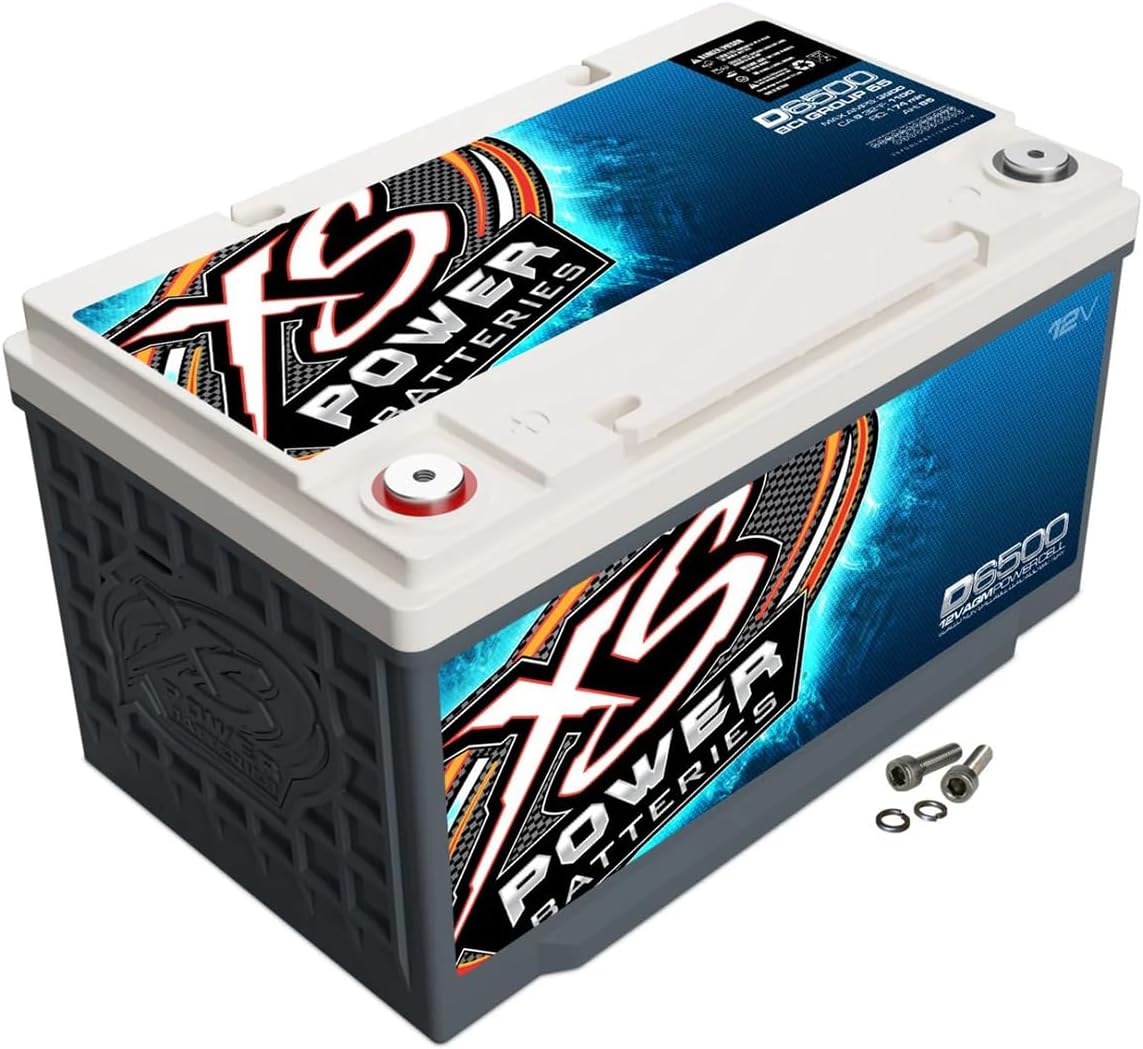
Do you have aftermarket heated seats, a powerful sound system, or dash cams? Or perhaps you run an air compressor frequently? If so, you need a battery that provides both starting power and high reserve capacity. Enter the XS Power D6500.
Energy Density
XS Power is famous in the car audio world, but their batteries are excellent for cold weather because they use a very dense AGM chemistry. The D6500 puts out over 1000 cranking amps. It acts as a capacitor and a battery in one, ensuring your voltage doesn’t drop even when you have the heater, defroster, headlights, and wipers running simultaneously.
If you have modernized your car with smartphone integrations and chargers, this battery handles the load effortlessly.
- Massive energy storage (Reserve Capacity).
- Sealed design prevents corrosion.
- Low internal resistance for faster charging.
- Extremely durable case.
- Very expensive.
- Terminal posts often sold separately (M6 bolts included).
Verdict: Best for modified vehicles with high electrical demands in cold climates.
4. ACDelco Gold (Professional) AGM: The Reliable OEM Fit

Not everyone needs a racing battery. Sometimes, you just want the car to start like it did when it was new. ACDelco is the Original Equipment Manufacturer (OEM) for GM vehicles, but their Gold (formerly Professional) line fits most makes and models.
Value meets Performance
This is the most balanced option on our list. It features a high-density negative paste that improves performance and battery life. It’s significantly cheaper than the Odyssey or XS Power but still offers AGM technology, which is far superior to standard flooded batteries in winter. It’s a smart pick for budget-friendly car maintenance.
- Excellent price-to-performance ratio.
- Exact fit for many vehicles (no adapters needed).
- 7-year design life expectancy.
- Leak-proof pressurized valve system.
- Warranty periods can vary by retailer.
- CCA is good, but not “extreme” like Odyssey.
Verdict: The best replacement battery for the daily commuter who wants factory-level reliability.
5. DieHard Platinum AGM: The Durability Legend

The “DieHard” name is legendary for a reason. After some years of fluctuating quality, the brand is back on top with the Platinum AGM line. These batteries utilize Stamped Grid technology, which provides a more robust internal structure than traditional expanded metal grids.
Why Stamped Grid Matters
In cold weather, internal corrosion is the enemy. Stamped Grid designs are optimized for electrical flow and corrosion resistance. This means the battery maintains high starting power for more years than a standard battery. It is an excellent choice for keeping your family safe, whether you are teaching new car owners about maintenance or prepping for a trip.
- Stamped Grid technology improves durability.
- Made using recycled materials (eco-friendly).
- High reliability scores.
- Widely available.
- Price has increased in recent years.
- Heavy unit.
Verdict: A solid, widely available choice that balances durability with strong cold-start performance.
Understanding Battery Group Sizes: Why “Best” Depends on Fit First
Before CCA or chemistry even enters the conversation, the battery has to physically and electrically fit your vehicle. Group size describes the case dimensions, terminal layout, and terminal polarity. Buying the wrong group size means a battery that rattles in the tray, won’t reach the cables, or simply won’t clamp down safely — a real risk once frost heaves and rough winter roads start shaking everything loose.
Common group sizes for passenger cars and light trucks include Group 24F and Group 25 (mid-size sedans and SUVs), Group 35 (many Japanese sedans like Camry, Accord, and Altima), Group 48 (H6, common in newer GM and European models), Group 65 (H8, popular in Ford trucks and SUVs), and Group 31 (heavy-duty applications, diesel pickups, and commercial vans). Your existing battery’s case, or your owner’s manual, will state the correct group number. Once you know the group size, the real optimization game is choosing the highest CCA and Reserve Capacity available within that size — that’s where the models on this list earn their keep.
Group Size Cross-Reference for Popular Cold-Climate Vehicles
| Vehicle Type | Typical Group Size | Recommended Minimum CCA |
|---|---|---|
| Compact Sedan | Group 35 / 51R | 500-600 |
| Mid-Size Sedan / Crossover | Group 24F / 35 | 600-700 |
| Full-Size SUV | Group 48 (H6) / 65 (H8) | 700-800 |
| Half-Ton Pickup | Group 65 / 48 | 750-850 |
| Heavy-Duty Diesel Truck | Group 31 (dual battery) | 925-1000+ per battery |
Diesel Trucks and Cold Starts: A Special Case
Diesel engines compound the winter starting problem. Diesel fuel can gel in extreme cold, glow plugs draw significant current before ignition, and compression-ignition engines generally require more cranking torque than a gasoline equivalent. Many diesel pickups, from the Ford Super Duty to the Ram 2500/3500 and Chevrolet Silverado HD, run dual-battery setups precisely because a single battery can’t reliably supply the combined glow plug and starter draw at sub-zero temperatures.
If you own a diesel truck, prioritize Group 31 batteries with CCA ratings near or above 950, and always replace both batteries in a dual-battery system at the same time. Mismatched battery ages create an imbalance where the older battery drags down the newer one, shortening both of their lifespans. Pair this with a block heater on nights below 0°F, and consider keeping a set of winter car emergency kit essentials in the cab in case a remote cold start still fails.
AGM vs. Lithium (LiFePO4) Starter Batteries in Winter
Lithium iron phosphate (LiFePO4) batteries have become popular for weight savings in performance and off-road builds, but they behave very differently from AGM in the cold. Standard LiFePO4 chemistry loses a meaningful percentage of its usable capacity below freezing, and many budget lithium starter batteries include a battery management system (BMS) that will refuse to charge — sometimes even refuse to discharge — once internal cell temperature drops too low, to protect the cells from damage.
Premium lithium starter batteries solve this with built-in self-heating elements that warm the cells before allowing a charge or crank, but these units carry a significant price premium over even the priciest AGM options on this list. For most drivers in genuinely cold climates, AGM remains the more predictable and cost-effective choice. Lithium starts to make more sense for weight-focused race builds that live in a heated garage, or for climates where winter lows rarely dip far below freezing.
Quick Chemistry Comparison
| Chemistry | Cold Performance | Weight | Typical Lifespan | Relative Cost |
|---|---|---|---|---|
| Flooded Lead-Acid | Fair, freeze risk | Heavy | 2-4 years | $ |
| AGM | Excellent | Heavy | 4-7 years | $$ |
| Pure Lead AGM (e.g., Odyssey) | Outstanding | Heavy | 6-10 years | $$$ |
| Standard LiFePO4 | Poor below freezing | Very Light | 8-10+ years | $$$ |
| Heated LiFePO4 | Very Good | Light | 8-10+ years | $$$$ |
What a Cold-Weather Battery Actually Costs
Budget matters, and prices shift with supply, group size, and retailer promotions, but a rough framework helps set expectations before you shop. Entry-level AGM batteries in common group sizes typically land in the 150 to 200 dollar range. Mid-tier options with higher CCA and longer warranties, like the ACDelco Gold or DieHard Platinum lines, usually run 200 to 300 dollars. Premium pure-lead or extreme-output batteries such as the Odyssey Extreme or XS Power D-series can exceed 300 to 450 dollars depending on group size, and heavy-duty Group 31 diesel truck batteries often sit at the higher end of that range or above it, especially when a dual-battery replacement is required.
It helps to think of the purchase in terms of cost-per-year rather than sticker price alone. A 400 dollar battery that reliably lasts 8 to 10 years in harsh cold can be cheaper over its lifespan than replacing a 150 dollar flooded battery every 2 to 3 winters, on top of the towing bills, missed mornings, and jump-start hassles that come with premature failure.
Warranty Comparison: What “Free Replacement” Really Means
Battery warranties are typically split into two periods: a “free replacement” window, where a failed battery is swapped at no cost, and a prorated period after that, where you pay a percentage of the retail price based on how much of the warranty term has elapsed. Premium brands like Odyssey often lead with the longest free-replacement windows, while value-focused brands like ACDelco balance a shorter free period against a lower upfront price.
When comparing warranties, always check whether the coverage is tied to the original purchase receipt and retailer, and whether it transfers if you sell the vehicle. Keep your receipt and the battery’s date code sticker in your glovebox or a phone photo; both are usually required to process a warranty claim.
Step-by-Step: How to Install a Cold Weather Battery Safely
Installing a new battery is one of the more approachable DIY jobs, but cold weather adds a few extra precautions worth following carefully.
- Gear up first: Wear safety glasses and gloves. Battery acid and terminal corrosion can cause skin and eye irritation, and cold weather makes hands clumsier around tools.
- Turn off the vehicle and remove the key: This prevents any accidental electrical draw while the terminals are disconnected.
- Disconnect negative first: Always remove the negative (black, “-“) terminal before the positive. This order minimizes the risk of a short circuit if a wrench touches metal.
- Remove the hold-down bracket: Most batteries are secured with a clamp or strap; keep the hardware together so it doesn’t get lost in snow or gravel.
- Lift carefully: AGM batteries are dense and can weigh 40-60 pounds. Bend at the knees, and consider a battery lifting strap for heavier Group 31 units.
- Clean the tray: Wipe away corrosion or debris before setting in the new battery, using a mixture of baking soda and water if buildup is present.
- Reconnect positive first, negative last: Reverse the disconnect order. Tighten terminals snugly but avoid overtightening, which can crack posts in cold, brittle conditions.
- Apply terminal protectant: A dielectric grease or anti-corrosion spray on the terminals helps prevent the white, crusty buildup that worsens in road-salt-heavy winter climates.
- Verify the charge: Start the vehicle and confirm it cranks smoothly, then check voltage with a multimeter to confirm the alternator is charging correctly.
Troubleshooting: Battery Died Again? Diagnose Before You Replace
Not every cold-weather no-start is actually the battery’s fault. Before buying a replacement, work through this quick diagnostic checklist:
Symptom: Slow Crank, Then Starts
This usually points to a battery nearing the end of its life, or a charging system that isn’t topping it off overnight. Test resting voltage (should read 12.6V or higher) and have the alternator’s charging output checked.
Symptom: Complete Silence, No Click
Check terminal connections for corrosion or looseness first. A loose or corroded connection can mimic a dead battery even when the battery itself is healthy. Also check for a blown fuse in the starting circuit.
Symptom: Single Click, No Crank
This often indicates a battery too weak to power the starter solenoid fully, or a failing starter motor itself. A load test at a parts store or with a home battery tester will usually clarify which component is at fault.
Symptom: Battery Drains Overnight Repeatedly
A “parasitic draw” from an interior light, aftermarket accessory, or failing module can slowly drain even a brand-new battery. A mechanic can measure parasitic draw with a multimeter in series with the negative terminal while the vehicle is off.
Regional Cold-Weather Considerations
Not all “cold weather” is equal. A driver in coastal Oregon dealing with occasional frost has very different needs than someone in Fargo, Winnipeg, or Fairbanks facing weeks of sub-zero temperatures. Consider these regional notes when deciding how much to invest:
- Upper Midwest and Northern Plains (ND, MN, WI, MT): Extended sub-zero stretches make 800+ CCA AGM batteries close to mandatory; a battery blanket is a worthwhile add-on.
- Mountain West (CO, WY, UT high elevations): Wide daily temperature swings stress batteries through repeated thermal cycling; prioritize vibration-resistant designs like the Optima RedTop for rough mountain roads.
- Northeast and Great Lakes (NY, MI, OH, PA): Heavy road salt accelerates terminal corrosion; sealed AGM designs and regular terminal cleaning matter as much as raw CCA.
- Alaska and Northern Canada: Extreme, prolonged cold makes pure-lead AGM batteries like the Odyssey Extreme, paired with a block heater and battery blanket, close to essential rather than optional.
- Mild Winter Regions (Pacific Northwest lowlands, Mid-Atlantic): A quality mid-range AGM battery in the 600-700 CCA range is typically more than sufficient.
Common Cold-Weather Battery Myths, Debunked
Myth: “Revving the engine charges the battery faster.”
Alternators charge based on RPM and load, but revving a cold engine adds unnecessary wear and doesn’t meaningfully speed up a deeply discharged battery’s recovery. A proper charger or extended, steady drive is more effective.
Myth: “A battery only dies from age.”
Corrosion, parasitic drains, short trips that never fully recharge the battery, and extreme temperature cycling all shorten battery life independent of calendar age.
Myth: “Bigger CCA numbers are always better, no matter the cost.”
Once you comfortably exceed your vehicle manufacturer’s recommended CCA, additional headroom brings diminishing returns relative to price. Match CCA to your climate and vehicle, not to the biggest number on the shelf.
Myth: “New batteries can’t fail early.”
Manufacturing defects and shelf-life issues do happen. Always check the date code, and test a new battery with a multimeter or tester shortly after installation to confirm it’s holding a proper charge.
Glossary of Battery Terms Every Winter Driver Should Know
| Term | Meaning |
|---|---|
| CCA (Cold Cranking Amps) | Amps delivered at 0°F for 30 seconds while staying above 7.2 volts. |
| CA (Cranking Amps) | Similar test performed at 32°F; always a higher, less winter-relevant number than CCA. |
| RC (Reserve Capacity) | Minutes a battery can supply 25 amps before dropping below 10.5 volts, indicating backup power for electronics. |
| Ah (Amp-hours) | A measure of total energy storage capacity, more relevant to deep-cycle and dual-purpose batteries. |
| AGM | Absorbent Glass Mat; electrolyte is held in a fiberglass mat rather than free-flowing liquid. |
| Group Size | Standardized case dimension and terminal layout code used to match a battery to a vehicle. |
| Parasitic Draw | Small ongoing current draw from the vehicle’s electronics while the engine is off. |
Buying Guide: How to Choose a Battery for Winter
Buying a battery isn’t just about picking the right size (Group Size). When you are fighting freezing temperatures, you need to understand the specs.
1. Cold Cranking Amps (CCA)
This is the most important number for winter. It measures the number of amps a battery can deliver at 0°F for 30 seconds while maintaining at least 7.2 volts. Do not confuse this with CA (Cranking Amps), which is measured at 32°F.
Rule of Thumb: For harsh winters, aim for at least 650+ CCA. 800+ is ideal for trucks or large engines.
2. AGM vs. Flooded Lead-Acid
Standard (Flooded) batteries contain liquid acid. If they freeze, the case can crack. AGM (Absorbent Glass Mat) batteries hold the electrolyte in glass sponges. They are sealed, charge faster, handle cold better, and won’t spill. We highly recommend AGM for cold climates.
3. Reserve Capacity (RC)
This measures how long the battery can run your car’s electronics if the alternator fails. In winter, with heaters, defrosters, and wipers running, a high RC is beneficial. This is also critical if you often drive at night and need reliable lighting (see: tips for driving at night).
4. Freshness Matters
Never buy a battery that has been sitting on the shelf for more than 6 months. Look for the date code on the sticker (e.g., A5 = January 2025).
Winter Maintenance Tips to Prevent Battery Death
Even the best battery can die if mistreated. Here is how to keep yours alive:
- Keep it Charged: If you don’t drive daily, use a battery tender/trickle charger.
- Clean Terminals: Corrosion adds resistance. A simple wire brush cleaning ensures max power reaches the starter.
- Check the Alternator: If your battery keeps dying, the issue might be your charging system. Use an OBD2 scanner app or tester to verify voltage.
- Turn Off Accessories: Before starting the car, ensure the heater, radio, and lights are off to direct all power to the engine.
If you do get stranded, make sure you have safety gear. A good flashlight and road flares are essential while waiting for help.
Extra Cold-Weather Gear Worth Pairing With Your New Battery
A great battery is the foundation, but a few complementary tools dramatically reduce your odds of a bad winter morning. A quality trickle charger or battery tender keeps a seldom-driven vehicle topped off between uses, which matters most for second cars, weekend trucks, or garages without daily driving. An insulated battery blanket wraps around the case to slow heat loss on the coldest nights, buying back cranking power that would otherwise be lost to the cold. A lithium-ion portable jump starter in the trunk provides a backup plan that doesn’t depend on flagging down another driver. And a simple digital multimeter, kept in the glovebox, lets you check resting voltage in seconds before a long winter drive, catching a weakening battery before it strands you.
Frequently Asked Questions (FAQ)
What is a good CCA rating for cold weather?
For mild winters, 600 CCA is usually sufficient. However, if you live in areas with sub-zero temperatures, look for a battery with at least 750 to 850 CCA to ensure reliable starting.
Are AGM batteries better for winter than standard lead-acid?
Yes, AGM (Absorbent Glass Mat) batteries are superior for winter. They have lower internal resistance, charge faster, and are more resistant to freezing because they don’t contain free-flowing liquid acid.
How often should I replace my car battery in cold climates?
In extreme cold climates, battery life is often reduced to 3-4 years. It is recommended to test your battery annually after the 3-year mark using a battery tester.
Can a frozen battery be jumped?
Never attempt to jump-start a frozen battery. It can explode. If the case is bulging or you suspect it’s frozen, remove it and let it thaw in a warm area before testing or charging.
Why does my car struggle to start in the cold?
Cold temperatures slow down the chemical reaction inside the battery that generates power. Simultaneously, engine oil thickens in the cold, requiring more power to turn the engine over. This double whammy causes starting struggles.
Does a battery blanket help?
Yes, an insulated battery blanket or warmer can prevent the battery’s internal temperature from dropping too low, preserving its cranking power for the morning start.
What happens if I use a battery with too low CCA?
If the CCA is too low, the battery may not provide enough burst energy to turn the starter motor in freezing weather, leaving you stranded.
How can I check my battery health at home?
You can use a digital multimeter to check voltage (should be 12.6V+) or a dedicated car battery tester to measure the actual CCA and internal health.
What group size battery do I need for winter?
Group size is determined by your vehicle, not the season. Check your owner’s manual or existing battery for the correct group size (e.g., 24F, 35, 48, 65), then choose the highest CCA available within that size.
Are lithium car batteries good for cold weather?
Standard lithium-ion starter batteries typically underperform AGM in extreme cold unless they include internal cell heating, which adds significant cost. AGM remains the more predictable choice for most cold climates.
How much does a cold-weather car battery cost?
Budget AGM batteries typically start around 150-200 dollars, mid-range options run 200-300 dollars, and premium pure-lead or high-CCA batteries can exceed 300-450 dollars depending on group size and brand.
Do diesel trucks need special cold-weather batteries?
Yes. Diesel engines require more cranking torque and glow plug current, so many diesel trucks use dual Group 31 batteries rated near or above 950 CCA each, ideally replaced together and paired with a block heater in extreme cold.
Brand Deep Dive: How the Major Battery Makers Compare
Beyond the five models reviewed above, several other well-known brands show up constantly in cold-weather searches. Understanding how they position themselves helps you make sense of the wider market, even if you ultimately choose one of our top picks.
Interstate Batteries
Interstate is one of the most widely distributed battery brands in North America, sold through thousands of independent dealers rather than big-box retail. Their MTP (Mega-Tron Plus) and AGM lines are popular with mechanics because of strong nationwide warranty support and consistent stock availability. Interstate batteries tend to sit in the same price bracket as ACDelco Gold, making them a reasonable alternative if a local Interstate dealer is more convenient than ordering online.
NAPA Batteries
NAPA’s Legend and Legend Premium AGM lines are another dealer-network favorite. NAPA batteries are manufactured by a mix of OEM suppliers depending on region, so specs can vary slightly by group size, but the Legend Premium AGM line consistently posts competitive CCA numbers for its price point. Because NAPA stores are common in rural and small-town areas, this brand is worth checking if you live somewhere without easy access to big online retailers or warehouse clubs.
Duracell (by East Penn)
Sold primarily through big-box retailers, Duracell automotive batteries are manufactured by East Penn Manufacturing, one of the largest battery producers in the U.S. The Duracell AGM Ultra Platinum line is a solid mid-to-premium option with strong CCA ratings, often positioned as a direct competitor to DieHard Platinum. Availability and frequent seasonal sales make this a convenient choice for drivers who prefer to buy and install in the same afternoon.
EverStart (Walmart house brand)
EverStart batteries are budget-oriented and widely available, making them tempting for cost-conscious shoppers. The EverStart Maxx AGM line offers respectable CCA figures for the price and can be a reasonable stopgap option. However, independent testing and long-term owner reports generally show shorter average lifespans compared to the premium options on our main list, so treat EverStart as a budget bridge rather than a long-term cold-climate investment if winters in your area are severe.
Bosch
Bosch’s S5 and S6 AGM batteries are common in Europe and increasingly available in North America, especially for German and other import vehicles with tight engine bay tolerances and specific fitment requirements. Bosch batteries are engineered to meet OEM specifications for stop-start systems, which demand frequent partial-cycle recharging — a feature set that also happens to translate well to reliable cold-weather starting.
| Brand | Positioning | Typical Availability | Cold-Weather Verdict |
|---|---|---|---|
| Interstate | Mid-to-Premium | Dealer network | Strong, reliable |
| NAPA Legend Premium AGM | Mid-to-Premium | NAPA stores | Strong, good rural access |
| Duracell AGM Ultra Platinum | Mid-to-Premium | Big-box retail | Strong, convenient |
| EverStart Maxx AGM | Budget | Walmart | Acceptable, shorter lifespan |
| Bosch S5/S6 AGM | Premium (import fitment) | Import specialty retailers | Excellent for stop-start vehicles |
Signs Your Battery Won’t Survive the Winter
Batteries rarely fail without warning; they usually give subtle clues for weeks before a full failure. Catching these early lets you replace the battery on your own schedule, in daylight and warmth, rather than in a dark parking lot during a cold snap.
- Slower-than-usual cranking: If the engine takes noticeably longer to catch, especially on the first cold morning of the season, the battery is losing capacity.
- Dimming headlights at idle: Headlights that visibly brighten when you rev the engine, and dim at idle, suggest the battery isn’t holding a strong enough charge to support the electrical system on its own.
- Dashboard warning lights: A battery or charging system warning light, or an unusually persistent check-engine light tied to voltage codes, deserves an immediate test.
- Corrosion buildup: White, blue, or greenish crust around the terminals restricts current flow and often signals a battery under strain.
- Battery is 3+ years old and has never been tested: Age alone isn’t a death sentence, but an untested battery past the 3-year mark is flying blind into winter.
- A swollen or misshapen case: This is a serious warning sign of internal damage, often from freezing or overcharging, and the battery should be replaced immediately rather than tested further.
- Electrical accessories acting erratically: Power windows moving slower than normal, or infotainment systems rebooting unexpectedly, can point to insufficient reserve capacity.
If you notice two or more of these signs as temperatures start dropping, it’s worth proactively testing or replacing the battery rather than waiting for a guaranteed cold-morning failure.
Battery or Alternator? How to Tell the Difference
One of the most common winter mix-ups is blaming the battery for a problem that’s actually coming from the alternator, or vice versa. Since both a dying battery and a failing alternator can produce similar symptoms — dim lights, slow cranks, dashboard warnings — a quick diagnostic process saves you from replacing the wrong part.
Start the engine and let it idle, then measure voltage at the battery terminals with a multimeter. A healthy resting battery (engine off) should read close to 12.6 volts. With the engine running, a properly functioning alternator should push that reading up to roughly 13.7 to 14.7 volts. If the running voltage stays flat near 12.6 volts or lower, the alternator likely isn’t charging the battery, even if the battery itself is otherwise healthy. If the resting voltage itself is low before you even start the car, and it drops further after a short drive, the battery is more likely the root cause.
Many auto parts stores offer free load testing that can isolate the two components definitively, and it’s worth doing this before spending money on a new battery if you’re not fully certain which part is at fault. Replacing a battery while ignoring a failing alternator only buys a few weeks before the new battery is drained flat as well.
How to Jump-Start a Car Safely in Freezing Temperatures
Jump-starting in the cold carries a few extra risks compared to a mild-weather jump, mainly because a battery that has partially frozen or is severely discharged can be more prone to venting gas or, in rare cases, cracking. Following the correct sequence keeps things safe.
- Inspect first: Never jump a battery with visible cracks, bulging, or frost/ice on the case. Let it thaw in a warmer space before attempting anything.
- Position vehicles close but not touching: Turn off both engines and all accessories before connecting cables.
- Connect in the correct order: Red (positive) to the dead battery’s positive terminal, then red to the donor battery’s positive terminal, then black (negative) to the donor battery’s negative terminal, and finally black to an unpainted metal ground point on the dead vehicle’s engine block — not directly to the dead battery’s negative terminal, which reduces spark risk near the battery itself.
- Start the donor vehicle first: Let it run for a couple of minutes before attempting to start the dead vehicle.
- Start the dead vehicle: If it doesn’t catch within a few attempts, stop and let the batteries sit connected for a few more minutes rather than repeatedly grinding the starter.
- Disconnect in reverse order: Black from the engine ground first, then black from the donor battery, then red from the donor, then red from the previously dead battery.
- Drive to recharge: A jump only restores enough charge to start the engine; drive for at least 20-30 minutes, or use a charger, to properly recharge the battery afterward.
A quality lithium portable jump starter removes the need for a second vehicle entirely and is one of the highest-value additions to a winter emergency kit.
Charging Your Battery Correctly: Trickle Chargers, Maintainers, and Fast Chargers
Not all chargers are created equal, and using the wrong type in cold weather can shorten a battery’s life instead of extending it. A trickle charger delivers a slow, steady, low-amperage charge over many hours, which is gentle on the battery but requires you to monitor and disconnect it manually once full. A battery maintainer (sometimes called a “smart charger”) automatically switches to a float or maintenance mode once the battery reaches full charge, making it safe to leave connected indefinitely — ideal for a vehicle parked outside all winter or used only occasionally. A fast charger delivers higher amperage for quicker results but generates more heat and, if used carelessly on a very cold or already-fragile battery, can stress internal components.
For most winter driveway situations, a smart maintainer in the 1-2 amp range is the safest, lowest-maintenance option. Plug it in overnight before a predicted cold snap, and disconnect it before driving. Avoid charging a battery that shows signs of being frozen; let it warm to room temperature first, since charging current passing through ice-crusted electrolyte can cause internal damage or, in worst cases, case rupture.
Cold Weather Batteries for Motorcycles, ATVs, and Powersports
Riders who keep motorcycles, ATVs, or side-by-sides on the road (or trail) into shoulder-season cold face a scaled-down version of the same problem car owners deal with. Powersports batteries are almost universally sealed AGM units these days, largely because the compact case size makes a spill-proof design essential, and because AGM’s better cold tolerance matters even more given the smaller reserve capacity of these batteries relative to a car.
For seasonal storage, a powersports-specific battery tender is close to mandatory. A small AGM motorcycle battery can drop below a usable charge in a matter of weeks if left disconnected through a cold garage winter, since self-discharge accelerates in cold, damp storage conditions and small batteries have little buffer capacity to begin with. Disconnecting the negative terminal for winter storage, combined with a maintainer plugged in periodically, is the standard approach experienced riders use to avoid a dead battery come spring.
RVs and Trailers: Dual-Purpose Battery Considerations
RV owners face a slightly different challenge, because many rigs run both a chassis starting battery and one or more house batteries dedicated to lights, water pumps, and appliances. House batteries are typically deep-cycle or dual-purpose AGM units rather than pure starting batteries, since they need to discharge slowly over hours rather than deliver one big burst like a starter battery.
In cold weather, house batteries face an added complication: standard lead-acid and AGM chemistries lose usable capacity as temperature drops, and charging a battery that’s below freezing can damage it, particularly with lithium house battery systems that often include a built-in low-temperature charge cutoff. If you winterize an RV, disconnecting or removing house batteries and storing them in a temperature-stable space — a heated garage or basement — preserves both their charge and their long-term health far better than leaving them in an unheated trailer through a hard freeze.
Hybrid and EV 12-Volt Batteries: A Different Kind of Cold Weather Problem
Hybrid and electric vehicles still rely on a conventional 12-volt battery to power the low-voltage systems — infotainment, lights, door locks, and critically, the contactors that allow the high-voltage traction battery to engage. If that small 12-volt battery dies, the car often won’t “wake up” at all, even though the large traction battery pack may be sitting at a full charge.
This catches many EV and hybrid owners off guard, since they assume the big battery pack means the car is immune to a dead-battery scenario. In reality, the 12-volt battery in an EV or hybrid is usually a smaller AGM unit, subject to the same cold-weather capacity loss as any other AGM battery, and it deserves the same attention: periodic testing, prompt replacement at the first signs of weakness, and avoidance of long parking stretches without the vehicle occasionally waking its systems to recharge that small battery from the main pack.
Recycling Your Old Battery the Right Way
Lead-acid and AGM batteries are among the most recycled consumer products in existence, with the vast majority of the lead and plastic reclaimed and reused in new batteries. It’s also illegal in most states and provinces to simply throw a car battery in household trash, both because of the lead content and the residual acid inside.
Most auto parts retailers, including the ones carrying the batteries reviewed in this guide, are required to accept old batteries for recycling, and many offer a small “core charge” refund or discount on your new purchase when you trade in the old unit. If you’re installing a battery yourself, save your old one until you can drop it off, and never store a spent battery on its side, since even a mostly-discharged battery can still leak residual electrolyte.
Pre-Winter Battery Checklist
Running through a short checklist each fall, before the first hard freeze, catches most cold-weather battery problems before they strand you. Print this list or save it to your phone as the seasons turn.
- Test resting voltage with a multimeter; anything below 12.4 volts warrants a closer look.
- Have the battery load-tested at a parts store or with a dedicated tester if it’s 3 or more years old.
- Inspect terminals and cables for corrosion, and clean if needed.
- Check that the hold-down bracket is snug, since vibration damage accelerates in freezing conditions.
- Confirm the alternator is charging correctly (13.7-14.7 volts with the engine running).
- Verify the battery’s date code isn’t past its expected lifespan for your climate.
- Stock a portable jump starter and confirm it’s charged.
- Consider a battery blanket if you park outdoors and face sub-zero stretches.
- Keep a basic winter car emergency kit in the trunk, including gloves, a flashlight, and blankets.
Real-World Cold Snap: What a -20°F Morning Actually Demands
To put the numbers in this guide into perspective, consider what happens electrically during a genuine -20°F cold snap, the kind that hits the Dakotas, Minnesota, or the Canadian Prairies several times most winters. At that temperature, a battery’s available cranking power can fall to roughly half of its rated capacity at 80°F, while engine oil viscosity increases sharply, demanding more torque from the starter motor to turn the engine over. A battery rated at 600 CCA under these conditions may realistically deliver closer to 300 usable amps — often not enough margin for an aging engine with slightly worn piston rings or a marginal starter motor.
This is precisely why the guidance throughout this article leans toward buying more CCA headroom than the bare minimum, especially for anyone in a region where -20°F mornings aren’t a rare event but a recurring feature of the season. The Odyssey Extreme’s massive rated CCA isn’t excess for its own sake; it’s a buffer against exactly this kind of real-world capacity loss.
Conclusion
Winter driving commands respect, not just for the road conditions, but for the toll it takes on your machine. Upgrading to one of the 5 best car batteries for cold weather is one of the smartest preventative measures you can take.
For the absolute best performance, the Odyssey Extreme is our top pick. For heavy-duty trucks, the Optima RedTop remains a classic choice. And for those on a budget who still demand quality, the ACDelco Gold is hard to beat.
Don’t wait until you are stranded in a snowstorm to think about your battery. Check it now, replace it if needed, and drive confidently all winter long.