Driving with a Cracked Windshield: Illegal, Dangerous, or Both?
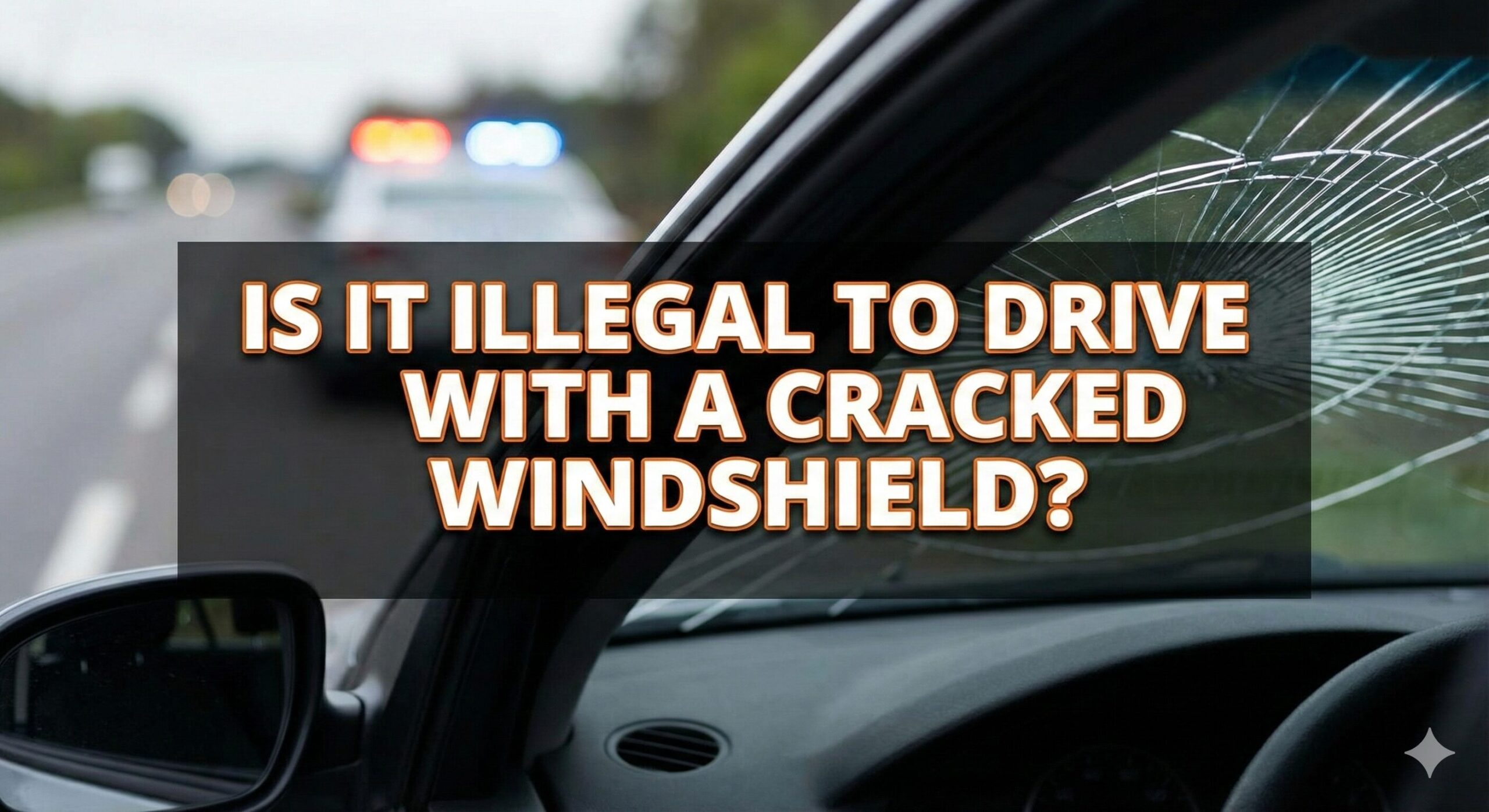
It starts with a loud SNAP on the highway. You flinch, scan the glass, and spot it: a tiny starburst chip right in your line of sight. You tell yourself you’ll fix it later, but weeks pass, and the chip grows into a jagged line snaking across the passenger side.
We have all been there. But beyond the annoyance, a cracked windshield poses a serious question: Is it illegal to drive like this?
The answer is rarely a simple “yes” or “no.” It usually depends on the size of the crack, its location, and the specific traffic laws of your state. While a small chip in the corner is generally fine, a spiderweb crack obstructing your view is a guaranteed ticket in almost every jurisdiction.
This guide breaks down the complex web of Department of Transportation (DOT) regulations and state statutes to help you avoid fines—and more importantly, keep you safe.

Federal vs. State Regulations: Who Rules the Road?
Understanding the law requires looking at two levels of government. While states write the traffic tickets, federal regulations set the safety standards for the vehicle itself.
Federal Standards (U.S. Department of Transportation)
The Federal Motor Carrier Safety Administration (FMCSA) sets strict rules, primarily for commercial vehicles, but many states adopt these as their baseline for passenger cars. Section 393.60 of the federal code states:
- Vision Acuity: Drivers must have a clear view of the road.
- The Critical Area: No cracks or chips larger than ¾ of an inch (roughly the size of a quarter) are allowed within the area swept by the windshield wipers.
- Intersecting Cracks: Any two cracks that intersect are an automatic violation.
If you drive a commercial truck or are crossing state lines, these federal rules apply strictly. For everyday passenger vehicles, local state laws take precedence, though they often mirror these federal guidelines.
The 3 Factors That Determine if You Get a Ticket
Police officers generally use “discretion” when issuing equipment violations. However, three specific factors will almost always result in a citation:
1. Location (The “Driver’s Box”)
The most critical area is the “Acute Area” (an 8.5 x 11-inch box directly in front of the driver). Any damage here is illegal because it distorts your view of the road, pedestrians, and traffic signals. This connects directly to broader safety concerns, similar to why driving barefoot is often debated—control and visibility are paramount.
2. Size of the Damage
As a general rule of thumb used by law enforcement:
- Chips: Anything smaller than a quarter is usually a warning.
- Cracks: Any single crack longer than 6 inches is a violation in many states (like Florida).
- Star Breaks: If a rock hit creates a “star” pattern larger than 1.5 inches in diameter, it is illegal.
3. Structural Integrity (Spiderwebbing)
If the glass is “spiderwebbed” (shattered but held together by the laminate), the vehicle is considered unsafe to operate. This glass cannot support the roof in a rollover or properly deflect the passenger airbag.

State-by-State Breakdown
While we cannot list the full text of every statute, here is how the states generally group their windshield laws.
| Category | Description | Example States |
|---|---|---|
| Zero Tolerance | No cracks allowed in the wiper sweep area whatsoever. | Minnesota, Pennsylvania, Ohio |
| Size Limits | Allows cracks if they are under a certain length (usually 6 inches) or not in driver’s view. | Florida, California, Texas |
| Discretionary | Illegal only if the officer deems the vehicle “unsafe” or visibility is “obstructed.” | New York, Illinois, Massachusetts |
| Inspection States | Vehicle will fail annual safety inspection if glass is damaged. | Virginia, Texas, Maine, Vermont |
Note: If you live in a state with annual safety inspections (like Texas or Virginia), a cracked windshield is an automatic fail, meaning you cannot legally renew your registration until it is fixed.
The Hidden Danger: Why the Law Exists
It is easy to think of a windshield as just a wind blocker, but in modern cars, it is a structural component. The laws aren’t just about being able to see; they are about surviving a crash.
1. Airbag Deployment
Passenger-side airbags deploy upward, bouncing off the windshield to cushion the passenger. If the glass is cracked, the explosive force of the airbag can shatter the windshield completely, causing the airbag to deploy outside the car, offering zero protection to the passenger.
2. Roof Crush Protection
In a rollover accident, the windshield prevents the roof from collapsing on the occupants. A crack creates a weak point in this support system. If the glass fails, the roof is much more likely to cave in.
3. Nighttime Glare
At night, cracks refract light from oncoming headlights and street lamps, creating blinding prisms. This reduces contrast and reaction time. For more on managing visibility, read our guide to safe night driving.

The “Free” Windshield States
Good news for drivers in certain states: you might not have to pay a dime for repairs. To encourage safety, several states have laws requiring insurance companies to waive the deductible for windshield replacement.
States with Zero-Deductible Glass Coverage laws include:
- Florida (Famous for this law)
- Kentucky
- South Carolina
- Massachusetts (Often included in comprehensive)
- Arizona (Available as a separate low-cost endorsement)
If you have comprehensive coverage in these states, check your policy immediately. Driving with a crack when you could fix it for free is a risk you don’t need to take.
Repair vs. Replace: What Can You DIY?
Not every rock chip requires a trip to the shop. Modern resin kits are surprisingly effective if used early.
When to DIY:
- The chip is smaller than a quarter.
- The crack is less than 3 inches long.
- The damage is NOT in the driver’s direct line of sight.
When to Replace:
- The crack goes all the way to the edge of the glass (this compromises the seal).
- The glass is pitted (tiny micro-craters from sandblasting over time).
- The inner layer of glass is damaged (run your fingernail over the inside; if it catches, replace it).
Having the right tools is essential for car maintenance. Check out our list of best car safety tools for other essential items every driver needs.

Frequently Asked Questions
Don’t let a small chip become a big legal headache. For more advice on vehicle safety standards and myths, check out our article on essential safety tools and glass breakers.