Driving Shirtless: Is It Illegal, Or Just Uncomfortable?
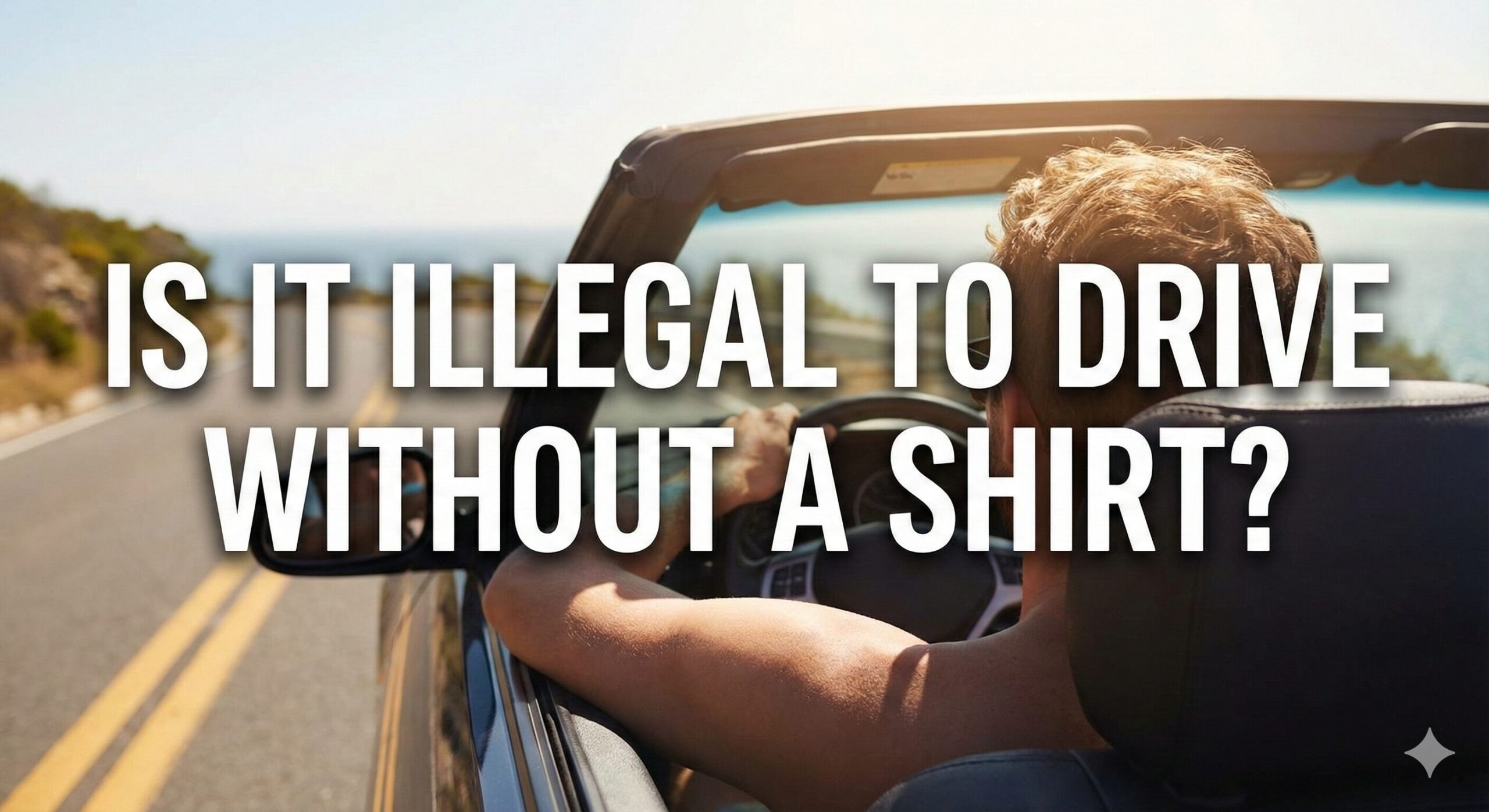
It’s the middle of July. The AC in your car is broken, the leather seats are scorching, and you are dripping sweat just sitting in traffic. The temptation to peel off your shirt is overwhelming. Or maybe you are just heading back from the beach, sandy and damp, and putting a shirt back on feels like a chore.
We’ve all seen someone driving shirtless, but a nagging thought usually persists: Is that actually legal?
The intersection of automotive freedom and public decency laws is murkier than you might think. While driving itself doesn’t require a dress code, being visible to the public does. This guide will peel back the layers (pun intended) of the law to clarify exactly where you stand when you drive au naturel from the waist up.

Traffic Laws vs. Indecency Laws: Understanding the Difference
To understand the legality, you have to separate Department of Motor Vehicles (DMV) codes from Penal Codes.
1. The Traffic Code View
Traffic laws are concerned with the safe operation of the vehicle. They dictate speed, signaling, and mechanical soundness. There is no statute in any of the 50 states that lists “shirt” as required equipment for a driver. Just as it is not illegal to drive barefoot, the law does not care about your attire as long as it doesn’t impede your ability to drive.
From a purely operational standpoint, you can drive in a tuxedo, a swimsuit, or shirtless, provided you are wearing your seatbelt.
2. The Penal Code View (Public Decency)
This is where it gets tricky. While the act of driving is fine, the act of being seen might not be. Most jurisdictions have laws against “Indecent Exposure.”
- For Men: Being shirtless is widely accepted in public spaces across the US. Driving shirtless poses almost zero legal risk under indecency statutes.
- For Women: This varies wildly by state and municipality. In places like NYC or Austin, TX, it may be legal for women to be topless in public, but in more conservative jurisdictions, a topless female driver could be cited for indecent exposure or creating a public distraction.
Men vs. Women: The Legal Gap
The law is not applied equally here. For male drivers, the risk of a ticket is virtually non-existent unless the behavior is accompanied by lewd acts. For female drivers, the situation is a legal minefield.
While the “Free the Nipple” movement has challenged laws in courts across the country (successfully in the 10th Circuit Court states like Colorado and Utah), many local police officers may still issue citations for “disorderly conduct” if they believe a topless driver is causing a traffic hazard by distracting other motorists.
The “Distraction” Loophole: Even if public nudity is legal in your city, an officer can cite you if your appearance causes other drivers to rubberneck, crash, or drive erratically. This falls under broad “disturbing the peace” or “public safety” statutes.

Safety: Why You Might Want to Keep the Shirt On
Just because you can do it, doesn’t mean you should. Driving shirtless introduces several physical discomforts that can distract you from the road.
1. Seatbelt Chafing (“The Red Stripe”)
Seatbelts are made of coarse, durable polyester webbing designed to restrain thousands of pounds of force. They are not designed for comfort against bare skin. In a crash, or even during hard braking, the belt can cause severe friction burns (road rash) on your chest and shoulder. Even during normal driving, the constant rubbing can be irritating enough to distract you.
2. Leather and Vinyl Burns
If you have ever sat on a black leather seat that has been baking in the sun, you know the pain. Driving shirtless removes the barrier between your back and scalding hot upholstery. Furthermore, sweat makes skin stick to leather, restricting your movement when you try to turn your torso to check blind spots.
3. Sunburn
Car windows do not block all UV rays. While windshields are treated to block UVA and UVB, side windows often are not. Truckers famously get sun damage on just one side of their body. Driving shirtless exposes significantly more skin to harmful radiation. This is also why we recommend protecting your car’s paint—the sun is relentless.

What if You Get Pulled Over?
Imagine you are driving shirtless and see the red and blue lights behind you. What do you do?
The “Public View” Doctrine: When you are stopped, you are interacting with a law enforcement officer in a public capacity. While an officer likely won’t ticket a male driver solely for being shirtless, it can set an unprofessional tone for the interaction.
Best Practice: Keep a t-shirt or towel within arm’s reach. If you are pulled over, quickly (and calmly) putting on a shirt shows respect for the officer and the situation. It shifts the dynamic from “guy at the beach” to “responsible motorist.”
If you have to exit the vehicle (e.g., for a sobriety test or to check a flat tire), you are now fully in public. Stepping out of a car shirtless on a highway is legal for men, but again, having a shirt available is always the smarter move.
Also, ensure your other safety equipment is up to par. Check our guide on essential car safety tools to keep in your trunk.
Does This Apply to Motorcycles?
Yes, and the risks are infinitely higher. Driving a motorcycle shirtless is famously dubbed “Squid” behavior (Stupidly Quick, Under-dressed, Imminent Death). While legally permitted in many states (excluding helmet laws), riding shirtless exposes you to:
- Severe sunburn (wind cools the skin, masking the burn).
- Debris impact (bugs feel like bullets at 60mph).
- Catastrophic road rash in the event of a slide.
For motorcyclists, gear is the only barrier between skin and asphalt. While not illegal, it is widely considered extremely negligent.

Frequently Asked Questions
While the law is on your side, common sense suggests keeping a shirt handy. Comfort and safety should always be your top priorities on the road. For more tips on staying safe and comfortable, read our guide on the best driving sunglasses for glare protection.