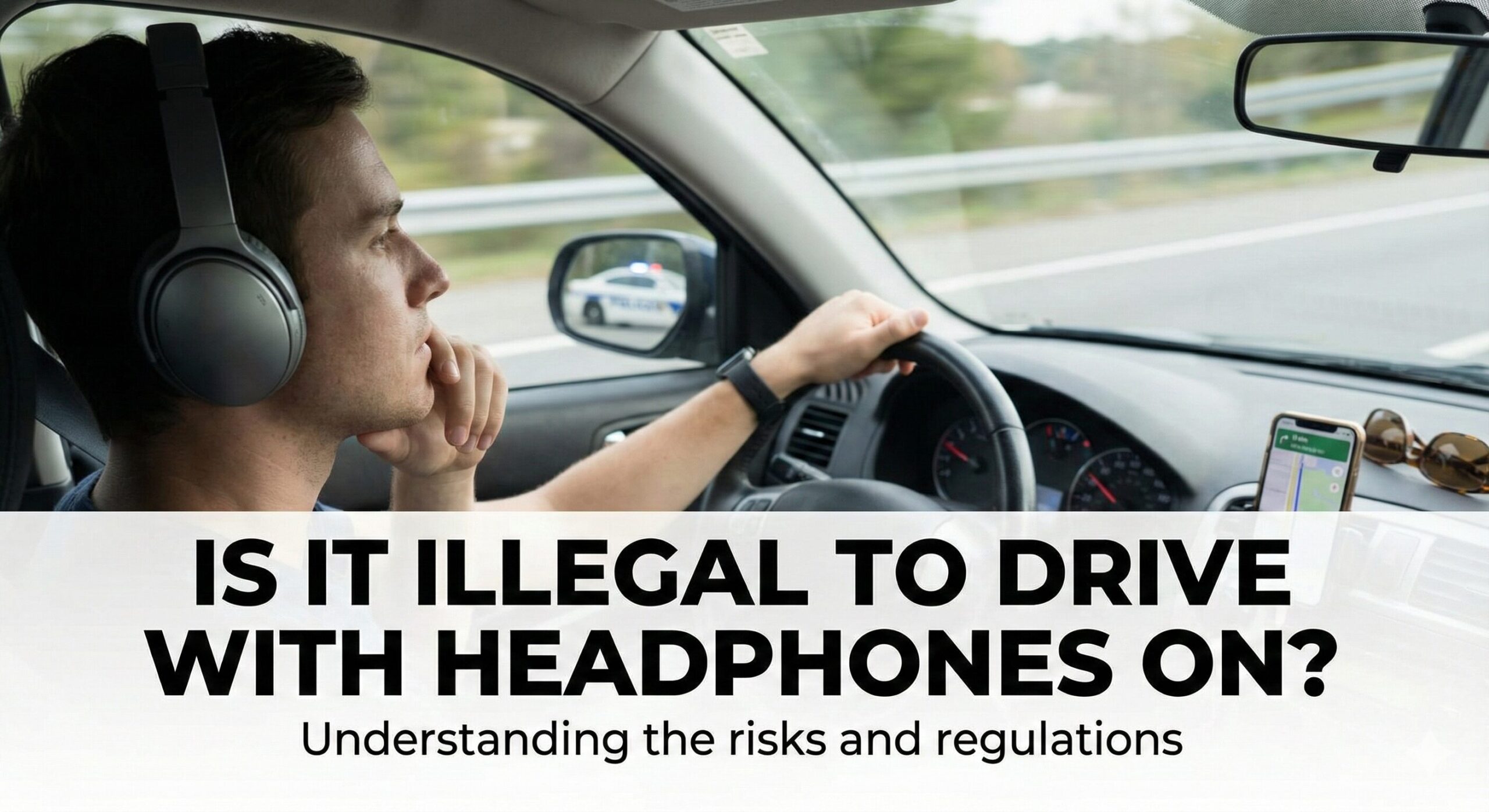
We see it every day on the highway: a driver cruising in the left lane, head bobbing, large noise-canceling headphones covering their ears. It seems innocent enough—maybe their car stereo is broken, or they just want better audio quality for a podcast. But is it legal?
The legality of driving with headphones is one of the most confusing areas of traffic law in the United States because there is no single federal rule. It is a patchwork of state statutes that range from “strictly prohibited” to “completely legal,” with a confusing middle ground of “one ear only.”
This guide dives deep into the traffic codes of all 50 states to clarify where you stand. We will also look at why this law exists—hint: it’s not just about you, it’s about sirens—and what alternatives you can use to stay legal and safe.

The Short Answer: It Depends Where You Live
There is no universal “Yes” or “No.” The United States is generally divided into three camps regarding headphones while driving:
- Illegal: States where covering both ears is strictly prohibited.
- One Ear Only: States that allow you to use a headset in one ear (usually for calls) but forbid covering both ears.
- Legal: States with no specific law against it (though distracted driving laws still apply).
For example, driving in California with both ears covered is a ticketable offense, whereas in Texas, there is no specific statute banning it. This variance is similar to other driving myths we’ve debunked, such as whether it’s illegal to drive barefoot.
State-by-State Breakdown
Below is a general categorization of headphone laws. Note: Traffic laws change. Always verify with your local DMV.
| State | Status | Details |
|---|---|---|
| Alaska, California, Colorado, Florida, Georgia, Illinois, Louisiana, Maryland, Massachusetts, Minnesota, New York, Ohio, Pennsylvania, Virginia, Washington | Restricted / Illegal | Generally illegal to wear headphones over both ears. One ear is usually permitted for communication. |
| Arizona, New York (One ear), Ohio (One ear) | One Ear Permitted | Specifically allows one earbud for calls/navigation. |
| Alabama, Arkansas, Connecticut, Delaware, DC, Hawaii, Idaho, Indiana, Iowa, Kansas, Kentucky, Maine, Michigan, Mississippi, Missouri, Montana, Nebraska, Nevada, New Hampshire, New Jersey, New Mexico, North Carolina, North Dakota, Oklahoma, South Carolina, South Dakota, Tennessee, Texas, Utah, Vermont, West Virginia, Wisconsin, Wyoming | Legal* | No specific prohibition, but distracted driving laws still apply if audio volume is excessive. |
The “One Ear” Loophole
In states like California and New York, the law typically states that a person operating a motor vehicle shall not wear a headset covering, or earplugs in, both ears. This allows for modern Bluetooth headsets used for phone calls. If you use Apple AirPods, keeping only one in your ear is generally compliant in these states.

Common Exceptions to the Rule
Even in states with strict bans, lawmakers recognize that some devices are necessary for safety or health. The most common exceptions include:
1. Hearing Aids
Laws prohibiting headphones almost always explicitly exempt prosthetic devices used to aid the hearing impaired. If you require hearing aids to function, you are legally protected. For more on how disabilities intersect with driving laws, read our article on whether deaf people are allowed to drive.
2. Emergency Personnel & Construction
Drivers of authorized emergency vehicles or highway maintenance workers who require headsets for radio communication are typically exempt while on duty.
3. Motorcycle Helmets
Some states regulate speakers inside motorcycle helmets differently than headphones on car drivers. Helmets with built-in comms systems are generally legal because they do not “plug” the ear canal, allowing ambient noise to enter.
Why Is It Dangerous? (The Science of Audio Isolation)
You might think, “I can see fine, why do I need to hear?” Driving is primarily visual, but auditory cues play a critical role in spatial awareness.
The Siren Problem
Modern noise-canceling headphones (ANC) are designed to filter out consistent frequencies—like engine drone and road noise. Unfortunately, they can also dampen the sound of approaching emergency sirens until the vehicle is right on top of you. Delaying your reaction to an ambulance or fire truck by even a few seconds creates a massive hazard.
Mechanical Awareness
A good driver listens to their car. The sound of a tire blowing out, a belt squealing, or the engine knocking gives you instant feedback. If you are blasting music through earbuds, you miss these early warning signs. We discuss these auditory cues in our guide on why cars shake while driving.
Sensory Deprivation
When you isolate one sense (hearing), your brain has to work harder to process the remaining inputs. This cognitive load can slightly delay reaction times, similar to the effects of fatigue.
Legal & Safe Audio Alternatives
If your car stereo is broken, or you just hate the radio, you don’t have to break the law. Here are the best ways to get high-quality audio safely:
1. Bluetooth FM Transmitters
These devices plug into your cigarette lighter (12V port) and broadcast your phone’s audio over an unused FM radio station. They are cheap, legal everywhere, and require zero installation.
2. Portable Bluetooth Speakers
A high-quality portable speaker (like a JBL or Bose) can be placed in a cupholder or on the passenger seat. This fills the cabin with sound without blocking your ear canals, making it safer and legal.
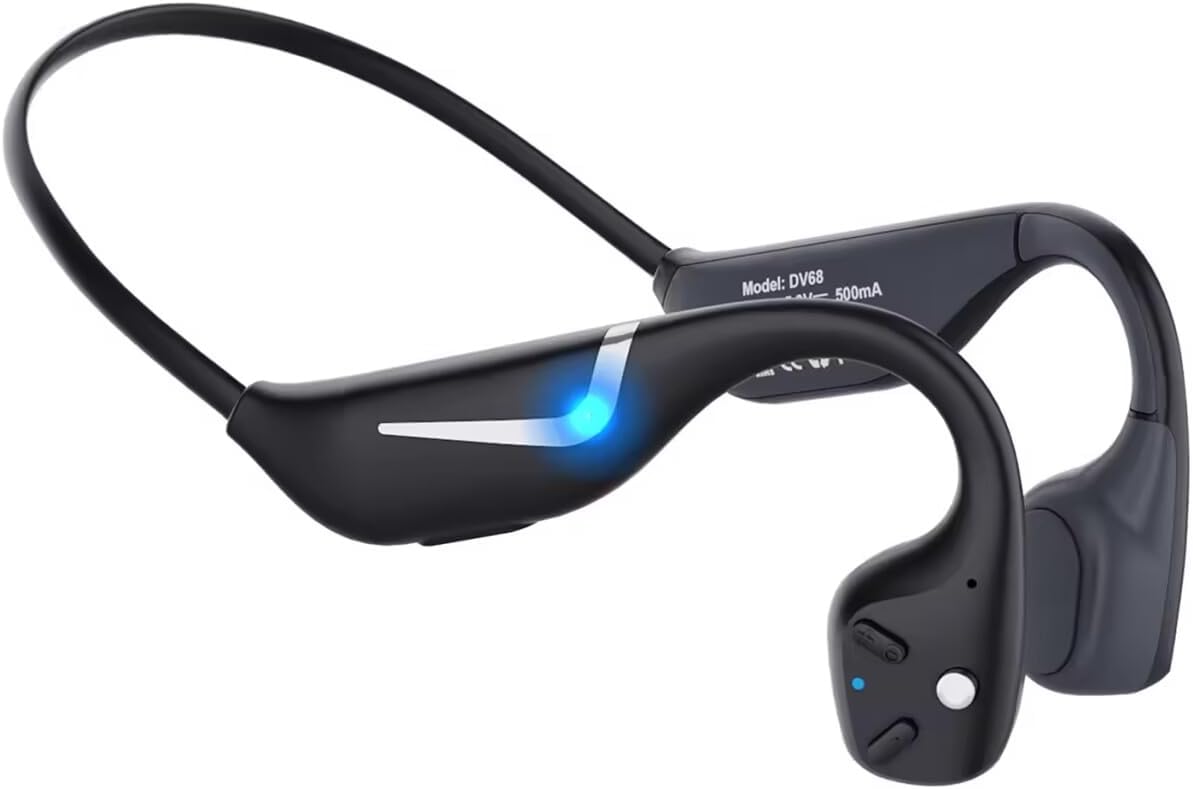
3. Bone Conduction Headphones
These headphones sit on your cheekbones and transmit sound via vibration, leaving your ear canal completely open to hear sirens and horns. While legal interpretation varies, they are significantly safer than in-ear buds.
Looking for more gear to make your drive comfortable? Check out our list of must-have gadgets for long drives.