Driving in Flip Flops: Is It Illegal or Just Dangerous?
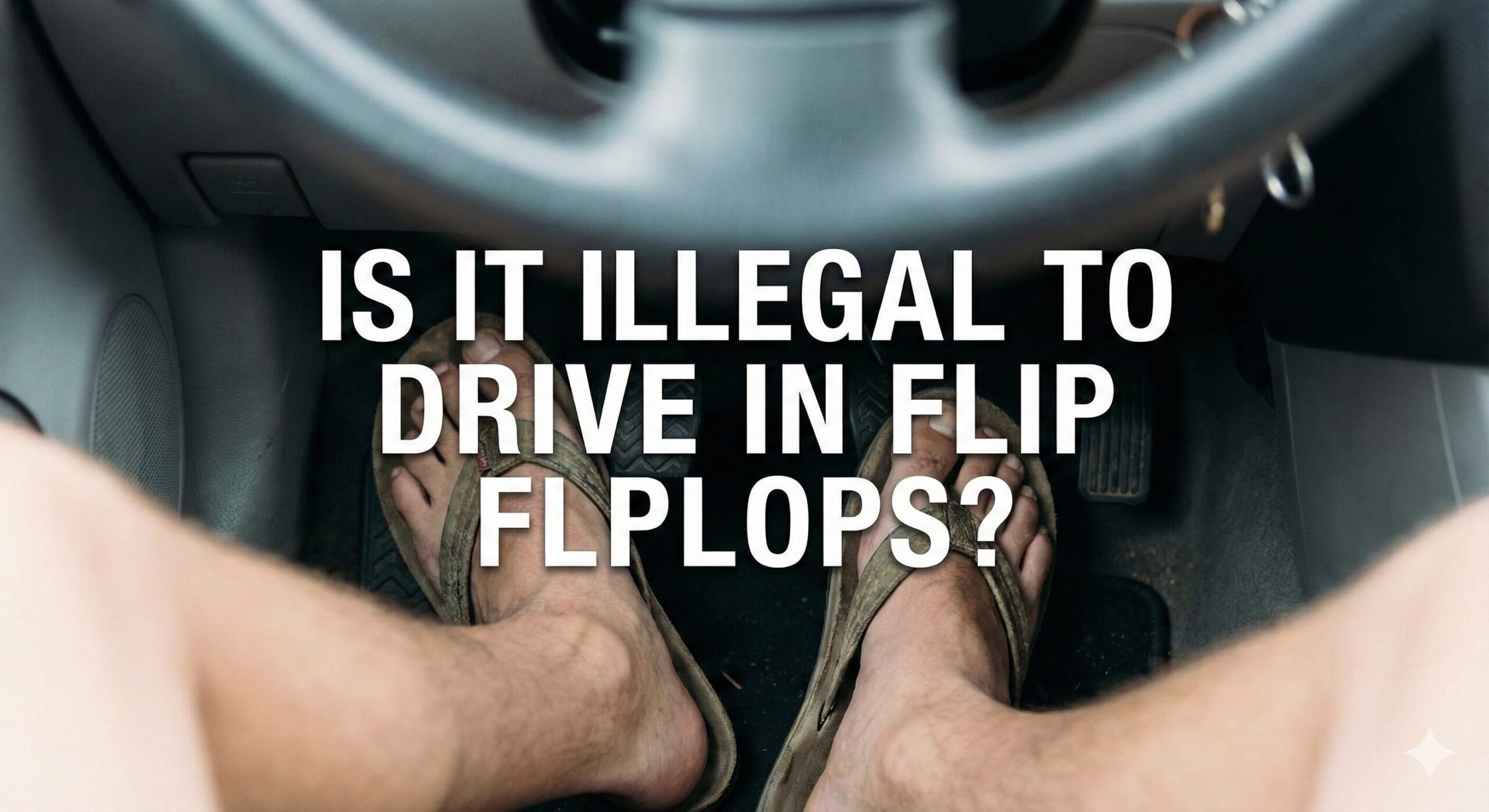
It’s a hot summer day. You’re heading to the beach, grabbing a quick coffee, or just running errands. You slide into the driver’s seat wearing your favorite pair of Havaianas or slides. It feels natural, comfortable, and breezy. But then a friend or a nagging voice in the back of your head asks: “Wait, isn’t it illegal to drive in flip flops?”
This is one of the most persistent myths in the automotive world. We are often told by driving instructors, parents, and concerned friends that driving in sandals is strictly prohibited by law. The reality, however, is much more nuanced. While the “fashion police” might let you slide, traffic police operate on a different set of rules.
In this guide, we will strip away the urban legends and look at the actual statutes across the United States. We will also explore why, even if it is legal, it might be one of the riskiest decisions you make behind the wheel.

The Law: Is It Actually Illegal?
Let’s be crystal clear: No.
We have analyzed traffic codes from California to New York, and Florida to Texas. There is no federal or state statute that lists “footwear” as a requirement for operating a motor vehicle. You can legally drive in boots, stilettos, flip flops, or even diving flippers (though we highly advise against that).
The “Careless Driving” Catch-22
While the act of wearing the shoe isn’t illegal, the consequence of wearing it can be. Police officers have broad discretion to cite drivers for “unsafe operation of a vehicle” or “failure to exercise due care.”
- Scenario A: You get pulled over for a broken taillight. The officer sees your flip flops. Result: No ticket for the shoes.
- Scenario B: Your flip flop gets stuck under the brake pedal, causing you to rear-end the car in front of you. Result: Ticket for Careless Driving (and likely a hefty insurance hike).
This distinction is crucial for new drivers who often worry about common driving test mistakes. While an examiner might not fail you immediately for the shoes, they certainly will if those shoes cause a driving error.
The Real Danger: Pedal Entrapment
Why do safety experts hate flip flops so much? It comes down to mechanics. Unlike a sneaker, a flip flop is not secured to your heel. This creates a “floppy” sole that can move independently of your foot.
1. The “Under-Pedal” Jam
This is the nightmare scenario. As you lift your foot from the gas to hit the brake, the loose sole of the sandal can catch on the underside of the brake pedal. This prevents you from depressing the brake, leading to a total loss of stopping power. This creates a panic situation similar to what to do if your brakes fail, but in this case, the mechanical failure is your shoe.
2. Reduced Braking Force
Studies have shown that braking in flip flops is slower than in regular shoes. The deceleration is roughly 0.13 seconds slower. That might sound negligible, but at 60 mph, that equals roughly 11-12 feet of extra stopping distance—the difference between a close call and a collision.
3. Slippage
Flip flops often have smooth foam bottoms. If your pedals are wet from rain, or the shoe is worn down, your foot can easily slip off the brake pedal entirely.

Insurance & Negligence Claims
Even if the police don’t ticket you, your insurance company might punish you. In the event of an accident, insurance adjusters look for reasons to assign fault (negligence).
If forensic analysis shows that “pedal misapplication” caused the crash, and it is noted in the police report that you were wearing loose footwear, the other driver’s lawyer could argue that you were negligent. This could lead to:
- Denial of collision claims.
- Increased liability for personal injury.
- Possibility of being sued for “gross negligence.”
It is always better to follow best driving practices rather than handing the insurance company an excuse to deny your claim.
Flip Flops vs. Barefoot: Which is Safer?
If flip flops are dangerous, should you just take them off? Surprisingly, yes.
While many people believe driving barefoot is illegal, we have established in our guide on driving barefoot laws that it is perfectly legal in all 50 states. More importantly, it is significantly safer than driving in flip flops.
Why Barefoot Wins:
- Tactile Feedback: You can feel exactly where the pedal is.
- Grip: Your toes can grip the pedal better than a foam sole.
- No Entrapment: There is no loose sole to get stuck under the brake.
If you find yourself with only flip flops, take them off and drive barefoot. Just be sure to place the sandals in the passenger footwell or backseat, never near the driver’s pedals where they could slide around.

Safe Footwear Alternatives
You don’t have to wear heavy work boots to drive safely. The ideal driving shoe has a thin sole (for pedal feel), a closed heel (for stability), and good traction.
- Sneakers: The gold standard for daily driving.
- Driving Loafers: Stylish and functional with a wrapped heel.
- Sandals with Heel Straps: Unlike flip flops, sandals like Tevas or Chacos that strap around the ankle are generally safe because they stay attached to your foot.