Is It Illegal to Sleep in Your Car? The State-by-State Guide & Safety Rules
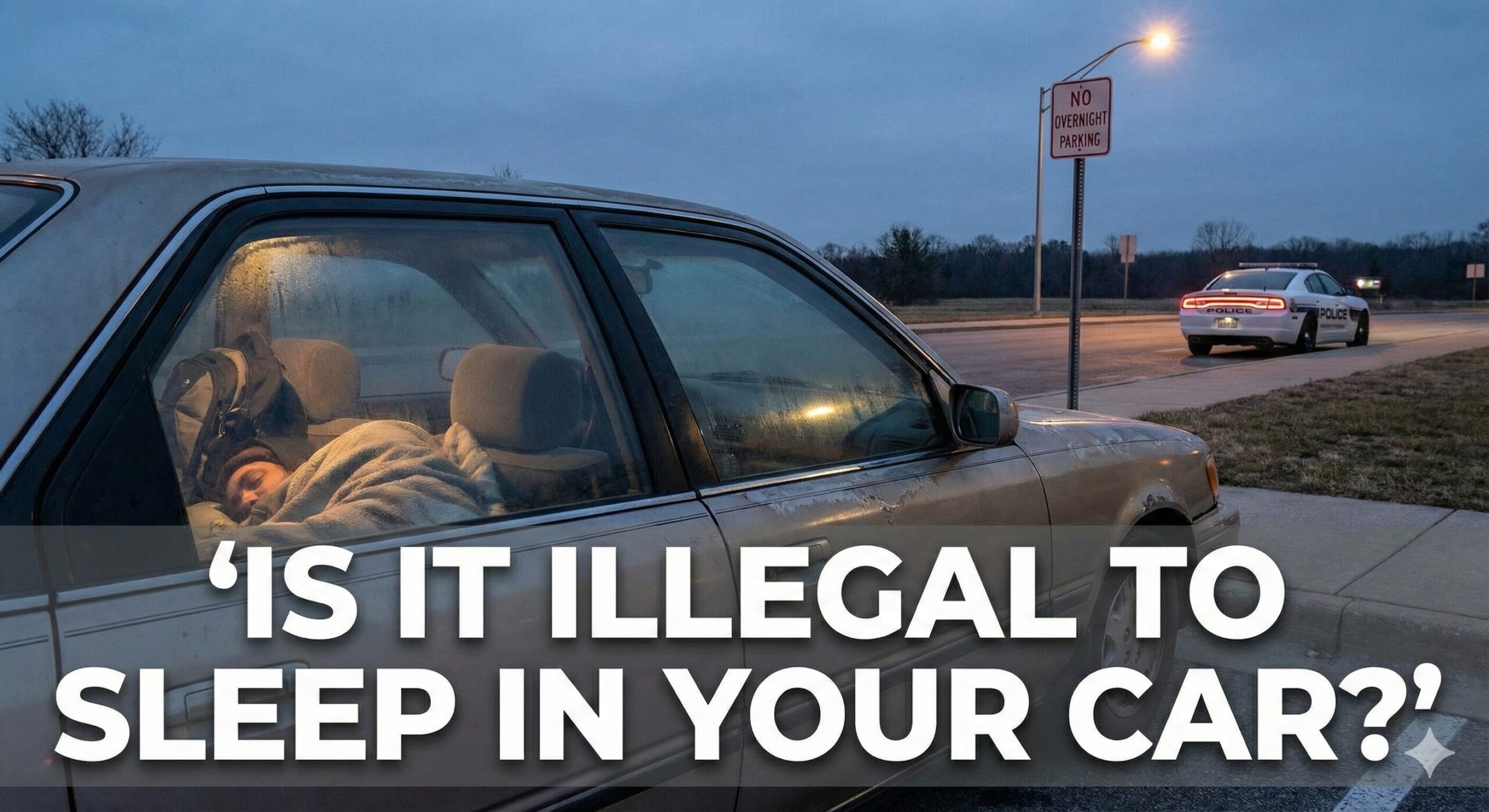
We’ve all been there. You’ve been driving for eight hours, your eyelids feel like lead weights, and the nearest hotel is 50 miles away—or simply too expensive. The logical, safe choice is to pull over and nap. After all, it is far safer than continuing to drive while exhausted. For more on the dangers of fatigue, see our guide on how to stay awake while driving.
But as you recline your seat, a worry creeps in: Is this illegal? Am I going to get a knock on the window from a police officer?
The answer is complex because there is no single federal law banning sleeping in cars. Instead, it is a patchwork of local ordinances, parking restrictions, and vagrancy laws. While the act of sleeping itself is rarely a crime, where you park to do it often is.
Federal vs. Local Laws: The Hierarchy of “No Parking”
To understand the legality, you have to look at who is making the rules.
1. Federal Law
There is no federal ban on sleeping in your car. In fact, the Department of Transportation encourages drowsy drivers to pull over and rest rather than risk a crash. On Bureau of Land Management (BLM) land or National Forests, “dispersed camping” (sleeping in your vehicle) is often explicitly allowed for free.
2. State Law
Most states do not ban sleeping in cars at the state level. However, they strictly regulate rest stops. Some states allow overnight stays (up to 8-10 hours) at highway rest areas, while others (like Florida and Tennessee) strictly prohibit overnight camping and limit stays to 3 or 4 hours.
3. City Ordinances (The Real Problem)
This is where 90% of tickets come from. Cities like Los Angeles, San Diego, and Key West have passed ordinances banning “vehicle habitation” on public streets. These laws are often aimed at homeless populations but apply equally to tired travelers.
Where Can You Legally Park & Sleep?
Finding a safe, legal spot is 90% of the battle. Here are your best options:
- Walmart Parking Lots: Historically friendly to RVers and car sleepers, though policy varies by store manager. Always check for signs.
- Cracker Barrel: Known for being RV-friendly. Usually allows one night of parking in designated areas.
- Truck Stops (Loves, Pilot, Flying J): Designed for sleeping drivers. They are noisy and bright, but legal and usually safe.
- BLM Land & National Forests: If you are near nature, you can often pull off on a Forest Service road and sleep for free.
- Casinos: Many casinos allow overnight parking in distant lots to encourage you to come inside.
If you are planning a long journey, review our best road trip essentials checklist to ensure you are prepared for overnight stays.

The Hidden Danger: Getting a DUI While Sleeping
This is the most dangerous legal trap for car sleepers. You do not have to be driving to get a DUI (Driving Under the Influence).
Most states define DUI as being in “Actual Physical Control” of the vehicle while intoxicated. If you have had a few drinks at a party and decide to “sleep it off” in your car, you can be arrested if:
- You are in the driver’s seat.
- The keys are in the ignition (even if the engine is off).
- The keys are in your pocket or within reach.
How to avoid this: If you must sleep in your car after drinking, sleep in the back seat and put the keys in the trunk. However, the safest option is simply not to be in the car at all. For more on alcohol laws, read our guide on alcohol rules for passengers.
Can You Sleep at Highway Rest Stops?
Rest stops seem like the obvious choice, but they are technically designed for “resting,” not “camping.”
| State Status | General Rule |
|---|---|
| Permissive States | Allow stays of 8–10 hours (e.g., Texas, Arizona, Arkansas). Safe for a full night’s sleep. |
| Restrictive States | Limit stays to 2–4 hours (e.g., Florida, Pennsylvania, Tennessee). Police patrol these to prevent vagrancy. |
| Prohibited States | Strictly no overnight parking (e.g., Colorado, Virginia). Signs will be posted explicitly banning it. |
Critical Safety Guidelines
Sleeping in a car carries risks beyond legal ones. Carbon monoxide poisoning and vulnerability to crime are real concerns.
1. Never Sleep with the Engine Running
It is tempting to keep the AC or heat on, but if you have an exhaust leak or if snow blocks your tailpipe, carbon monoxide can fill the cabin and kill you in your sleep. Crack a window for ventilation and turn the car off.
2. Lock the Doors
This sounds obvious, but engaging the locks is your first line of defense. Keep your keys close (but not in the ignition if drinking) so you can hit the panic button if someone tries to break in.
3. Location Awareness
Park under a light if you are in a commercial area (like a Walmart), but seek shadows if you are trying to be stealthy on a street. Avoid parking alone in desolate areas. Keep essential safety tools within arm’s reach.
