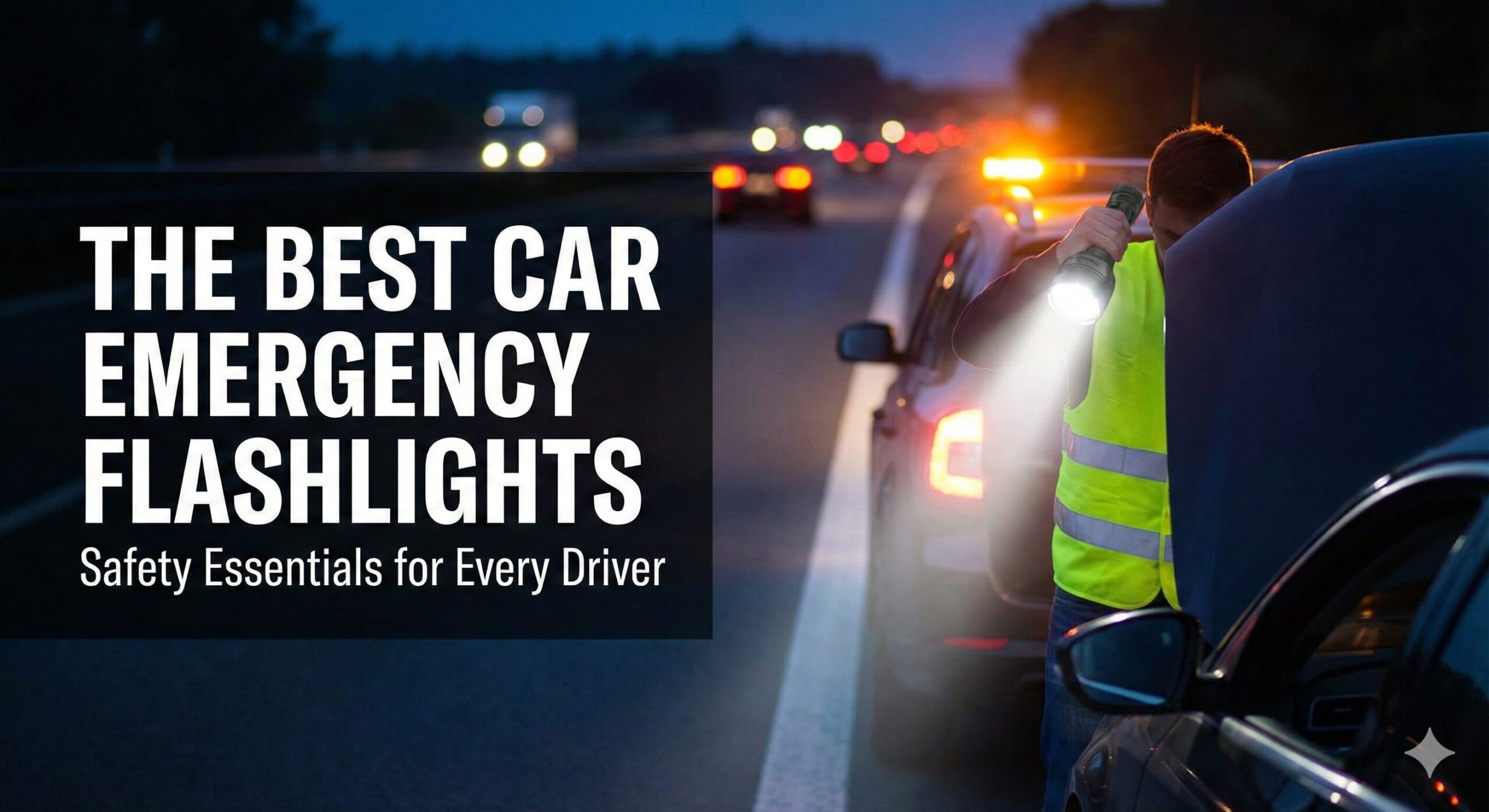
The 5 Best Car Emergency Flashlights for Roadside Safety (Review)
Imagine this: It’s 11:00 PM, pouring rain, and you are miles from the nearest exit. Suddenly, your engine sputters and dies. You pull over to the shoulder, engulfed in darkness. You reach for your glovebox. What you pull out next could define your safety for the next few hours.
Is it a dim, flickering plastic torch with dead batteries? Or is it a high-performance, reliable illumination tool? If you are relying on your smartphone light, you are already making a mistake. You need that battery for calling emergency services, not for looking under the hood.
At DriveSafeGuide, we take vehicle safety seriously. Whether you need to inspect a blown tire, signal oncoming traffic, or break a window in a worst-case scenario, a dedicated car flashlight is non-negotiable. It belongs in your kit right alongside your car fire extinguisher and jumper cables.
After testing lumens, battery longevity in extreme temperatures, and durability, we have curated the 5 best car emergency flashlights available today.
Quick Comparison: Top Rated Car Flashlights
| Model | Best For | Lumens | Battery Type | Key Feature |
|---|---|---|---|---|
| Streamlight 88061 ProTac 1L-1AA | Overall Best | 350 | Dual Fuel (AA or CR123A) | Indestructible build |
| NPET T09 Solar Flashlight | Safety Multi-Tool | 268 | Solar/USB Rechargeable | Window Breaker & Cutter |
| Fenix PD36R Pro | High Performance | 2800 | Li-ion (USB-C) | Incredible beam throw |
| Maglite ML300L LED 3-Cell | Heavy Duty | 625 | D-Cell Alkaline | Long runtime & impact tool |
| GearLight S1000 (Pack of 2) | Budget Pick | High | AAA or 18650 | Zoomable lens |
1. Streamlight 88061 ProTac 1L-1AA: The Best Overall
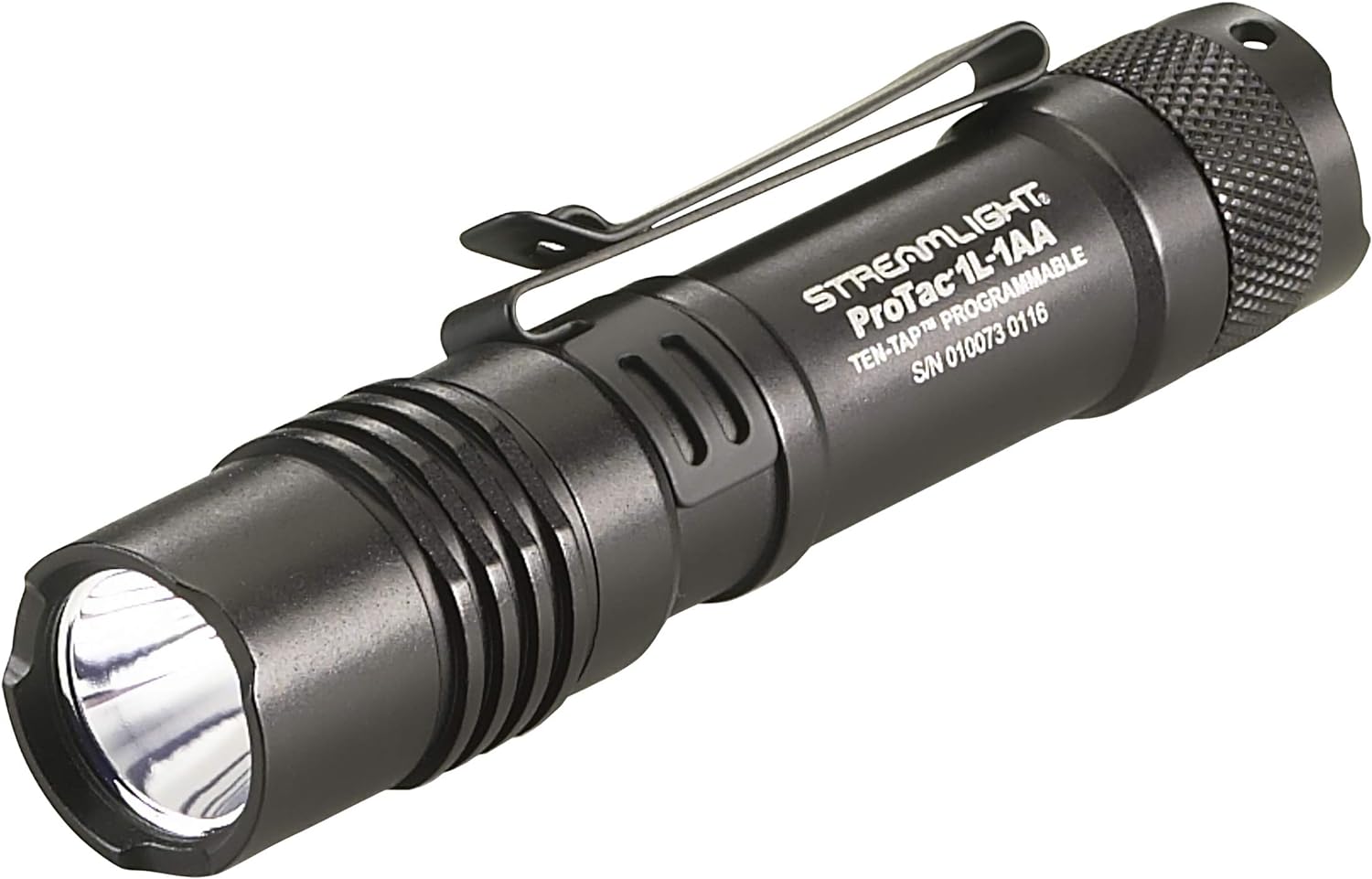
When it comes to automotive reliability, Streamlight is a titan in the industry. The ProTac 1L-1AA takes our top spot not because it is the brightest, but because it is the most practical for a glovebox environment.
Why It Wins
The genius of this light is its “Dual Fuel” capability. It accepts both a single AA battery (widely available) or a CR123A lithium battery. Why does this matter? If you are stuck in the middle of nowhere, you can likely find a AA battery at any gas station. However, if you use the CR123A, you get better performance in freezing temperatures—essential if you are updating your winter car emergency kit checklist.
It is compact enough to hold in your teeth while you work (though we recommend a headlamp for that), yet bright enough to inspect suspension issues or check fluids.
- Accepts multiple battery types (AA and CR123A).
- Ten-Tap programming allows you to choose your mode sequence.
- IPX7 waterproof rating (can be submerged).
- Extremely durable aluminum construction.
- Not the brightest on this list (350 lumens max).
- Battery life is shorter on AA alkaline cells.
Verdict: If you want a light you can throw in the center console and forget about until you desperately need it, this is the one.
Check Price on Amazon2. NPET T09 Solar Flashlight: The Ultimate Safety Multi-Tool

Sometimes, a flashlight needs to be more than just a light. The NPET T09 is a Swiss Army knife of illumination. It is designed specifically for vehicular emergencies, incorporating features that could save your life in an entrapment scenario.
Safety Features Galore
This unit features a dedicated seatbelt cutter and a tungsten steel window breaker. If you’ve read our guide on the best car window breaker, you know how vital this tool is if you are submerged or trapped after a collision. Furthermore, the NPET T09 has a magnetic base, allowing you to stick it to the side of your car while changing a tire—perfect for those who don’t want to juggle tools.
It also features a solar panel on the handle. While solar charging is slow, it provides a trickle charge assurance that the battery won’t be completely dead when you need it.
- Integrated window breaker and seatbelt cutter.
- Strong magnet for hands-free work.
- Side work-light mode and red emergency flasher.
- Can serve as a power bank to charge your phone.
- Solar charging is very slow (emergency backup only).
- Build quality feels less premium than Streamlight.
Verdict: This is the best choice for anxious drivers or new car owners who want an “all-in-one” safety solution.
Check Price on Amazon3. Fenix PD36R Pro: The High-Performance Powerhouse
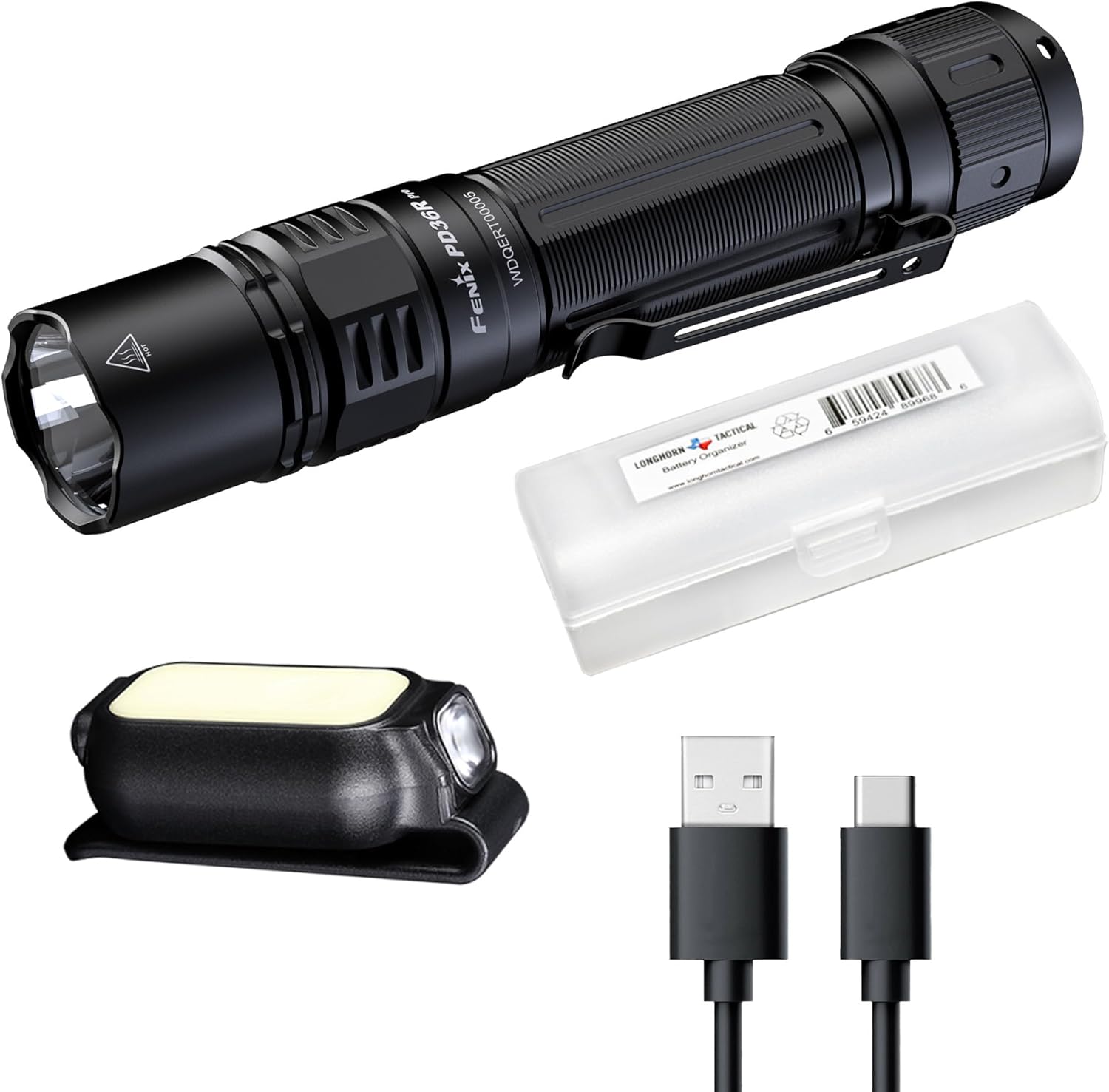
If you drive in rural areas where streetlights are non-existent, you need “throw”—the ability to cast light a long distance. The Fenix PD36R Pro is a beast, outputting a blinding 2800 lumens. This is helpful for spotting deer before they run onto the road (see: what to do if you hit a deer) or signaling for help from a massive distance.
Modern Tech for Modern Drivers
Unlike older flashlights, this uses a high-capacity 5000mAh battery chargeable via USB-C. This means you can charge it using the same port you likely have in your modern vehicle. It fits perfectly with must-have car gadgets for long drives.
- Incredible brightness (2800 lumens).
- Long battery life (up to 42 hours on low).
- USB-C fast charging.
- Battery level indicator.
- Expensive compared to basic models.
- Can get hot during extended use on Turbo mode.
Verdict: For the tech-savvy driver who wants the brightest and most durable light on the market, the Fenix is the luxury pick.
Check Price on Amazon4. Maglite ML300L LED 3-Cell D: The Heavy Duty Classic

There is a reason police officers used Maglites for decades. They are heavy, solid, and reliable. The Maglite ML300L is the modern LED evolution of the classic baton-style light. If you are driving in high winds or severe weather, having a heavy light that won’t blow away is surprisingly useful.
Battery Endurance
Using 3 D-cell batteries, this light has an insane runtime. In Eco mode, it can run for nearly 117 hours. If you are stuck in a blizzard or stranded for days, this is the light you want. Its size also makes it easy to find in a messy trunk full of road trip essentials.
- Massive runtime on Eco mode.
- Solid construction doubles as a defensive tool.
- Adjustable beam (Spot to Flood) with a quarter turn.
- Simple interface.
- Large and heavy (hard to store in glovebox).
- D-cell batteries are heavy and expensive to replace.
Verdict: The “Old Faithful” of car lights. Great for truck owners or those who want a light that doubles as a defensive implement.
Check Price on Amazon5. GearLight S1000 (2-Pack): The Best Budget Option

Not everyone wants to spend $80 on a flashlight. The GearLight S1000 usually comes in a pack of two for a very low price. This allows you to keep one in the glovebox and one in the trunk, perhaps near your air compressor for car tires.
Value Proposition
While they don’t have the sophisticated electronics of Fenix or Streamlight, they work. They feature a zoomable lens, allowing you to focus the beam or flood an area. They run on AAA batteries (adapter included) or rechargeable 18650s. They are perfect budget-friendly car gadgets for new drivers.
- Extremely affordable.
- You get two lights for the price of one.
- Zoom function is handy for engine work.
- Compact size.
- Construction is lighter and less durable.
- Switch quality is average.
- Not fully waterproof (only water-resistant).
Verdict: Excellent for stocking multiple family cars without breaking the bank. A great addition to gifts for new car owners.
Check Price on AmazonBuying Guide: How to Choose the Right Car Flashlight
Choosing a flashlight for your vehicle is different than choosing one for camping or home use. A car environment is harsh—temperatures fluctuate wildly, and the light might sit unused for months. Here is what you need to consider.
1. Battery Chemistry Matters
This is the most critical factor. Standard alkaline batteries (like generic AAs) can leak over time, especially in the heat of a car interior. Imagine needing your light, opening it up, and finding it corroded.
- Lithium Primary (CR123A): These are non-rechargeable but have a shelf life of 10 years and withstand extreme heat and cold. They are the gold standard for emergency kits.
- NiMH (Rechargeable AA): Better than alkaline, but they self-discharge over time.
- Li-Ion (Rechargeable): Great power, but you must remember to charge them every few months. Combine these with a portable jump starter that has USB ports.
2. Lumens vs. Candela
Lumens measure total light output. Candela measures how focused the beam is (throw).
- Under hood work: You want a “floody” light (lower candela, 300-500 lumens) so you aren’t blinded by reflection off metal parts.
- Roadside signaling: You want high candela (throw) to be seen from far away, similar to best road flares.
3. Hands-Free Capability
If you are changing a tire, you need both hands. Look for lights with magnetic tails, clips that attach to a hat brim, or right-angle designs. This is as important as knowing how to store summer tires—it’s all about logistics.
4. Durability and Weather Resistance
If you break down in a storm, your light must be waterproof (IPX7 or IPX8). If you drop it on asphalt, it shouldn’t shatter. Aluminum bodies generally survive drops better than plastic.
Essential Maintenance for Car Flashlights
Even the best flashlight is useless if it doesn’t work when you need it. Just like you perform maintenance to protect car paint from sun damage, you must protect your electronics.
- The “Vampire” Drain: Some electronic switches drain a tiny amount of power even when off. Loosen the tail cap a quarter turn to “lock out” the light and break the circuit for long-term storage.
- Temperature Check: If you live in Arizona or Minnesota, extreme temps kill batteries. Rotate your batteries twice a year—perhaps when you check your safety checklist before a road trip.
- Don’t Forget the Spare: Always keep a spare set of batteries in a plastic case next to the flashlight.
Frequently Asked Questions (FAQ)
Why not just use my phone flashlight?
Your phone is your lifeline to call 911 or a tow truck. Using it as a flashlight drains the battery rapidly. Furthermore, phone LEDs are not bright enough to illuminate a dark highway or signal oncoming traffic effectively. It’s risky, much like driving with a blown head gasket—you might get away with it for a moment, but it will eventually fail you.
What implies a “Tactical” flashlight?
Tactical lights usually feature a momentary-on switch (press slightly for light, release for off), a strike bezel for defense or glass breaking, and a strobe mode to disorient attackers. They are rugged and often used by law enforcement.
Can a flashlight really break a car window?
Only if it has a dedicated tungsten or ceramic bead strike bezel. Aluminum is softer than tempered glass and may not break it easily. Dedicated tools like the NPET T09 or a specific car safety tool are better for this.
Is a headlamp better than a flashlight for cars?
A headlamp is arguably better for changing tires because it is hands-free. However, a handheld flashlight is better for signaling, looking under seats, or defensive use. ideally, carry both.
How many lumens is too much?
Inside a car, anything over 1000 lumens can be blinding due to reflection. This is why multi-mode lights (Low/Med/High) are essential. You don’t want to blind yourself while looking for your driving sunglasses in the dark.
Conclusion
Breakdowns happen when we least expect them. Whether you are navigating tips for driving in fog or dealing with a flat tire on a black ice patch (see: how to drive on black ice), visibility is safety.
For most drivers, the Streamlight 88061 ProTac is the perfect balance of reliability and size. If you want maximum safety features, the NPET T09 is a smart addition to any glovebox. Whichever you choose, ensure it is accessible from the driver’s seat. Don’t bury it in the trunk under your luggage.
Stay safe, keep your batteries fresh, and drive prepared.
Shop All Car Flashlights on Amazon