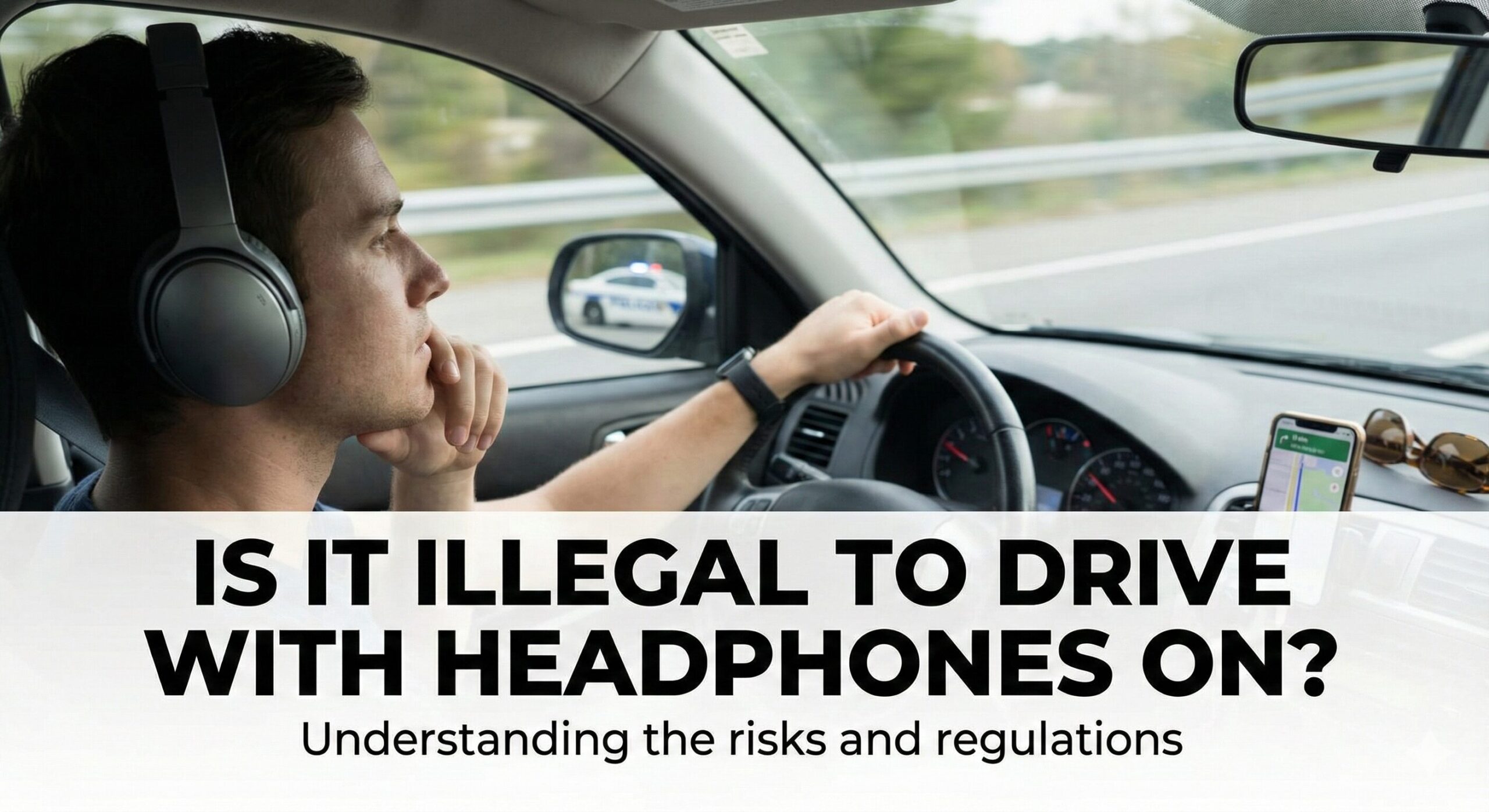
We see it every day on the highway: a driver cruising in the left lane, head bobbing, large noise-canceling headphones covering their ears. Or perhaps it’s the subtle white stem of an Apple AirPod dangling from a driver’s ear. It seems innocent enough—maybe their car stereo is broken, they are trying to take a hands-free work call, or they just want better audio quality for a true crime podcast. But the burning question remains: is it illegal to drive with headphones?
The legality of driving with headphones is arguably one of the most misunderstood and heavily searched areas of traffic law in the United States today. The confusion stems from the fact that there is no single federal rule that applies to all everyday motorists. Instead, it is a complex, constantly shifting patchwork of state statutes. These laws range from “strictly prohibited” to “completely legal,” with a massively confusing middle ground of “one ear only.”
Furthermore, the advent of modern technology—specifically Active Noise Cancellation (ANC), Transparency Modes, and Spatial Audio—has outpaced legislation. Many drivers falsely believe that because their AirPods Pro allow outside noise in via Transparency Mode, they are exempt from state laws. This is a dangerous (and expensive) misconception.
This massive, definitive guide dives deep into the traffic codes of all 50 states to clarify exactly where you stand. We won’t just cover the basic laws; we will explore the severe insurance implications of driving with headphones, commercial driver (CDL) restrictions, rideshare company policies, the science behind auditory distracted driving, and what alternatives you can use to stay legal and safe on the road.

The Short Answer: It Heavily Depends on Where You Live
There is no universal “Yes” or “No” to the question of driving with headphones. The United States is generally divided into three major legal camps regarding headsets, earbuds, and over-ear headphones while operating a vehicle:
- Strictly Illegal: States where covering both ears or inserting earbuds into both ears is strictly prohibited by law. Doing so constitutes a moving or non-moving violation, depending on the jurisdiction.
- The “One Ear” Compromise: States that have adapted their laws for the modern era. They allow you to use a headset or earbud in one ear only (usually to facilitate hands-free phone calls) but explicitly forbid covering both ears, ensuring one ear remains fully open to ambient traffic sounds.
- Completely Legal (No Specific Ban): States with no specific statute banning headphones. However, this does not mean you have a free pass. Broad distracted driving laws still apply everywhere, and if you cause an accident because you couldn’t hear, you will face severe consequences.
For example, driving down the Pacific Coast Highway in California with both ears covered is a definitive, ticketable offense. Conversely, driving across the expansive highways of Texas with headphones on will not violate a specific headset statute. This variance is similar to other driving myths we’ve thoroughly debunked, such as whether it’s illegal to drive barefoot or if it’s illegal to sleep in your car.
State-by-State Overview Table
Below is a general categorization of headphone laws to give you a quick bird’s-eye view. Note: Traffic laws change rapidly, and local municipalities (cities and counties) can sometimes pass stricter ordinances than the state. Always verify with your local DMV or state legislature.
| State Categorization | Legal Status | Important Details & Caveats |
|---|---|---|
| Alaska, California, Colorado, Florida, Georgia, Illinois, Louisiana, Maryland, Massachusetts, Minnesota, New York, Ohio, Pennsylvania, Rhode Island, Virginia, Washington | Restricted / Illegal (Both Ears) | It is strictly illegal to wear headphones over both ears or earbuds in both ears. Most of these states have updated their laws to permit a single earbud for communication purposes (hands-free calling or GPS audio). |
| Arizona, New York (One ear specific), Ohio (One ear specific), Florida (One ear specific) | One Ear Permitted | These states explicitly write into their laws that one ear must be completely free of any device. If you are pulled over with two AirPods in, you will be ticketed, even if they are turned off. |
| Alabama, Arkansas, Connecticut, Delaware, DC, Hawaii, Idaho, Indiana, Iowa, Kansas, Kentucky, Maine, Michigan, Mississippi, Missouri, Montana, Nebraska, Nevada, New Hampshire, New Jersey, New Mexico, North Carolina, North Dakota, Oklahoma, South Carolina, South Dakota, Tennessee, Texas, Utah, Vermont, West Virginia, Wisconsin, Wyoming | Legal* (No Specific Ban) | No specific state statute outlaws wearing headphones while driving. However, you can and will be cited for dangerous driving or distracted driving if the audio causes you to drive erratically or miss emergency signals. |
The Complete 50-State Breakdown
Because the laws vary so drastically, a simple table doesn’t always tell the whole story. Some states allow headphones for communication but not for entertainment. Some states allow them in one ear only. Let’s do a deep dive into the specific legal landscape of all 50 states regarding driving with headphones, earbuds, AirPods, or headsets.
Alabama
Status: Legal. Alabama does not have a specific statute prohibiting the use of headphones while driving. However, Alabama has strict distracted driving laws. If an officer determines that wearing headphones caused you to drive erratically or fail to hear an emergency siren, you can be pulled over and cited for distracted driving.
Alaska
Status: Illegal. Under Alaska state law (13 AAC 02.545), it is illegal for a driver of a motor vehicle to wear a headset, headphones, or earplugs. There are exceptions for hearing aids and single-earpiece devices used strictly for cellular phone communication.
Arizona
Status: Legal (with caveats). There is no statewide ban prohibiting headphones. However, Arizona has enacted strict hands-free laws for cell phones. While wearing headphones isn’t specifically banned, if you are fiddling with them to change songs or answer calls, you violate the hands-free law.
Arkansas
Status: Legal. Arkansas does not have a law that specifically bans driving with headphones. Drivers are still expected to maintain full control of the vehicle and situational awareness. Distracted driving laws can still be applied at an officer’s discretion.
California
Status: Illegal (Both Ears). California Vehicle Code 27400 is very explicit: a person operating a motor vehicle or bicycle may not wear a headset covering, or earplugs in, both ears. You are legally allowed to wear one earbud or an earpiece in one ear to use for hands-free calling or GPS instructions, but the other ear must remain completely clear. Driving with both AirPods in your ears in California is a clear violation.
Colorado
Status: Illegal (Both Ears). Colorado law strictly prohibits wearing earphones in both ears while driving. Similar to California, you are permitted to use an earpiece in one ear for the purpose of communicating via a cellular device. Entertainment listening with both ears covered is highly illegal.
Connecticut
Status: Legal. There is no explicit law against wearing headphones in Connecticut. However, Connecticut has incredibly strict distracted driving laws. If headphones are deemed to be a distraction, you will face hefty fines.
Delaware
Status: Legal. Delaware has no specific statute banning the practice. Drivers must still yield to emergency vehicles; failure to do so because of loud music in headphones will result in severe penalties.
Florida
Status: Illegal (Both Ears). Florida Statute 316.304 states that no person shall operate a vehicle while wearing a headset, headphone, or other listening device, other than a hearing aid. However, Florida does allow the use of a headset in conjunction with a cellular phone that only provides sound through one ear.
Georgia
Status: Illegal (Both Ears). Georgia law prohibits wearing a headset or headphones that would impair the driver’s ability to hear emergency vehicles. A single earpiece for communication purposes is permitted under Georgia’s Hands-Free Law.
Hawaii
Status: Legal. Hawaii does not have a specific ban on headphones. Drivers must remain vigilant and responsive to auditory cues on the road, as general distracted driving ordinances are heavily enforced.
Idaho
Status: Legal. No specific prohibition exists in Idaho. However, local municipalities might have ordinances, and the general rule of maintaining situational awareness applies.
Illinois
Status: Illegal (Both Ears). Illinois law prohibits the use of a headset receiver while driving. The law was updated to allow a single-sided headset or earpiece for cellular communication. Dual-earbud use (like wearing two AirPods) is a traffic offense.
Indiana
Status: Legal. Indiana has no laws forbidding headphones while driving. The state does have a hands-free law, meaning you cannot hold your phone, so many drivers use headphones as a workaround. Just ensure you can still hear sirens.
Iowa
Status: Legal. There is no statewide ban on wearing headphones behind the wheel in Iowa. Distracted driving laws remain the primary enforcement tool for officers.
Kansas
Status: Legal. Kansas does not explicitly ban headphones for drivers. Safe driving practices and maintaining an awareness of your surroundings are legally expected.
Kentucky
Status: Legal. Drivers in Kentucky can legally wear headphones. However, if wearing them leads to an accident or a failure to yield, it will be heavily factored into liability.
Louisiana
Status: Illegal (Both Ears). Louisiana law prohibits the operation of a motor vehicle while wearing headphones in both ears. Use of a single earbud for phone calls is acceptable.
Maine
Status: Legal. Maine does not ban the use of headphones. However, Maine has strict laws against distracted driving, and a police officer can cite you if they believe the headphones are impairing your driving ability.
Maryland
Status: Illegal (Both Ears). In Maryland, you may not wear a headset or earplugs that cover both ears. Exceptions are made for hearing aids and single earbuds used for communication.
Massachusetts
Status: Illegal (Both Ears). Massachusetts law firmly bans wearing headphones while driving. You are allowed to use one earbud or an earpiece for communication or navigation, but both ears cannot be covered or plugged.
Michigan
Status: Legal. Michigan has no explicit law against driving with headphones. However, under Michigan’s new distracted driving laws, manipulating the phone connected to those headphones is illegal.
Minnesota
Status: Illegal (Both Ears). Minnesota statute 169.471 makes it illegal to drive while wearing headphones or earphones in both ears. The use of a single earbud for cellular communication is allowed.
Mississippi
Status: Legal. Mississippi currently has no laws on the books preventing a driver from wearing headphones.
Missouri
Status: Legal. There is no statewide ban in Missouri, though local city ordinances can sometimes supersede state silence on the issue. Always check local laws.
Montana
Status: Legal. Montana does not explicitly ban headphones while driving.
Nebraska
Status: Legal. No specific laws prohibit headphone use in Nebraska.
Nevada
Status: Legal. Nevada has no statute making headphones illegal, but they do have strict hands-free laws for devices.
New Hampshire
Status: Legal. While legal, New Hampshire has a comprehensive distracted driving law (Jessica’s Law) that could be applied if headphones contribute to erratic driving.
New Jersey
Status: Legal. New Jersey does not explicitly ban headphones, but it is famous for having some of the strictest distracted driving laws in the country. If an officer thinks your headphones are a distraction, you will get a ticket.
New Mexico
Status: Legal. No specific prohibition in New Mexico state law.
New York
Status: Illegal (Both Ears). New York Vehicle and Traffic Law Section 375(24-a) clearly states it is illegal to operate a motor vehicle while wearing more than one earphone attached to a radio, tape player, or other audio device. A single earbud is permissible.
North Carolina
Status: Legal. North Carolina does not ban headphones while driving.
North Dakota
Status: Legal. No specific laws prevent headphone use behind the wheel.
Ohio
Status: Illegal (Both Ears). Ohio law prohibits driving while wearing earphones or earplugs over or in both ears. Using a single earbud for communication is a permitted exception.
Oklahoma
Status: Legal. Oklahoma has no specific laws regarding headphones and driving.
Oregon
Status: Legal. Surprisingly, Oregon does not have a specific ban on headphones, though they have some of the tightest cell phone usage laws in the country.
Pennsylvania
Status: Illegal (Both Ears). Pennsylvania law states that no driver shall operate a vehicle while wearing headphones. The standard exception for single-ear communication devices applies.
Rhode Island
Status: Illegal (Both Ears). Rhode Island prohibits wearing earphones, headsets, or other listening devices in both ears. Single earbud use is allowed for cell phones.
South Carolina
Status: Legal. No explicit ban exists in South Carolina.
South Dakota
Status: Legal. South Dakota has no laws prohibiting headphones while driving.
Tennessee
Status: Legal. While there is no statewide ban, local municipalities may enforce stricter rules, and hands-free laws apply.
Texas
Status: Legal. Texas has no specific law against driving with headphones. However, the Texas Department of Public Safety strongly discourages it due to the extreme danger of auditory isolation.
Utah
Status: Legal. Utah does not ban headphones, but careless driving statutes can be applied if a driver is demonstrably distracted.
Vermont
Status: Legal. No specific prohibition in Vermont state law.
Virginia
Status: Illegal (Both Ears). Virginia law makes it illegal to drive while wearing earphones or headphones in both ears. Custom earplugs for noise reduction are sometimes permitted if they do not block emergency sirens, but entertainment headphones are banned.
Washington
Status: Illegal (Both Ears). Washington state prohibits the use of any headset or earphones that cover both ears. Single-ear devices designed for hands-free communication are fully legal.
West Virginia
Status: Legal. West Virginia does not have a specific statute banning headphones.
Wisconsin
Status: Legal. Wisconsin has no laws preventing the use of headphones while driving.
Wyoming
Status: Legal. Wyoming does not explicitly ban headphones, though maintaining awareness of your surroundings is required by basic traffic safety laws.
The Technology Dilemma: ANC vs. Transparency Mode
One of the most common arguments drivers make to police officers when pulled over with AirPods Pro or Sony headphones is: “But Officer, I had Transparency Mode turned on! I can hear everything!”
Modern wireless headphones utilize sophisticated external microphones to sample ambient noise. In Active Noise Cancellation (ANC) mode, the headphones play an inverted sound wave to cancel out road noise, engine drone, and unfortunately, sirens. In “Transparency” or “Ambient Sound” mode, the headphones amplify the outside world, theoretically allowing you to hear sirens and horns even better than with the naked ear.
Does the law care about Transparency Mode? The absolute answer is No.
Current state traffic laws were written long before Transparency Mode existed. The legal statutes ban the physical act of wearing a device over or in both ears. The law does not differentiate between ANC, Transparency Mode, or even if the headphones are turned completely off. If an officer sees devices in both ears in a state where it’s restricted (like California or New York), you will receive a citation. You cannot successfully argue the technology in traffic court because the letter of the law focuses on the physical obstruction of the ear canal.

Insurance Implications & Legal Liability
Getting a traffic ticket is bad, but the civil and financial consequences of driving with headphones can be catastrophic if you are involved in a motor vehicle accident. This is an area most drivers completely overlook.
Insurance companies are in the business of determining fault. If you are in a crash and the police report notes that you were wearing headphones, or if witnesses testify to seeing you wearing them, the opposing insurance company will aggressively use this fact against you. They will argue negligence.
- At-Fault Determination: Even if the other driver made a mistake, if you were wearing headphones, an insurance adjuster or jury may determine you exhibited “contributory negligence.” They will argue that had you not been wearing headphones, you would have heard the squeal of the other car’s brakes or their warning horn, and could have taken evasive action.
- Subpoena of Bluetooth Records: In serious accidents involving injury or death, plaintiff attorneys can and will subpoena your phone data. They can pull Bluetooth connection logs to prove exactly what device was connected to your phone at the exact millisecond the airbag deployed. They can even pull Spotify or Apple Music data to show you were actively streaming loud music.
- Punitive Damages: If you are driving with headphones in a state where it is explicitly illegal (e.g., Florida) and you strike a pedestrian, you aren’t just negligent—you are breaking a specific statute (negligence per se). This can dramatically increase the financial damages awarded against you in a civil lawsuit.
Commercial Drivers and CDL Regulations
If you hold a Commercial Driver’s License (CDL) and drive a semi-truck, bus, or heavy machinery, the rules change drastically. Commercial drivers are subject not only to state laws but also to the strict federal regulations set forth by the Federal Motor Carrier Safety Administration (FMCSA).
The FMCSA has severe rules regarding mobile phone usage for commercial drivers. While the FMCSA does not have a specific federal regulation that universally bans all headphone use, their rules regarding electronic devices are strict:
- CDL drivers are strictly prohibited from holding, dialing, or reaching for a mobile phone while operating a commercial vehicle.
- Hands-free communication is allowed, but it must be completely hands-free and voice-activated, or require no more than a single touch of a button.
- Because of the need for hands-free communication, CDL drivers frequently use specialized Bluetooth headsets (like BlueParrott headsets). However, these are almost universally single-ear headsets.
- Wearing dual-ear headphones (covering both ears) while operating a commercial vehicle is highly dangerous and violates the general safety principles of the FMCSA, as truckers must be able to hear air brake leaks, engine issues, and weigh station sirens. If a DOT inspector catches a CDL driver wearing dual-ear entertainment headphones, they can cite the driver for unsafe operation, potentially affecting the driver’s CSA score and their carrier’s safety rating.
Scientific Studies on Audio Distraction and Driving
Why do legislators care so much about what’s on your ears? The AAA Foundation for Traffic Safety and various university transportation institutes have conducted numerous studies on the cognitive load of auditory isolation.
The human brain struggles with “inattention blindness.” When you wear noise-canceling headphones and blast music, you are not just blocking physical sound waves; you are demanding cognitive processing power. Studies show that drivers isolated by headphones experience delayed reaction times to visual stimuli. Because the brain is immersed in the auditory environment of the podcast or music, it processes peripheral visual information slightly slower. A half-second delay in reaction time at 70 miles per hour equates to an extra 51 feet of travel before the brakes are even applied. This cognitive isolation is exactly why lawmakers fear headphone-wearing drivers.
Common Exceptions to the Headphone Rule
Even in states with the strictest bans on driving with headphones, lawmakers recognize that some devices are absolutely necessary for safety, health, or employment. The most common legal exceptions include:
1. Hearing Aids and Prosthetics
Laws prohibiting headphones universally exempt prosthetic devices used to aid the hearing impaired. If you require hearing aids to function and hear the world safely, you are legally protected under both state traffic codes and the Americans with Disabilities Act (ADA). For more on how physical disabilities intersect with driving laws, read our detailed article on whether deaf people are allowed to drive.
2. Emergency Personnel & Highway Workers
Drivers of authorized emergency vehicles (police, fire, EMS) or municipal highway maintenance workers who require tactical headsets or earplugs for radio communication and extreme noise protection are typically exempt while on active duty.
3. Motorcycle Helmets & Intercoms
The rules for motorcyclists are nuanced. Some states regulate speakers inside motorcycle helmets differently than headphones on car drivers. Helmets with built-in Bluetooth communication systems (like Sena or Cardo units) are generally legal because the speakers sit inside the helmet shell and do not physically “plug” or penetrate the ear canal, allowing ambient road noise to easily bypass the speaker and enter the ear.
4. Refuse Collection and Heavy Machinery
Drivers operating loud refuse trucks or construction equipment on public roads are often permitted to wear specific OSHA-approved ear protection to prevent permanent hearing loss, provided the protection allows for certain high-frequency alarms to penetrate.
Why Is It So Dangerous? (The Science of Audio Isolation)
You might be thinking to yourself, “I’m a good driver, my vision is 20/20, why do I need to hear to drive?” Driving is primarily a visual task, yes, but auditory cues play an incredibly critical, subconscious role in your spatial awareness and reaction times.
The Imminent Siren Problem
Modern noise-canceling headphones are engineered to aggressively filter out consistent, low-frequency sounds—like engine drone, wind, and tire rumble. Unfortunately, their algorithms can also severely dampen the high-frequency wail of approaching emergency sirens. Fire trucks, ambulances, and police cruisers rely on you hearing them blocks away so you can pull over. Delaying your reaction to an ambulance by even a few seconds creates a massive hazard in an intersection. If an ambulance has to slow down for you, lives are literally put at risk.
Mechanical Awareness and Vehicle Feedback
A good driver subconsciously listens to their vehicle. The sudden sound of a tire deflating, a serpentine belt squealing, the grind of worn brake pads, or the engine knocking gives you instant feedback that something is wrong. If you are blasting audio directly into your ear canals, you miss these early warning signs. Identifying these auditory cues early can prevent a breakdown at 70 mph. We discuss these vital auditory and tactile cues in our comprehensive guide on why cars shake while driving.
Spatial Awareness (The “Blind Spot” Honk)
Imagine you check your mirrors, look over your shoulder, and begin to change lanes. You didn’t see a small car hovering perfectly in your blind spot. That driver instantly lays on their horn to warn you. If you have noise-canceling headphones on, you might not hear that horn until metal crunches. The horn is the ultimate safety net of the road, and headphones sever your connection to it.
Can Police Pull You Over Just for Wearing Headphones?
Yes, absolutely. In states where wearing headphones is explicitly illegal (like California, Florida, or Maryland), this is considered a “primary offense.” A primary offense means a law enforcement officer does not need any other reason (like speeding or running a red light) to initiate a traffic stop. If an officer sitting in a speed trap looks into your window as you drive by and sees large over-ear headphones, they can flip on their lights, pull you over, and write you a ticket solely for the headphones.
In states where it is legal, an officer cannot pull you over just for wearing them. However, if you are swerving, driving under the speed limit, or failing to maintain your lane, they will pull you over for suspected DUI or reckless driving. Once they approach the window and see the headphones, that will be noted in the police report as the cause of the distracted driving, leading to heavy fines.
International Laws on Driving with Headphones
Planning a road trip abroad? Don’t assume the laws are the same as back home. The international community is generally much stricter regarding driving with headphones than the United States.
- United Kingdom: There is no specific law completely banning headphones in the UK. However, police are highly aggressive in applying “driving without due care and attention” charges. If headphones are found to be a factor in an accident, penalties are severe, including license points and unlimited fines.
- France: Since 2015, France has implemented an absolute, strict ban on any device worn in the ear while driving, cycling, or riding a motorcycle. This includes Bluetooth headsets, earbuds, and headphones. The only exception is integrated helmet speakers for motorcycles. The fine is steep, and points are deducted from your license immediately.
- Spain: Similar to France, Spain strictly forbids driving with headphones or earphones connected to sound receivers or players. Using a mobile phone without a fully hands-free (car speaker) system is illegal.
- Canada: Laws vary by province, much like the USA. In British Columbia, for example, it is illegal to drive with both ears covered by headphones. A single earbud is permitted for cellular calls.
Legal & Safe Audio Alternatives for Broken Car Stereos
Many people resort to driving with headphones because they drive an older vehicle with a broken stereo, a blown speaker, or a radio that simply lacks Bluetooth and AUX connectivity. You don’t have to break the law or risk your safety just to listen to your morning podcast. Here are the best, 100% legal ways to get high-quality audio safely:
1. Bluetooth FM Transmitters
These brilliant little devices are a lifesaver for older cars. They plug directly into your car’s 12V cigarette lighter port. You connect your smartphone to the device via Bluetooth, and the device then broadcasts your phone’s audio over an unused, static FM radio station (like 89.1 FM). You tune your car’s radio to that station, and your music plays clearly through your car’s speakers. They are cheap, legal everywhere, and require zero professional installation.
2. Portable Bluetooth Speakers
If your car’s speakers are completely blown and an FM transmitter won’t work, a high-quality portable Bluetooth speaker (like a JBL Flip, Bose SoundLink, or Ultimate Ears) is an excellent alternative. You can place the speaker securely in a center console cupholder or strap it to the passenger seat. This fills the cabin with high-quality sound without blocking your ear canals. You remain fully compliant with the law and can still hear approaching sirens.
3. Bone Conduction Headphones
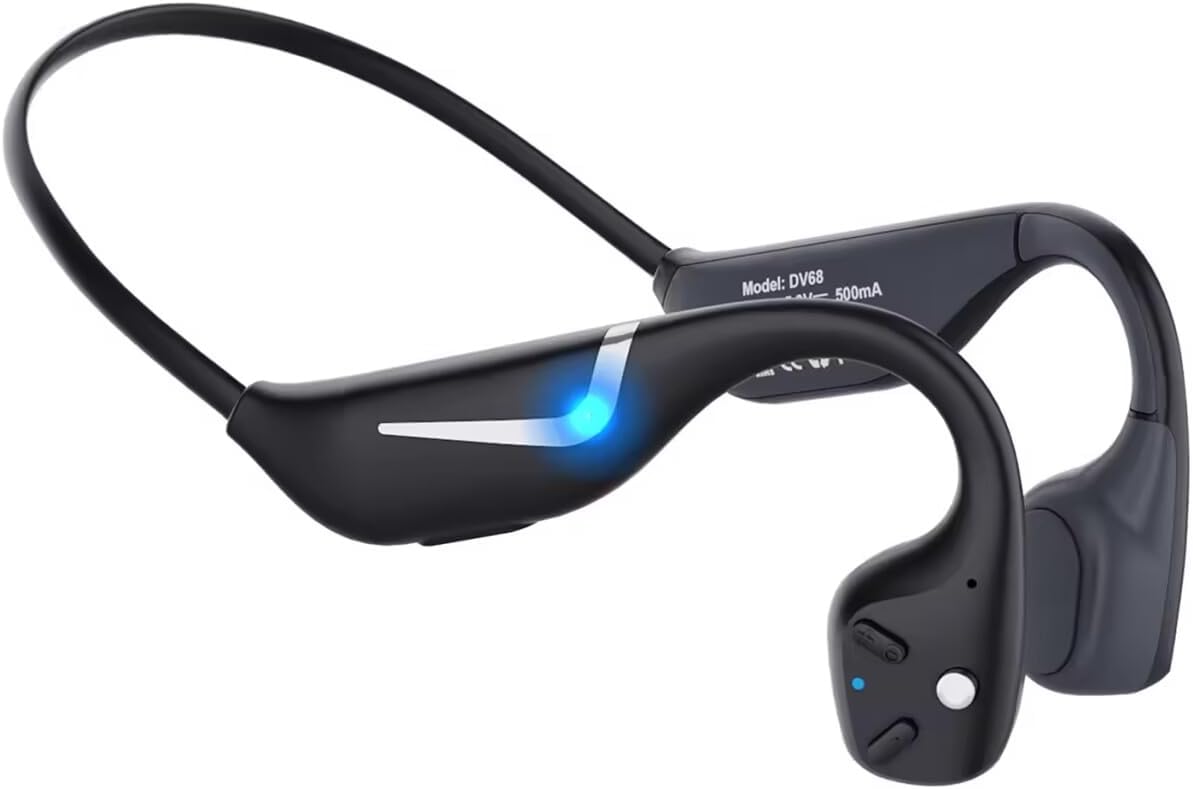
This is a fascinating gray area in the law. Bone conduction headphones (like those made by Shokz) do not go in or over your ears. They rest squarely on your cheekbones, right in front of the ear, and transmit sound vibrations directly into your inner ear via your skull. This leaves your actual ear canal completely, 100% open to the ambient environment. While legal interpretation varies by specific municipal judge, they are generally considered significantly safer and often legally compliant because they do not technically “cover or plug” the ear. They are a massive favorite among cyclists for this exact reason.
Looking for more innovative gear to make your daily commute or road trip safer and more comfortable? Check out our extensive, curated list of must-have gadgets for long drives.