5 Best OBD2 Scanner Reviews: Decode Your Check Engine Light
There is no symbol on your dashboard more fear-inducing than the dreaded Check Engine Light (CEL). It stares at you, orange and ominous, giving you zero information about what is actually wrong. Is it a loose gas cap? Or is your catalytic converter failing?
In the past, your only option was to drive to a mechanic and pay a diagnostic fee just to find out what was happening. Today, technology has put the power back in the driver’s hands. With the right OBD2 (On-Board Diagnostics) scanner, you can instantly read trouble codes, view live sensor data, and even reset the light yourself.
At DriveSafeGuide, we believe every driver should have a diagnostic tool in their glovebox, right next to their emergency flashlight and safety tools. But not all scanners are created equal. Some are simple code readers, while others are sophisticated diagnostic computers.
If you are wondering, “Can I still drive with my engine light on?”, the tools below will give you the answer. We have tested and reviewed the top 5 OBD2 scanners on the market for 2025.
Quick Comparison: The Top Diagnostic Tools
| Model | Type | Best For | Connection | App/Screen |
|---|---|---|---|---|
| BlueDriver Bluetooth Pro | Wireless Dongle | Overall Best | Bluetooth | iOS/Android App |
| Innova 5610 | Handheld | DIY Mechanics | Wired | Color Screen |
| Ancel AD310 | Handheld | Budget/Basics | Wired | B&W LCD |
| FIXD Sensor | Wireless Dongle | Beginners | Bluetooth | iOS/Android App |
| FOXWELL NT301 | Handheld | Live Data | Wired | Color Screen |
1. BlueDriver Bluetooth Pro OBDII Scan Tool: The Best Overall
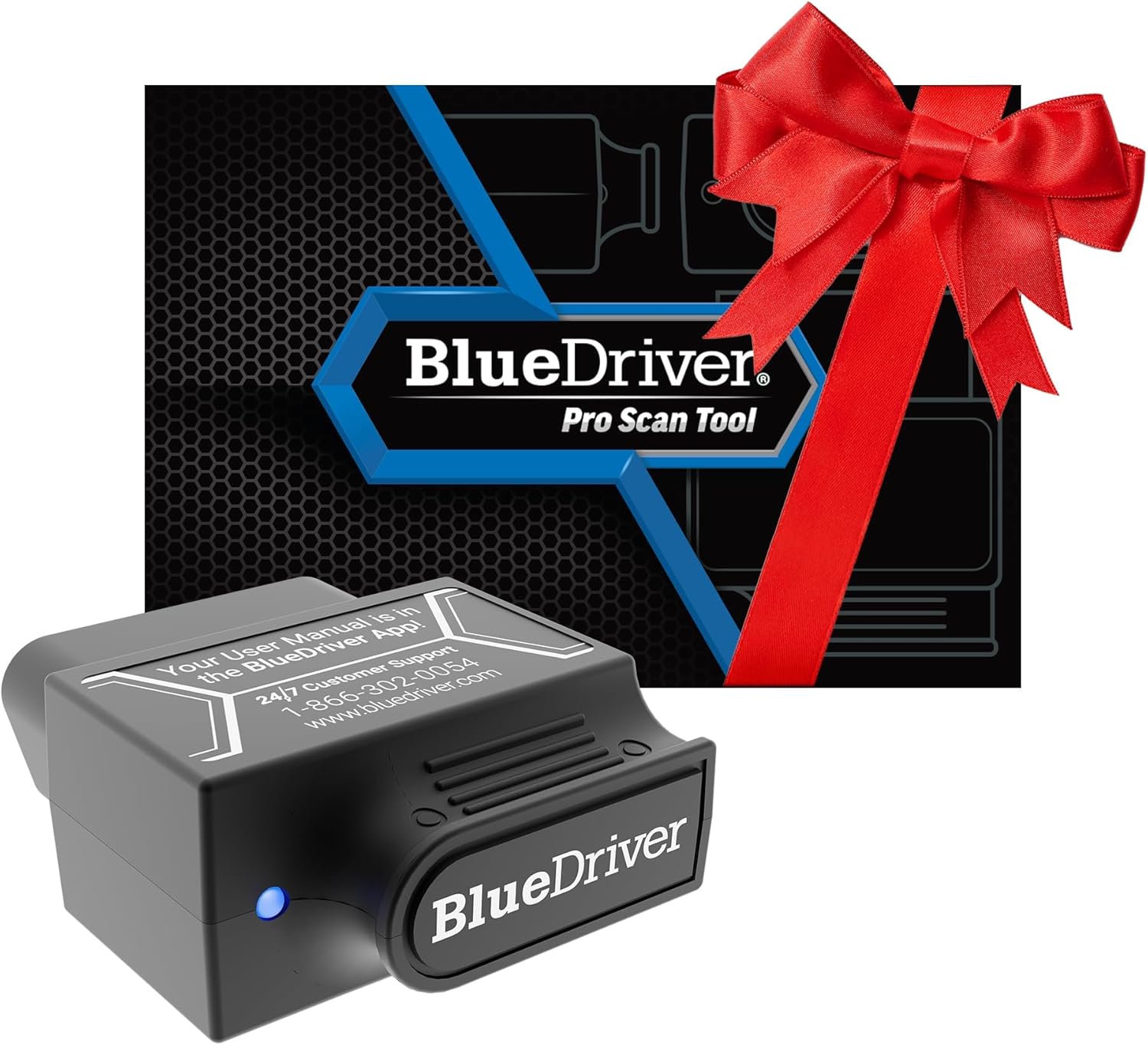
The BlueDriver has completely changed the landscape of home auto repair. Unlike traditional bulky scanners, this is a small dongle that plugs into your car’s OBDII port and connects wirelessly to your smartphone. But don’t let the size fool you—it is incredibly powerful.
Why It Is Our Top Pick
Most budget scanners only read generic engine codes. BlueDriver reads enhanced codes for ABS (brakes), SRS (airbags), and transmission for major brands like Ford, GM, Toyota, and Nissan. If your dashboard is lighting up like a Christmas tree, this tool tells you why.
Its standout feature is the “Repair Reports.” When it pulls a code, it doesn’t just give you a cryptic number like P0300. It cross-references a database of over 30 million verified fixes to tell you the most likely cause and the specific part you need to replace.
- Reads ABS, Airbag, and Transmission codes.
- “Verified Fix” reports save hours of research.
- Live data graphing on your phone screen is superior to small handheld screens.
- Smog check readiness included.
- Requires a smartphone to work.
- Slightly more expensive than basic handhelds.
Verdict: If you own a smartphone and want professional-grade data without the bulk, BlueDriver is the gold standard.
2. Innova 5610 Bidirectional Scan Tool: The Mechanic’s Choice

For the serious DIYer who does their own safety checklist before a road trip, the Innova 5610 is a powerhouse. While many scanners just “read” data, the 5610 can “talk back” to the car. This is called bi-directional control.
Advanced Features
This tool allows you to perform active tests, such as cycling the A/C clutch, testing fuel injectors, or retracting the electronic parking brake (essential for changing rear brake pads on modern cars). It also covers advanced resets like oil light, battery registration, and steering angle sensors.
If you are trying to diagnose complex issues, such as why your car shakes when you drive, the live data stream on the Innova is fast and accurate.
- Bi-directional controls (Active Tests).
- Special functions: Battery reset, EPB retraction, ABS bleeding.
- Bright, large color screen.
- LED lights in the connector to help find the port in the dark.
- Pricey compared to standard code readers.
- Some advanced features are vehicle-specific.
Verdict: The closest you can get to a dealership tool without spending thousands of dollars. Perfect for the home mechanic.
3. Ancel AD310 Classic Enhanced: The Budget King

Sometimes, you don’t need fancy graphs or Bluetooth connectivity. You just want to know why the light is on and clear it. Enter the Ancel AD310. It is widely regarded as one of the best budget-friendly car gadgets you can buy.
Simplicity at its Best
This device runs off the power of your car’s OBD2 port, so it never needs batteries. You can leave it in your glovebox for five years, pull it out during an emergency, and it will fire right up. It reads and erases engine trouble codes and displays I/M readiness (to see if you will pass an emissions test).
- Extremely affordable.
- Rugged design; drop-resistant.
- No batteries or charging required.
- Very fast startup.
- Basic features only (No ABS or Airbag codes).
- Screen is basic LCD.
- Cable is somewhat short.
Verdict: An essential tool for every vehicle. Even if you don’t fix cars yourself, having this allows you to fact-check your mechanic.
4. FIXD Bluetooth Sensor: The Beginner’s Best Friend

If you aren’t a “car person” and the thought of Error Code P0420 means nothing to you, FIXD is designed for you. It translates technical jargon into plain English. Instead of just giving you a code, the app tells you the severity of the issue: “Can I drive?” or “Stop immediately.”
Maintenance Tracking
Beyond diagnostics, FIXD acts as a car health monitor. It tracks your mileage and alerts you when maintenance is due, helping you avoid issues like driving with a blown head gasket due to overheating or neglect. It is also a fantastic gift, ranking high on our list of gifts for new car owners.
- Simplifies car problems into plain language.
- Alerts for maintenance intervals.
- Can monitor multiple vehicles in one app (Family Mode).
- Tiny form factor.
- Some advanced features require a subscription.
- Not as deep regarding data as BlueDriver.
Verdict: The best option for non-mechanics who want peace of mind and simple explanations.
5. FOXWELL NT301: The Live Data Specialist

The FOXWELL NT301 sits in the sweet spot between the budget Ancel and the pro-grade Innova. Its claim to fame is its ability to graph live sensor data accurately. When diagnosing intermittent issues, like a misfire that only happens at high speeds, seeing live data is crucial.
Enhanced Mode 6
This tool offers “Mode 6” data, which allows you to see how the car’s self-tests are performing before they actually trigger a check engine light. This is proactive maintenance at its finest. It’s a great tool to keep handy along with your must-have car gadgets for long drives.
- Excellent live data graphing.
- Dedicated I/M readiness hotkey for smog checks.
- Print data via PC.
- Color screen improves readability.
- Update process on PC can be clunky.
- Button interface is a bit stiff.
Verdict: Excellent value for those who want to see live engine performance without using a smartphone app.
Buying Guide: How to Choose the Right OBD2 Scanner
Choosing the right scanner depends entirely on how much work you plan to do yourself. Here are the key factors to consider:
1. Compatibility
In the US, all cars made after 1996 are OBD2 compliant. However, if you are driving a vintage vehicle or a heavy-duty truck, standard scanners might not work. Always check compatibility.
2. Basic vs. Enhanced Codes
If you just want to clear the “Check Engine” light, a $20 scanner works. But modern cars have complex systems. If your ABS (Brakes) or SRS (Airbag) light is on, a cheap scanner won’t see it. You need a tool like the BlueDriver or Innova for those safety systems. This is vital if you are concerned about safety issues like what to do if your brakes fail.
3. Connectivity: Bluetooth vs. Handheld
- Handheld (Wired): Reliable, fast, no batteries needed, no pairing issues. Preferred by old-school mechanics.
- Bluetooth (Wireless): Uses your phone’s processor, allowing for better graphics, internet connectivity for repair databases, and easy updates.
4. Live Data and Freeze Frame
Freeze Frame takes a snapshot of the engine data the exact moment the error code was triggered. This is detective work 101. Live Data shows you real-time RPM, temperature, and fuel trim. This is essential for diagnosing overheating issues or checking if you need to check your battery health.
Why You Need an OBD2 Scanner in Your Emergency Kit
Many drivers view scanners as tools for the garage, but they are essential for the road. If your car goes into “Limp Mode” on a highway, a scanner can tell you if it’s a minor sensor error or a catastrophic failure.
Combined with a car window breaker and a tire compressor, an OBD2 scanner completes your vehicle’s health and safety kit. It empowers you to make informed decisions: call a tow truck, or fix it and drive home.
Frequently Asked Questions (FAQ)
Will these OBD2 scanners work on my car?
If your car was manufactured in 1996 or later in the United States, it is legally required to be OBD2 compliant. These scanners will work for standard diagnostics. For cars sold in the EU, OBD2 (EOBD) became mandatory for gas cars in 2001 and diesel in 2004.
Can an OBD2 scanner fix my car?
No, a scanner is a diagnostic tool. It identifies the problem by reading error codes (DTCs). It can turn off the Check Engine Light, but if the underlying mechanical issue isn’t fixed, the light will come back on.
What is the difference between a code reader and a scan tool?
A basic code reader simply reads and clears engine codes. A more advanced scan tool offers live data streams, freeze frame data, and sometimes advanced functions like ABS/SRS bleeding, battery registration, and bi-directional controls.
Do I need a Bluetooth or corded scanner?
Bluetooth scanners are generally more convenient, pairing with your phone to offer rich interfaces and easy updates. Corded scanners are often more rugged, don’t require batteries or phone pairing, and are preferred by mechanics for quick, reliable plug-and-play use.
Can these scanners diagnose ABS and Airbag lights?
Basic scanners usually only read Engine and Transmission codes. To read ABS (Braking) or SRS (Airbag) codes, you need a mid-range or professional scanner like the BlueDriver or Innova 5610 listed in this review.
Why does my scanner say ‘Link Error’?
A link error usually means the scanner cannot communicate with the vehicle’s ECU. This can be caused by a blown fuse (often the cigarette lighter fuse shares the OBD2 circuit), a damaged port, or the ignition key not being in the ‘ON’ position.
Can I drive with the scanner plugged in?
Yes, many modern scanners allow for live data monitoring while driving. This is useful for diagnosing intermittent issues, like why your car shakes when driving at certain speeds.
Do these scanners require a subscription?
Most handheld scanners and the BlueDriver do not require a subscription. However, some app-based dongles (like later versions of FIXD or dedicated professional tablets) may offer premium features behind a paywall.
Conclusion
Ignoring a check engine light is a gamble that rarely pays off. By investing in one of the 5 best OBD2 scanners, you are investing in the longevity of your vehicle and your own peace of mind.
For the average driver who wants the best features and ease of use, the BlueDriver Bluetooth Pro is our top recommendation. For those on a strict budget who just want the basics, the Ancel AD310 is unbeatable.
Don’t wait for a breakdown to start caring about your car’s health. Grab a scanner, understand your vehicle, and drive with confidence.